
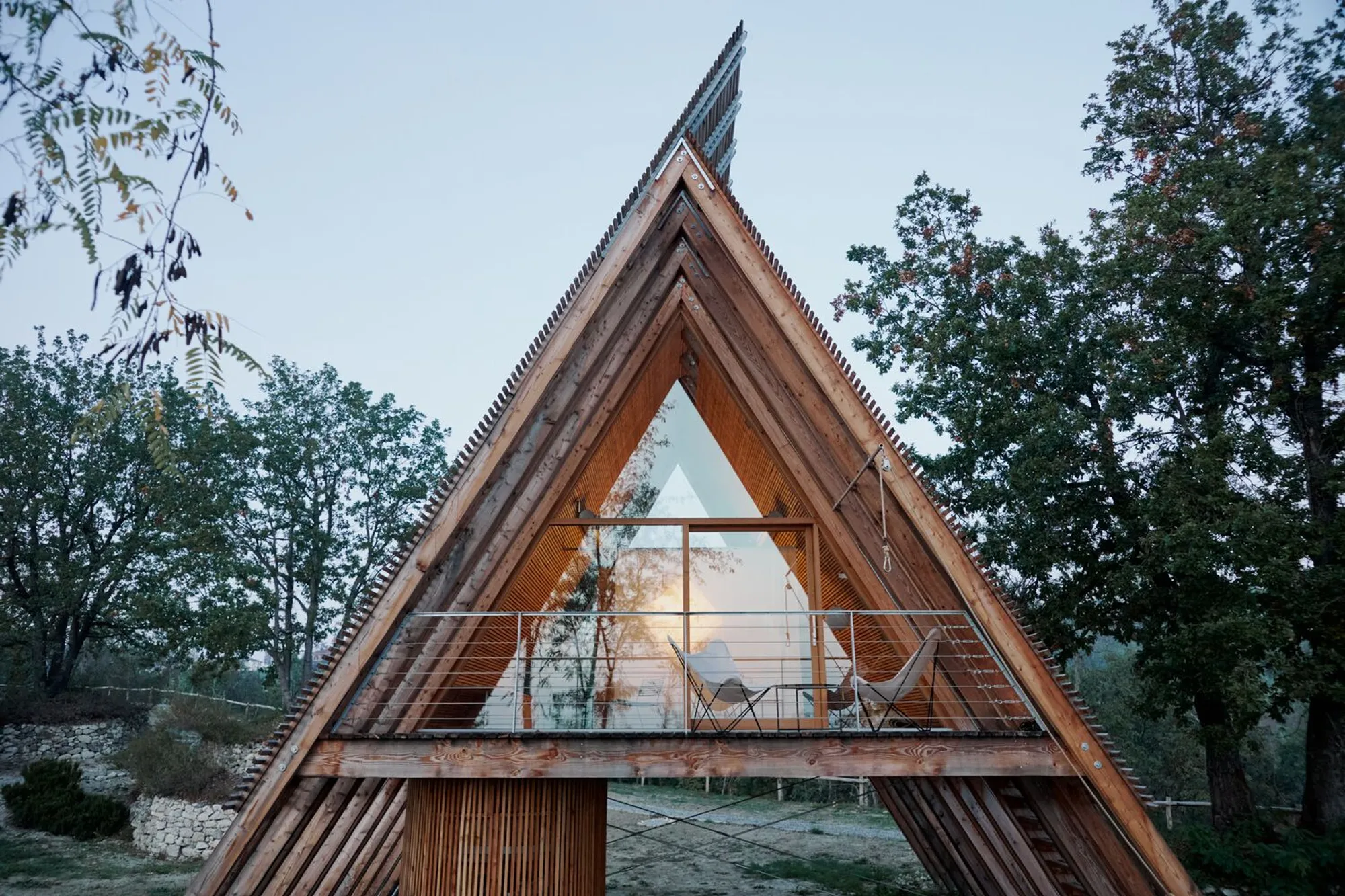
LILELO: Blending Eco-Hotel Luxury with Nature's Embrace
Exploring LILELO's eco-friendly cabins in Monferrato, Italy, blending sustainable design with natural beauty and community.


In the lush heart of Monferrato, Italy, where vineyards stretch into the horizon and forests whisper tales of the earth, the LILELO project by Atelier LAVIT emerges as a sanctuary of eco-friendly luxury. This collection of wooden and glass cabins redefines the eco-hotel experience, harmonizing advanced sustainable design with the timeless beauty of nature.
The Vision Behind LILELO: More Than Just Cabins
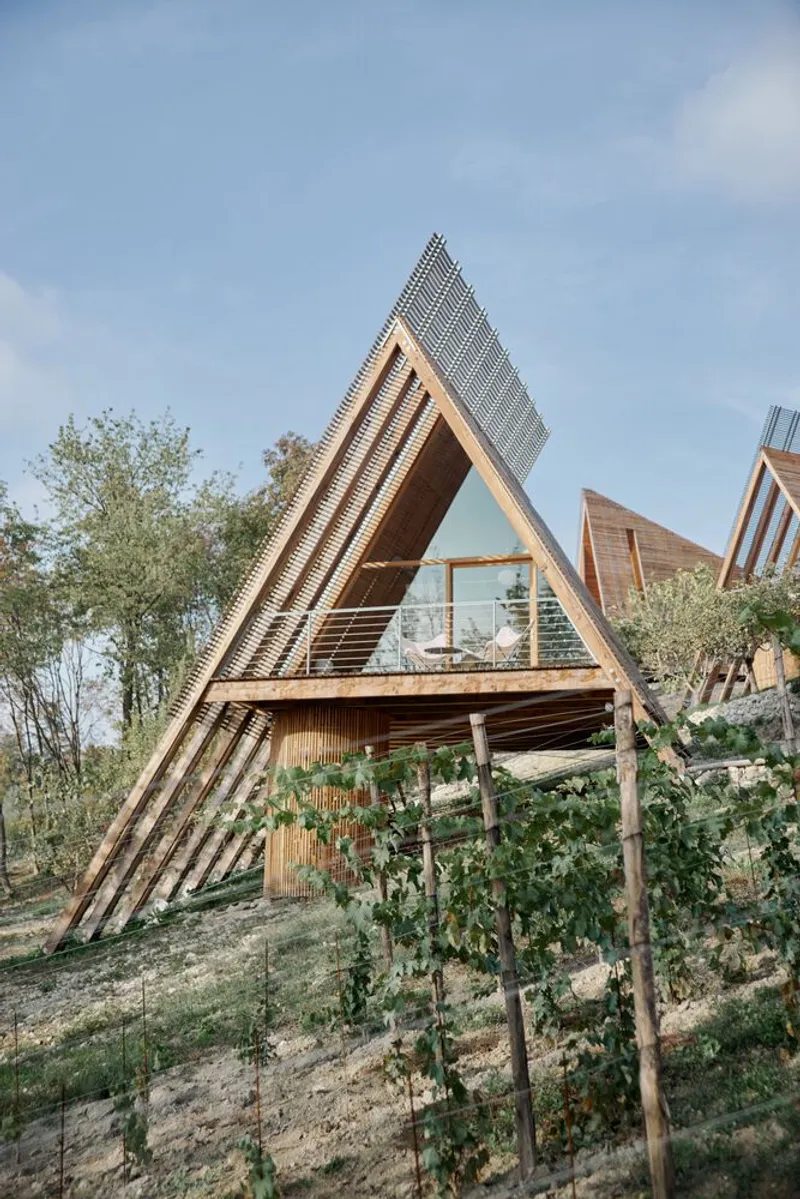
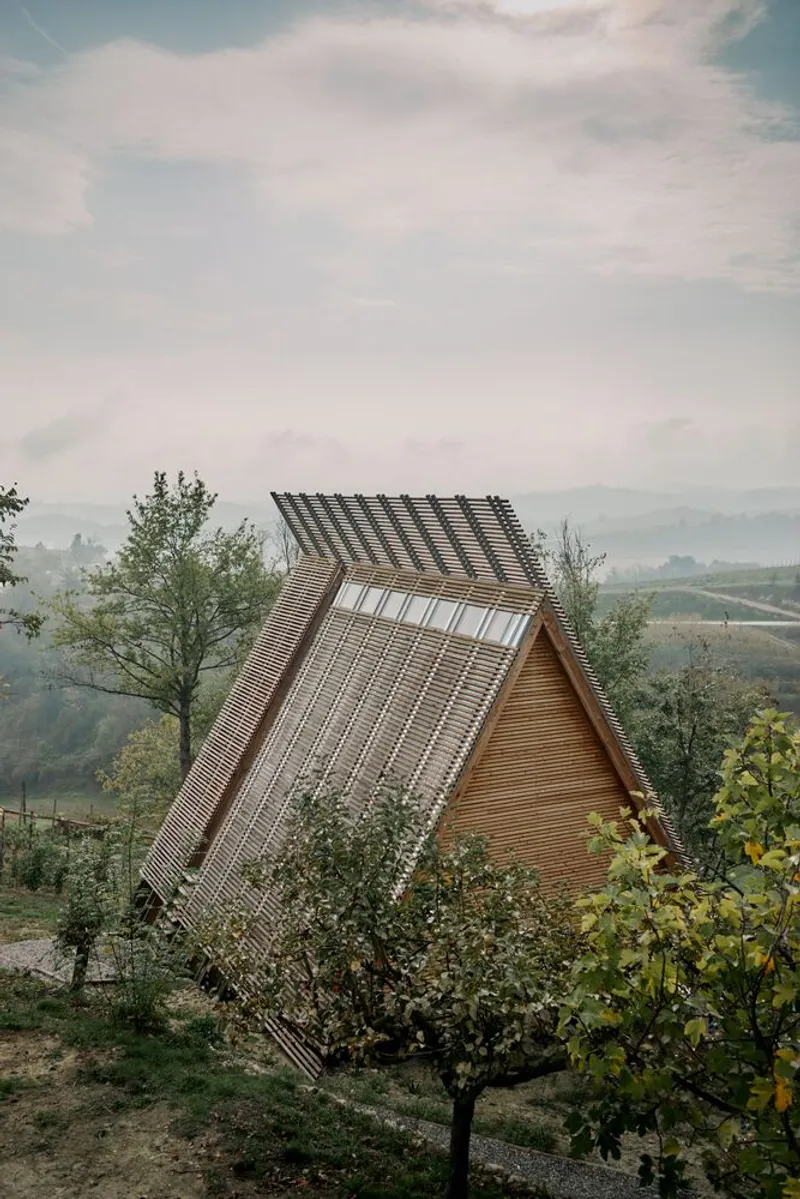
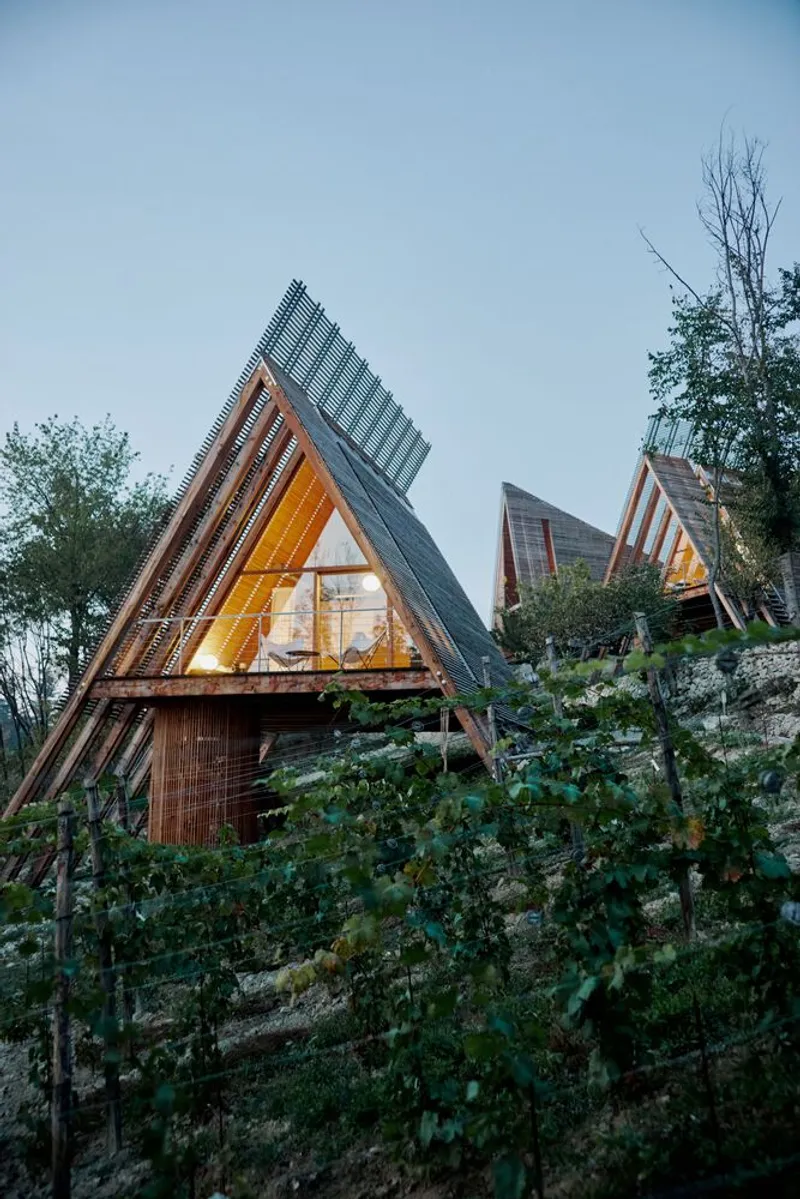
The LILELO project stands as a testament to the innovative spirit of Atelier LAVIT, an architecture studio that has long championed the integration of environmental consciousness with architectural beauty. Inspired by the simplicity and functionality of traditional haystacks, the project comprises four independent cabins, each a beacon of eco-friendly design amidst the natural splendor of Italy's Monferrato region.
A Closer Look at the Eco-Friendly Cabins
Sustainable Materials and Design
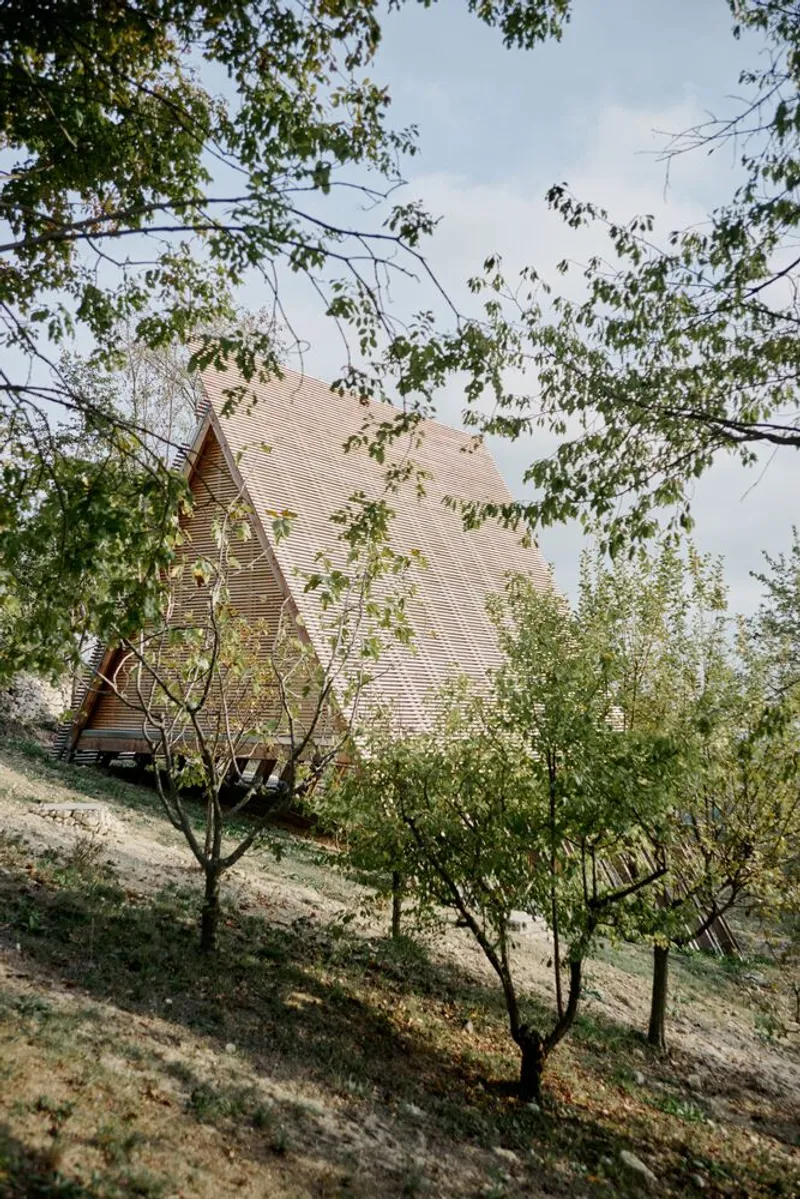
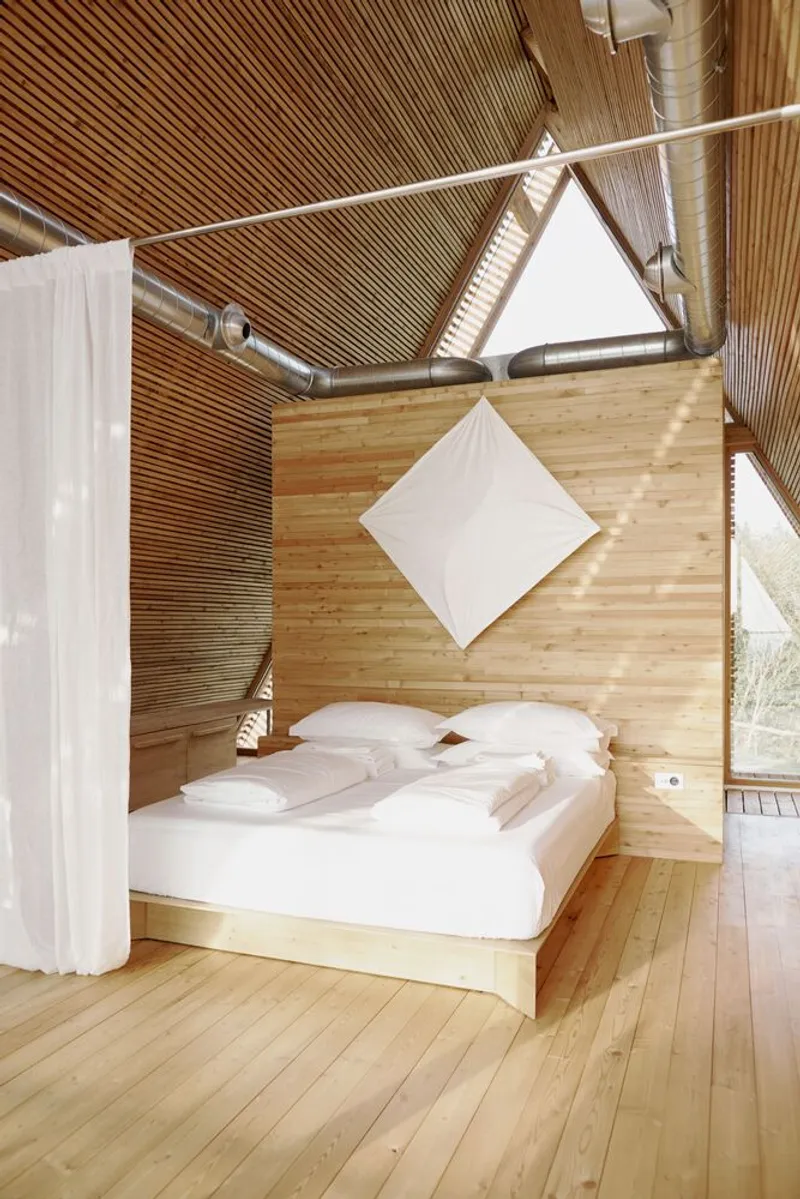
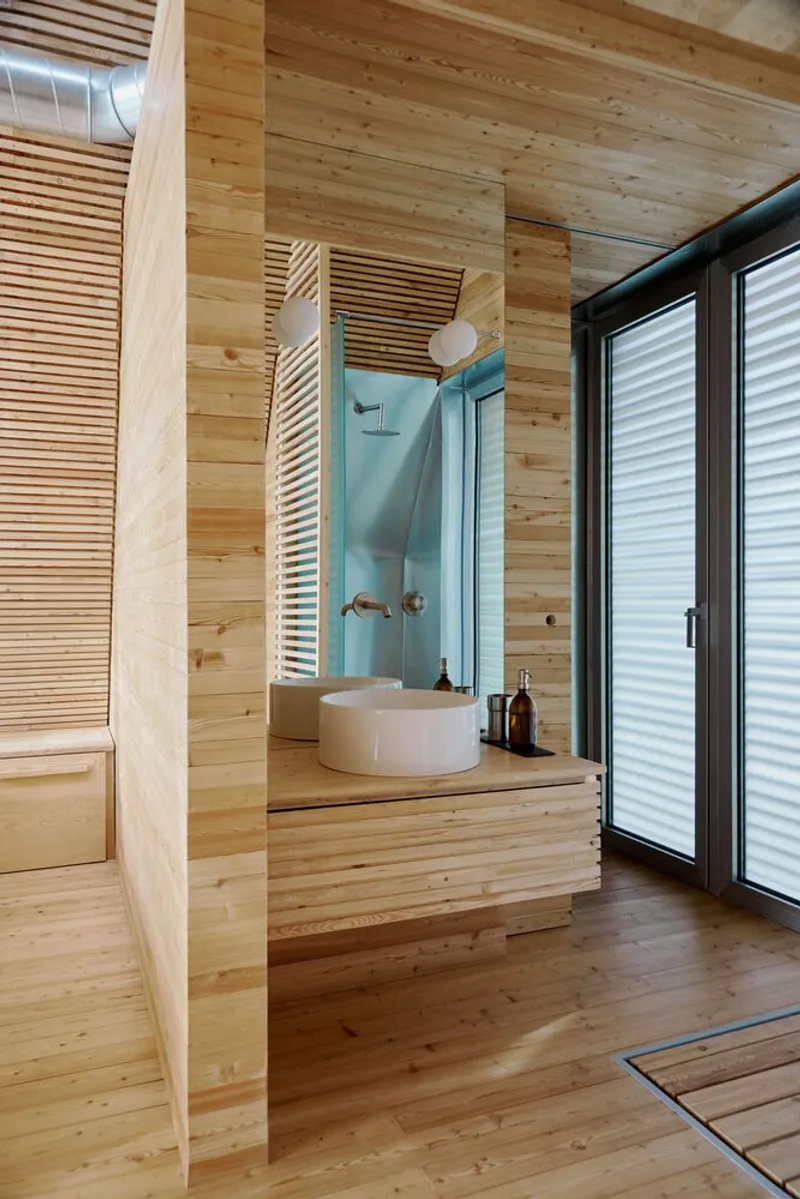
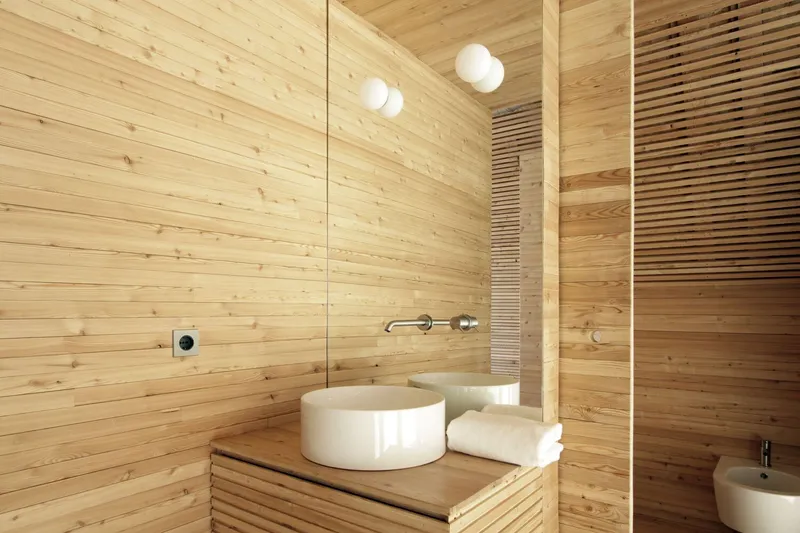
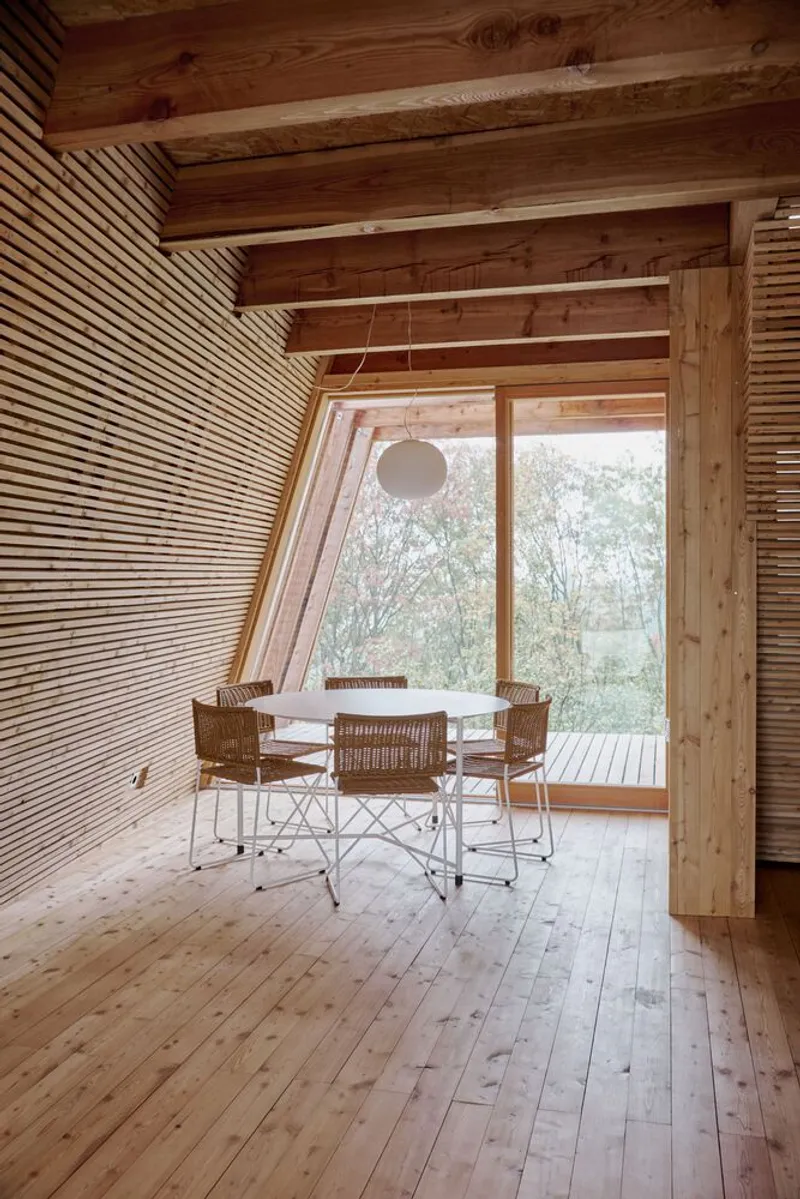
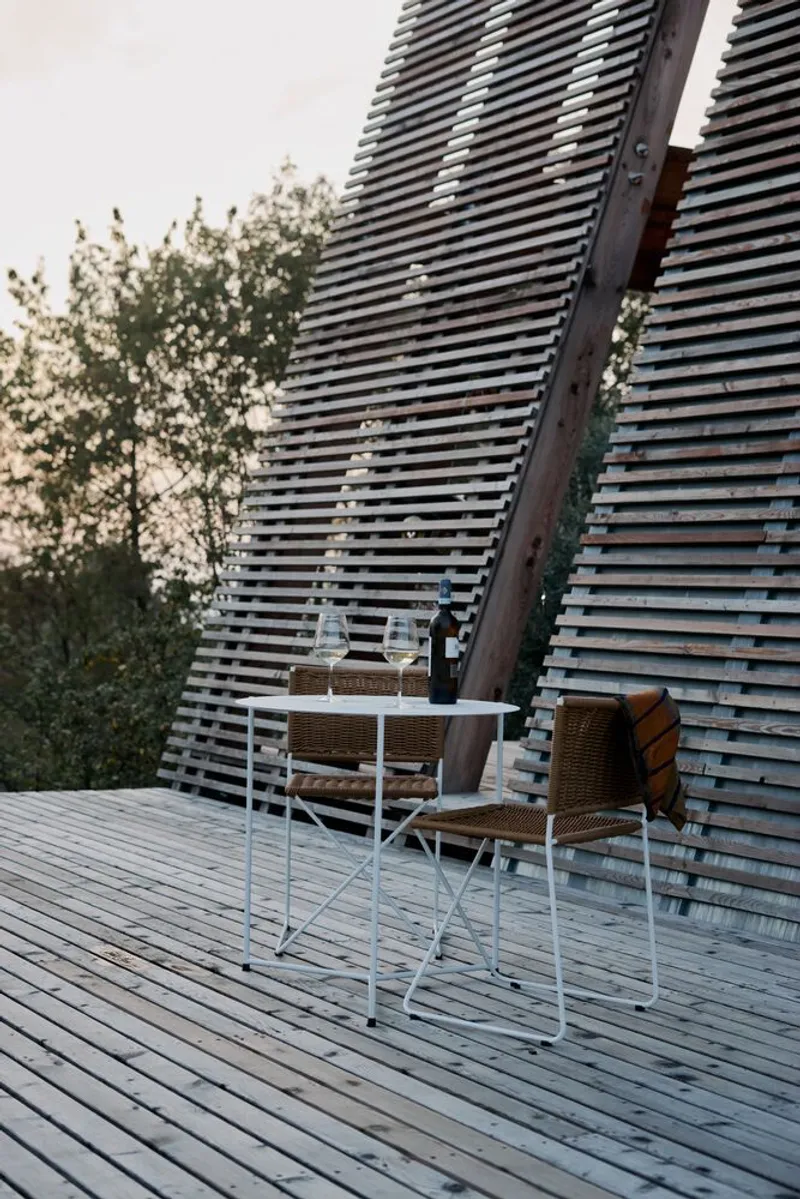
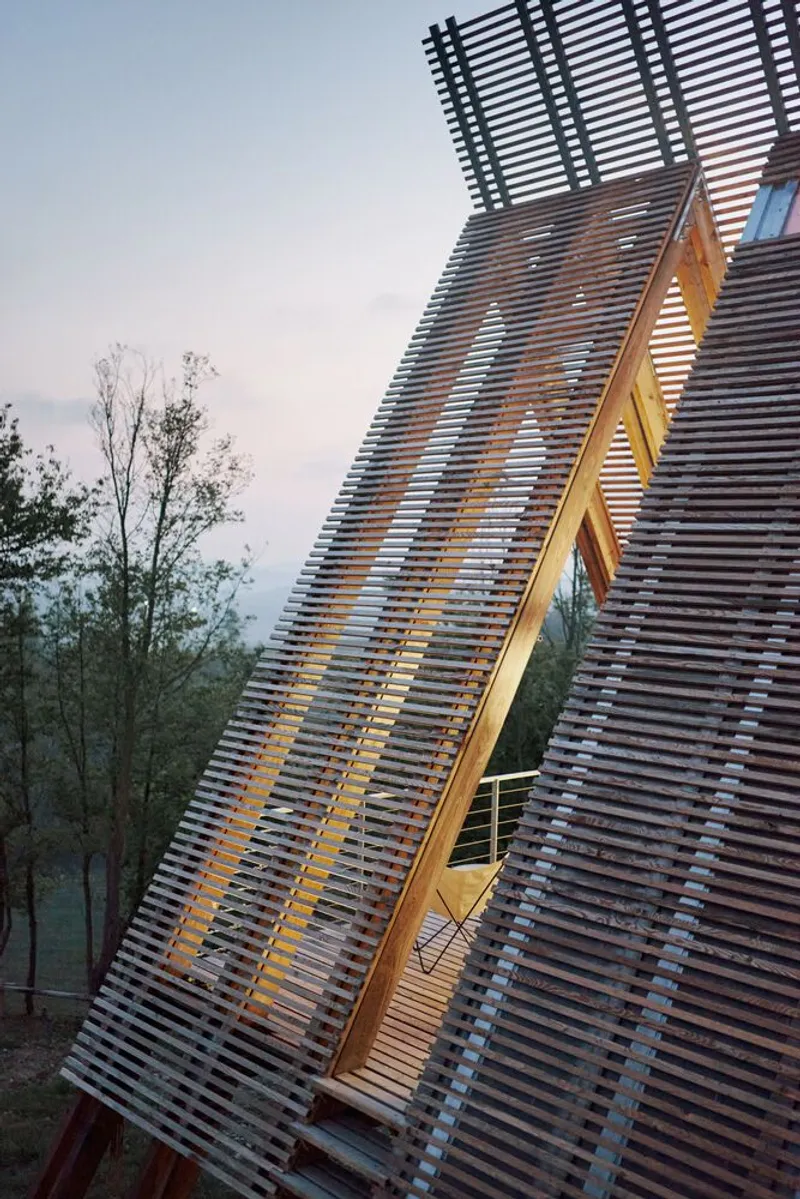
Crafted from natural and eco-compatible materials, the cabins are a reflection of a commitment to sustainability. The use of larch wood, treated only with natural oils, ensures that each structure not only blends seamlessly with its surroundings but also ages gracefully, its character deepening over time.
Innovative Construction for Energy Efficiency
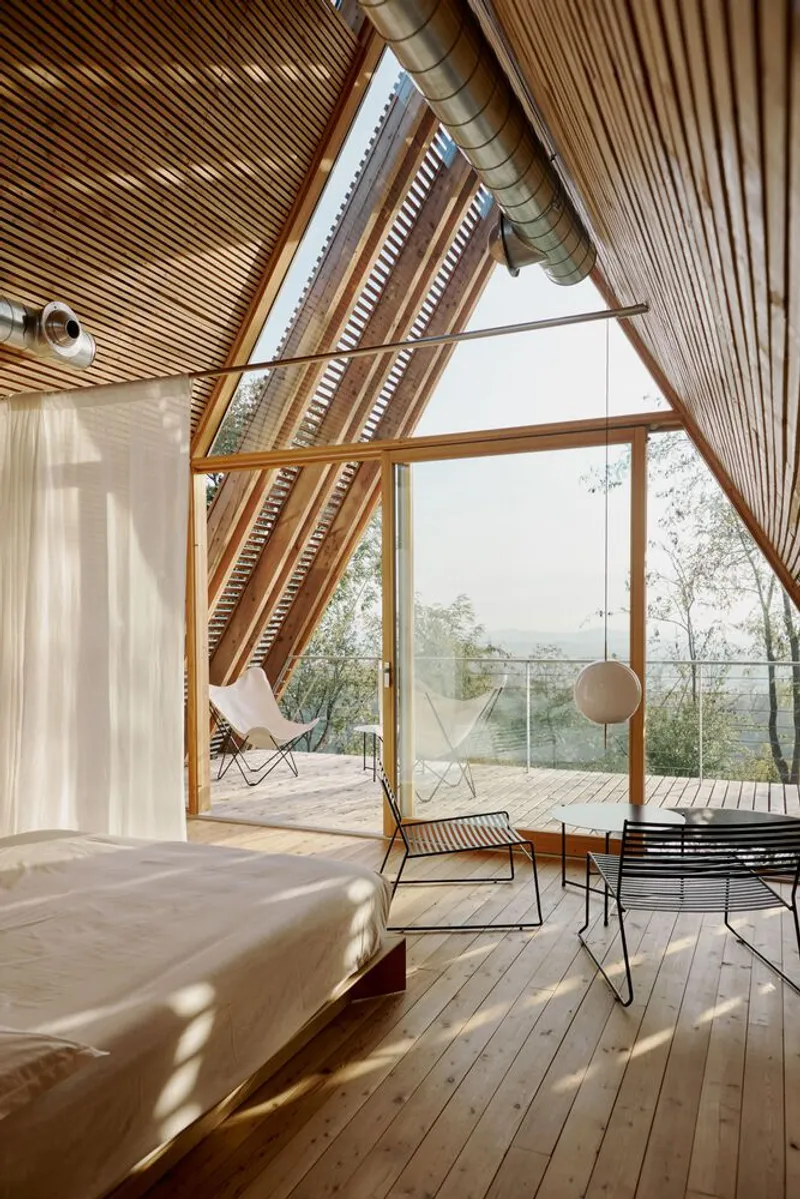
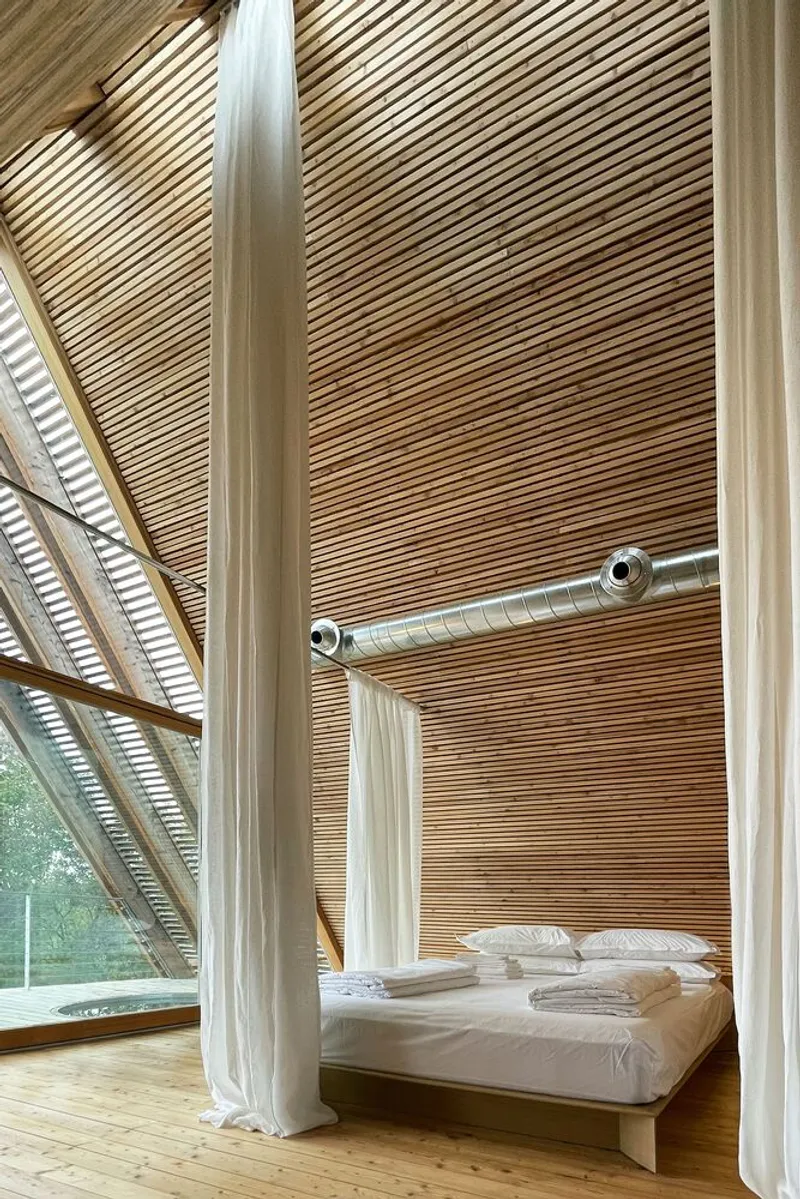
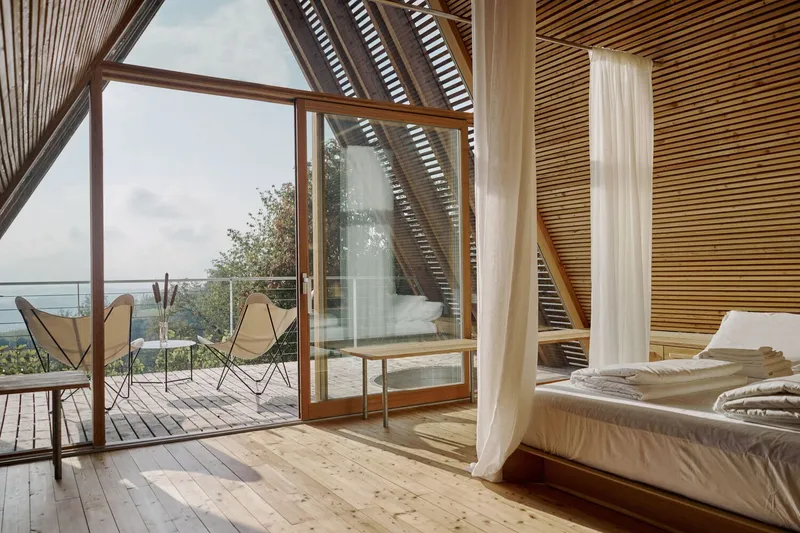
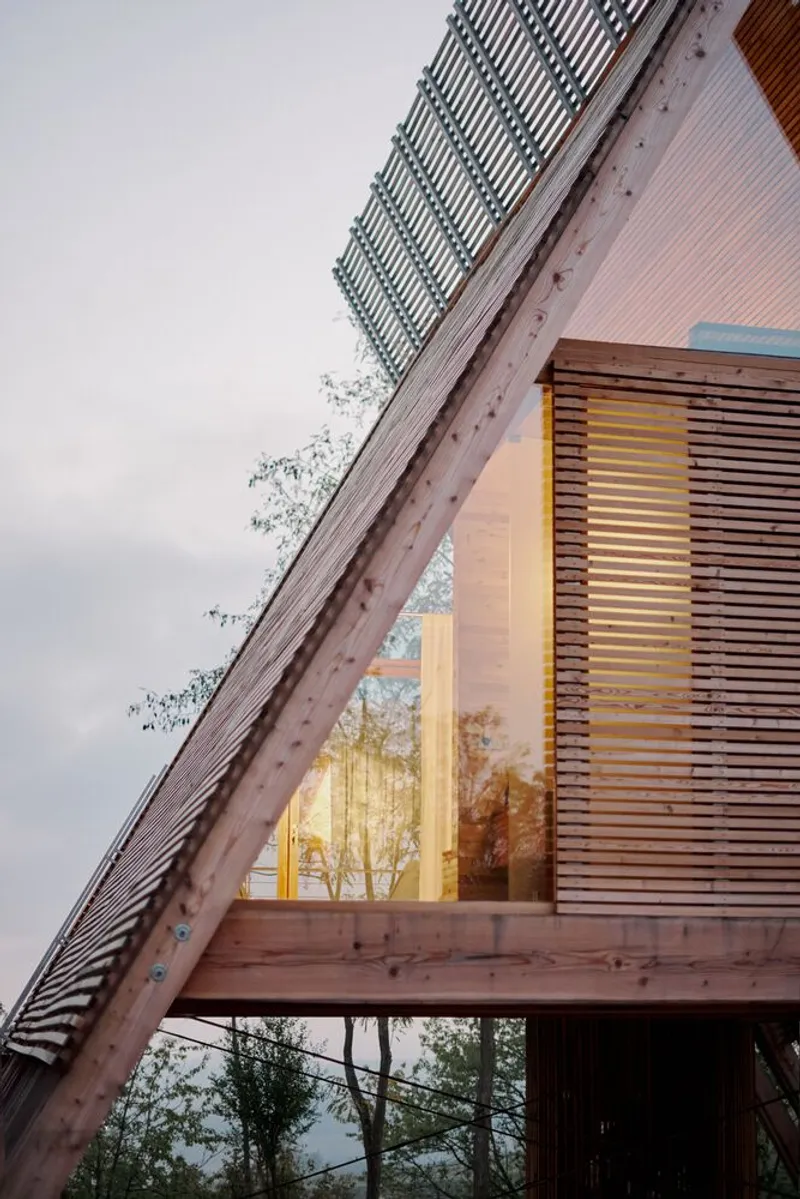
Raised off the ground to adapt to the sloping terrain, the cabins' construction techniques emphasize energy efficiency and minimal environmental impact. The A-shaped roof, with its fully glazed triangular elevations, serves multiple functions—it is a wall, a window, and a testament to the possibility of avoiding standardization even when using prefabricated elements.
Inside the Eco-Friendly Cabins: A Haven of Light and Space
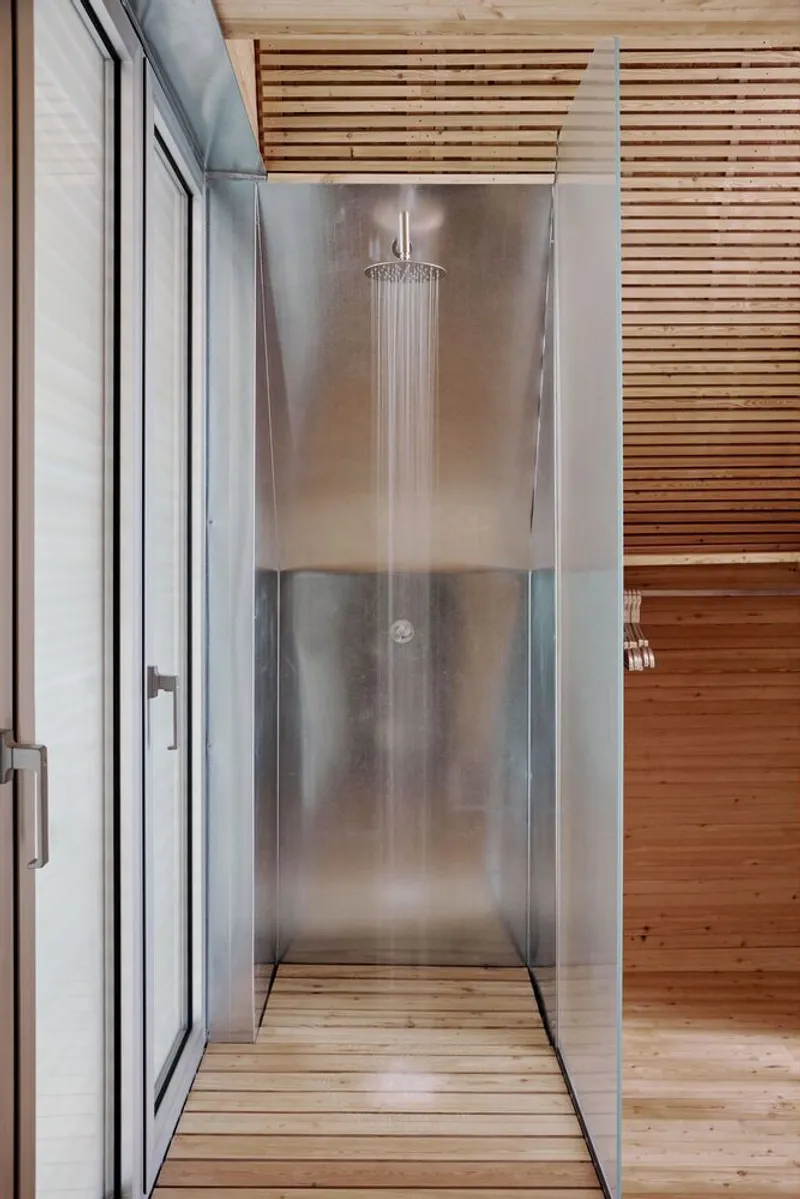
The interior design of the cabins is a masterclass in the use of space and light. With a layout that flows seamlessly from the breakfast nook to the sleeping area and then to the bathroom, the cabins offer a refuge that is both private and inviting. The choice of thin windows integrates the structure into the wooden framework, allowing light to flood in and ensuring that the boundary between inside and out is effortlessly blurred.
The Heart of LILELO: Community and Connection
The fourth cabin, designed as a common space, embodies the ethos of community and connection. Featuring a large kitchen and an outdoor area, it is conceived as a place for guests to come together, share experiences, and create memories.
H1: LILELO and the Future of Eco-Friendly Travel
The LILELO project is more than just an eco-hotel; it is a blueprint for the future of travel, where luxury and sustainability are not mutually exclusive but are intertwined in the fabric of the experience. Atelier LAVIT's creation is a reminder of the possibilities that emerge when architecture respects and reflects the natural world.
As we move forward, the LILELO project stands as a beacon of innovation in eco-friendly cabins, showcasing how sustainable practices can lead to the creation of spaces that not only provide refuge and relaxation but also contribute to the conservation of our planet. In embracing the principles of sustainable design, LILELO offers a glimpse into a future where architecture and nature exist in perfect harmony.
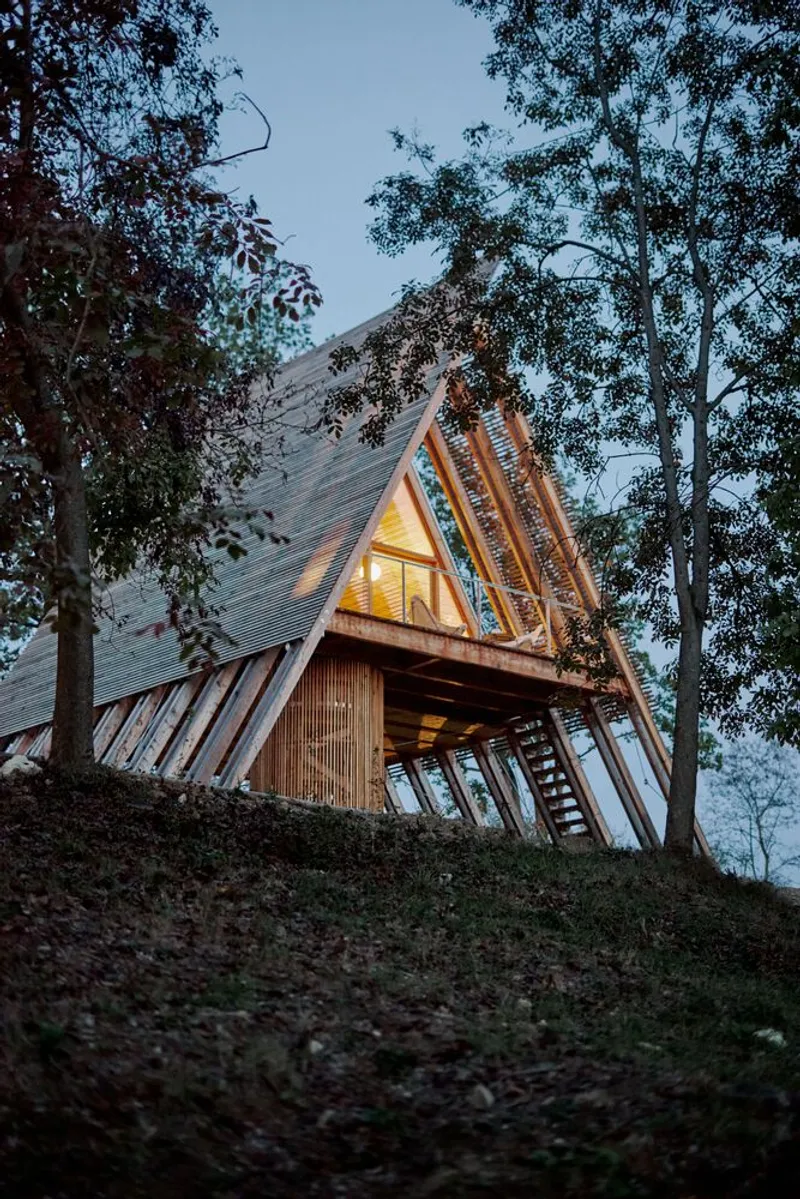
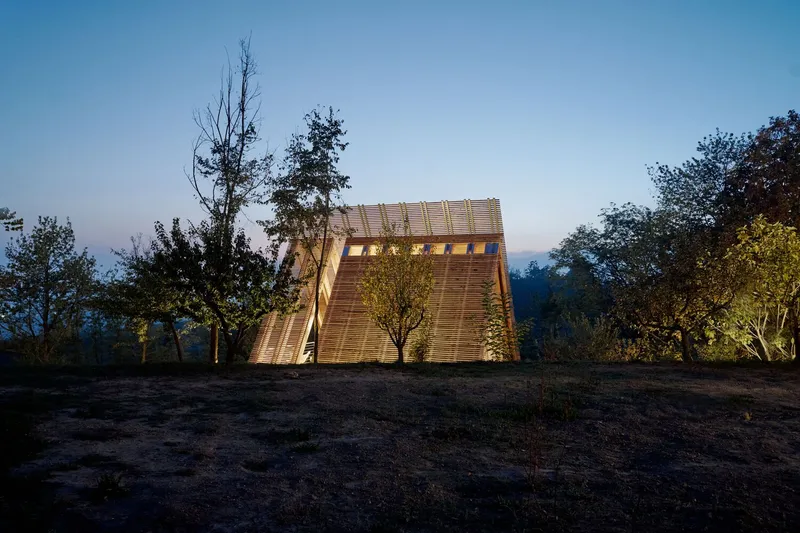
All photographs are work of Silvia Lavit




Popular Articles
Popular articles from the community


Riyadh For All: Intergenerational Urban Design for Active Aging in Rabat
Riyadh For All reimagines urban design in Rabat with intergenerational co-living, adaptive courtyards, and Moroccan cultural exchange today.

Conexión: Biophilic Design Reimagines High-Rise Living in Hong Kong
Conexión reimagines high-rise living in Hong Kong through biophilic design, green facades, shared spaces, daylight, water and nature within.

Lunar Spiral: Space Architecture Shaped by the Mathematics of the Universe
Lunar Spiral reimagines space architecture through Fibonacci geometry, lunar regolith, levitating habitats, and self-sustaining Moon living.

The Ocean Hive: Sustainable Architecture for a Self-Sufficient Civilization at Sea
The Ocean Hive imagines sustainable architecture at sea, where modular habitats, algae, wave power and ocean waste sustain a growing colony.


Similar Reads
You might also enjoy these articles

FAMM Arquitectura Organizes Ten Villas Around Courtyards and Jungle in Nosara, Costa Rica
El Molino pairs two elongated volumes with deep overhangs and timber louvers to build a compact coastal community five minutes from the beach.
Oscar Niemeyer's Ibirapuera Park Pavilions Define São Paulo's Cultural Identity in Concrete and Curve
A constellation of modernist volumes set within São Paulo's most important urban park, conceived for the city's 400th anniversary in 1954.

How Henri Picq's 1889 Paris Pavilion Traveled 11,000 Kilometers to Become Santiago's Artequín Museum
A prefabricated iron and glass pavilion built for the Paris Universal Exposition found a second life as a children's art museum in Chile.
Sanjay Puri Architects Wraps a Jaipur Office Tower in Capsule-Shaped Green Buffers
A nine-level climate-responsive workplace near Jaipur Airport uses stacked planter terraces and aluminium screens to fight 40°C heat.


Explore Hospitality Building Competitions
Discover active competitions in this discipline



Challenge to reimagine the Iron Throne


Photograph architecture without architects


Illustrate the lost glory of Angkor Wat - Render Challenge


Design challenge to reuse E-waste
Comments (0)
Please login or sign up to add comments
No comments yet. Be the first to comment!