

Maison KN by Nghia-Architect: Sustainable Urban Living in Hanoi
Maison KN by Nghia-Architect is a sustainable, inward-focused Hanoi residence with rooftop garden, natural ventilation, privacy, and innovative urban design.


Maison KN, designed by Nghia-Architect, is a distinctive private residence nestled in the historic core of Hanoi. Located in one of the city’s densest urban zones, an area heavily reconstructed after the Vietnam War, the house rises amidst tightly packed alleyways and narrow passages that historically suffered from poor natural light and ventilation. This compact yet thoughtful design responds to the challenges of urban density while emphasizing privacy, comfort, and sustainability.
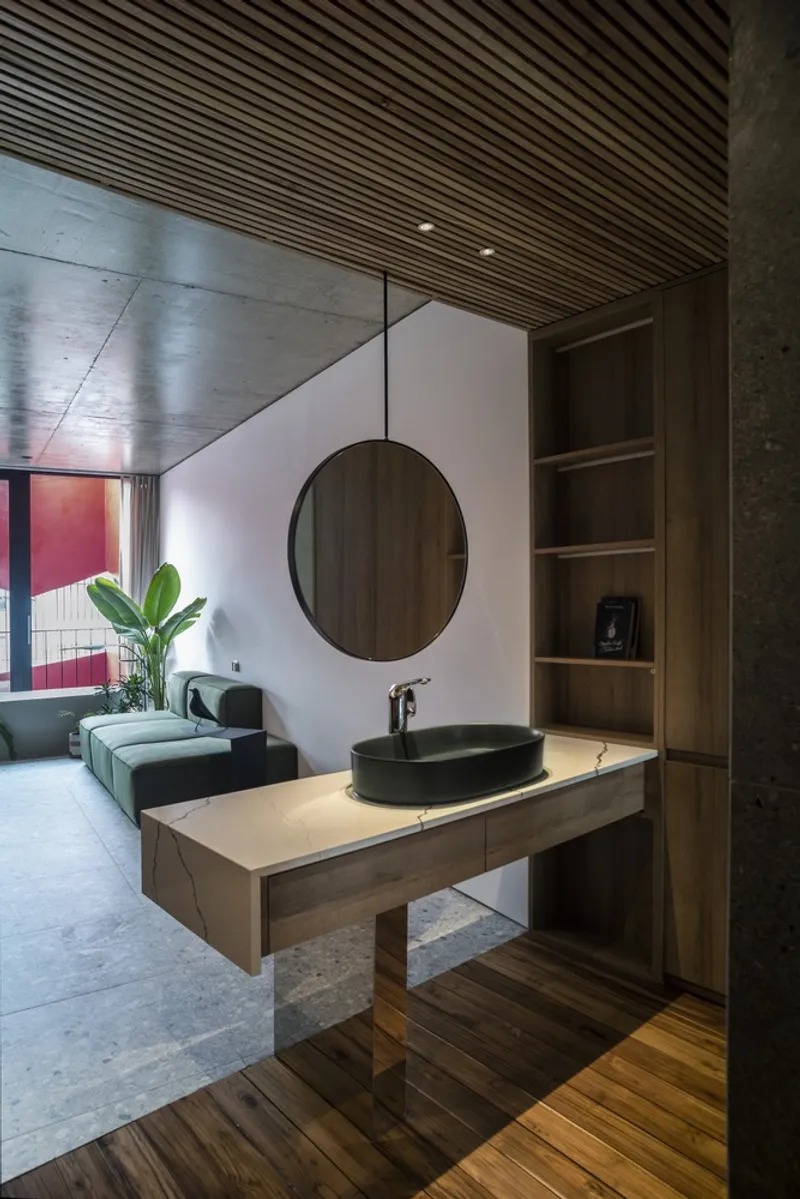
Commissioned for the two grown children of a longstanding Hanoi family, Maison KN addresses the modern demands of semi-autonomous living. With remote work becoming essential, the residence was conceived as a future-proof home capable of supporting two potential small families while maintaining strong family connections. This balance between proximity and independence shapes the project’s unique character.
Design Philosophy: Privacy, Openness, and Sustainability
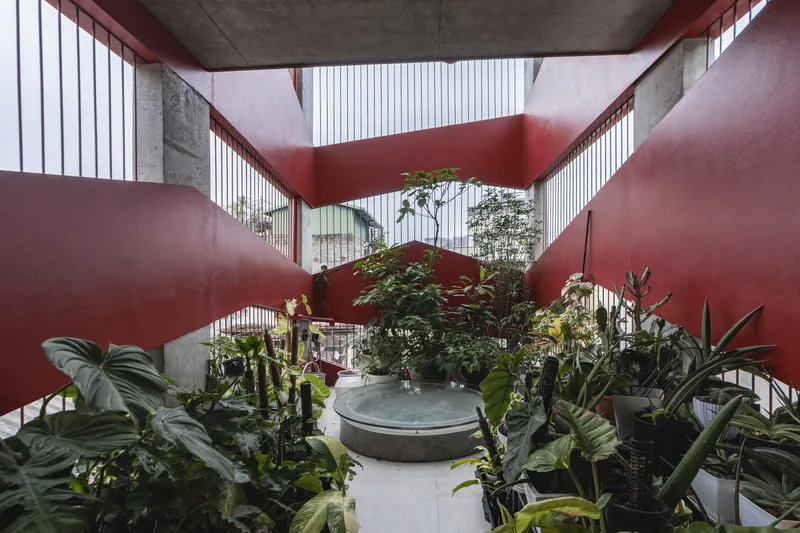
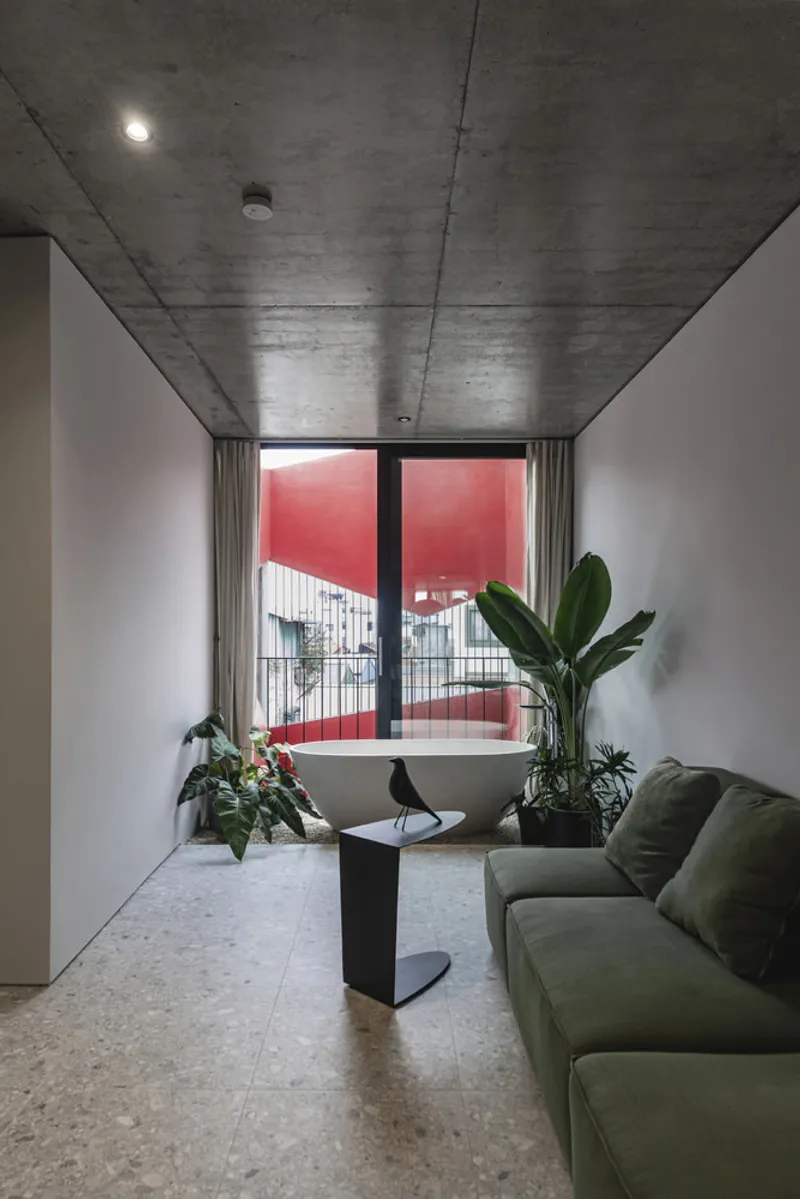
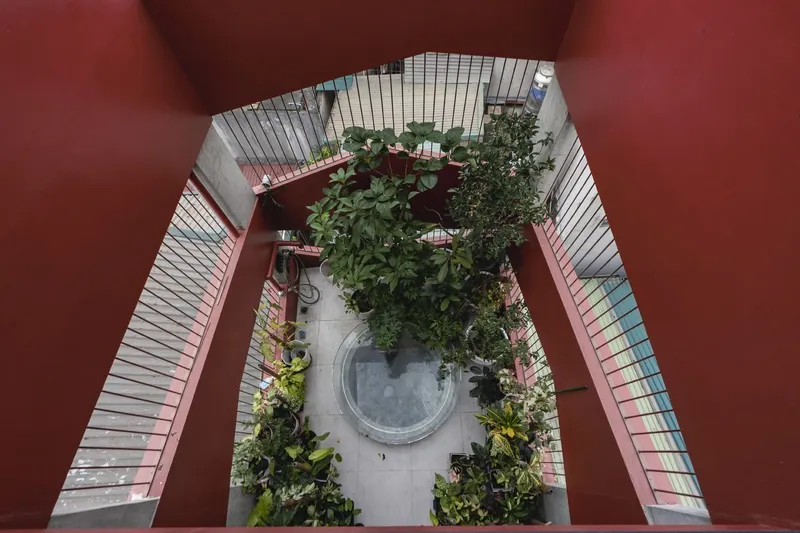
The architectural brief emphasized an inward-focused design, creating a self-contained home that harmoniously blends living, working, and leisure spaces. A central feature of Maison KN is its rooftop garden on the third floor, which functions as both an ecological sanctuary and a buffer zone. This space provides natural ventilation, ensures privacy from neighboring houses, and fosters a microclimate suitable for growing diverse flora. The garden exemplifies urban sustainability by utilizing rainwater collection, organic fertilizers, and a circulatory plant biosystem, creating a self-sustaining mini-ecosystem.

Façade and Spatial Identity
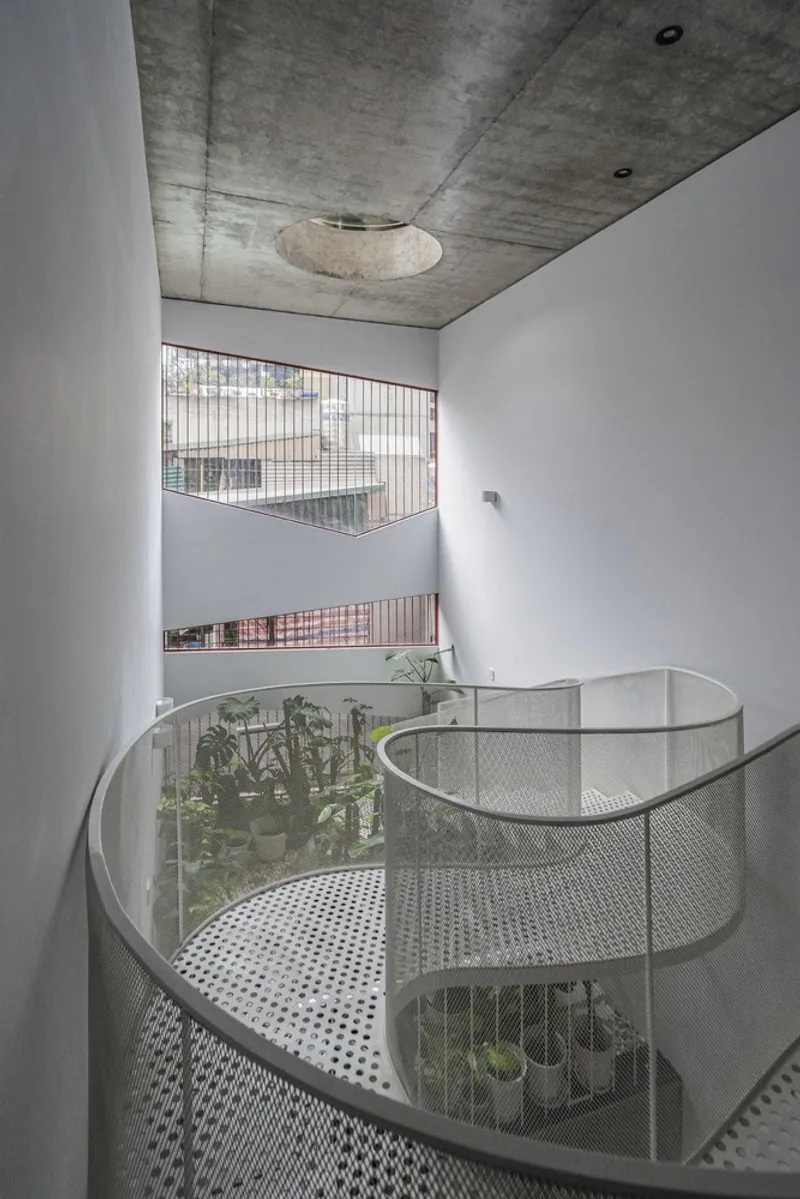
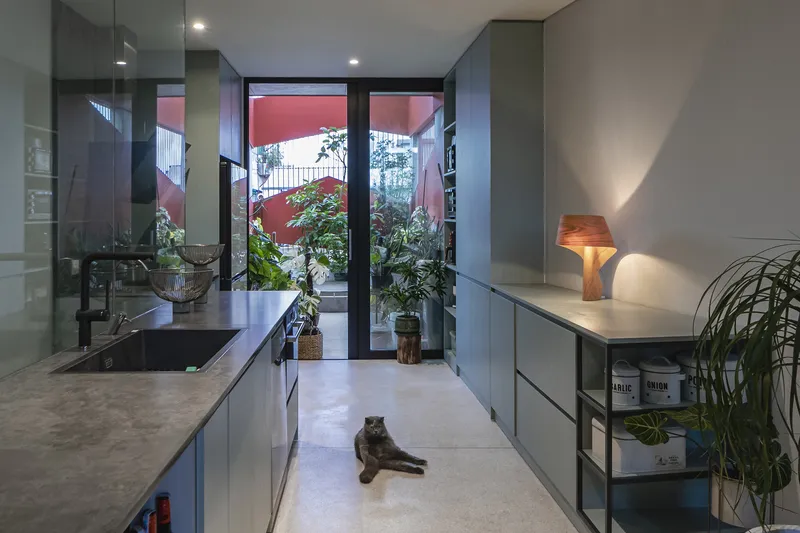
Maison KN’s façade is a direct reflection of its chaotic urban context. Observing the surrounding rooftops from above inspired the architects to incorporate randomized solid and void patterns on the building’s exterior. This design strategy transforms the façade into a dynamic visual experience, creating unique framed views from each floor. Inside, these design choices frame the circulation paths, guiding natural light deep into the house, even in areas typically deprived of sunlight due to narrow frontage.
Innovative Interior Features
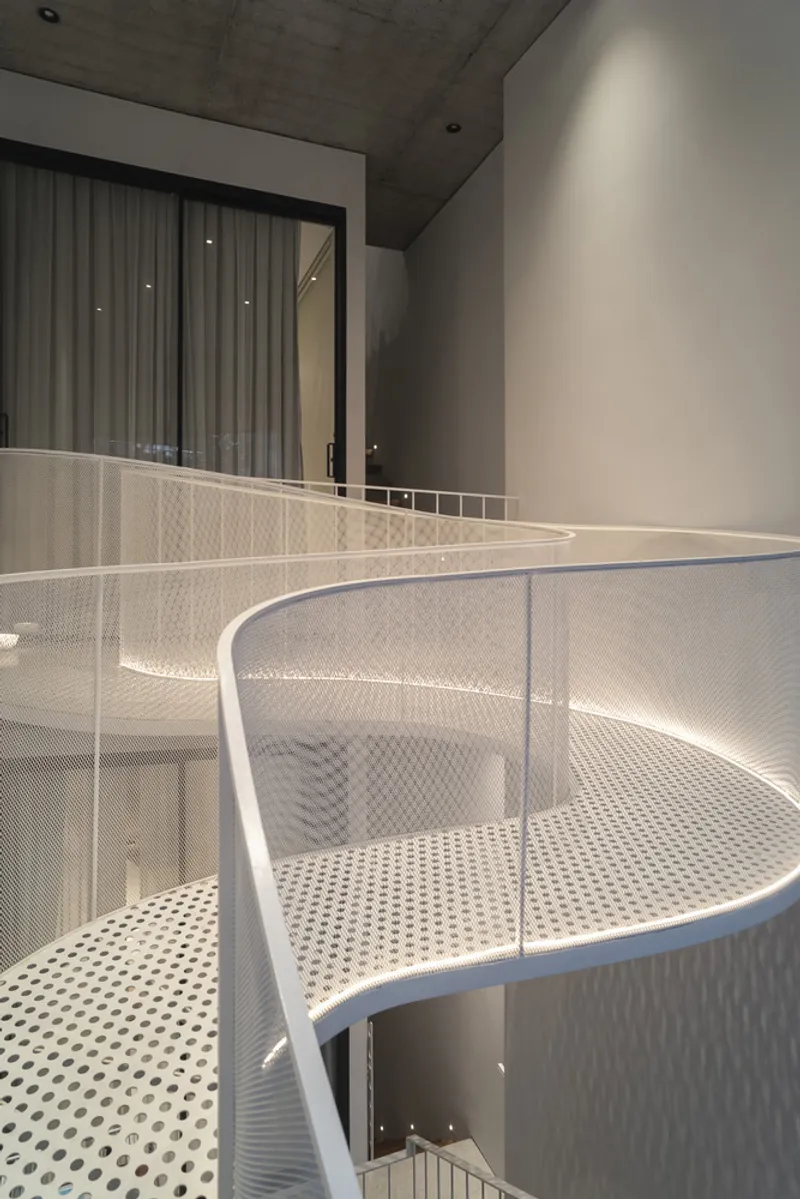
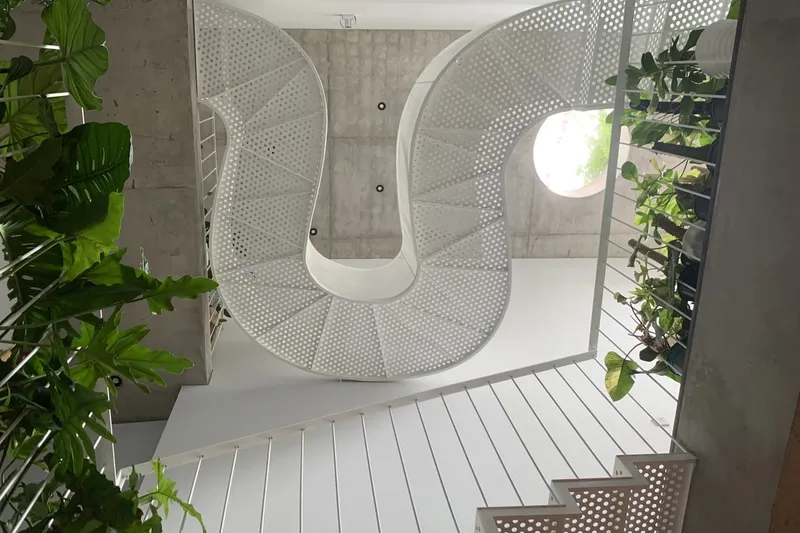
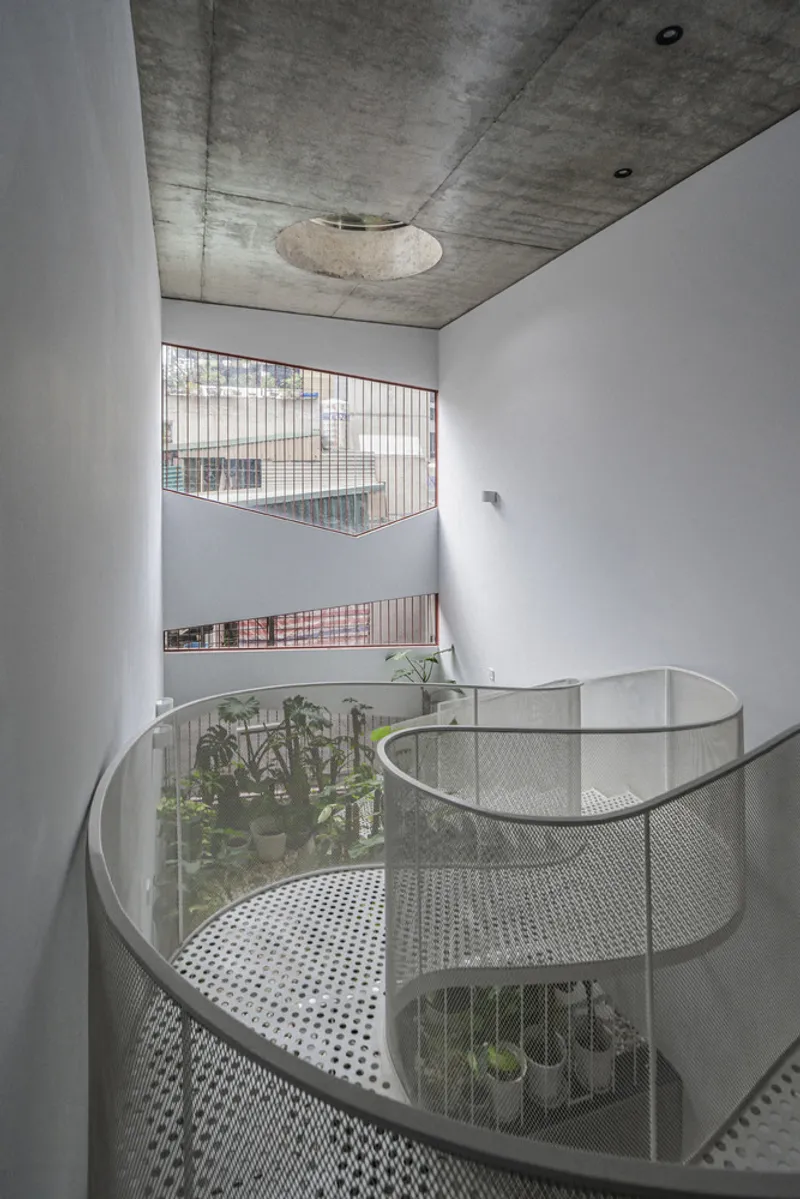
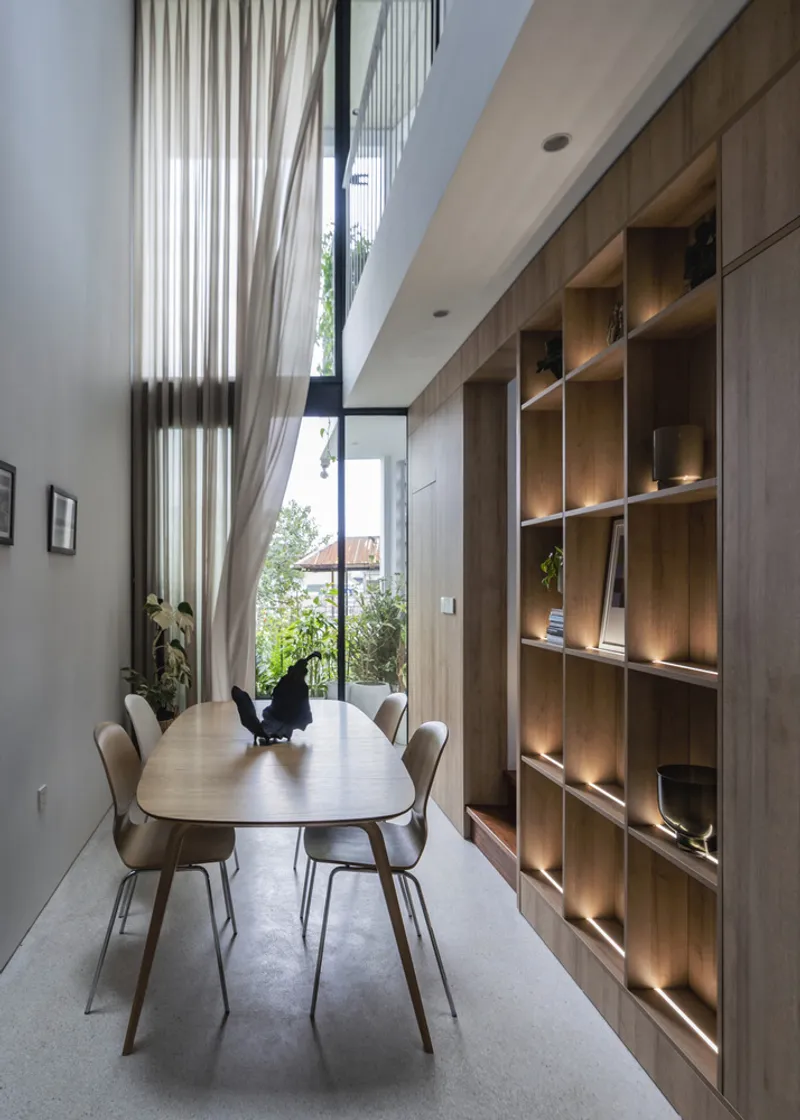
The house integrates a floating walkway that connects two main levels. Crafted from steel and perforated mesh, the walkway resembles a delicate silk ribbon, providing transparency and lightness. This architectural feature not only enhances interior fluidity but also channels daylight into the interior garden, creating a bright, airy environment that enhances the sense of openness.
Maison KN is an exemplary model of urban residential sustainability, combining innovative architecture, natural ventilation, green living, and adaptive design strategies. Every element, from interior circulation to rooftop gardening, reinforces a future-focused vision for Hanoi’s dense urban environment.


All photographs are works of
Nguyen Viet Tien, Nguyen Tuan Nghia


Popular Articles
Popular articles from the community


FCC Arquitectura Expands a Portuguese Granite House with a Board-Marked Concrete Wing
In Portugal, JV House pairs a cleaned-up whitewashed and granite dwelling with a timber-shuttered concrete extension, courtyards and a garden pool.


Opera on the Sea: Driftwood Logic Shapes a Timber Opera House on Estonia's Coast
Trevor Orgill's opera house translates the entangled drift of floating timber into a civic building where wood, water, and music converge.

Singing Woman: An Opera House That Performs Before the Curtain Rises
Ovidiu Cristian Pavel's conceptual opera house translates Estonia's choral identity into a sculpted waterfront landmark facing the Baltic Sea.

ETEH Reworks the Shared Spaces of São Domingos School in Brazil Around Timber, Color and Hanging Plants
At São Domingos School in Brazil, 436 m² of hall, refectory and library are recast with timber joinery, a yellow and blue code and trailing greenery.

Similar Reads
You might also enjoy these articles

Cube Design Draws an Ecological Corridor Between Two Shenzhen Hills with the Nankai Building
Beside Shenzhen's container docks, the Nankai Building pairs stacked balconies with a climbing green screen to connect two hillsides across its height.

Praksis A and Studio Sted Bend a Red Timber Cabin Across the Granite of Norway's Southern Coast
On the southern Norwegian coast, a 105 m² cabin follows the rock on slender posts, pairing red cladding outside with pine, brick and plywood within.

David Ortega Stacks a Two-Story Mexico City Penthouse Around a Steel Stair and a Pergola-Shaded Roof Terrace
In Colonia Roma, a 300 m² penthouse uses oak joinery, a planted steel stair and a slatted roof pergola to make a new-build apartment feel like a house.

PARALELA and LB2 Thread a Public Walkway Through the Base of a Las Condes Residential Tower
In Las Condes, Santiago, the Hamlet Building gives its fenceless ground floor to a 70-metre wooded passage linking two streets and the metro.

Explore Housing Competitions
Discover active competitions in this discipline

Challenge to reimagine the Iron Throne

Photograph architecture without architects

Illustrate the lost glory of Angkor Wat - Render Challenge

Design challenge to reuse E-waste
Comments (0)
Please login or sign up to add comments
No comments yet. Be the first to comment!