
Makizham Thottam House: A Sustainable Earthen Home in Udumalaipettai, India
Makizham Thottam House by Second Ground is a sustainable earthen home in Tamil Nadu, integrating courtyards, jack arch roofs, and natural light.


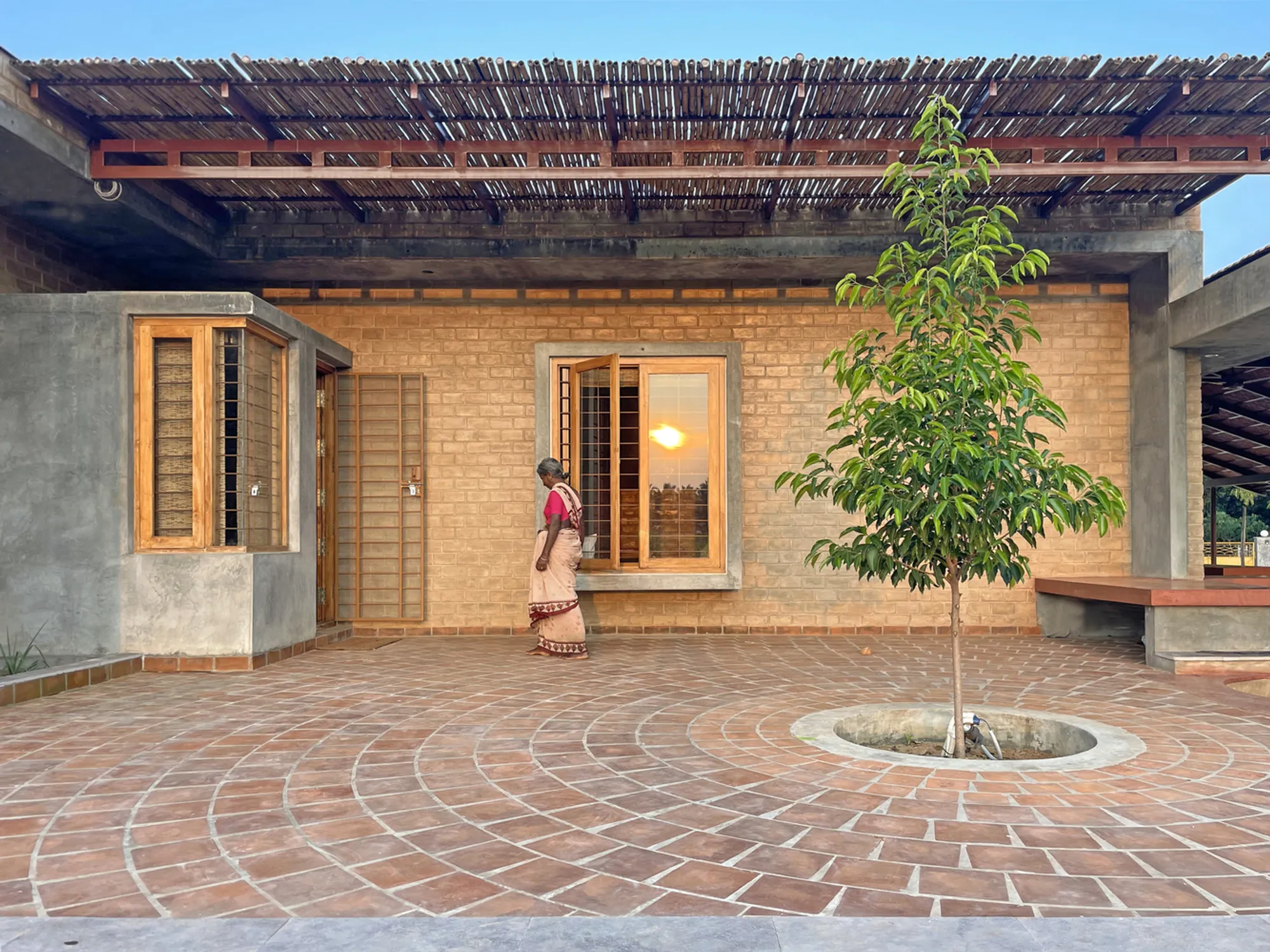
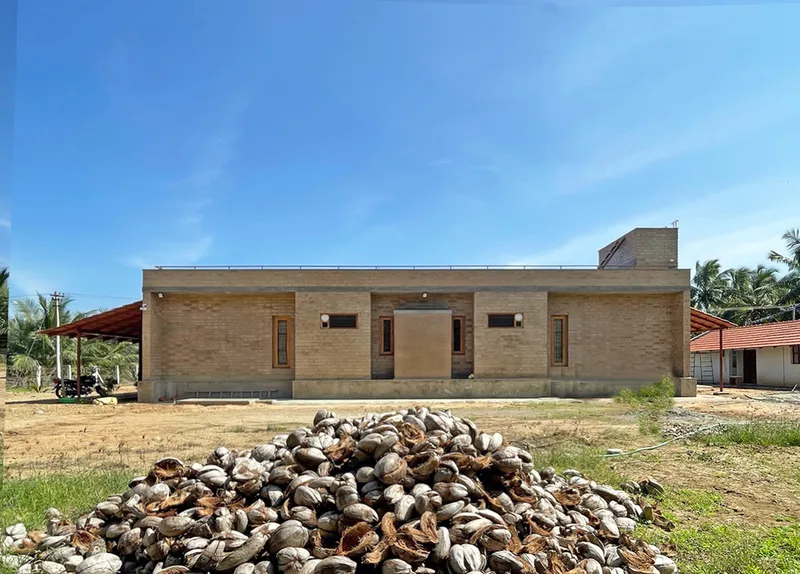
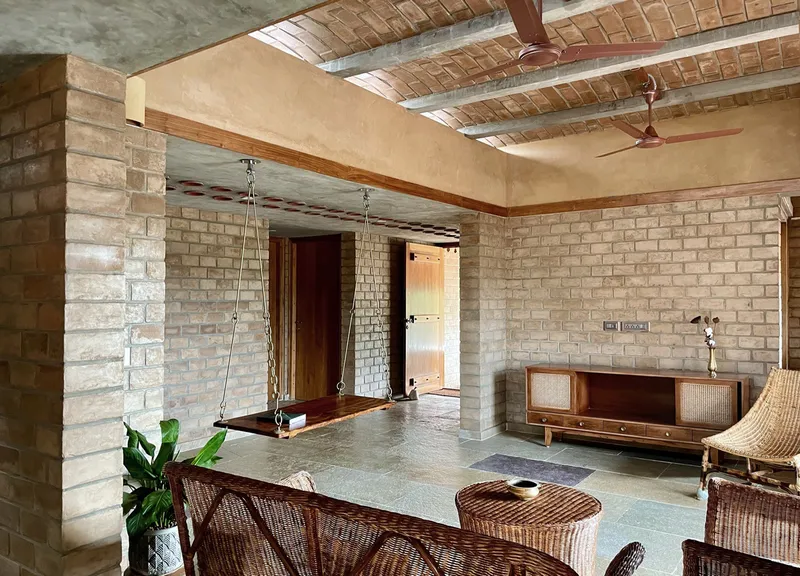
Nestled in the agrarian heartland of Tamil Nadu, Makizham Thottam House by Second Ground exemplifies a harmonious blend of traditional vernacular architecture and contemporary sustainable design. Completed in 2022, this 220 m² residence thoughtfully integrates the natural environment, minimal built fabric, and the local earth as a primary building material, creating a home that is deeply rooted in its landscape.
Site and Concept: Centered Around Nature
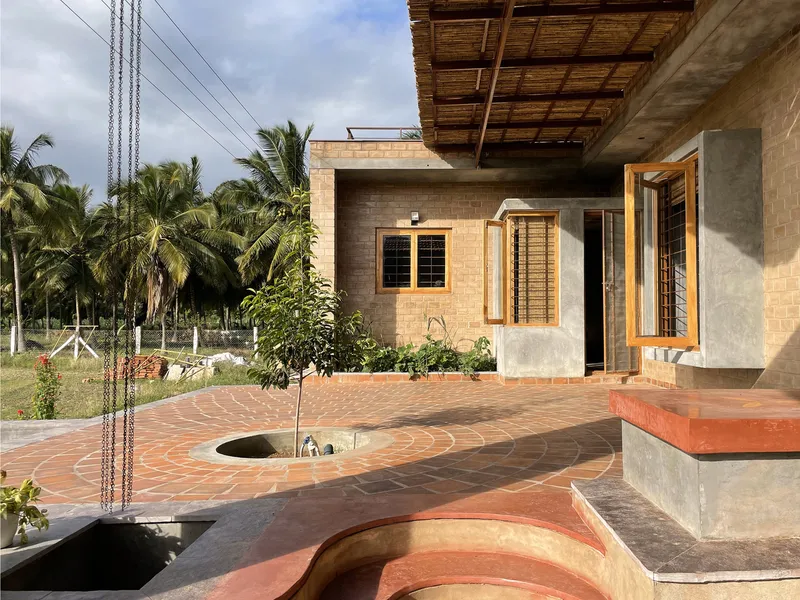
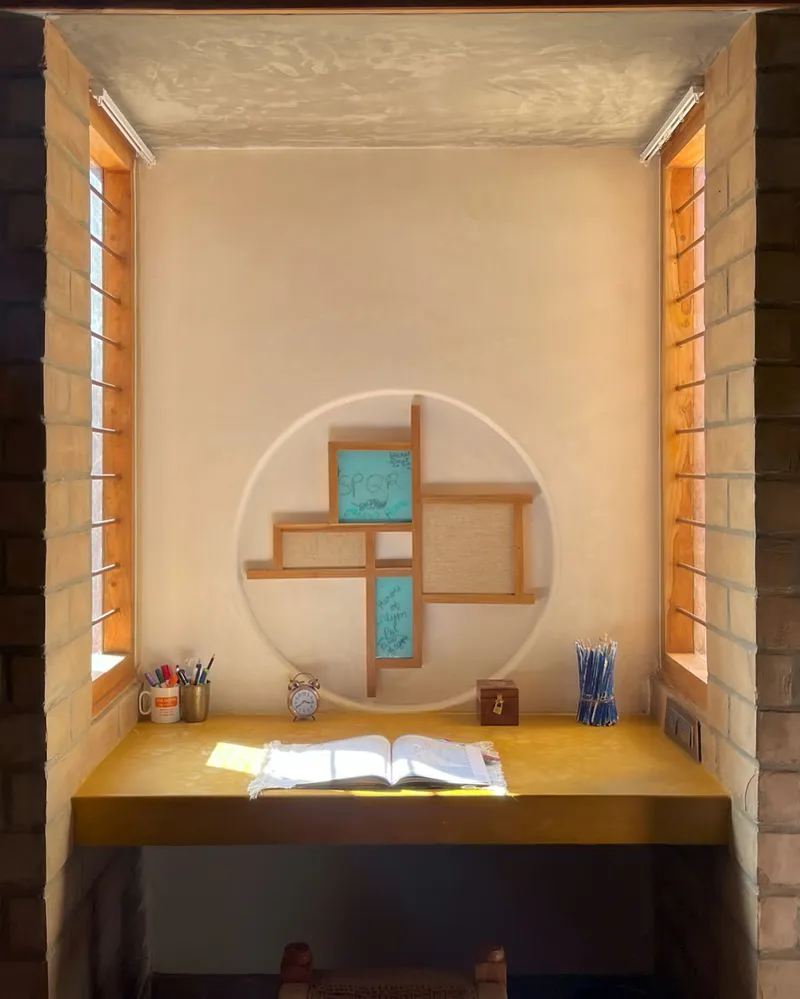
The site, surrounded by fertile farmland, called for a minimal environmental footprint. The architects prioritized reducing steel and cement usage, instead embracing earth-based construction for both walls and roofing. Central to the house is the Makizham tree, a pre-existing natural feature that dictated the spatial layout. From this nucleus, the house unfolds in concentric layers: the living, dining, and kitchen spaces form the primary layer, organized in an L-shaped configuration around a central courtyard. The dining area acts as a focal fulcrum, seamlessly connecting spaces while fostering interaction.
Spatial Flow and Courtyard Living
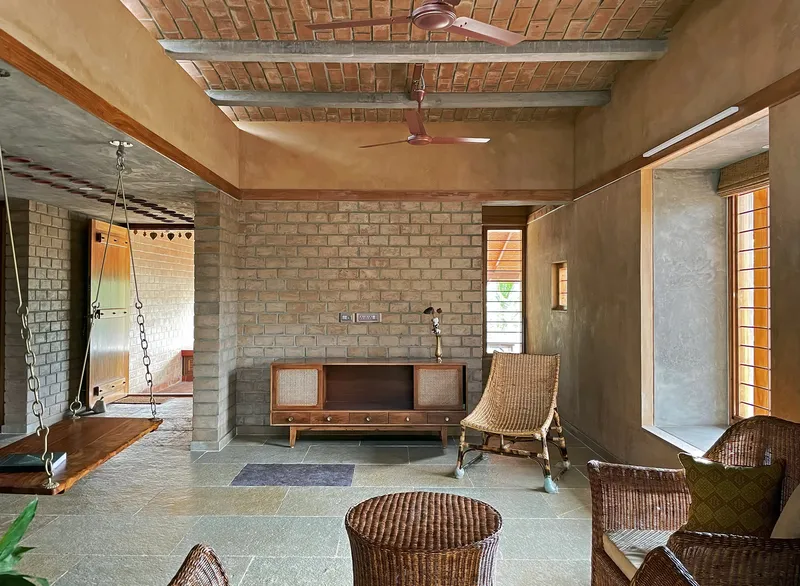
The design encourages fluid spatial experiences, with minimal barriers between areas. A corridor serves as a connective layer, guiding movement through the house while maintaining visual continuity. The private zones, including three bedrooms, are discreetly tucked along the western edge, ensuring both privacy and optimal solar orientation. This layered planning allows the home to respond naturally to daily rhythms, with sunlight strategically illuminating spaces in both morning and evening.
Earthen Construction and Innovative Roofing
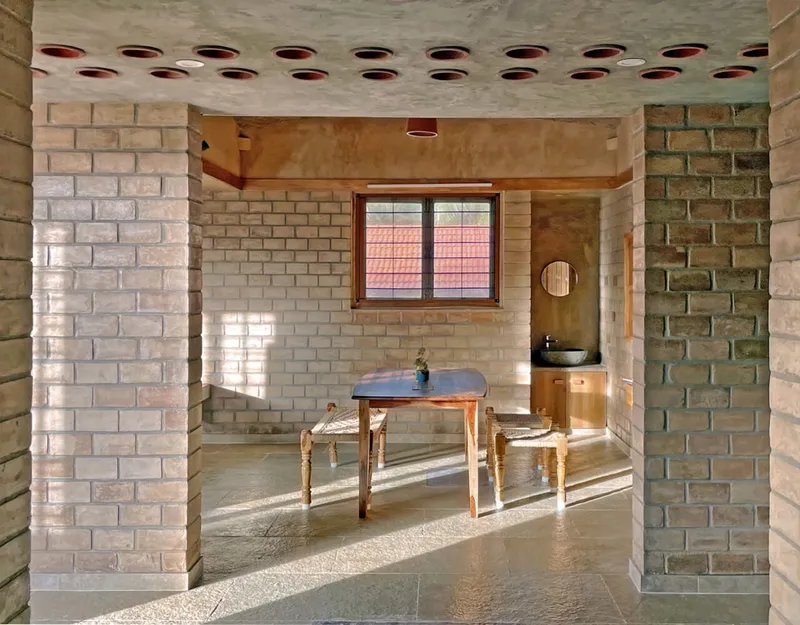
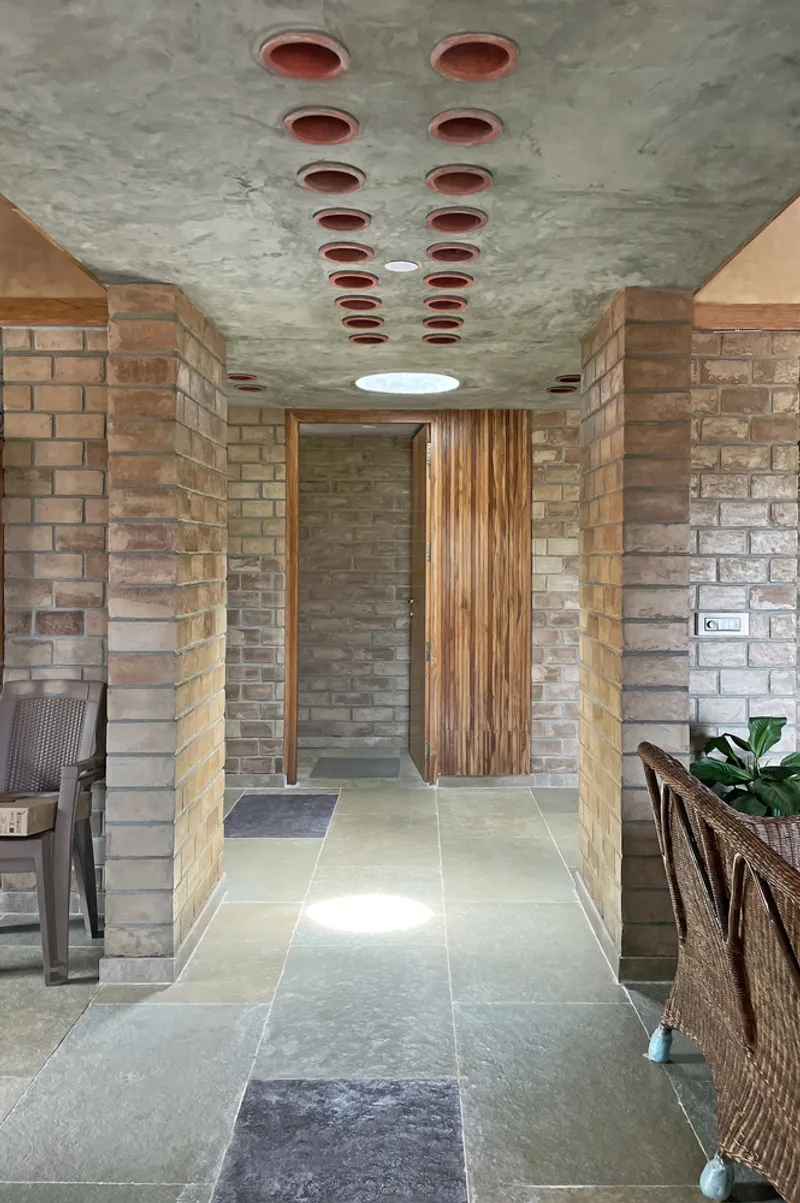
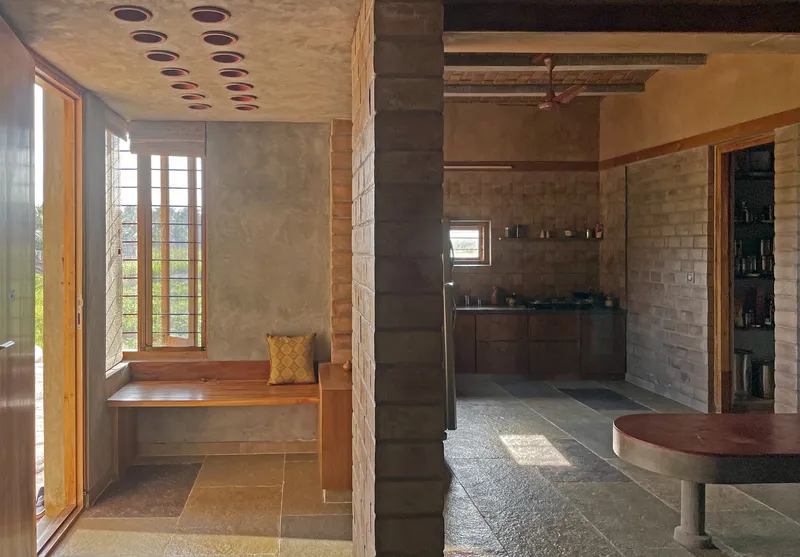
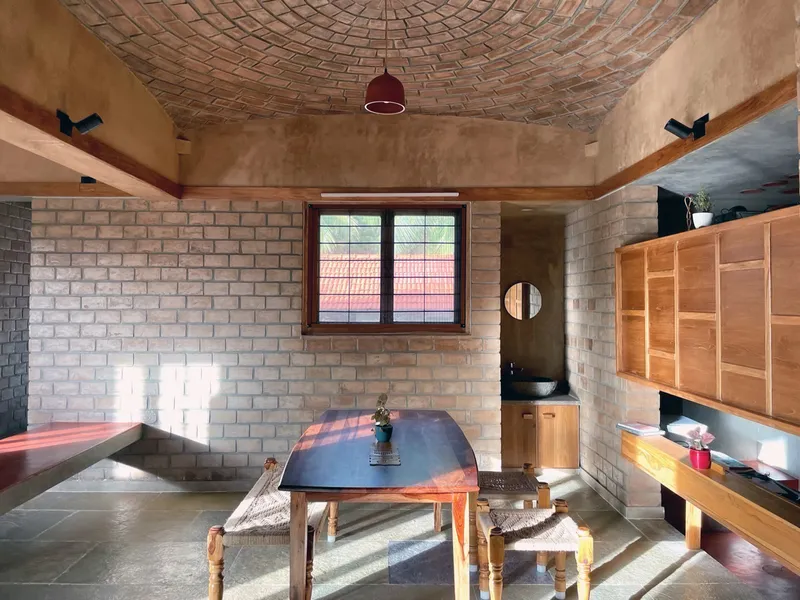
Makizham Thottam House employs compressed mud blocks for load-bearing walls, supporting precast jack arch roofs. These roofs, composed of precast beams and arches, were assembled on-site using a kit-of-parts approach, merging ancient roofing techniques with modern efficiency. Above the dining area, a mud brick dome creates a sculptural centerpiece, while the low-height corridor slabs allow sunlight to filter enchantingly through the arches, animating the living spaces throughout the day.
Natural Light, Ventilation, and Climate Response
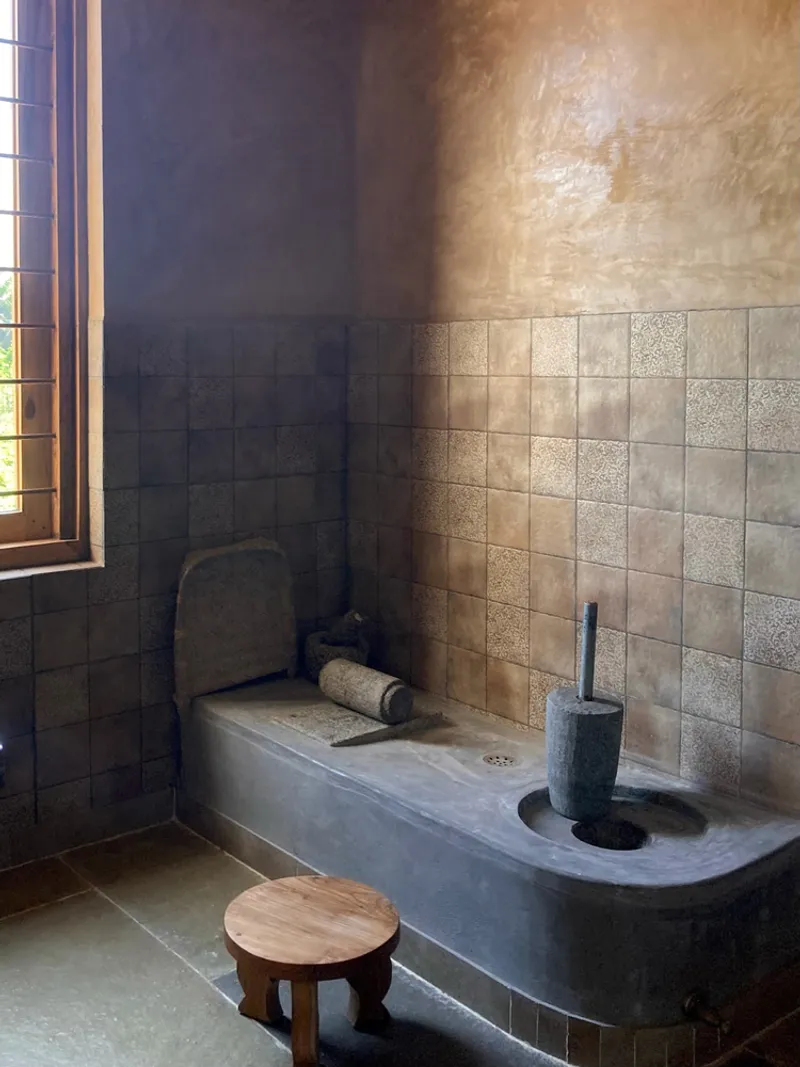
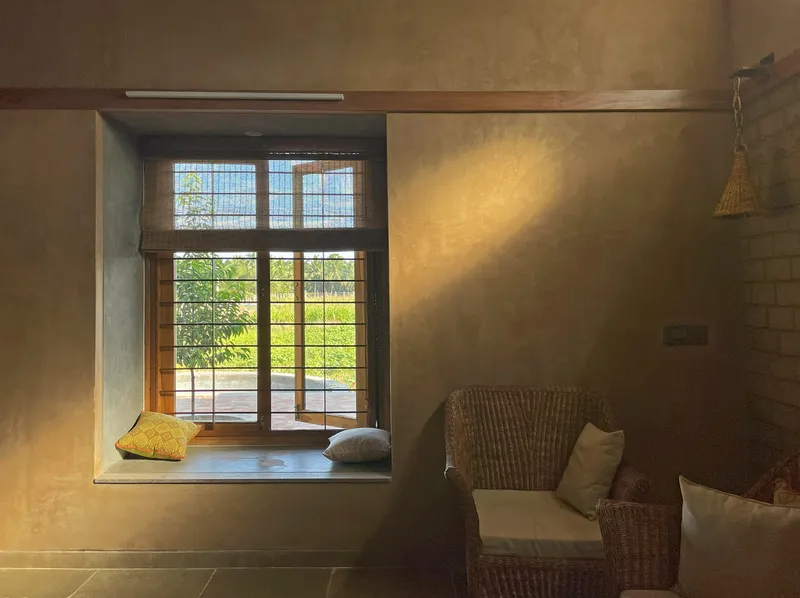
The architectural strategy thoughtfully channels sunlight: eastern living areas are bathed in the setting sun, while western bedrooms receive early morning rays. Select walls feature mud plaster, designed to capture and celebrate sunlight streaming through the arches. Beyond aesthetics, the arches also function as natural ventilation vents, promoting passive cooling and thermal comfort. The courtyard’s jack arch section doubles as a rainwater channel, allowing rainfall to be collected and celebrated visually, integrating sustainable water management into the home’s daily life.
Harmonizing Tradition and Modern Living
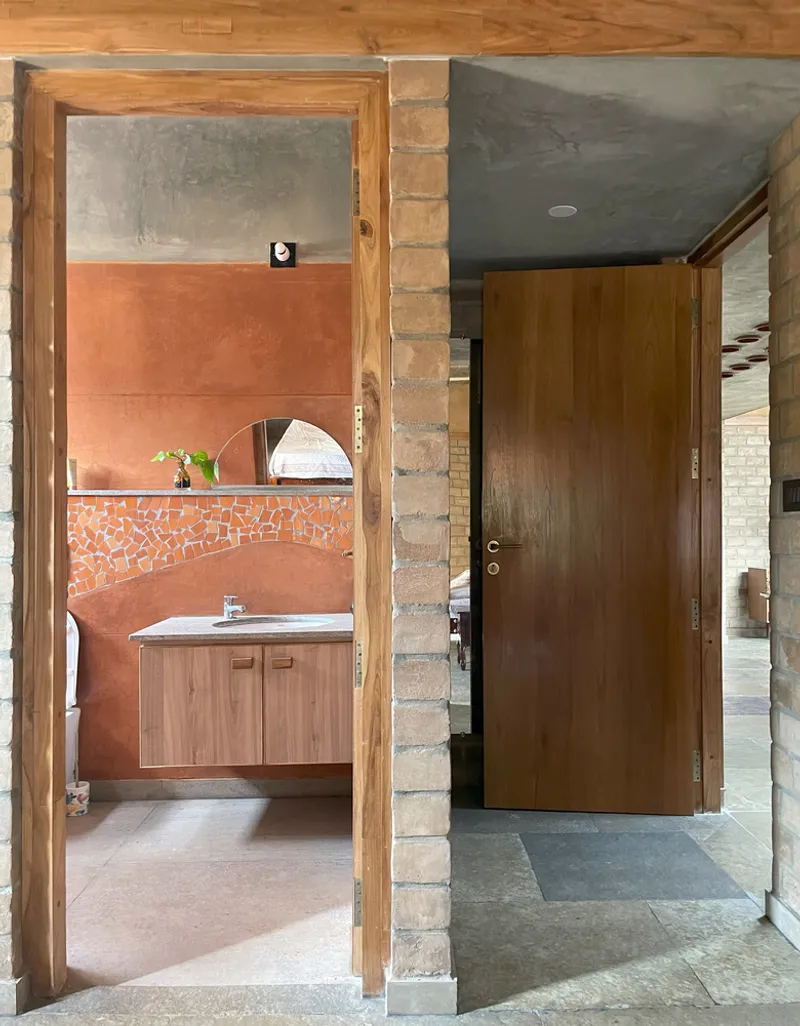
By merging traditional Tamil architectural elements: such as thinnai (in-built seats), courtyards, and jack arch roofing, with contemporary construction methods, Second Ground has created a residence that respects history while addressing modern lifestyle needs. The result is a home that is sustainable, contextually sensitive, and visually poetic, celebrating the intrinsic beauty of earth, light, and natural rhythms.
All photographs are works of
Abinaya Varshni



Popular Articles
Popular articles from the community


Riyadh For All: Intergenerational Urban Design for Active Aging in Rabat
Riyadh For All reimagines urban design in Rabat with intergenerational co-living, adaptive courtyards, and Moroccan cultural exchange today.

Co-Life: Senior Housing Design That Reconnects Older Adults With the City
Co-Life reimagines senior housing design through healing gardens, shared streets, workshops, and a sustainable community across generations.
EW PARK: Sustainable Architecture Reimagines the Future of Urban Parking
EW PARK reimagines city parking as a modular wooden tower combining automation, solar energy, electric mobility, and adaptable urban design.

The Musturak Paradise: Senior Living Architecture for a Connected Future in Temara, Morocco
The Musturak Paradise reimagines senior living architecture in Temara via private homes, social spaces, culture, community, and shared care.


Similar Reads
You might also enjoy these articles

FAMM Arquitectura Organizes Ten Villas Around Courtyards and Jungle in Nosara, Costa Rica
El Molino pairs two elongated volumes with deep overhangs and timber louvers to build a compact coastal community five minutes from the beach.
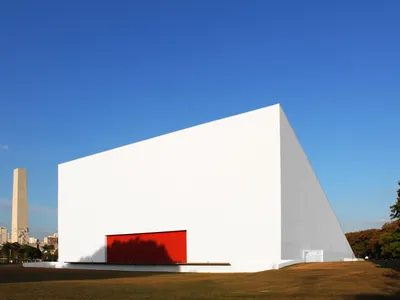
Oscar Niemeyer's Ibirapuera Park Pavilions Define São Paulo's Cultural Identity in Concrete and Curve
A constellation of modernist volumes set within São Paulo's most important urban park, conceived for the city's 400th anniversary in 1954.
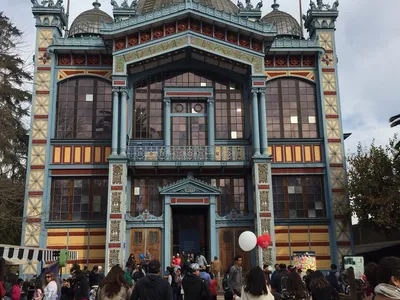
How Henri Picq's 1889 Paris Pavilion Traveled 11,000 Kilometers to Become Santiago's Artequín Museum
A prefabricated iron and glass pavilion built for the Paris Universal Exposition found a second life as a children's art museum in Chile.
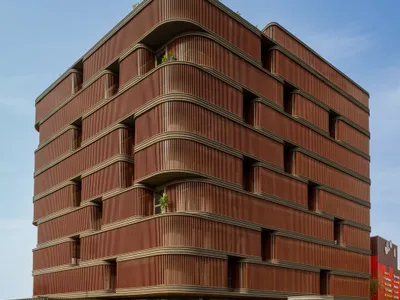
Sanjay Puri Architects Wraps a Jaipur Office Tower in Capsule-Shaped Green Buffers
A nine-level climate-responsive workplace near Jaipur Airport uses stacked planter terraces and aluminium screens to fight 40°C heat.


Explore Housing Competitions
Discover active competitions in this discipline



Challenge to reimagine the Iron Throne


Photograph architecture without architects


Illustrate the lost glory of Angkor Wat - Render Challenge


Design challenge to reuse E-waste
Comments (0)
Please login or sign up to add comments
No comments yet. Be the first to comment!