

Mansa House by Stemmer Rodrigues Arquitetura
Minimalist weekend retreat in Brazil combining concrete, wood, and glass with sustainable design, natural ventilation, and serene garden integration.


A Tranquil Weekend Retreat That Blends Architecture and Nature
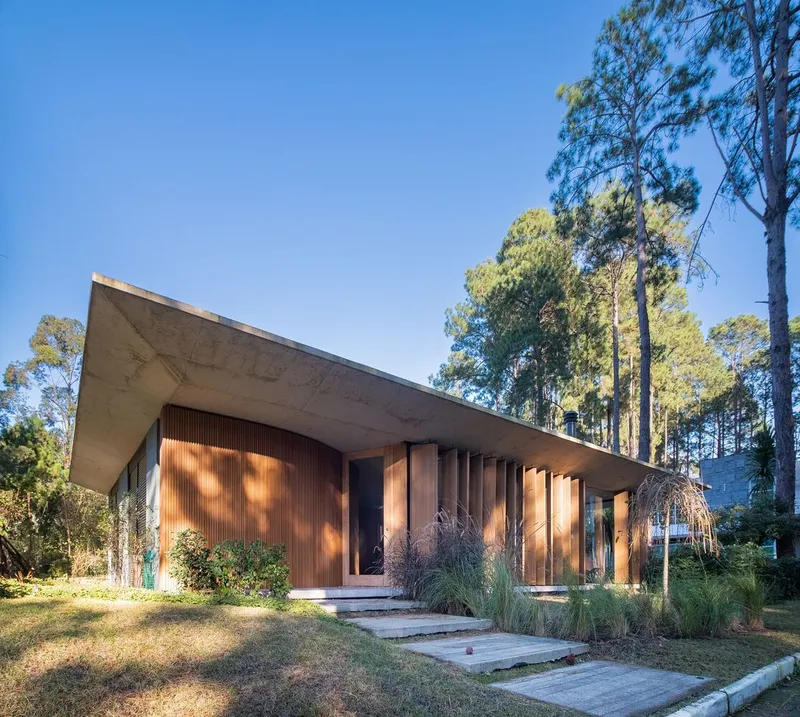
Nestled in the coastal city of Xangri-lá near Porto Alegre, Mansa House is a serene, ground-level retreat designed by Stemmer Rodrigues Arquitetura to reflect peace, simplicity, and comfort. Conceived as a weekend getaway, the 201 m² residence caters to the client’s desire for a cozy, nature-connected environment, where calmness and spatial fluidity define the architectural language.
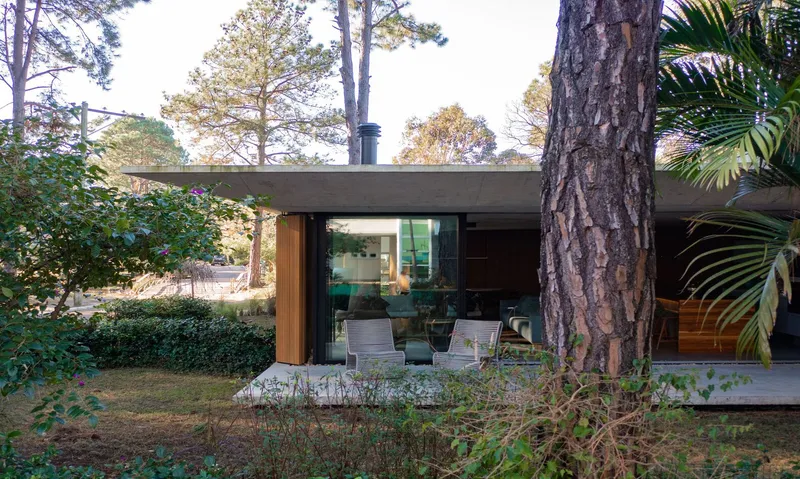
A core challenge lay in designing and completing the residence within six months while preserving the site’s natural features—especially the mature trees that defined the landscape. The architects rose to the occasion by using efficient and sustainable building techniques that also aligned with the minimalist aesthetic of the home.
Efficient Construction with Clean, Contemporary Lines
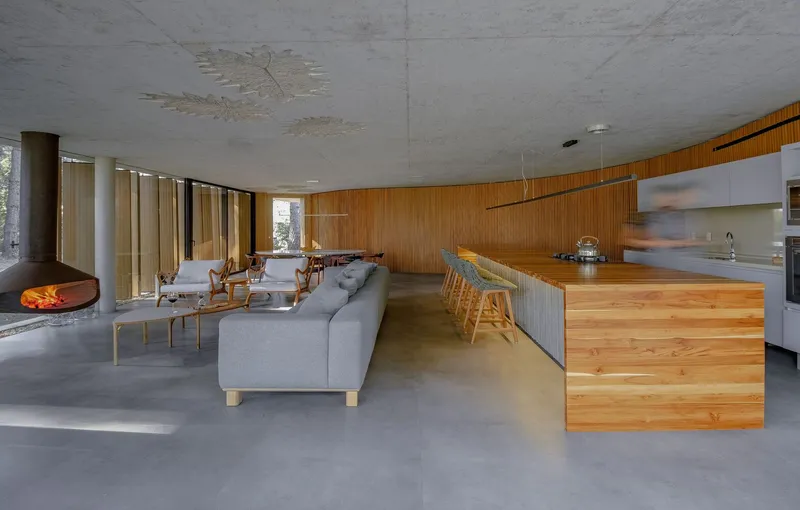
To meet the tight schedule, the team employed rapid construction methods including pouring the subfloor and floor slab in a single phase and using structural masonry to support the exposed concrete slab, eliminating the need for interior ceilings like gypsum. These solutions accelerated construction while expressing a raw, material honesty that became central to the design.
Site-Specific Design on a Corner Lot
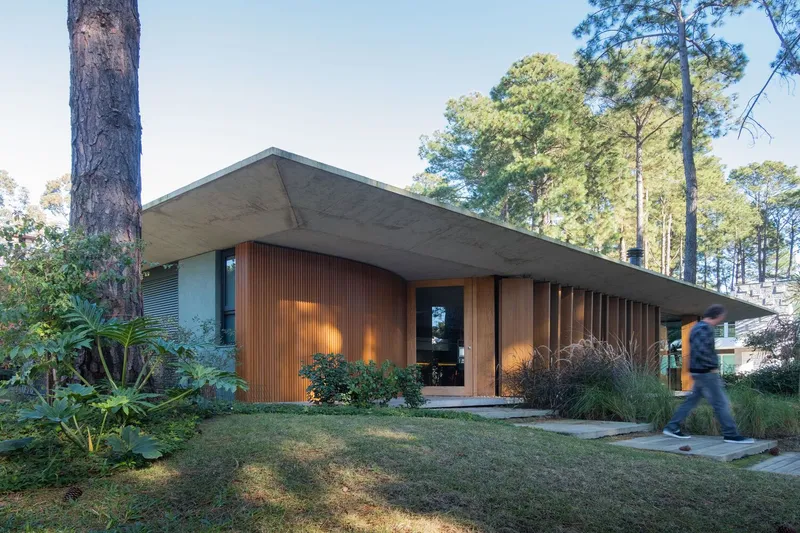
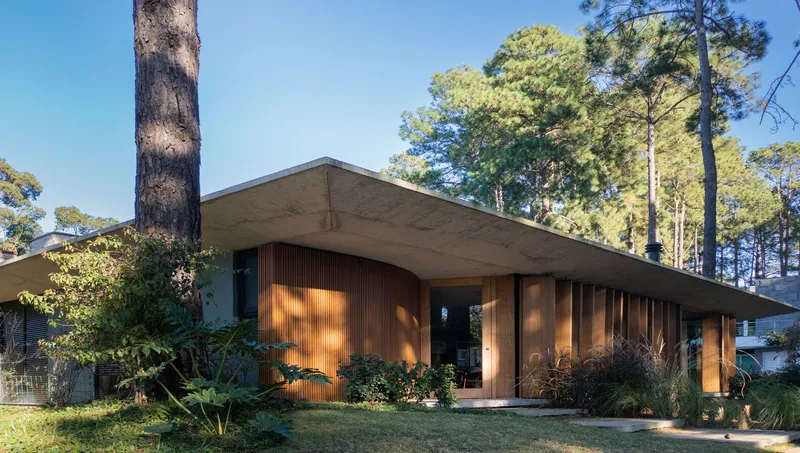
Positioned on a corner site—a location often fraught with design complexities—the home's layout unfolds along a curving wooden partition. This sinuous element elegantly separates the social and private areas, guiding circulation and reinforcing the residence’s organic character.
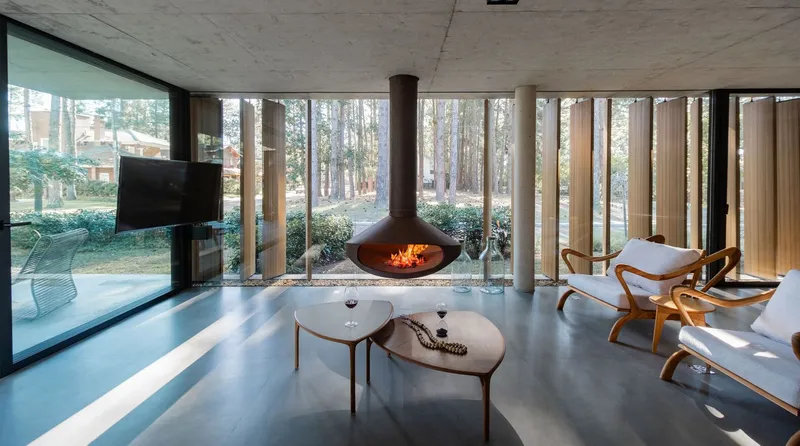
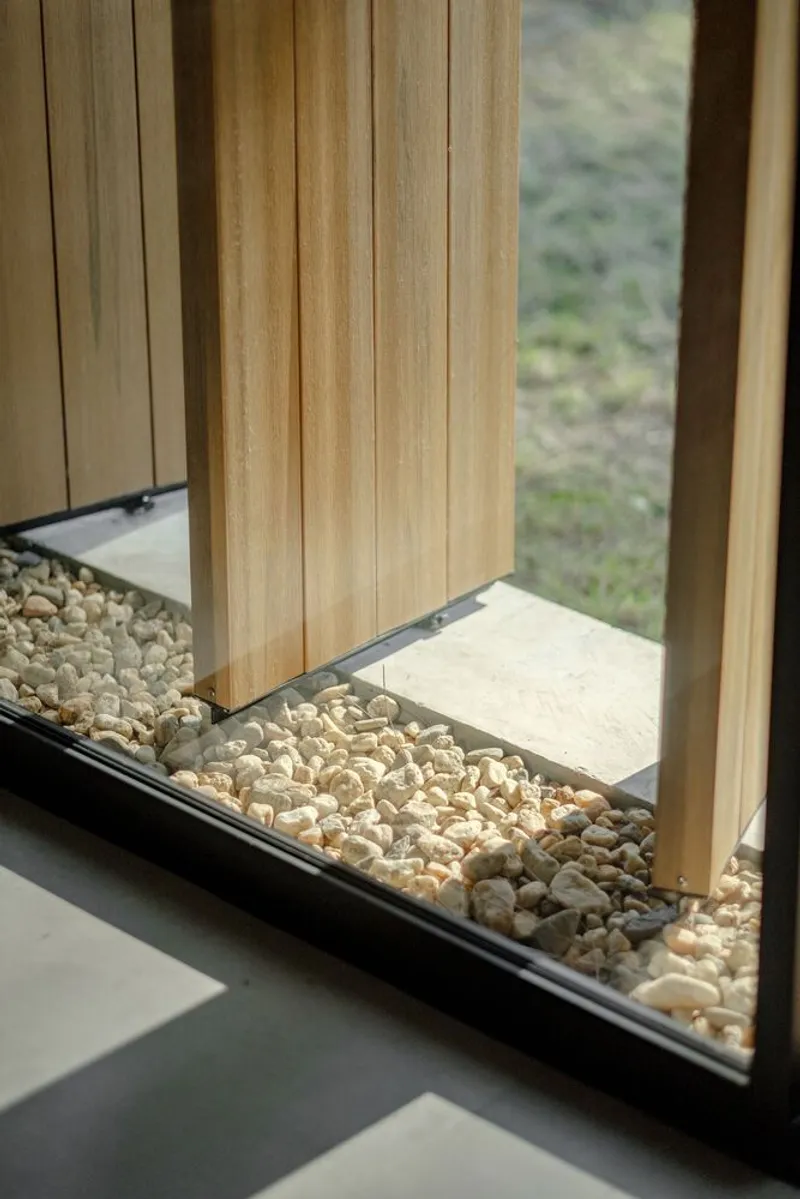
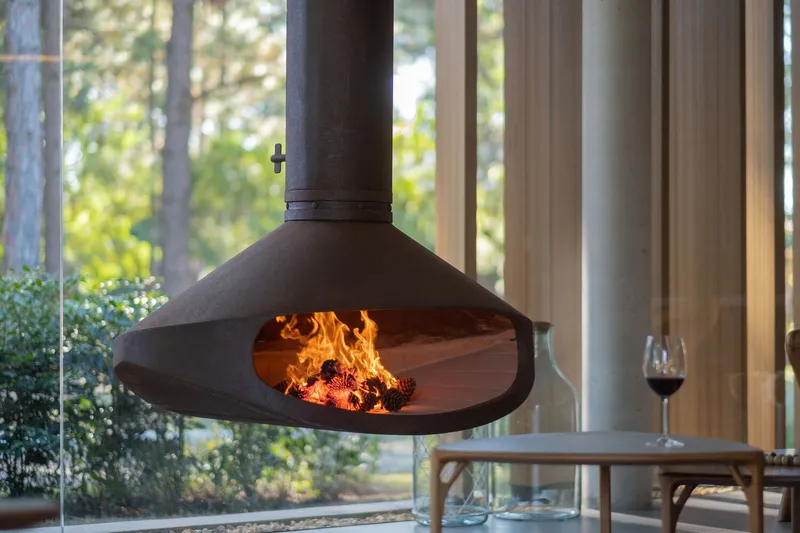
Two strong horizontal concrete planes define the roof and base, framing the structure with precision. Full-height glass panels on both façades create a seamless connection between interior and exterior spaces, while wooden brise-soleil panels ensure both solar protection and privacy, enhancing the dwelling's functionality.
Material Palette: Concrete, Glass, and Warm Wood
The project embraces a refined palette of concrete, glass, and wood, each material selected for both its aesthetic and environmental performance. The concrete slab, which spans the entirety of the home, is adorned with imprints of Guaimbê leaves—a native Brazilian plant—offering a tactile link to the site’s biodiversity.
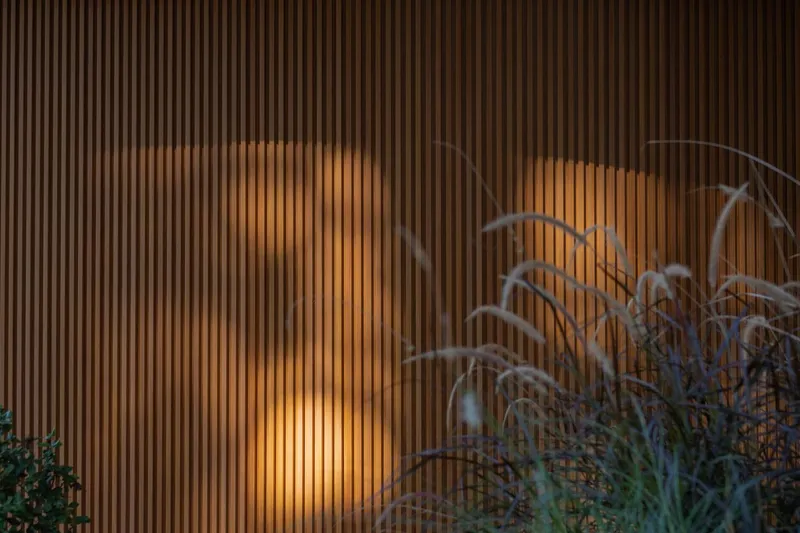
Extensive use of wooden elements—including panels and sunshades—softens the otherwise stark materiality. These features foster a sense of warmth, intimacy, and well-being, counterbalancing the cooler tones of the exposed concrete and glass.
Passive Design and Sensory Lighting
Sustainability and environmental responsiveness were key design priorities. The home uses natural cross ventilation and strategic openings to reduce reliance on air conditioning and artificial lighting. These passive systems help maintain indoor comfort while reducing energy consumption.
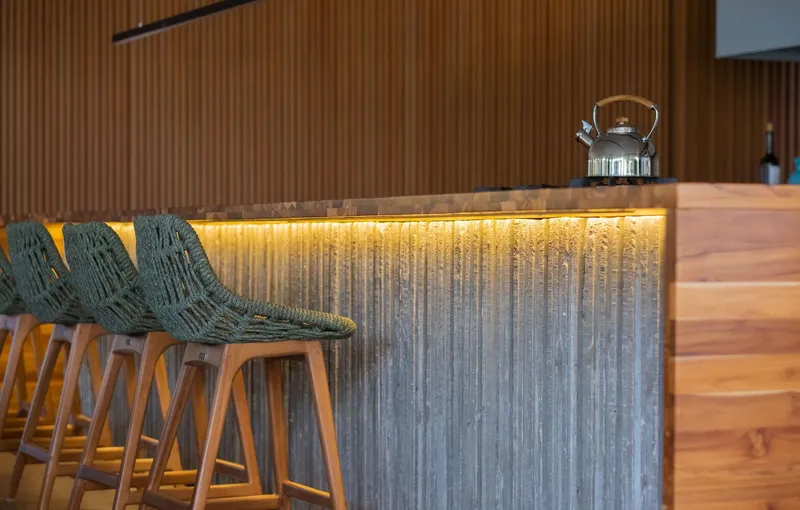
The lighting design accentuates architectural textures and spatial depth. Indirect lighting enhances the sculptural qualities of the interiors, while focused pendant fixtures provide targeted illumination in functional zones such as the kitchen and dining area. A bespoke concrete-and-wood countertop features integrated lighting, creating dramatic shadows and highlighting the material’s unique surface.
A Harmonious Escape Rooted in Place
Mansa House is a prime example of contemporary Brazilian residential architecture that respects its environment while delivering a deeply sensory, contemplative living experience. Its thoughtful integration of natural materials, efficient design, and site-responsive planning results in a modern home that feels timeless, warm, and profoundly connected to its surroundings.
All Photographs are works of Lucas Frank


Popular Articles
Popular articles from the community


longwave studio Reorganizes a 112 m² Tainan Apartment Around the Daily Routines of a Family and Two Cats
In Tainan, Taiwan, birch plywood, rust-red furniture and a freestanding plaster wall link arrival, storage, work and family life in one apartment.

David Ortega Stacks a Two-Story Mexico City Penthouse Around a Steel Stair and a Pergola-Shaded Roof Terrace
In Colonia Roma, a 300 m² penthouse uses oak joinery, a planted steel stair and a slatted roof pergola to make a new-build apartment feel like a house.

Jaramillo Van Sluys Arquitectura and Urbanismo Turn a Demolished Registry Lot in Quito into an Orchard Plaza
In Quito's Centro Histórico, a 2,800 m² plaza exposes the San Agustín convent wall and redraws its lost Augustinian orchard in volcanic stone.

Architekt Andreas Gruber Scatters 23 Dark Timber Chalets Across a South Tyrolean Forest Edge
In Molini di Tures, Amonti Chalets breaks a resort into a hamlet of gabled timber houses, with parking, storage and services pushed into the slope.

Similar Reads
You might also enjoy these articles


Hodi-Mandai Geram
Project Function: Preservation and revitalization of the Intangible heritage and socio-spatial identity of the Hodi by Housing, Cultural Memory Center, Sacred Grove, landscape, local tourism economy


Olio Towers: A Mid-Rise for Performers That Fuses Housing, Rehearsal, and Stage
Located blocks from Houston's Theater District, this modular tower stacks living units around a central performance atrium.

Oasis: Modular Green Housing Carved into Dhaka's Urban Fabric
A shortlisted Plugin Housing entry reclaims unauthorized settlements in Dhaka with stepped concrete volumes, green roofs, and ventilation-driven design.

Black Hole: A Floating Megastructure for the Post-Physical Era
Emiliano Mazzarotto envisions a spherical, self-scaling arena where e-sports, digital hotels, and holographic stadiums replace traditional public space.

Explore Architecture Competitions
Discover active competitions in this discipline

Challenge to reimagine the Iron Throne

Photograph architecture without architects

Illustrate the lost glory of Angkor Wat - Render Challenge

Design challenge to reuse E-waste
Comments (0)
Please login or sign up to add comments
No comments yet. Be the first to comment!