

MARC Auditorium: A Dynamic Hub at Manipal Academy of Higher Education
MARC Auditorium in Bengaluru features a vibrant 1,200-seat circular auditorium, layered plazas, orange-hued interiors, seamless indoor-outdoor flow, and dynamic social spaces.


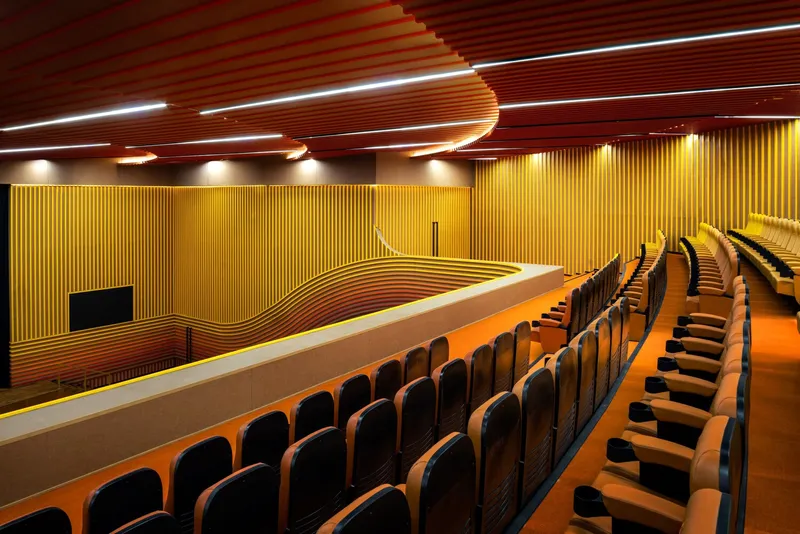
Nestled within the sprawling 80-acre campus of Manipal Academy of Higher Education (MAHE) in Bengaluru, India, the MARC Auditorium by The Purple Ink Studio emerges as the centerpiece of campus life. Serving as both a 1,200-seat auditorium and a two-level food court, this architectural landmark caters to the diverse needs of over 12,000 students across technology, arts, and sciences disciplines. Completed in 2024, the project exemplifies contemporary campus design, blending functional programmatic spaces with visually compelling architecture.

Context and Vision
Bengaluru’s growing network of micro-campuses calls for spaces that foster interaction, learning, and community engagement. Within this context, MARC is conceived as a central node that enhances the academic and social fabric of MAHE. Its strategic placement and design encourage seamless movement between indoor and outdoor zones, creating a cohesive environment where students, faculty, and visitors can gather, interact, and participate in campus activities.
Design Framework
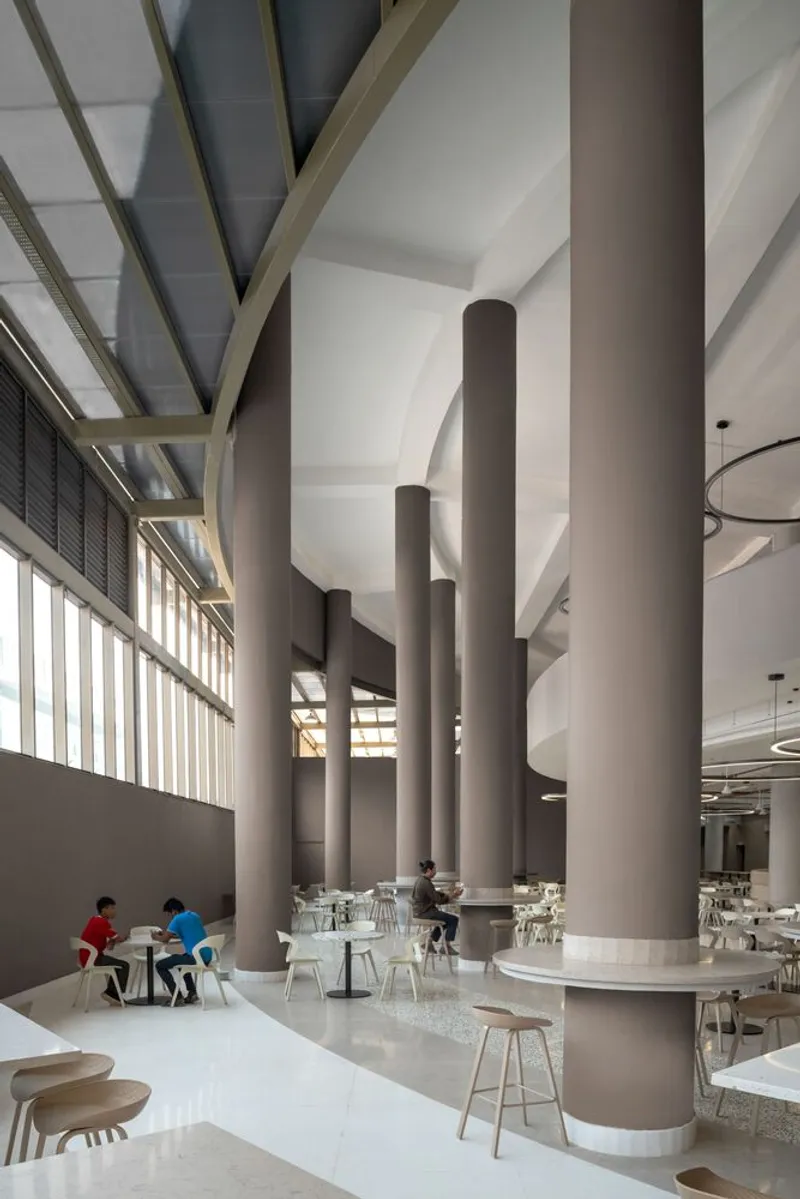
The MARC Auditorium complex is structured around two distinct yet interconnected facilities. The food court, spanning two lower levels, is half-sunken to establish a direct connection with the outdoor plaza. Above, the 1,200-seat auditorium anchors the campus visually and functionally. Surrounding the building is a rectangular plaza, which serves as both an extension of the interior spaces and a versatile outdoor congregation area. Designed as an optical and spatial conundrum, the plaza doubles as a casual and organized social hub, hosting everything from informal gatherings to campus events.
People, Movement & Transitional Spaces
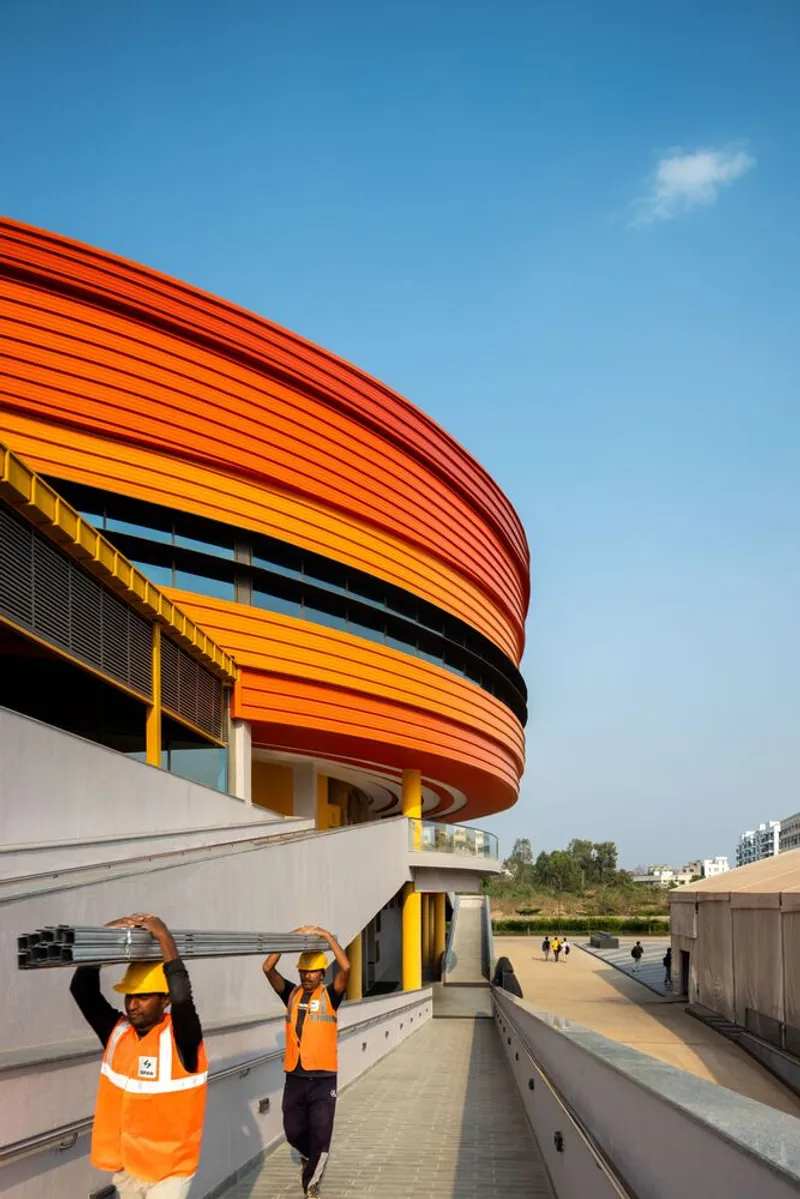
A core design philosophy at MARC revolves around enhancing user experience through carefully choreographed circulation. Diverging ramps lead visitors from the plaza to the auditorium, ensuring smooth accessibility and fluid movement across levels. Transitional lobbies and decks open directly onto the plaza, blurring boundaries between interior and exterior. The half-sunken food court allows direct visual and physical access, while the auditorium’s elevated level maintains prominence without isolating users from the campus activity below.

Layers, Patterns & Architectural Expression
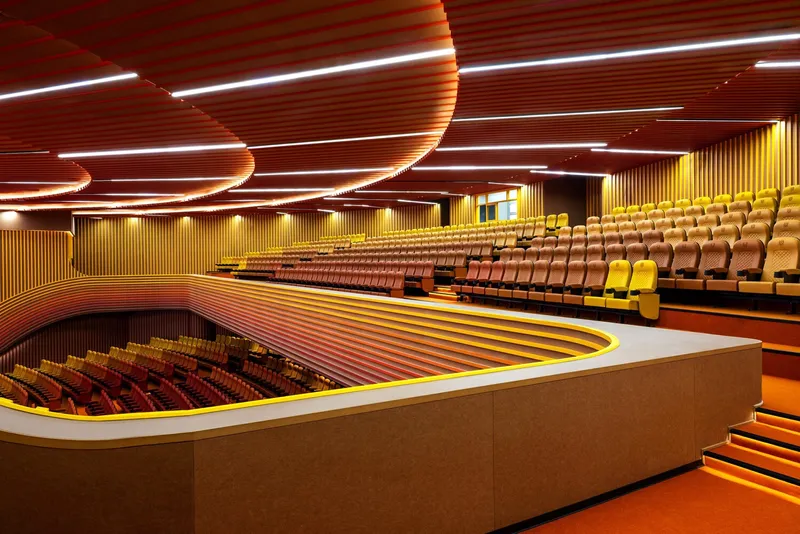
Spatial layering defines MARC’s architectural identity. The auditorium’s central circular core, with a diameter of 52 meters, functions as a magnet, drawing activity and attention. Concentric rings of vibrant orange hues, applied across structural rafters and interiors, create visual continuity while reinforcing the auditorium’s symbolic prominence. The steel framework, anchored to roof trusses supporting the composite roof, juxtaposes structural robustness with the fluidity of the surrounding plazas, creating a dynamic interplay of form, color, and space.

Spatial Interiors & Material Strategy
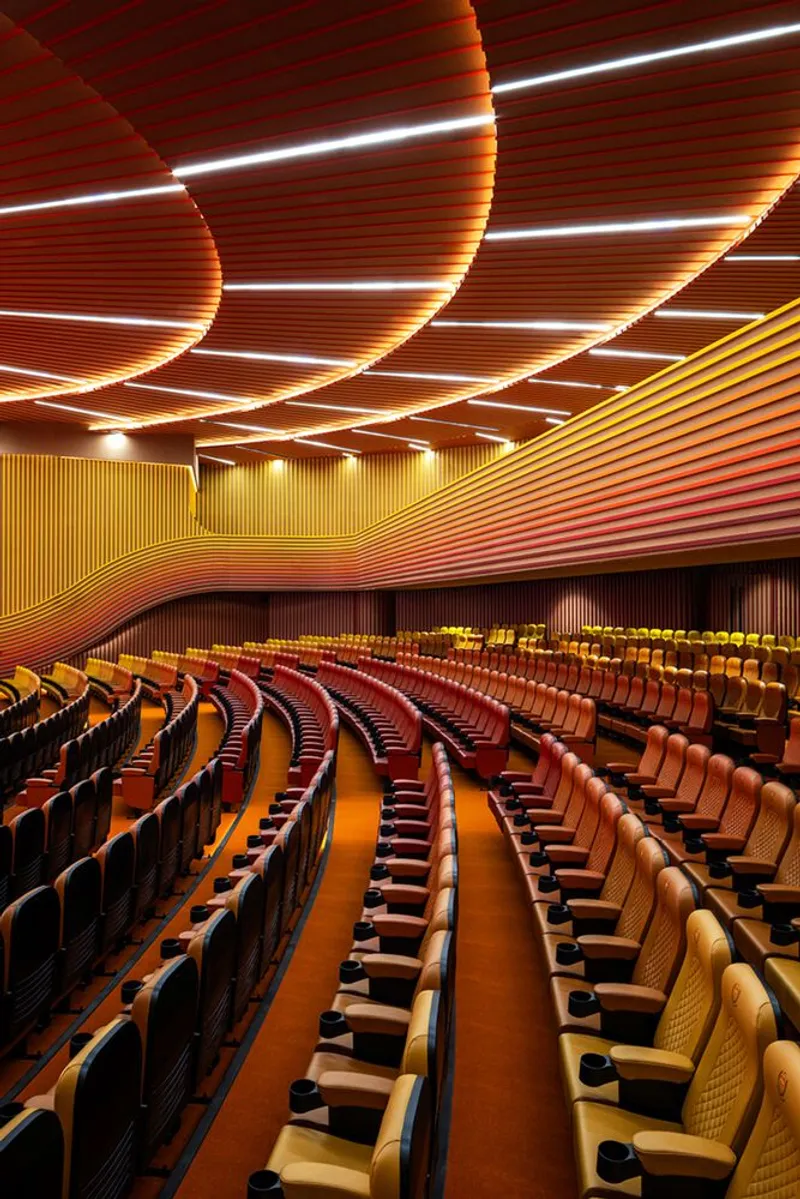
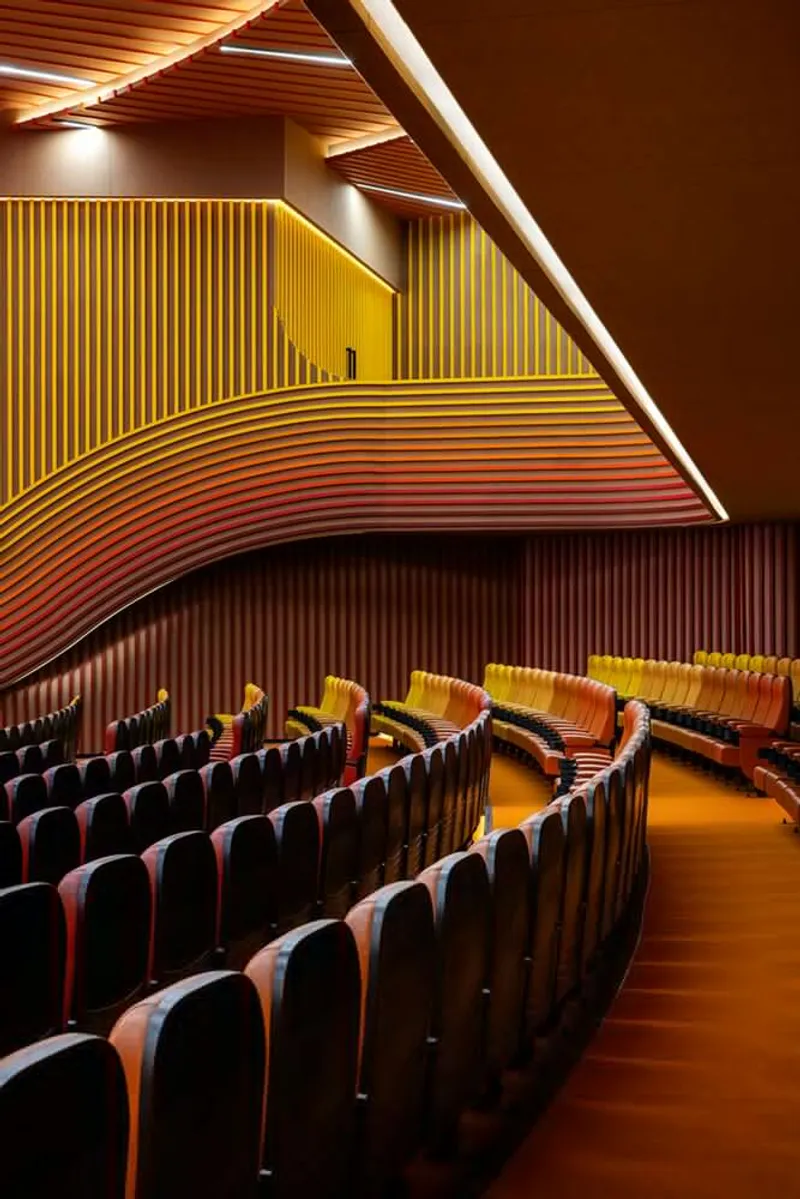
MARC’s interiors embrace openness and continuity rather than compartmentalization. Outdoor decks, VIP galleries, and strategic lobby areas enhance circulation while supporting social and event-based interactions. A gradient of orange tones flows across seating and rafters, responding to exterior patterns and adding depth to the interior experience. Acoustical panels integrated into the ceiling and rafter system provide sound insulation, while concentric lighting emphasizes the auditorium’s spatial rhythm. Materials and textures are carefully chosen to complement both the robust structural elements and the soft, flowing plaza spaces, reflecting modern Indian campus architecture at its finest.
Sustainability and Collaboration
The project benefited from a multidisciplinary approach, integrating Kalzip standing seam facades, sustainable consulting by Terraviridis, and HVAC strategies by KNND Associates Pvt Ltd. Structural stability was ensured by TRC Engineering, while Sobha Glazing Limited, SPAN Interiors, and CB CRAFT Interiors contributed to the high-quality execution of façade and interiors. MARC demonstrates new-age architectural thinking, balancing aesthetic expression with functionality, sustainability, and user-centric design.
MARC Auditorium is more than an architectural centerpiece: it is a living, breathing social hub that embodies MAHE’s educational legacy, modern campus culture, and the aspirations of a vibrant student community.




Popular Articles
Popular articles from the community


Riyadh For All: Intergenerational Urban Design for Active Aging in Rabat
Riyadh For All reimagines urban design in Rabat with intergenerational co-living, adaptive courtyards, and Moroccan cultural exchange today.

The Musturak Paradise: Senior Living Architecture for a Connected Future in Temara, Morocco
The Musturak Paradise reimagines senior living architecture in Temara via private homes, social spaces, culture, community, and shared care.

Conexión: Biophilic Design Reimagines High-Rise Living in Hong Kong
Conexión reimagines high-rise living in Hong Kong through biophilic design, green facades, shared spaces, daylight, water and nature within.

AL-JANNAH: Sustainable Architecture and Permaculture for Afghan Widows
AL-JANNAH uses sustainable architecture and permaculture to create resilient oasis of housing, learning, work and renewal for Afghan widows.


Similar Reads
You might also enjoy these articles

FAMM Arquitectura Organizes Ten Villas Around Courtyards and Jungle in Nosara, Costa Rica
El Molino pairs two elongated volumes with deep overhangs and timber louvers to build a compact coastal community five minutes from the beach.
Oscar Niemeyer's Ibirapuera Park Pavilions Define São Paulo's Cultural Identity in Concrete and Curve
A constellation of modernist volumes set within São Paulo's most important urban park, conceived for the city's 400th anniversary in 1954.
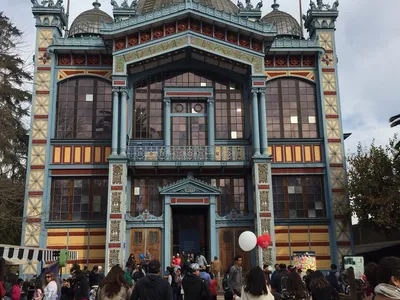
How Henri Picq's 1889 Paris Pavilion Traveled 11,000 Kilometers to Become Santiago's Artequín Museum
A prefabricated iron and glass pavilion built for the Paris Universal Exposition found a second life as a children's art museum in Chile.
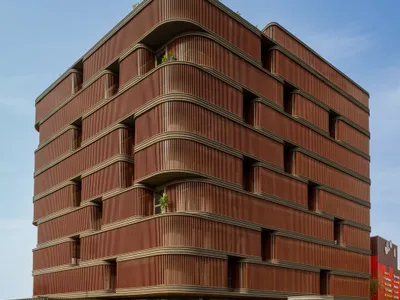
Sanjay Puri Architects Wraps a Jaipur Office Tower in Capsule-Shaped Green Buffers
A nine-level climate-responsive workplace near Jaipur Airport uses stacked planter terraces and aluminium screens to fight 40°C heat.


Explore Architecture Competitions
Discover active competitions in this discipline



Challenge to reimagine the Iron Throne


Photograph architecture without architects


Illustrate the lost glory of Angkor Wat - Render Challenge


Design challenge to reuse E-waste
Comments (0)
Please login or sign up to add comments
No comments yet. Be the first to comment!