

Monolithic Concrete House Design Near Vienna by Balissat Kaçani + Jann Erhard
A striking monolithic concrete house near Vienna blends raw materiality, spatial complexity, and private garden living amidst railway infrastructure.


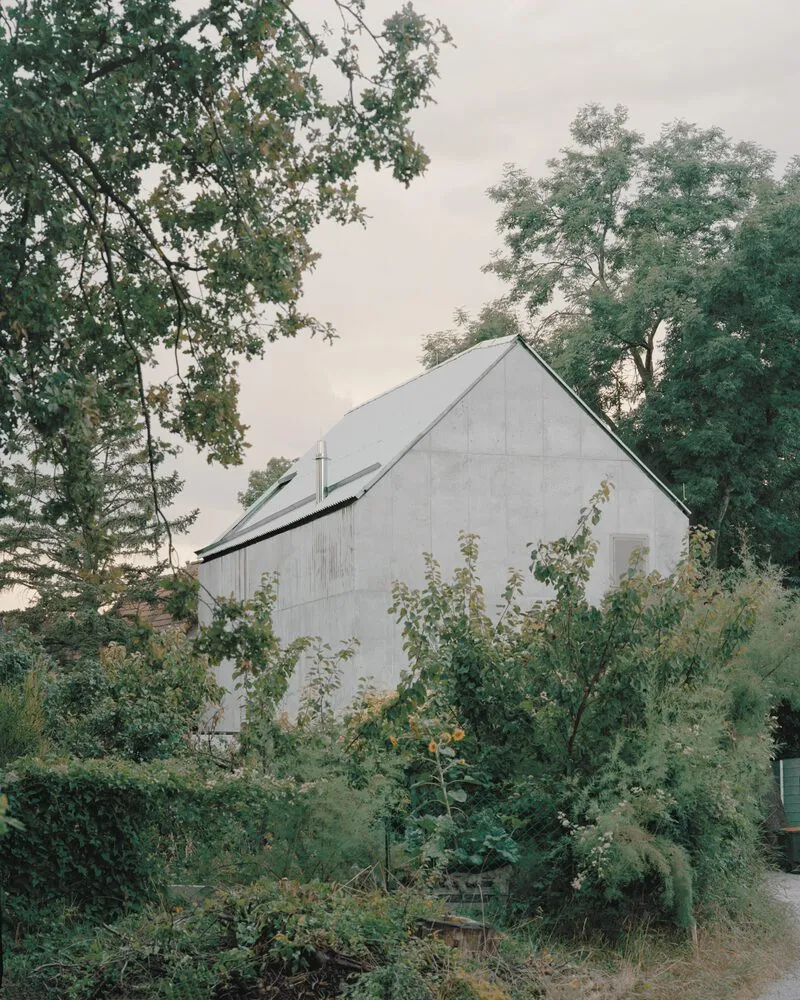
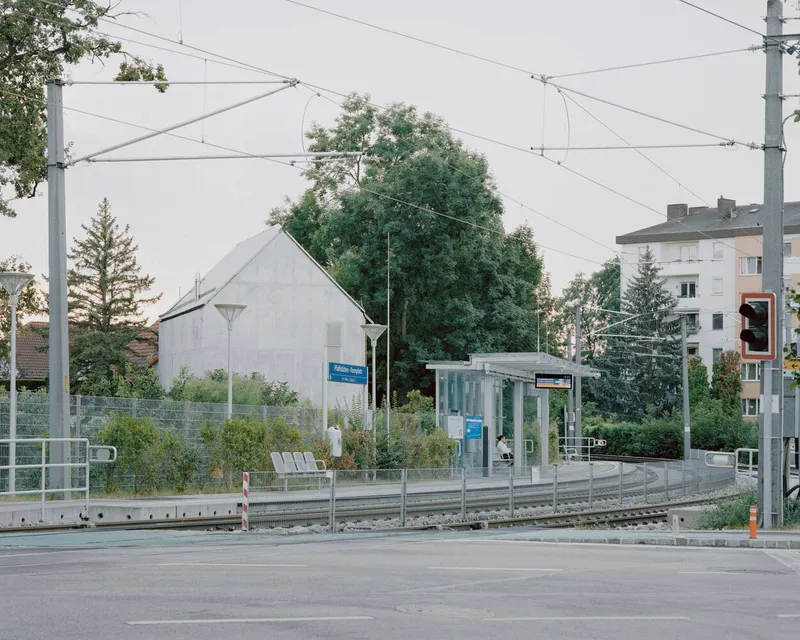
In Baden bei Wien, Austria, architects Balissat Kaçani and Jann Erhard have designed an extraordinary monolithic concrete house that redefines the relationship between built form, garden, and urban infrastructure. Positioned between a historic villa garden and the tracks of the Baden railway, the house transforms a constrained and exposed site into a private, introverted living space.
The Site and Conceptual Approach
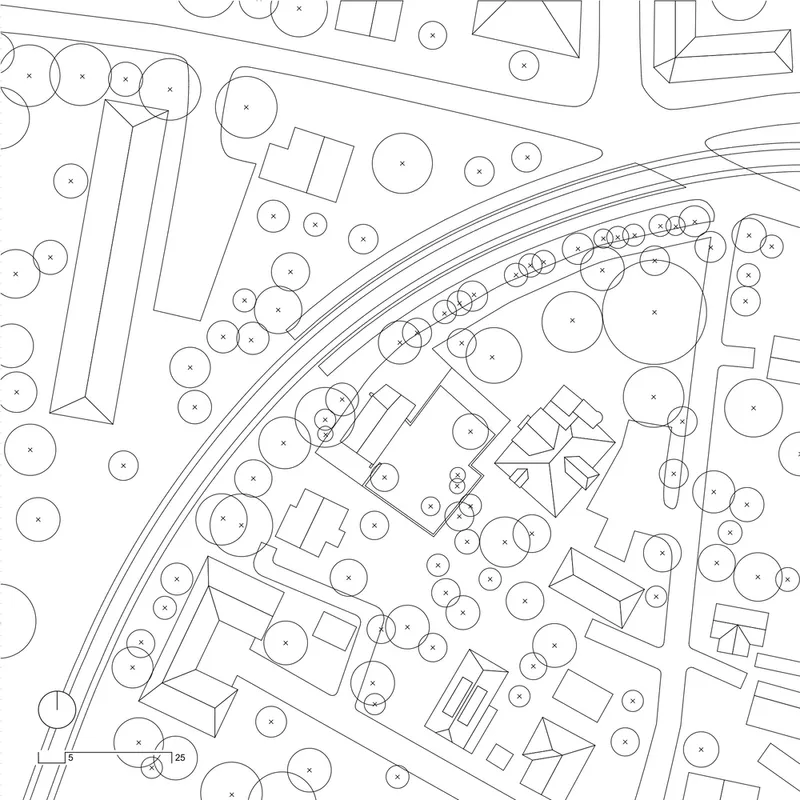
The home is strategically located at the end of a private path that runs parallel to the tram tracks and through tall, old trees. It occupies what was once part of a large villa garden, introducing a striking architectural statement while preserving intimacy and privacy. The design mediates between two contrasting worlds: the dynamic railway infrastructure on one side and a serene enclosed garden on the other.
This garden, accessible only through the house, becomes a protected counterpart to the noise and movement of the railway. The architecture acts as both a physical and visual shield, enhancing the residents’ sense of seclusion.
Monolithic Concrete Construction
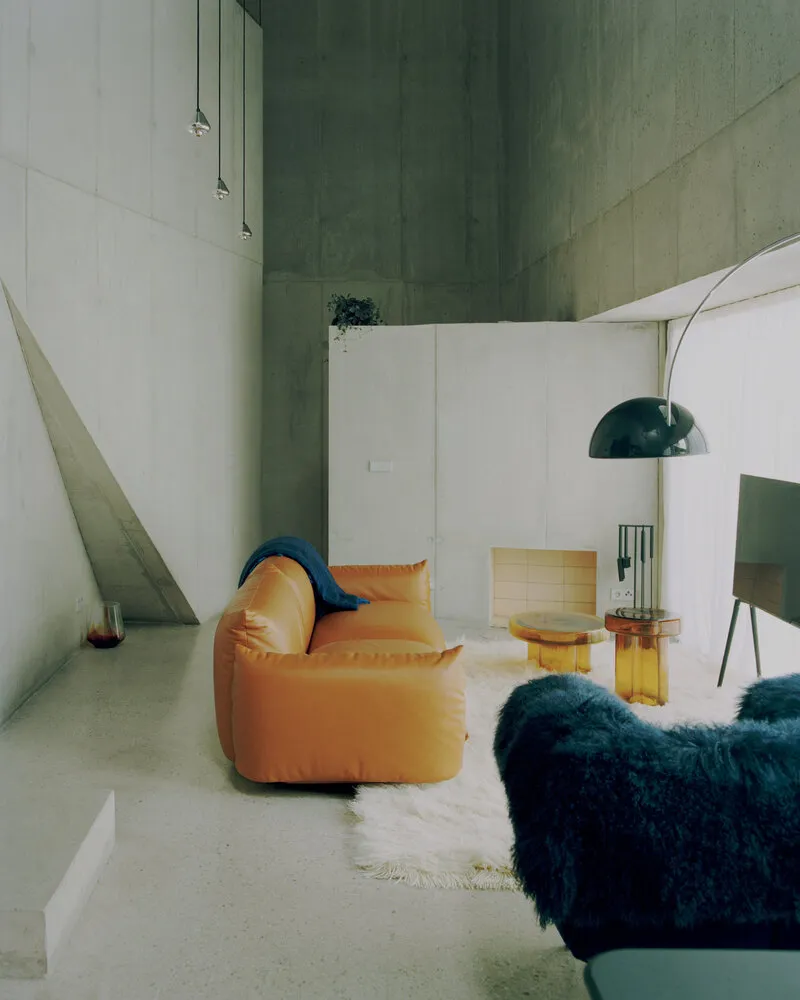
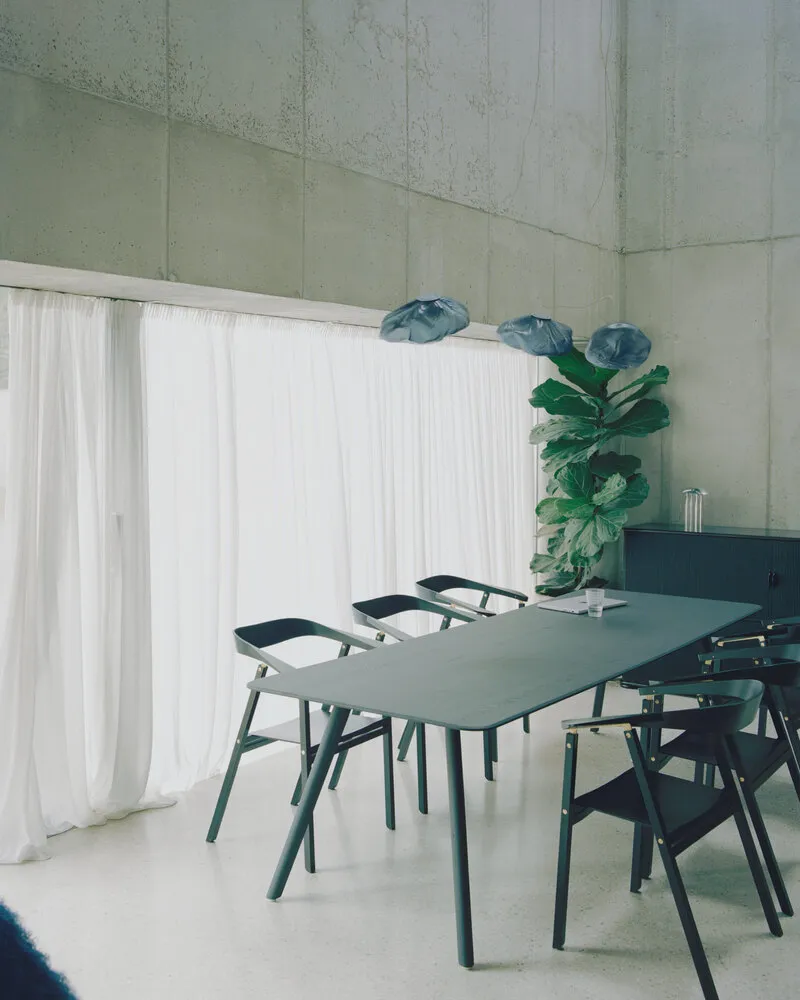
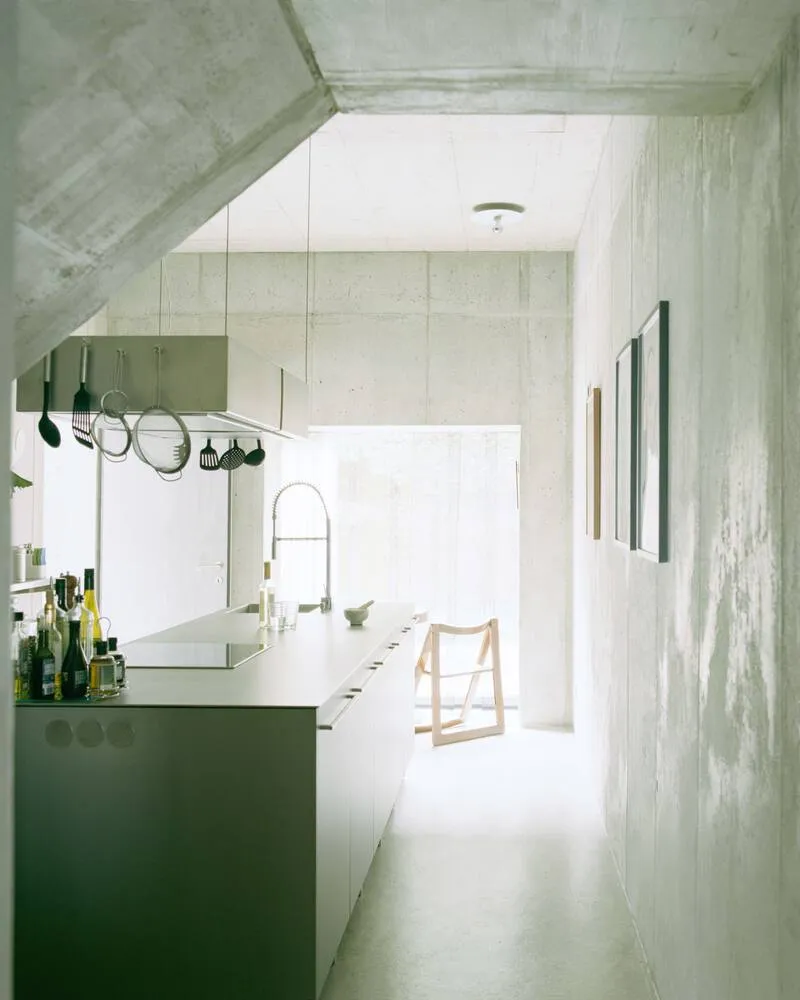
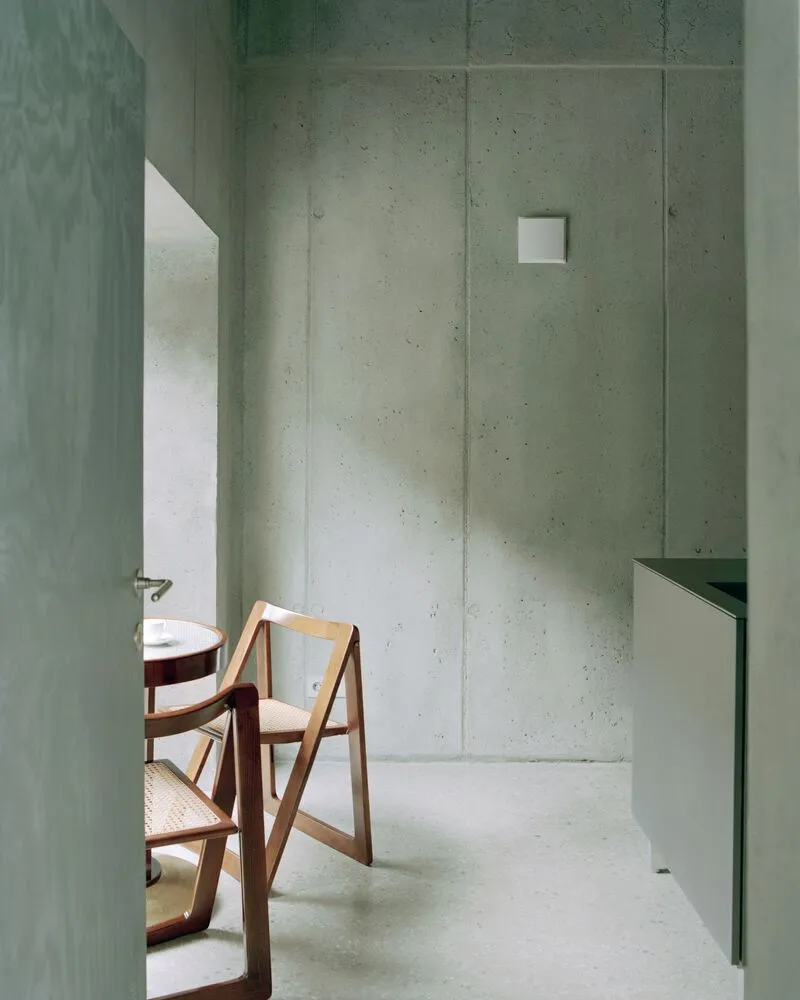
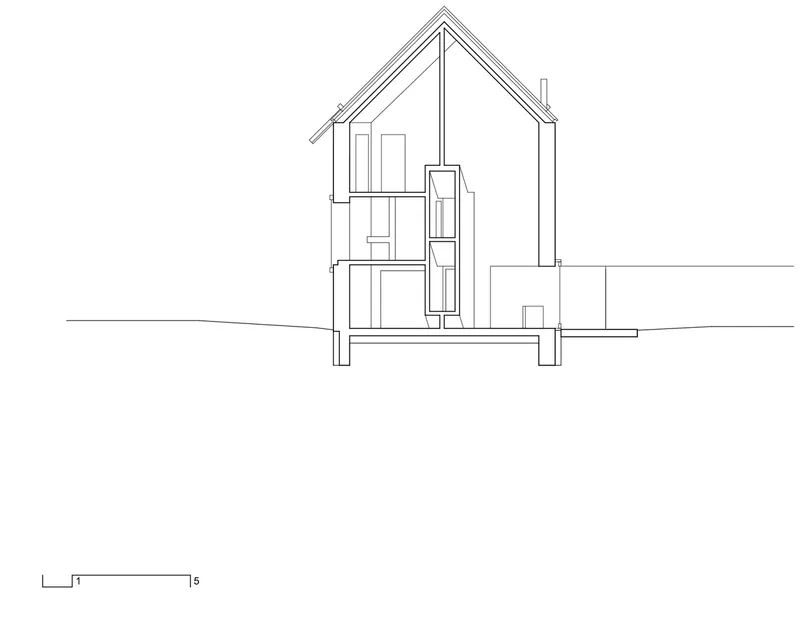
The house’s defining feature is its 55 cm thick insulating concrete outer wall, which is the same inside and out. This archaic, monolithic approach uses no layered finishes, creating a pure and raw expression of material. All interior walls and ceilings are 15 cm thick reinforced concrete, making the structure a thermally activated mass.
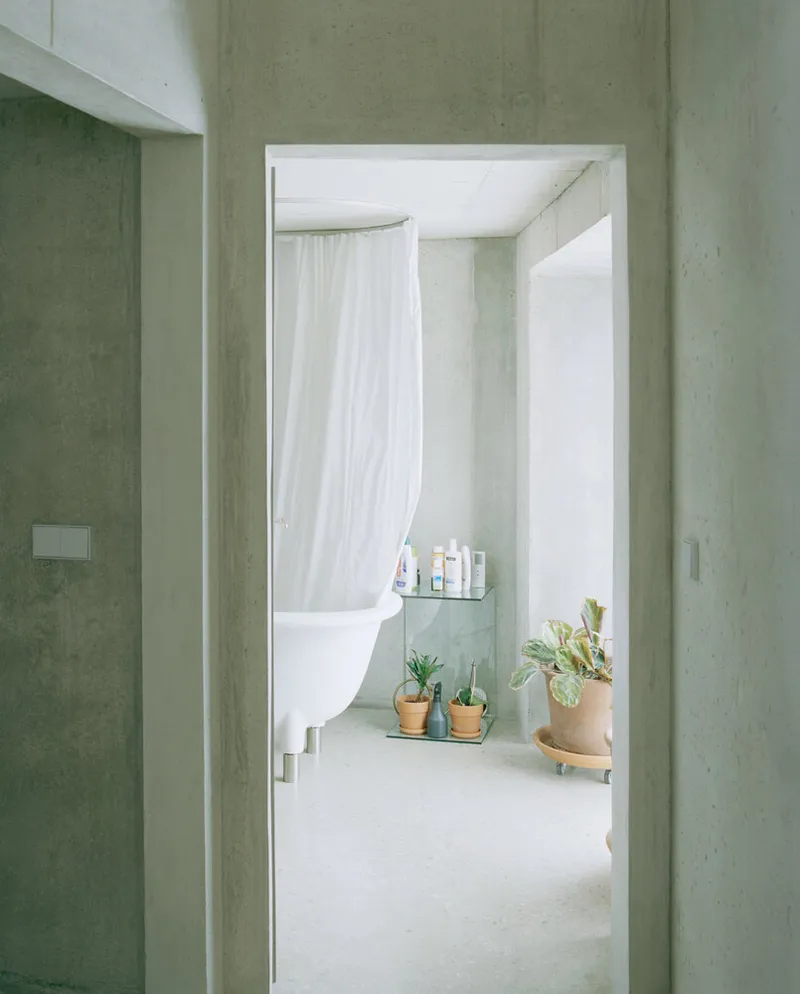
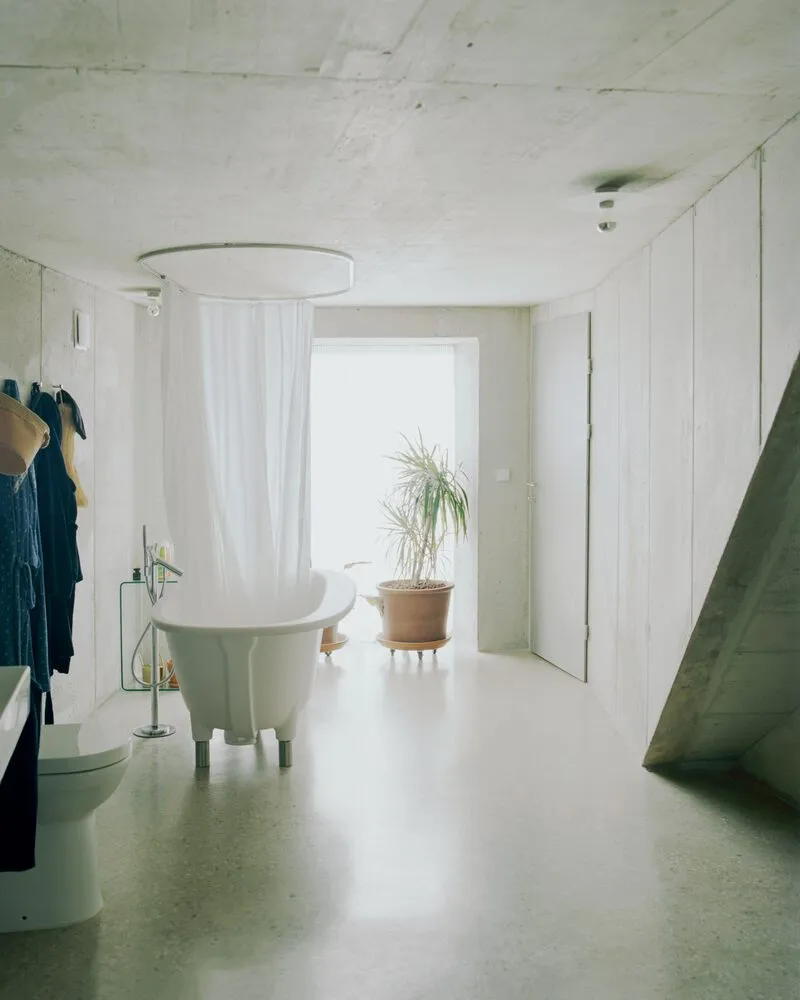
Heating and cooling pipes are integrated directly into the floor slabs, ensuring year-round temperature regulation without additional structural layers. The design embraces diffusion-open construction, promoting natural breathability while offering durability and a sculptural presence.

Spatial Organization
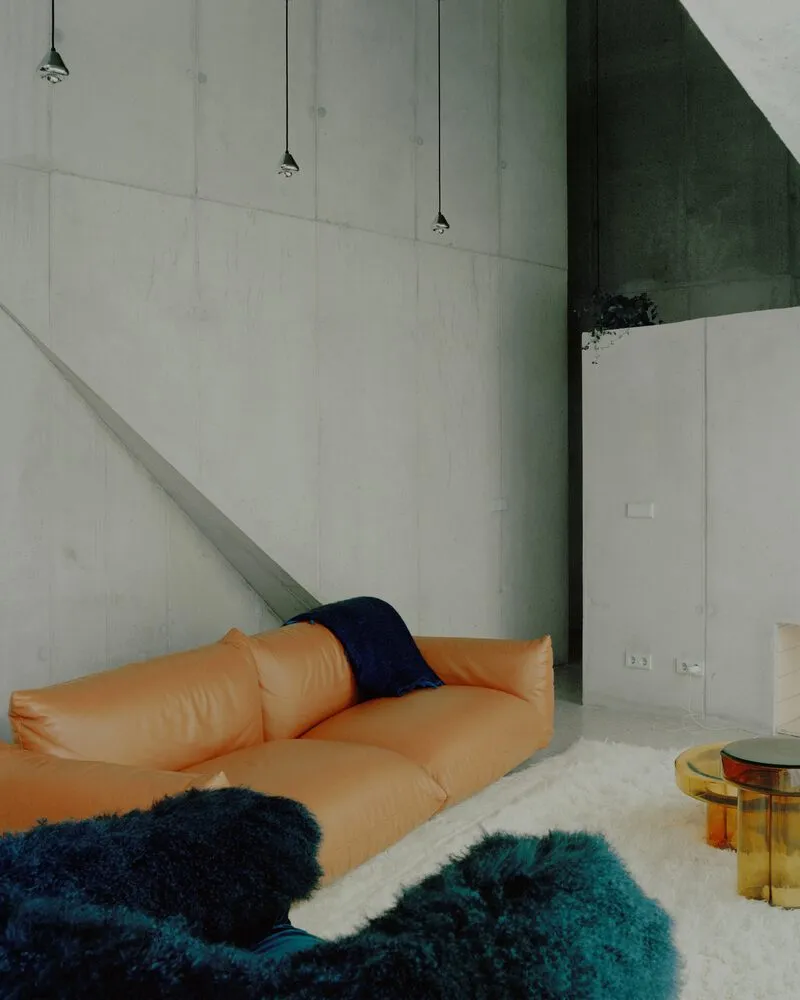
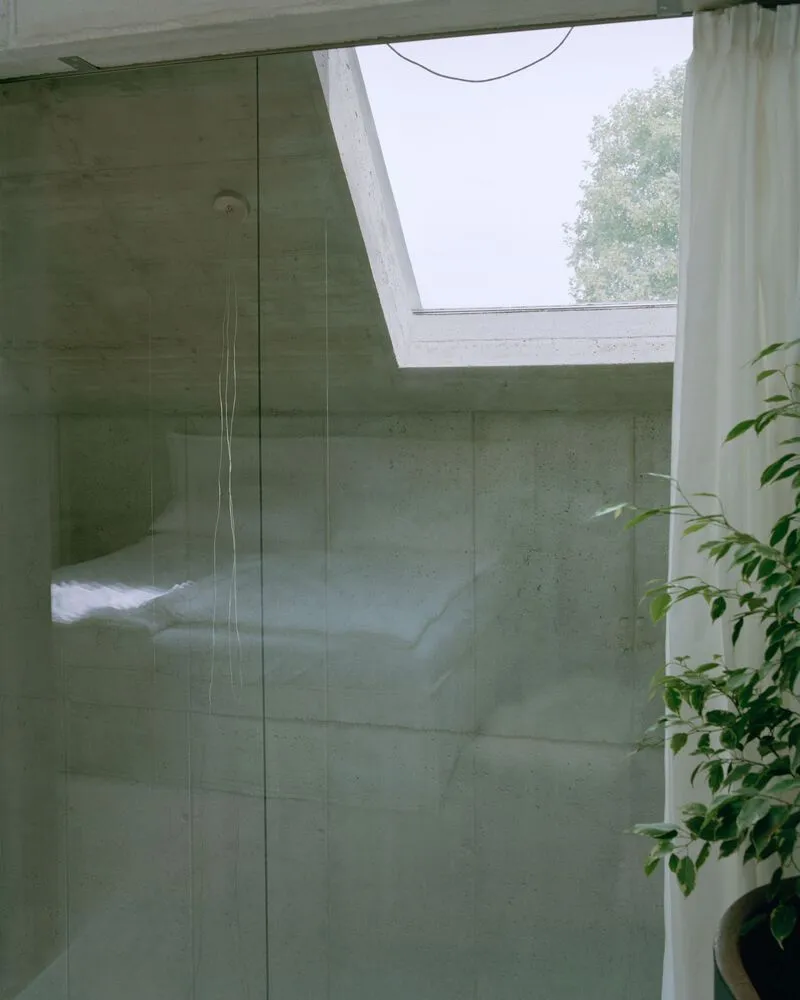
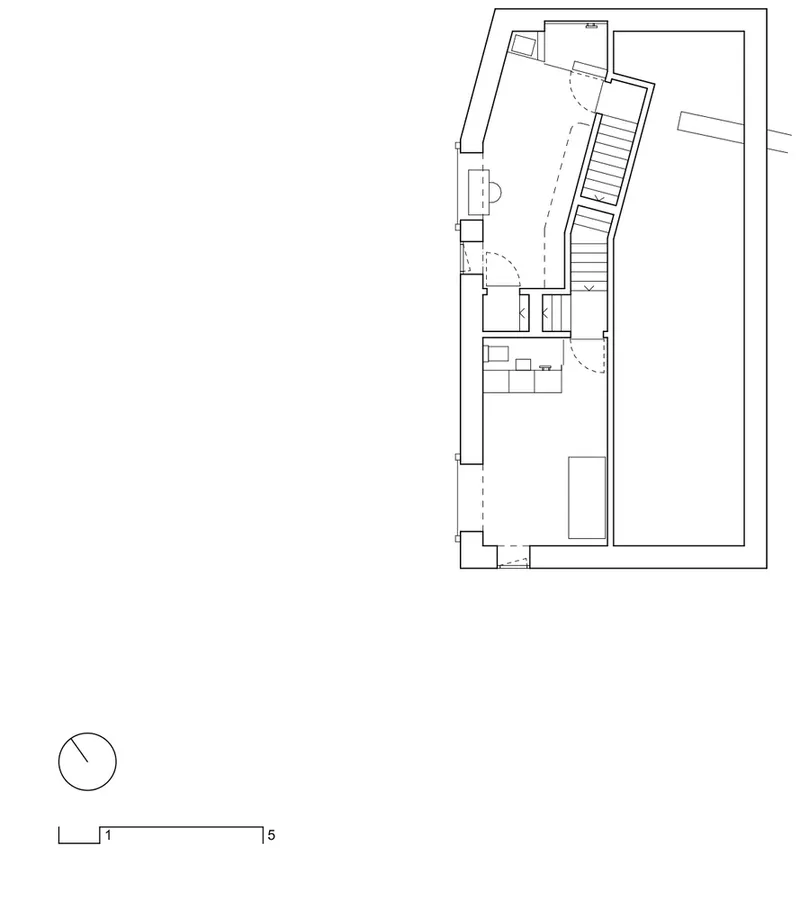
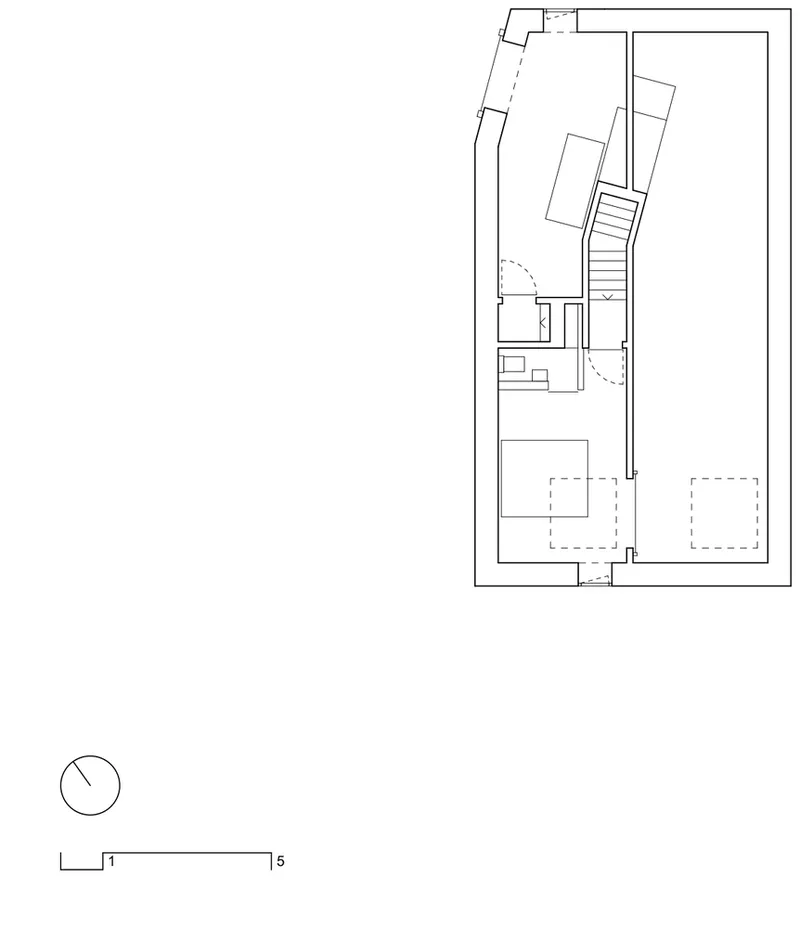
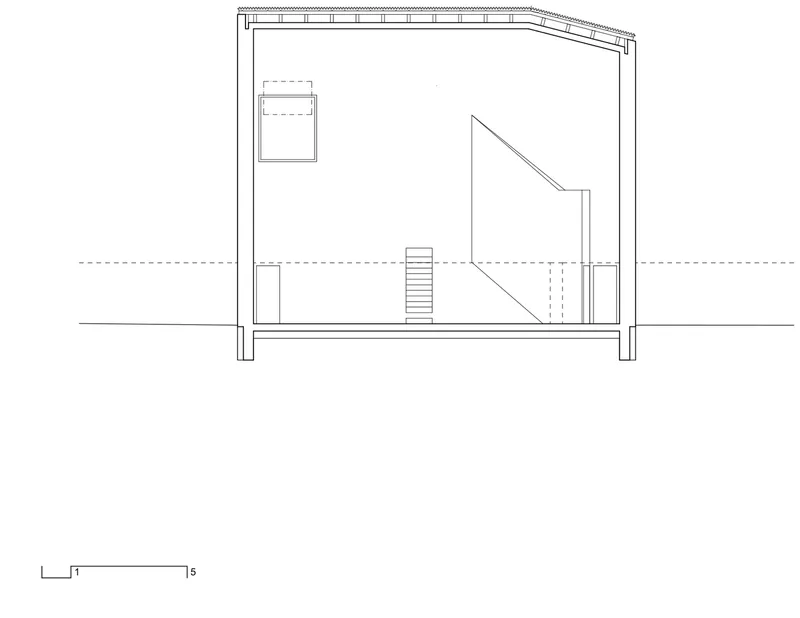
The plan unfolds in two distinct halves. On the side facing away from the tracks, a dramatic interior void connects to the garden. This soaring space measures over 10 meters in height, nearly 12 meters in length, and just over 3 meters in width, blurring the boundary between interior and exterior.
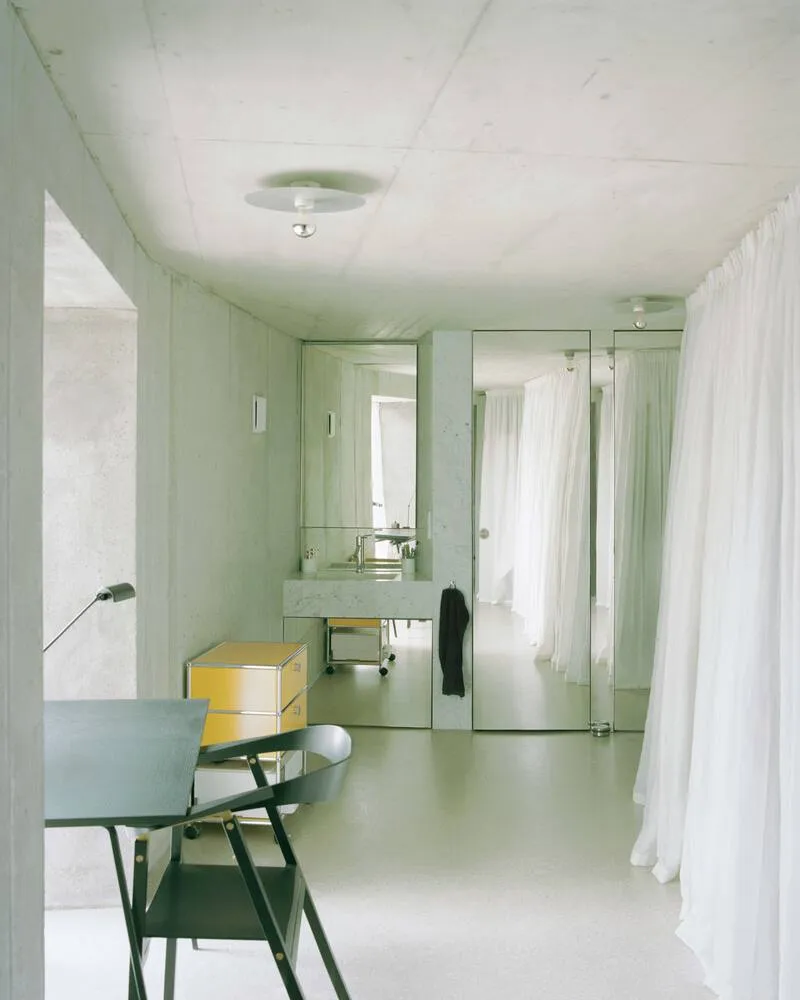
Two staircases—one central and one peripheral—spiral through the home like a double helix, providing access to the second half of the house where six equally sized rooms line up along the railway side. Each room features a large fixed north-facing window toward the tracks and a quieter ventilation door facing the opposite side.
The varying lengths of the staircases subtly adjust the heights of the rooms, providing variety within their otherwise identical footprints. The result is a dynamic interplay between repetition and difference.

Fragmentation and Wholeness
While the two staircases lead to separate parts of the house, the spaces are designed so that all sides and levels remain visually connected. This creates a tension between fragmentation and unity, allowing occupants to feel both separation and cohesion simultaneously. The design encourages flexible use of the neutral rooms, adapting to diverse and evolving living scenarios.

Material Honesty and Architectural Character
This monolithic concrete house design champions material authenticity. The raw concrete surfaces are left exposed, expressing the building’s structural logic and giving it a timeless, grounded quality. Large windows, controlled openings, and the strategic folding of the garden wall into the building establish a dialogue between openness and enclosure.
The garden wall not only defines the entrance but also merges the exterior landscaping with the architectural form, reinforcing the home’s strong conceptual link between nature and built environment.
The House near Vienna by Balissat Kaçani and Jann Erhard is a remarkable study in monolithic concrete architecture, spatial interweaving, and the coexistence of privacy with contextual openness. By embracing raw materiality and integrating the garden as an intrinsic architectural element, the project offers a forward-thinking response to site constraints while creating a timeless, adaptable home.


All Photographs are works of Willem Pab


Popular Articles
Popular articles from the community


Juan García Correa, John González and Claudia Rueda Sink a Circular Amphitheater into a Manizales Engineering Building
On the La Nubia campus in Manizales, Colombia, the S1 Building folds labs and offices into a hillside of ramped lawns that double as a campus route.

LT2A and OPEN Architectes Thread a Brick and Glass High School Through a Wooded Belgian Campus
In Braine-l'Alleud, a 3,000 m² wing for Collège Cardinal Mercier pairs pale brick with a glazed colonnade, deferring to a small chapel and a dense wood.

GROUP A Strips a 1969 Rotterdam Harbor Headquarters to Its Frame and Wraps It in Timber Louvers
In Rotterdam's M4H harbor district, Ferro Offices reuses a 1969 frame, adds one timber storey and reaches BREEAM-NL Outstanding.

David Ortega Stacks a Two-Story Mexico City Penthouse Around a Steel Stair and a Pergola-Shaded Roof Terrace
In Colonia Roma, a 300 m² penthouse uses oak joinery, a planted steel stair and a slatted roof pergola to make a new-build apartment feel like a house.

Similar Reads
You might also enjoy these articles

Gil Mello Arquitetura Tilts a Single Roof Toward the Waterfalls on a Plateau Above Aiuruoca, Brazil
In Aiuruoca, Minas Gerais, a 200 m² house of local labor and reclaimed poles pairs a low valley veranda with a tall mountain one.

U.GA Architects Wraps an Oval Rooftop Pool in Curved Board-Formed Concrete on Busan's Jeollidan-gil
In Busan's Jeonpo-dong, a 454 m² mixed-use block stacks a neighborhood facility, guest rooms and an oval rooftop pool inside spiraling concrete walls.

Felipe Hess Arquitetos Turns a Blind Stone Wall to the Street and Opens a Brazilian House onto a Courtyard and Canal
A canal-front house in Brazil hides behind painted stone and planting, then opens to an olive-tree courtyard, a reed-ceilinged porch and a curving pool.

David Macias Steps a Doorless Stone and Plaster House Down a Tropical Colombian Hillside
In the humid hills of Colombia, Threshold House replaces the front door with an open void and terraces its 850 m² down the slope instead of fighting it.

Explore Architecture Competitions
Discover active competitions in this discipline

Challenge to reimagine the Iron Throne

Photograph architecture without architects

Illustrate the lost glory of Angkor Wat - Render Challenge

Design challenge to reuse E-waste
Comments (0)
Please login or sign up to add comments
No comments yet. Be the first to comment!