
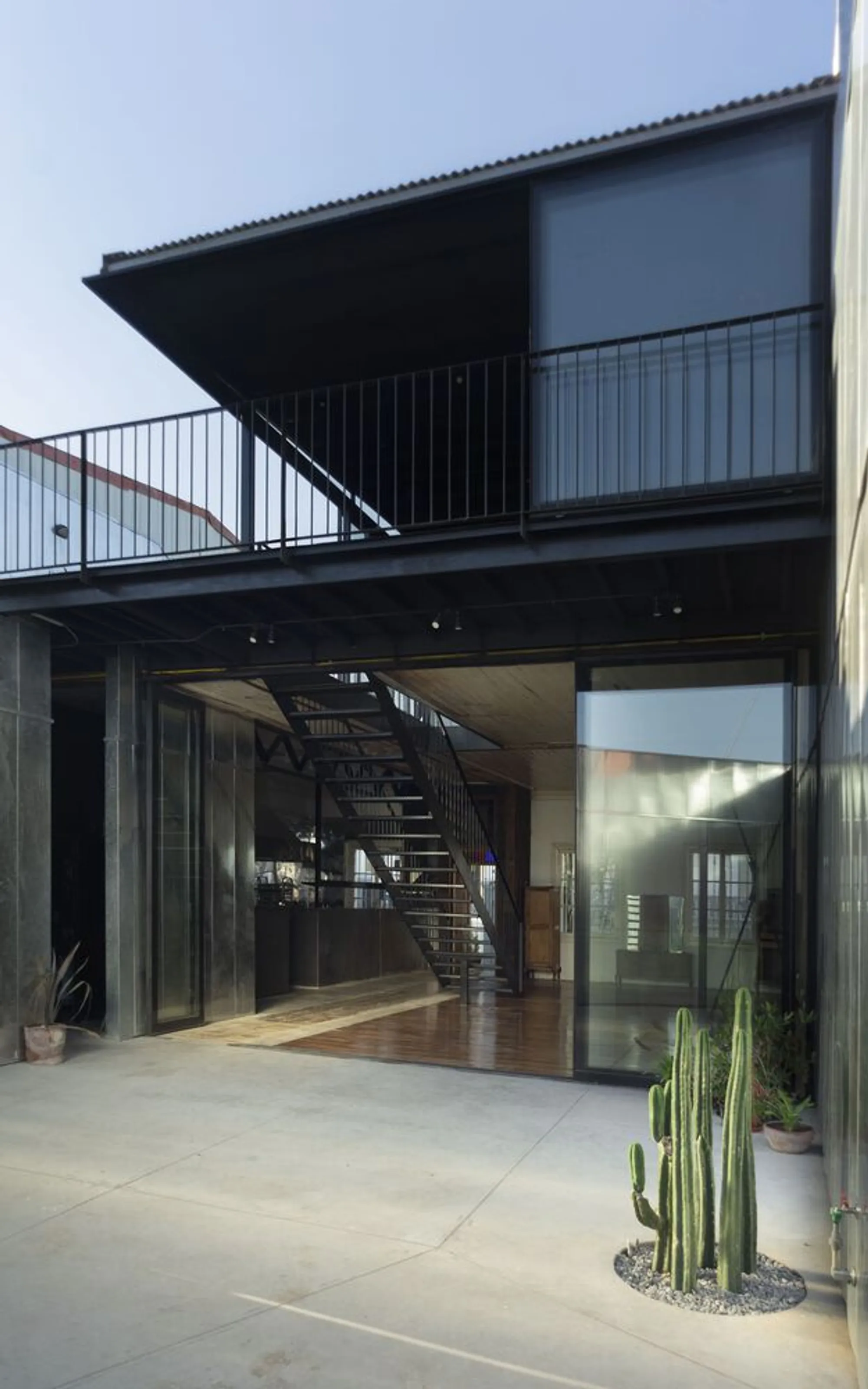
Montt 727 Heritage Restoration by Fantuzzi + Rodillo Arquitectos
Historic Montt 727 restoration in Valparaíso revitalizes a deteriorated structure through underground expansion, mansard addition, reclaimed wood, and careful heritage preservation.


The Montt 727 Restoration project by Fantuzzi + Rodillo Arquitectos represents a thoughtful approach to architectural restoration, adaptive reuse, and heritage preservation in the historic coastal city of Valparaíso. Completed in 2022, the project transforms a deteriorated historic property into a renewed cultural and social space while carefully protecting its original architectural identity.
With a built area of 153 square meters, the intervention focuses on restoring valuable structural and architectural elements that had deteriorated due to humidity, termites, and years of inadequate maintenance. The project balances structural reinforcement, heritage conservation, and programmatic expansion, ensuring that the building’s historical character remains intact while meeting contemporary functional needs.
Photographed by Sofía Oyarzún, the restored building demonstrates how sensitive restoration strategies can revive historic structures without compromising their authenticity.
Preserving Architectural Heritage While Addressing Structural Damage
The main goal of the Montt 727 project was to restore and maintain the building’s architectural integrity by conserving elements with strong heritage value. Key features such as the north and south façades, original floors, ceilings, and structural wall axes were carefully repaired to maintain the building’s historic environmental character.
Over time, the structure had suffered significant damage caused by moisture infiltration, termite activity, and material deterioration. These conditions had weakened the foundations and floor frameworks, causing noticeable inclinations in the original floor levels.
To resolve these structural issues, the architects introduced new reinforced concrete foundations, replacing the deteriorated brick foundations that had been undermined by moisture. This structural intervention not only stabilized the building but also allowed the creation of a new underground level, expanding the functional capacity of the project without altering its visual presence in the surrounding urban landscape.
This approach reflects a key principle in historic building restoration: improving structural stability while maintaining the original architectural appearance.
Invisible Expansion Through an Underground Level
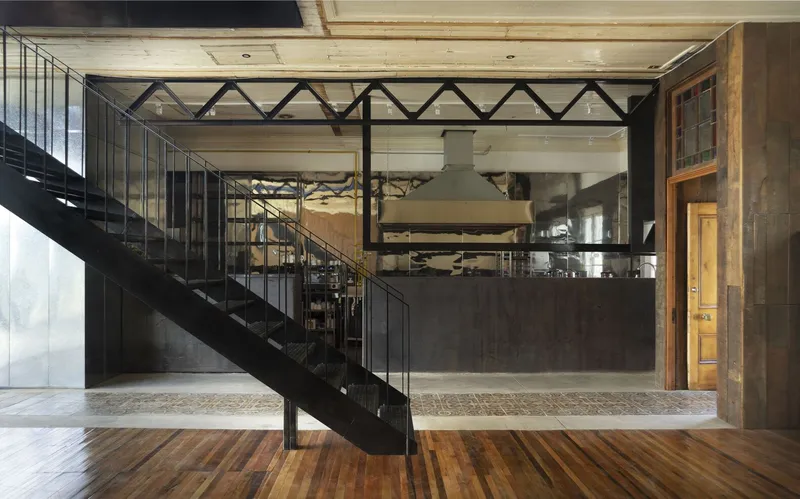
One of the most innovative aspects of the project is the addition of an underground floor that remains almost completely invisible from the public realm. This strategic design decision allowed the architects to expand the architectural program without compromising the historic façade or altering the building’s urban identity.
The underground level incorporates reinforced concrete foundations and perimeter walls, ensuring structural durability while integrating seamlessly with the restored building above. By locating new spaces below ground, the design preserves the scale, proportions, and heritage character of the property within the historic neighborhood of Valparaíso.
This solution highlights how subterranean architecture can provide additional functionality while respecting the architectural context of historic environments.
Mansard Roof Addition Without Altering the Historic Façade
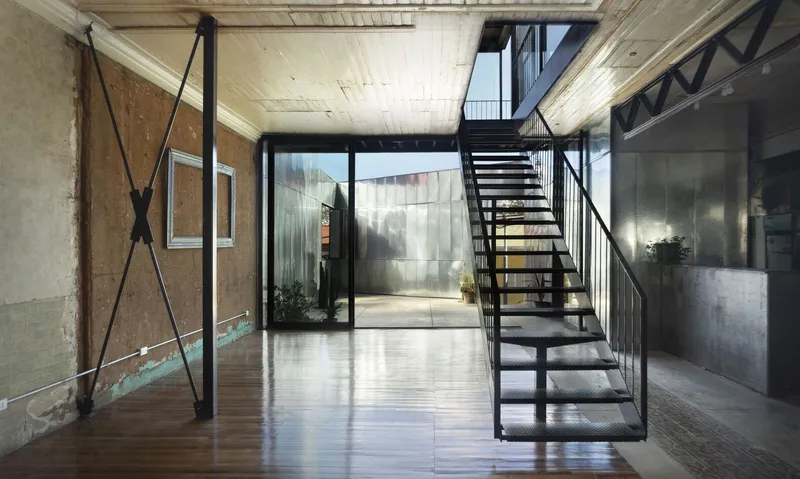
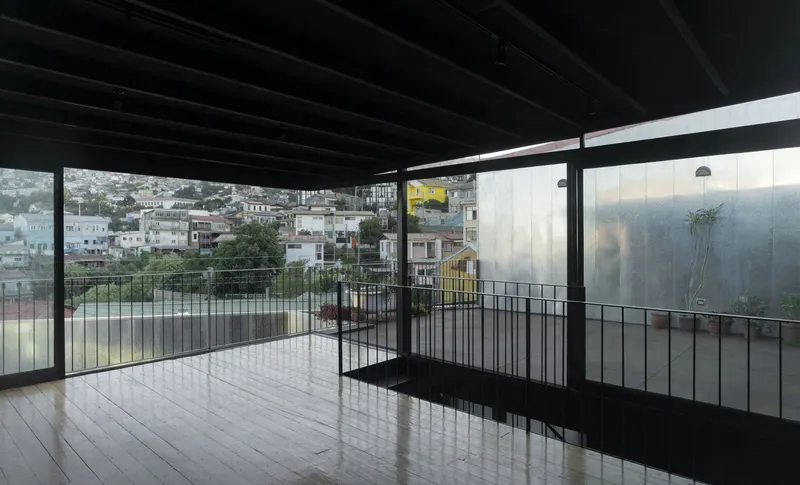
In addition to the underground expansion, the architects introduced a second mansard-style level to increase usable interior space. The mansard roof is carefully designed so that it remains hidden from street view, ensuring that the building’s original façade continues to dominate the streetscape.
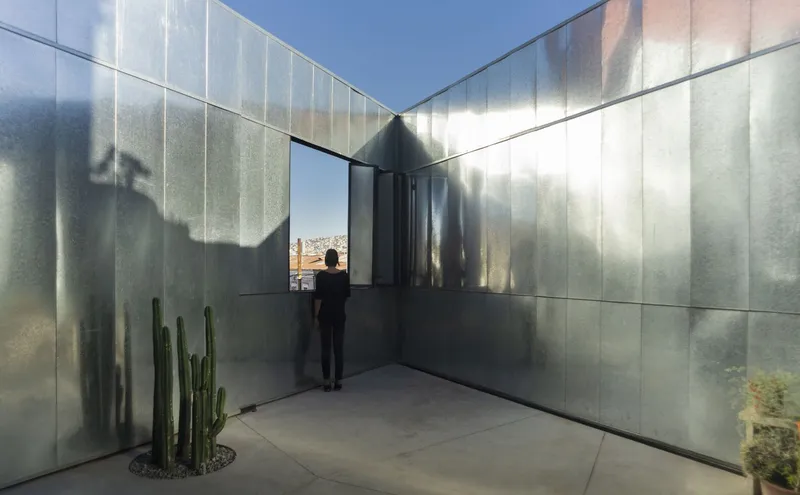
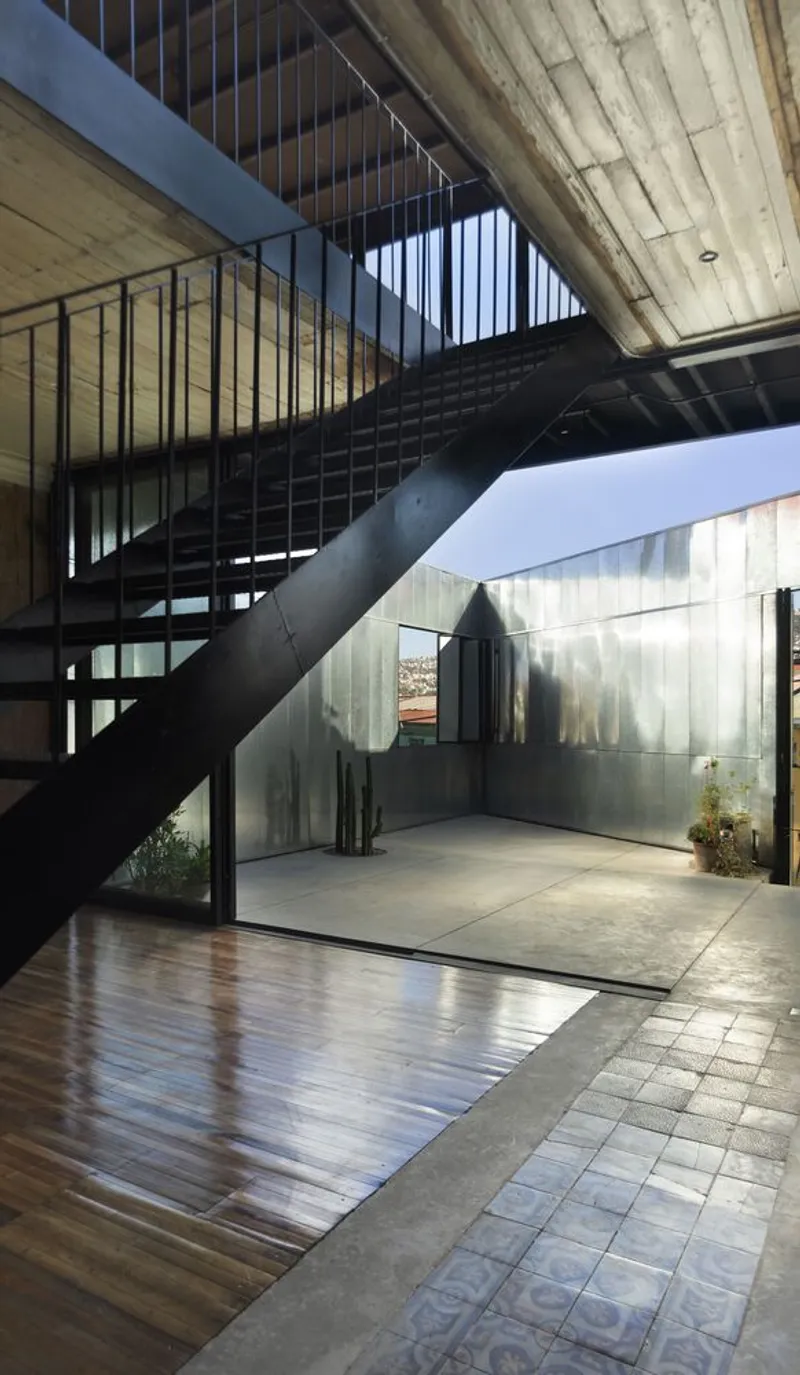
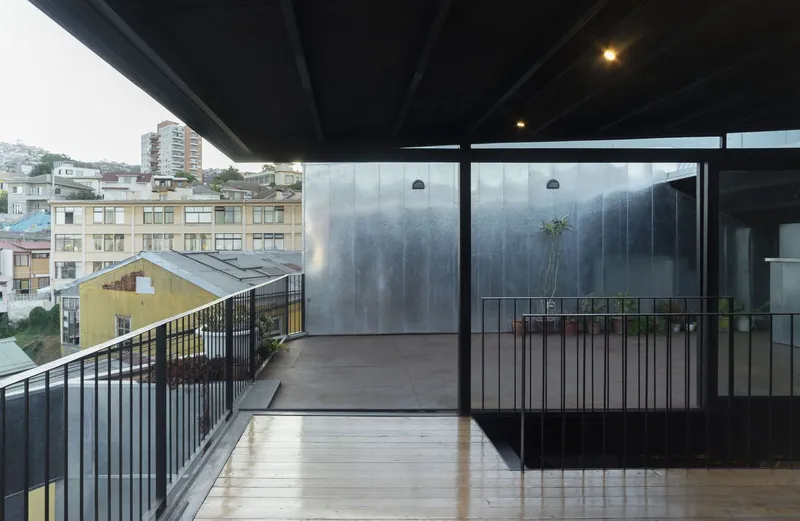
This new upper level integrates seamlessly with the historic structure by using restored wooden floor beams and Oregon pine boards for interior cladding. On the exterior, the design utilizes corrugated zinc panels in the same original color, maintaining visual continuity with the existing materials.
By concealing the additional floor within the roof structure, the architects successfully achieved vertical expansion without visual disruption, a key strategy in heritage-sensitive architectural interventions.
Restoring Historic Materials and Architectural Details
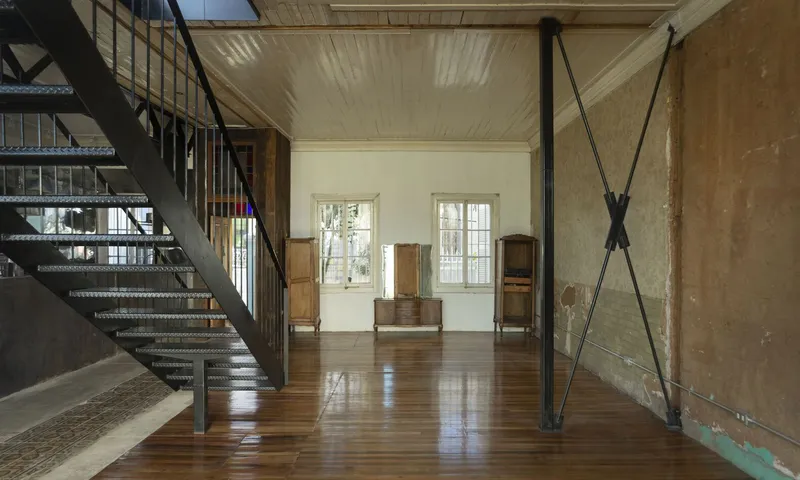
A defining aspect of the Montt 727 Restoration project is its commitment to material authenticity and traditional craftsmanship. Rather than replacing original elements with new materials, the architects prioritized the reuse and restoration of historic components whenever possible.
The restoration process involved recovering the original structural framework, using reclaimed or demolition wood to reconstruct elements that had deteriorated. Oregon pine beams were reused for the floor frameworks, with cross-sections ranging between 2 to 2½ inches by 10 to 12 inches, matching the dimensions of the original construction.
For the wall structures, reclaimed wood with 4x4-inch sections was incorporated to maintain the historic structural system. These materials not only replicate the appearance of the original architecture but also reinforce the building’s environmental sustainability through material reuse.
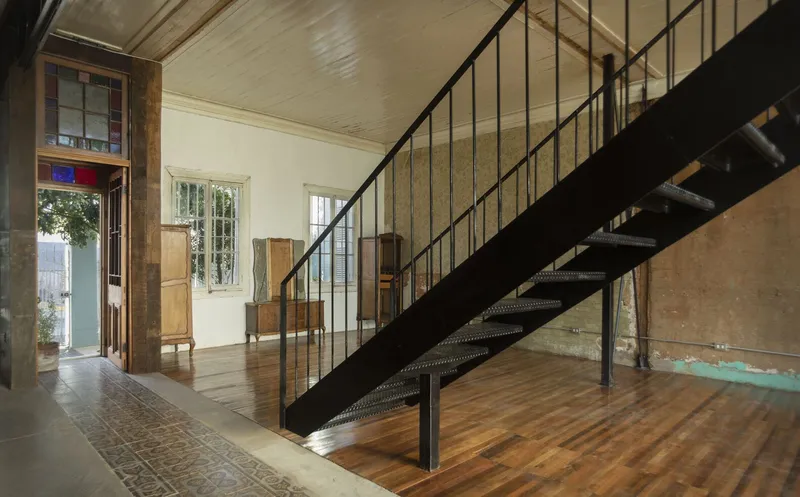
All existing doors, windows, trims, and interior elements were restored and repainted in their original colors, preserving the authentic character of the building. New doors and interior components were constructed using reclaimed wood, carefully designed to match the aesthetic language of the historic structure.
Façade Restoration and Urban Integration
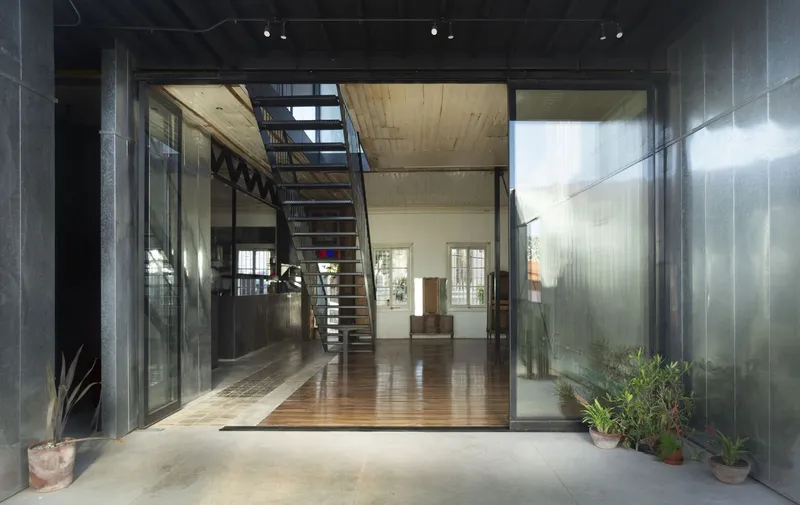
The building’s north façade, composed of micro-corrugated metal plates, was preserved and restored to maintain the building’s recognizable street presence. Maintenance work included repairing ornamental details and repainting surfaces while retaining the original color palette.
On the south façade, the project restored the existing enclosing wall, which had been severely deteriorated. The architects preserved the original finish, maintaining the appearance of exposed concrete, which reflects the building’s historic material identity.
By maintaining these façade elements, the project reinforces the building’s visual continuity with the surrounding historic urban fabric, ensuring that the restoration enhances rather than disrupts the architectural character of the neighborhood.
Interior Spaces and Structural Craftsmanship
Inside the building, the restoration highlights the beauty of exposed wooden structures, beams, and handcrafted details. The use of restored Oregon pine flooring, reclaimed timber frames, and carefully repaired structural elements creates a warm interior atmosphere that celebrates the building’s historic construction methods.
The visible structural components: such as beams, handrails, and wooden frameworks, serve both functional and aesthetic roles, emphasizing the architectural narrative of restoration and reuse.
The mansard level features wooden floors constructed with 1x4-inch Oregon pine boards, reinforcing the continuity of material expression throughout the building.
A Model for Sustainable Heritage Restoration
The Montt 727 Restoration demonstrates how adaptive reuse and heritage conservation can coexist with modern architectural requirements. By combining structural reinforcement, underground expansion, reclaimed materials, and careful façade preservation, the project successfully revitalizes a historic building while maintaining its cultural significance.
Through thoughtful design decisions, Fantuzzi + Rodillo Arquitectos created a project that respects the architectural legacy of Valparaíso while introducing new spatial possibilities for contemporary use.
The result is a compelling example of how historic restoration projects can balance preservation, sustainability, and innovation, ensuring that heritage buildings continue to play an active role in modern urban life.
All photographs are works of
Sofía Oyarzún


Popular Articles
Popular articles from the community


Riyadh For All: Intergenerational Urban Design for Active Aging in Rabat
Riyadh For All reimagines urban design in Rabat with intergenerational co-living, adaptive courtyards, and Moroccan cultural exchange today.

The Earth Pod: 3D Printed Homes for Resilient Refugee Communities
The Earth Pod reimagines refugee housing through 3D printed homes made from clay, combining resilience, self-sufficiency, and rapid shelter.

The Ocean Hive: Sustainable Architecture for a Self-Sufficient Civilization at Sea
The Ocean Hive imagines sustainable architecture at sea, where modular habitats, algae, wave power and ocean waste sustain a growing colony.

Play: Fragments of Their World
Familiar architecture becomes modular playground design, creating safe spaces where displaced children can learn, connect, imagine and play.


Similar Reads
You might also enjoy these articles

FAMM Arquitectura Organizes Ten Villas Around Courtyards and Jungle in Nosara, Costa Rica
El Molino pairs two elongated volumes with deep overhangs and timber louvers to build a compact coastal community five minutes from the beach.
Oscar Niemeyer's Ibirapuera Park Pavilions Define São Paulo's Cultural Identity in Concrete and Curve
A constellation of modernist volumes set within São Paulo's most important urban park, conceived for the city's 400th anniversary in 1954.
How Henri Picq's 1889 Paris Pavilion Traveled 11,000 Kilometers to Become Santiago's Artequín Museum
A prefabricated iron and glass pavilion built for the Paris Universal Exposition found a second life as a children's art museum in Chile.
Sanjay Puri Architects Wraps a Jaipur Office Tower in Capsule-Shaped Green Buffers
A nine-level climate-responsive workplace near Jaipur Airport uses stacked planter terraces and aluminium screens to fight 40°C heat.

Explore Architecture Competitions
Discover active competitions in this discipline



Challenge to reimagine the Iron Throne


Photograph architecture without architects


Illustrate the lost glory of Angkor Wat - Render Challenge


Design challenge to reuse E-waste
Comments (0)
Please login or sign up to add comments
No comments yet. Be the first to comment!