

Nanjing Constitution Park by azLa: A Civic Landmark Merging Architecture, Nature, and Legal Education
A civic landmark blending constitutional education, urban landscape, and cultural engagement along Nanjing’s Green Expo Park and Yangtze River.


A Monument to Constitutional Spirit
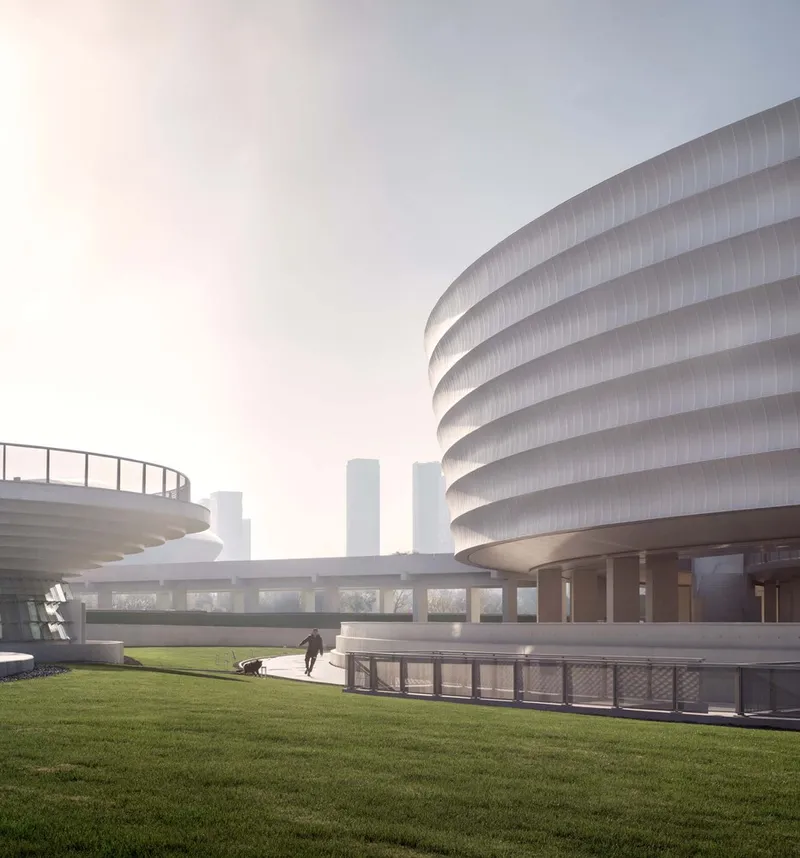
Designed byazLa Architecture, the Nanjing Constitution Park and Urban Living Room at Green Expo Park marks a significant milestone in China’s civic space evolution. It is not only an architectural response to the “rule of law” initiative but also a public cultural destination rooted in constitutional education, urban ecology, and community interaction.
Historical Context and Construction Timeline
In response to the CPC’s 8th Five-Year Legal Education Plan, the park was conceptualized to promote Xi Jinping’s thoughts on constitutional governance. Construction began on National Constitution Day, December 4, 2021, and was completed within a year—opening to the public on December 4, 2022.
Strategic Site Selection in Nanjing's Green Expo Park
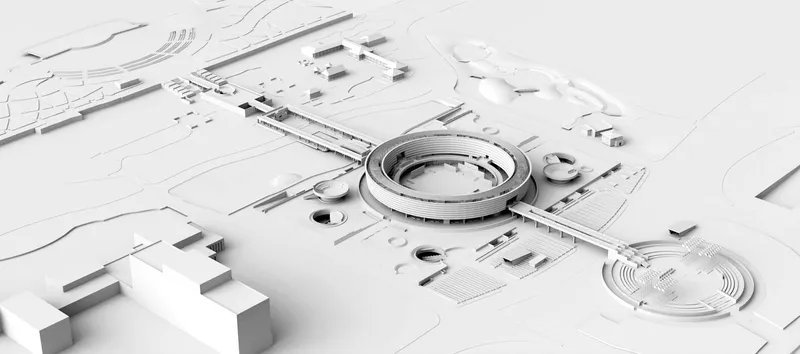
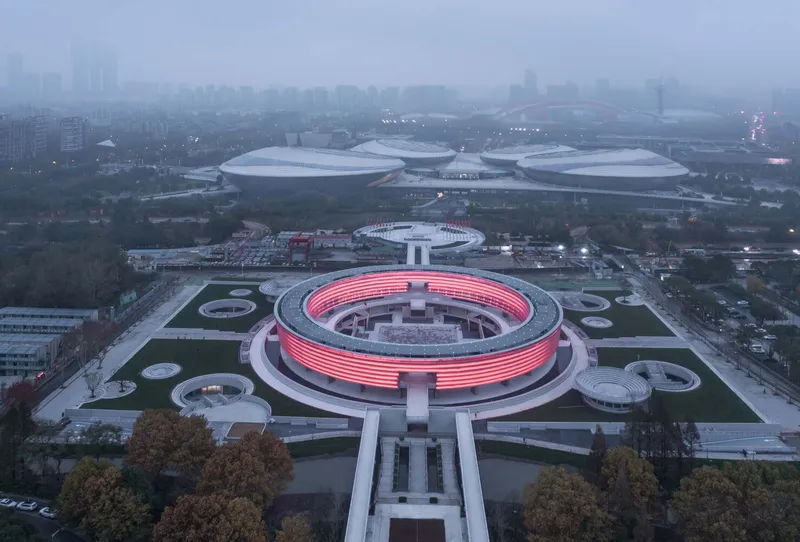
The park is strategically located within Green Expo Park, along the Yangtze River, from Jiangsu Grand Theatre to Jiajiang section. Covering a land area of 64,530 sqm, with a total built-up area of 31,162 sqm, the site integrates natural topography, existing public amenities, and Metro Line 9 connectivity—creating a future-ready legal and cultural hub.
Design Concept: Three Synergies
1. Legal Culture Meets Nature
The project harmonizes constitutional symbolism with riverside ecology, turning the riverbanks of the Yangtze into a living classroom. As a result, the park becomes a spatial metaphor for law’s coexistence with life, a model of legal landscape design in urban China.
2. Legal Learning Through Daily Living
By embedding the legal narrative into the urban living room—a multifunctional public space with sports, leisure, education, and social events—the park promotes civic engagement through interaction, not instruction.
3. Constitutional Landscape Meets Existing Ecology
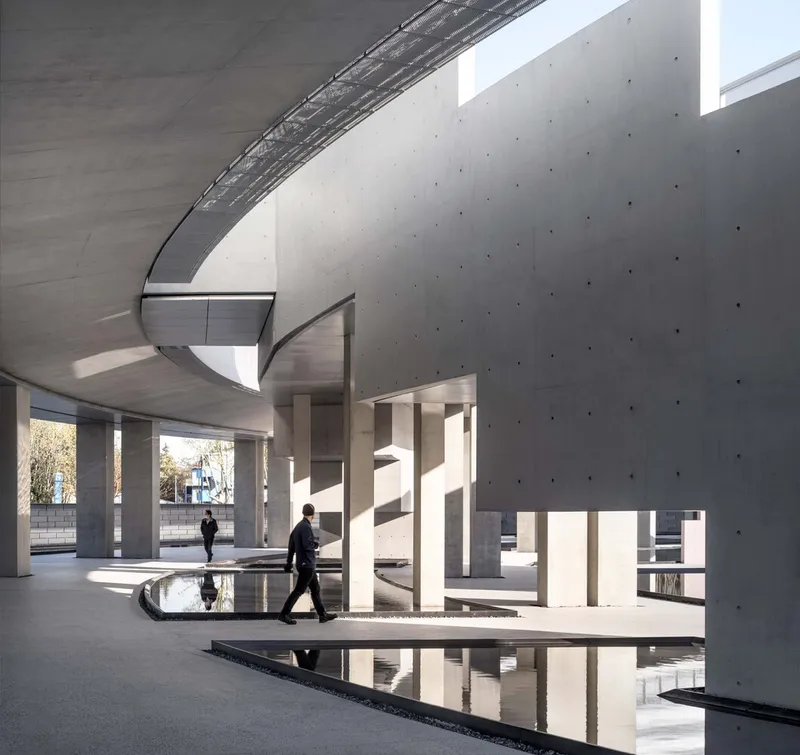
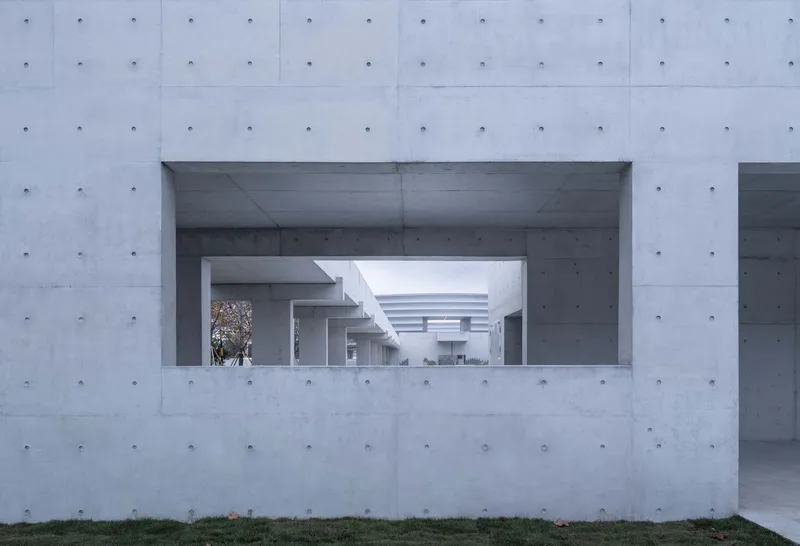
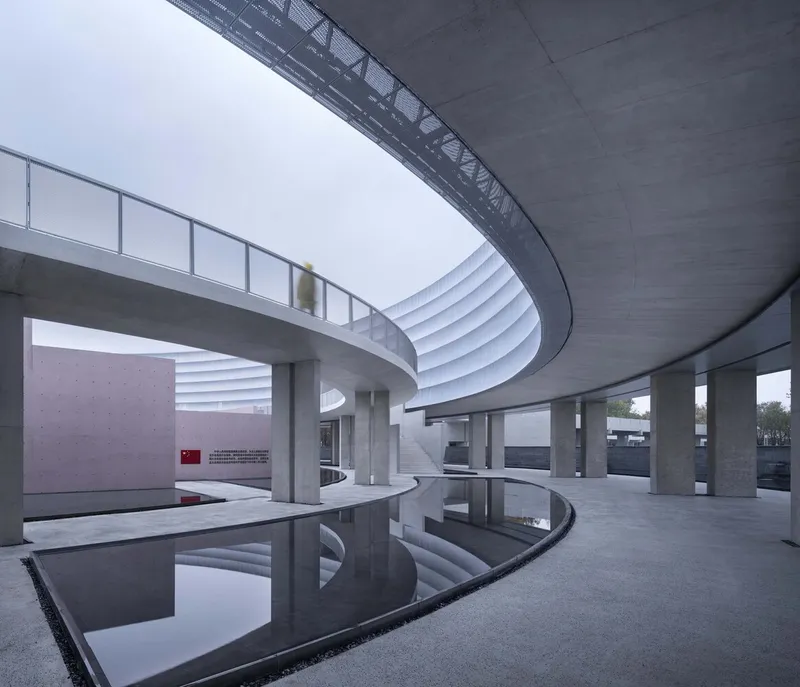
Without altering the park's original layout, the design incorporates Constitution Plaza, Flag Square, Oath Plaza, and Water Courtyard, weaving legal symbolism into the existing landscape, infrastructure, and pathways.
Urban Integration: The “Living Room” Vision
Nanjing’s Charming Riverfront 2035 Plan proposed the development of nine "urban living rooms" along the Yangtze. Constitution Park anchors the Green Expo Park City Living Room, forming a civic core surrounded by Jiangsu Grand Theatre, Olympic Sports Center, and Eco-Tech Island. The result is a continuous urban cultural and ecological corridor of over 3 kilometers.
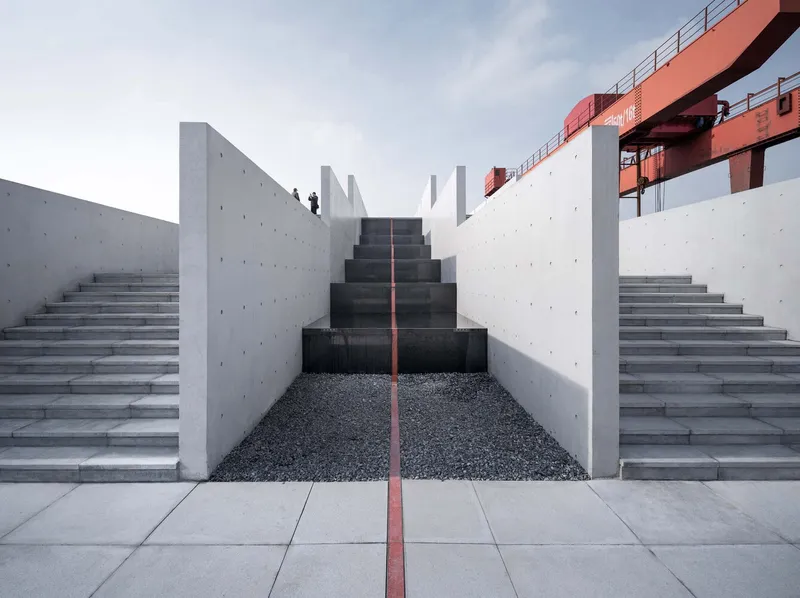
The Cultural and Sports Axis: Civic Continuity in Space
The Hexi Cultural and Sports Axis, a major urban development feature since 2004, connects Constitution Park with major landmarks, including the Olympic Sports Centre and Jiangsu Grand Theatre. The park’s layout reinforces ceremonial movement, legal monumentality, and urban-riverfront connectivity—culminating in a new symbolic heart for west Nanjing.
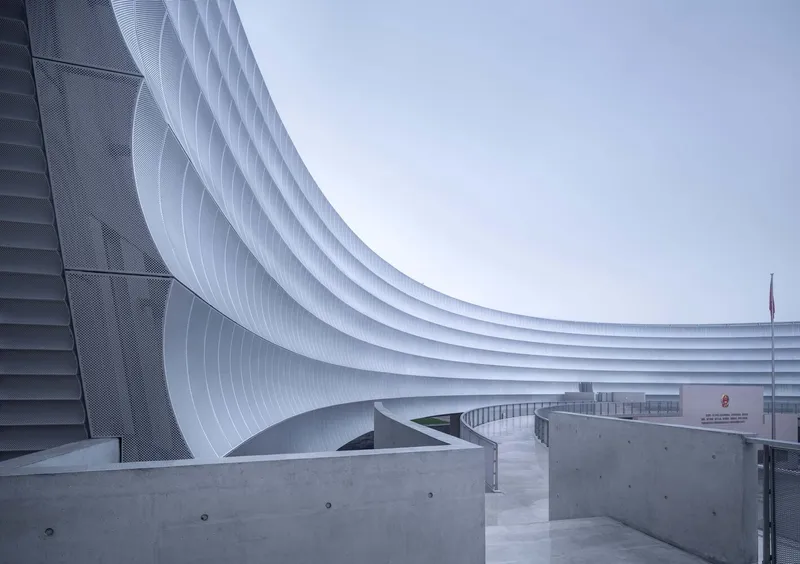
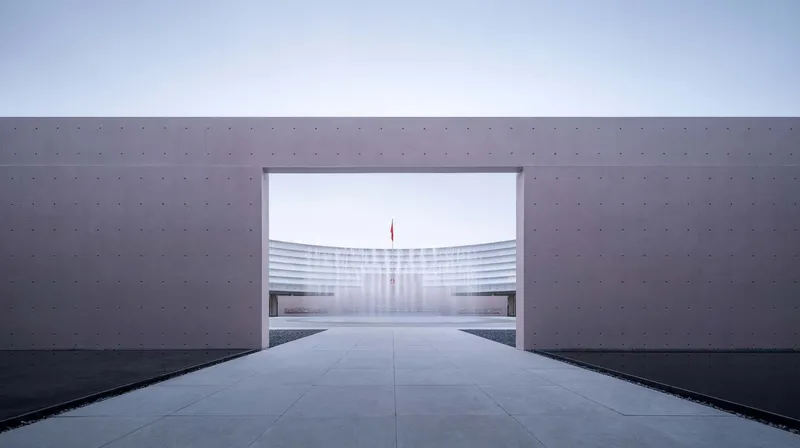
Symbolic Design: Square and Circle Metaphors
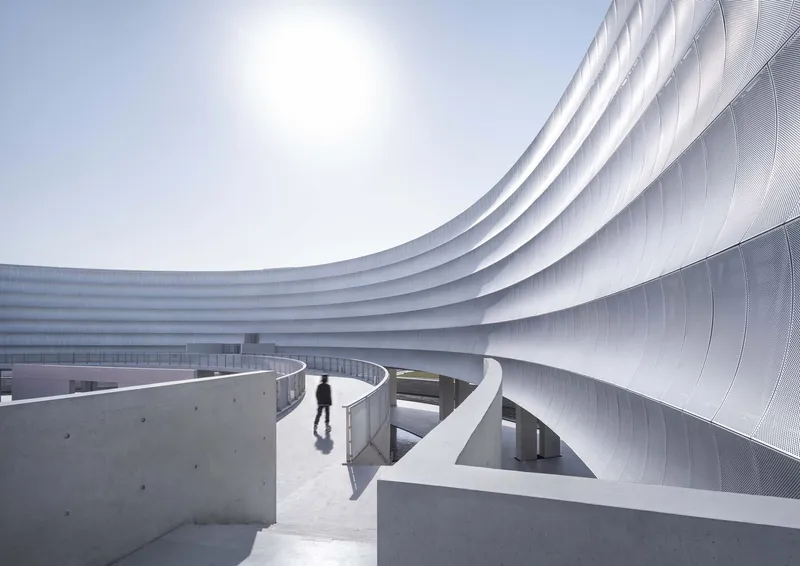
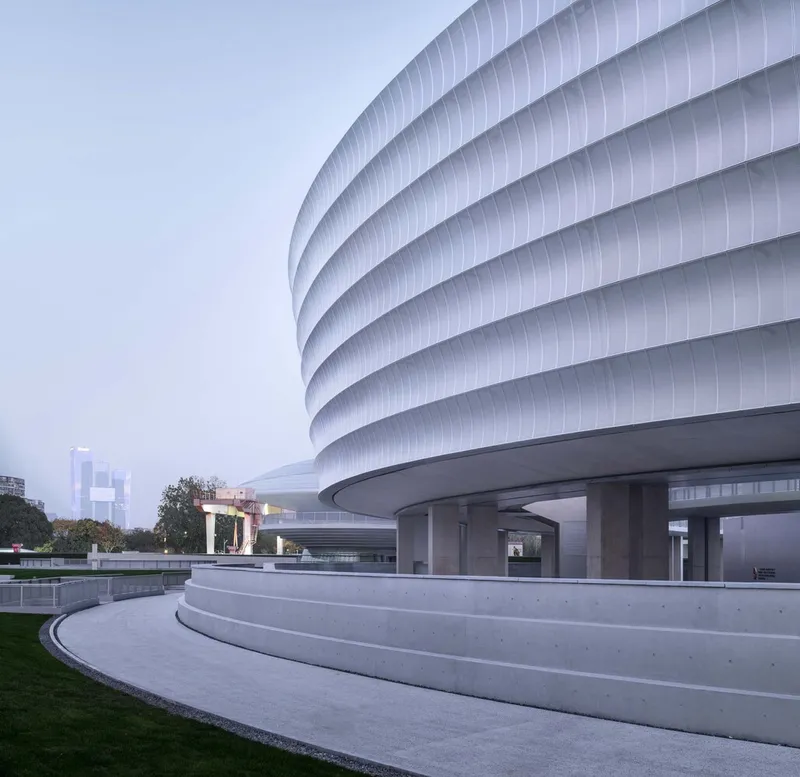
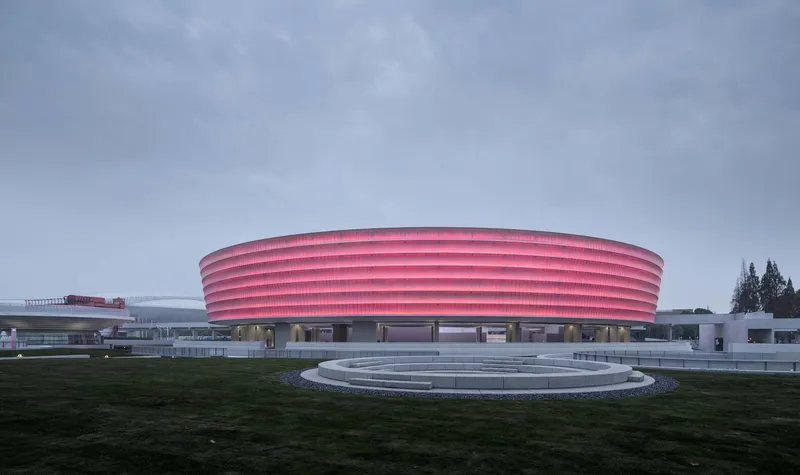
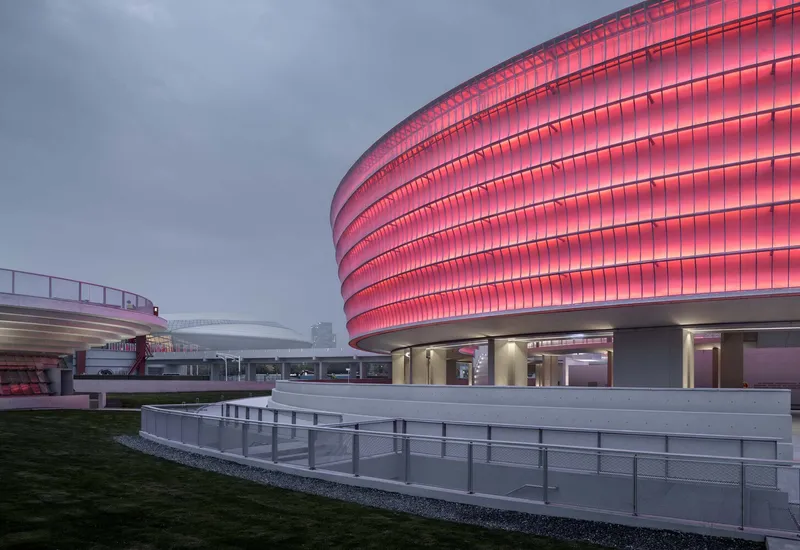
Rooted in Chinese cosmology (“heaven is round, earth is square”), the park uses geometry to convey stability, unity, and authority. At the core lies the Circular Constitution Exhibition Hall (diameter: 100m), encircling a Square Constitution Plaza for public ceremonies like the constitutional oath and coming-of-age rituals.
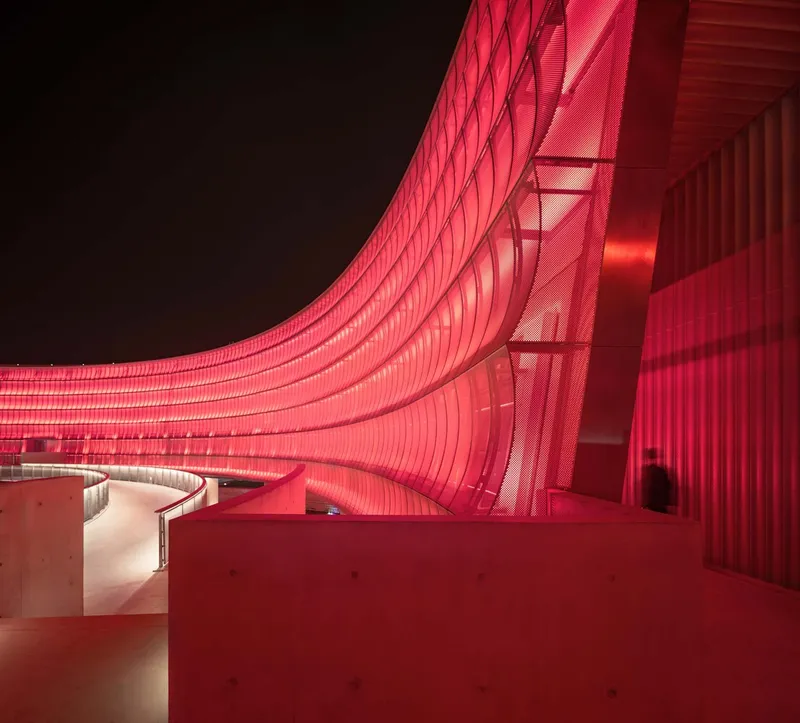
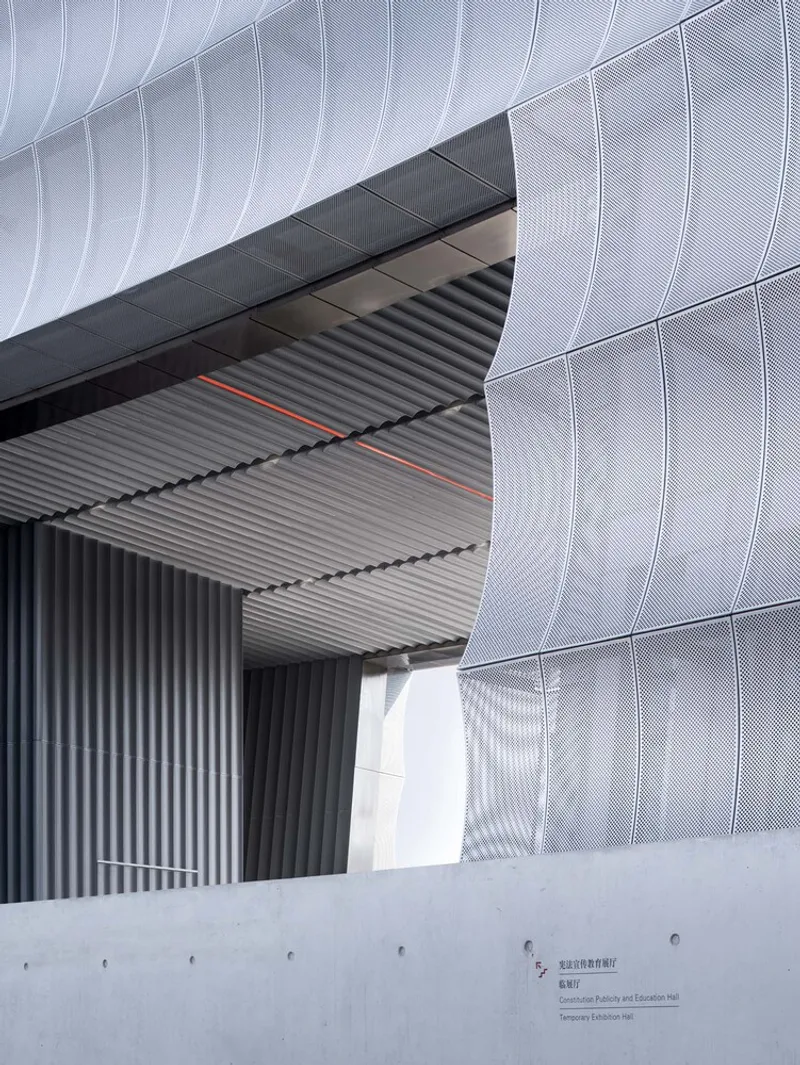
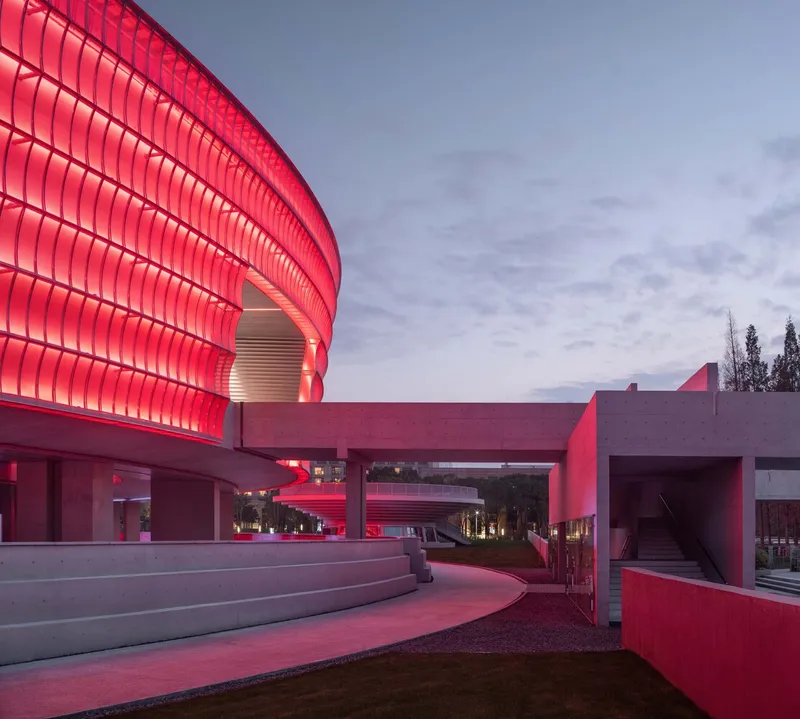
The facade, likened to a red lantern, shines at night with LED-lit concrete pathways named the “Light of the Constitution”—a contemporary tribute to tradition.
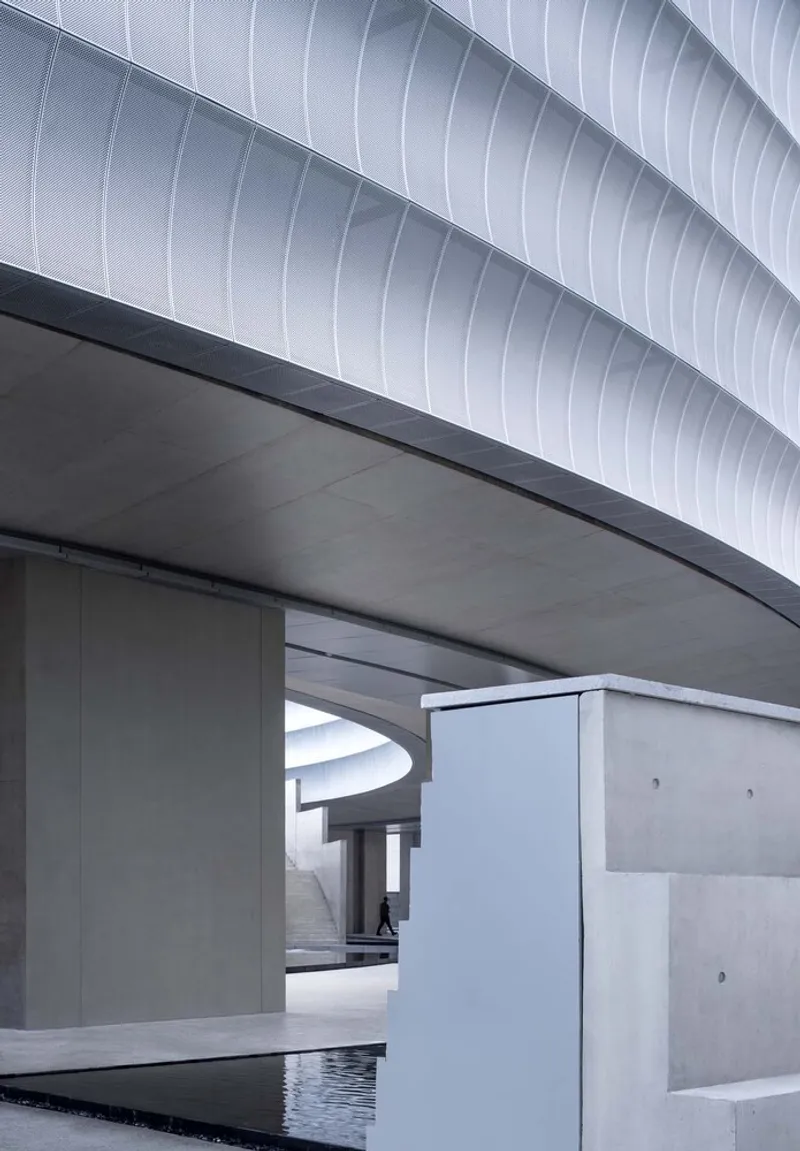
Digitally Encoded Memory: Spatial Numerology
Numerical references encode constitutional milestones into space:
- 8.2m height for the 1982 Constitution
- 5.4m references the 1954 Constitution
- 12.4m flag matrix height honors Constitution Day on Dec 4
- 100m ring and 82m internal diameter symbolize national unity and history
These metrics subtly embed national memory within the visitor’s spatial experience.
Civic Space and Environmental Vitality
The landscape architecture emphasizes openness and community. A large open lawn, immersive ginkgo-lined pathways, and a series of sunken courtyards create informal zones for play, rest, and public discourse. Public programming is supported by underground commercial, cultural, and transit infrastructure, connected directly to Metro Line 9.
From Architecture to Activism
At its heart, the park does not merely represent the Constitution—it activates it. By turning legal ideology into landscape, it becomes a living symbol of Chinese civic life, encouraging visitors to reflect, engage, and celebrate the country’s democratic and legal journey.
All Photographs are works of Bowen Hou


Popular Articles
Popular articles from the community


longwave studio Reorganizes a 112 m² Tainan Apartment Around the Daily Routines of a Family and Two Cats
In Tainan, Taiwan, birch plywood, rust-red furniture and a freestanding plaster wall link arrival, storage, work and family life in one apartment.

Jaramillo Van Sluys Arquitectura and Urbanismo Turn a Demolished Registry Lot in Quito into an Orchard Plaza
In Quito's Centro Histórico, a 2,800 m² plaza exposes the San Agustín convent wall and redraws its lost Augustinian orchard in volcanic stone.

GROUP A Strips a 1969 Rotterdam Harbor Headquarters to Its Frame and Wraps It in Timber Louvers
In Rotterdam's M4H harbor district, Ferro Offices reuses a 1969 frame, adds one timber storey and reaches BREEAM-NL Outstanding.

David Ortega Stacks a Two-Story Mexico City Penthouse Around a Steel Stair and a Pergola-Shaded Roof Terrace
In Colonia Roma, a 300 m² penthouse uses oak joinery, a planted steel stair and a slatted roof pergola to make a new-build apartment feel like a house.

Similar Reads
You might also enjoy these articles


Hodi-Mandai Geram
Project Function: Preservation and revitalization of the Intangible heritage and socio-spatial identity of the Hodi by Housing, Cultural Memory Center, Sacred Grove, landscape, local tourism economy


Olio Towers: A Mid-Rise for Performers That Fuses Housing, Rehearsal, and Stage
Located blocks from Houston's Theater District, this modular tower stacks living units around a central performance atrium.

Oasis: Modular Green Housing Carved into Dhaka's Urban Fabric
A shortlisted Plugin Housing entry reclaims unauthorized settlements in Dhaka with stepped concrete volumes, green roofs, and ventilation-driven design.

Black Hole: A Floating Megastructure for the Post-Physical Era
Emiliano Mazzarotto envisions a spherical, self-scaling arena where e-sports, digital hotels, and holographic stadiums replace traditional public space.
Explore Public Building Competitions
Discover active competitions in this discipline

Challenge to design locus for the upliftment of human rights

Challenge to reimagine the Iron Throne

Photograph architecture without architects

Illustrate the lost glory of Angkor Wat - Render Challenge
Comments (0)
Please login or sign up to add comments
No comments yet. Be the first to comment!