
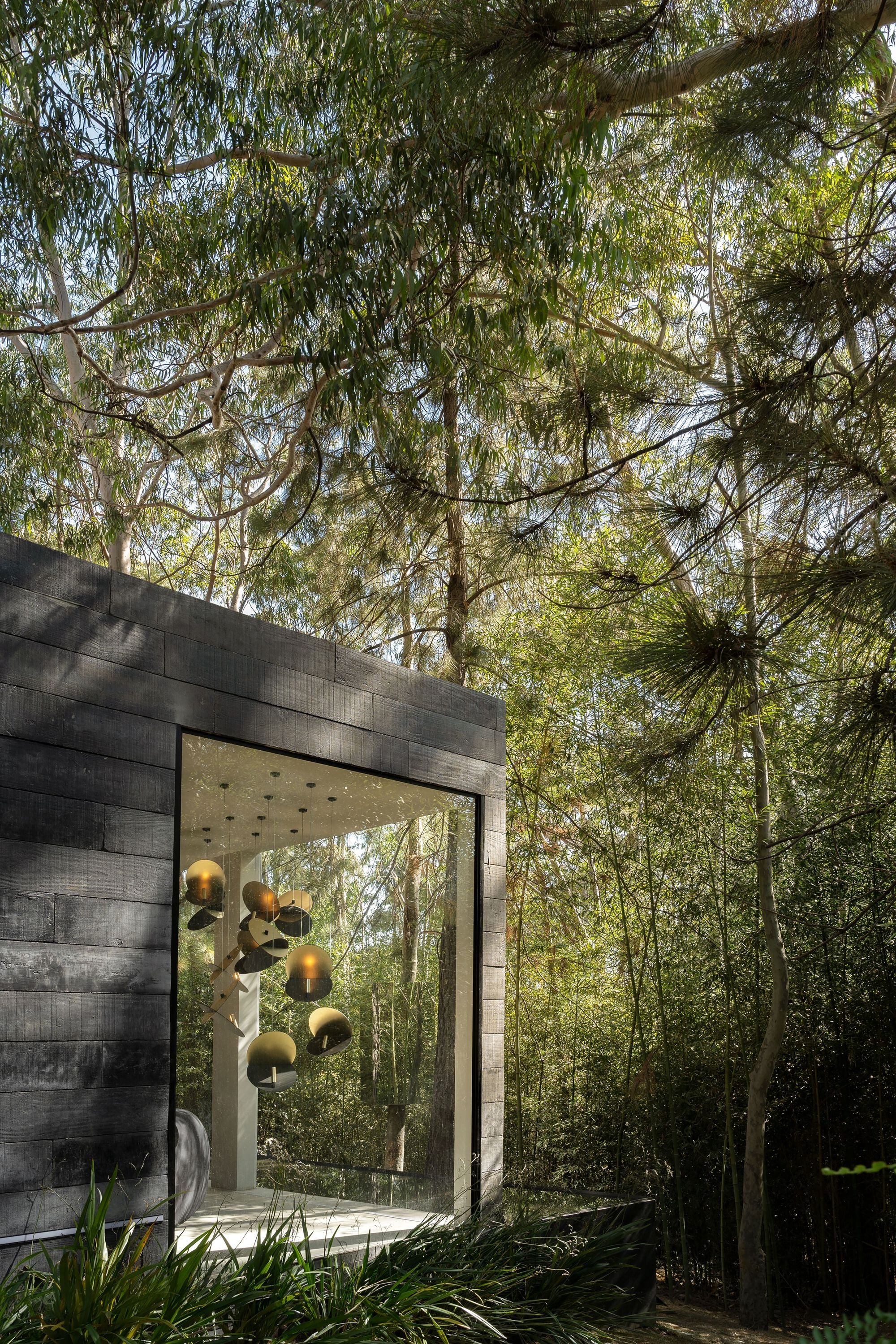
Natan Gil Arquitetura Builds a Charred Timber Hotel Room as a Desert Oasis in Belo Horizonte's Forest
Installed at CASACOR Minas 2022 on the grounds of Niemeyer's Palácio das Mangabeiras, this 100 m² room channels the logic of a desert caravan stop.

A hotel room that asks you to forget the city exists. That is the provocation Natan Gil Arquitetura staged for CASACOR Minas 2022, siting a 100 m² pavilion on the landscaped grounds of the Palácio das Mangabeiras in Belo Horizonte, a property originally designed by Oscar Niemeyer with gardens by Roberto Burle Marx. The project takes its name literally: the room is conceived as a way station, a place where a traveler arrives after crossing a hostile expanse and finds water, shade, and stillness. Translating that Middle Eastern caravan logic into a Brazilian subtropical forest produces a space that is at once dark, mineral, and extravagantly green.
What makes Urban Oasis worth studying is not the concept alone, which could easily have stayed at the level of mood board. It is the material discipline. Charred timber (shou sugi ban) wraps the exterior in a near-black skin that absorbs the mottled eucalyptus light rather than competing with it. Board-formed concrete anchors the structure to the ground. Vertical gardens and tropical plantings blur the threshold between built volume and Burle Marx's legacy landscape. The result is a room that feels excavated rather than erected, a hollow carved into the forest canopy.
A Black Shell Among Eucalyptus
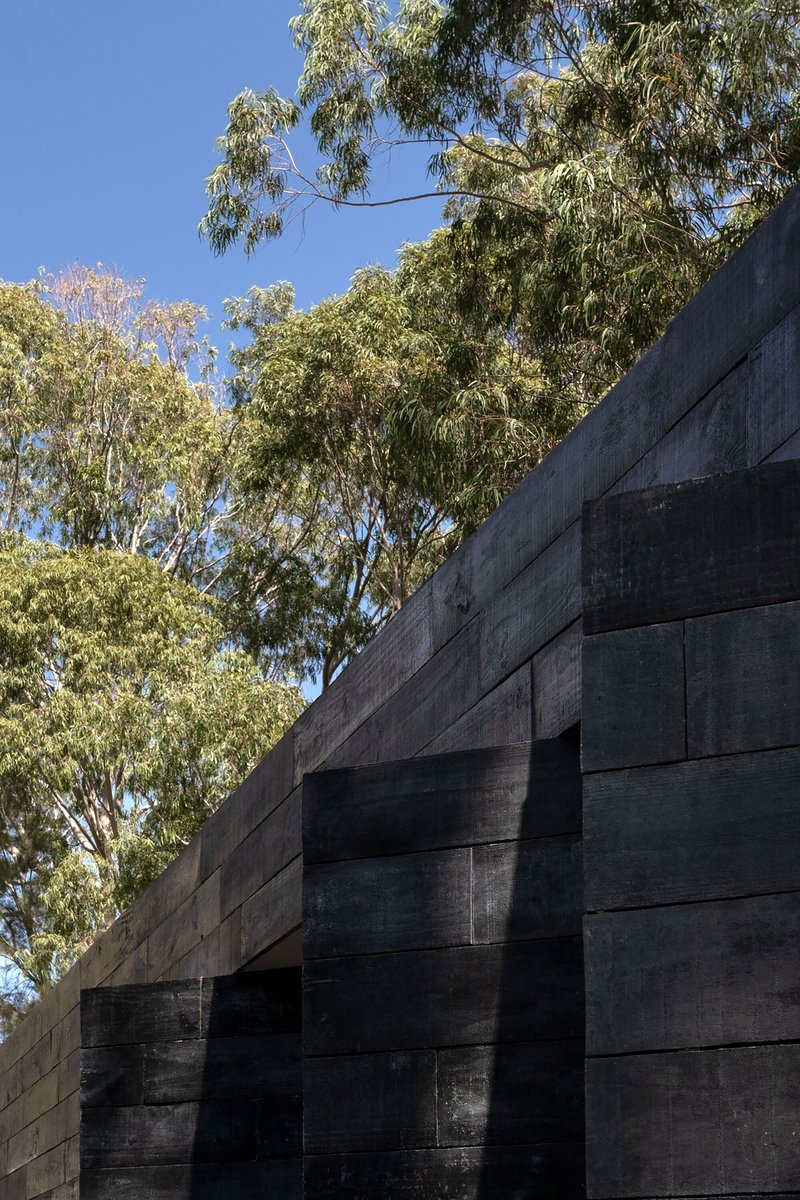
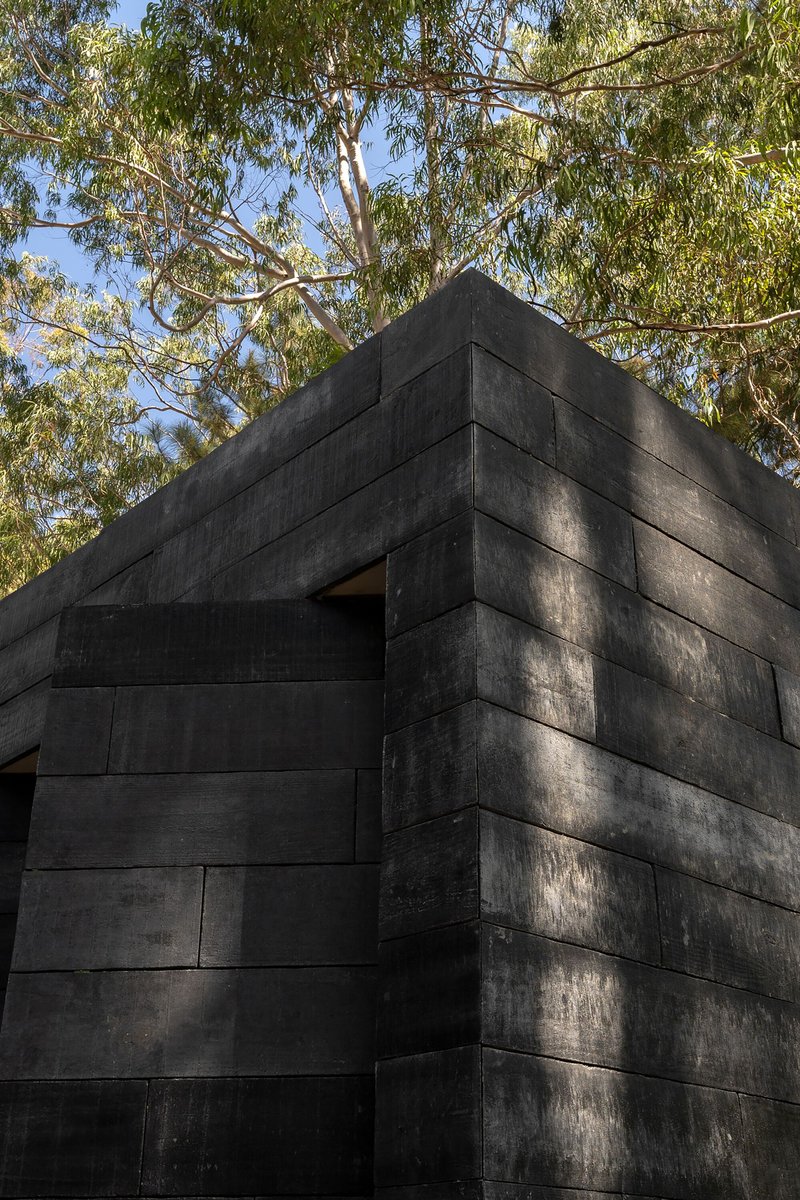
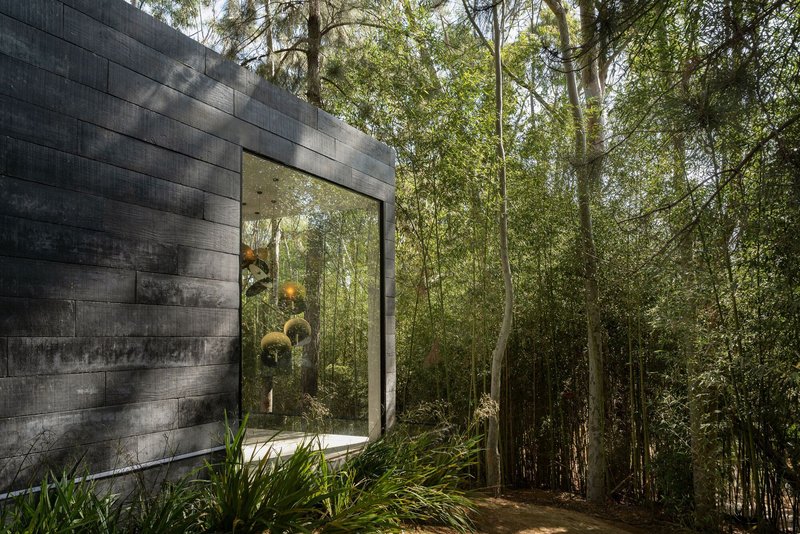
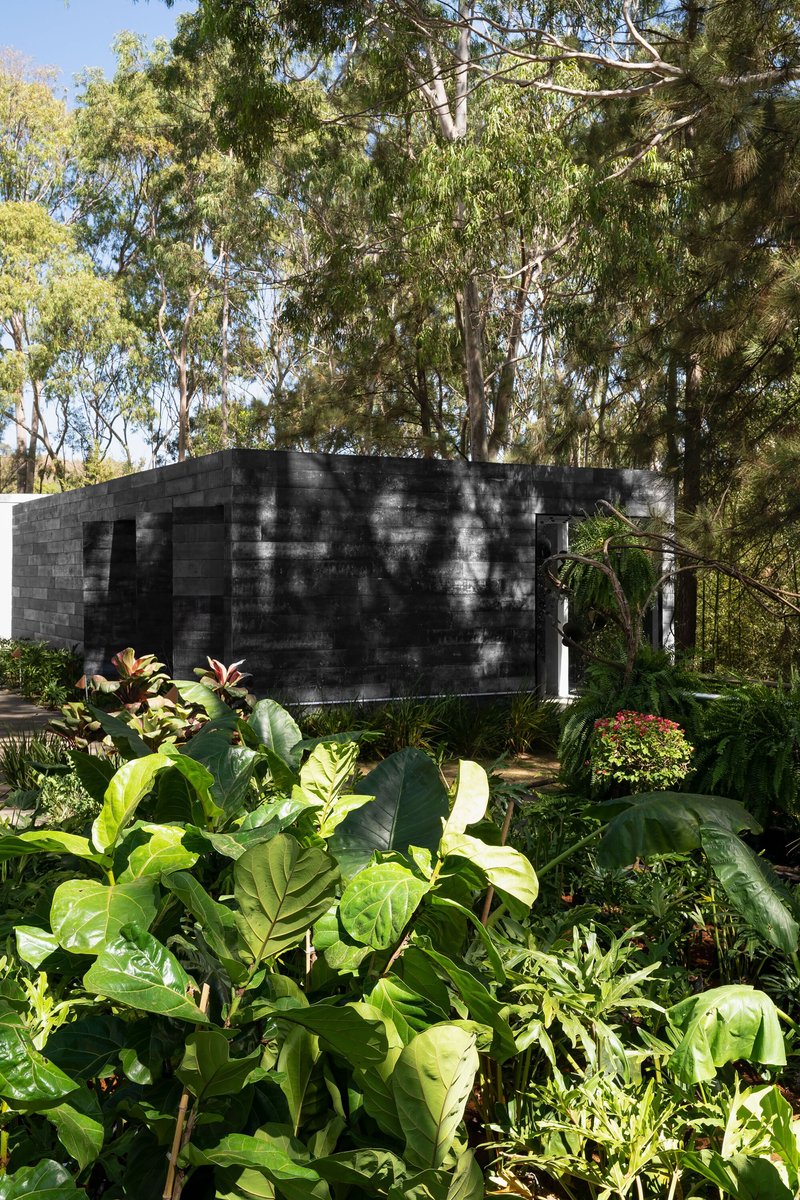
The charred timber cladding does real work here. Its horizontal board pattern reads as geological strata when viewed from a distance, and up close the carbonized grain holds every shadow the surrounding eucalyptus trees throw at it. Dappled light moves across the blackened surface throughout the day, making the facade a kind of sundial. The material is not just decorative: the charring process seals the wood against moisture and insects, a practical choice for a pavilion sitting directly in the forest's microclimate.
Corner details reveal how carefully the boards were mitered and aligned. There is no trim, no reveal strip, nothing to interrupt the monolithic reading of the volume. The decision to go completely dark on the exterior forces the building into a subordinate relationship with the landscape, which is exactly the hierarchy the oasis metaphor demands. Shelter is a servant of nature, not the other way around.
Threshold and Portal
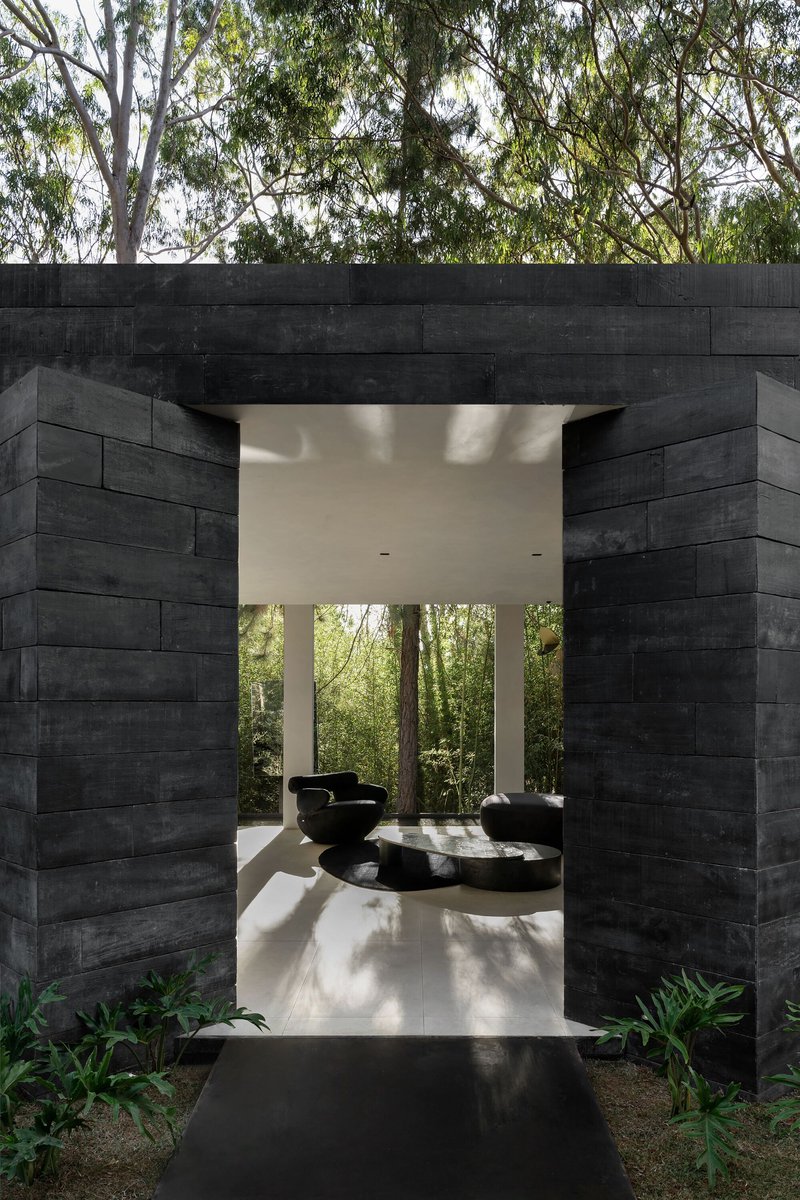
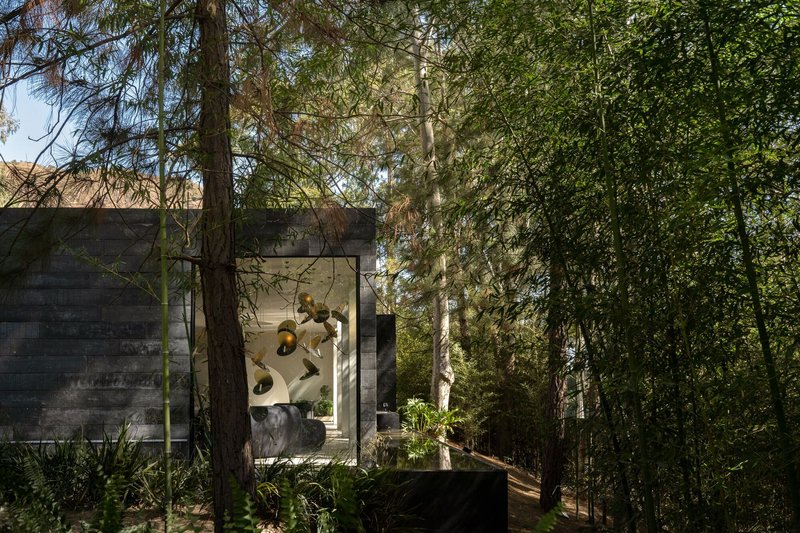
The frontal approach frames the pavilion as a portal. A deep, dark opening in the blackened timber wall reveals an interior courtyard beyond, and pendant spheres hang at the entrance like markers on a caravan trail. The gesture is theatrical but restrained: you are being pulled inward, not impressed outward. Natan Gil understands that threshold experiences matter more than facade composition for a project about arrival and rest.
From a different angle, the board-formed concrete base becomes visible, planted with bromeliads and tropical ground cover. The meeting of concrete, char, and garden bed creates three distinct material registers in the space of a single meter. This layering gives the small pavilion a density of texture that compensates for its compact footprint. It reads as substantial, even ancient, despite being a temporary installation.
Living Space and Light
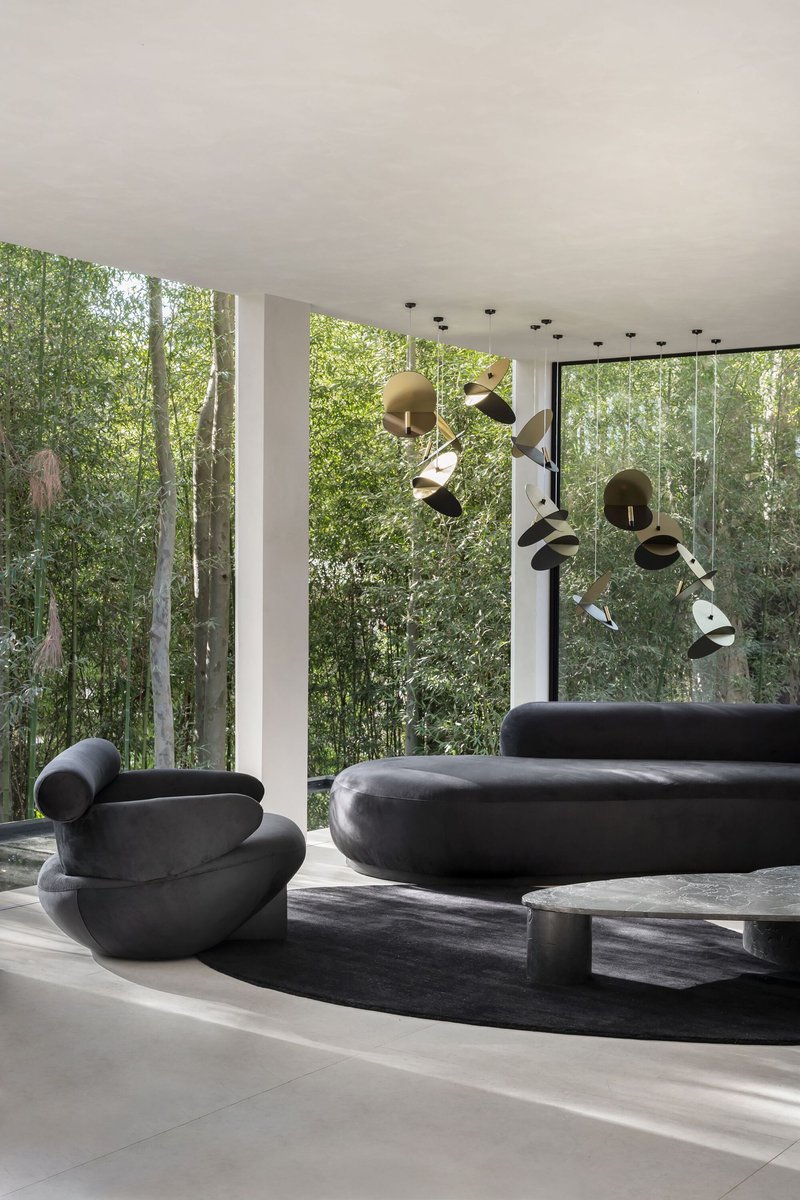
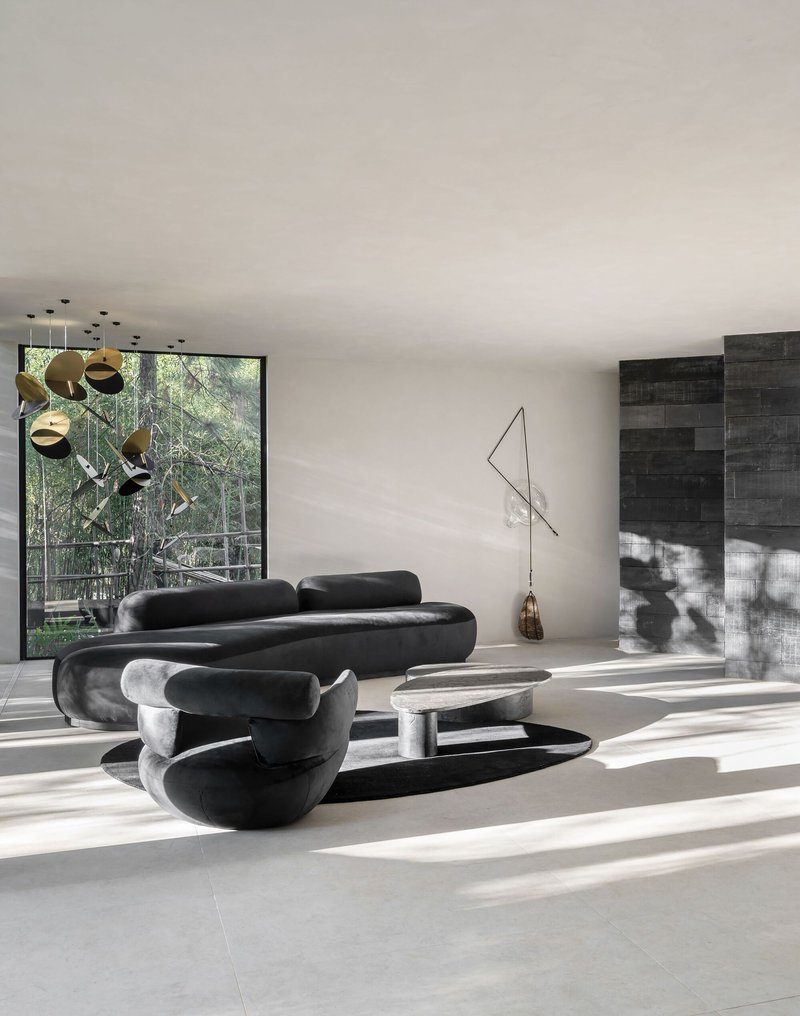
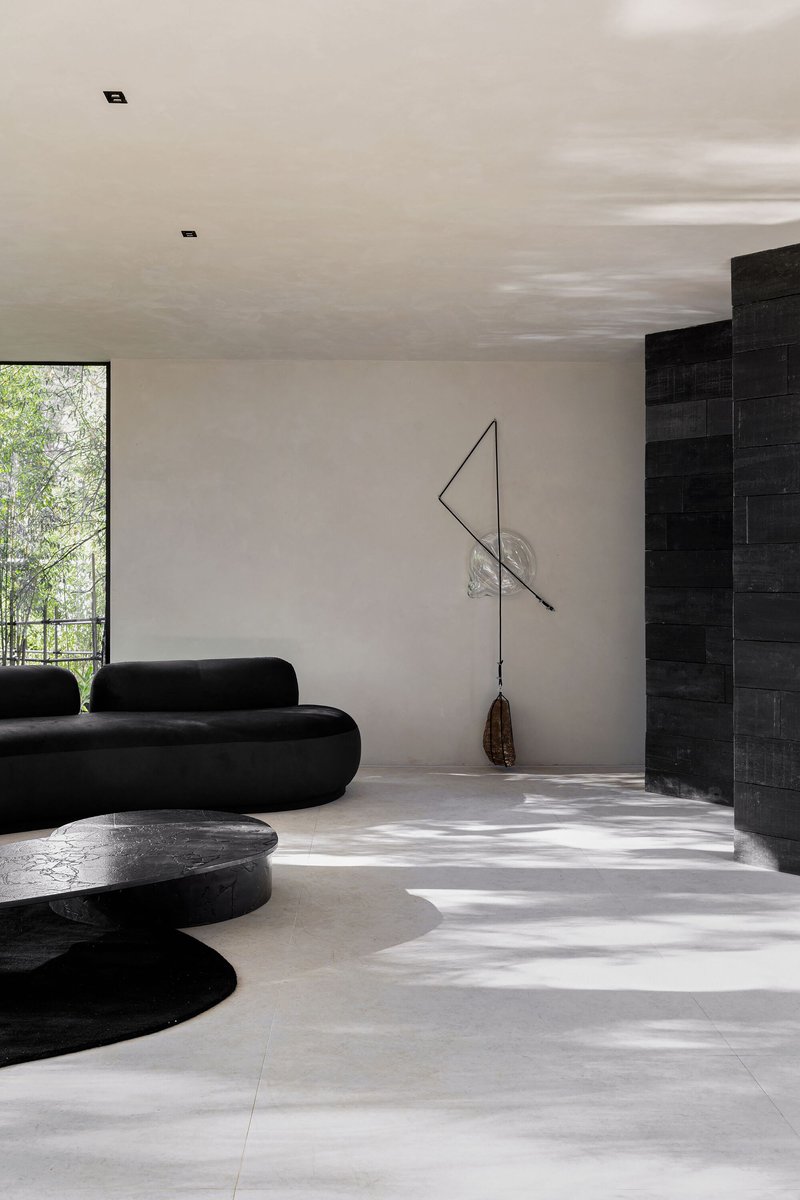
Inside, the living area holds sculptural seating pieces beneath a recessed ceiling with discreet lighting. Floor-to-ceiling glazing opens the room to the forest on one side while the charred timber courtyard wall anchors the opposite boundary. The effect is directional: you are always looking through the space toward greenery, never at a blank wall. Dappled sunlight enters from both the glass facade and the courtyard, creating a shifting lattice of light and shadow on the concrete floor.
The furniture selections lean organic and minimal. Wire sculptures and round side tables appear beside black tiled walls with linear uplighting, establishing a palette that stays within the material logic of the envelope. Nothing feels imported from a catalogue. Everything belongs to the same tonal family: black, stone, white, green.
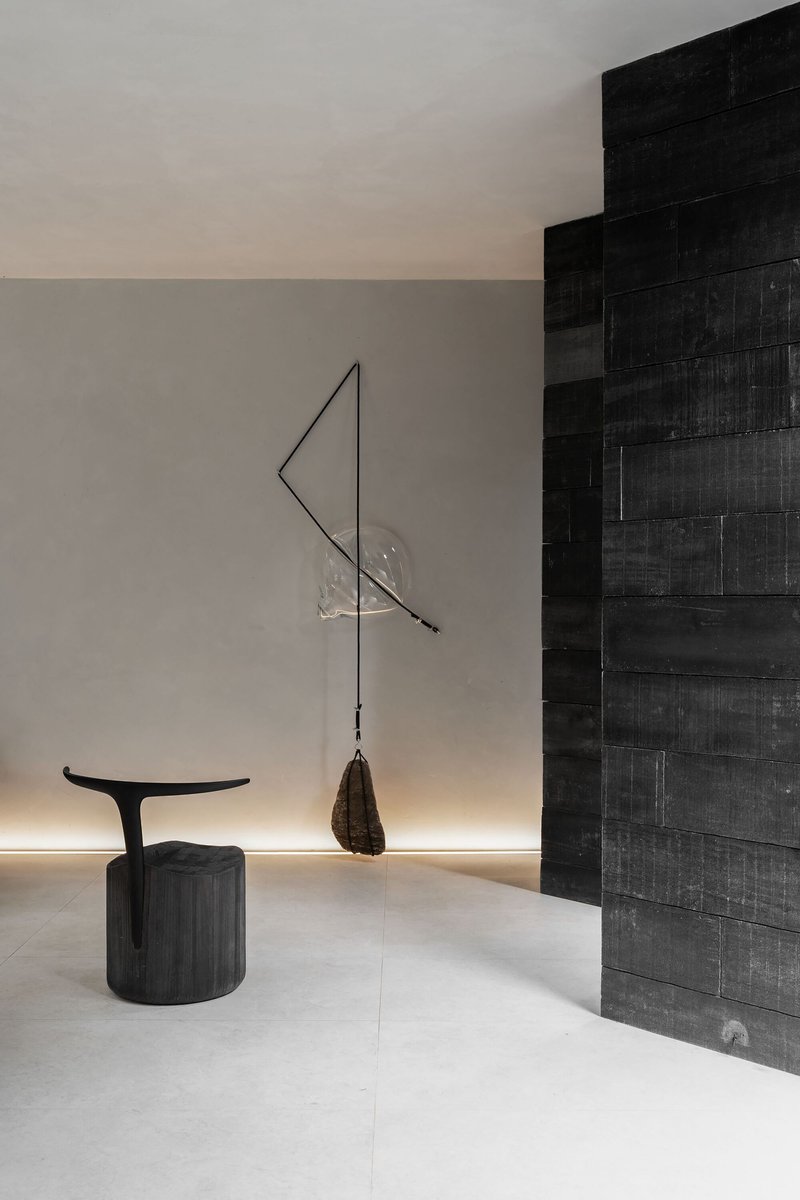
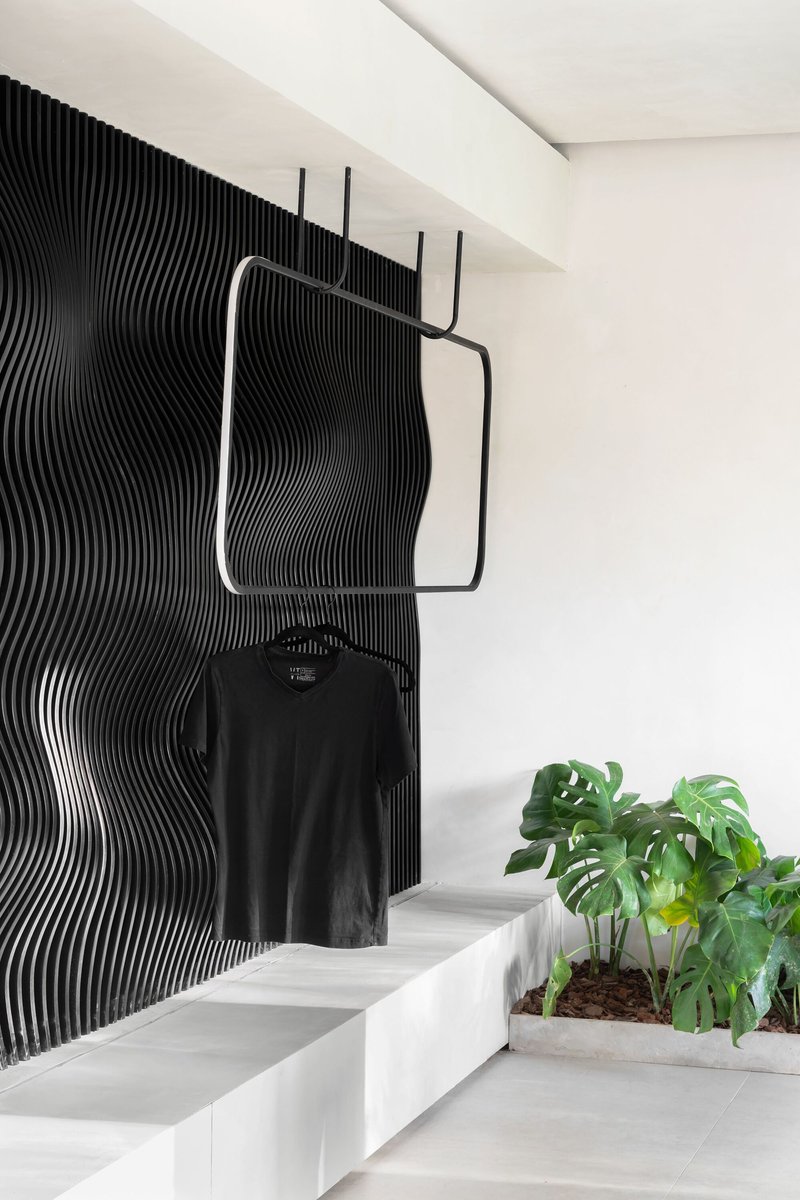
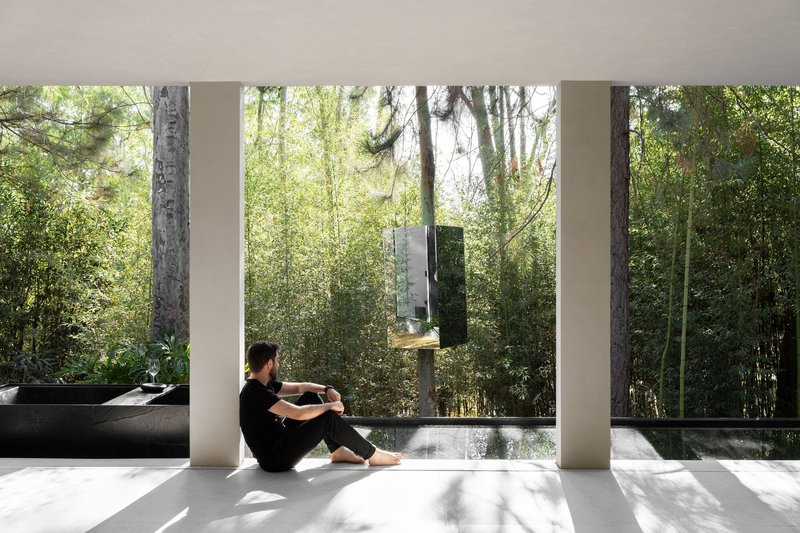
Detail shots reveal the ribbed black wall panels that carry the charred exterior language inside, creating continuity between the courtyard and the living zones. A steel clothing rack and stepped white seating with potted plants occupy one wall, blurring the line between hospitality fixture and botanical display. The column-framed view toward the forest, captured with a figure seated on the floor, communicates the room's intended posture: ground-level, contemplative, unhurried.
The Bedroom as Cave
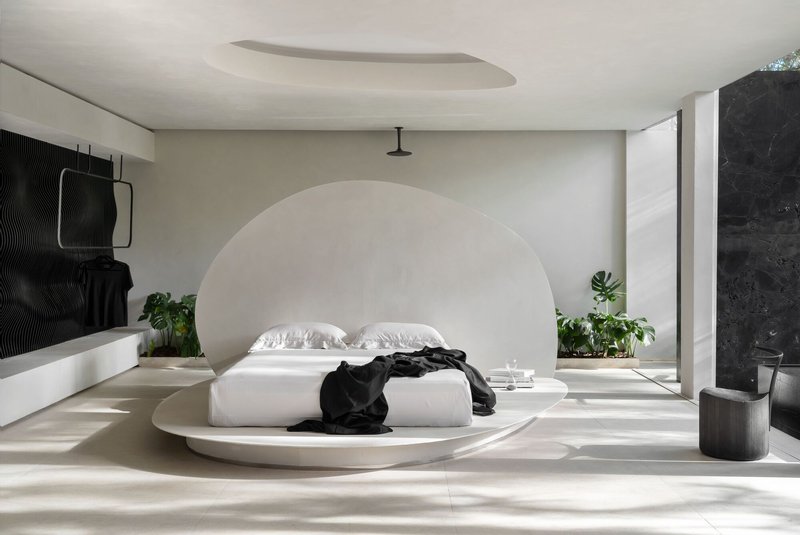
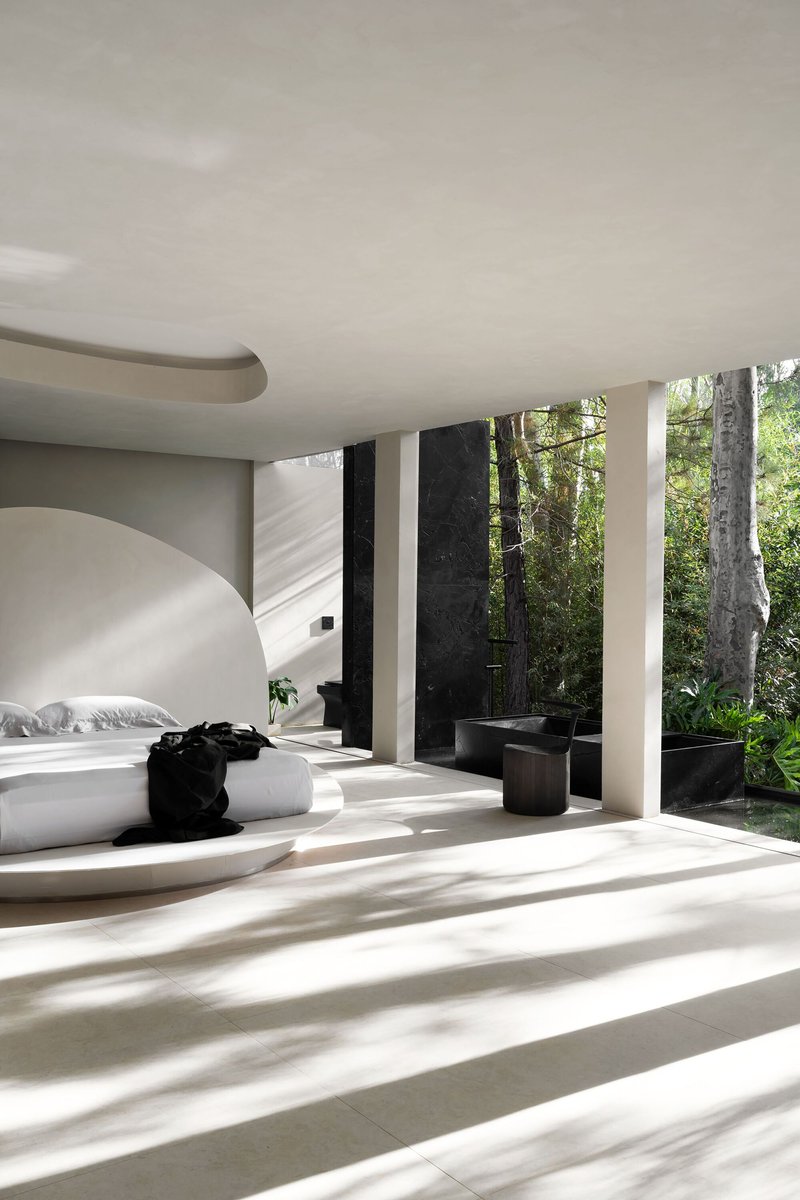
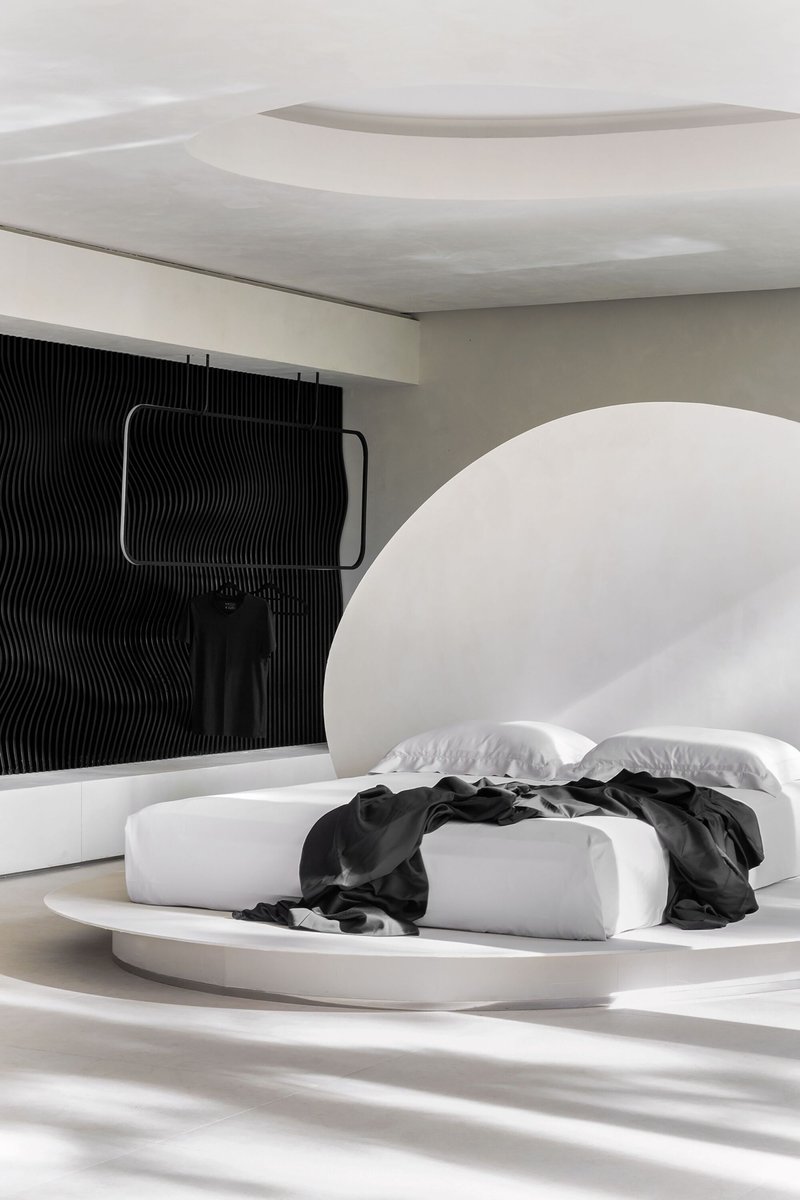
The bedroom is the most architecturally assertive room in the pavilion. A circular platform bed sits beneath an arched ceiling recess, a carved-out dome that gives the sleeping zone the intimacy of a cave or a hammam. Dappled light from the adjacent courtyard enters at a low angle, painting stripes of morning sun across the white bedding and pale floor tiles. The curved headboard niche, finished in dark material against a ribbed black accent wall, creates a cocoon effect without ever feeling claustrophobic.
The dome overhead is the key move. It changes the acoustic quality of the space, softens the geometry, and makes the act of lying down feel ceremonial. This is architecture designed for a horizontal body, not a standing viewer, and that inversion of the typical spatial hierarchy is what lifts the project above a standard designer hotel room.
Water, Stone, and the Ritual of Bathing
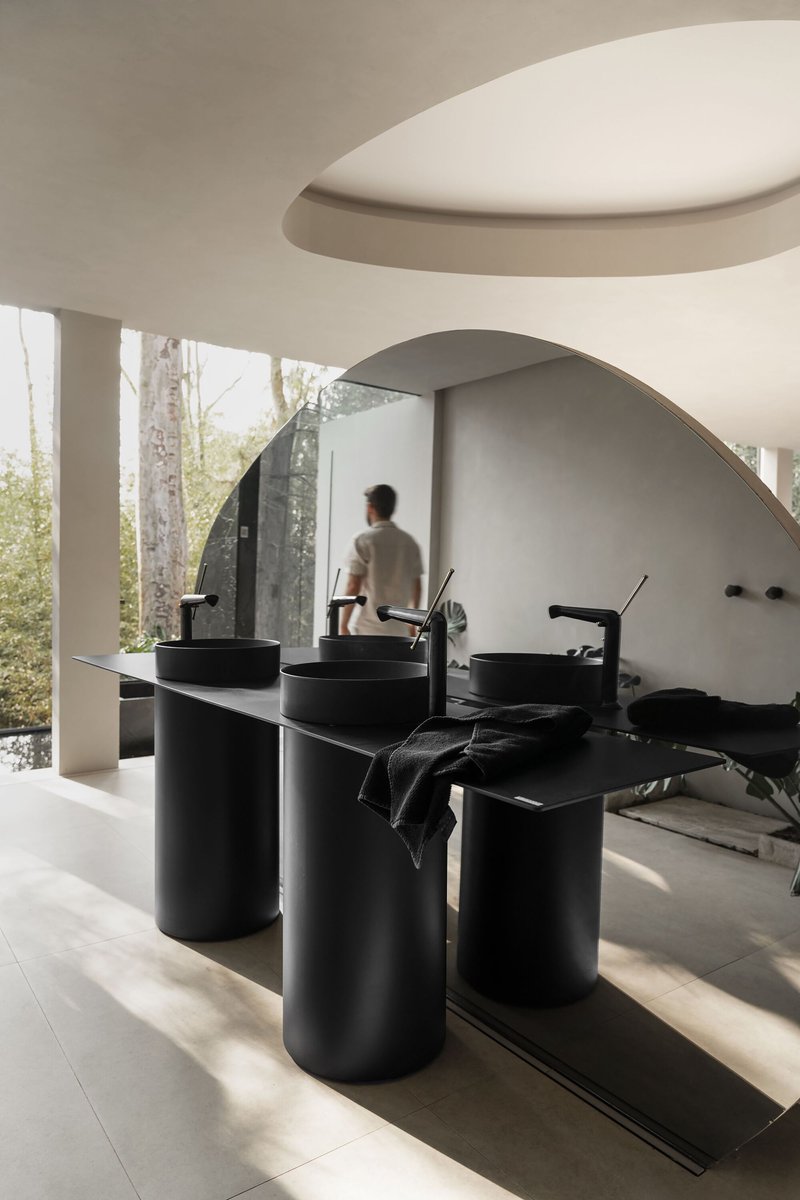
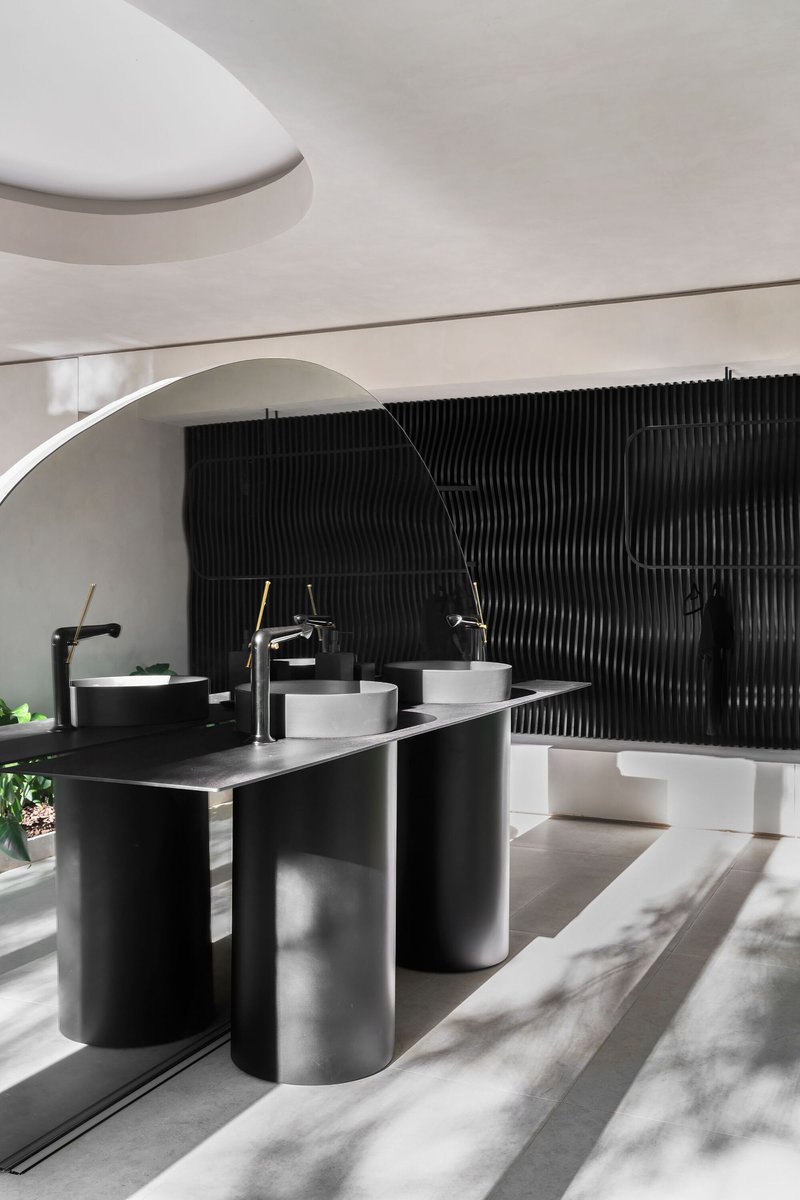
Water is the oasis's reason for existing, and Natan Gil gives it a central role. The interior bathroom pairs cylindrical black and white basins with the same ribbed black wall treatment and curved ceiling vaults, extending the domed language from the bedroom. The mirror and vanity feel secondary to the material envelope, which wraps around you like the inside of a cistern.
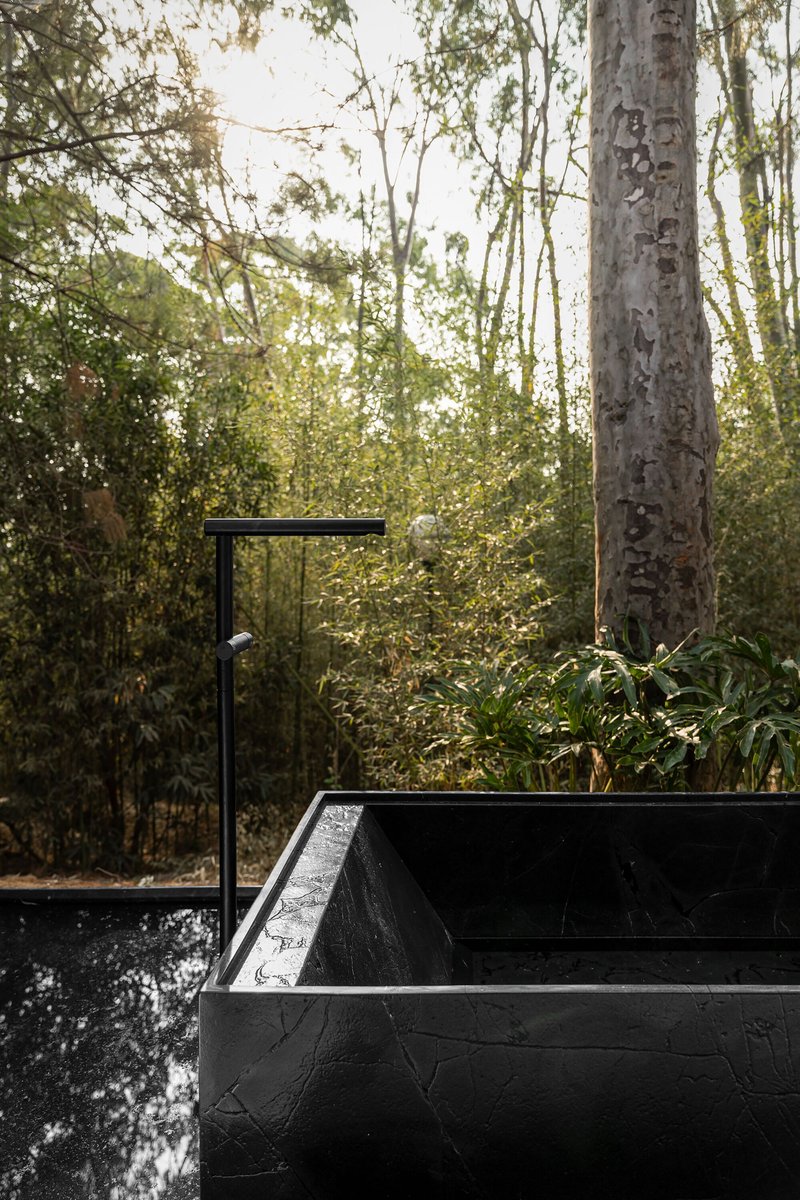
Outside, a black concrete bathtub sits under the eucalyptus canopy with a wall-mounted faucet and nothing else. No enclosure, no privacy screen, just a person and warm water and trees. It is the most direct expression of the project's thesis: that the luxury of an oasis is not opulence but exposure to natural elements, framed just enough to feel intentional. The tub's dark mass grounds it against the forest floor like a stone basin worn smooth by centuries of use.
Forest and Glass
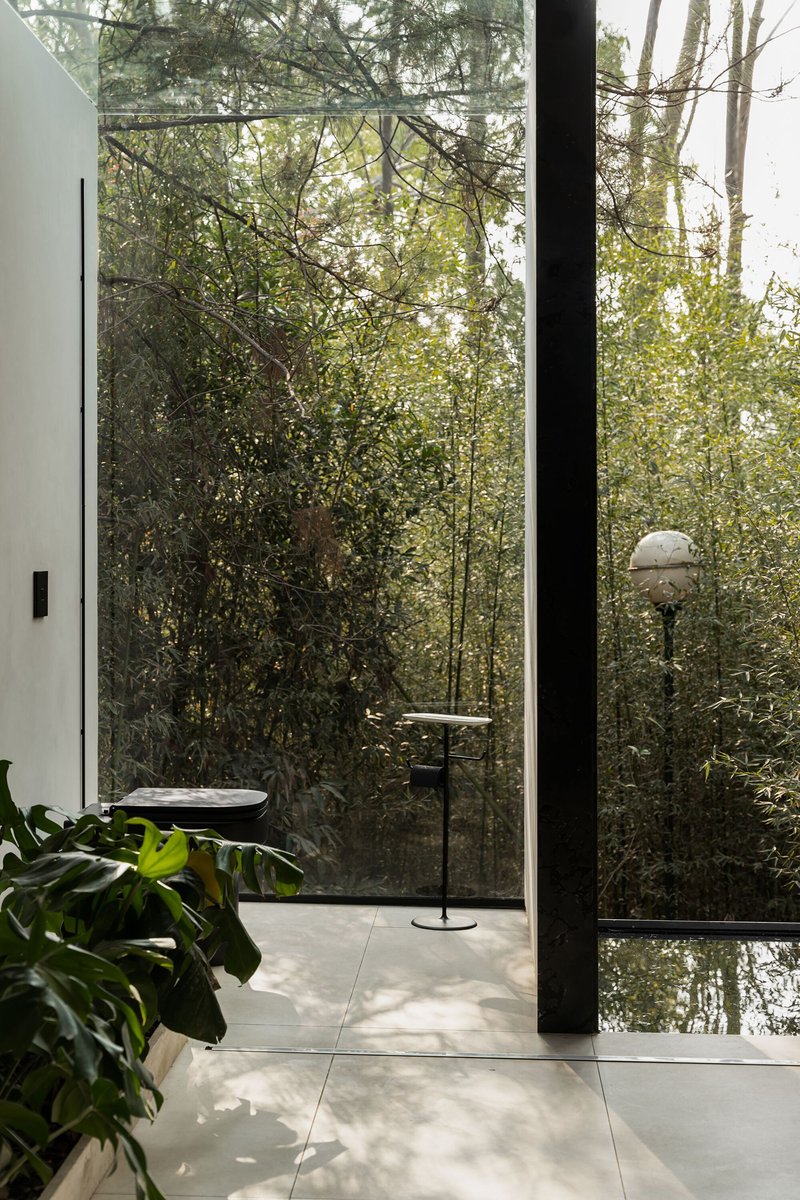
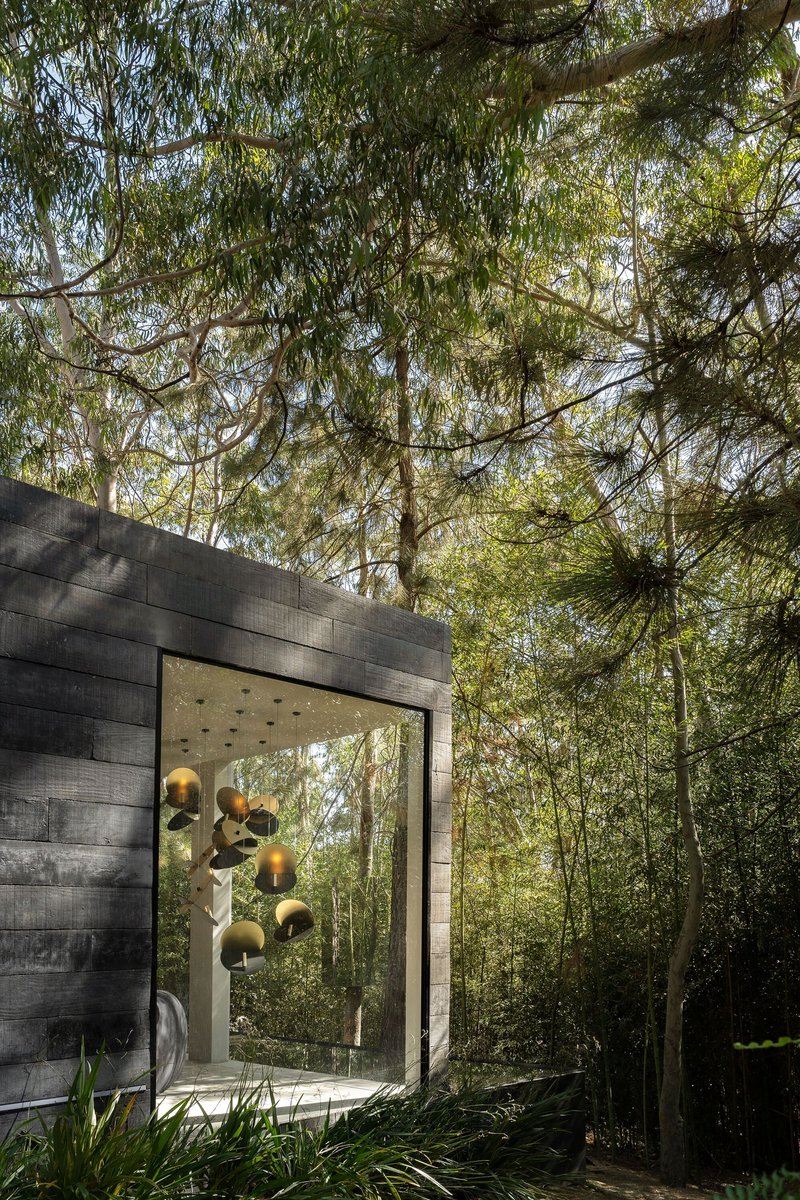
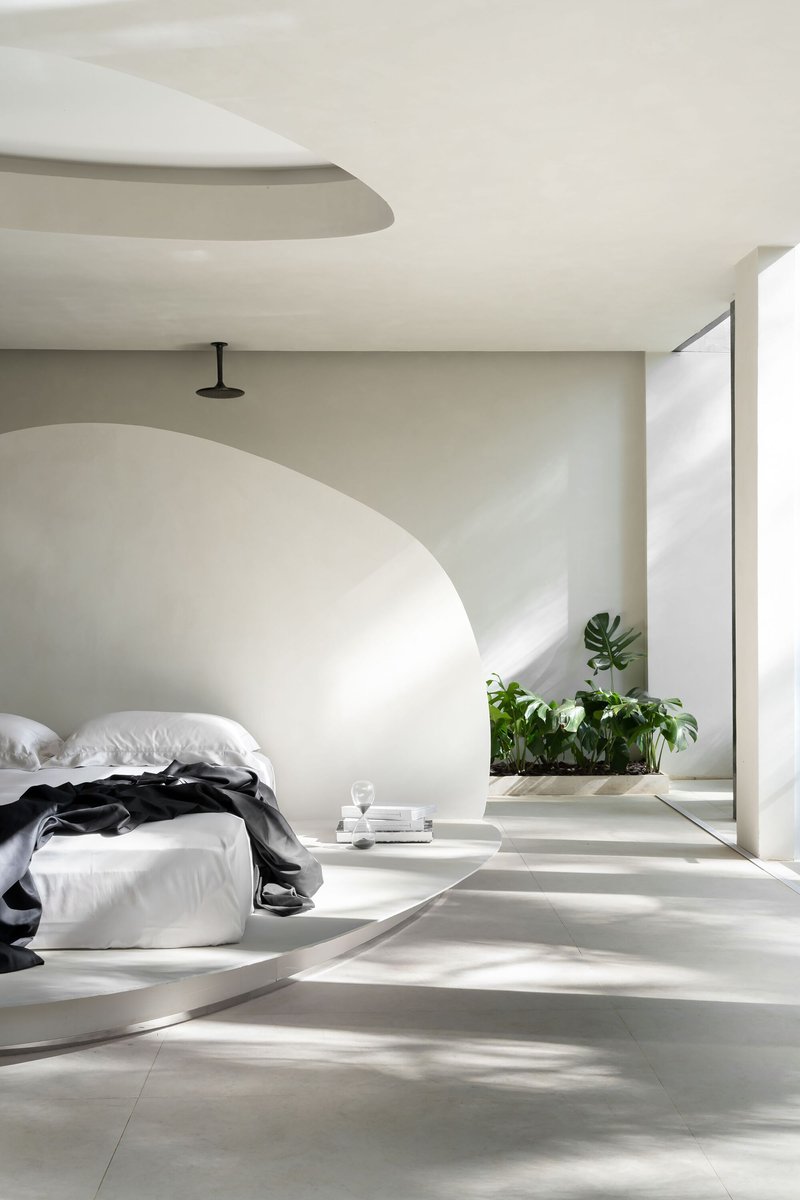
The floor-to-ceiling glazing system deserves recognition for what it refuses to do. There are no mullion grids subdividing the forest view into picture frames. The glass panels are large enough to read as open air, and the transition from interior concrete floor to exterior ground plane is almost seamless. Afternoon light filters through the tree canopy and fills the room with a quality of light that no artificial fixture can replicate.
The charred timber pavilion seen from the exterior at dusk, with pendant spheres glowing against the surrounding eucalyptus, collapses the distinction between architecture and lantern. At a low angle, the curved bed platform catches streaming morning light across the pale floor, demonstrating how the room's section was calibrated to capture specific sun paths. This is a space designed with the forest's daily rhythm as its primary clock.
Plans and Drawings
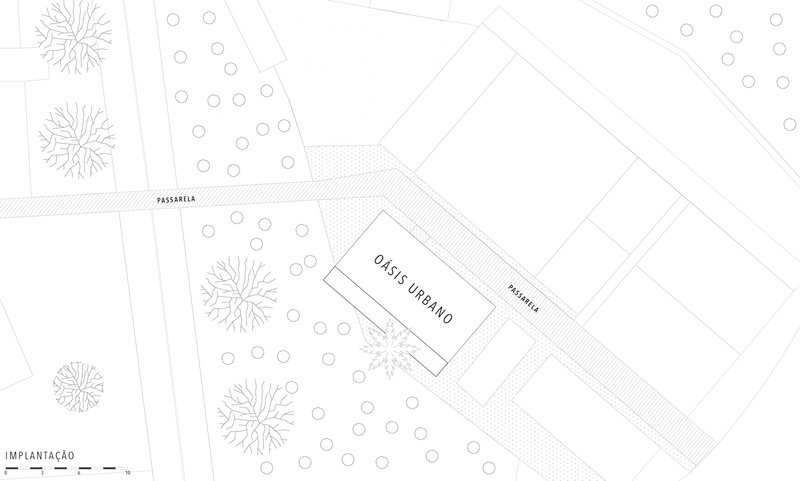
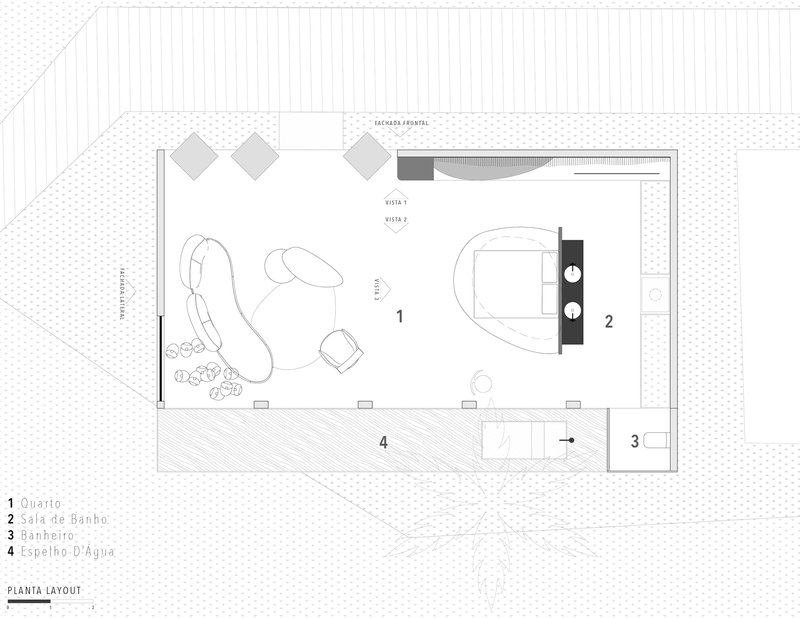
The site plan reveals how precisely the pavilion was inserted into the Palácio das Mangabeiras landscape, threading between existing tree placements rather than clearing a footprint. The floor plan organizes the 100 m² into four legible zones: bedroom, bathroom, living area, and an exterior water feature that extends the plan toward the forest. Furniture layouts confirm the low, horizontal emphasis visible in the photographs.
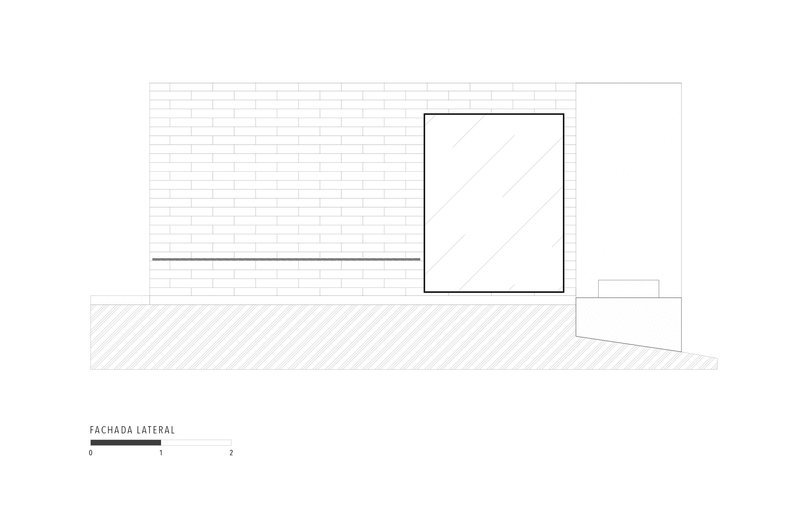
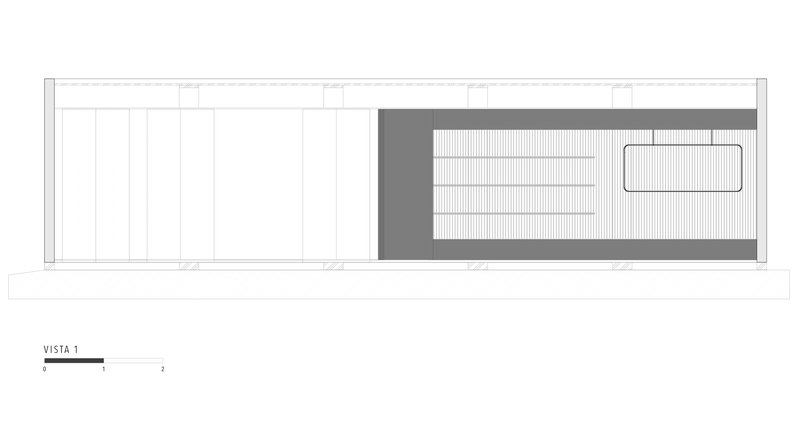
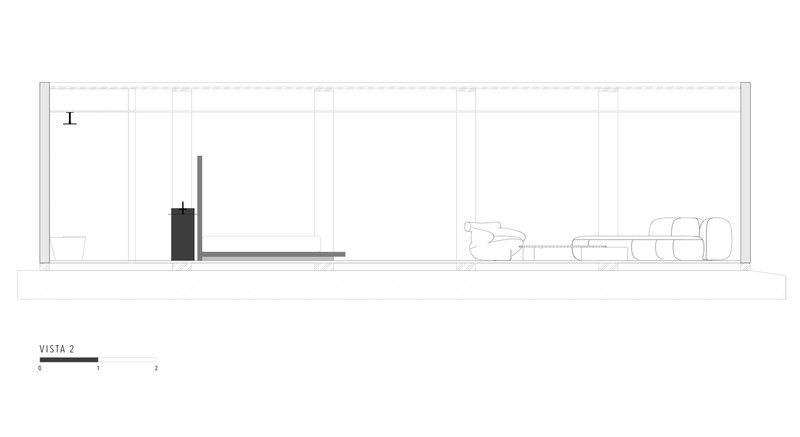
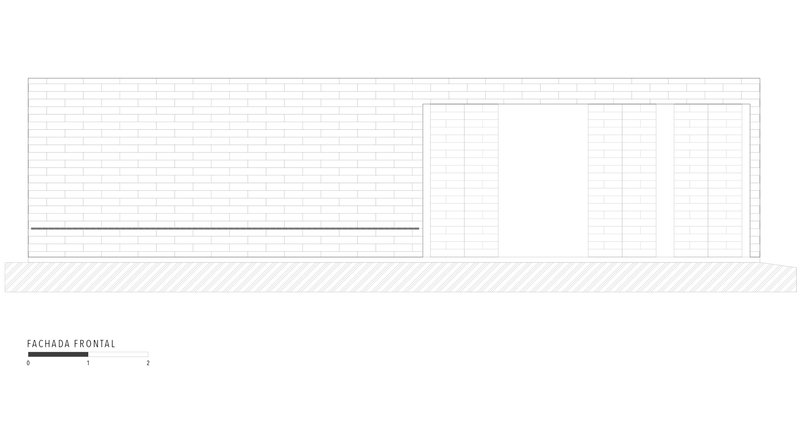
The lateral elevation shows the brick wall with its recessed glazed opening, an understated move that keeps the volume grounded against the sloping terrain. A second elevation depicts the deck area and pool at one end, confirming that the water feature is not a decorative afterthought but a structural terminus of the plan. The interior elevation of the living space, complete with fireplace and seating arrangement, shows how carefully the wall surfaces were composed: every element has a vertical datum.
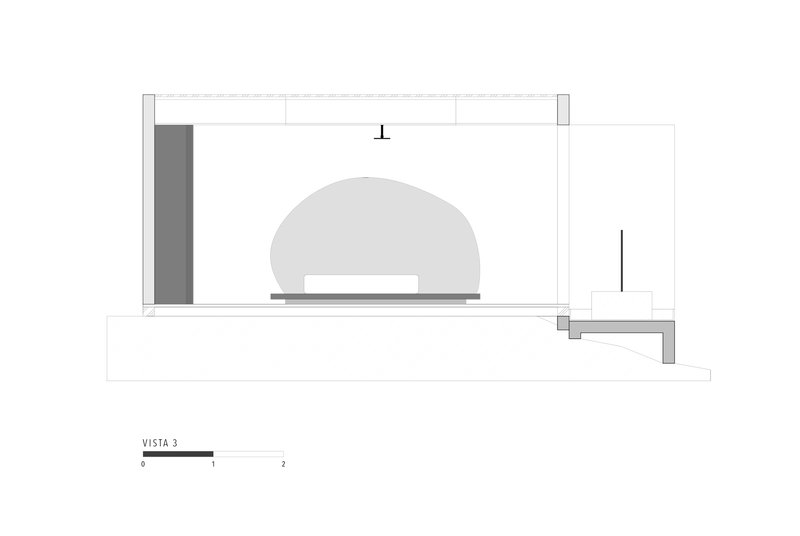
The section drawing is perhaps the most revealing document. It shows the domed volume clearly, with its opening to the exterior terrace creating a controlled funnel of light and air. The dome's proportions are modest, not vaulting, which explains the intimate rather than monumental quality of the bedroom. The relationship between interior ceiling height and exterior ground level confirms the excavated feeling the room produces in person.
Why This Project Matters
CASACOR installations often prioritize surface styling over spatial ideas, which makes Urban Oasis an outlier. Natan Gil treated the brief not as an interior design exercise but as an architectural problem: how do you make a temporary 100 m² room feel like it has always been part of a Niemeyer estate's Burle Marx landscape? The answer, evidently, is material commitment. Charred timber, board-formed concrete, natural stone, and vertical gardens are not easy shortcuts. They require craft and conviction, and they reward the visitor with a sensory density that painted drywall can never match.
The oasis metaphor could have been a liability. Desert-inspired concepts in tropical climates risk feeling arbitrary. But by focusing on the experiential core of the metaphor, the relief of finding water, shade, and rest after exertion, rather than its visual clichés, the project sidesteps pastiche entirely. The outdoor bathtub alone makes the argument: luxury is not marble and gold leaf, it is a warm bath under eucalyptus trees with no one watching. That is a hospitality idea worth stealing.
Urban Oasis – Hotel Room by Natan Gil Arquitetura (lead architect: Natan Gil), with creative team Lívia Gonçalves and Vinicius Pinheiro, landscape by Ana Campos and Katflores, engineering by Rocca Engenharia. Belo Horizonte, Brazil. 100 m², completed 2022. Presented at CASACOR Minas 2022 on the grounds of Palácio das Mangabeiras. Photography by NY 18.
About the Studio
Share Your Own Work on uni.xyz
If projects like this are the kind of work you want to make, uni.xyz is a place to publish your own, find collaborators, and enter design competitions.




Popular Articles
Popular articles from the community

Flow: Spatializing Well-being Through Intersecting Layers
Transforming the inner depth of wellness into a spatial reality.

Kanisavaran Office Turns a Central Courtyard into a Light Engine on the Plains of Damavand
Shahrzad Villa in Tehran's Seyedabad plains uses a classical courtyard typology to orchestrate natural light, ventilation, and mountain views.
Roman Izquierdo Bouldstridge Turns an Old Barcelona Shop into a Loft Organized by Emptiness
In El Born, three timber torii frames and the Taoist concept of the void reshape 85 square meters of former commercial space into a dwelling.
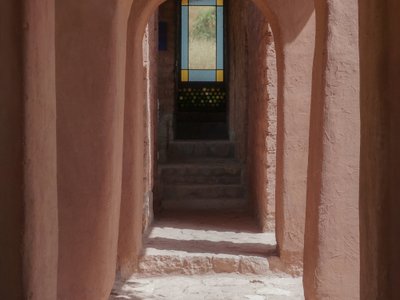
Taller MACAA Weaves Adobe Lodging into the Sacred Valley at 3,100 Meters Above Sea Level
Dormis Donata bridges permanent and temporary inhabitation through earthen construction in the agricultural highlands of Taray, Peru.


Similar Reads
You might also enjoy these articles

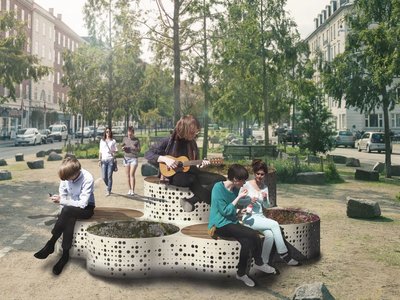
20 Most Popular Furniture Design Projects of 2025
Modular street systems, parametric benches, and insect hotels: the furniture design projects that captivated architects on uni.xyz in 2025.

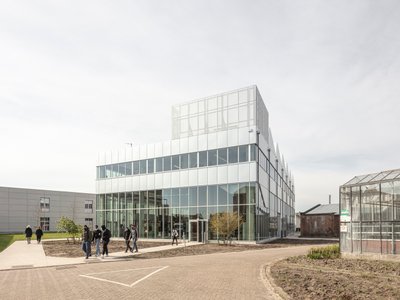
STEM School Mechelen by LAVA Architecten: A Future-Ready Educational Architecture in Belgium
Flexible, sustainable STEM school in Mechelen featuring modular classrooms, acoustic innovation, and energy-efficient design supporting future-focused collaborative learning environments.
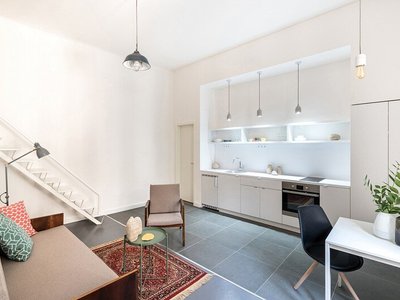
Marvila Apartment Renovation in Lisbon: A Bright Minimalist Attic Transformation by KEMA Studio
Bright attic transformed into minimalist Lisbon apartment with skylights, sustainable materials, open plan layout, and industrial-inspired interior design elements.
20 Most Popular Commercial Architecture Projects of 2025
From sustainable market concepts to heritage factories, the commercial buildings and proposals that drew the most attention on uni.xyz this year.
Explore Hospitality Building Competitions
Discover active competitions in this discipline




The Global Benchmark for Architecture Dissertation Awards


Challenge to design a portable theatre


Challenge to design a portable music platform


Challenge to design an open learning module for the elderly
Comments (0)
Please login or sign up to add comments
No comments yet. Be the first to comment!