
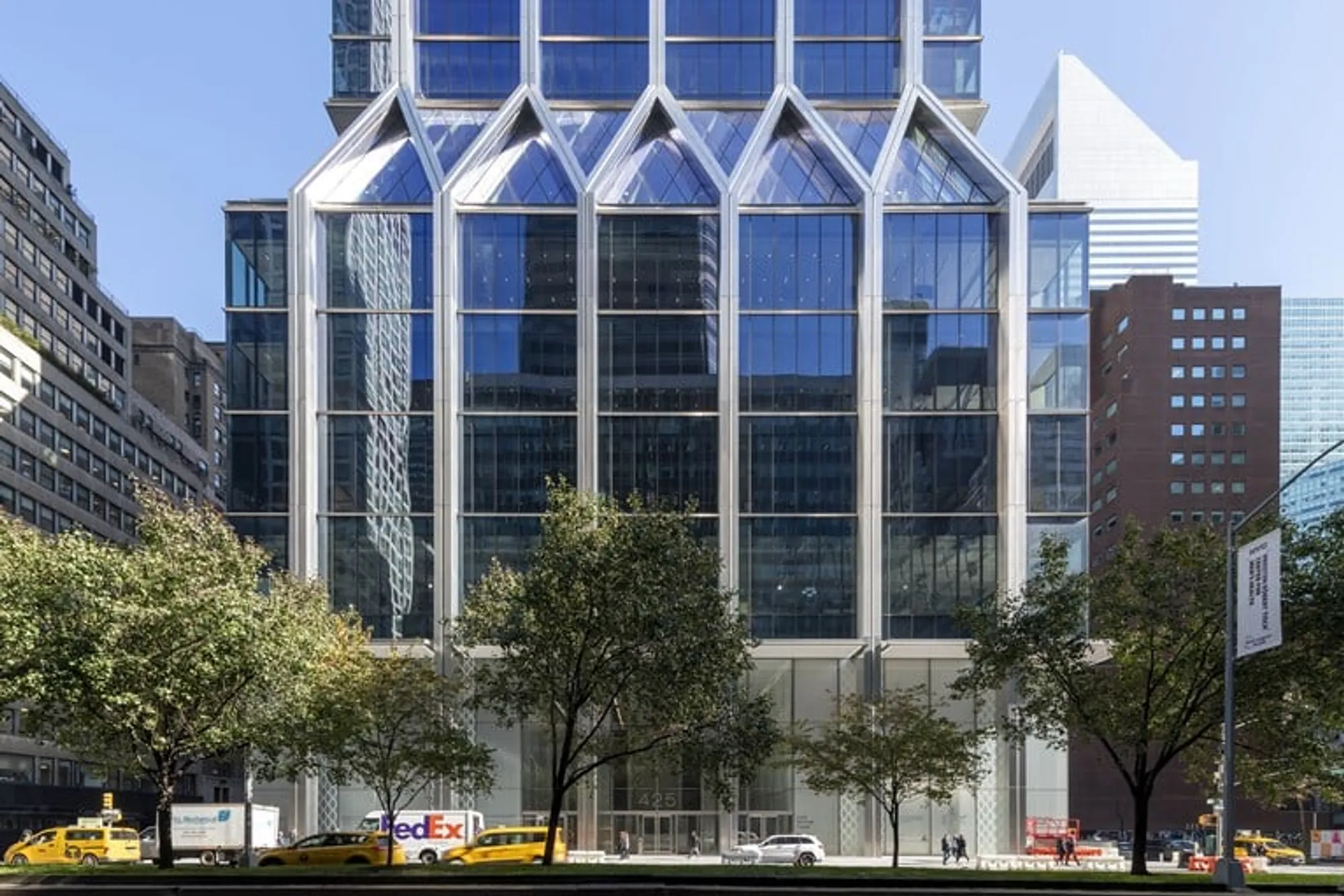
Nestled in the heart of New York City, Foster + Partners have completed Park Avenue's first full-block building in over 50 years.
The building is built to LEED Gold standard and has recently been certified as Well Core Gold, in recognition of its features which enhance the health and well-being of occupants.

At the grand opening of 425 Park Avenue, world-renowned architect Norman Foster was in attendance. The new building, which spans an entire city block on Park Avenue, is a modern marvel that will stand alongside other renowned buildings such as the Seagram Building, Lever House, and the CBS Building. As one of the most prestigious and important streets in the world, Park Avenue is the perfect home for this new office building.
The 47-story tower was designed to be as eco-friendly and sustainable as possible, in close collaboration with L&L Holding’s project team. It includes a triple-height lobby, world-class office accommodation, external green spaces, an expansive social amenity level, and a 38-foot-tall penthouse floor. Built to LEED Gold standard, the building recently earned Well Core certification at the Gold level, in recognition of its features which enhance the health and well-being of occupants.
Norman Foster, Founder, and Executive Chairman of Foster + Partners said the following about 425 Park Avenue - "It's a beautiful celebration of its historic context and the restrained elegance of its landmark neighbors while pushing the boundaries of workplace design and reflecting the contemporary spirit of the city. The building's architectural form and structural expression are inextricably linked, giving it a unique identity. The floors with external terraces are the first of their kind on Park Avenue, creating a permeable and healthy working environment."
Nigel Dancey, Head of Studio at Foster + Partners, said that it was an honor to design a new building that would sit among some of the most iconic landmarks in the city. He went on to say that the tower makes a significant contribution to the public areas at ground level, including the lobby, restaurant, and showroom space. By offsetting the core and bracing the structure, the tower also offers flexible, open floorplates on the upper levels, which can accommodate the changing needs of contemporary workspaces.
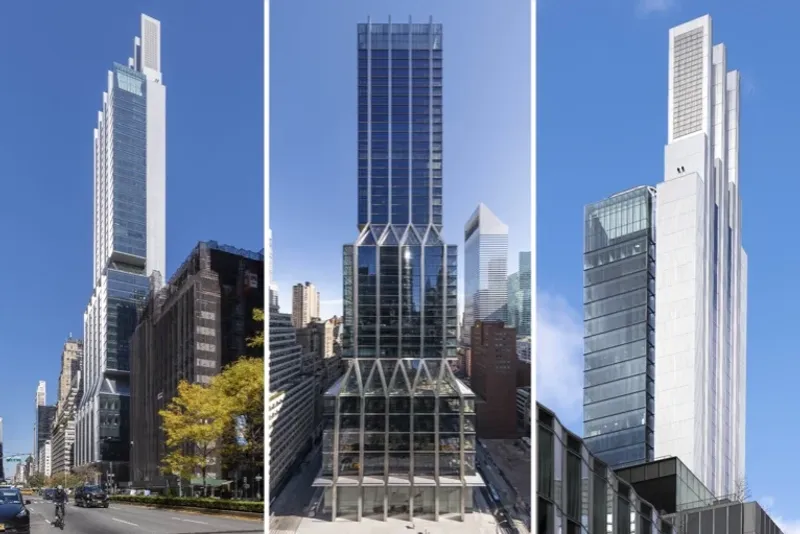
The design for the building was created by looking at how it would fit into the surrounding area and by modeling views of Central Park from the site. The aim was to create a balanced composition that would be visually appealing. The result is a tower that is divided vertically into three distinct volumes: a seven-story base, a recessed central section, and a slender formation of premium floors at the top.
One of the main features of high-rise design in New York is the first setback, which corresponds with the datum of the street. The second setback further develops this theme, physically and symbolically setting the upper levels apart from the rest of the city’s office towers. To make the most of the Park Avenue frontage, the core is placed at the rear, where glazed elevator lobbies bring life to the eastern elevation and provide long views towards the East River.
The tapered steel and concrete framed tower rise to meet three shear walls, extending from the top of the tower. These three blades provide a marker on the skyline. The structural expression of the building allows for truly flexible, column-free floorplates on the upper levels which can accommodate a wide range of tenants.
Between each of the three volumes, the office floors are intersected by double-height spaces that create open space in the heart of Manhattan. This open space is a highly coveted amenity for tenants. The second floor of the tower features The Diagrid Club, an amenity-rich space that includes beautiful views, outdoor areas, an art installation by Japanese contemporary artist Yayoi Kusama, private rooms for transcendental meditation by the David Lynch Foundation, and a number of other amenities designed to connect the mind and body. The café and dining spaces on this level are operated by award-winning chef Jean-Georges Vongerichten.
The social focus of the tower is evident as soon as you approach the building, where a triple-height lobby greets you with Jean-Georges Vongerichten’s new restaurant on either side. The 14,000-square-foot restaurant spans a main mezzanine dining level and a cocktail lounge, with breathtaking 45-foot-high ceilings. You'll find a 24-foot painting by the celebrated artist Larry Poons in the lounge.
James Barnes, the Senior Partner at Foster + Partners, said: “We're thrilled to see 425 Park Avenue opened in New York. By working closely with L&L, we were able to create a landmark building that focuses on comfort, natural light and fresh air - which is pretty amazing considering how dense the urban environment is around here. The people who work in the tower have direct access to some amazing new amenities and outdoor terraces with great views of the park and midtown Manhattan.”

Press release courtesy of Foster + Parteners
Photos ©Nigel Young / Foster + Partners



Popular Articles
Popular articles from the community


Riyadh For All: Intergenerational Urban Design for Active Aging in Rabat
Riyadh For All reimagines urban design in Rabat with intergenerational co-living, adaptive courtyards, and Moroccan cultural exchange today.

Co-life: Sustainable Architecture for Age-Friendly Community Living
Co-life reimagines sustainable architecture for seniors through courtyards, rammed earth, shared gardens, and spaces designed for belonging.

The Musturak Paradise: Senior Living Architecture for a Connected Future in Temara, Morocco
The Musturak Paradise reimagines senior living architecture in Temara via private homes, social spaces, culture, community, and shared care.

Lunar Spiral: Space Architecture Shaped by the Mathematics of the Universe
Lunar Spiral reimagines space architecture through Fibonacci geometry, lunar regolith, levitating habitats, and self-sustaining Moon living.

Similar Reads
You might also enjoy these articles
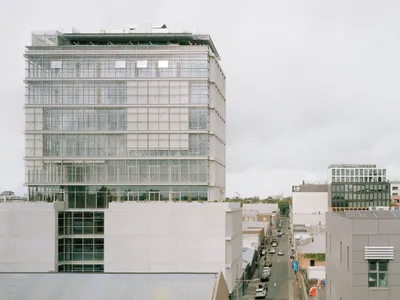
116 Rokeby Building, Collingwood
Sustainable Collingwood office building featuring double-skin façade, natural ventilation, rooftop amenities, and carbon-neutral design focused on wellbeing and longevity.
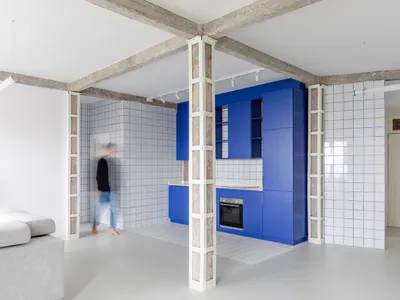
Contemporary Apartment Renovation in Spain: RV House by BIAN Opens Up to the Sea
A minimalist 1930s apartment in Santander is transformed into a flexible, sea-facing home through contemporary Spanish renovation.
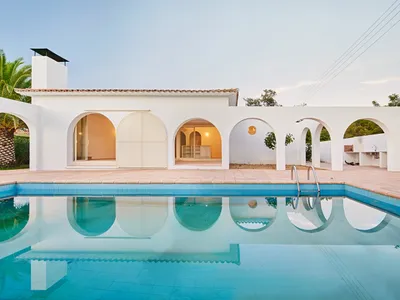
3 Marías House: A Contemporary Mediterranean Courtyard Retreat by Bajet Giramé + Burckhardt
Mediterranean courtyard home blending traditional architecture with modern design, terracotta flooring, flexible interiors, sustainable climate strategies, and garden integration.
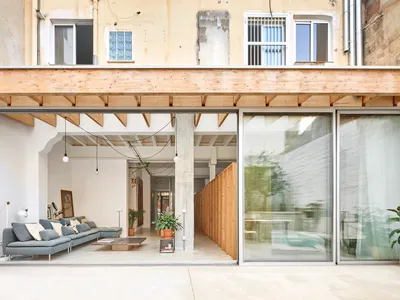
NZ10 Apartment by auba studio: Adaptive Reuse in Palma de Mallorca
Adaptive reuse apartment transforms bakery into light-filled home with patios, privacy layers, and wood interiors enhancing urban living experience.

Explore Healthcare Building Competitions
Discover active competitions in this discipline




Challenge to reimagine the Iron Throne


Photograph architecture without architects


Illustrate the lost glory of Angkor Wat - Render Challenge


Design challenge to reuse E-waste
Comments (0)
Please login or sign up to add comments
No comments yet. Be the first to comment!