
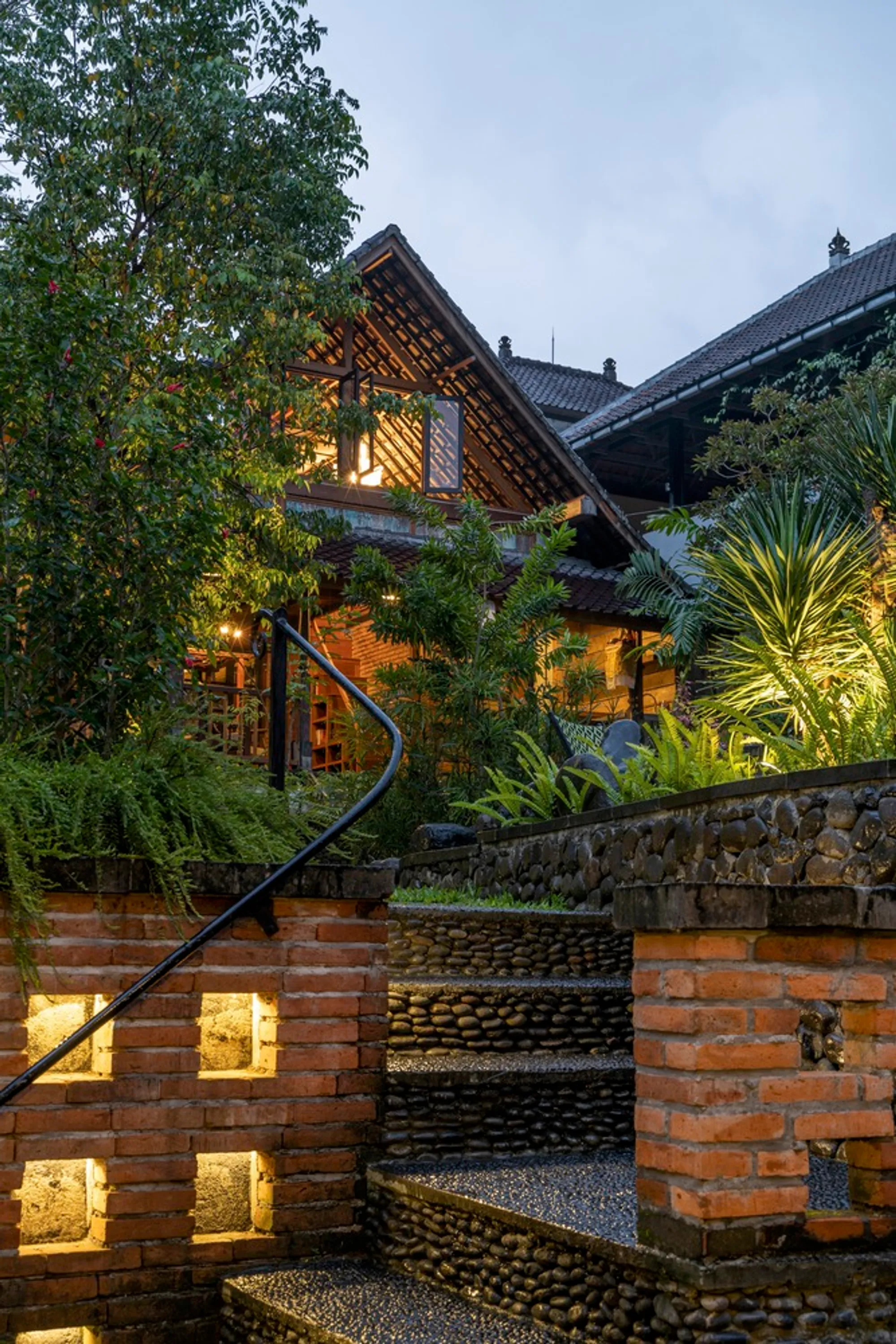
Oberoi Villa by Arkana Architects: A Harmonious Retreat Blending Indoor Living with Nature in Ubud, Bali
Oberoi Villa by Arkana Architects blends open-air living, natural materials, and privacy in a serene, sustainable retreat in Ubud.


Located in the serene landscape of Ubud, Bali, Oberoi Villa is a striking example of contemporary tropical architecture designed by Arkana Architects. Completed in 2020, the 470 m² private residence spans a 1,005 m² site and masterfully fuses openness, privacy, and sustainability through thoughtful spatial planning and natural materiality.
A Home Designed for Living and Gathering
Oberoi Villa is more than a residence—it is a hybrid space for living, recreation, and relaxation. The site is divided into two distinct zones that cater to different needs. The front portion of the property functions as a recreational hub, featuring a badminton court and ping pong table, creating an inviting space for guests and social gatherings. This open zone introduces the project with a vibrant, communal atmosphere.
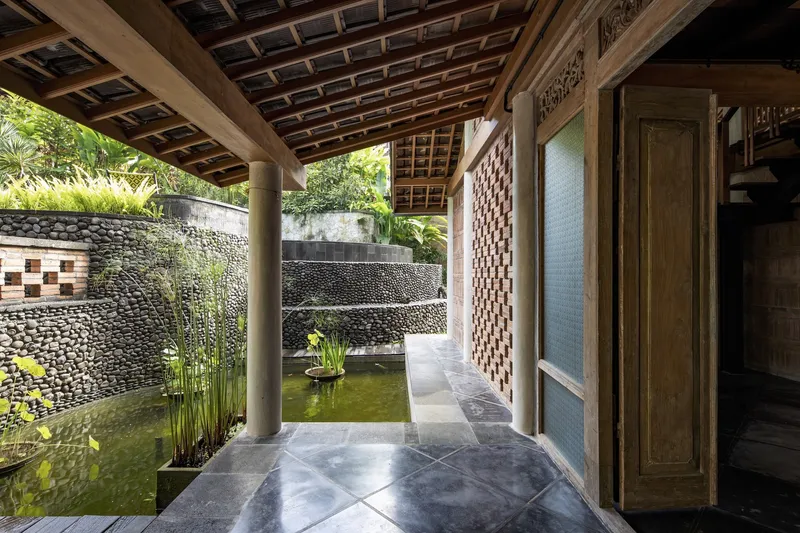
In contrast, the rear section houses the private living quarters, composed of two independent building masses: a guest bungalow and the main residence. Inspired by the traditional Balinese compound layout, these volumes are spatially and visually separated by garden walls, reinforcing privacy while maintaining a sense of openness.
Site Strategy: Embracing Contours and Views
The site’s natural topography was a key design driver. With a gentle slope, Arkana Architects strategically positioned the guest and main houses on different levels to adapt to the terrain. The guest bungalow, a single-storey structure with its own private pool, sits on the upper level to the left of the site, while the main two-storey residence is tucked into the lower right side, offering complete privacy and unobstructed vistas from each building.
This staggered configuration ensures that each function remains autonomous and undisturbed, avoiding visual or spatial overlap. The deliberate non-axial alignment of the two masses enhances both functionality and privacy, essential to the client’s lifestyle needs.
Privacy Through Asymmetry: The Gable Roof as Architectural Strategy
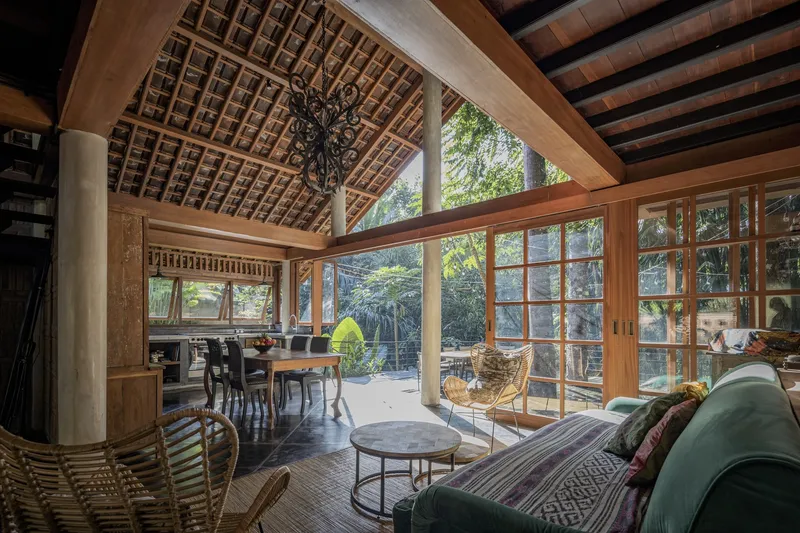
A distinctive feature of the villa is its asymmetrical gable roof, designed not only for its sculptural quality but also for privacy control. The roof plane is extended on the side facing neighboring properties, subtly shielding the interior spaces from external views without the need for solid walls. This design gesture transforms a traditional roof form into a functional privacy device, reinforcing the home’s sense of sanctuary.
Living in Nature: Maximum Openings, Minimal Walls
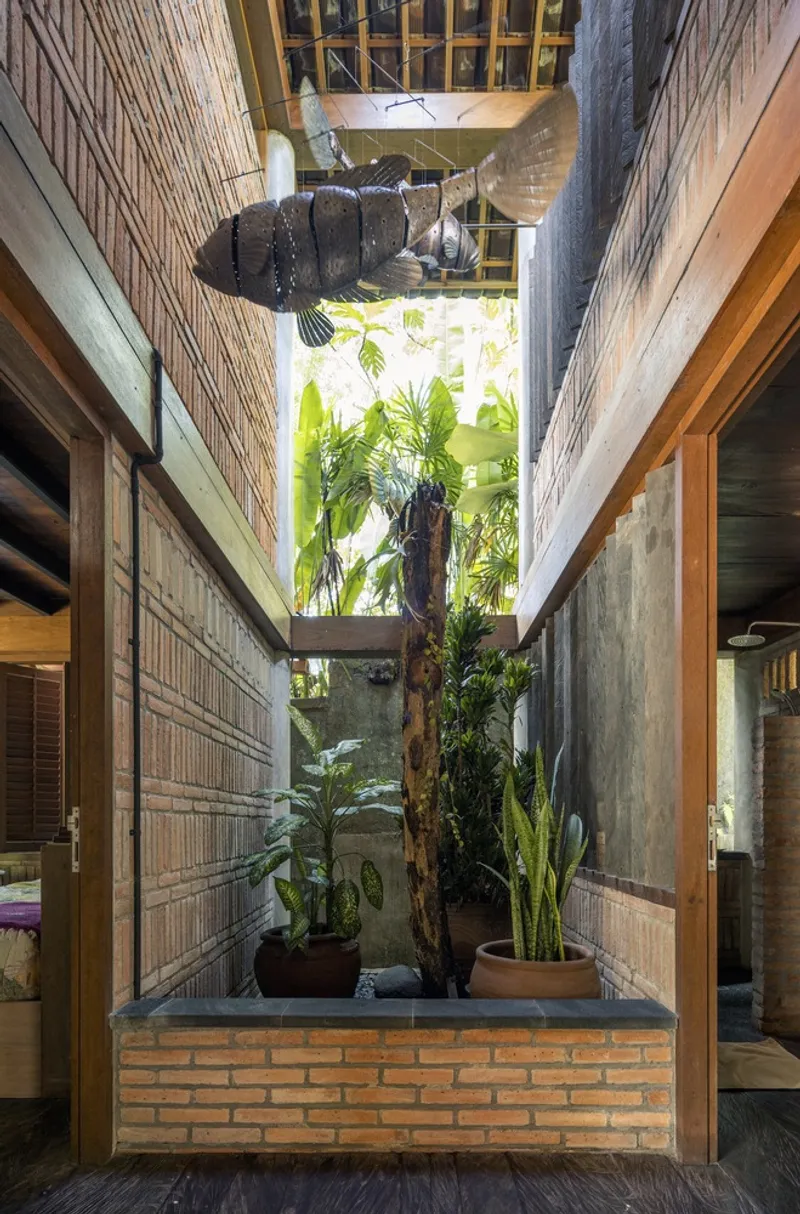
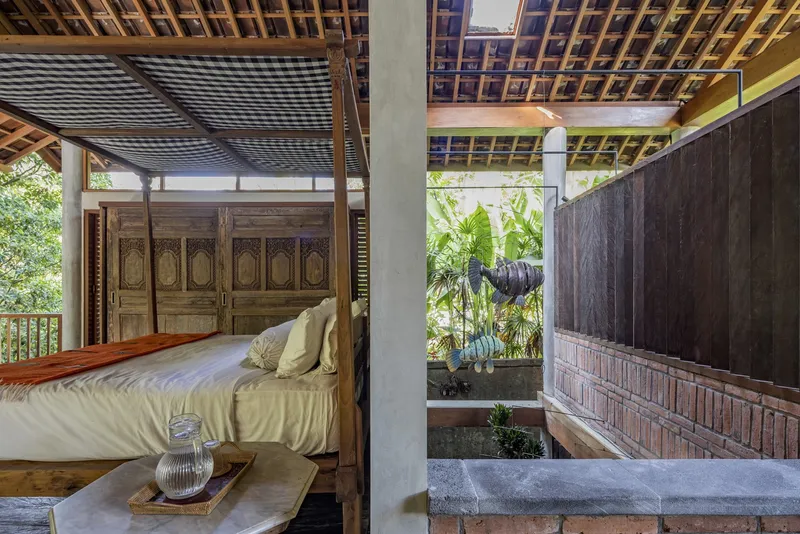
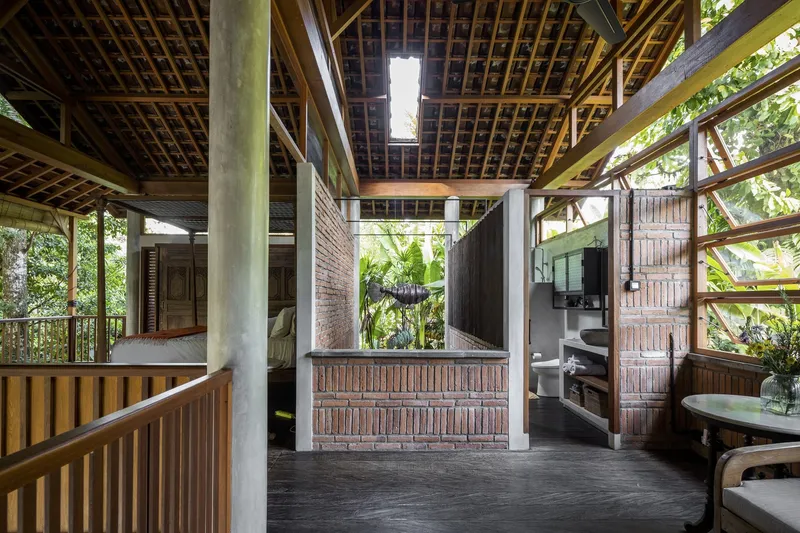
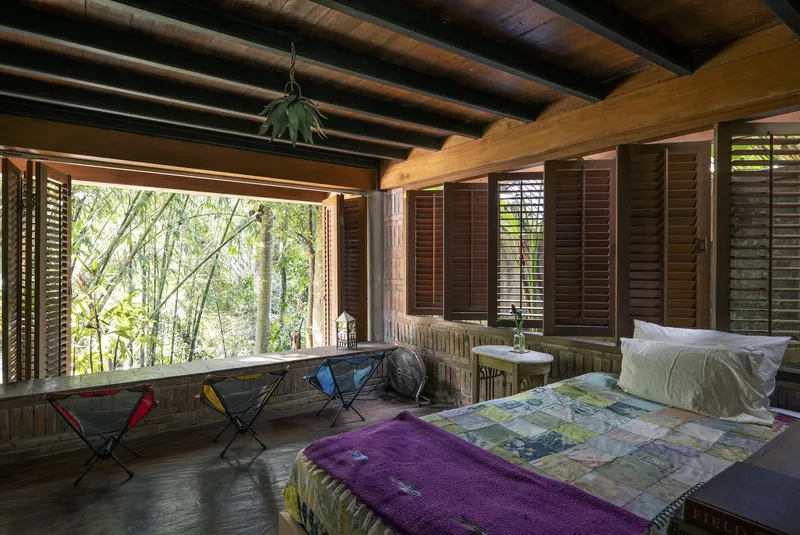
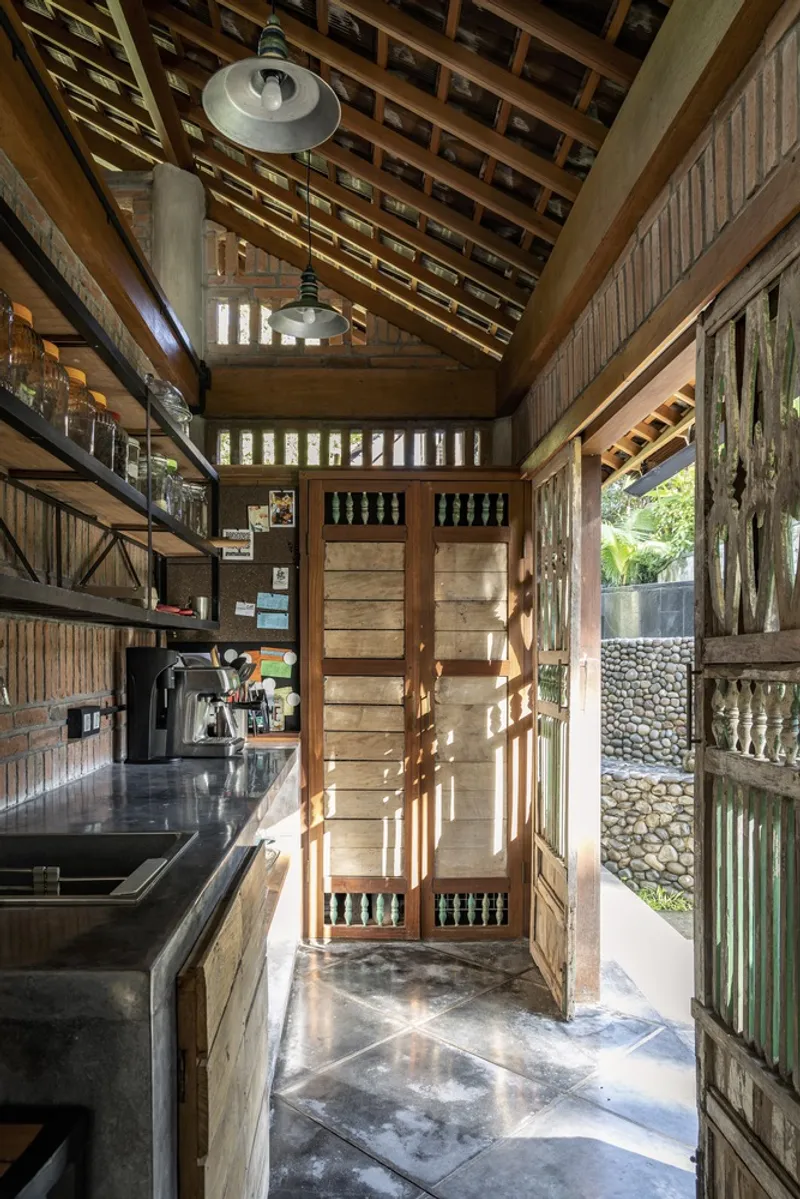
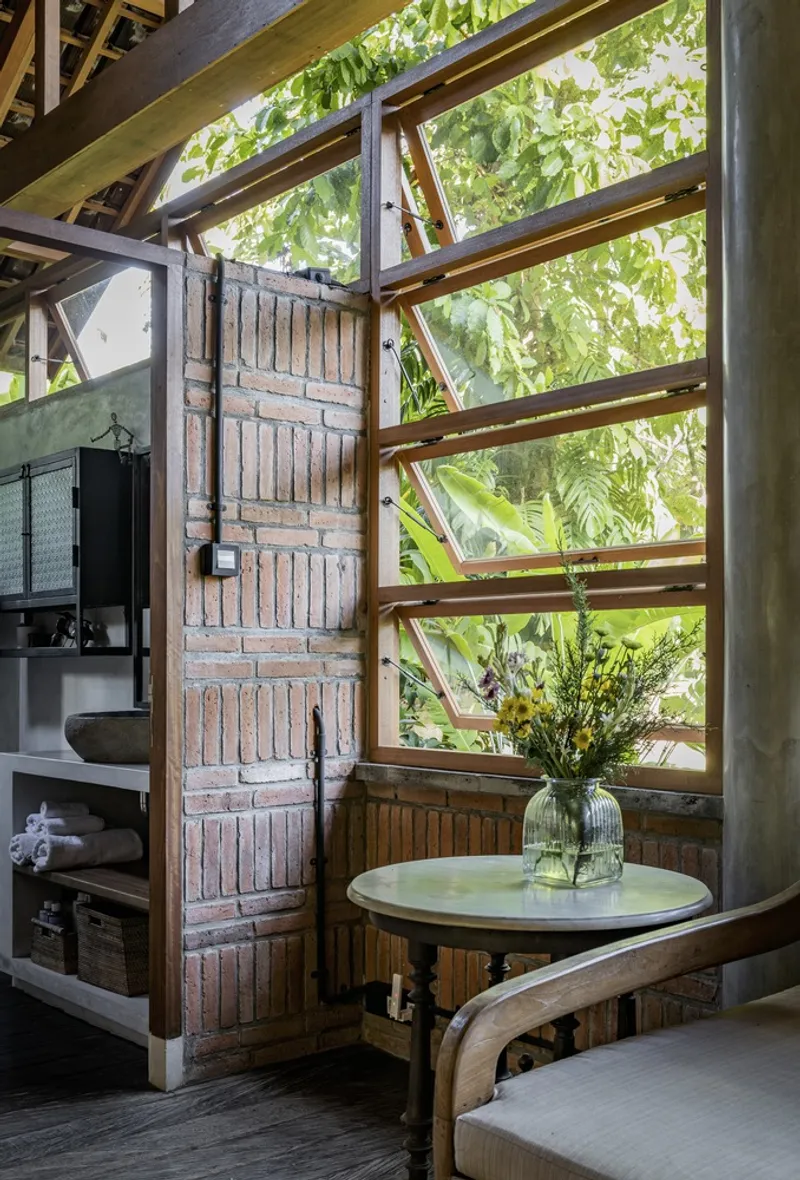
Guided by the concept of “living in nature,” the architectural language of Oberoi Villa emphasizes openness and connection to the environment. The main residence is designed with minimal solid walls and generous operable openings that invite natural light and cross-ventilation. Except for the children’s bedroom, every room is designed to be fully openable, dissolving the boundary between inside and outside.
Rejecting the use of mechanical cooling systems, the villa relies entirely on passive ventilation strategies, showcasing a climate-responsive design ethos that is increasingly relevant in today’s sustainable architecture discourse.
Material Authenticity: Raw and Natural
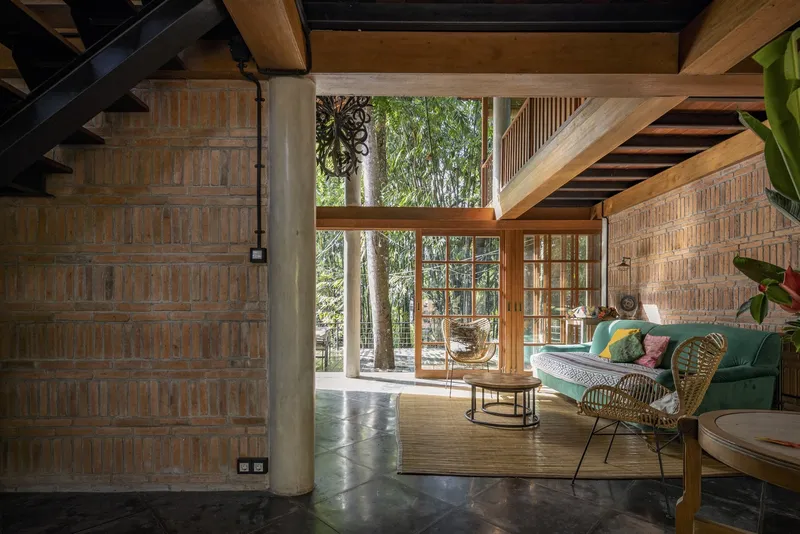
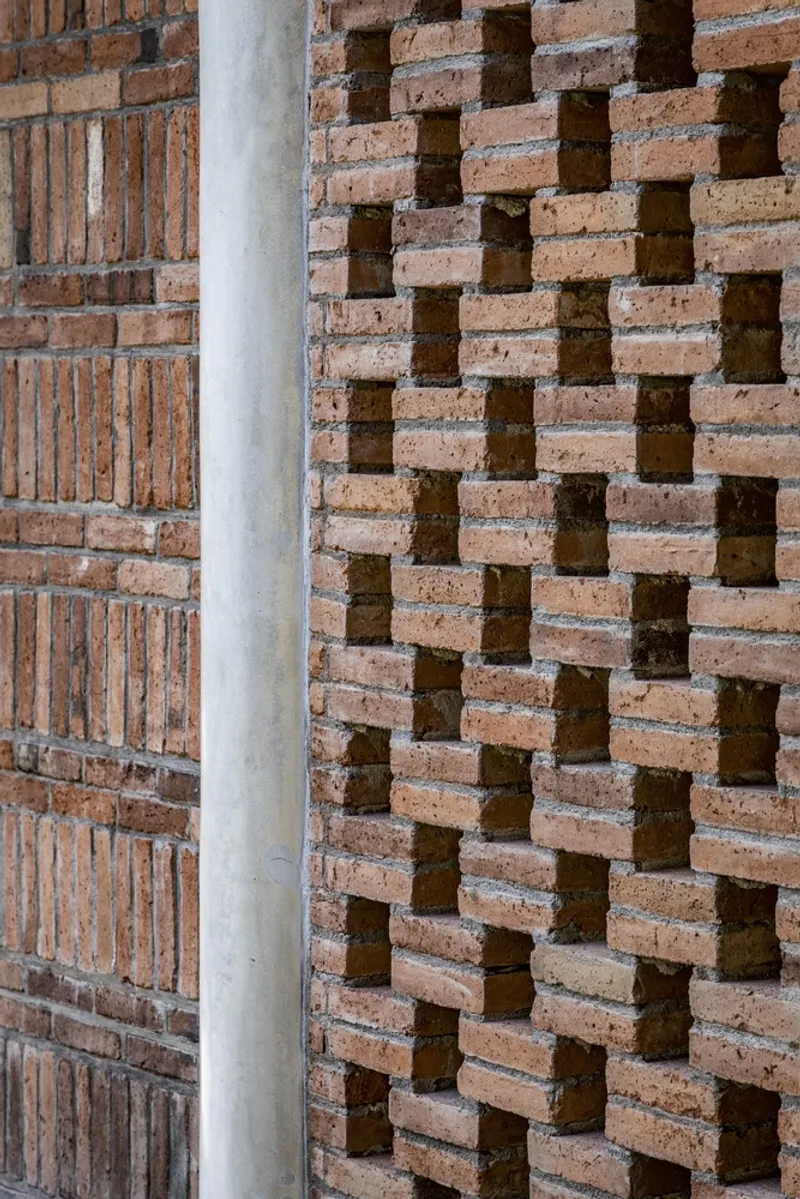
Materiality plays a pivotal role in reinforcing the villa’s organic spirit. Arkana Architects selected locally sourced bricks and natural timber for the building envelope and interiors, intentionally leaving them unfinished to retain their raw, tactile character. This choice not only blends the architecture seamlessly with its tropical surroundings but also reduces the project’s environmental footprint.
The exposed wood beams, brick walls, and floor-to-ceiling openings create a sensory-rich environment where light, air, and materials work together to elevate the experience of everyday living.
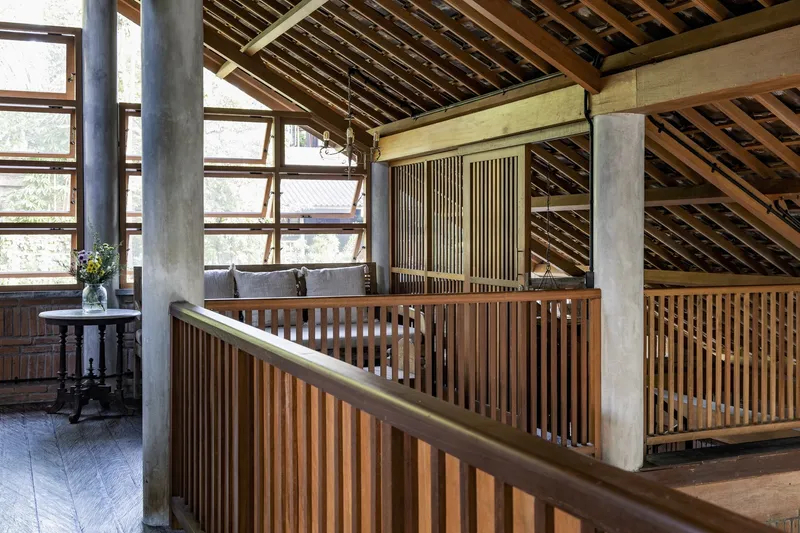
All Photographs are works of Indra Wiras



Popular Articles
Popular articles from the community


The Ocean Hive: Sustainable Architecture for a Self-Sufficient Civilization at Sea
The Ocean Hive imagines sustainable architecture at sea, where modular habitats, algae, wave power and ocean waste sustain a growing colony.

Hill & Cross Opera: Sculptural Opera House Architecture Shaped by Tallinn’s Landscape and Identity
Hill & Cross Opera reimagines opera house architecture in Tallinn through its sculptural hill, civic plaza, glass wave and a luminous cross.

The Musturak Paradise: Senior Living Architecture for a Connected Future in Temara, Morocco
The Musturak Paradise reimagines senior living architecture in Temara via private homes, social spaces, culture, community, and shared care.

Lunar Spiral: Space Architecture Shaped by the Mathematics of the Universe
Lunar Spiral reimagines space architecture through Fibonacci geometry, lunar regolith, levitating habitats, and self-sustaining Moon living.


Similar Reads
You might also enjoy these articles


Hodi-Mandai Geram
Project Function: Preservation and revitalization of the Intangible heritage and socio-spatial identity of the Hodi by Housing, Cultural Memory Center, Sacred Grove, landscape, local tourism economy


Olio Towers: A Mid-Rise for Performers That Fuses Housing, Rehearsal, and Stage
Located blocks from Houston's Theater District, this modular tower stacks living units around a central performance atrium.

Oasis: Modular Green Housing Carved into Dhaka's Urban Fabric
A shortlisted Plugin Housing entry reclaims unauthorized settlements in Dhaka with stepped concrete volumes, green roofs, and ventilation-driven design.

Black Hole: A Floating Megastructure for the Post-Physical Era
Emiliano Mazzarotto envisions a spherical, self-scaling arena where e-sports, digital hotels, and holographic stadiums replace traditional public space.

Explore Architecture Competitions
Discover active competitions in this discipline



Challenge to reimagine the Iron Throne


Photograph architecture without architects


Illustrate the lost glory of Angkor Wat - Render Challenge


Design challenge to reuse E-waste
Comments (0)
Please login or sign up to add comments
No comments yet. Be the first to comment!