
ODDs&ENDs Architects Give a Triangular Library in Pocheon a Mission of Second Chances
A wood-and-stone building in South Korea's Gyeonggi Province shelters vulnerable young people inside a radiating timber canopy.

Libraries are often framed as civic gifts to a community at large, neutral containers of knowledge open to anyone who walks through the door. The Second Chance Library in Pocheon-si, designed by Seoul-based ODDs&ENDs architects under lead architect Haejin Choi, refuses that neutrality. It is purpose-built for young people who have fallen on hard times, operated by the SEPUMA foundation, and its architecture is not shy about declaring that intention. At 372 square meters, the building is compact, but its triangular plan, radiating timber structure, and restrained material palette give it a spatial generosity that belies its footprint.
What makes this project worth studying is the way its geometry organizes care. The triangle is not a formal flourish; it creates distinct programmatic zones around a central courtyard while producing a roof structure that fans outward from a single peak, like a protective canopy. The exterior is clad in dark slate-colored stone tiles, closed and almost fortress-like, while the interior opens through continuous glazing onto a winter hillside. The contrast is deliberate: a building that shields its occupants from the outside but floods them with light and landscape once they step inside.
A Fortress in Stone Tile
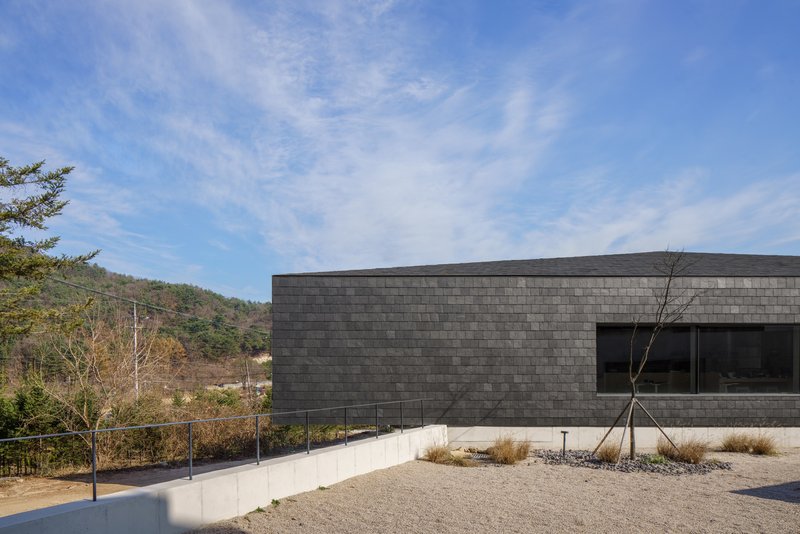
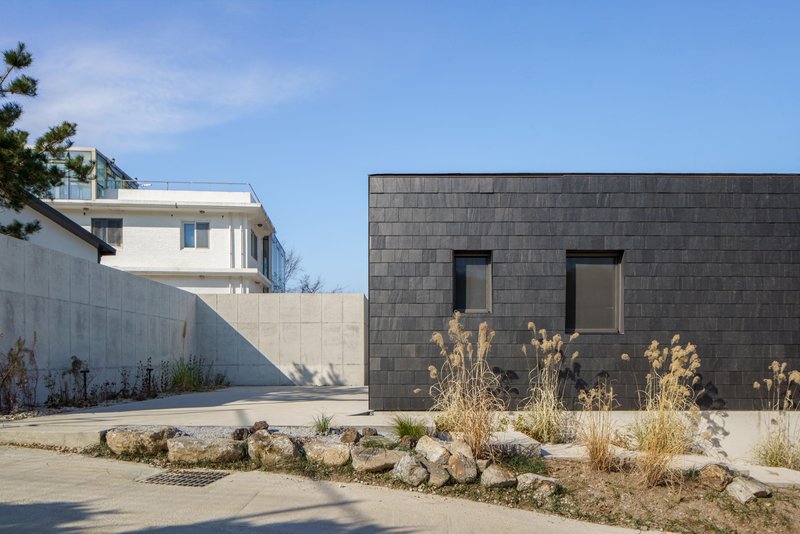
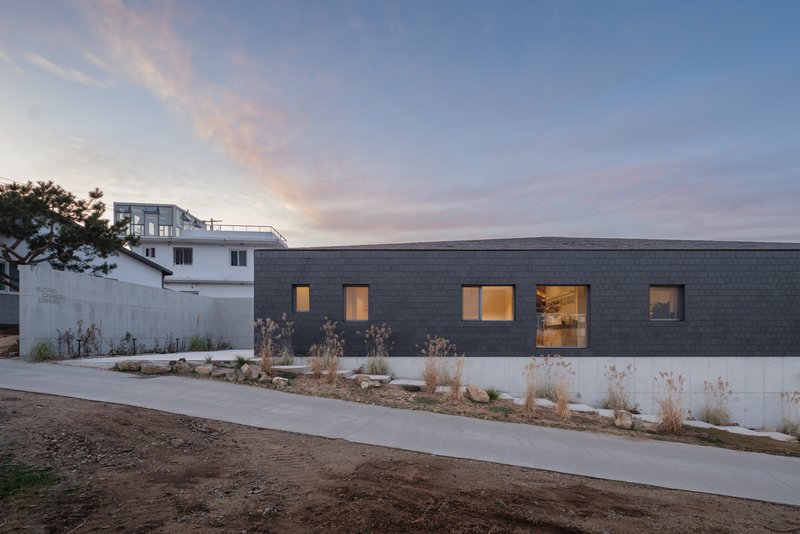
From the street, the Second Chance Library looks almost defensive. Dark stone tiles wrap the primary volume in a tight, opaque skin, broken only by small punched windows and a recessed entrance. The material reads as serious, even stern, and that tone is not accidental. For a building that serves young people in crisis, the exterior communicates shelter and privacy rather than the transparent welcome of a typical public library. Planted gravel beds and young saplings soften the perimeter without undermining its solidity.
At dusk, the punched openings glow faintly, revealing just enough interior warmth to signal life without exposing the occupants. It is an architecture of discretion, one that earns trust by not putting its users on display.
Threshold and Entry
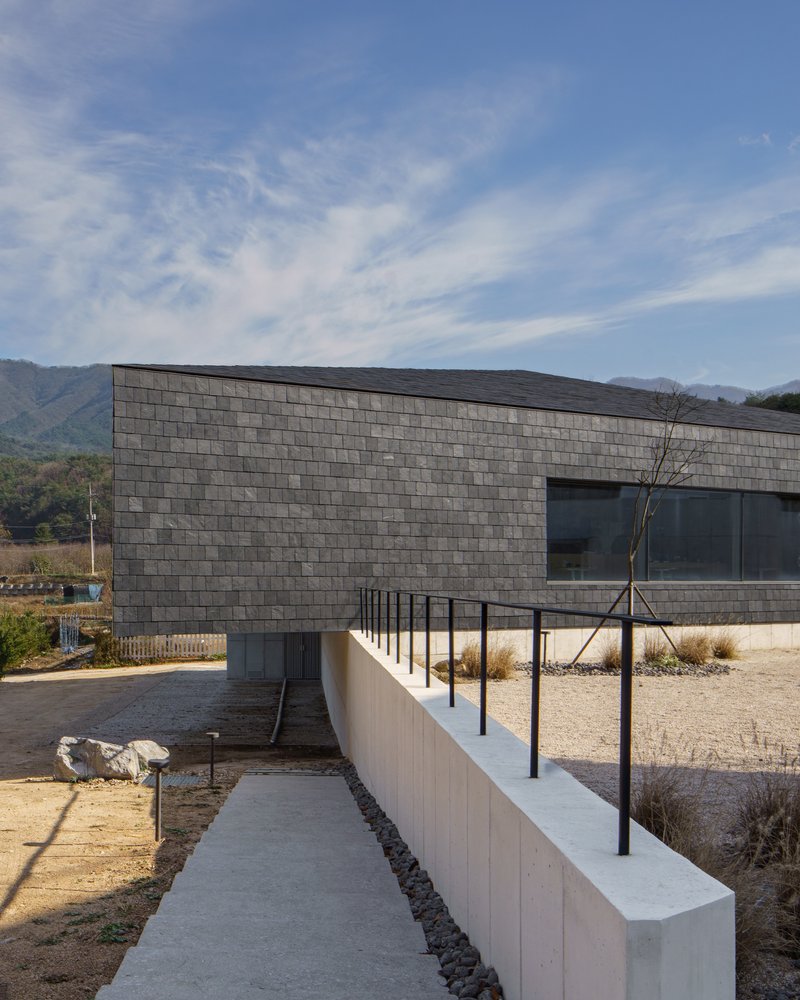
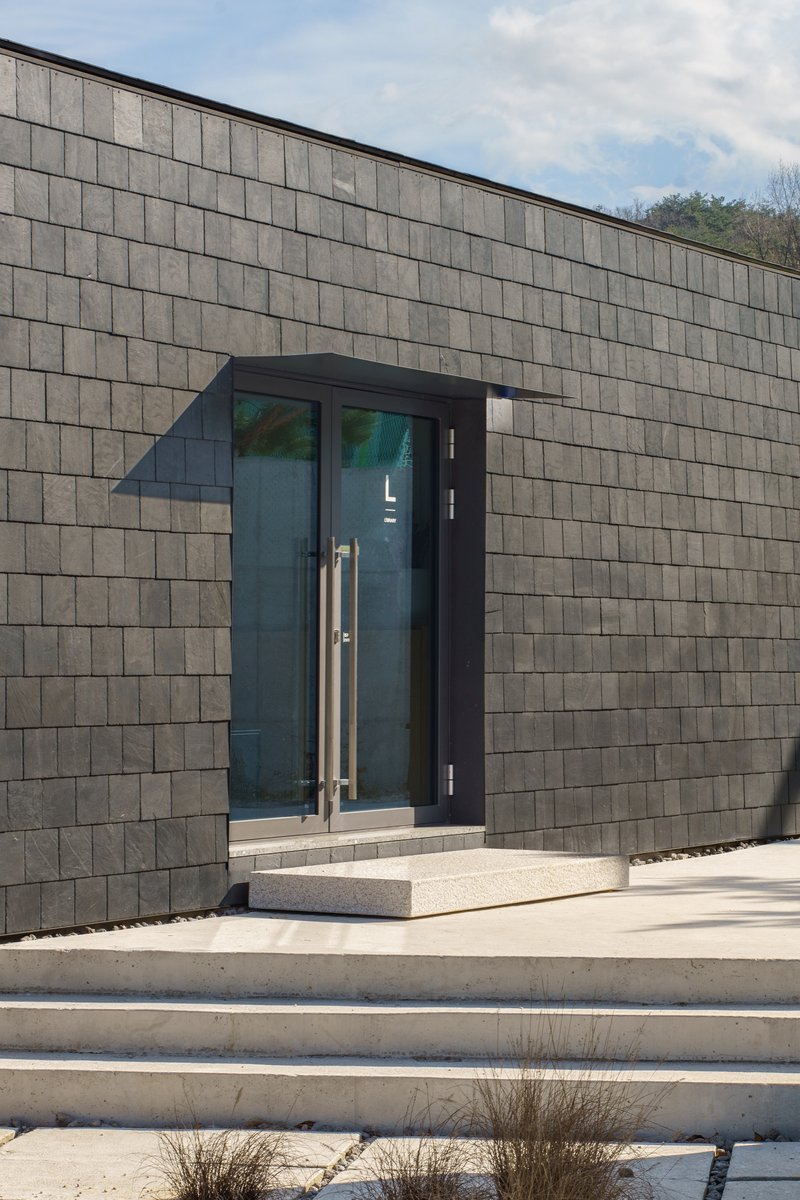
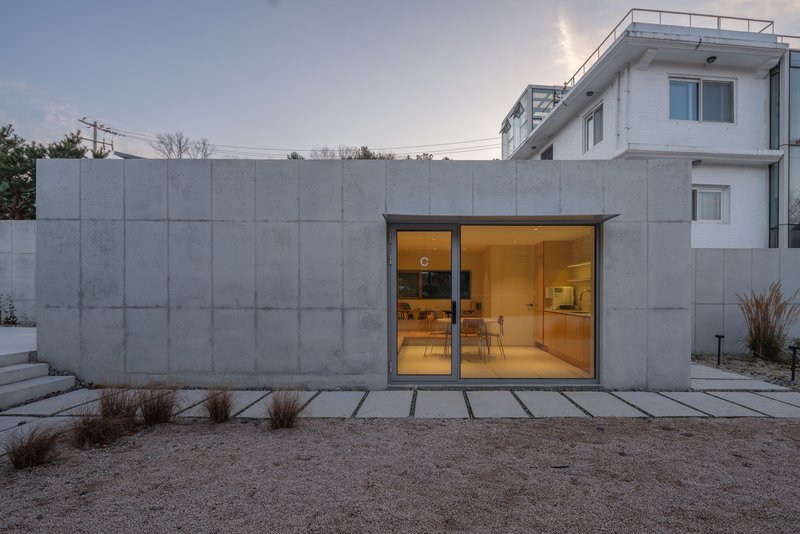
Arrival is carefully choreographed. A concrete path leads along a white retaining wall to the recessed glass entrance, which sits beneath a projecting canopy. The path is neither grand nor hidden; it offers a moment of transition between the public world and the interior, compressing space before releasing it. Steel railings and a simple paver pathway reinforce the sense of institutional care without tipping into austerity.
The adjoining white volumes visible in the aerial views suggest the library sits within a small campus, positioned next to a sports field. The entry sequence acknowledges this context: you approach from the everyday landscape of Pocheon and step into something deliberately quieter, slower, more protected.
The Radiating Canopy
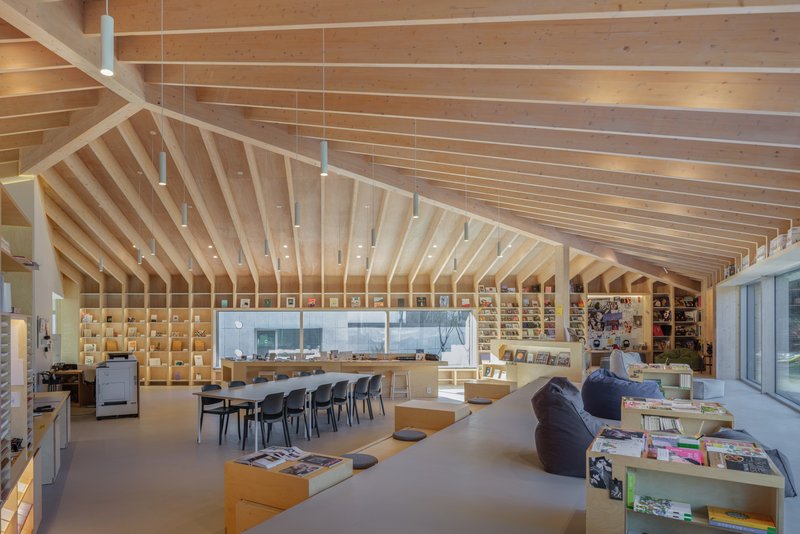
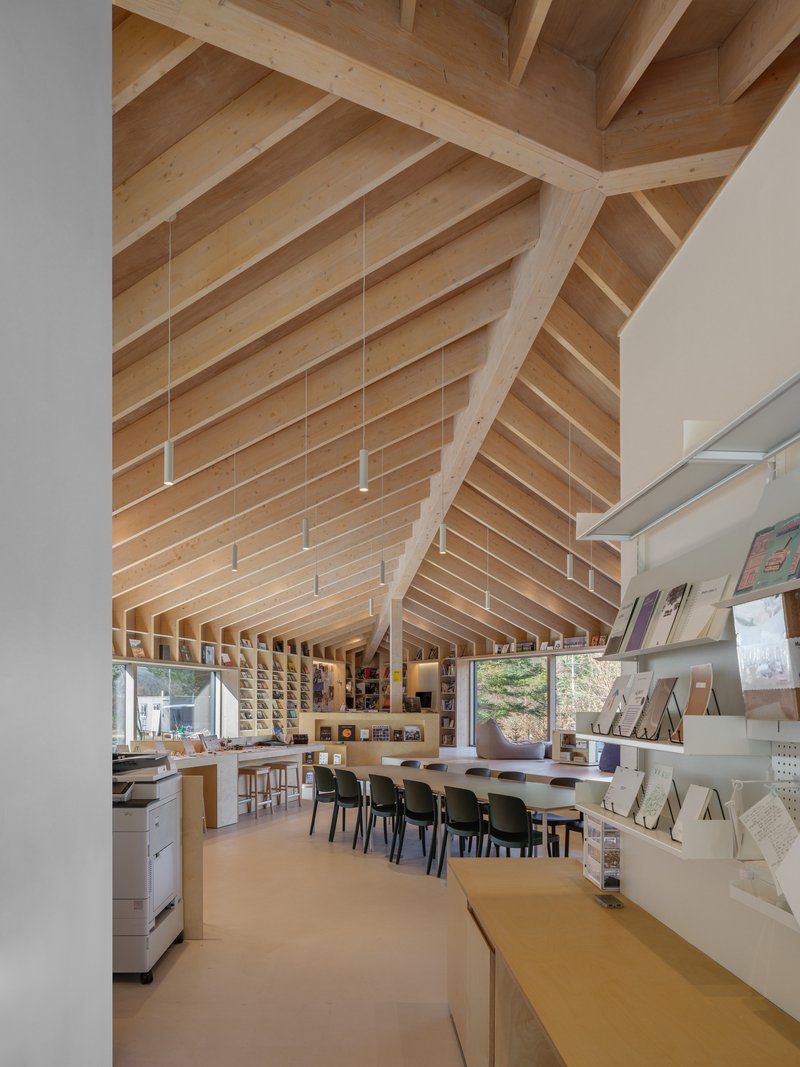
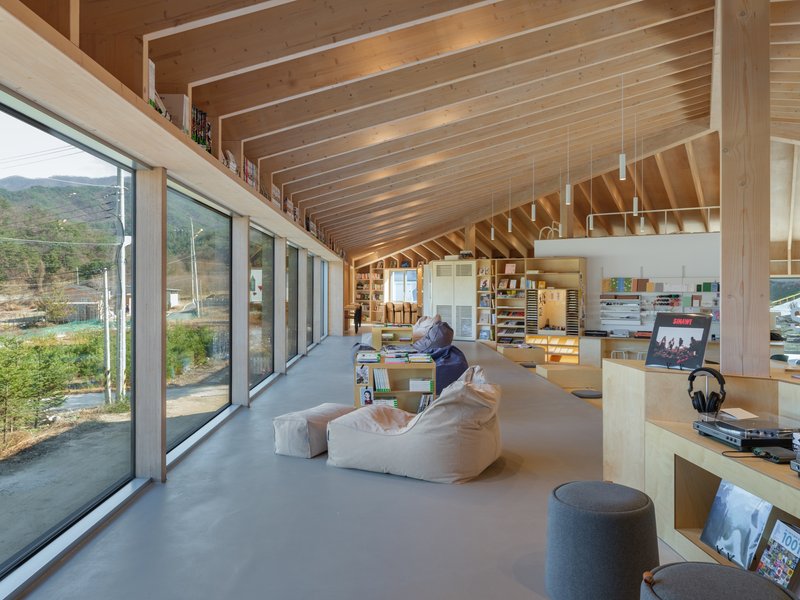
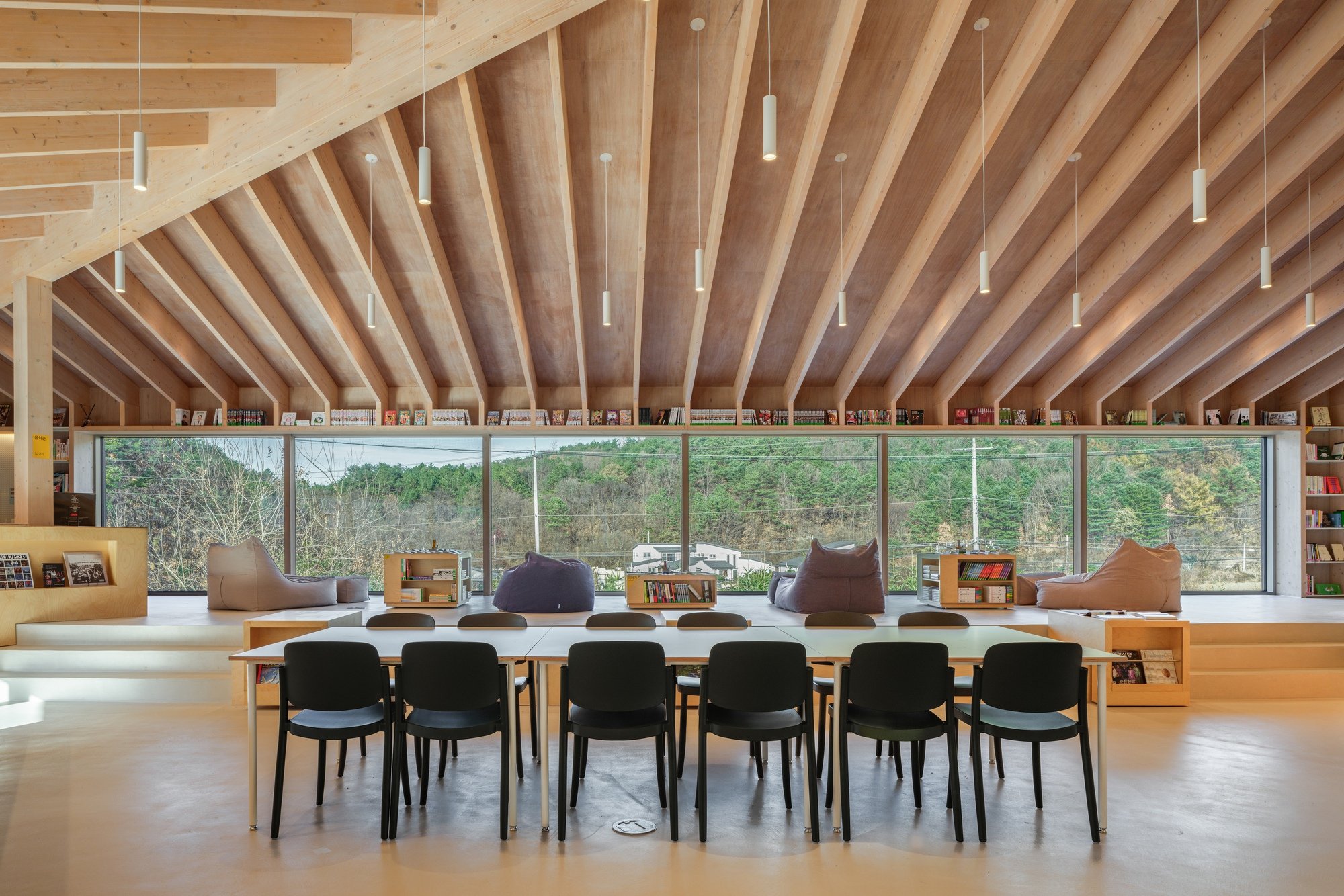
Step inside and the mood shifts completely. The roof structure is the building's central architectural idea: exposed timber ribs radiate from the peak of the triangular plan, fanning outward across the ceiling like the spokes of an unfolding umbrella. The wood is light-toned and warm, and it transforms the interior into a single, legible volume unified by its overhead geometry. Bookshelves line the perimeter walls beneath the ribs, turning the entire envelope into a working surface.
Pendant lights hang from the rafters at measured intervals, and the overall effect is one of calm order. The timber structure is both ornamental and honest: you can read exactly how the roof works, how loads travel from ridge to wall. For young readers who may have experienced chaos in other parts of their lives, this legibility is itself a form of care.
Reading Against the Hillside
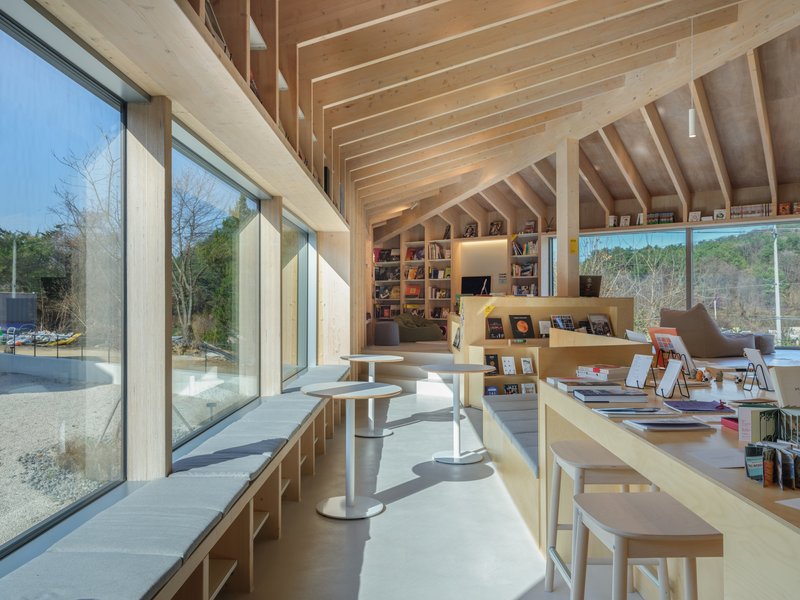
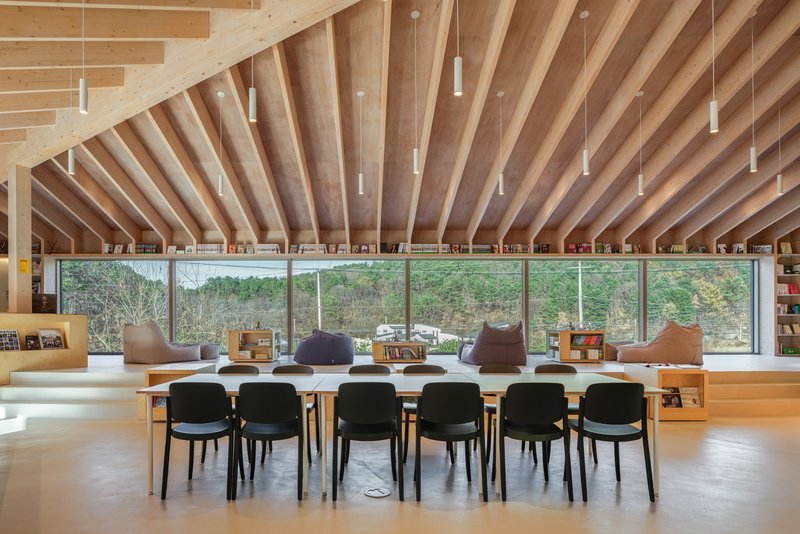
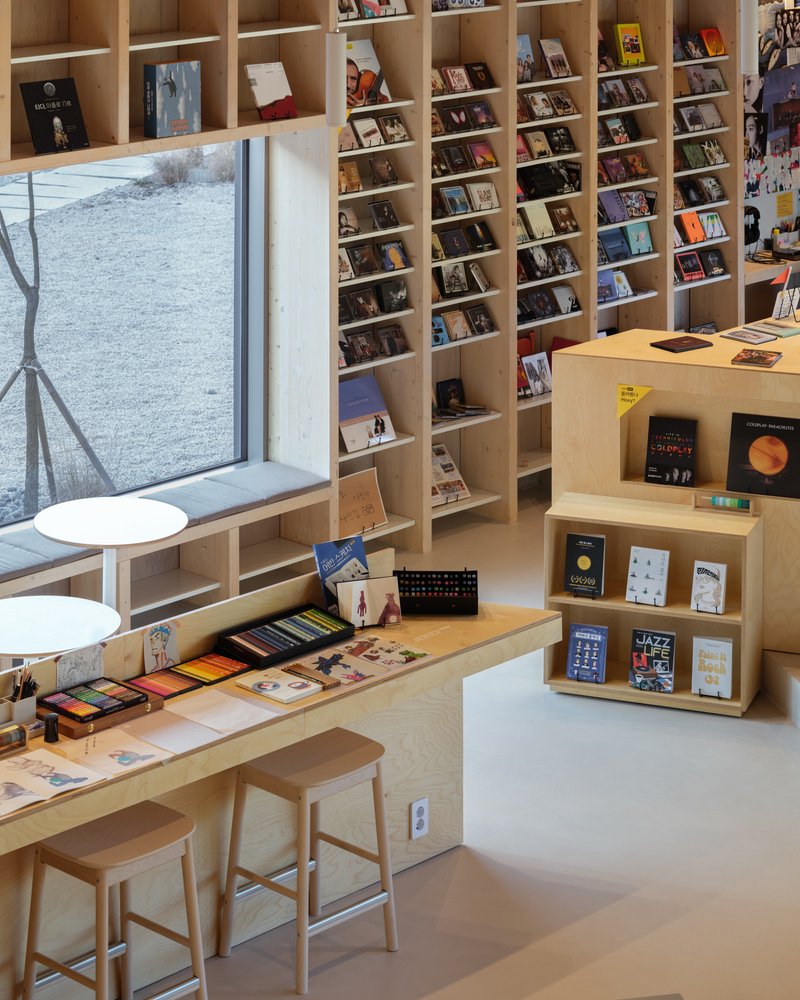
Where the exterior is opaque, the interior walls facing the hillside dissolve into floor-to-ceiling glazing. The reading areas exploit this fully. Communal tables with black chairs sit beneath the fanned rafters, oriented toward bare winter trees. A window seat built into a plywood bookshelf wall creates a nook for solitary reading with a view of the landscape. The relationship between the warm wood interior and the cold hillside outside is mediated by the glass, which acts less as a barrier than as a frame.
The decision to open only toward the natural landscape, not the street or neighboring structures, is consistent with the building's ethos. The library offers its occupants views of sky, trees, and terrain, not of the social world they may be trying to recover from. Nature becomes a therapeutic backdrop, and the architecture makes sure it is always present.
Courtyard and Landscape
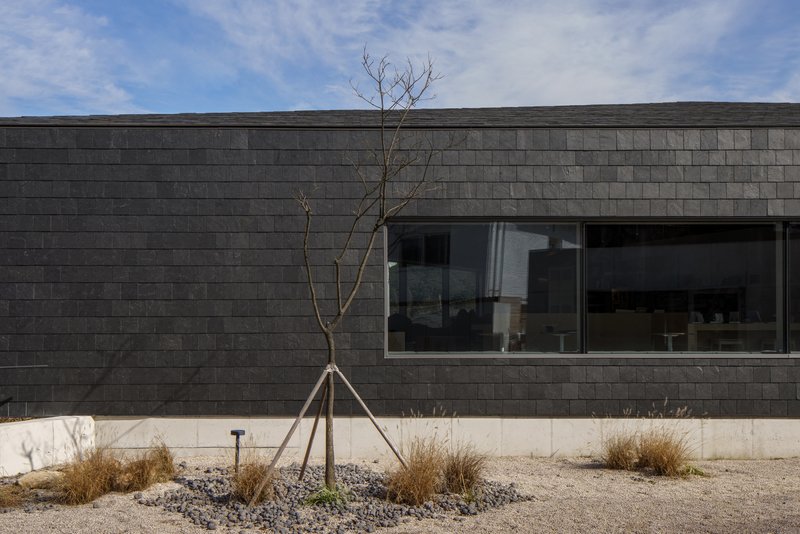
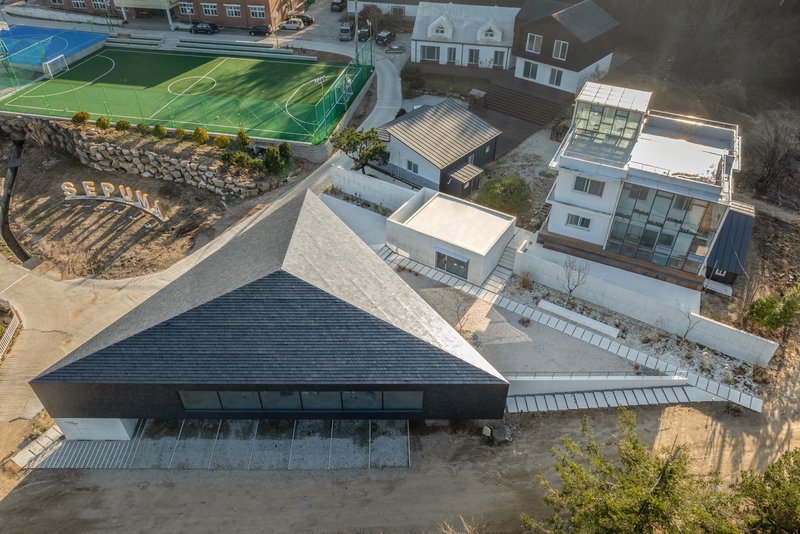
The aerial view reveals the building's full geometry: a pyramidal slate roof sitting like a dark mineral form beside white-rendered support buildings and a sports field. The triangular footprint creates a compact courtyard, which pulls daylight into the center of the plan and offers a private outdoor space separate from the public grounds. Gravel beds with staked young trees line the dark tile walls, promising future shade and greenery as the landscape matures.
The courtyard is not merely decorative. In the drawings, it is clear that the triangular plan wraps its program zones around this void, meaning every internal space either faces outward to the hillside or inward to the court. No room is left without natural light, and the courtyard functions as a second anchor alongside the radiating roof.
Plans and Drawings
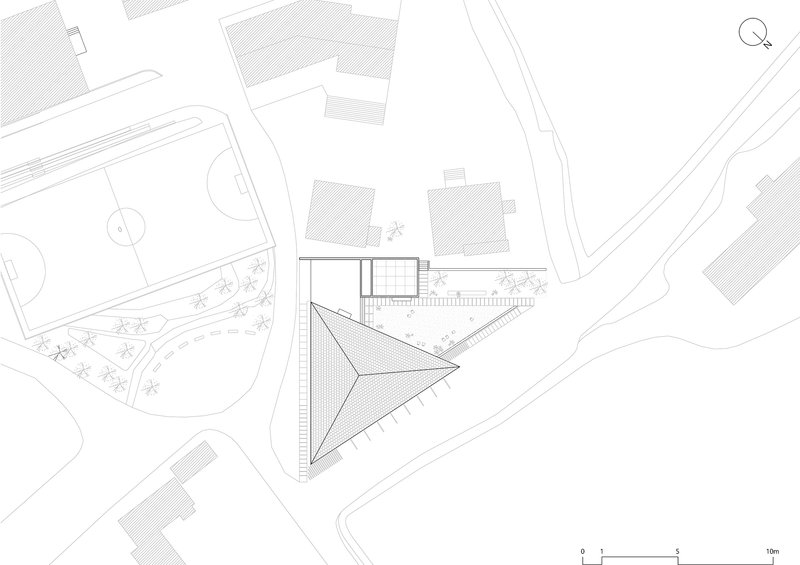
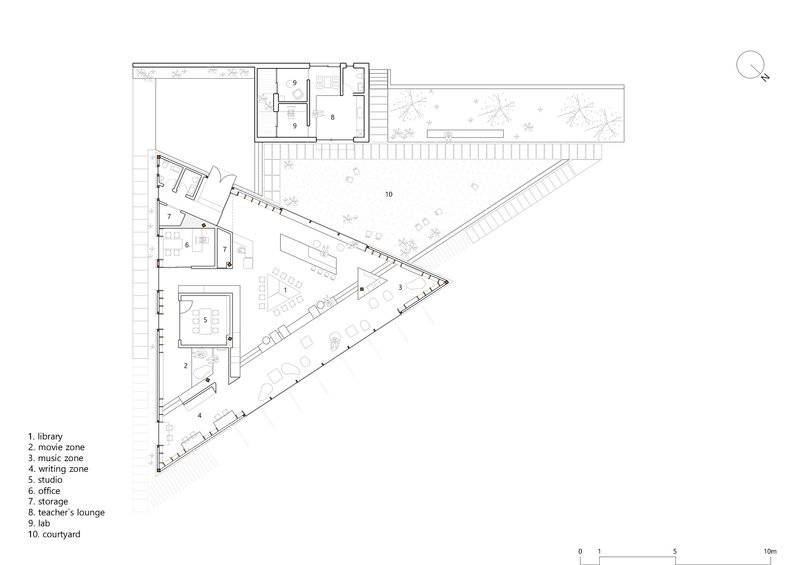
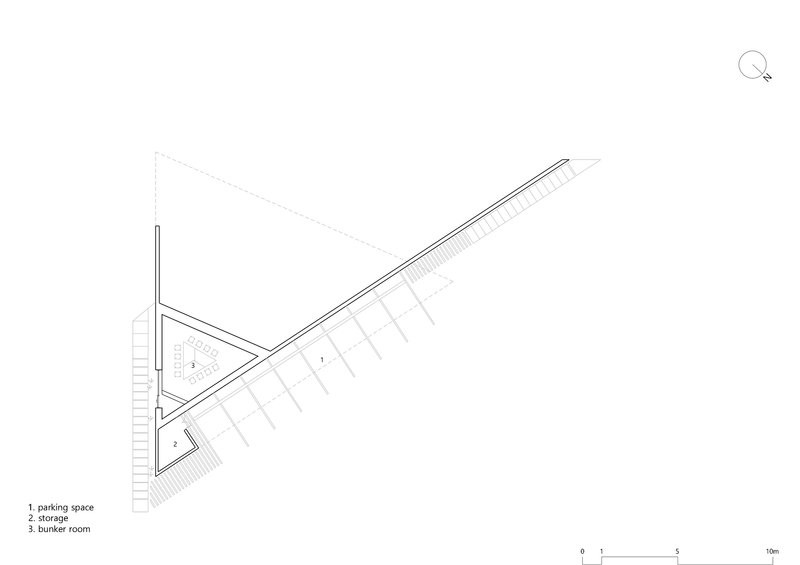
The site plan confirms the triangular footprint and its relationship to adjacent structures and the surrounding landscape. The floor plan shows program zones arranged around a central courtyard, with distinct areas for reading, workspace, and communal activity distributed along the three edges. The axonometric drawing is particularly revealing: below grade, the building conceals parking and storage, keeping the ground plane clear and uncluttered for its users.
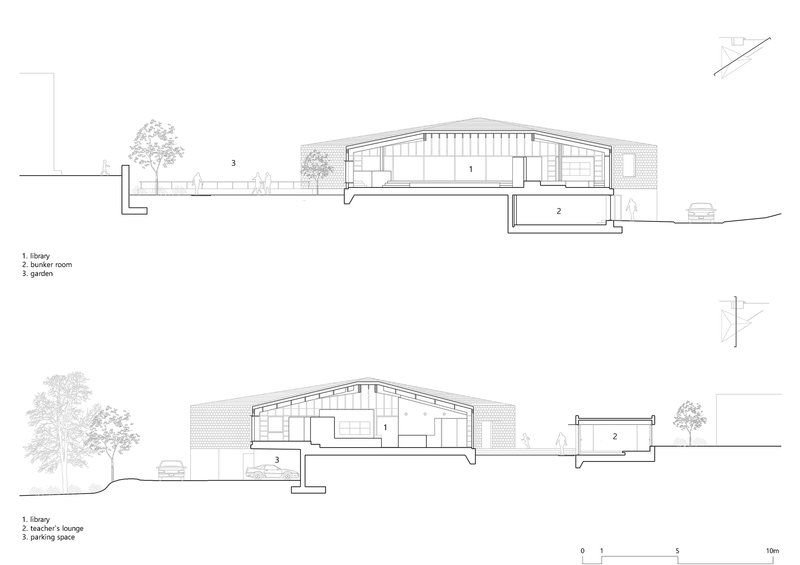
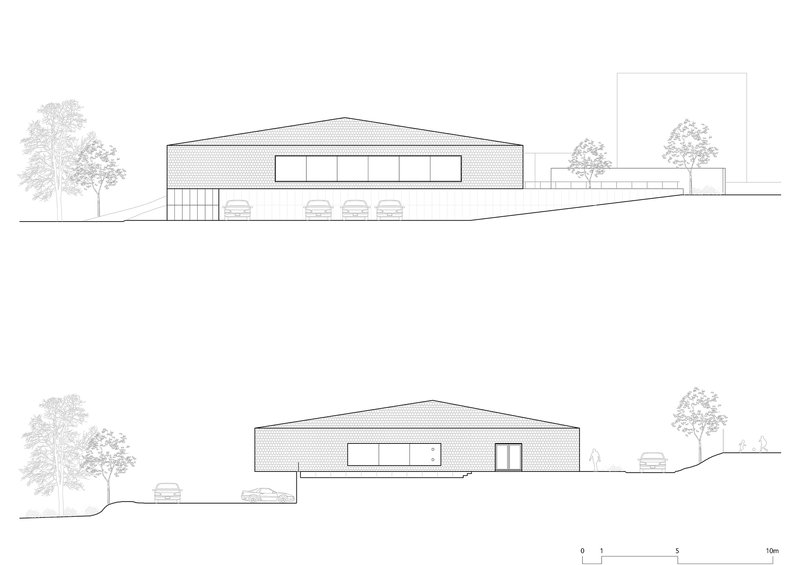
Section drawings cut through the vaulted volume and expose an embedded bunker room, a detail that underscores the building's commitment to providing refuge in multiple senses of the word. The elevations show a low-slung profile with pitched roofs that defer to the surrounding terrain rather than competing with it. Taken together, the drawings reveal a building that is far more spatially complex than its modest area suggests, with each decision oriented toward the safety and dignity of its occupants.
Why This Project Matters
Architecture for vulnerable populations tends to fall into two traps: it either over-performs generosity with conspicuous formal gestures, or it defaults to the minimum viable solution. The Second Chance Library does neither. Its exterior is tough and private; its interior is luminous and precise. The triangular plan is not arbitrary geometry but a working diagram that organizes shelter, light, and landscape around a courtyard core. The radiating timber roof gives the whole building a single, memorable image without becoming decorative.
ODDs&ENDs architects have produced a building that takes its social mission seriously at the level of plan, section, and material. The young people who use this library are not presented with charity architecture. They are given a space that is careful, specific, and dignified, one that communicates through its structure that recovery deserves real architecture, not just a roof.
Second Chance Library by ODDs&ENDs architects (lead architect: Haejin Choi), Pocheon-si, South Korea. 372 m², completed 2023. Photography by Kim Yongsung.
About the Studio
Share Your Own Work on uni.xyz
If projects like this are the kind of work you want to make, uni.xyz is a place to publish your own, find collaborators, and enter design competitions.



Popular Articles
Popular articles from the community

The Faith: Modular Architecture for Play, Learning, and Hope in Kutupalong Refugee Camp
A modular playground architecture project in Bangladesh where play, learning, safety, and hope rebuild childhood inside a refugee camp anew.

Kerry Kounnapis Packs 800 Daily Coffees into a 43-Square-Metre Melbourne Laneway Bar
Palace Coffee channels Pellegrini's and European standing bars through oxide-red steel and spotted gum timber in a Ridgway Place sliver.
Reincarnation Weaves a Three-Story Retreat into the Green Landscape of Rural Bangladesh
Ara Manor in Narsingdi dissolves the line between domestic architecture and its lush surroundings through screens, courtyards, and planted rooftops.
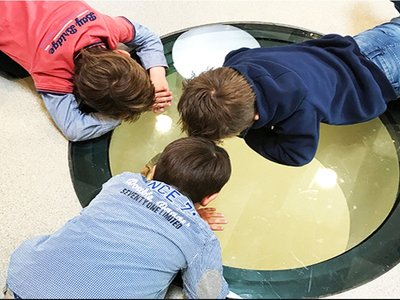
IKC de Geluksvogel: Sustainable School Architecture Designed for Free Movement and Digital Learning
IKC de Geluksvogel turns sustainable school architecture into a flexible Maastricht campus for digital learning, nature, and free movement.
Similar Reads
You might also enjoy these articles
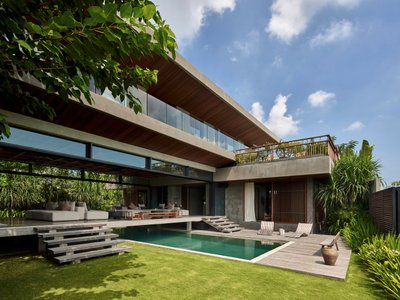
Freebird Residence by Alexis Dornier: A Tropical Modernist Sanctuary in Bali
Floating living pavilion above pool anchors H-shaped tropical villa, blending Japanese minimalism, sustainable strategies, lush landscape, and sculptural interiors.
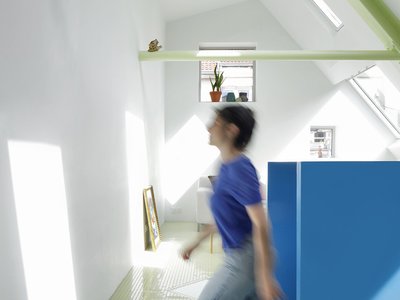
127af Flips a Tiny Bagnolet Rowhouse Upside Down with a Handcrafted Roof Extension
A 55-square-meter terraced house on the edge of Paris gains a luminous upper living floor through lightweight timber and steel.
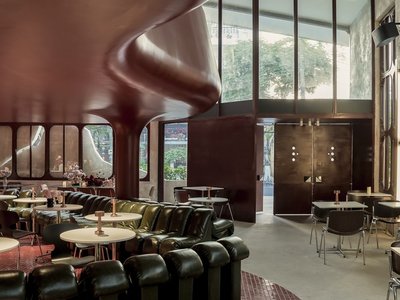
1.61 Design Workshop Wraps a 600-Square-Meter Café in Vietnam in Sculptural Burgundy Drama
Reden Café & Bistro pairs a helical staircase, mosaic floors, and deep red interiors to rethink Vietnamese hospitality space.

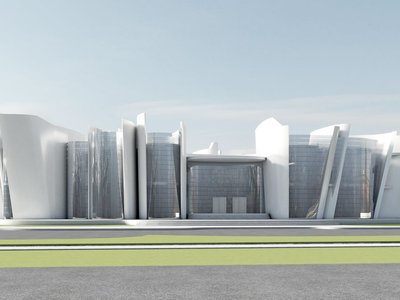
The Unbound Brain: A School Shaped by Cognitive Architecture
Cylindrical learning pods radiate like neurons from a central cortex, turning the floor plan into a spatial model of human thought.


Explore Landscape Design Competitions
Discover active competitions in this discipline




The Global Benchmark for Architecture Dissertation Awards


Challenge to design public laboratory
Comments (0)
Please login or sign up to add comments
No comments yet. Be the first to comment!