

Olivé House: A Hillside Apartment Reimagined Above the Val Squaranto
Historic Verona apartment renovation reorients living spaces upward, opens panoramic valley views, integrates terrace, oak, marble, and reclaimed materials sustainably.


Located on the eastern hills of Verona, Olivé House is a refined residential refurbishment that transforms a century-old building into a light-filled contemporary home overlooking the Val Squaranto. Designed byFutura | Squaranto Associati, the 160-square-meter apartment occupies the first and second floors of a historic structure once known locally as “La Alpina,” a former village bar positioned at the highest point of the settlement.
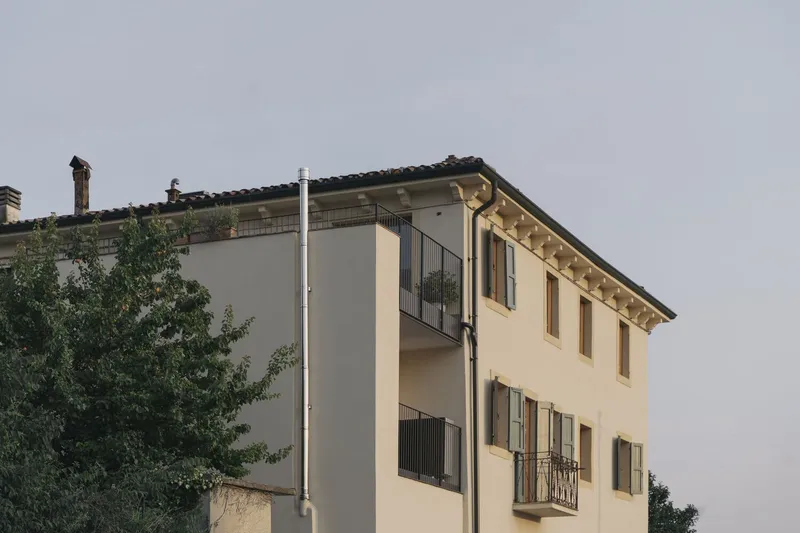
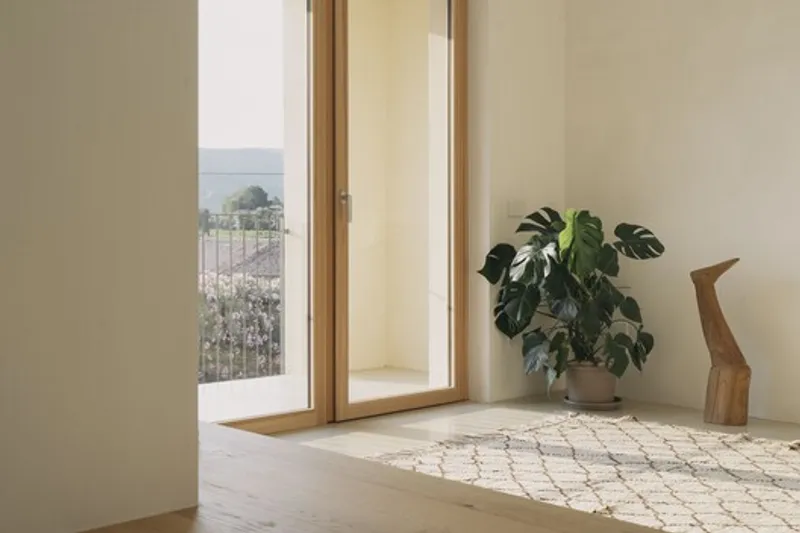
Despite its extraordinary location and uninterrupted 180-degree views across vineyards, cypress trees, and the surrounding landscape, the original apartment layout failed to engage with its context. Service spaces, staircases, and corridors dominated the main façade, while the primary living areas were pushed inward, disconnected from natural light and the valley panorama. The renovation project set out to reverse this condition entirely, using architectural clarity and material coherence to reconnect domestic life with the landscape.
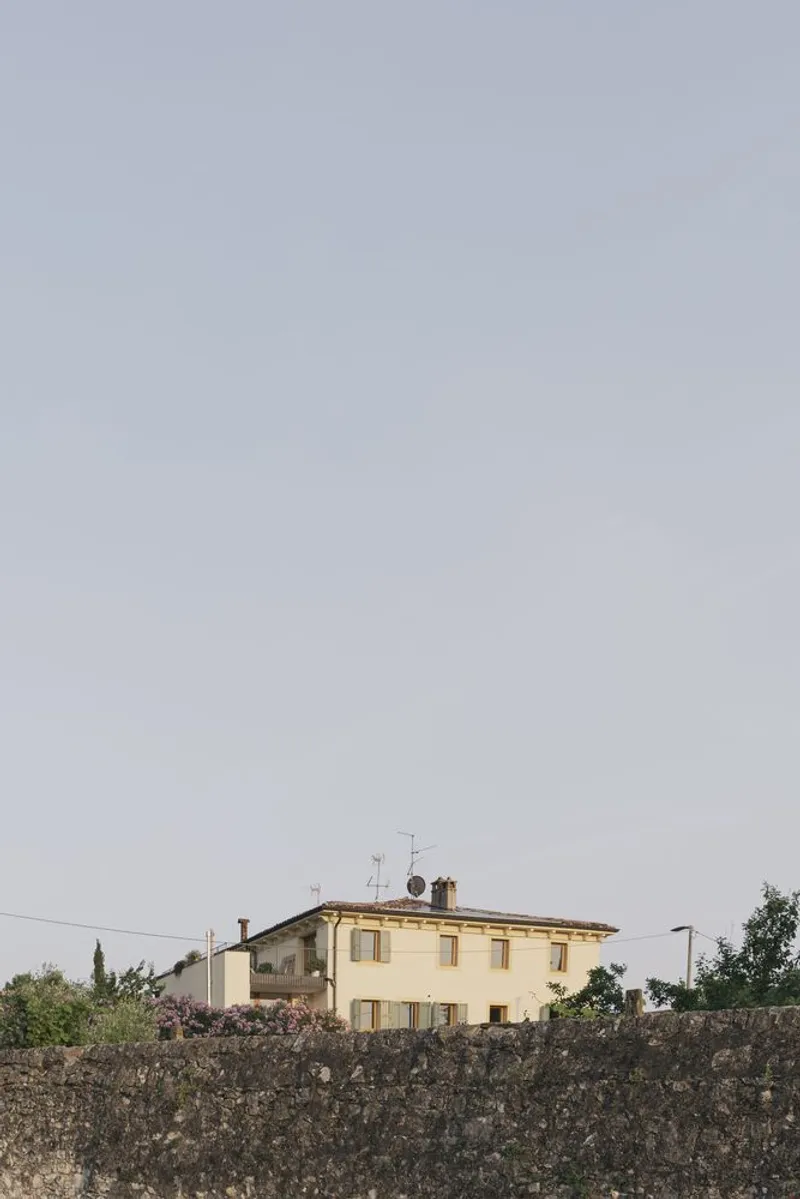
The design strategy began with a radical reorganization of space. Nearly all internal partitions were removed, allowing the architects to relocate storage, service areas, and technical functions toward the center of the plan. This freed the perimeter for spaces intended to be lived in, placing everyday activities directly along the façade and in dialogue with the surrounding views. Select structural interventions supported this transformation while preserving the integrity of the historic building.
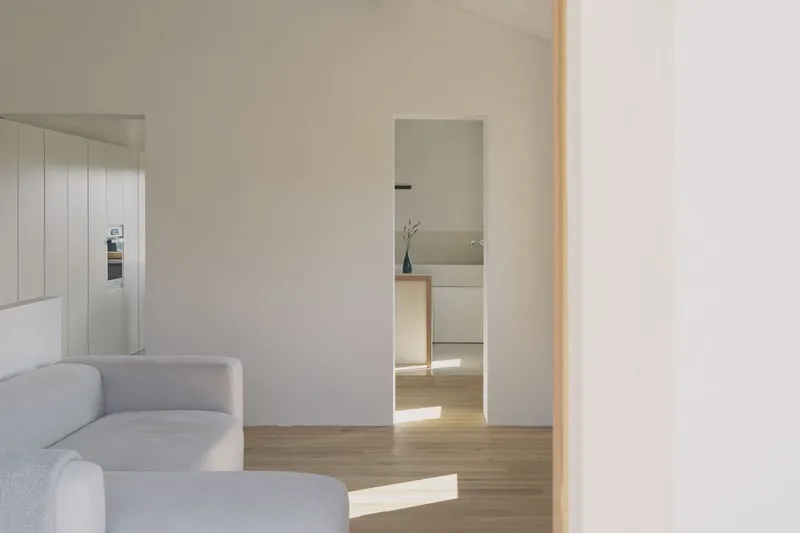
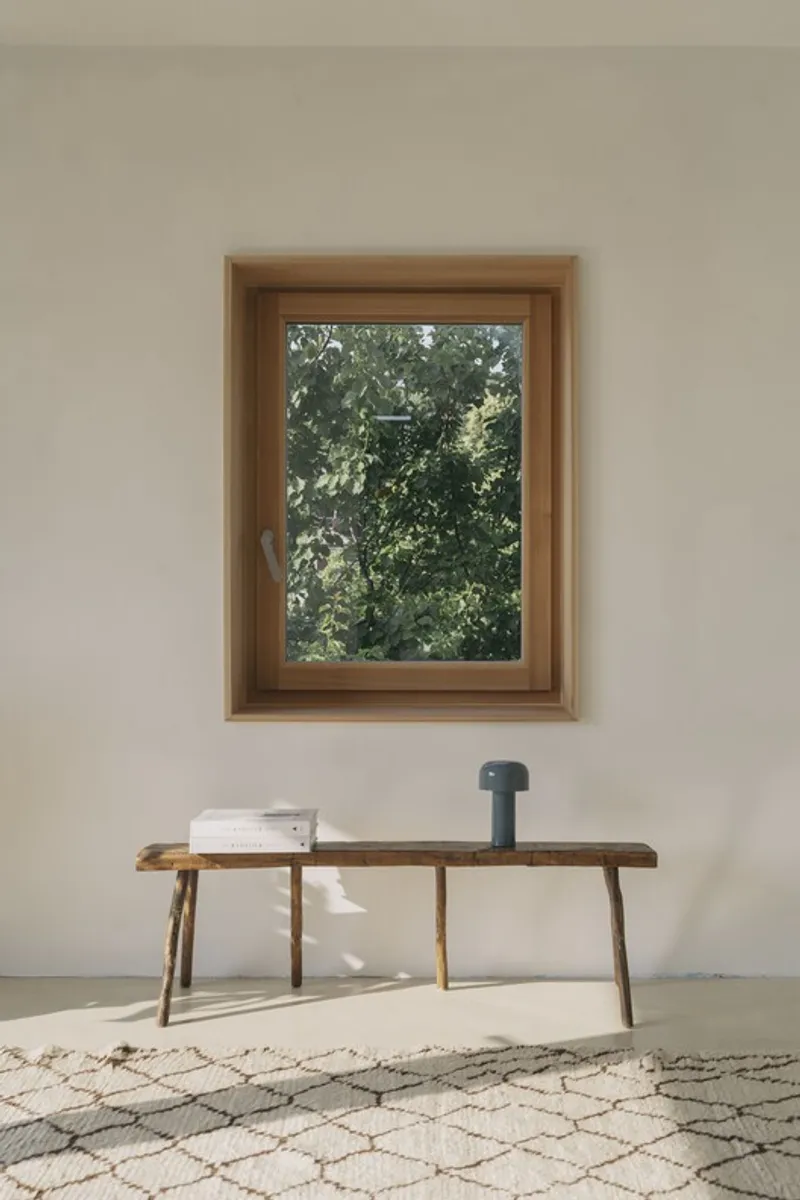
One of the most distinctive architectural decisions was the inversion of the conventional residential hierarchy. Instead of situating bedrooms above and living areas below, the project places the kitchen, living room, and a generous new terrace on the upper floor. This level becomes the social and experiential heart of the home, elevated to fully embrace the valley landscape. Below, the more private functions are housed, including the entrance, bedrooms, a compact service block, and a creative studio space.
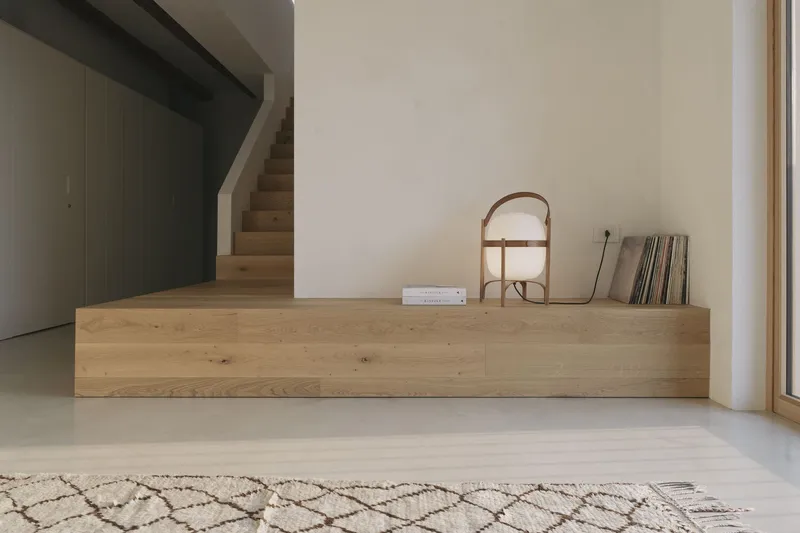
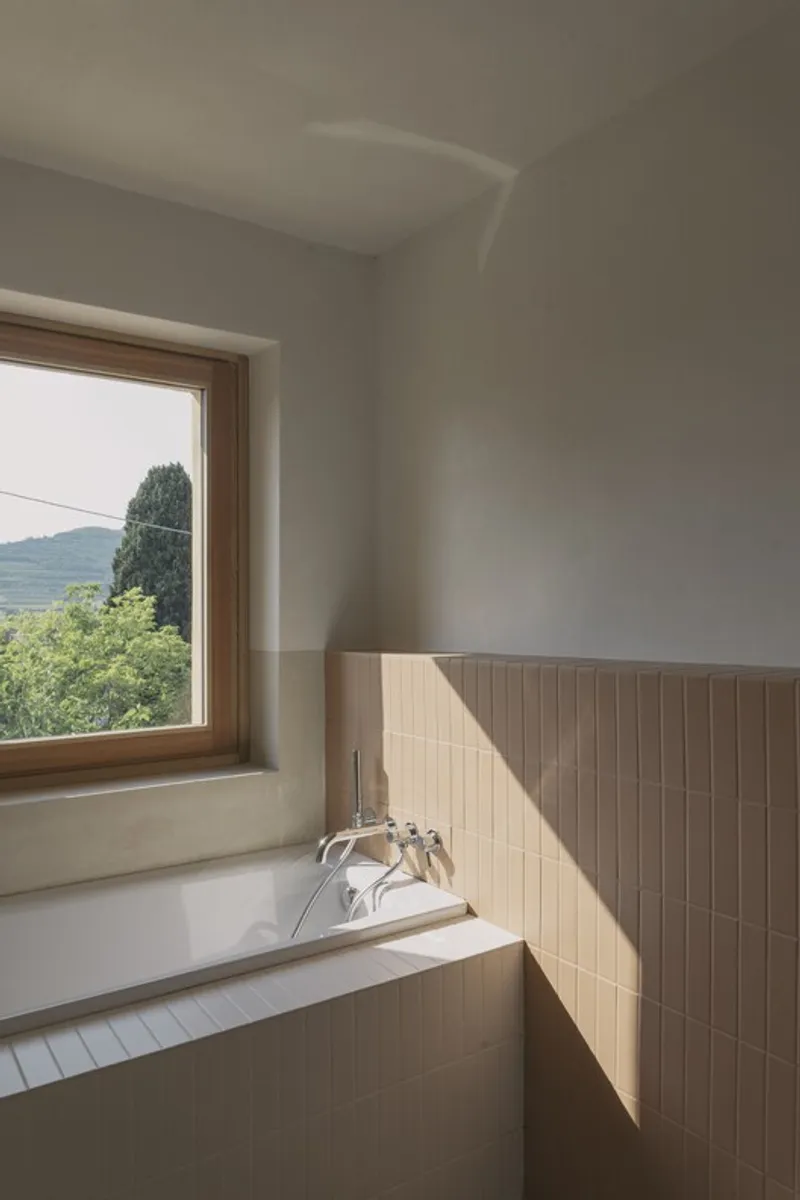
Throughout the apartment, existing windows act as carefully composed frames, offering sequential views of the medieval castle, historic villas, and cultivated hillsides. A new, large sliding glass opening connects the living space to the terrace, disappearing completely into the wall and dissolving the boundary between interior and exterior. From this vantage point, the oak forests and the distant Lessinia mountains become an extension of the domestic environment.
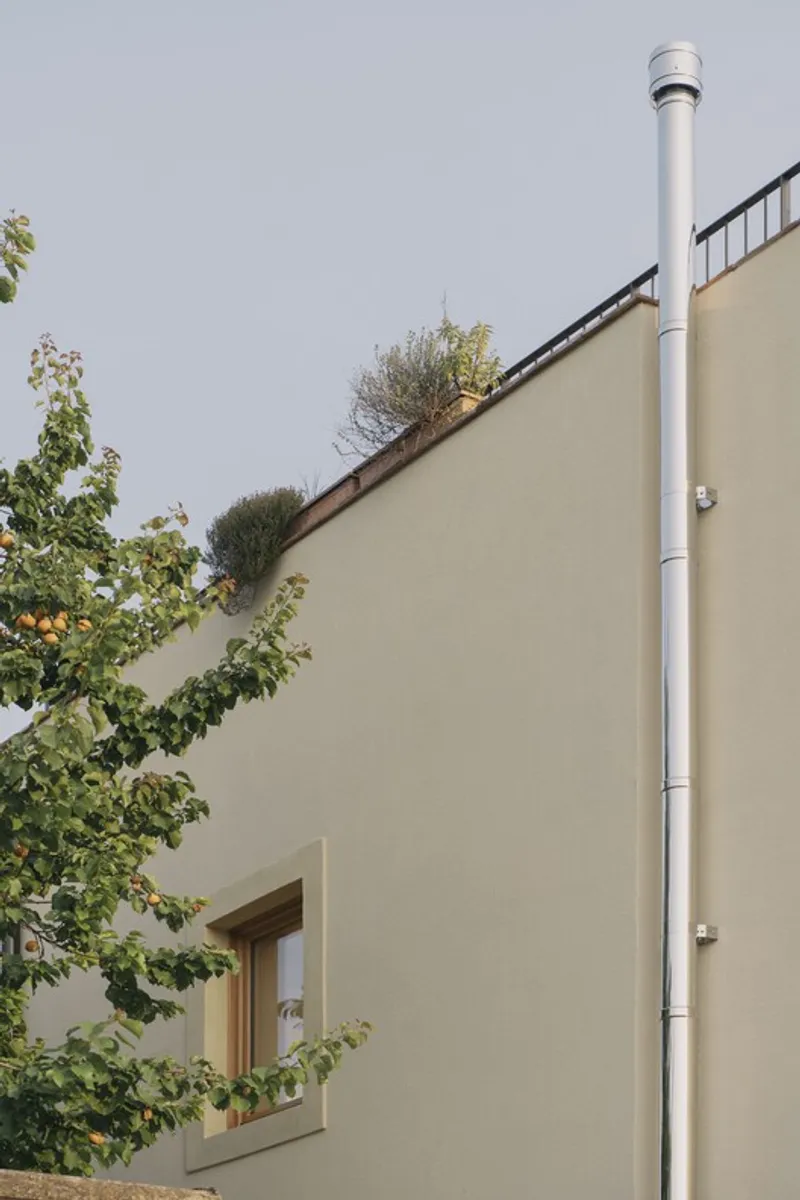
Material selection plays a crucial role in reinforcing this connection to place. Floors are finished with large oak planks and “biancone della Lessinia” marble, referencing the local geology and woodland context. These natural materials are complemented by concrete surfaces, creating a restrained palette that balances warmth with architectural precision. The terrace continues this language with a concrete floor and a perimeter wall built using reclaimed terracotta bricks salvaged from a nearby farmhouse demolition. An outdoor kitchen integrated into this structure further enhances the terrace as a functional extension of the living space.
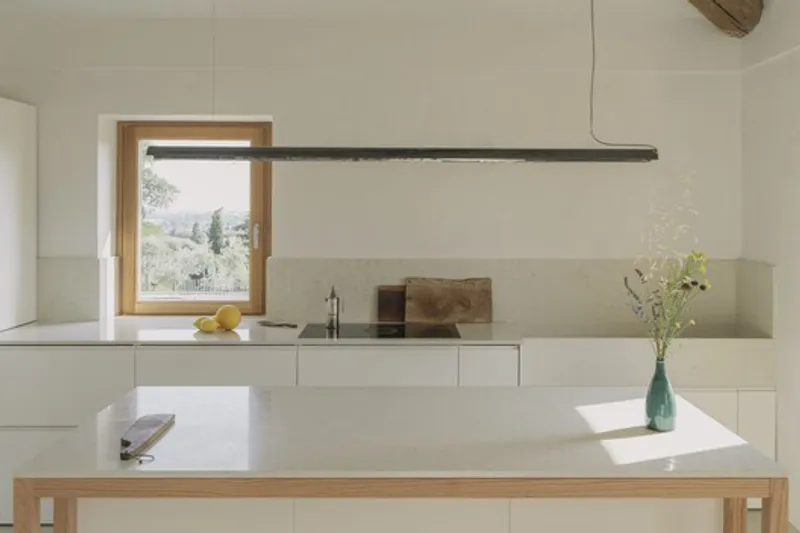
Olivé House exemplifies a thoughtful approach to residential renovation, where spatial inversion, material authenticity, and landscape engagement redefine everyday living. By reorienting the apartment toward its exceptional setting, the project demonstrates how adaptive reuse and contemporary design can coexist within a historic envelope, offering a timeless response to place, light, and topography.
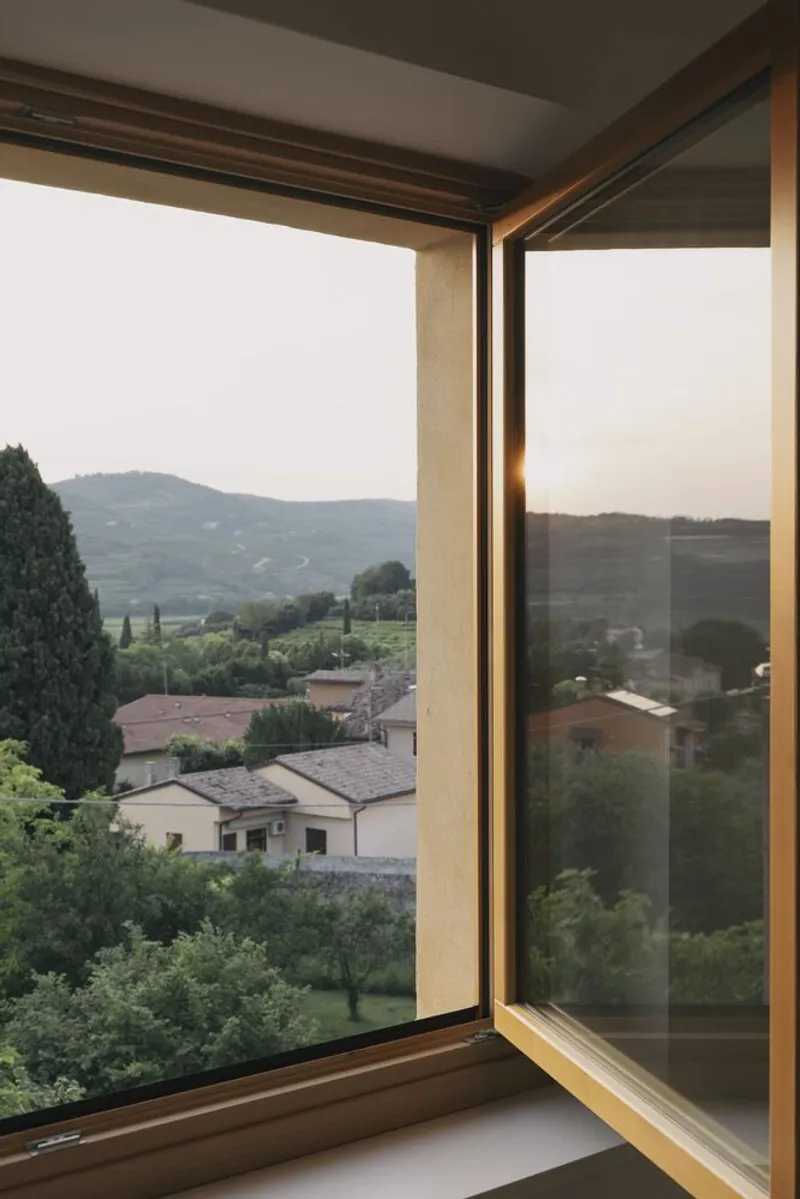
All photographs are works of
Catalogo Studio - Maria Francesca Lui, Marco Lumini


Popular Articles
Popular articles from the community


longwave studio Reorganizes a 112 m² Tainan Apartment Around the Daily Routines of a Family and Two Cats
In Tainan, Taiwan, birch plywood, rust-red furniture and a freestanding plaster wall link arrival, storage, work and family life in one apartment.

GROUP A Strips a 1969 Rotterdam Harbor Headquarters to Its Frame and Wraps It in Timber Louvers
In Rotterdam's M4H harbor district, Ferro Offices reuses a 1969 frame, adds one timber storey and reaches BREEAM-NL Outstanding.

David Macias Steps a Doorless Stone and Plaster House Down a Tropical Colombian Hillside
In the humid hills of Colombia, Threshold House replaces the front door with an open void and terraces its 850 m² down the slope instead of fighting it.

David Ortega Stacks a Two-Story Mexico City Penthouse Around a Steel Stair and a Pergola-Shaded Roof Terrace
In Colonia Roma, a 300 m² penthouse uses oak joinery, a planted steel stair and a slatted roof pergola to make a new-build apartment feel like a house.

Similar Reads
You might also enjoy these articles

Gil Mello Arquitetura Tilts a Single Roof Toward the Waterfalls on a Plateau Above Aiuruoca, Brazil
In Aiuruoca, Minas Gerais, a 200 m² house of local labor and reclaimed poles pairs a low valley veranda with a tall mountain one.

U.GA Architects Wraps an Oval Rooftop Pool in Curved Board-Formed Concrete on Busan's Jeollidan-gil
In Busan's Jeonpo-dong, a 454 m² mixed-use block stacks a neighborhood facility, guest rooms and an oval rooftop pool inside spiraling concrete walls.

Felipe Hess Arquitetos Turns a Blind Stone Wall to the Street and Opens a Brazilian House onto a Courtyard and Canal
A canal-front house in Brazil hides behind painted stone and planting, then opens to an olive-tree courtyard, a reed-ceilinged porch and a curving pool.
David Macias Steps a Doorless Stone and Plaster House Down a Tropical Colombian Hillside
In the humid hills of Colombia, Threshold House replaces the front door with an open void and terraces its 850 m² down the slope instead of fighting it.

Explore Housing Competitions
Discover active competitions in this discipline

Challenge to reimagine the Iron Throne

Photograph architecture without architects

Illustrate the lost glory of Angkor Wat - Render Challenge

Design challenge to reuse E-waste
Comments (0)
Please login or sign up to add comments
No comments yet. Be the first to comment!