
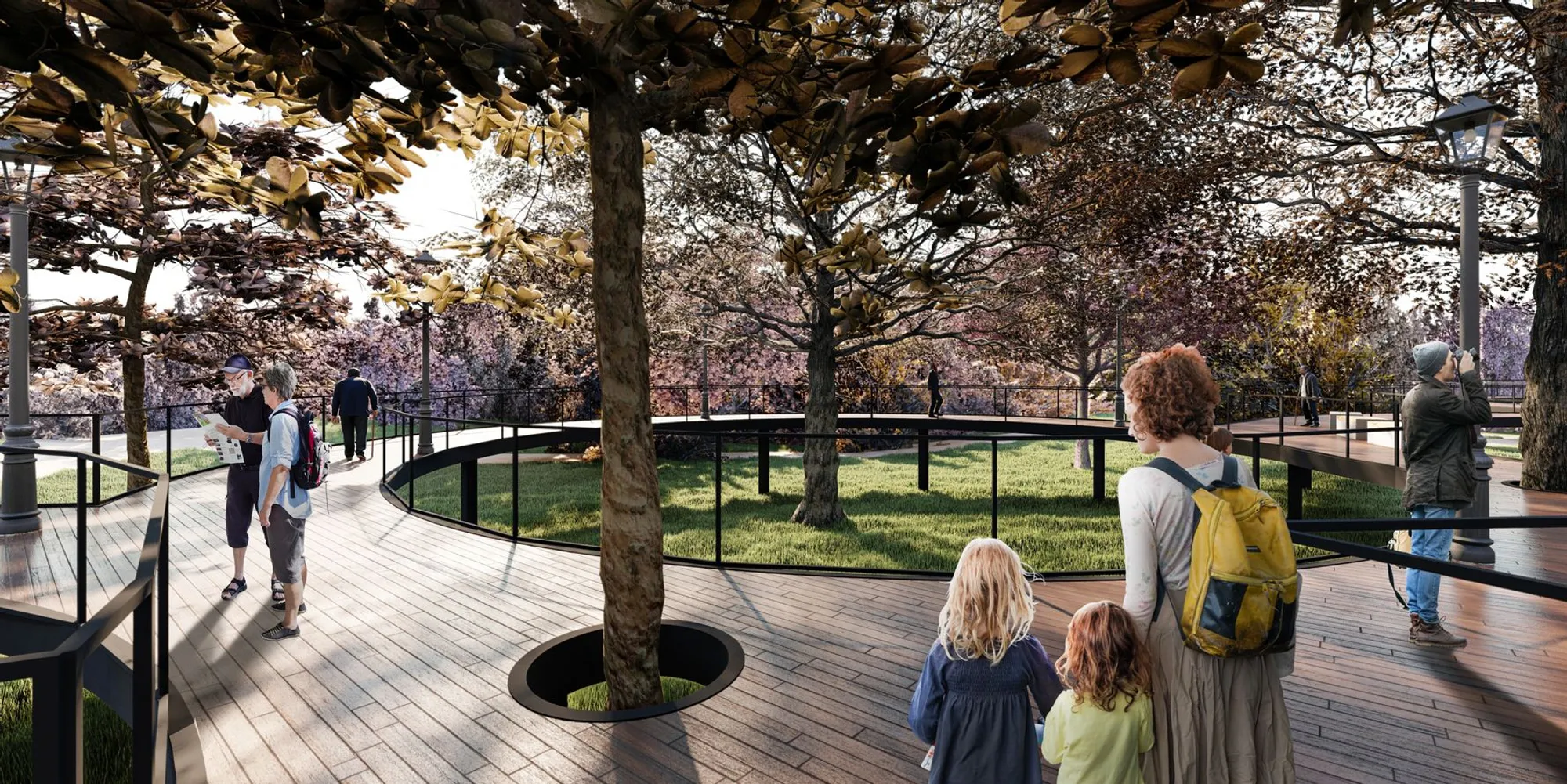
Platform Park: An Elevated Boardwalk That Floats Above the Ground for Senior Mobility
Five circular timber platforms trace an irregular hillside, preserving vegetation below while giving seniors barrier-free access to landscape.


What if the most respectful way to occupy a landscape is to never touch the ground? Platform Park takes that premise literally, lifting its entire circulation system onto a continuous timber boardwalk that hovers above an irregular hillside, leaving the soil, roots, and understory vegetation undisturbed. Designed specifically for people of advanced age, the project treats accessibility not as an afterthought but as the generative logic of its form: a seamless elevated plane that follows the terrain's highest contour so that no ramp, stair, or grade change interrupts movement.
The project earned an Honorable Mention in the Huddle competition and was developed by Luis Felipe Betancur Uribe and Juan Jose Vargas Castillo. Sited on highly uneven terrain, their proposal organizes the program around five circular platforms arranged in a linear sequence among existing trees, creating a landscape experience that is equal parts mobility aid, ecological strategy, and contemplative journey through the seasons.
A Boardwalk That Never Meets the Ground
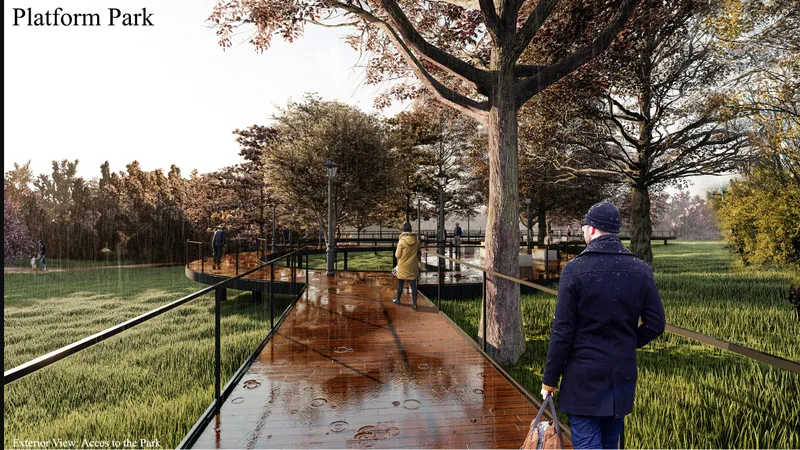
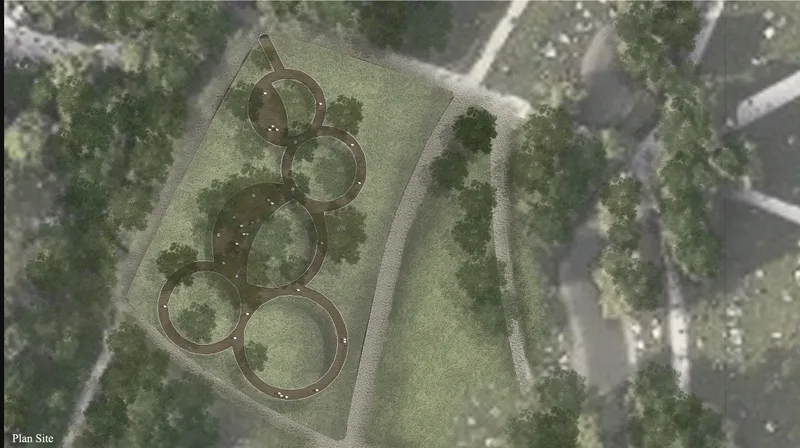
The opening image captures the essence of the scheme: a timber boardwalk with glass railings glides through a grove on a wet autumn morning, its deck lifted clear of the muddy slope below. Slender metal columns carry the load, thin enough to read as punctuation marks rather than structural intrusions. The aerial site plan reveals the larger organizational logic. Five circular platforms, each wide enough to serve as a gathering node, are strung along a continuous linear path that threads between mature trees. The circles are not decorative; their geometry generates 360-degree sightlines and eliminates dead-end corridors, letting visitors loop back at any point without retracing their steps.
By tracing the terrain's highest ridge, the designers avoid the conventional approach of grading a hillside flat. The ground beneath the platform is instead rewilded with low vegetation, maintaining ecological continuity and reinforcing the sensation that the walkway is genuinely flying. For seniors who may rely on wheelchairs, walkers, or simply a predictable walking surface, this uninterrupted plane removes every threshold that an undulating landscape would otherwise impose.
Canopy Trees as Architecture
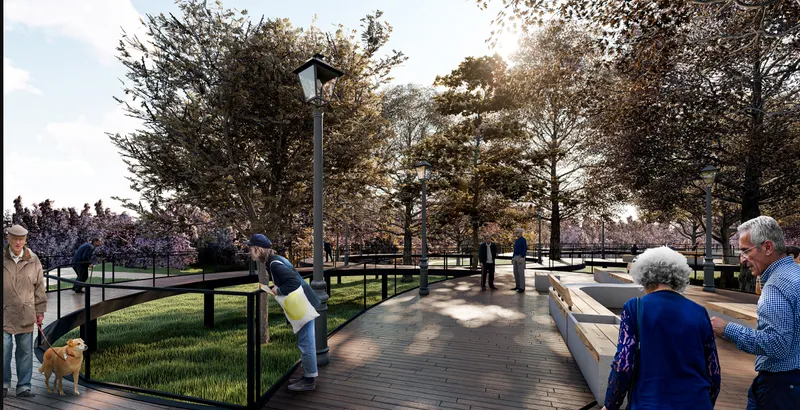
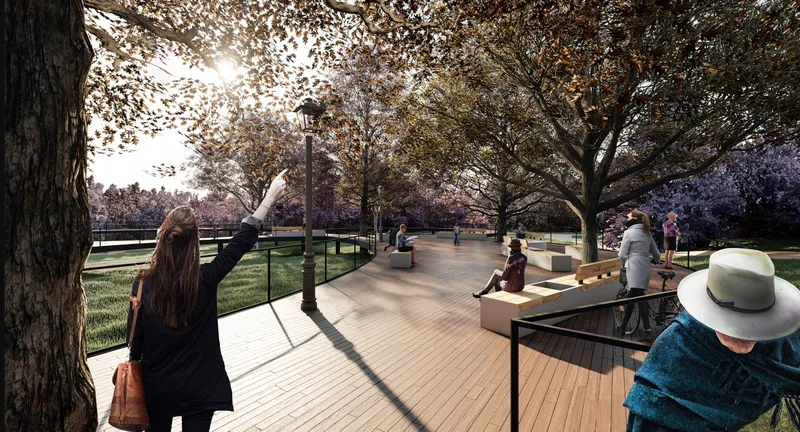
Two dusk and daylight views show how the existing tree canopy serves as the project's roof. At dusk, visitors gather on integrated benches flanked by black railings while mature trees frame the sky above, their branches providing shade and a sense of enclosure without any built overhead structure. In the daylight scene, autumn leaves filter sunlight onto the wooden deck, producing shifting patterns that make every visit optically distinct. The designers describe these canopy trees as natural "roofs" that form shaded, comfortable gathering points, and the images bear this out: the spatial quality is closer to a forest room than to an open-air promenade.
Strategically placed seating areas punctuate the walkway, creating pause points where social interaction can unfold naturally. The benches are integrated into the deck itself rather than bolted on, which keeps the walking surface clear and reinforces the idea of a single continuous material plane. The natural wood finish of the deck amplifies the organic experience, blurring the line between built surface and forest floor.
Four Seasons in Section
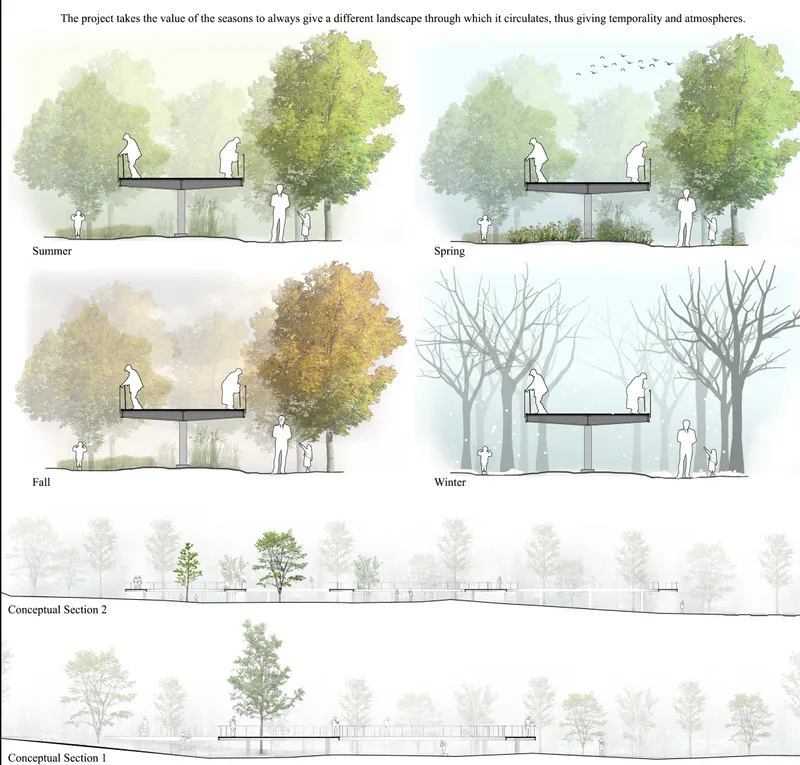
The section drawings lay bare the project's temporal ambition. Four seasonal vignettes show the same walkway segment transforming from lush summer canopy to vibrant autumn color, then to the stark silhouettes of winter and the fresh regrowth of spring. Two longitudinal site configurations illustrate how the platform's elevation shifts relative to the ground, sometimes hovering just above grade and at other moments rising to clear a steep drop. These sections make a compelling case that the architecture is not a fixed object but a framework through which the landscape performs its own annual cycle.
For senior users, this seasonal choreography translates into a reason to return. The path is never the same walk twice: light, color, scent, and even the degree of shade change with the calendar. The designers channel this temporality into what they call a journey, and the looping circular geometry supports it. There is no prescribed start or end, only a continuous invitation to keep moving at whatever pace the body allows.
Why This Project Matters
Platform Park reframes the brief for age-inclusive public space. Rather than flattening a difficult site or filling it with handrails and signage, Betancur Uribe and Vargas Castillo lift the user above the problem entirely. The result is a place where accessibility is indistinguishable from the spatial experience, where the ecological imperative to preserve existing vegetation aligns perfectly with the structural decision to elevate the deck, and where circular geometry turns a simple walk into an open-ended social ritual.
The project's strength lies in the economy of its central move. One decision, to float, solves multiple problems simultaneously: barrier-free circulation, habitat preservation, seasonal immersion, and a compelling visual identity. That kind of synthesis is rare in conceptual competition entries, where ambition often outpaces coherence. Here, the ambition and the coherence are the same thing.
View the Full Project
About the Designers
Designers: Luis Felipe Betancur Uribe, Juan Jose Vargas Castillo
Enter a Design Competition on uni.xyz
uni.xyz runs architecture and design competitions year-round that reward proposals with spatial conviction and real site intelligence.
Project credits: Platform Park by Luis Felipe Betancur Uribe, Juan Jose Vargas Castillo Huddle (uni.xyz).



Popular Articles
Popular articles from the community

EW PARK: Sustainable Architecture Reimagines the Future of Urban Parking
EW PARK reimagines city parking as a modular wooden tower combining automation, solar energy, electric mobility, and adaptable urban design.

Co-life: Sustainable Architecture for Age-Friendly Community Living
Co-life reimagines sustainable architecture for seniors through courtyards, rammed earth, shared gardens, and spaces designed for belonging.
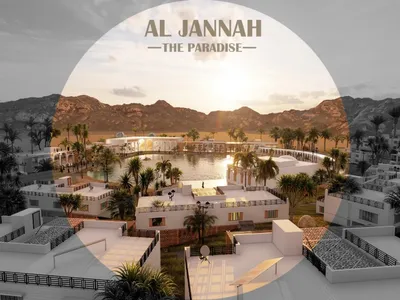
AL-JANNAH: Sustainable Architecture and Permaculture for Afghan Widows
AL-JANNAH uses sustainable architecture and permaculture to create resilient oasis of housing, learning, work and renewal for Afghan widows.

The Musturak Paradise: Senior Living Architecture for a Connected Future in Temara, Morocco
The Musturak Paradise reimagines senior living architecture in Temara via private homes, social spaces, culture, community, and shared care.
Similar Reads
You might also enjoy these articles

Day and Night Park: A Time-Based Urban Newsstand in Beijing
A temporary urban newsstand in Beijing blending travel, light, and reading through poetic colors, compact form, and community-focused design.

Modernist Patio Renovation in El Masnou, Barcelona by Oliver Segura Arquitectura + Cebrià Arquitectura
Modernist patio renovation blending tradition and innovation with a movable pool, leveled floors, and Catalan materials in El Masnou.

Alto Residencial Coop: Cooperative Housing Development in Santiago de Compostela by Carbajo Barrios Arquitectos
A linear cooperative housing complex blending white volumes and perforated metal façades, enhancing community living, natural light, privacy, and urban integration.
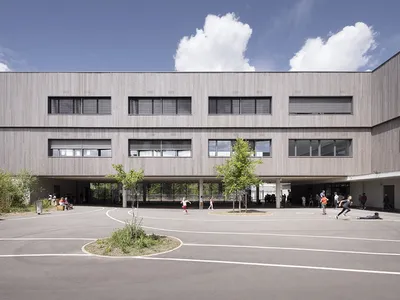
Vil Genis School by BPA ARCHITECTURE – Massy, France
Vil Genis School in Massy, France, features sustainable design, south-facing classrooms, community integration, accessible spaces, and modern educational architecture.




Comments (0)
Please login or sign up to add comments
No comments yet. Be the first to comment!