
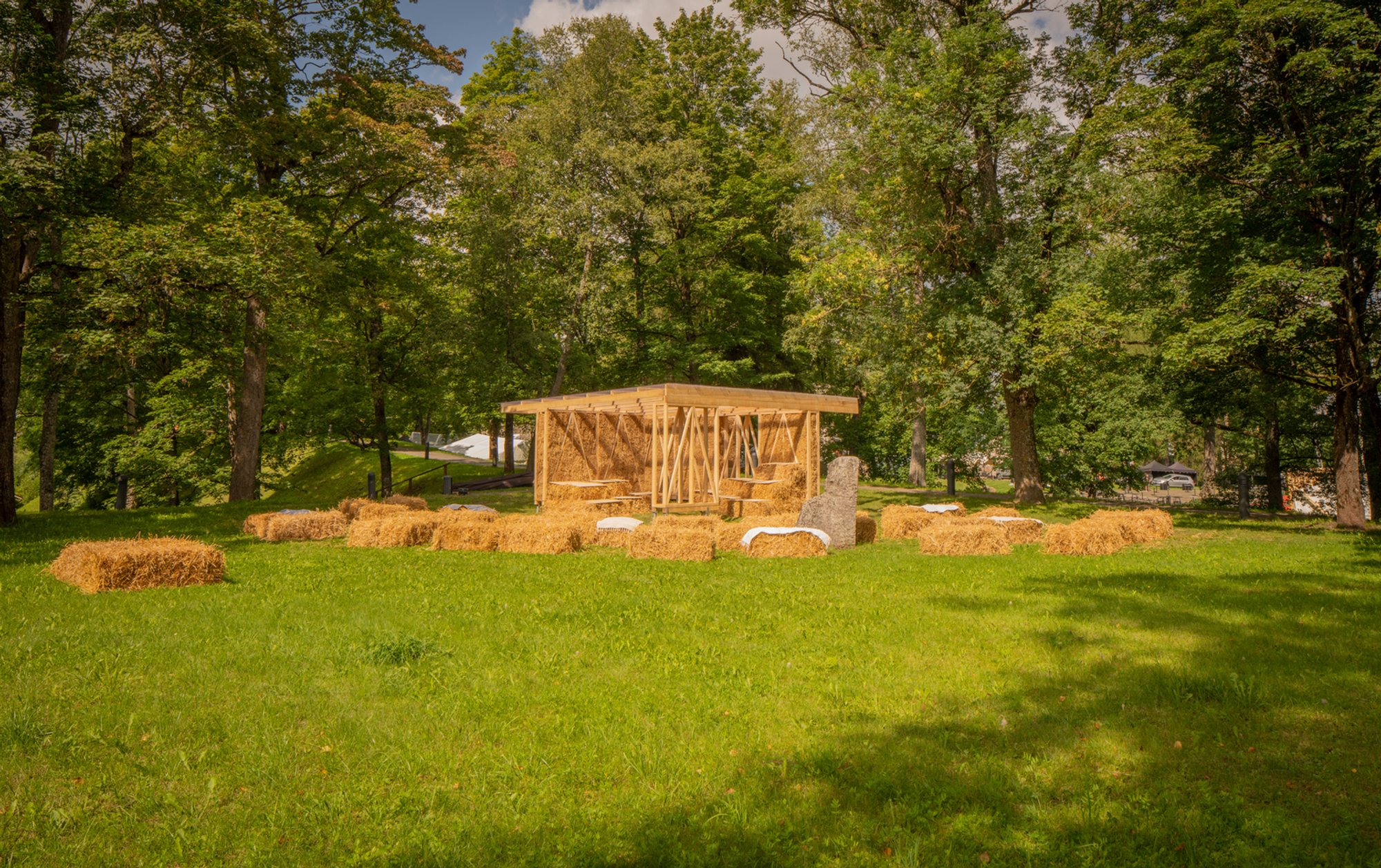
PÕHULA(va) Straw Installation by 1+X – A Circular, Biogenic Pavilion for the Paide Opinion Festival
A straw-built pavilion and stage showcasing sustainable design, biogenic materials, and open, light-filled spaces for festivals, discussions, and community gatherings.

The PÕHULA(va) Installation, designed by the Estonian architectural collective 1+X, is an innovative straw-based pavilion built for the Paide Opinion Festival’s Energetic Economy Area in 2024. Located in Paide, Estonia, the 46 m² structure combines experimental design, sustainable thinking, and hands-on craftsmanship, showcasing how natural materials can shape contemporary spatial experiences.
Its name—PÕHULA(va)—is a fusion of the Estonian words põhk (“straw”) and lava (“stage”). Translated as “straw stage”, it perfectly describes the project’s identity as a multifunctional open-air venue. More than a performance platform, the installation operates as a gallery, pavilion, classroom, and communal gathering space, encouraging visitors to slow down, interact, and experience architecture through sight, smell, and touch.
A Prototype from 15 Months of Research
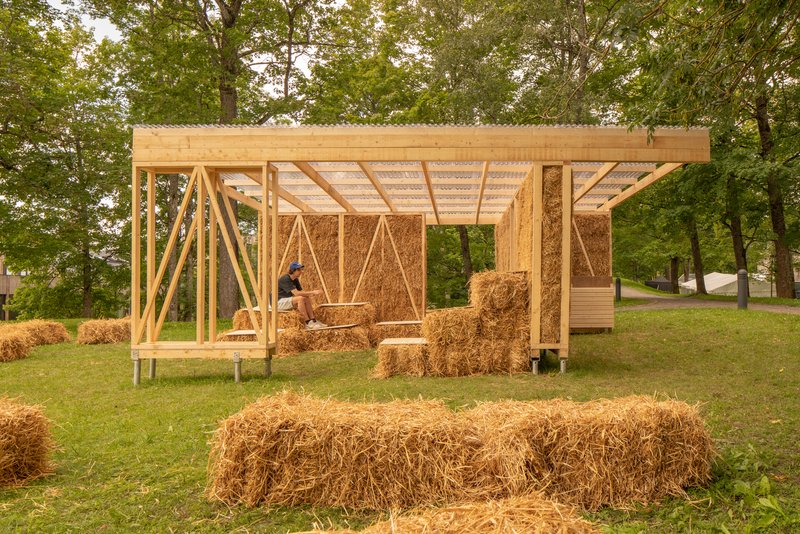
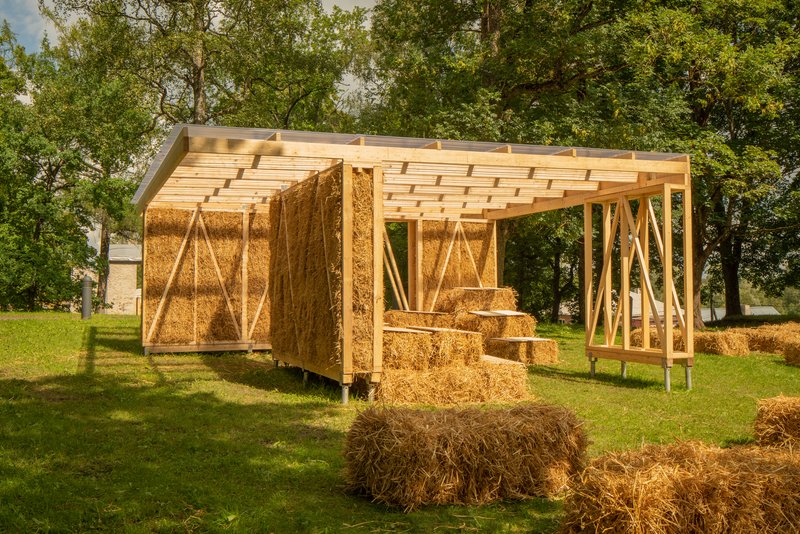
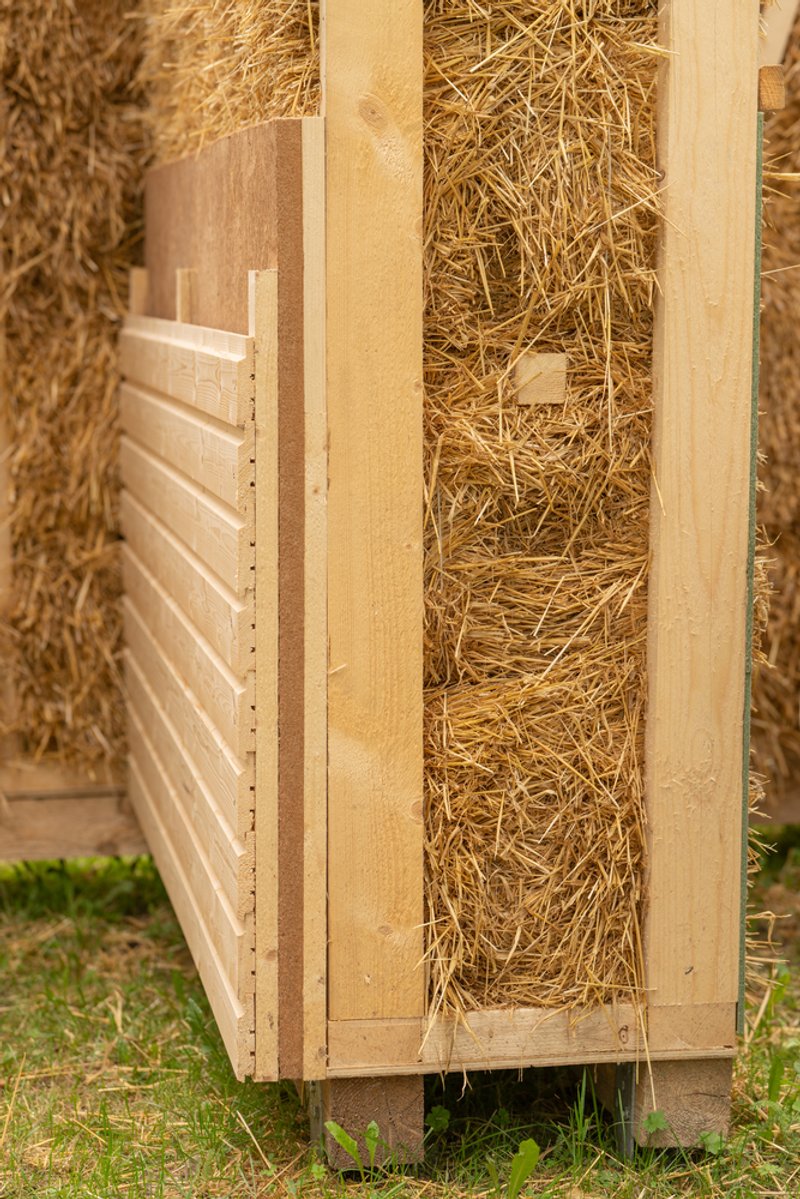
PÕHULA(va) represents the culmination of a 15-month research project conducted by 1+X into the architectural potential of straw as a biogenic building material. Developed as a prototype for the group’s prefabricated straw panel system, the installation demonstrates how organic construction materials can enter mainstream architectural practice.
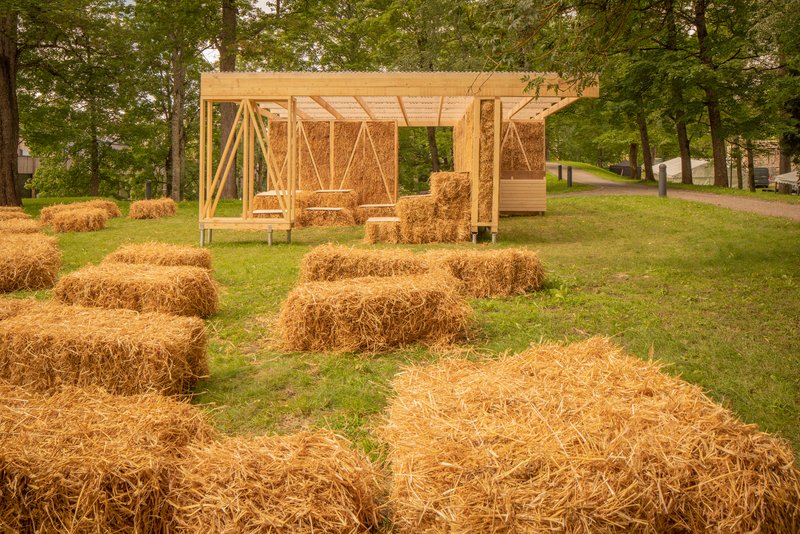
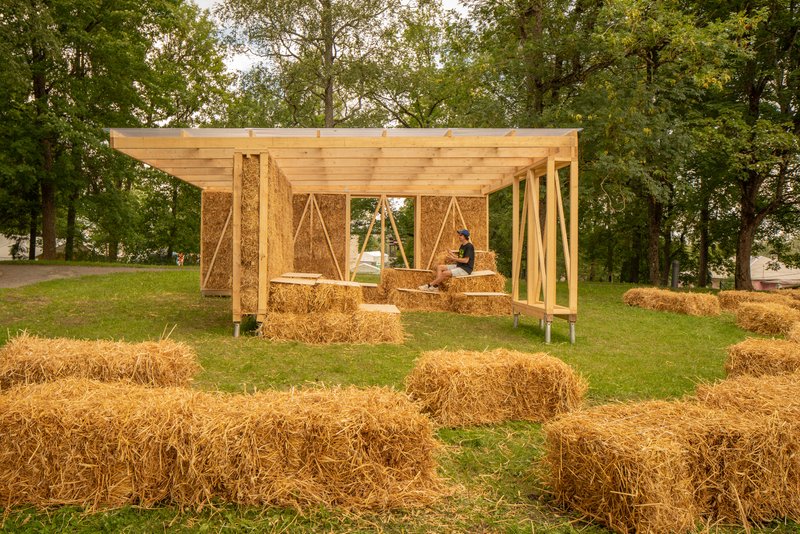
The pavilion’s golden straw exterior immediately draws attention from a distance. Its warm surfaces invite visitors to explore, offering a sensory encounter with natural materials rarely highlighted in contemporary installations. Inside, the structure is divided into distinct zones:
- a central stage for talks and performances,
- a discussion and seating area, and
- a project exhibition zone featuring fabric panels, books, and video projections documenting the research journey.
Open, Light-Filled and Connected to the Landscape
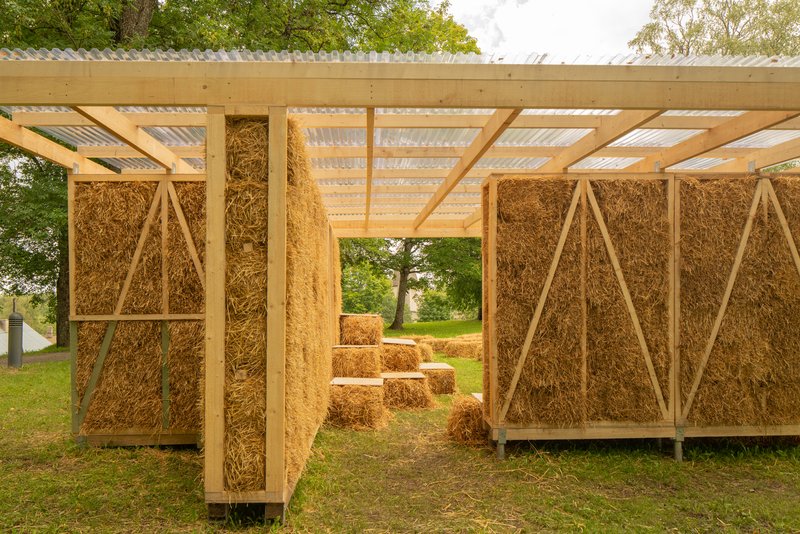
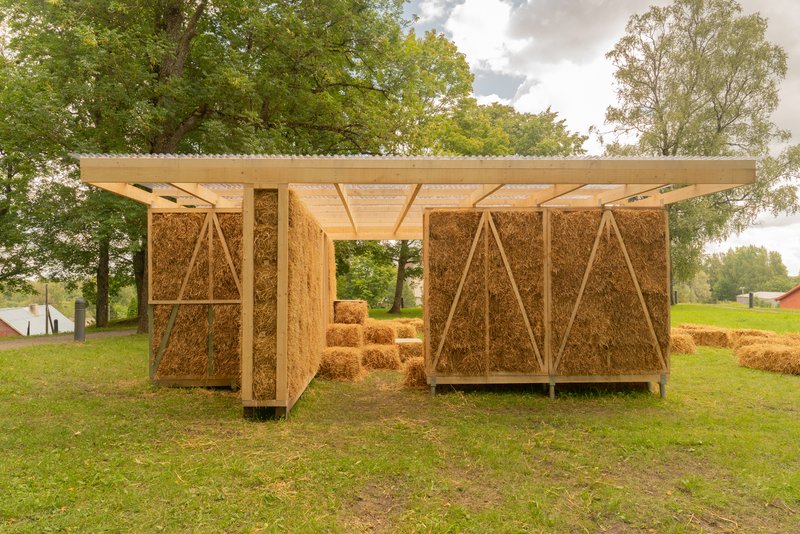
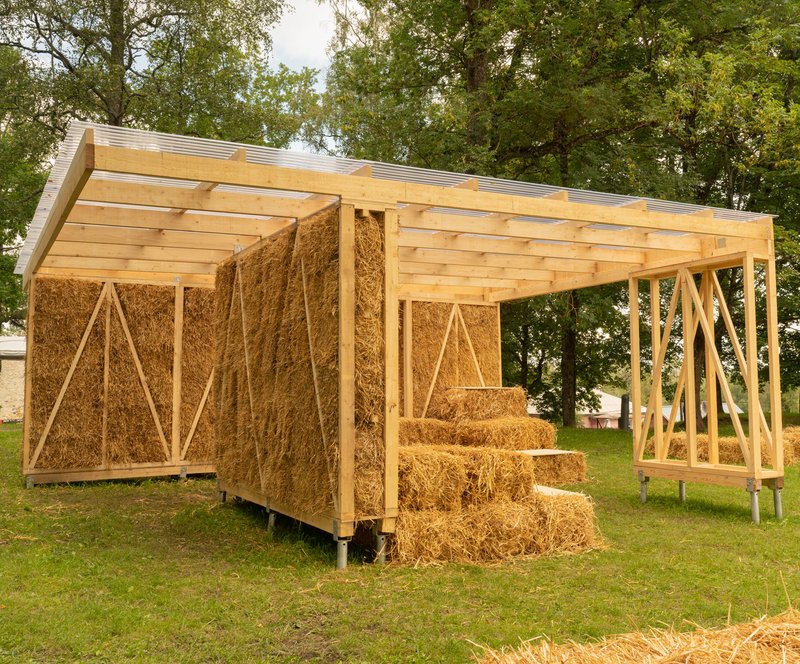
Designed with open sides and a translucent roof, the structure feels airy and transparent, allowing natural light to filter through and creating fluid connections between the stage and surrounding park. Two straw-free panels act as framed windows, offering a curated view toward Paide Hill and reinforcing the installation’s relationship to place.
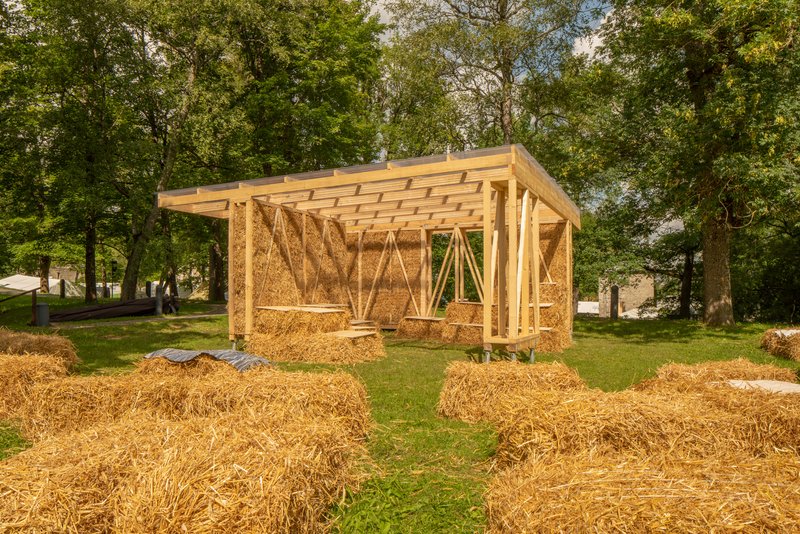
The structure is built entirely from timber-framed, straw-filled prefabricated panels, produced in nearby Hobukooli Park. Once assembled on-site, a lightweight roof and straw-bale seating elements completed the pavilion. The use of biogenic materials reinforces a commitment to circular design—structures that decompose harmlessly, return to nature, or are reused in new constructions.
Building Knowledge Through Making
The construction process became an educational experience for the young architects of 1+X, who gained first-hand insights into working with natural materials and prefabrication methods. The project emphasizes how material research, experimental building, and environmental responsibility can converge to shape the future of architecture.
A documentary video captured the assembly process, revealing the collaborative nature of the project and the team’s reflections on ecological construction, circular economies, and the evolving role of architects in sustainable development.
PÕHULA(va) stands as a powerful example of how straw—a humble, ancient material—can inspire new architectural narratives. Blending research, craftsmanship, and festival culture, the installation demonstrates how temporary structures can spark meaningful dialogues about sustainability, community, and the future of building.
All photographs are works of Evert Palmets




Popular Articles
Popular articles from the community

IKC de Geluksvogel: Sustainable School Architecture Designed for Free Movement and Digital Learning
IKC de Geluksvogel turns sustainable school architecture into a flexible Maastricht campus for digital learning, nature, and free movement.

Inside a Timeless Mumbai Residence by Aether Studio
Aether Studio's 2,250 sq ft apartment in Malad, Mumbai uses marble, brass, boucle, and disciplined restraint to build a quiet retreat from the city.
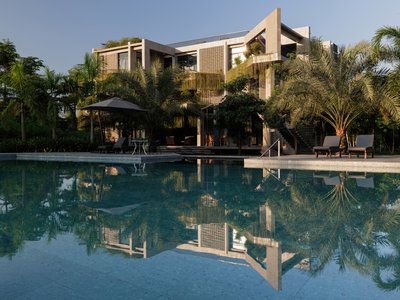
Reincarnation Weaves a Three-Story Retreat into the Green Landscape of Rural Bangladesh
Ara Manor in Narsingdi dissolves the line between domestic architecture and its lush surroundings through screens, courtyards, and planted rooftops.
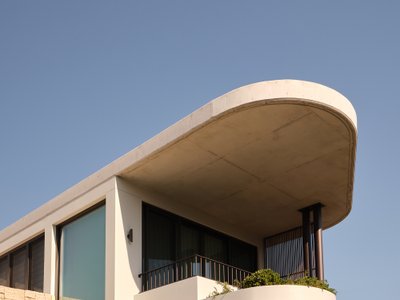
Stanton Architects Sculpts a Curving Family Home into Sydney's Inner West Fabric
Five Dock House uses cantilevers, curved concrete, and layered courtyards to carve out privacy on a tight suburban lot in Sydney.


Similar Reads
You might also enjoy these articles

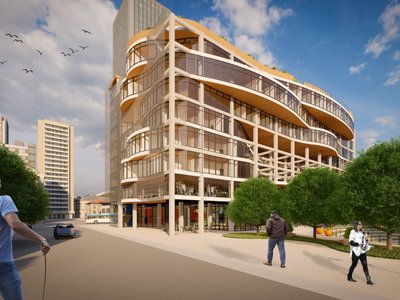
Olio Towers: A Mid-Rise for Performers That Fuses Housing, Rehearsal, and Stage
Located blocks from Houston's Theater District, this modular tower stacks living units around a central performance atrium.
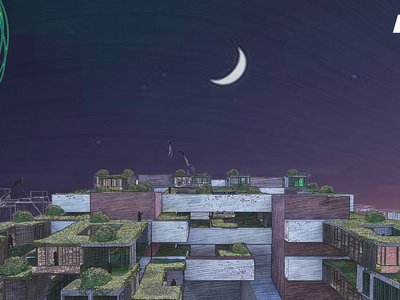
Oasis: Modular Green Housing Carved into Dhaka's Urban Fabric
A shortlisted Plugin Housing entry reclaims unauthorized settlements in Dhaka with stepped concrete volumes, green roofs, and ventilation-driven design.

Black Hole: A Floating Megastructure for the Post-Physical Era
Emiliano Mazzarotto envisions a spherical, self-scaling arena where e-sports, digital hotels, and holographic stadiums replace traditional public space.
Compact & Sustainable Living in Piraeus: A Four-Level Family Home Built Around Light and Air
A narrow townhouse in one of Greece's densest port cities uses a central atrium and passive strategies to house three generations under one roof.

Explore Installations Competitions
Discover active competitions in this discipline




The International Standard for Design Portfolios


The Global Benchmark for Architecture Dissertation Awards


The Global Benchmark for Graduation Excellence

Challenge to design a portable theatre
Comments (0)
Please login or sign up to add comments
No comments yet. Be the first to comment!