
Primary and Secondary School Leopold Kohr-Straße Designed by Franz&Sue in Vienna
Contemporary Vienna school by Franz&Sue features learning clusters, green terraces, central atrium, and community sports spaces enhancing urban education.


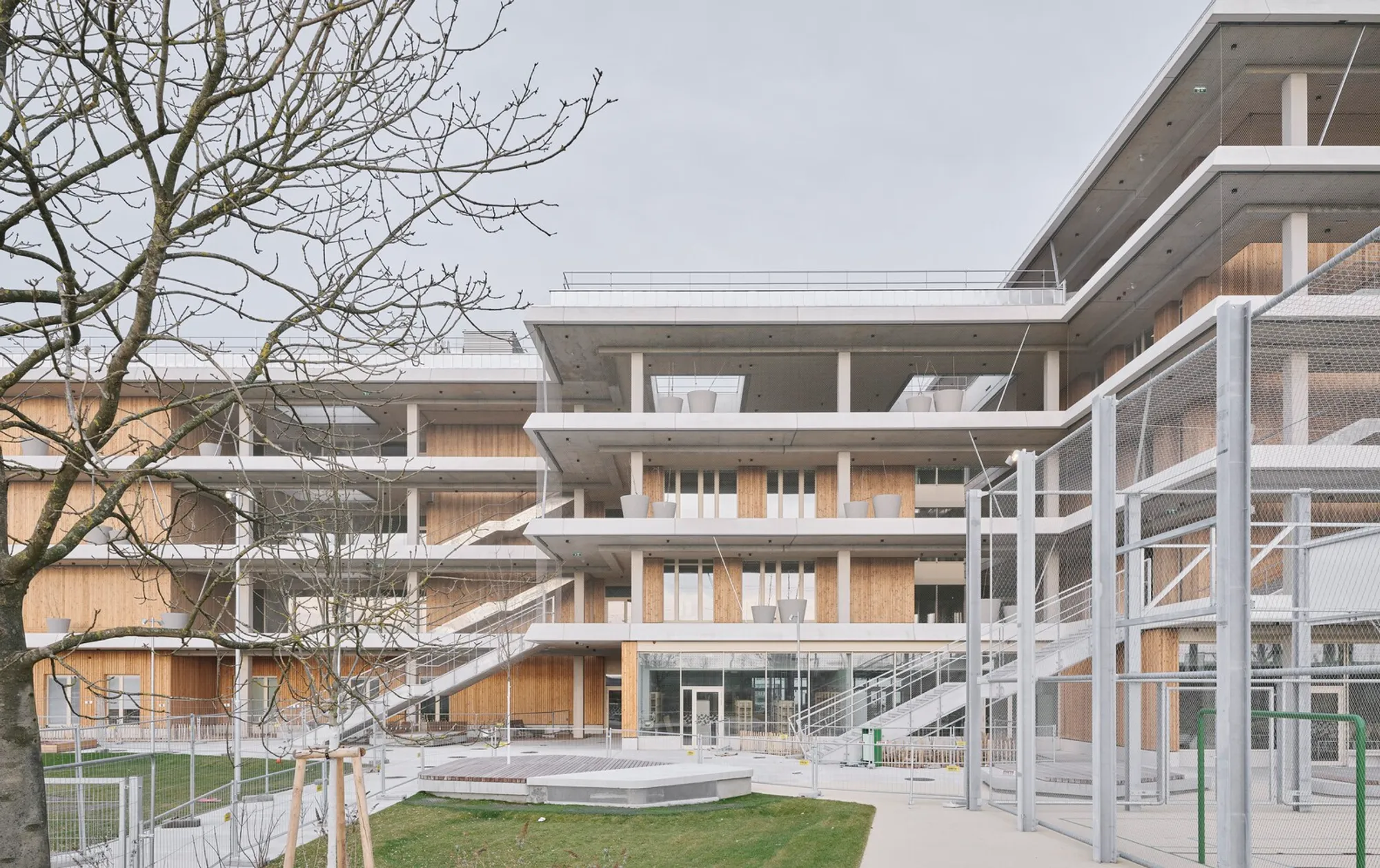
Located in the rapidly developing district of Kagran in Vienna, the Primary and Secondary School Leopold Kohr-Straße, designed by Franz&Sue, represents a forward-thinking approach to educational architecture. Completed in 2023, the 11,551-square-meter campus responds to the evolving needs of a growing urban neighborhood in Vienna’s northern districts, often referred to by locals as “Transdanubia.” While the name may suggest a peripheral location, the area is currently experiencing significant urban growth, with new housing developments, business parks, and infrastructure transforming the district into a dynamic urban environment.
The school emerges as a key civic anchor within this evolving context. Positioned between residential developments, commercial zones, and the Ostbahn railway line, the project establishes an important social and educational hub for the community. Through thoughtful architectural design, the building not only provides modern learning spaces for students but also enhances the public realm with accessible outdoor areas and shared recreational spaces.
Urban Integration and Community Connection
A defining feature of the school is its integration with the surrounding neighborhood. The design extends beyond the typical educational building, creating a welcoming environment that encourages community interaction. The lively forecourt serves as an open gathering space and acts as the primary threshold between the school and the urban landscape.
Sports courts, playgrounds, and open recreational areas are accessible not only to students but also to local residents during evenings and weekends. This strategy transforms the school into a community-oriented civic space that contributes to neighborhood life. By encouraging public use, the project strengthens social connections and enhances the urban quality of the district.
The forecourt itself becomes the first architectural gesture of a new urban identity for the area, providing a vibrant public zone that encourages activity and interaction.
Vertical Gardens and Climate-Responsive Façade
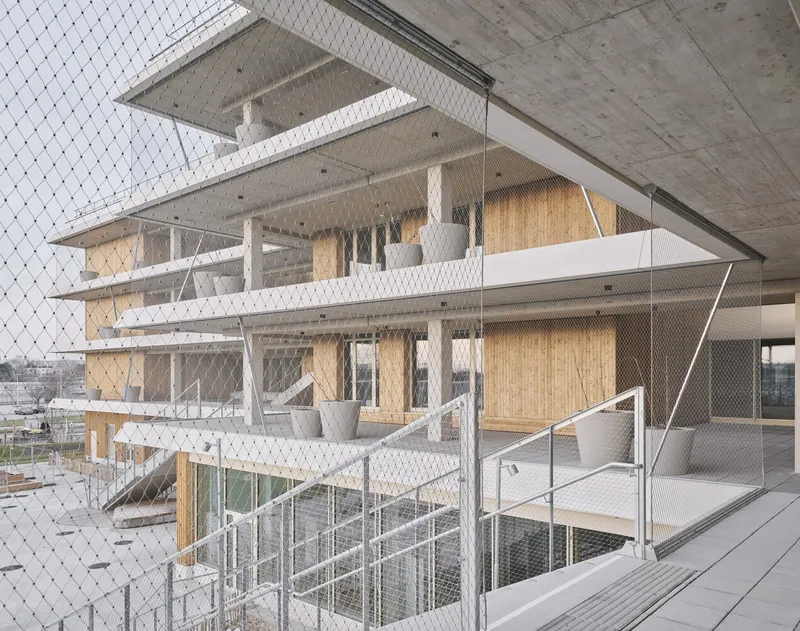
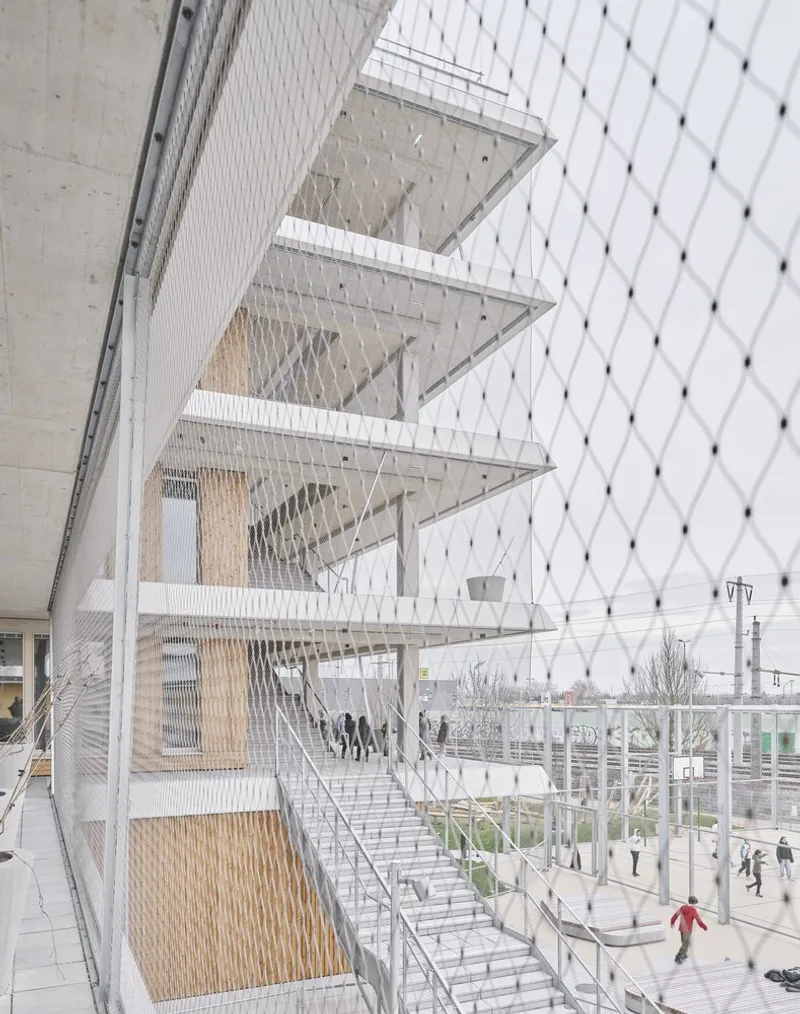
The façade design plays a crucial role in defining the architectural identity of the school. Generous covered terraces wrap around the building, forming a series of vertical outdoor learning spaces. These terraces function as extensions of classrooms and communal areas, allowing students to engage with outdoor environments throughout the year.
Steel cable mesh systems provide safety while maintaining transparency and openness. Over time, climbing plants and wild vines will grow along these structures, gradually transforming the façade into a lush vertical garden. This living layer enhances the building’s environmental performance while introducing a dynamic seasonal character to the architecture.
Behind this green façade lies a natural larch wood cladding that will slowly weather into a soft silver-grey patina. This natural aging process reinforces the building’s relationship with time and nature, emphasizing sustainability and material authenticity.
A Dynamic Central Atrium for Learning and Movement
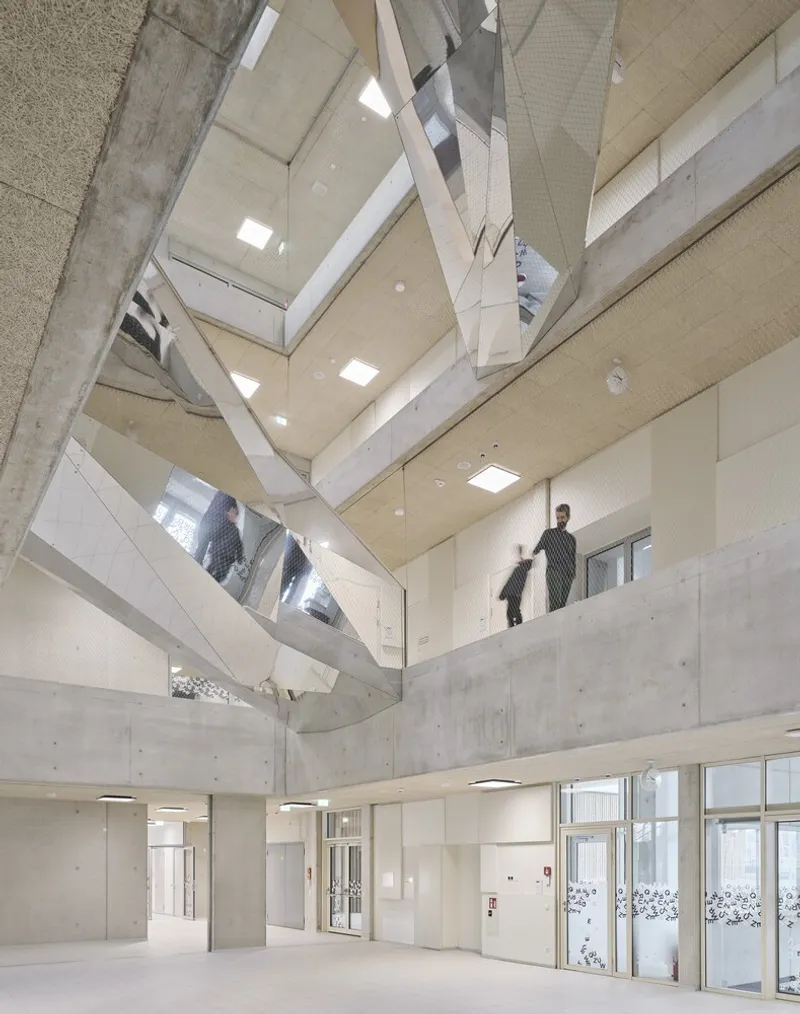
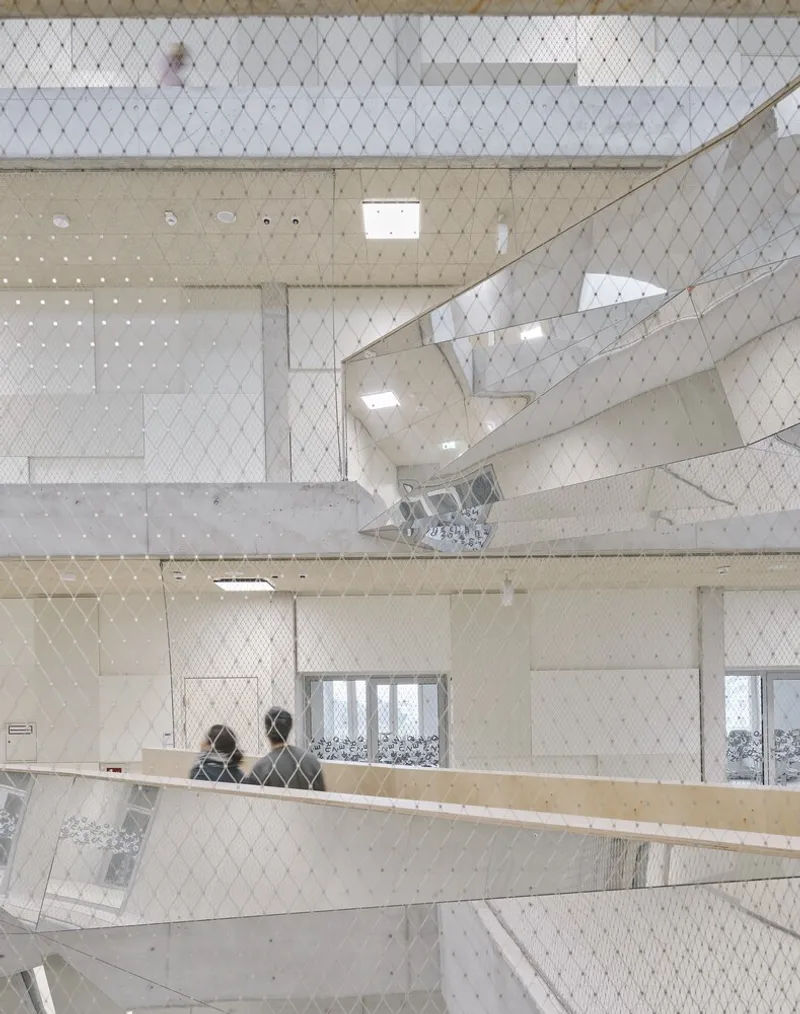
At the heart of the school lies a dramatic central atrium, a spatial element designed to foster interaction, orientation, and discovery. Two sculptural reflective bridges span across the atrium, creating visual connections between different levels of the building. These bridges introduce movement and dynamism into the interior, transforming circulation areas into moments of spatial exploration.
The atrium acts as a central meeting point where students gather, socialize, and navigate between different educational zones. From this central hub, direct access leads to outdoor terraces on every level, reinforcing the building’s seamless connection between interior and exterior spaces.
Large windows and open sightlines further enhance transparency and daylight penetration, ensuring that the central space remains bright, welcoming, and visually connected to the surrounding environment.
Flexible Educational Clusters Supporting Modern Learning
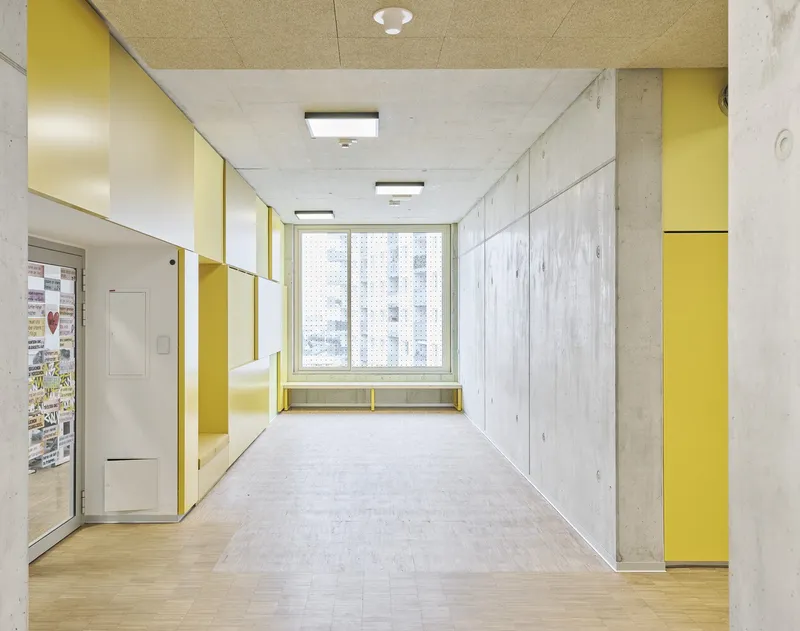
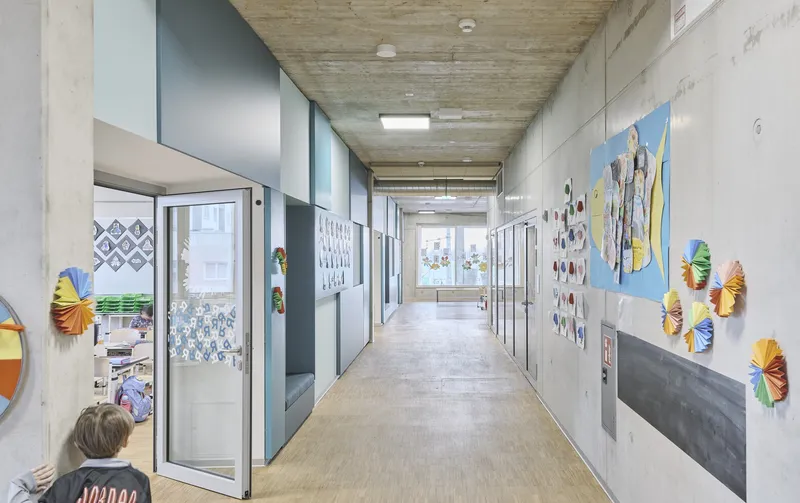
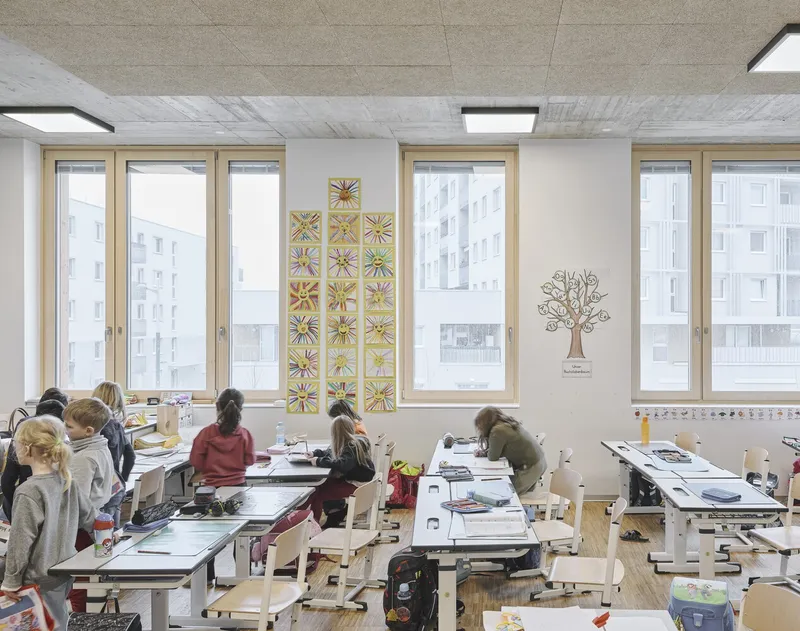
The educational concept of the school is organized around circular learning clusters that prioritize flexibility, collaboration, and student engagement. Each cluster receives natural light from multiple directions, creating bright and comfortable learning environments.
Within these clusters, traditional classrooms are complemented by open, multifunctional niches that support informal learning activities. These adaptable spaces allow students to study, collaborate, or relax outside the conventional classroom structure.
Direct access to sheltered outdoor terraces further enriches the educational experience. Students can step outside to explore, play, or simply enjoy fresh air during breaks, encouraging a more dynamic and flexible approach to learning.
The architectural layout encourages exploration through interconnected spaces, visual openings, and vertical connections that reveal views between different levels of the building.
Nature, Play, and Exploration
Outdoor learning and play are essential components of the school’s design philosophy. From the upper floors, students can quickly reach the school garden via wide staircases and even a playful slide, transforming circulation into an engaging experience.
The garden serves as both a recreational and educational landscape, where children can connect with nature and engage in outdoor activities. The landscape design supports a variety of experiences, from quiet relaxation to active play.
The integration of nature within the campus contributes to student well-being, creativity, and environmental awareness.
Multi-Functional Sports Facilities
Flanking the main entrance are two sunken sports halls, carefully integrated into the site to minimize visual impact while maximizing functionality. These facilities provide indoor spaces for sports and physical education during school hours.
Importantly, the sports halls are designed for shared community use. Outside school hours, they can host events, training sessions, and recreational activities for local residents. This dual-purpose strategy reinforces the school’s role as a public resource and strengthens its connection to the neighborhood.
Architecture that Supports Community and Learning
The Primary and Secondary School Leopold Kohr-Straße demonstrates how contemporary educational architecture can respond to both pedagogical and urban challenges. By combining flexible learning environments, sustainable material strategies, and community-oriented design, the project creates a vibrant educational ecosystem.
Through its open spaces, green terraces, and engaging interior environments, the school encourages movement, curiosity, and collaboration. It also contributes to the urban transformation of Vienna’s Transdanubian districts, offering a model for future educational buildings that prioritize social connectivity, environmental awareness, and spatial quality.
The project by Franz&Sue stands as a compelling example of how architecture can shape the future of learning while strengthening community identity.
All photographs are works of
David Schreyer




Popular Articles
Popular articles from the community


Riyadh For All: Intergenerational Urban Design for Active Aging in Rabat
Riyadh For All reimagines urban design in Rabat with intergenerational co-living, adaptive courtyards, and Moroccan cultural exchange today.

Conexión: Biophilic Design Reimagines High-Rise Living in Hong Kong
Conexión reimagines high-rise living in Hong Kong through biophilic design, green facades, shared spaces, daylight, water and nature within.

Co-life: Sustainable Architecture for Age-Friendly Community Living
Co-life reimagines sustainable architecture for seniors through courtyards, rammed earth, shared gardens, and spaces designed for belonging.

The Ocean Hive: Sustainable Architecture for a Self-Sufficient Civilization at Sea
The Ocean Hive imagines sustainable architecture at sea, where modular habitats, algae, wave power and ocean waste sustain a growing colony.

Similar Reads
You might also enjoy these articles

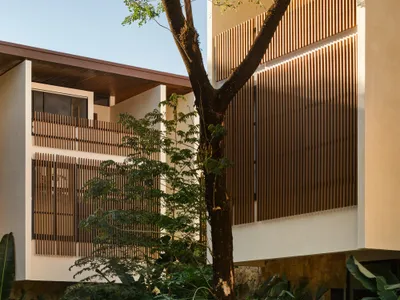
FAMM Arquitectura Organizes Ten Villas Around Courtyards and Jungle in Nosara, Costa Rica
El Molino pairs two elongated volumes with deep overhangs and timber louvers to build a compact coastal community five minutes from the beach.
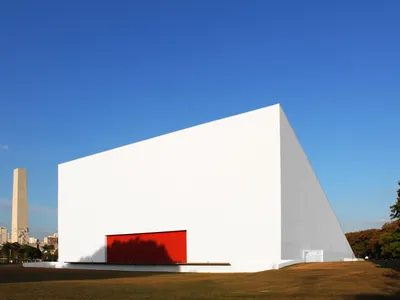
Oscar Niemeyer's Ibirapuera Park Pavilions Define São Paulo's Cultural Identity in Concrete and Curve
A constellation of modernist volumes set within São Paulo's most important urban park, conceived for the city's 400th anniversary in 1954.
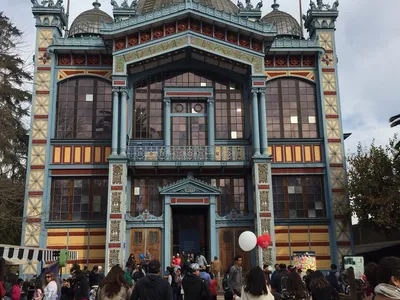
How Henri Picq's 1889 Paris Pavilion Traveled 11,000 Kilometers to Become Santiago's Artequín Museum
A prefabricated iron and glass pavilion built for the Paris Universal Exposition found a second life as a children's art museum in Chile.
Sanjay Puri Architects Wraps a Jaipur Office Tower in Capsule-Shaped Green Buffers
A nine-level climate-responsive workplace near Jaipur Airport uses stacked planter terraces and aluminium screens to fight 40°C heat.


Explore Educational Building Competitions
Discover active competitions in this discipline



Challenge to design public laboratory


Challenge to reimagine the Iron Throne


Photograph architecture without architects


Illustrate the lost glory of Angkor Wat - Render Challenge
Comments (0)
Please login or sign up to add comments
No comments yet. Be the first to comment!