
Purgatorium: Reimagining Border Architecture as a Space of Waiting and Belonging
A radical border architecture that transforms division into a shared space of waiting, care, and human connection beyond sovereignty.

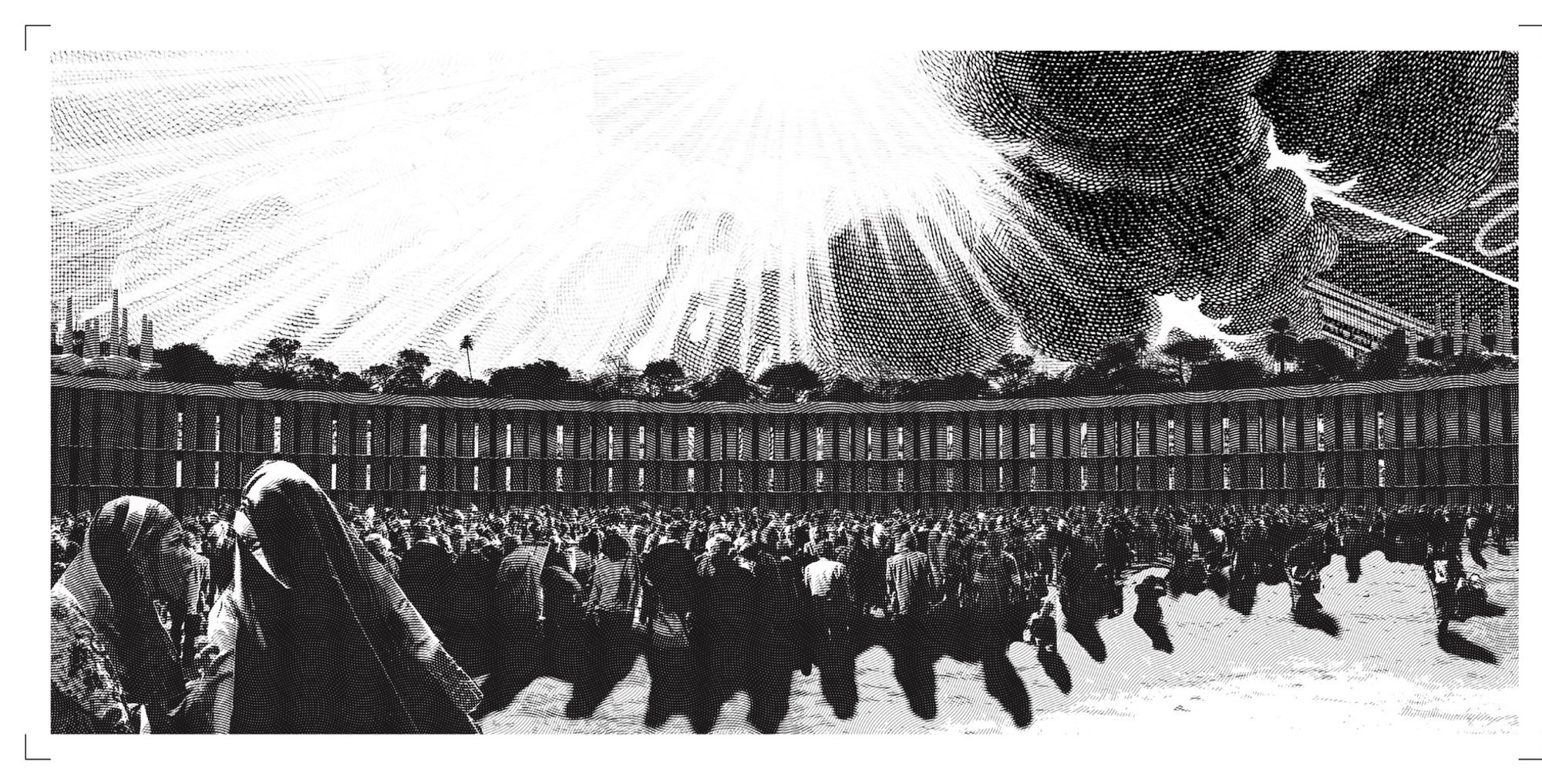
In contemporary discourse, border architecture is often associated with control, separation, and surveillance. Purgatorium, a winning entry of the No Man’s Land competition by Matias Vilches Navarro, challenges this paradigm by proposing an alternative spatial narrative. Instead of reinforcing division, the project redefines the border as a shared condition, transforming it into a place of encounter, pause, and human dignity.
Situated conceptually between the United States and Mexico, the proposal introduces a new typology of infrastructure, one that neither belongs to one nation nor the other. It is a constructed “no man’s land” that acknowledges the realities of migration while offering a humane architectural response.
Concept: Architecture Without Sovereignty
At its core, Purgatorium is an exploration of architecture without sovereignty. The project does not attempt to resolve geopolitical tensions but instead amplifies them spatially. It recognizes the existence of individuals who remain suspended between nations, those who cannot cross borders yet cannot return.
Rather than denying this condition, the design formalizes it. The border is no longer a line but becomes a spatial field. The edge is transformed into a place.
This shift is critical. Traditional border systems operate as thresholds of exclusion. Purgatorium repositions the threshold as a zone of inclusion, albeit temporary, where human needs take precedence over political definitions.
The Circular Super-Infrastructure
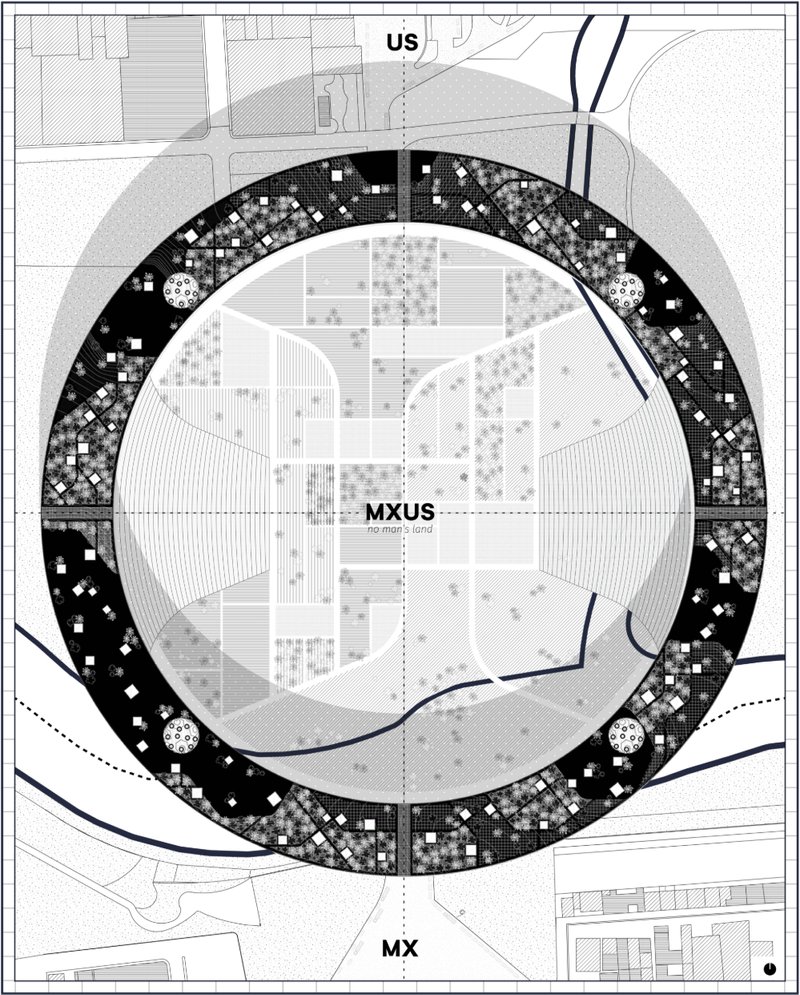
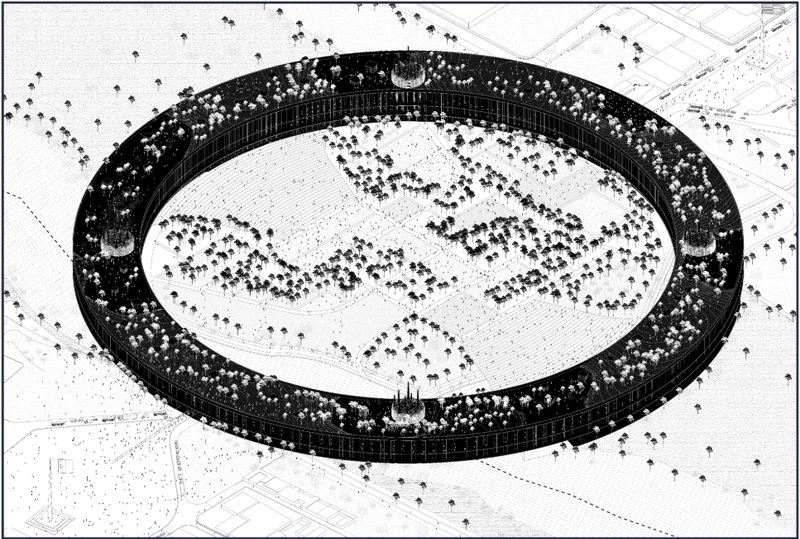
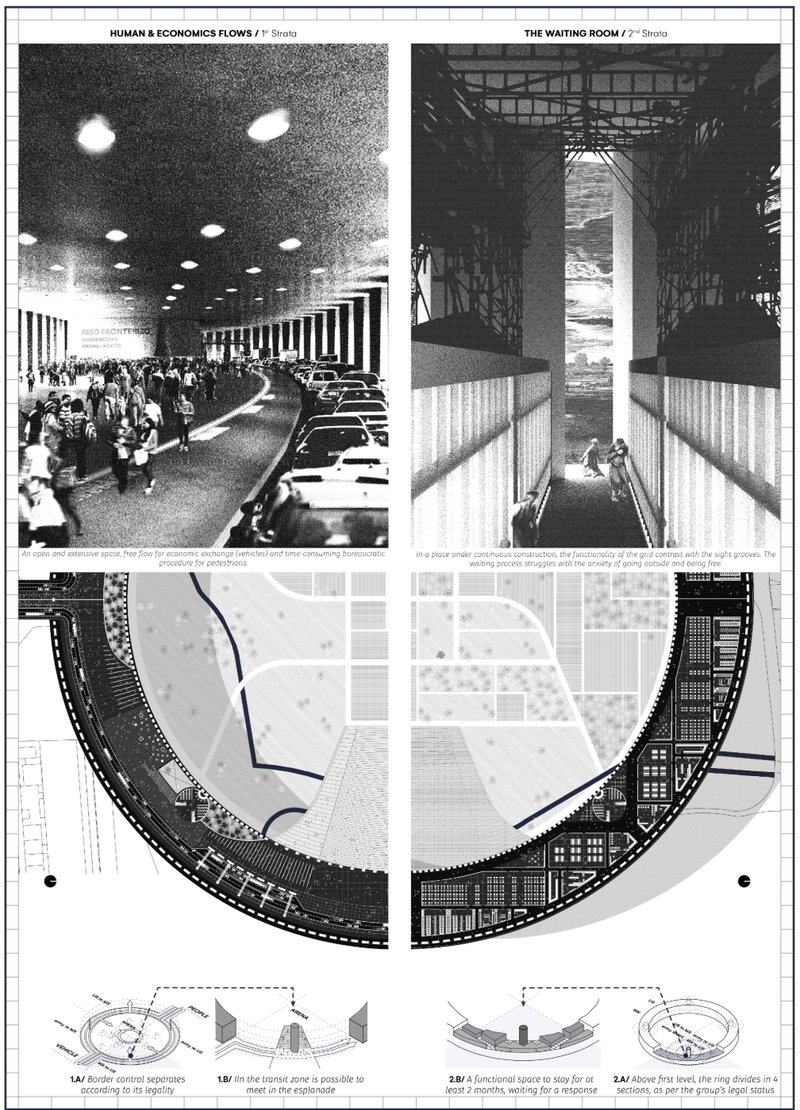
The project is organized as a monumental circular structure, a border super-infrastructure that encloses and defines a central shared territory. This ring acts simultaneously as a barrier, a mediator, and a programmatic container.
The circular geometry is deliberate. It removes the directional bias of a linear border and creates a continuous, non-hierarchical spatial condition. Every point along the ring becomes equally significant, reinforcing the idea of neutrality.
Within this structure, the border is no longer experienced as a crossing point but as a prolonged condition of inhabitation.
Three Strata: Vertical Border Architecture
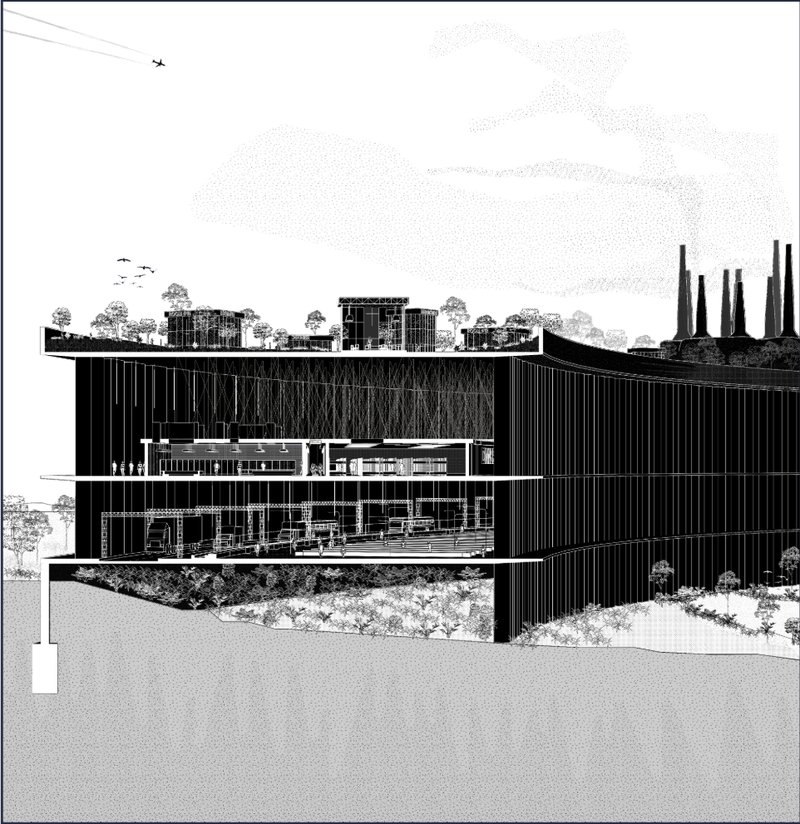
A defining feature of Purgatorium is its vertical stratification, which organizes users based on their duration of stay and legal status. This introduces a temporal dimension to border architecture.
1. Ground Level: Human and Economic Flows
The first stratum operates as an open and extensive space where flows of people and goods coexist. Vehicles and pedestrians share a continuous infrastructural field, representing the immediate reality of border exchange.
Here, the architecture accommodates movement, negotiation, and interaction. It reflects the urgency and density of migration while maintaining operational efficiency.
2. Intermediate Level: The Waiting Room
Above the ground plane lies the second stratum, a controlled environment designed for those in prolonged states of uncertainty. This level functions as a respite center for asylum seekers, offering basic services and temporary shelter.
The spatial language shifts from openness to enclosure. Corridors, structural grids, and filtered light create an atmosphere of suspension. The architecture embodies the psychological condition of waiting, where time becomes the dominant experience.
3. Upper Level: The Purgatorium
The final stratum represents the culmination of the journey. Elevated above the infrastructural layers, this level introduces a contrasting environment, one that is more contemplative and idyllic.
This is not a permanent destination but a symbolic reward for endurance. It reflects the idea of “purgatory” as a transitional state, where individuals await resolution while experiencing a momentary sense of peace.
Border as a Collective Space
One of the most compelling aspects of the proposal is its redefinition of the border as a collective public space. The central void within the ring becomes a shared ground where individuals from both nations can meet without the necessity of crossing into the other’s territory.
This reconfiguration transforms the border from a site of separation into a platform for interaction. Families can reunite, communities can gather, and social exchange becomes possible without violating territorial sovereignty.
The border, therefore, ceases to be a line of conflict and becomes a place of convergence.
Responding to Migration Realities
The project demonstrates a nuanced understanding of migration as a complex and shared issue. It rejects the notion that border challenges belong to a single nation and instead frames them as collective responsibilities.
By spatializing the waiting process, Purgatorium acknowledges the lived experiences of asylum seekers. It provides a structured pause, a moment for recovery after long and often traumatic journeys.
However, the design also resists becoming a permanent solution. The architecture intentionally avoids excessive comfort, ensuring that the space remains transitional rather than turning into a fixed settlement.
Juror Insights
The project has been critically recognized for both its conceptual clarity and its ambitious scope.
Luis Diego Barahona Ortega noted that the proposal establishes a direct relationship between concept and user reality, highlighting its clarity and strong visual impact. He also pointed out that while the overall composition is coherent, certain programmatic and scale relationships could be further refined.
Juan Cuevas Duran emphasized the project’s ambition in addressing border-related challenges. He acknowledged the strength of its visual narrative, which effectively communicates the underlying context and prioritizes the fundamental needs of asylum seekers.
Purgatorium positions itself as a significant contribution to the discourse on border architecture. It challenges conventional approaches by transforming a line of division into a layered, inhabitable system.
Through its circular form, vertical organization, and emphasis on shared space, the project redefines how architecture can engage with political boundaries. It does not resolve the complexities of migration but offers a spatial framework that is both critical and compassionate.
In doing so, it shifts the role of architecture from enforcing limits to mediating human conditions, proposing a future where borders are not only controlled but also understood, inhabited, and reimagined.



Popular Articles
Popular articles from the community

GGR Architectes Anchors a New Neighborhood in Frouzins with a Brick and Timber School Complex
A cruciform plan of terracotta brick and exposed wood frames four courtyards for 140 students outside Toulouse, France.

The Heart of Milano: Slow Fashion Architecture for a New Circular Culture
The Heart of Milano turns slow fashion architecture into a civic landmark where learning, making, sharing, and circular culture meets daily.
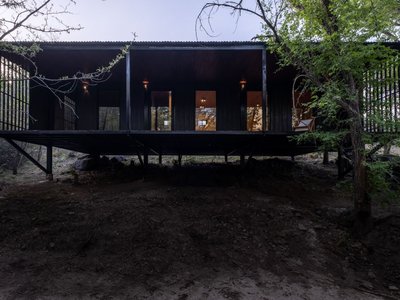
Pablo Senmartin Suspends a Steel-and-Timber Refuge Above a River Forest in Córdoba
An 80-square-meter dwelling on pilotis camouflages itself among the trees of Mayu Sumaj, designed to be dismantled without waste.
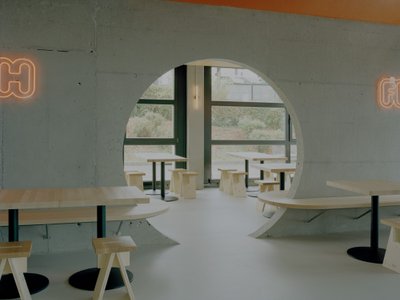
Noue Studio Organizes a Swiss Restaurant Around a Single Concrete Wall
In Granges-Paccot, Switzerland, a 216-square-meter renovation turns raw materials and a central spine into a legible dining experience.


Similar Reads
You might also enjoy these articles


Urban Forest: A Vertical Ecosystem for 5,000 Workers in Singapore's Changi Business Park
Radially stacked pods and layered green decks turn a 7-acre plot into 47 acres of ecological workspace projected for 2040.
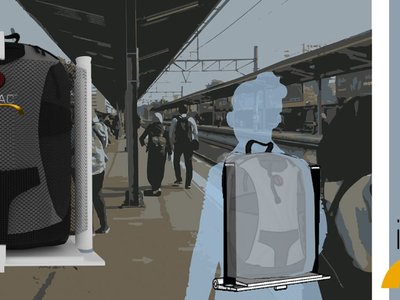
interACT: A Wearable Transit Object That Turns Commuting Into Social Infrastructure
A backpack-mounted foldable device transforms walking, waiting, and riding into moments of shared comfort across Jakarta's transit network.
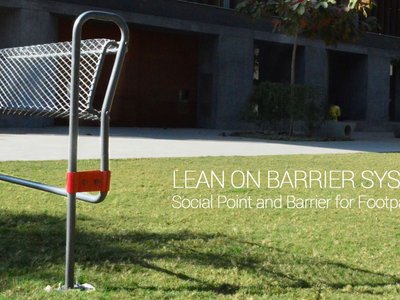
Lean On Barrier System: Where Traffic Safety Meets Chai Culture in Ahmedabad
A modular steel barrier doubles as informal seating and lean-on furniture at one of Ahmedabad's busiest intersections, keeping vendors in place.
The Black Bagh: A Living Monument Built from Water, Light, and Memory
On the banks of the Yamuna, two designers replace the myth of a marble mausoleum with a regenerative landscape of reflection and ritual.


Explore Infrastructure Design Competitions
Discover active competitions in this discipline




The International Standard for Design Portfolios


The Global Benchmark for Architecture Dissertation Awards


The Global Benchmark for Graduation Excellence


Challenge to reimagine the Iron Throne
Comments (0)
Please login or sign up to add comments
No comments yet. Be the first to comment!