
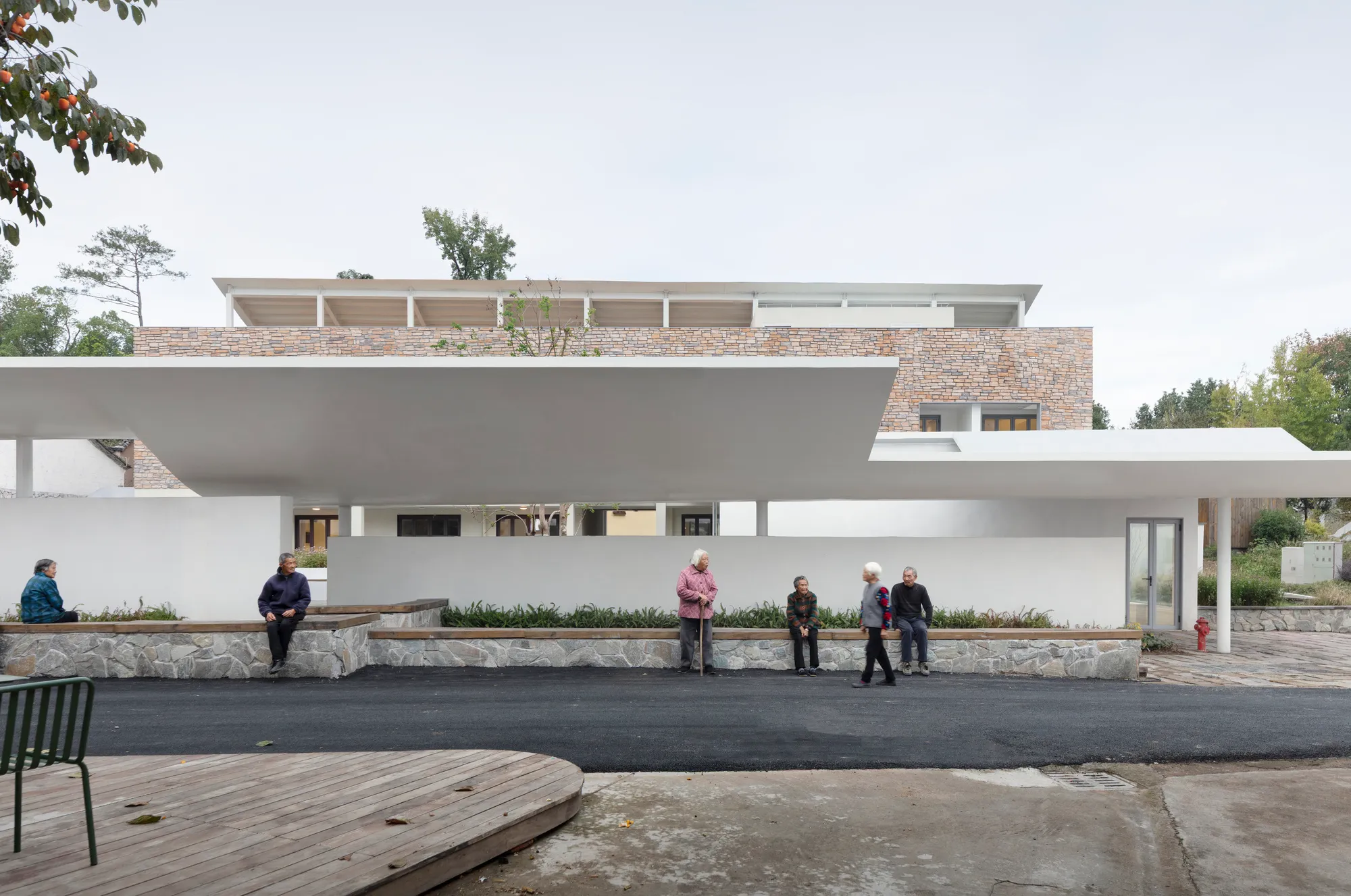
Qingyi Lodge: Reviving a Village School into a Creative Retreat for Artists
Adaptive reuse of village school into artist lodge with terraces, balconies, and courtyards, connecting creativity, community, and mountain landscape seamlessly.


Located in Xianjing Village in Zhejiang Province, China, Qingyi Lodge by Hsu & Du Architects is a thoughtful adaptive reuse project that transforms an abandoned primary school into a vibrant residence for young artists and students. Set against the dramatic backdrop of the Shenxianju mountain range, with direct views toward Fanzeng Peak, the project is part of a broader initiative to reposition the village as a cultural and artistic destination.
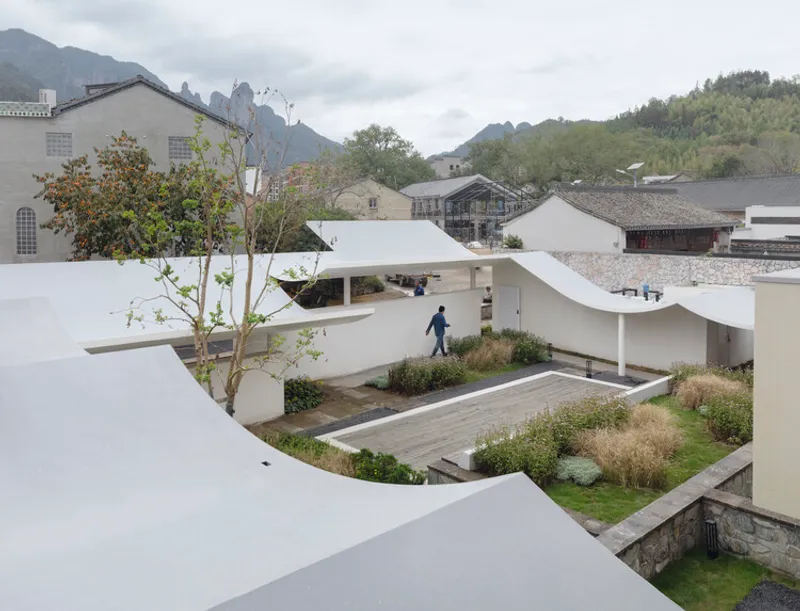
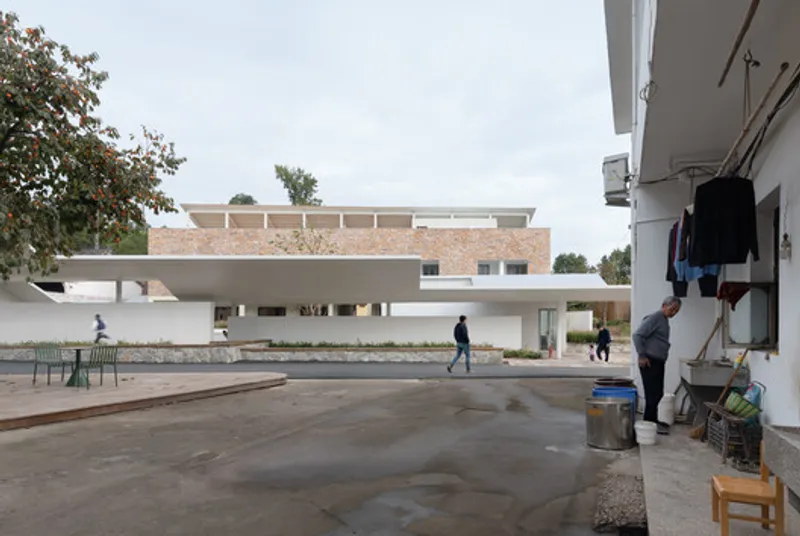
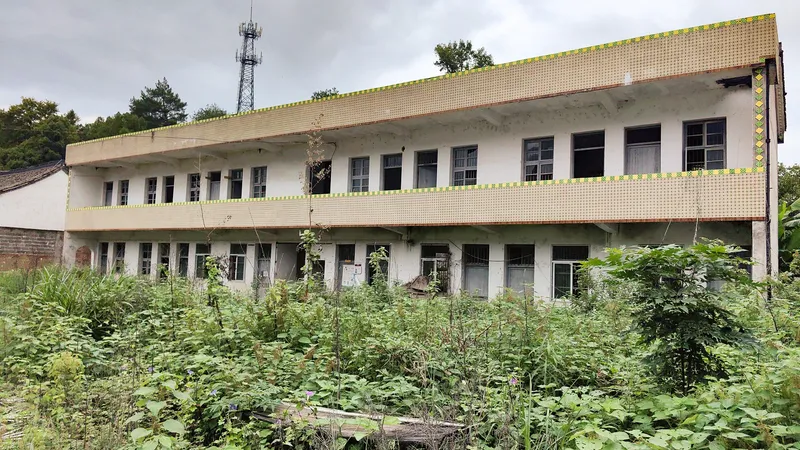
Originally constructed in the 1970s and 1980s, the existing school building was a modest two-story brick-concrete structure. Rather than replacing it, the architects chose to preserve its essential form, using renovation as a means to extend its life and embed new purpose. This approach reflects a balance between memory and transformation, where the identity of the old building is retained while accommodating contemporary needs.
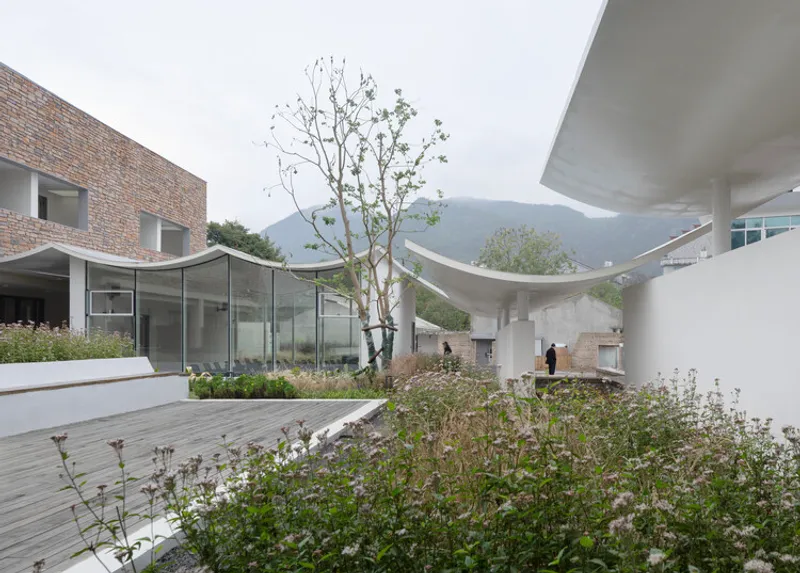
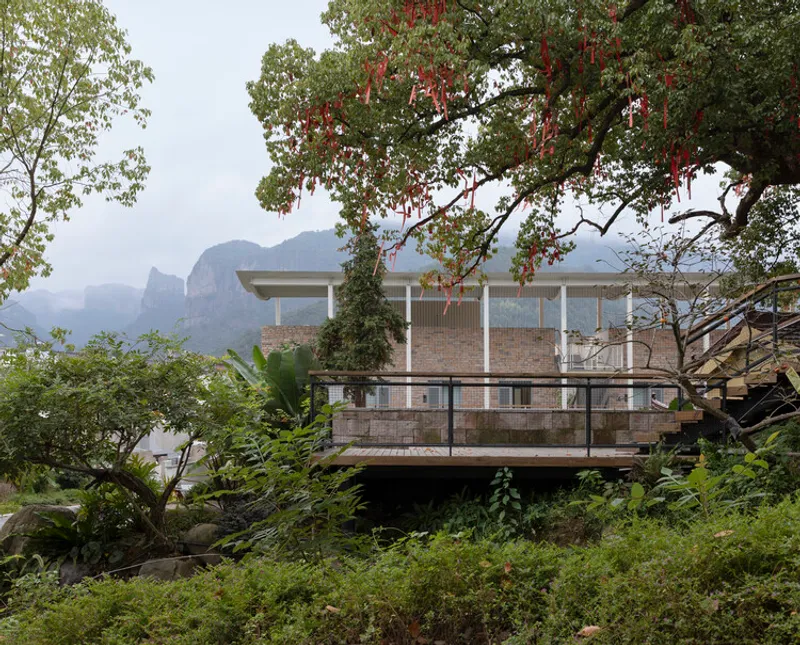
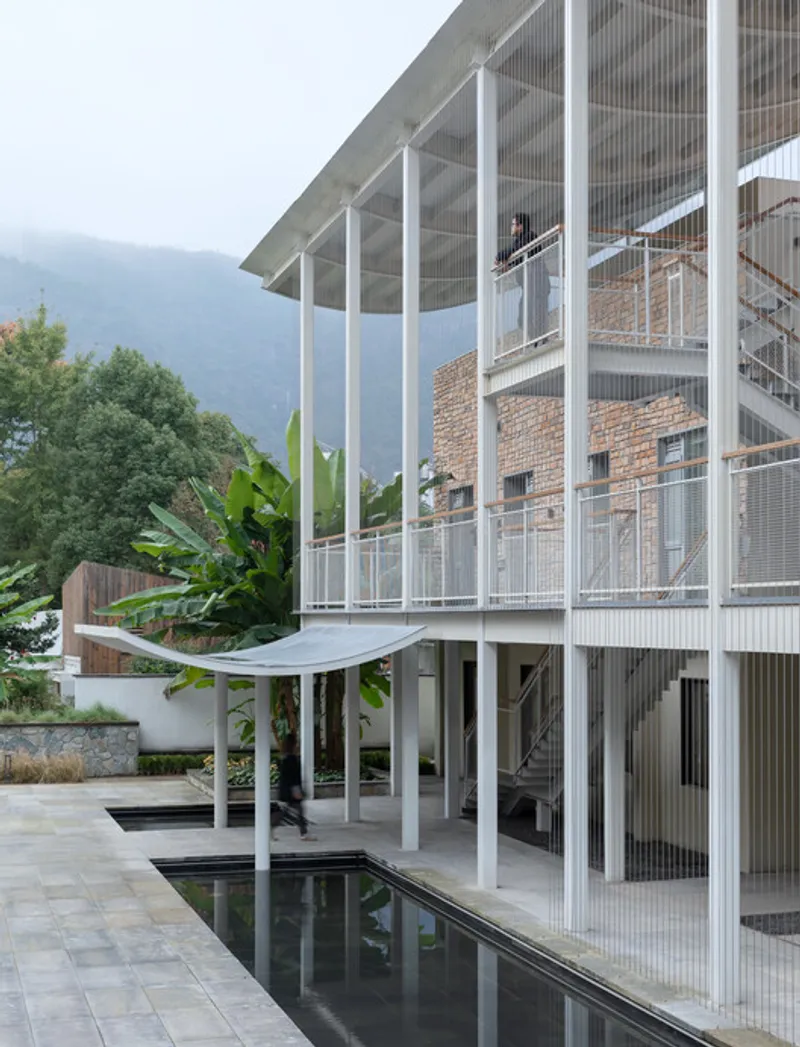
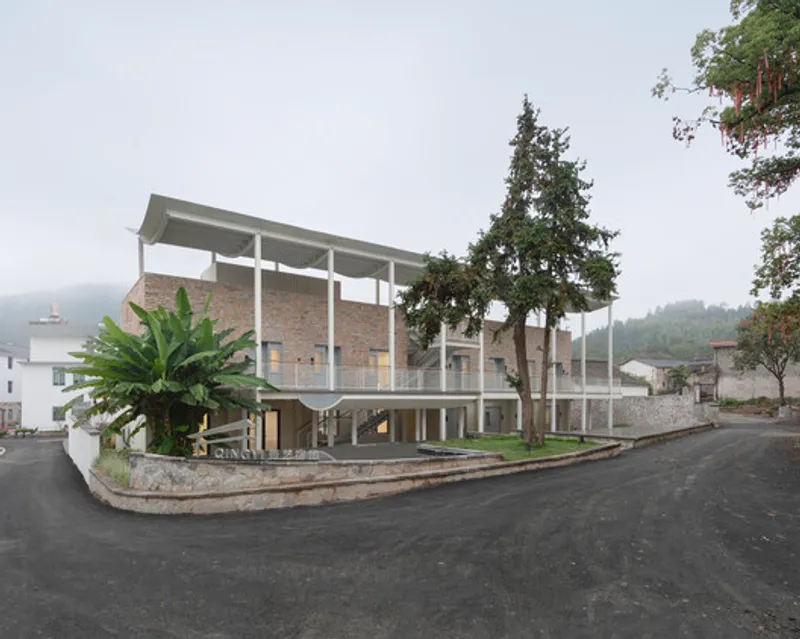
The design strategy begins with an emphasis on landscape. Recognizing the visual and cultural significance of Fanzeng Peak, the architects reconfigured the building to maximize outward views. The deteriorated roof was removed and replaced with a rooftop terrace oriented toward the mountains, creating a shared space where residents can gather, observe, and draw inspiration from the natural surroundings.
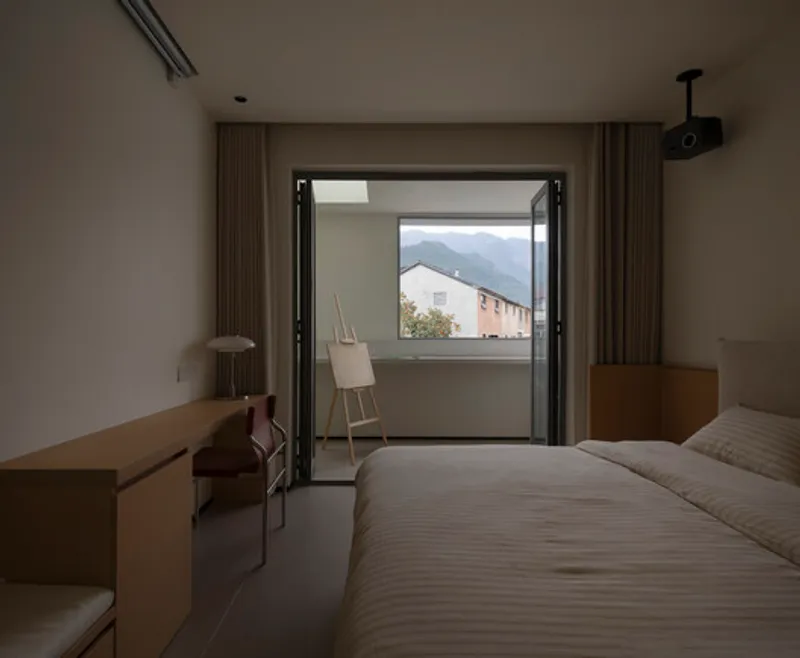
Internally, the former classrooms have been converted into dormitory units. While the original structural rhythm is maintained, key interventions: such as the replacement of traditional openings with floor-to-ceiling sliding doors: enhance light, ventilation, and visual connectivity. This transformation allows each room to feel more open and closely connected to the surrounding environment.
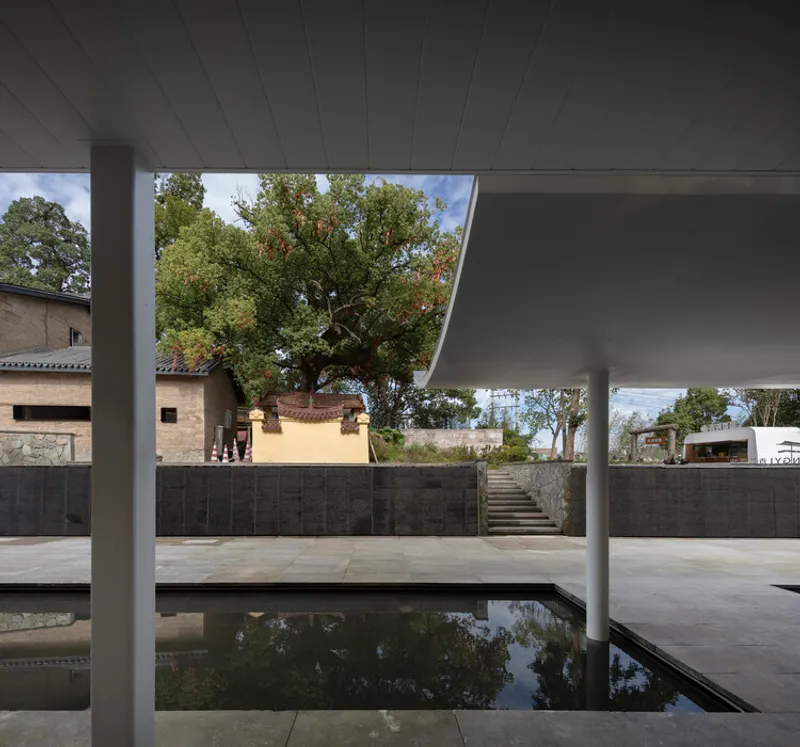
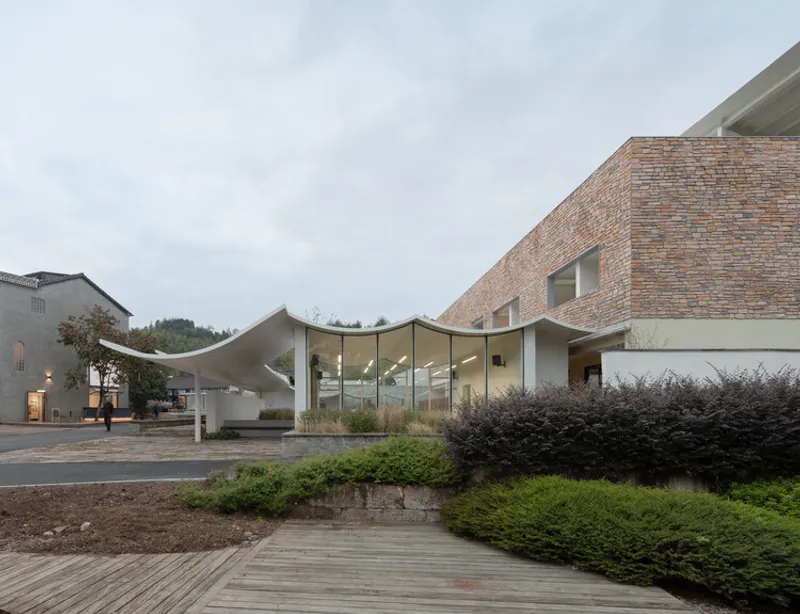
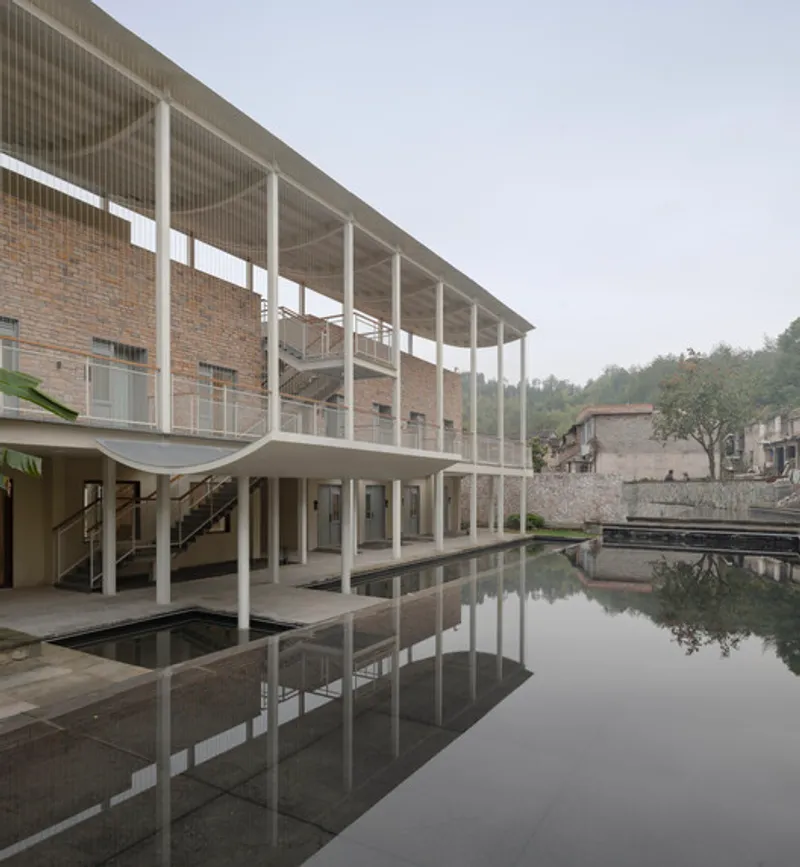
A new steel-structured corridor is introduced along the north side of the building, functioning as the primary circulation spine. In contrast, the original southern corridor is reimagined as a continuous balcony dedicated to rest and artistic practice. These sketching balconies are carefully oriented toward the mountain views, providing artists with direct visual engagement with the landscape. Skylights above these areas ensure consistent natural light, supporting creative work throughout the day.
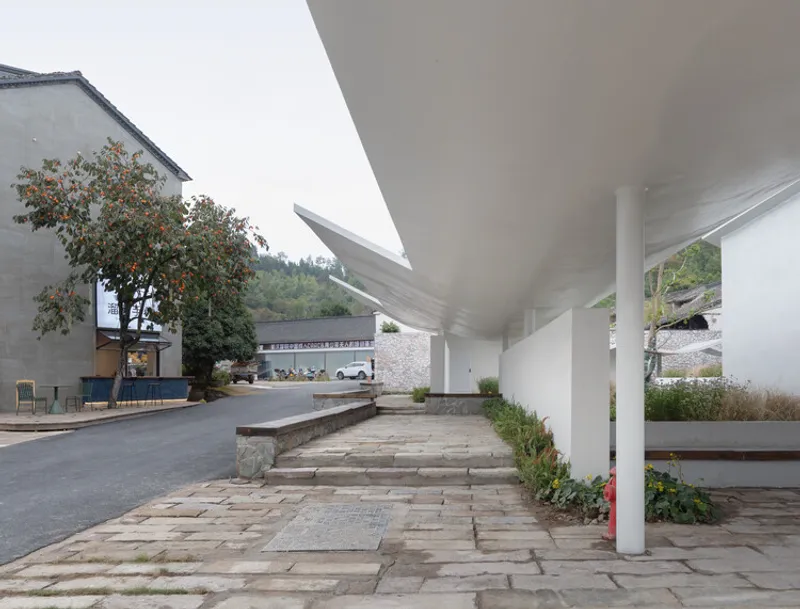
At ground level, each unit is complemented by a small private courtyard, offering additional space for sketching and reflection. These intimate outdoor areas reinforce the project’s emphasis on individual creativity while maintaining a strong connection to nature.
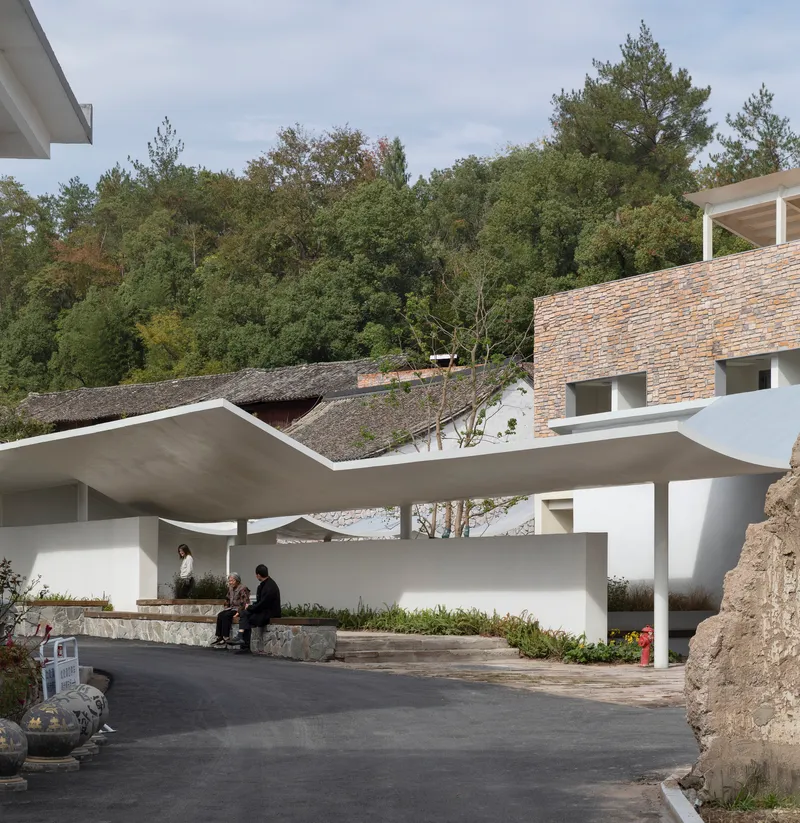
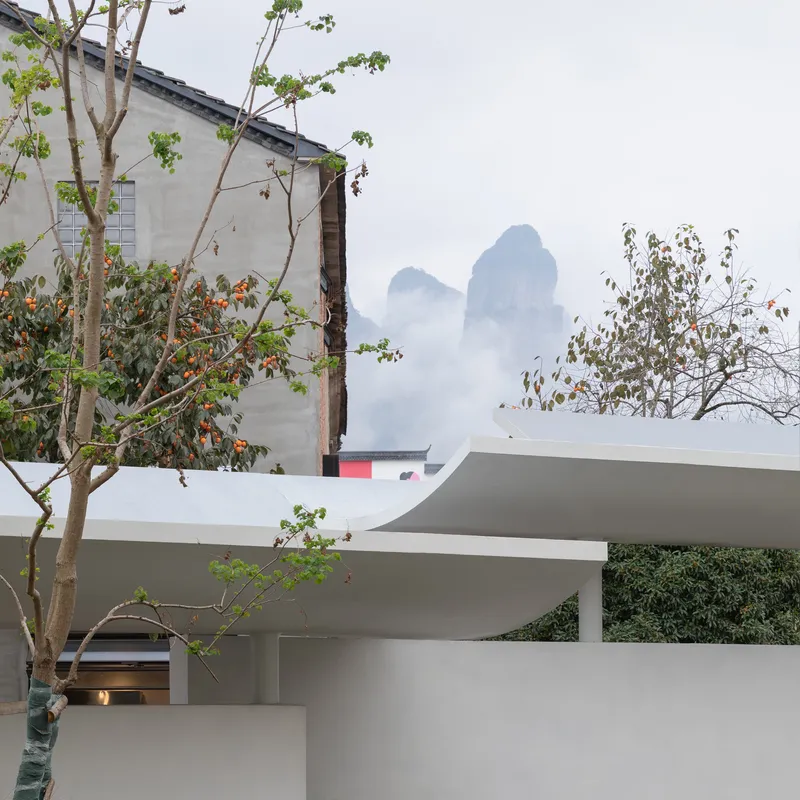
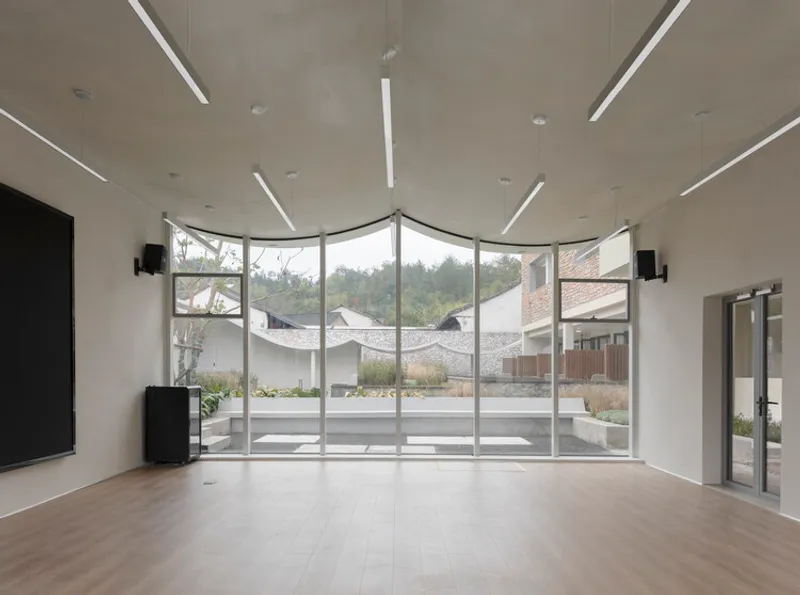
To address the limitations of the original structure, particularly its constrained dimensions, a new multifunctional hall is added to the southeast. This space acts as a social and cultural hub, accommodating informal exhibitions, discussions, and gatherings between students, artists, and the local community. It extends the program beyond accommodation, transforming the lodge into an active platform for exchange and collaboration.
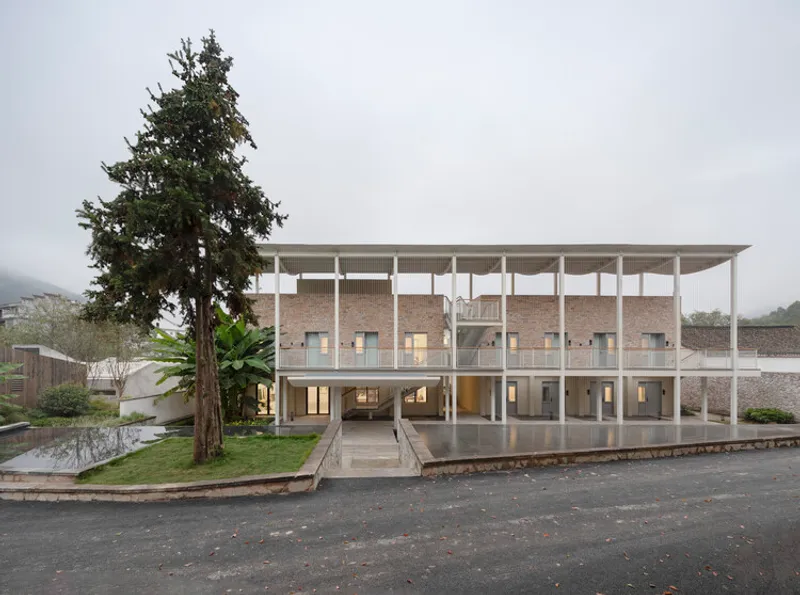
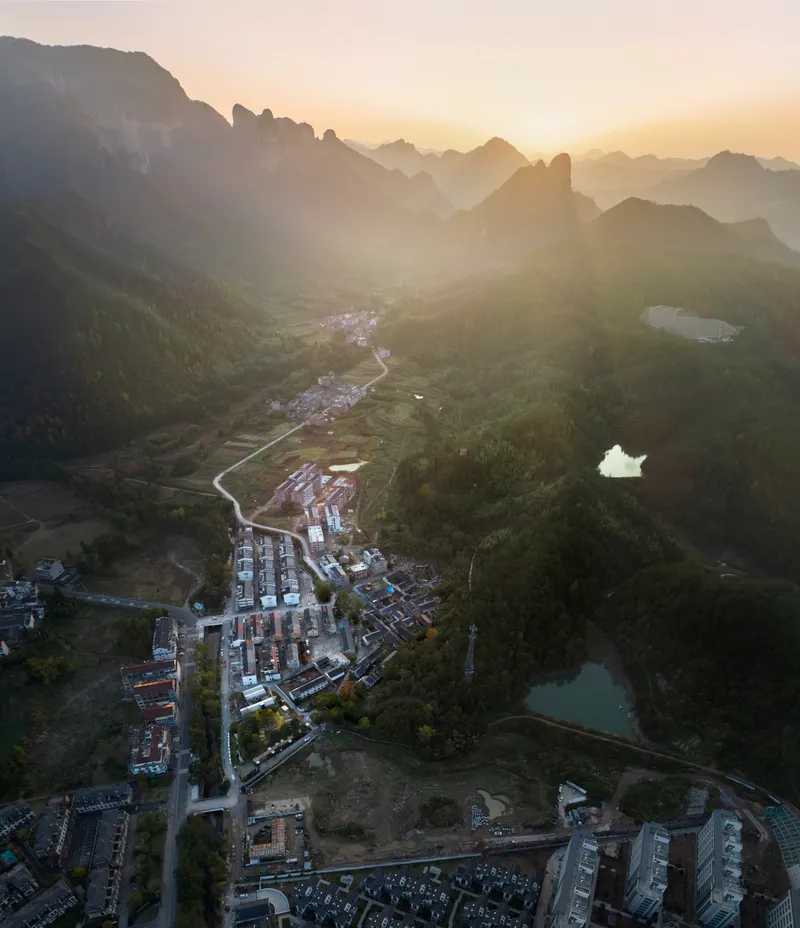
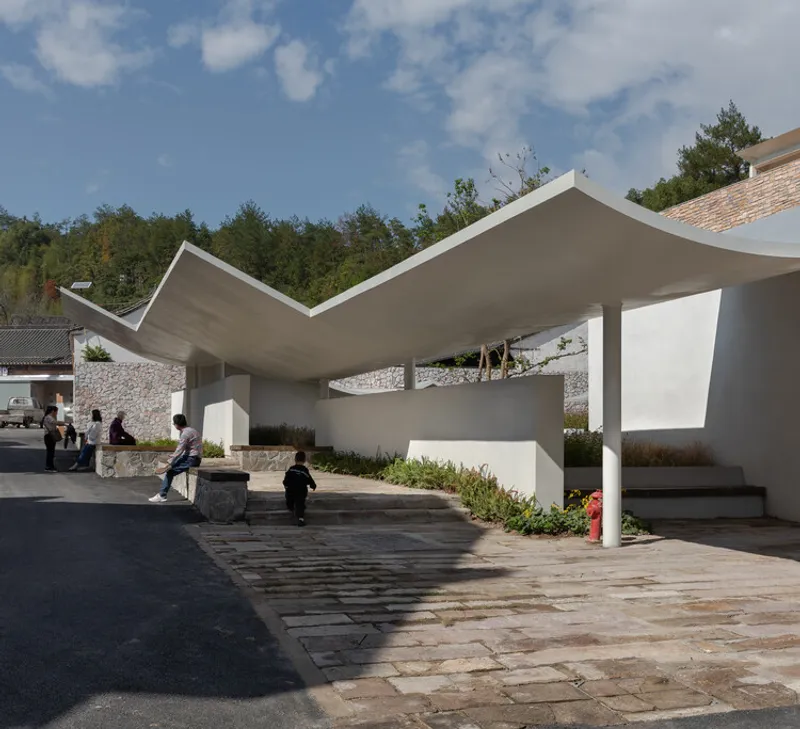
Beyond the building itself, the project engages deeply with the village context. The former school playground and perimeter wall are reinterpreted to create a more open and inviting public interface. Sections of the wall are removed, improving visibility and accessibility, while a series of gently curved metal roofs are introduced along the boundary. These roofs echo the forms of traditional village houses, creating a familiar yet contemporary architectural language.
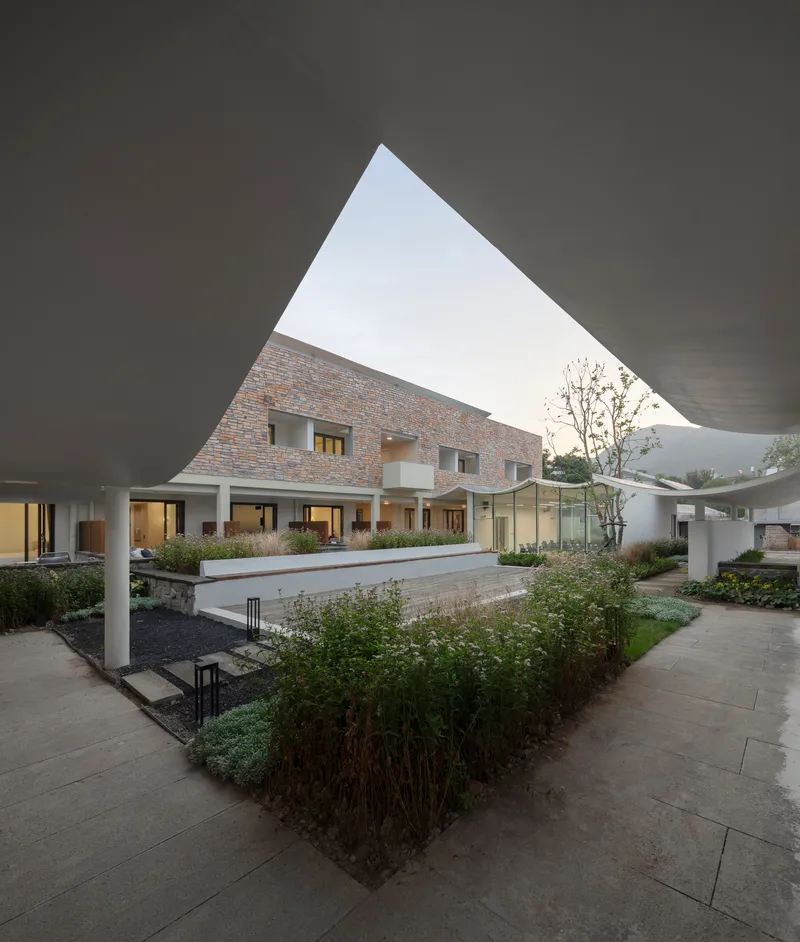
Beneath these lightweight structures, a layered corridor system emerges, combining internal and external pathways that connect the lodge with the surrounding village. These transitional spaces become social pockets where everyday life unfolds. Villagers rest, converse, and gather alongside visiting artists, fostering a shared sense of community. Materials such as reclaimed stone slabs, rubble walls, and timber seating further root the intervention in local craftsmanship and memory.
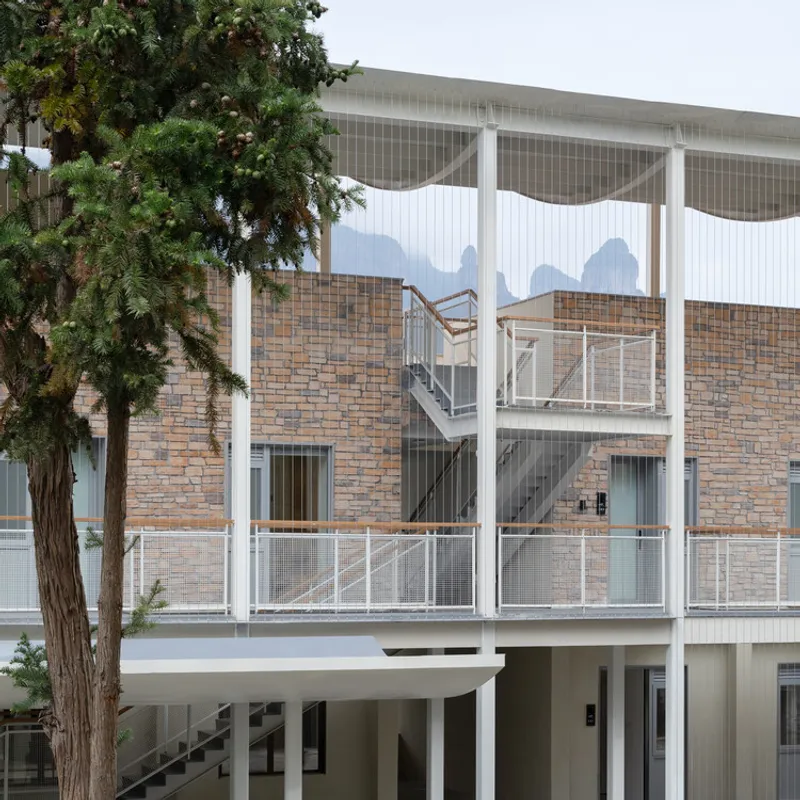
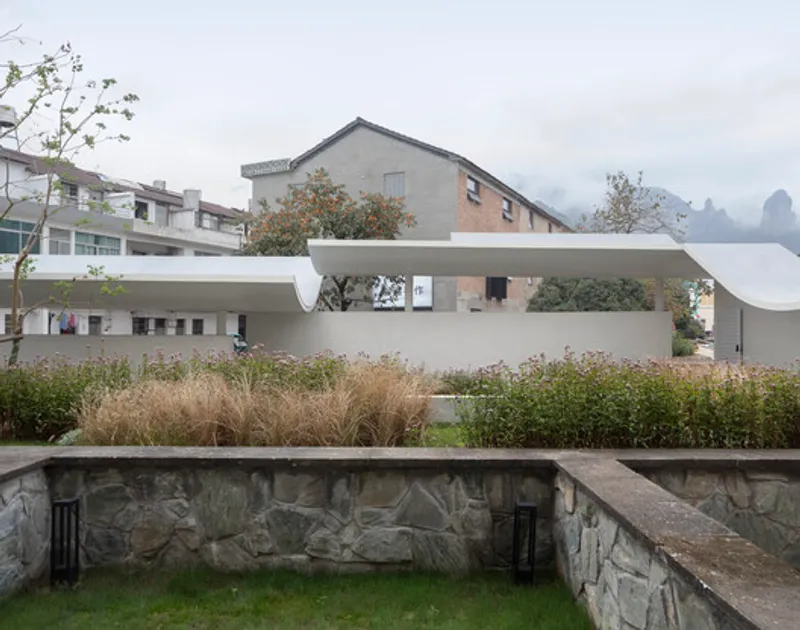
The project’s strength lies in its ability to operate across multiple scales. At the building level, it redefines an obsolete structure into a functional and inspiring living environment. At the village level, it activates public space and encourages interaction between residents and visitors. And at the cultural level, it supports the transformation of Xianjing Village into a destination for artistic exploration.
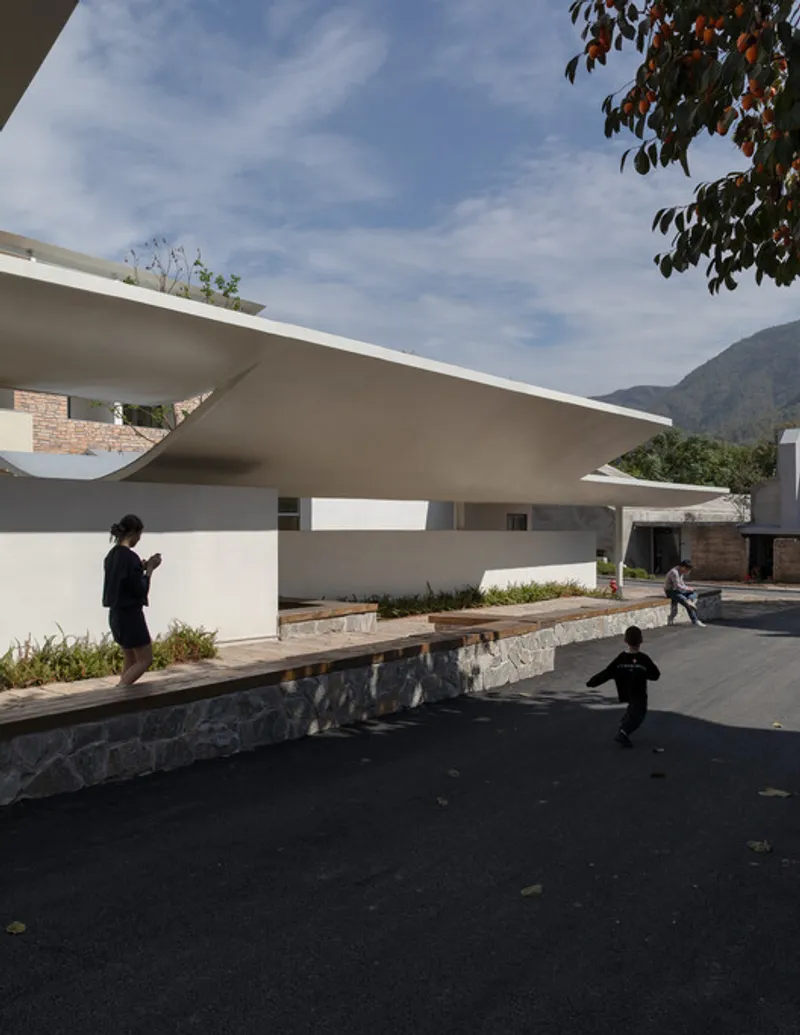
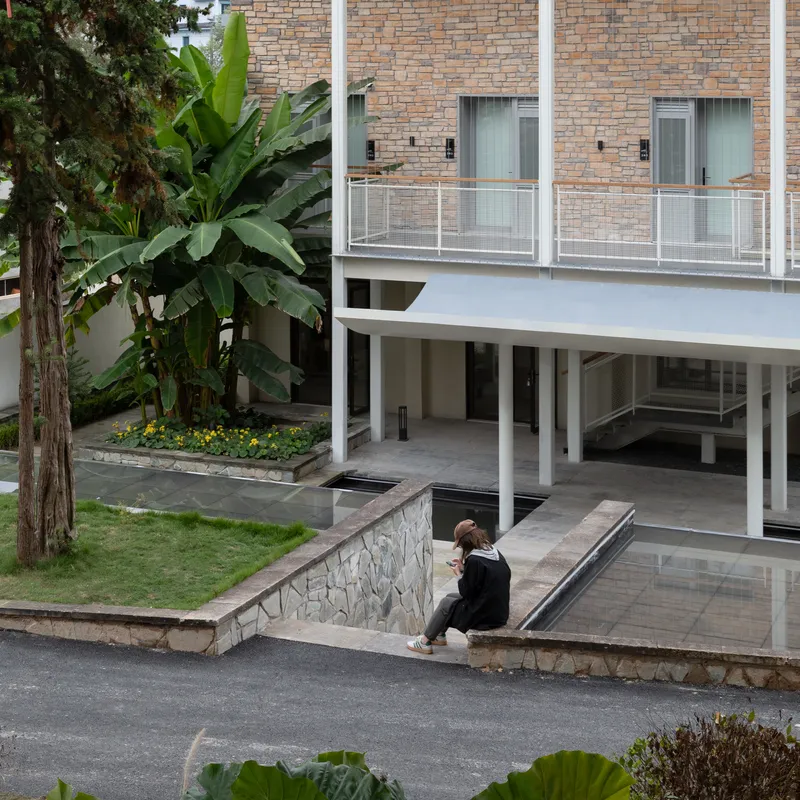
Ultimately, Qingyi Lodge is more than a renovation, it is a catalyst for regeneration. By weaving together architecture, landscape, and community, the project creates a layered and enduring environment where past and present coexist, and where creativity becomes a shared experience embedded within the fabric of the village.
All the Photographs are works of Shan Liang



Popular Articles
Popular articles from the community


The Earth Pod: 3D Printed Homes for Resilient Refugee Communities
The Earth Pod reimagines refugee housing through 3D printed homes made from clay, combining resilience, self-sufficiency, and rapid shelter.

Hill & Cross Opera: Sculptural Opera House Architecture Shaped by Tallinn’s Landscape and Identity
Hill & Cross Opera reimagines opera house architecture in Tallinn through its sculptural hill, civic plaza, glass wave and a luminous cross.

Play: Fragments of Their World
Familiar architecture becomes modular playground design, creating safe spaces where displaced children can learn, connect, imagine and play.

Lunar Spiral: Space Architecture Shaped by the Mathematics of the Universe
Lunar Spiral reimagines space architecture through Fibonacci geometry, lunar regolith, levitating habitats, and self-sustaining Moon living.

Similar Reads
You might also enjoy these articles

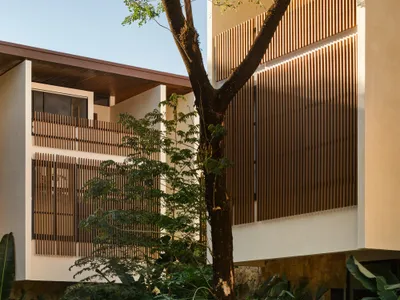
FAMM Arquitectura Organizes Ten Villas Around Courtyards and Jungle in Nosara, Costa Rica
El Molino pairs two elongated volumes with deep overhangs and timber louvers to build a compact coastal community five minutes from the beach.
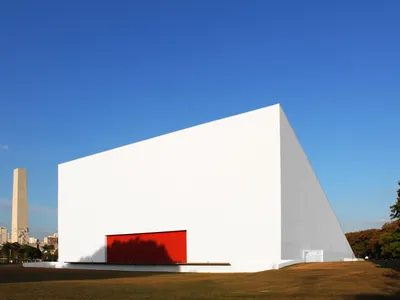
Oscar Niemeyer's Ibirapuera Park Pavilions Define São Paulo's Cultural Identity in Concrete and Curve
A constellation of modernist volumes set within São Paulo's most important urban park, conceived for the city's 400th anniversary in 1954.
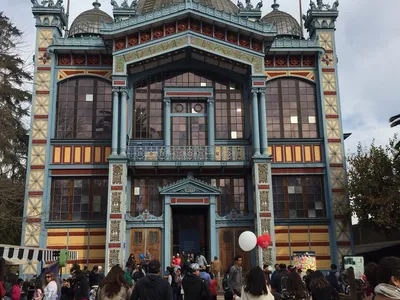
How Henri Picq's 1889 Paris Pavilion Traveled 11,000 Kilometers to Become Santiago's Artequín Museum
A prefabricated iron and glass pavilion built for the Paris Universal Exposition found a second life as a children's art museum in Chile.
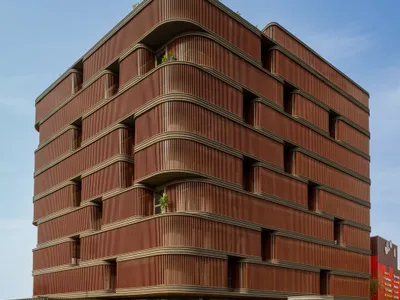
Sanjay Puri Architects Wraps a Jaipur Office Tower in Capsule-Shaped Green Buffers
A nine-level climate-responsive workplace near Jaipur Airport uses stacked planter terraces and aluminium screens to fight 40°C heat.

Explore Architecture Competitions
Discover active competitions in this discipline



Challenge to reimagine the Iron Throne


Photograph architecture without architects


Illustrate the lost glory of Angkor Wat - Render Challenge


Design challenge to reuse E-waste
Comments (0)
Please login or sign up to add comments
No comments yet. Be the first to comment!