

River Terrace by Mestizo Estudio Arquitectura: Sustainable Ecotourism Architecture in Puyo
Rainforest pavilion in Puyo featuring vernacular form, killi logs, river stone, rainwater harvesting roof, and flexible ecotourism gathering space.


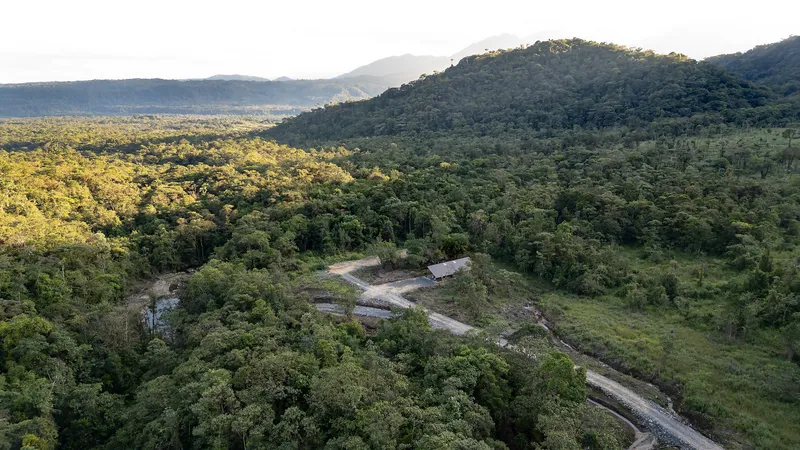
Set at 1,250 meters above sea level in the montane rainforest near Llanganates National Park, River Terrace is a 95 m² mixed-use eco-structure designed as a flexible, climate-responsive space immersed in biodiversity. Located on the eastern foothills of the Andes in Ecuador’s Pastaza province, the project is surrounded by over 800 species of vascular and endemic plants, forming part of a delicate Amazonian ecosystem.
Designed in 2025 by Mestizo Estudio Arquitectura, River Terrace serves as the first architectural intervention within a 4.5-hectare sustainable tourism masterplan developed by a young family committed to environmental conservation. The structure acts as a transitional meeting point along a route leading toward Llanganates National Park: welcoming hikers, eco-tourists, researchers, and spiritual retreat groups.
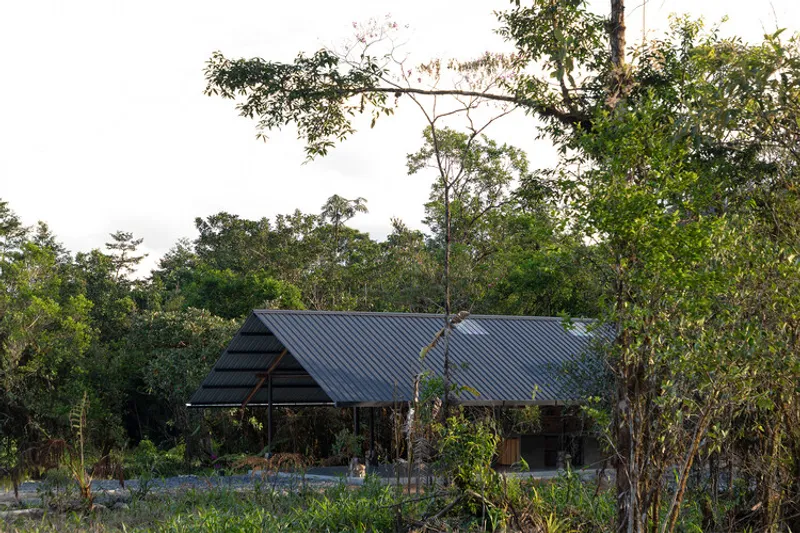

Architecture Rooted in the Amazonian Landscape
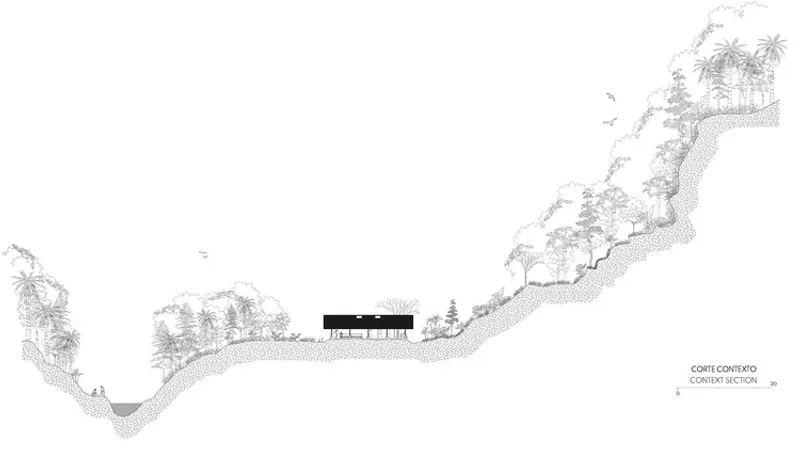
The project emerges from its irregular topography, positioned beside a flowing stream and embedded within dense vegetation. Rather than altering the land, the design adapts to it. Elevated slightly above ground and oriented eastward, the building captures the first morning sunlight: an essential passive heating strategy in a region characterized by persistent mist, humidity, and rainfall.
Its volumetric form references vernacular Amazonian architecture, particularly ancestral palm-based constructions traditionally built with species such as chonta, pambil, and killi. These natural materials have historically functioned as structural pillars in Indigenous dwellings, and their reinterpretation here reinforces a cultural and environmental continuity.
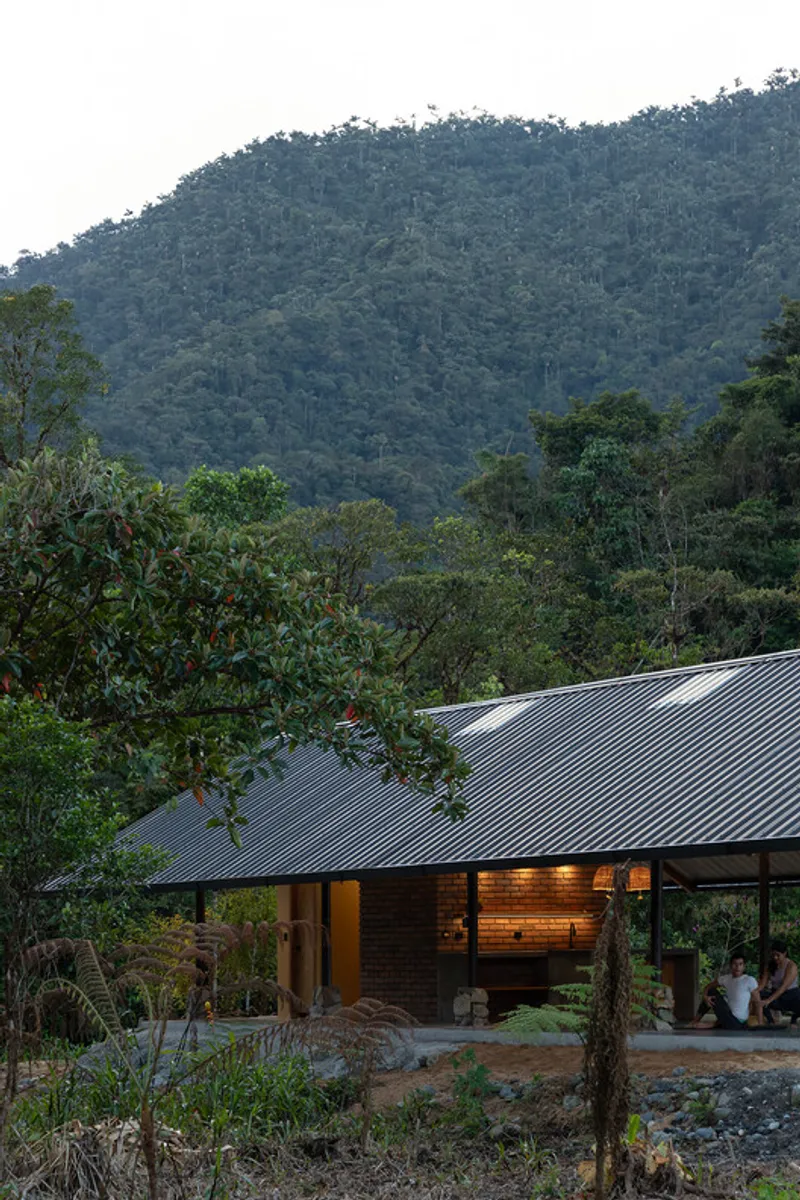
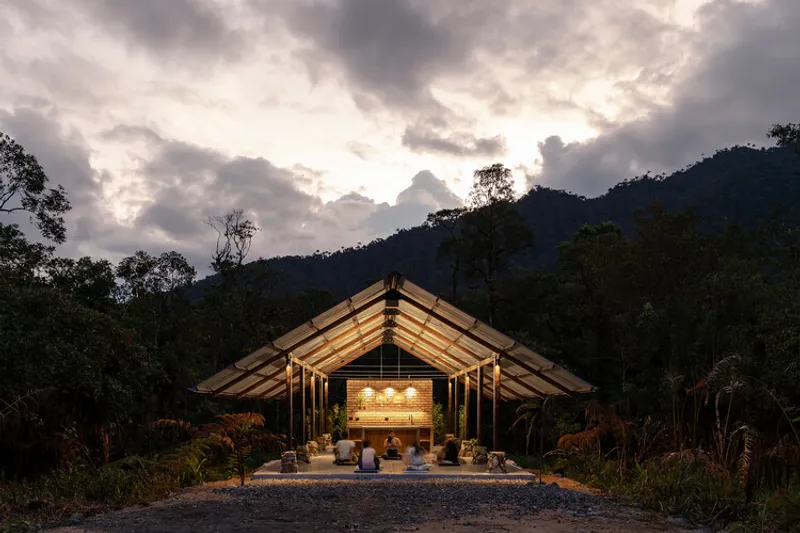
A Dynamic Multi-Use Ecotourism Pavilion
Conceived as an “Espacio Dinámico” (Dynamic Space), River Terrace is designed with a free-plan layout that accommodates multiple uses:
- Community meetings
- Outdoor dining experiences
- Eco-tourism rest stops
- Camping support facilities
- Spiritual retreats and meditation sessions
- Environmental education workshops
The program is divided into two primary zones:
- Semi-Closed Service Core – Includes storage, bathroom, shower, and changing facilities.
- Open Multi-Use Terrace – A flexible, covered platform overlooking the stream and forest canopy.
This adaptable design ensures longevity and evolving functionality as the broader sustainable tourism project expands.

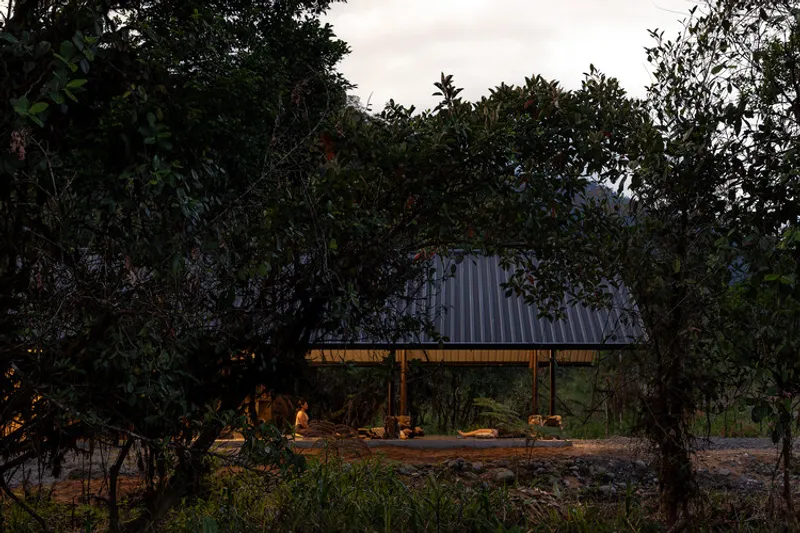
Climate-Responsive Design & Rainwater Management
Given the tropical rainforest climate, the roof plays a critical environmental role. Its sharply inclined geometry facilitates rapid rainwater evacuation, directing water toward collection systems for reuse in service areas. This integrated rainwater harvesting strategy supports low-impact operation and reduces dependency on external infrastructure.
The open-sided configuration enhances cross-ventilation, allowing humid air to circulate freely while maintaining shelter from frequent rainfall. The building envelope remains porous, reinforcing a direct sensory relationship with the surrounding forest: sounds of water, filtered light, and shifting mist become part of the architectural experience.

Local Materials & Artisan Craftsmanship
River Terrace is constructed using materials sourced directly from the site and its immediate context:
- Killi logs harvested from the property
- River stones collected from the nearby stream
- Locally fabricated steel elements
The project employs a hybrid construction system executed by artisans, carpenters, stonemasons, and welders. This collaborative, hands-on process revives traditional building knowledge while integrating contemporary techniques.
By combining natural and urban resources, the architecture seeks to restore a fading local identity: one grounded in craft, ecological awareness, and material honesty.

Sustainable Tourism & Environmental Stewardship
River Terrace reflects a broader vision of regenerative architecture in Ecuador’s Amazon region. Rather than functioning as an isolated object, it operates as infrastructure for environmental education and conservation-driven tourism.
Its small footprint (95 m²), passive environmental strategies, locally sourced materials, and multi-functional adaptability exemplify:
- Sustainable ecotourism architecture
- Vernacular-inspired contemporary design
- Rainforest climate-responsive buildings
- Low-impact construction methods
- Amazonian material innovation
- Community-based development models

A Contemporary Vernacular for the Rainforest
River Terrace does not dominate its surroundings, it listens to them. Through its open structure, rainwater-conscious roof, natural materials, and flexible programming, the project becomes an extension of the forest itself.
In a region where biodiversity and cultural heritage intertwine, Mestizo Estudio Arquitectura delivers a modest yet powerful architectural gesture, one that reimagines vernacular Amazonian principles for sustainable tourism in the 21st century.
All the photographs are works of
JAG Studio




Popular Articles
Popular articles from the community


The Musturak Paradise: Senior Living Architecture for a Connected Future in Temara, Morocco
The Musturak Paradise reimagines senior living architecture in Temara via private homes, social spaces, culture, community, and shared care.

The Ocean Hive: Sustainable Architecture for a Self-Sufficient Civilization at Sea
The Ocean Hive imagines sustainable architecture at sea, where modular habitats, algae, wave power and ocean waste sustain a growing colony.

Co-life: Sustainable Architecture for Age-Friendly Community Living
Co-life reimagines sustainable architecture for seniors through courtyards, rammed earth, shared gardens, and spaces designed for belonging.

Conexión: Biophilic Design Reimagines High-Rise Living in Hong Kong
Conexión reimagines high-rise living in Hong Kong through biophilic design, green facades, shared spaces, daylight, water and nature within.


Similar Reads
You might also enjoy these articles

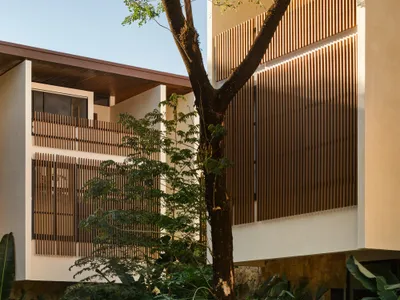
FAMM Arquitectura Organizes Ten Villas Around Courtyards and Jungle in Nosara, Costa Rica
El Molino pairs two elongated volumes with deep overhangs and timber louvers to build a compact coastal community five minutes from the beach.
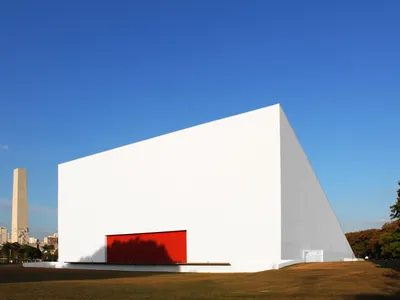
Oscar Niemeyer's Ibirapuera Park Pavilions Define São Paulo's Cultural Identity in Concrete and Curve
A constellation of modernist volumes set within São Paulo's most important urban park, conceived for the city's 400th anniversary in 1954.
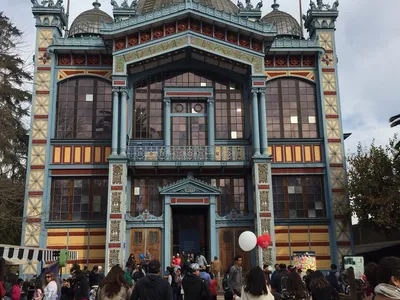
How Henri Picq's 1889 Paris Pavilion Traveled 11,000 Kilometers to Become Santiago's Artequín Museum
A prefabricated iron and glass pavilion built for the Paris Universal Exposition found a second life as a children's art museum in Chile.
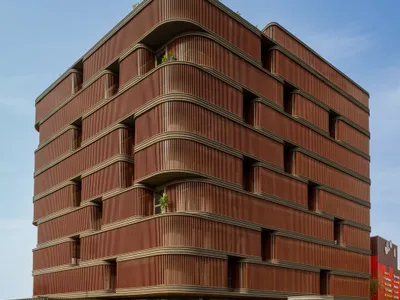
Sanjay Puri Architects Wraps a Jaipur Office Tower in Capsule-Shaped Green Buffers
A nine-level climate-responsive workplace near Jaipur Airport uses stacked planter terraces and aluminium screens to fight 40°C heat.

Explore Architecture Competitions
Discover active competitions in this discipline



Challenge to reimagine the Iron Throne


Photograph architecture without architects


Illustrate the lost glory of Angkor Wat - Render Challenge


Design challenge to reuse E-waste
Comments (0)
Please login or sign up to add comments
No comments yet. Be the first to comment!