
Sabater House by Fran Silvestre Arquitectos, Alicante (Alacant)
Linear white residence integrates courtyards, terraces, and sea views, blending minimalist geometry with landscape through light, topography, and spatial sequencing.


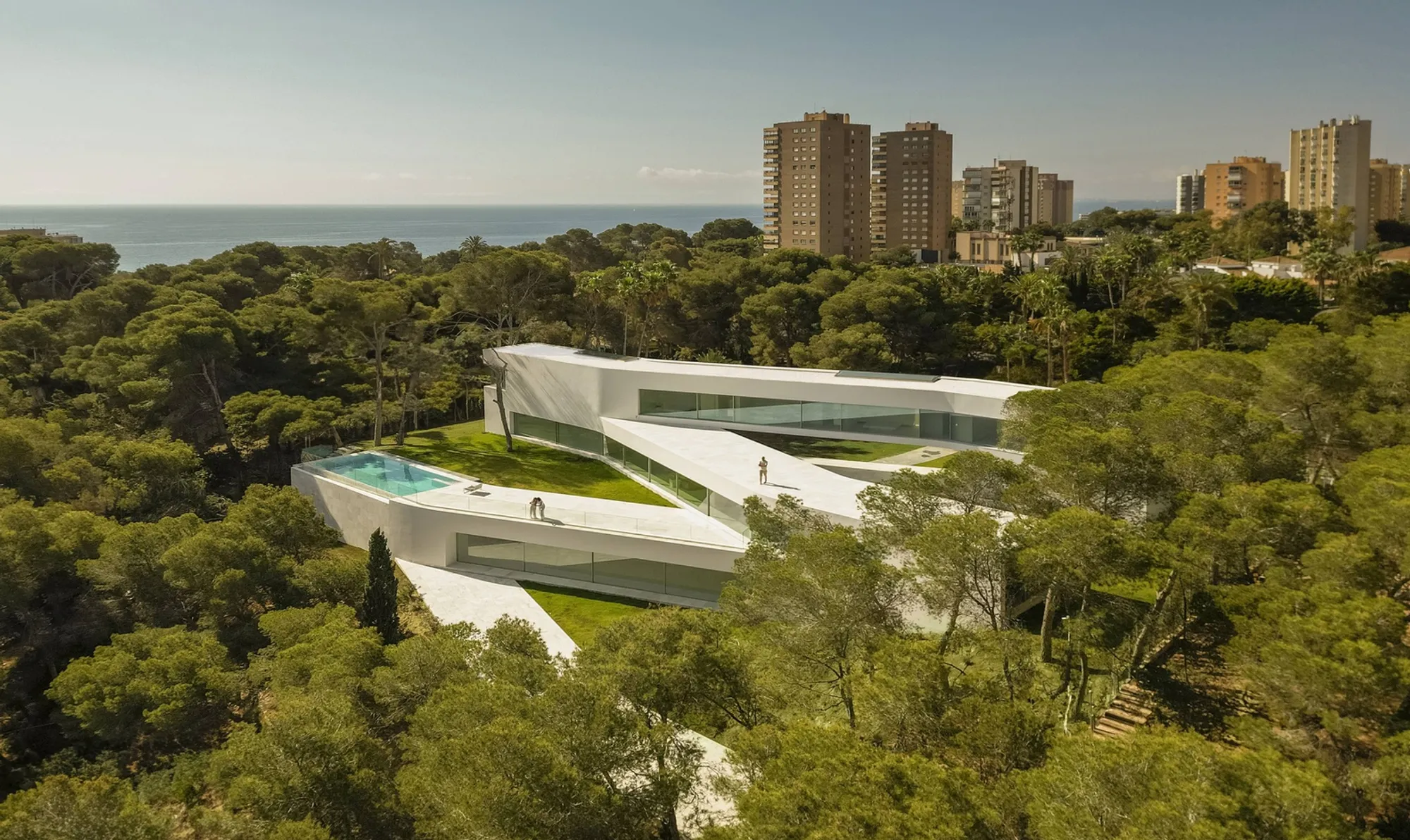
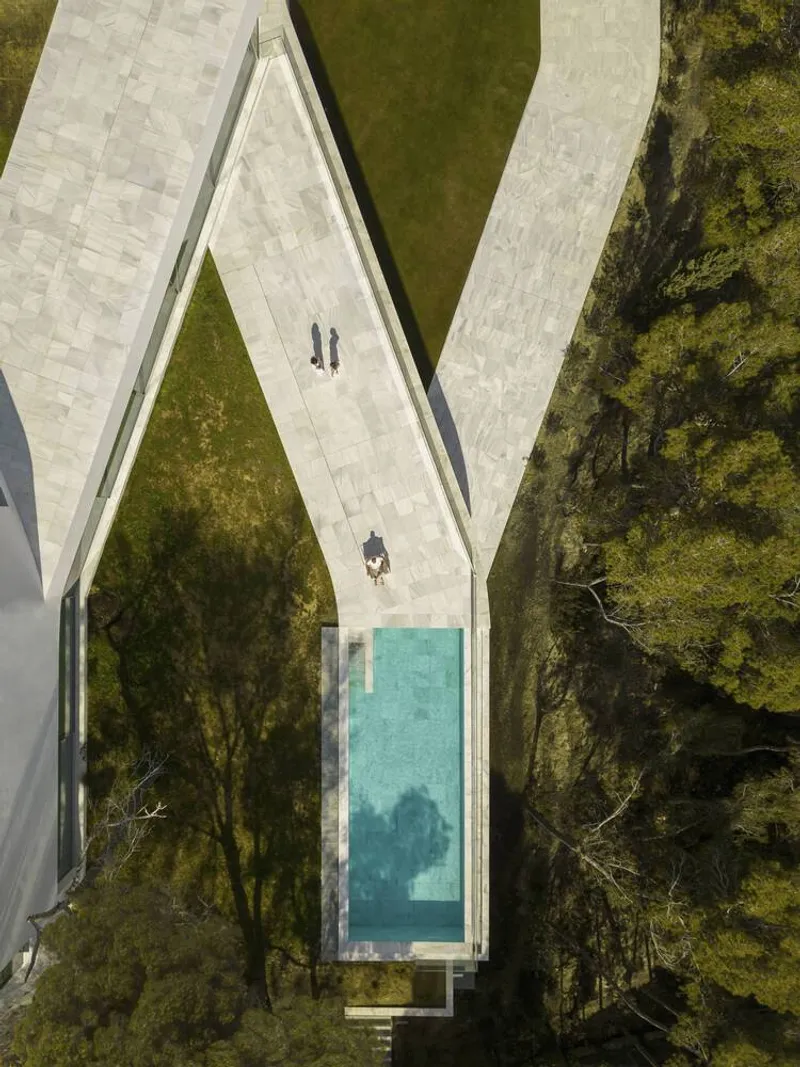
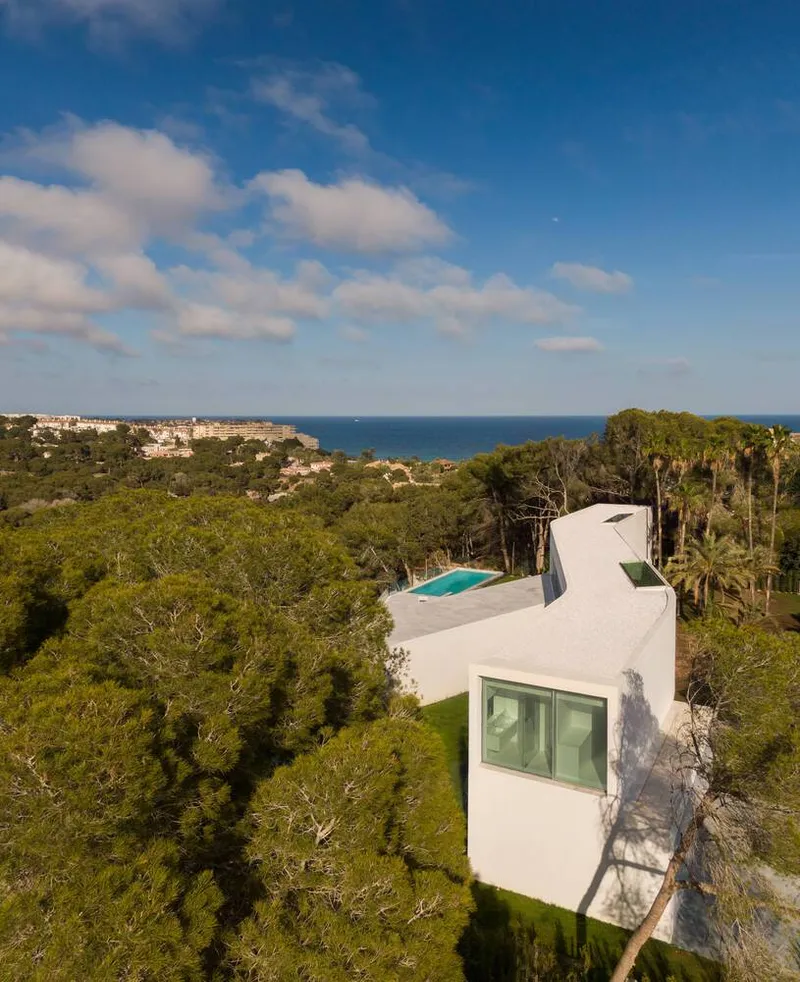
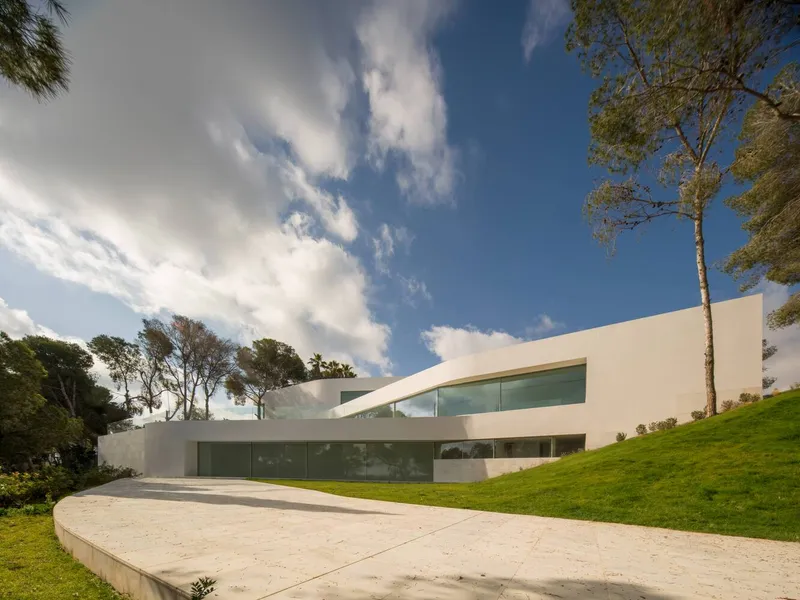
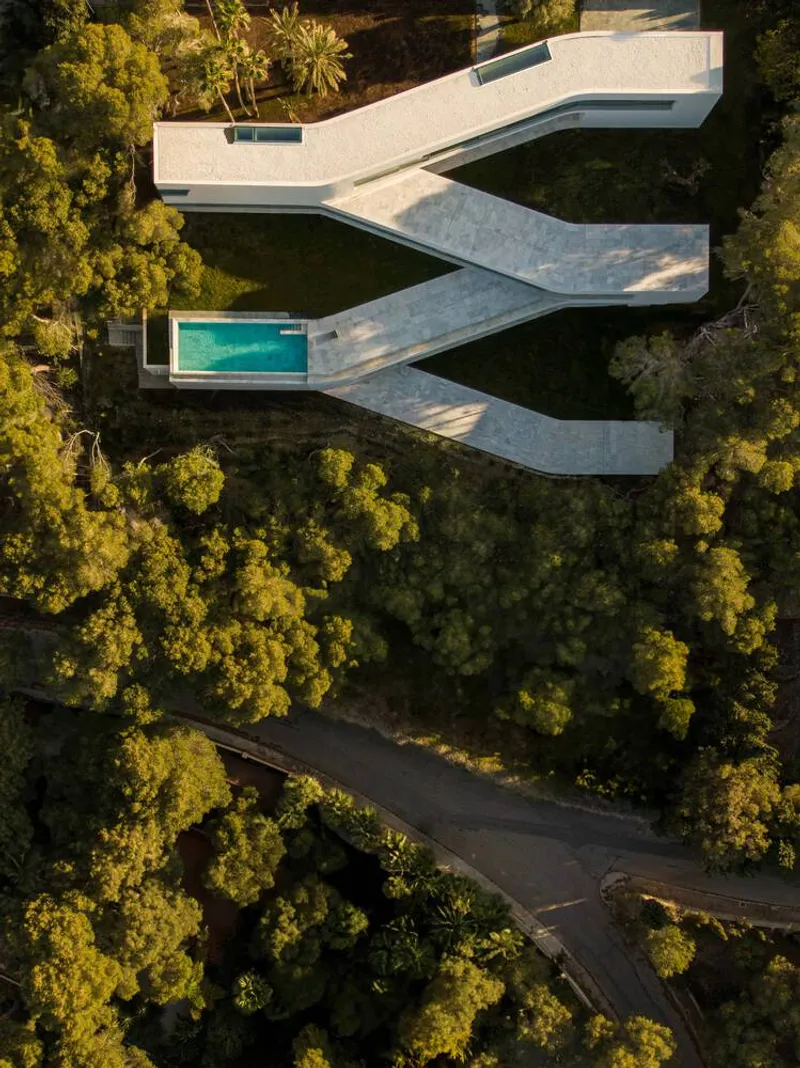
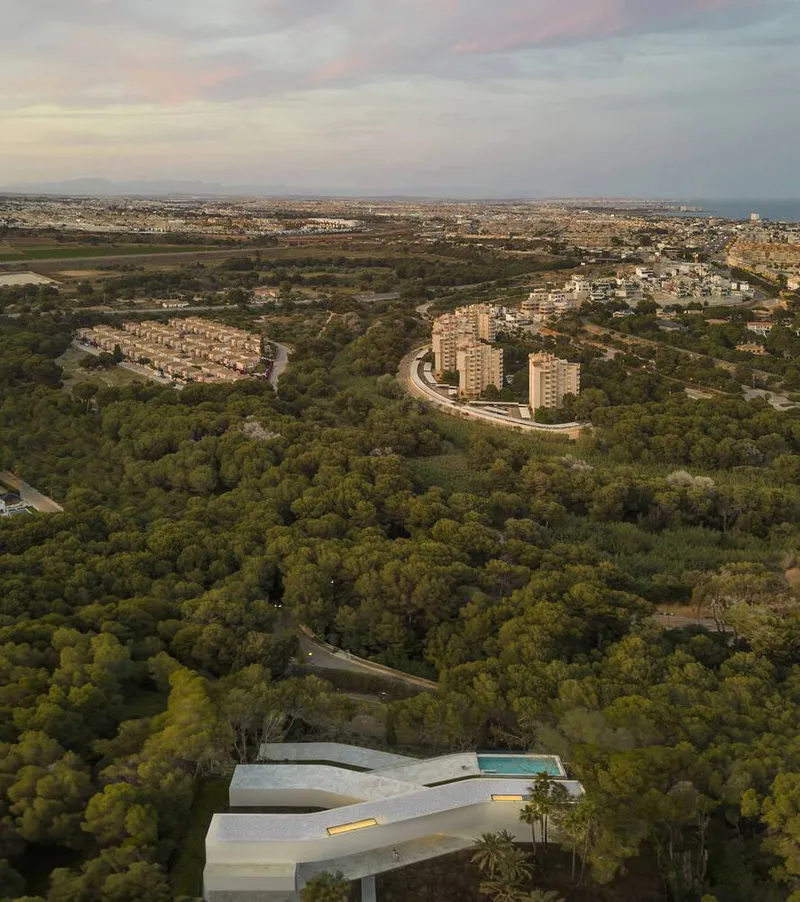
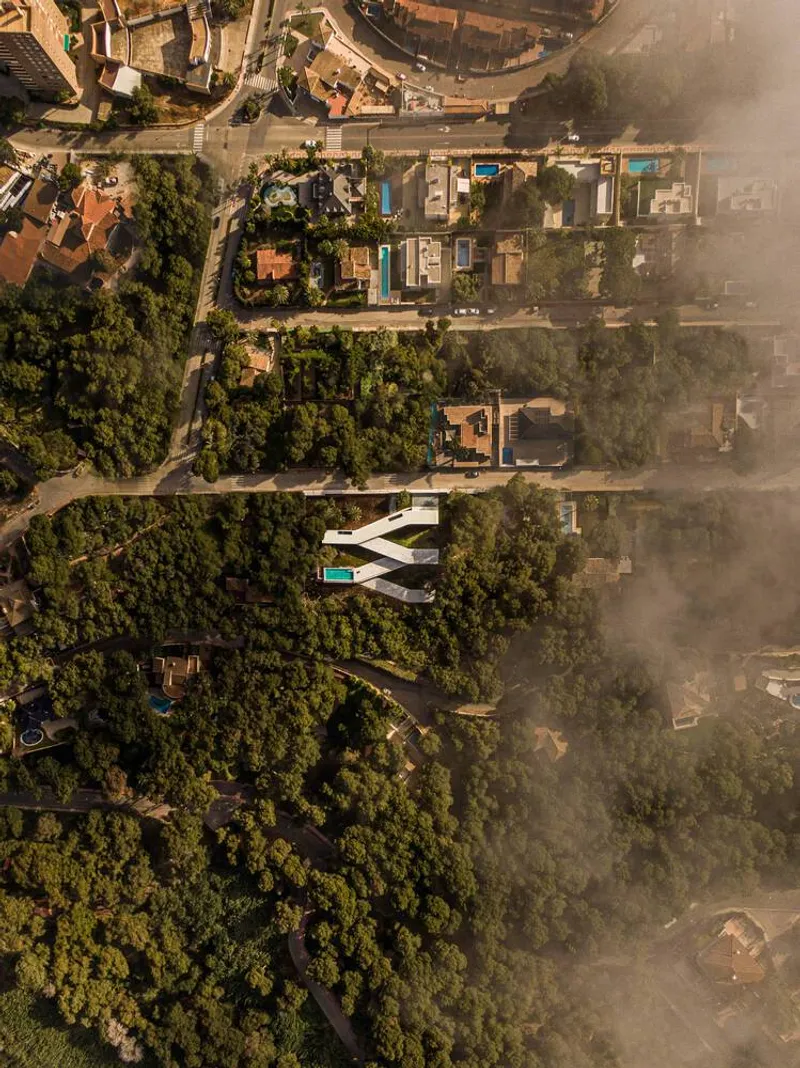
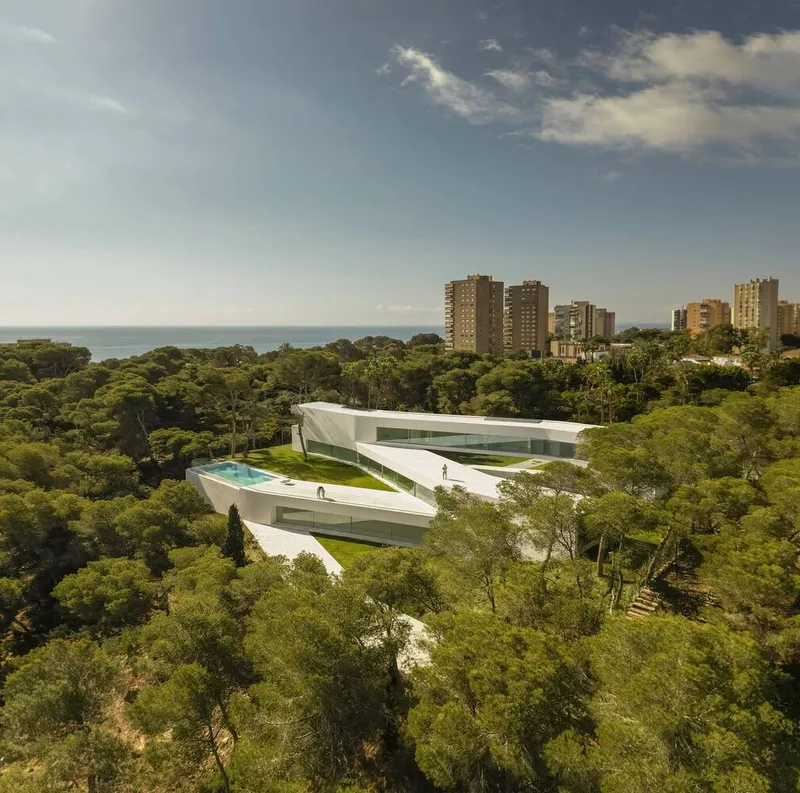
Sabater House is a contemporary Mediterranean residence that explores how architecture can dissolve into landscape through geometry, proportion, and light. Designed by Fran Silvestre Arquitectos, the 780-square-meter house is located in Alicante, Spain, where topography, mature trees, and distant sea views strongly informed the architectural strategy. Rather than adopting a compact volume, the project unfolds as a linear and fragmented system, increasing the perimeter of contact between interior and exterior and generating a sequence of courtyards that appear to extend endlessly into the garden.
Architecture Integrated with Landscape
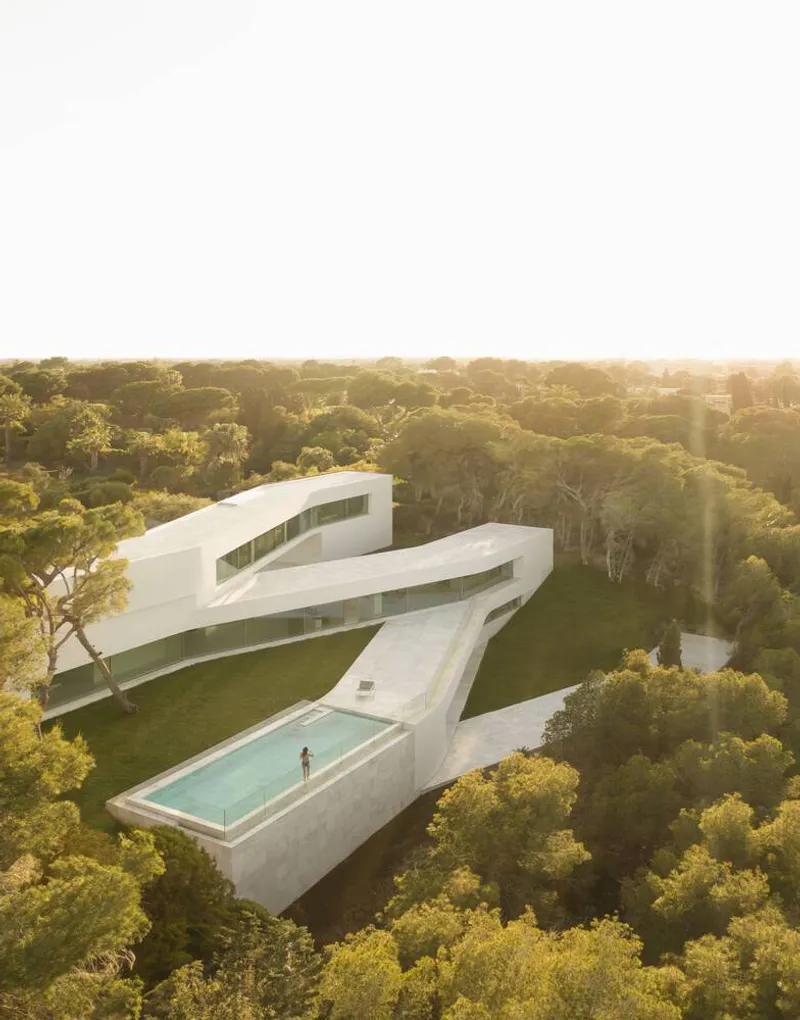
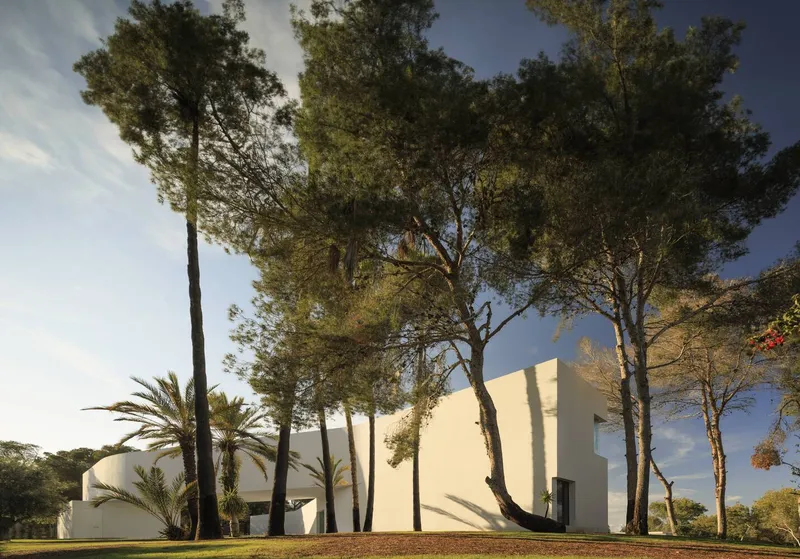
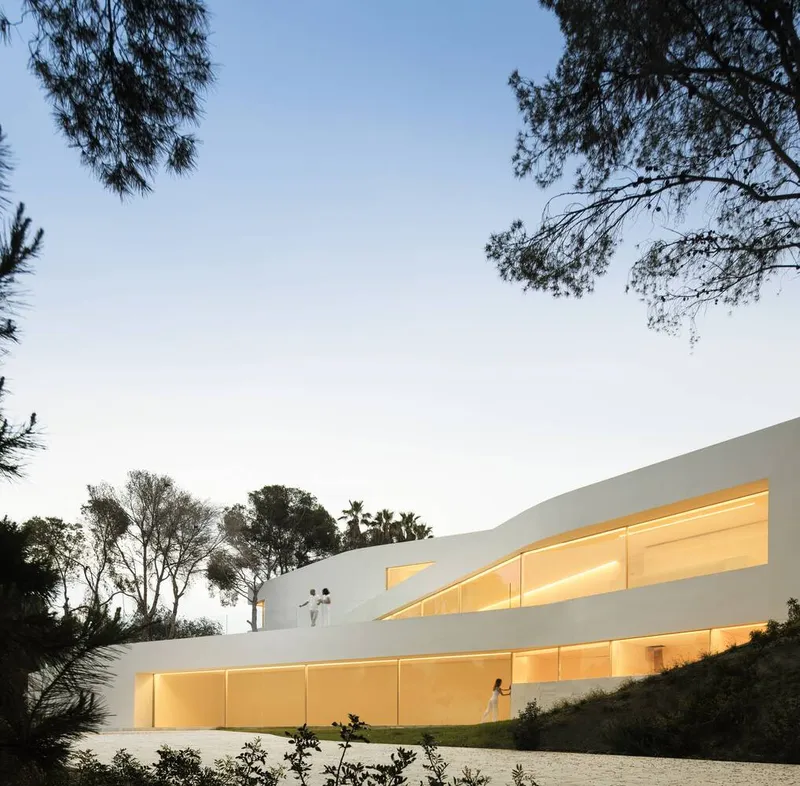
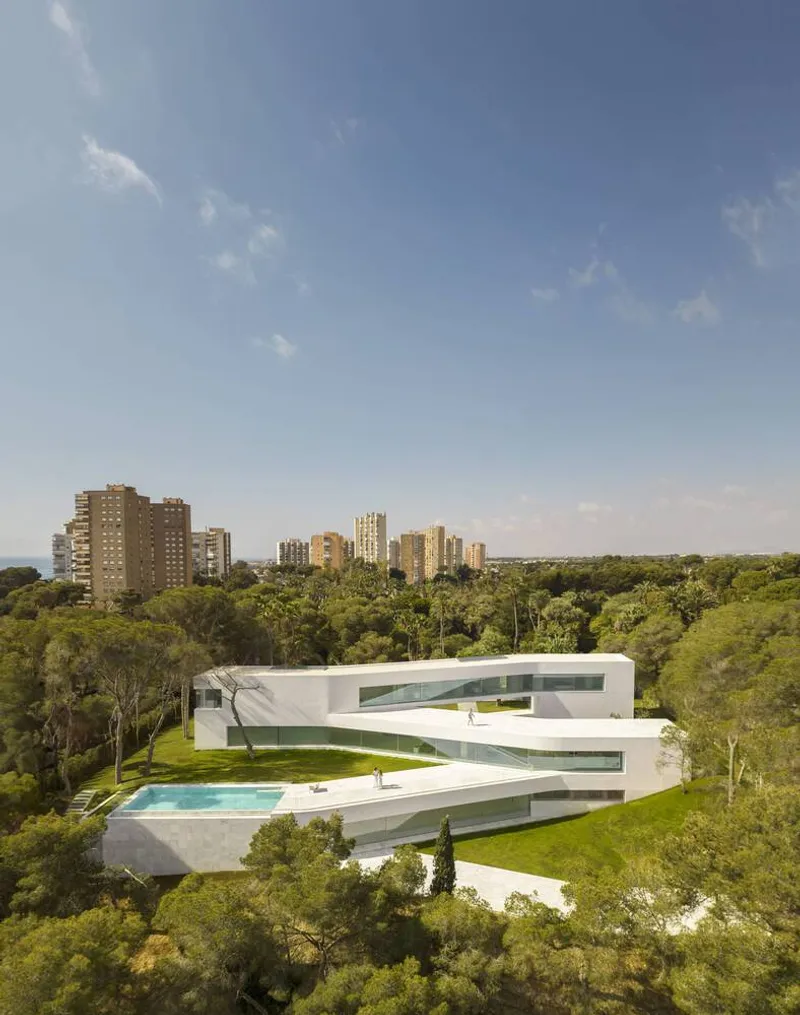
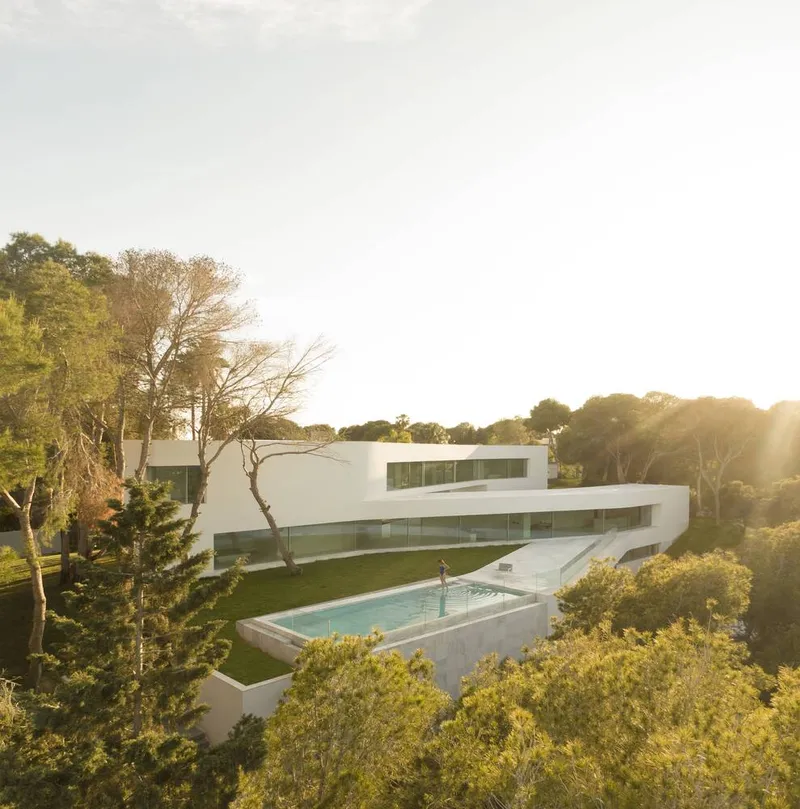
The house is conceived as an architectural composition drawn between trees. Its clear and slender geometry allows the building to carefully avoid existing large specimens while embracing new vegetation planted on site. The architecture adapts to the natural slope of the land through a terraced configuration, recalling the gradual ascents of historic hermitages. This approach reinforces a sense of continuity between built form and terrain, enabling the house to be experienced as a unified whole rather than as an isolated object.
The aggregation logic of the project also introduces flexibility. The linear system can be extended or adapted over time, responding to changes in the domestic program while maintaining architectural coherence. This strategy positions Sabater House as both a precise architectural artifact and an open framework for living.
Spatial Organization Across Three Levels
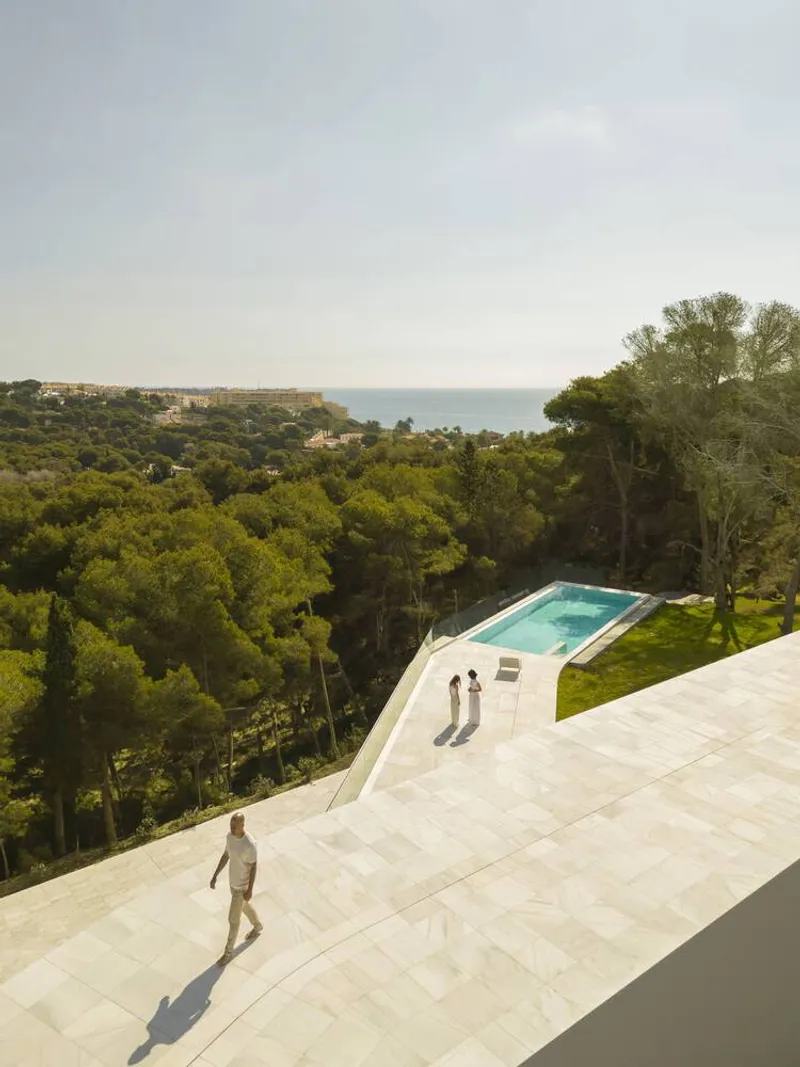
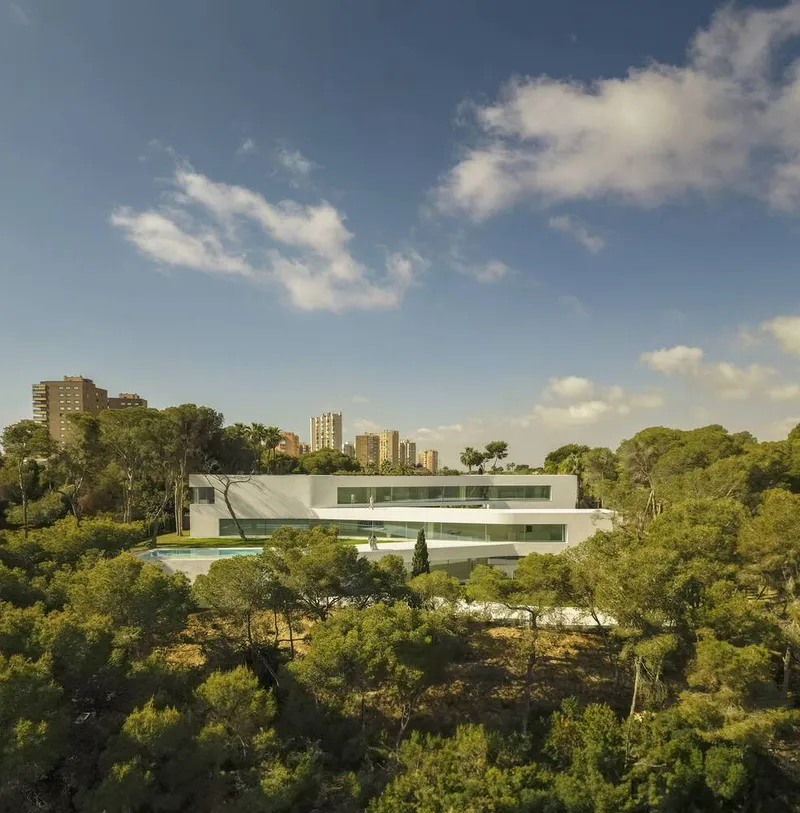
The residential program is distributed across three floors, each carefully oriented to balance privacy, views, and environmental comfort. The upper level contains the private night area. From here, the bedrooms enjoy long views toward the Mediterranean Sea above the treetops, reinforcing the elevated and protected character of this floor. This level also connects directly to the roof of the ground floor, conceived as a belvedere that offers panoramic views over the surrounding landscape.
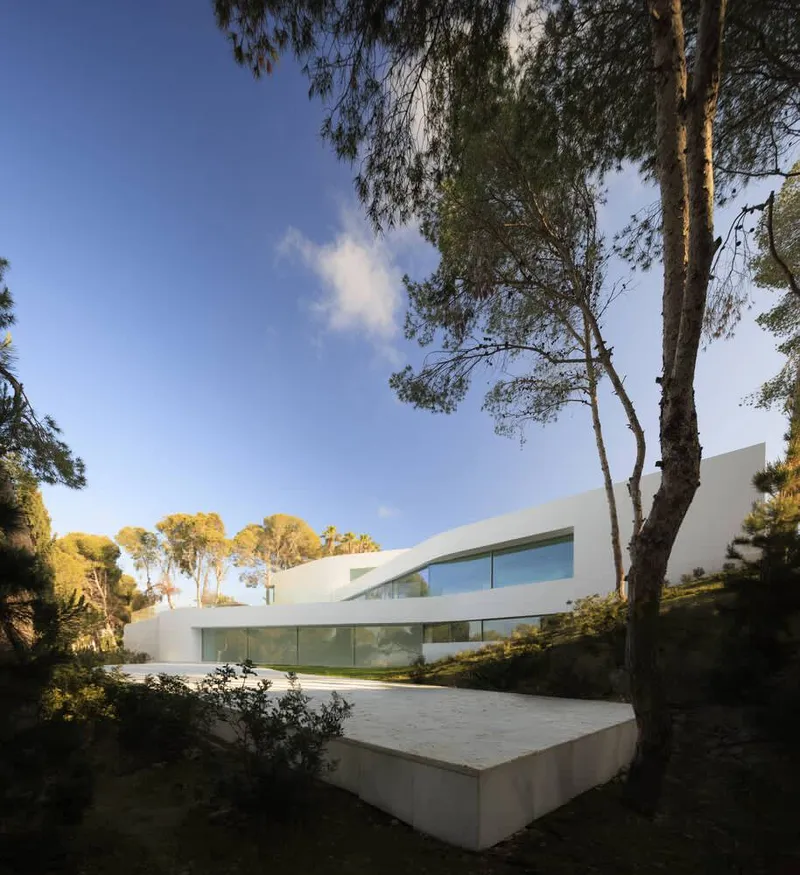
Structurally, the upper floor functions as a bridge spanning between the garage at the plot boundary and the vertical communication core. This configuration generates a shaded portico at ground level, marking the main entrance and creating a transitional space between street and home. The volume remains closed toward the street, ensuring privacy while opening generously toward the garden and sea.
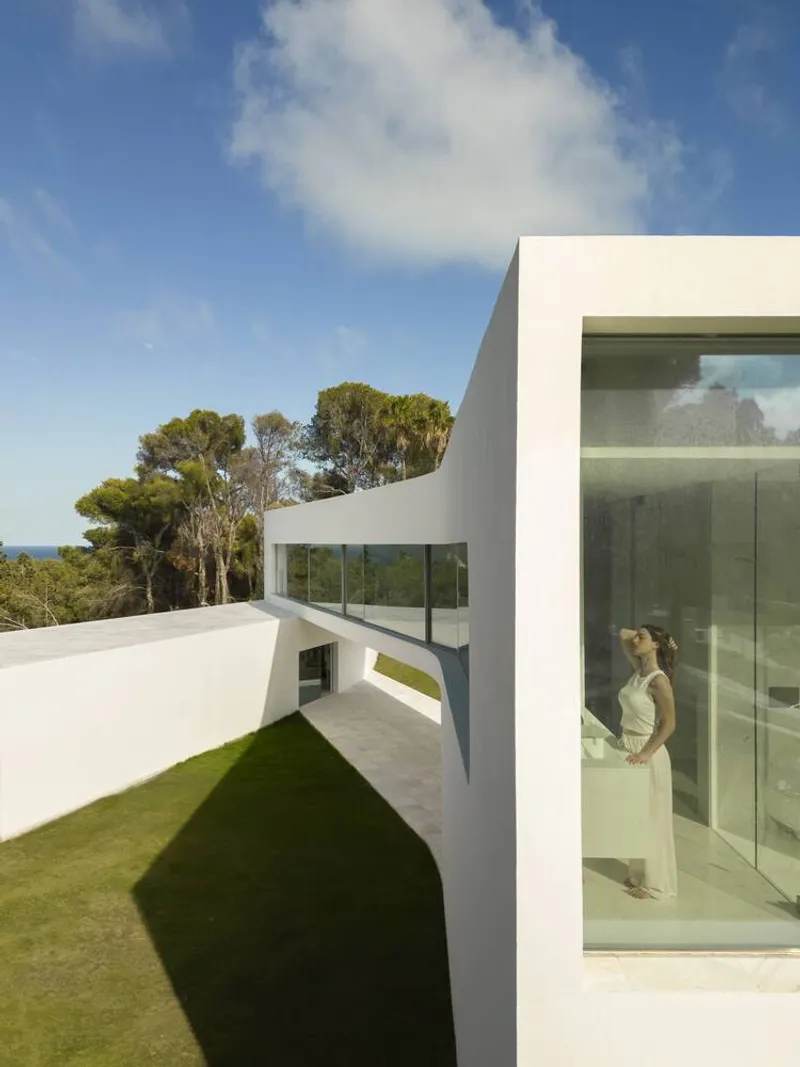
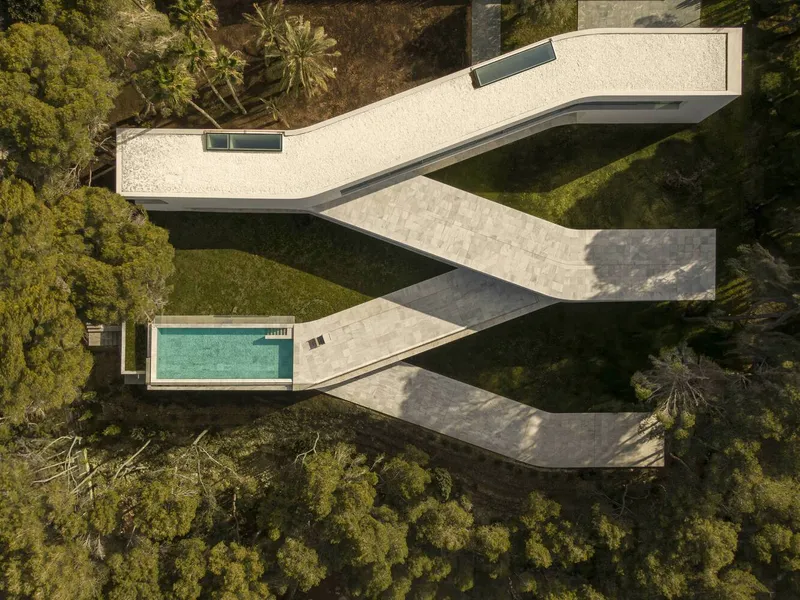
The ground floor accommodates a complete and autonomous domestic program. It is deliberately closed toward the southwest to control solar exposure and opens fully toward the sea, allowing daylight and views to shape the living spaces. Service areas on this level are illuminated by zenithal light, giving architectural identity to the circulation core and internal distribution while maintaining visual calm.
Below ground level, the lower floor houses auxiliary functions, technical facilities, a multifunctional space, and the pool basin. By placing these uses partially underground, the project minimizes visual impact while enhancing thermal performance and spatial clarity above.
Geometry, Light, and Minimalist Expression
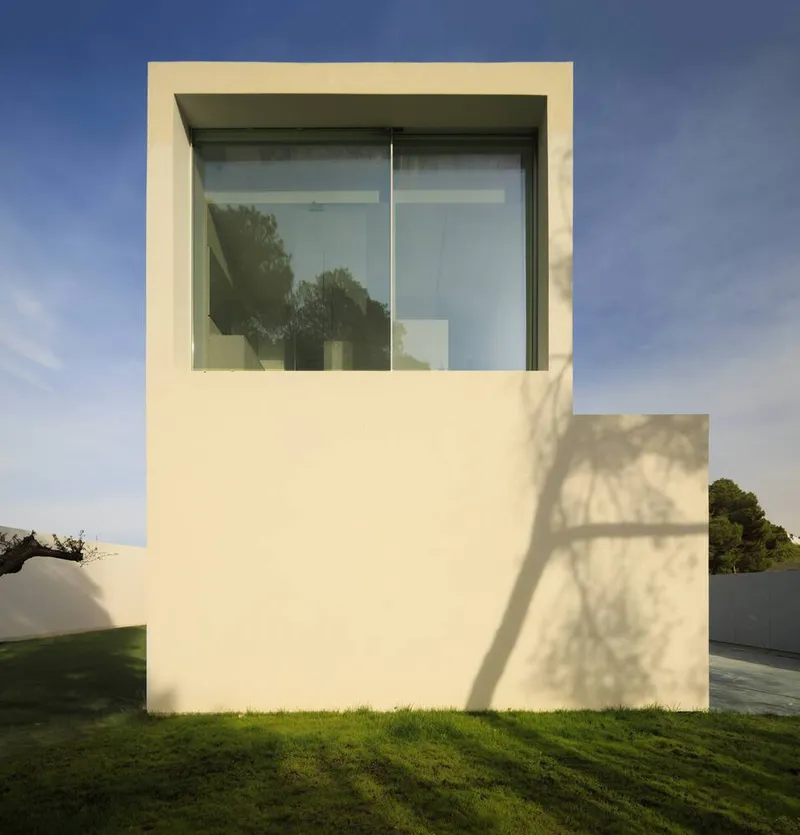
Sabater House is defined by a refined geometric language composed of straight lines softened by gentle curves. This balance between precision and fluidity allows the architecture to be simultaneously minimalist and organic. White surfaces, controlled openings, and carefully framed courtyards reinforce the sense of abstraction while intensifying the relationship with light, vegetation, and horizon.
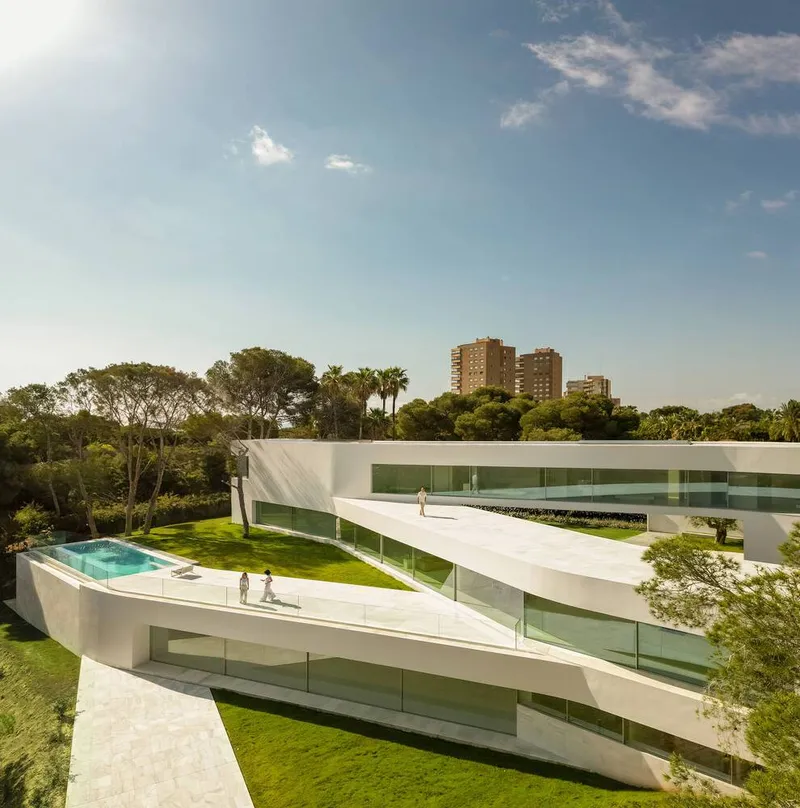
As architectural critic Philipp Jodidio notes, the project reveals an intriguing dichotomy. While the house appears as a white minimalist object, its layout and implantation integrate it deeply into its surroundings. Influences from Álvaro Siza’s modern sensibility and Andreu Alfaro’s sculptural forms are subtly present, helping the project achieve a rare equilibrium between geometry and landscape, discipline and emotion.
A Contemporary Mediterranean House
Sabater House exemplifies a contemporary approach to luxury residential architecture rooted in restraint, clarity, and contextual sensitivity. Through its terraced organization, courtyard system, and precise geometric articulation, the house transcends the notion of a singular volume and becomes an inhabitable landscape. It is an architecture designed not only to be seen, but to be experienced through movement, light, and constant dialogue with nature.
All photographs are works of
Fernando Guerra




Popular Articles
Popular articles from the community


Lunar Spiral: Space Architecture Shaped by the Mathematics of the Universe
Lunar Spiral reimagines space architecture through Fibonacci geometry, lunar regolith, levitating habitats, and self-sustaining Moon living.

Hill & Cross Opera: Sculptural Opera House Architecture Shaped by Tallinn’s Landscape and Identity
Hill & Cross Opera reimagines opera house architecture in Tallinn through its sculptural hill, civic plaza, glass wave and a luminous cross.

The Earth Pod: 3D Printed Homes for Resilient Refugee Communities
The Earth Pod reimagines refugee housing through 3D printed homes made from clay, combining resilience, self-sufficiency, and rapid shelter.

Co-life: Sustainable Architecture for Age-Friendly Community Living
Co-life reimagines sustainable architecture for seniors through courtyards, rammed earth, shared gardens, and spaces designed for belonging.


Similar Reads
You might also enjoy these articles

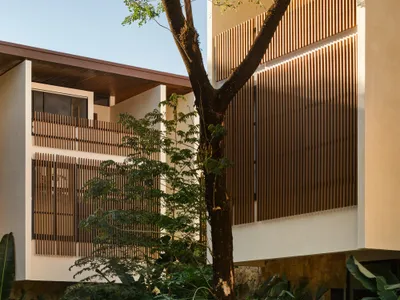
FAMM Arquitectura Organizes Ten Villas Around Courtyards and Jungle in Nosara, Costa Rica
El Molino pairs two elongated volumes with deep overhangs and timber louvers to build a compact coastal community five minutes from the beach.
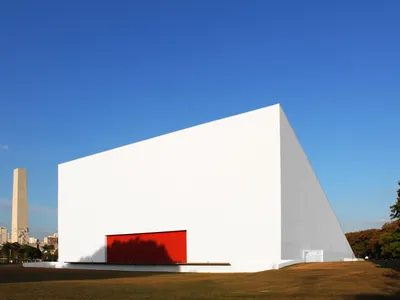
Oscar Niemeyer's Ibirapuera Park Pavilions Define São Paulo's Cultural Identity in Concrete and Curve
A constellation of modernist volumes set within São Paulo's most important urban park, conceived for the city's 400th anniversary in 1954.
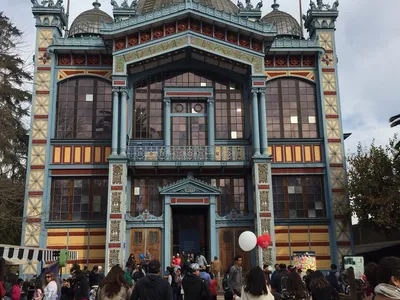
How Henri Picq's 1889 Paris Pavilion Traveled 11,000 Kilometers to Become Santiago's Artequín Museum
A prefabricated iron and glass pavilion built for the Paris Universal Exposition found a second life as a children's art museum in Chile.
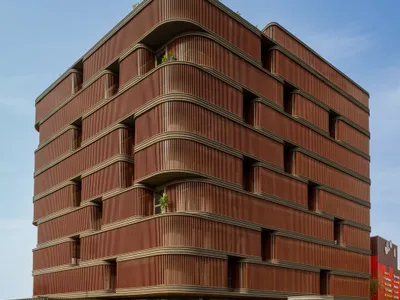
Sanjay Puri Architects Wraps a Jaipur Office Tower in Capsule-Shaped Green Buffers
A nine-level climate-responsive workplace near Jaipur Airport uses stacked planter terraces and aluminium screens to fight 40°C heat.


Explore Architecture Competitions
Discover active competitions in this discipline



Challenge to reimagine the Iron Throne


Photograph architecture without architects


Illustrate the lost glory of Angkor Wat - Render Challenge


Design challenge to reuse E-waste
Comments (0)
Please login or sign up to add comments
No comments yet. Be the first to comment!