
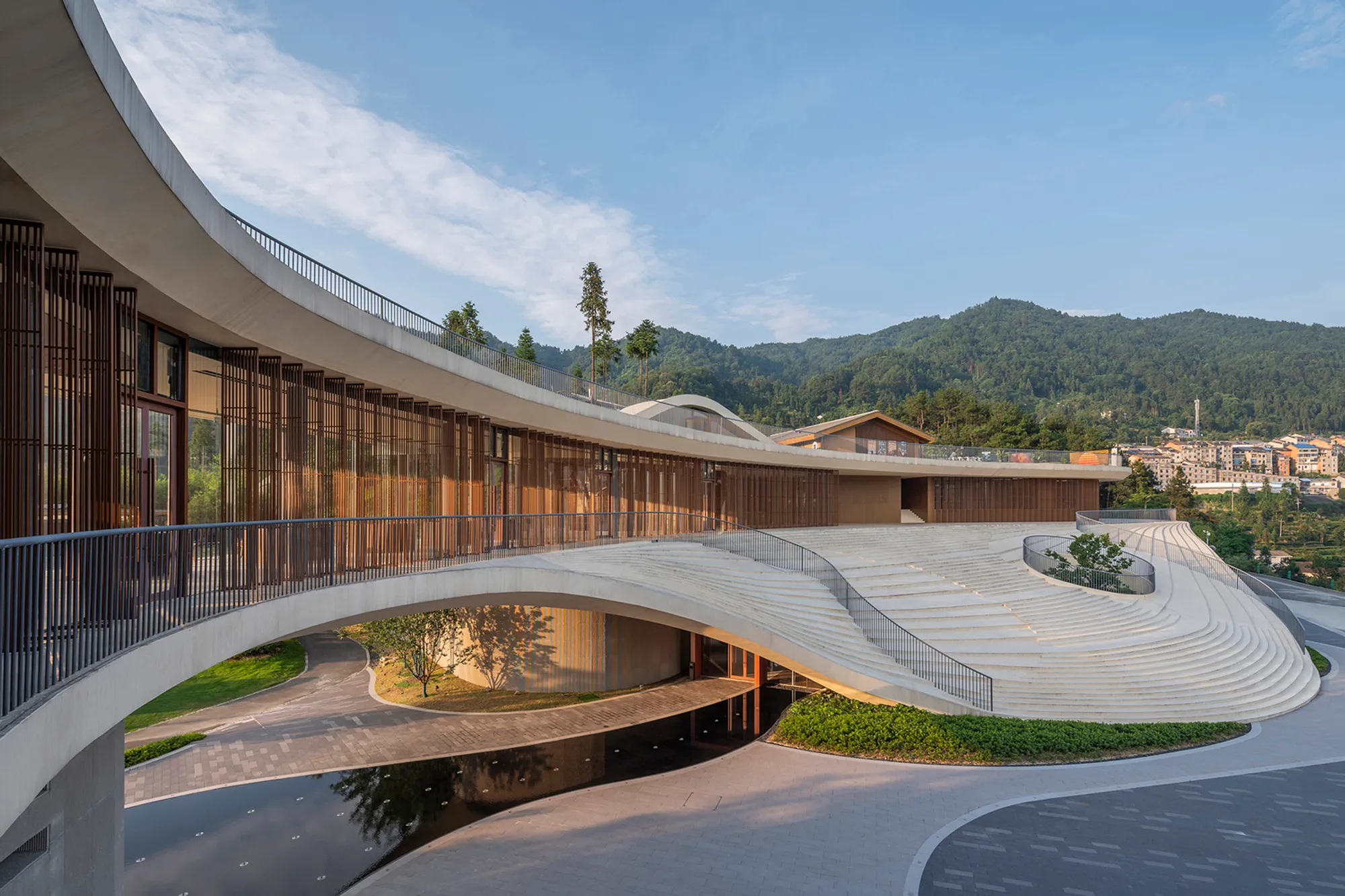
Sanxia Tea Town Exhibition Center by ARCHSTUDIO: A Harmonious Dialogue Between Architecture and Tea Landscapes
Sanxia Tea Town Exhibition Center by ARCHSTUDIO blends architecture with tea gardens, featuring hybrid spaces, natural views, and cultural experiences.


A Gateway to Tea Culture and Ecological Tourism
Nestled amid the lush tea fields of Dengcun Town, Yichang City, the Sanxia Tea Town Exhibition Center, designed by ARCHSTUDIO, stands as a cultural and architectural landmark within a thriving eco-tourism hub. Located just 19 kilometers from the iconic Three Gorges Dam, this project is part of a broader masterplan to create a sustainable resort town at the heart of the Yangtze River’s ecological zone. The exhibition center not only functions as a hospitality and cultural facility but also serves as a vibrant window into the traditions, aesthetics, and future of tea valley culture.
With a total floor area nearing 5,000 square meters, the center integrates multifunctional spaces for tourist reception, dining, cultural exhibitions, creative retail, coworking, and performing arts, positioning itself as a central hub in the early development phase of the Sanxia Tea Town.
Landscape Integration: Architecture in Dialogue with Nature
ARCHSTUDIO embraced the challenge of situating the building within a limited and fragmented area of the tea garden, distributing its forms organically across two distinct plots—Plot A and Plot B. This strategic division allowed the architecture to seamlessly weave into the terrain, echoing the undulating rhythm of the surrounding hills and preserving the integrity of the local landscape.
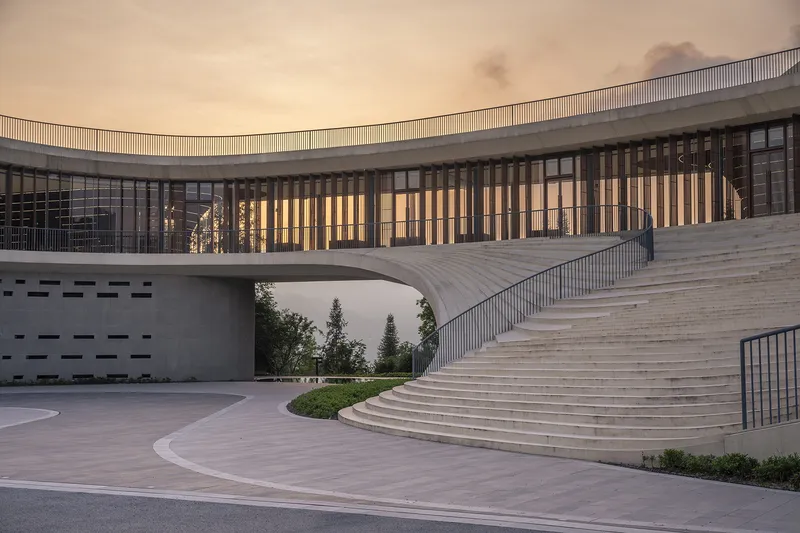
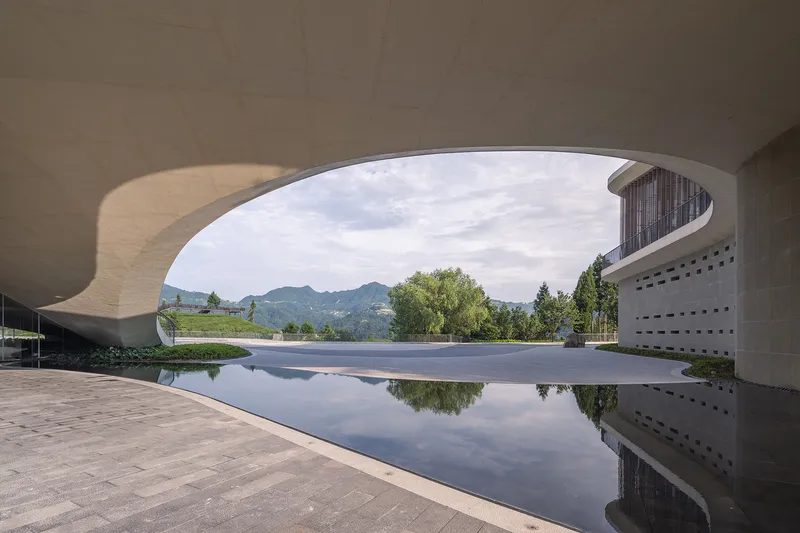
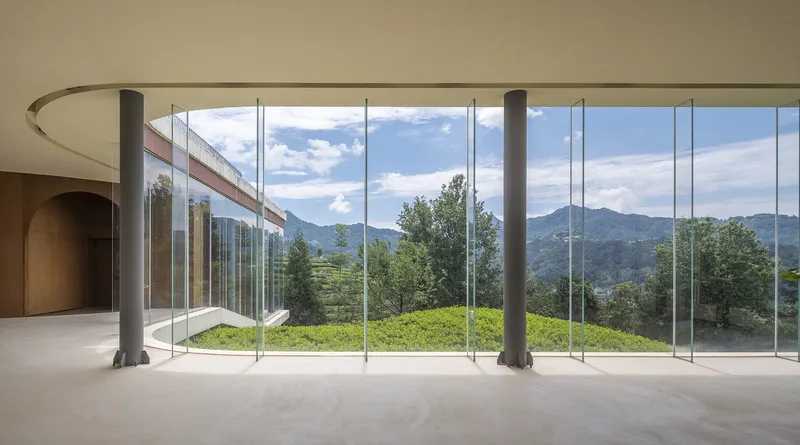
Plot A, a relatively flat area embraced by two modest hills, forms the primary site. One of its key design highlights is a "bridge"-like structure that spans between these hills, creating a floating architectural experience that both celebrates and preserves the precious open space below. The curvilinear southern side frames panoramic views of the tea terraces and distant mountains, while the northern side is angular and introverted, tucking itself subtly into the hillside.
Beneath this architectural bridge lies a gathering square that becomes a vibrant social and cultural anchor for the town, hosting tourists, performances, and community activities.
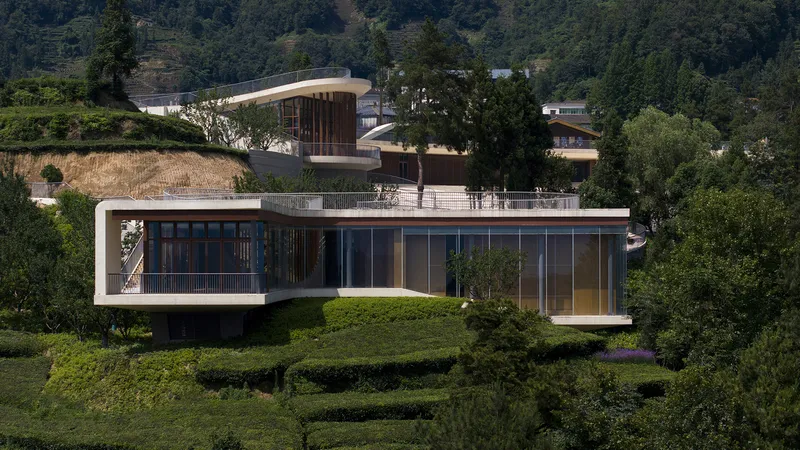
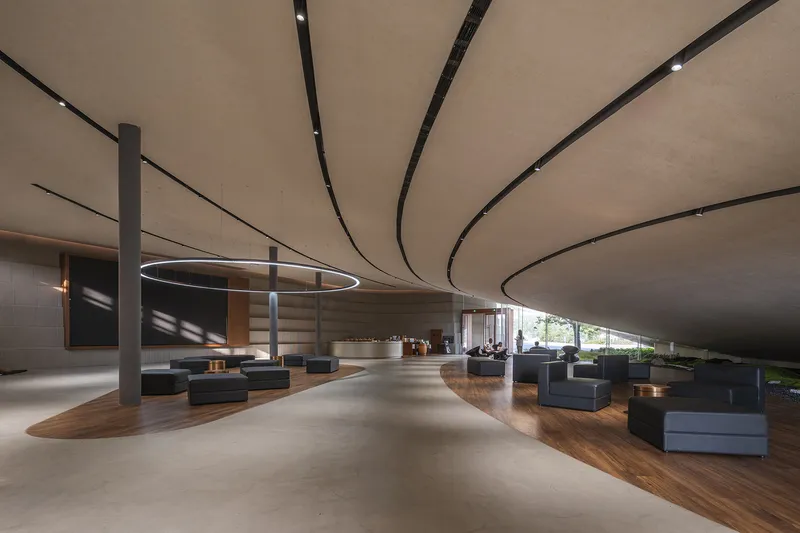
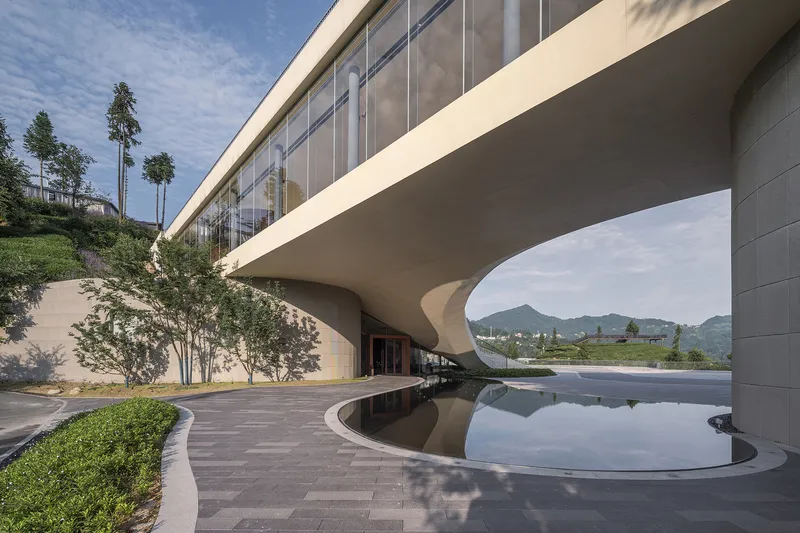
Scenic Framing and Public Interaction
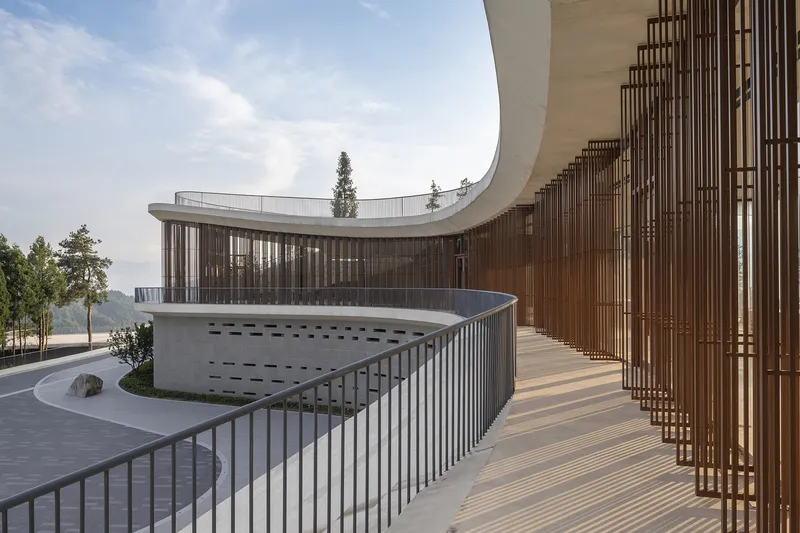
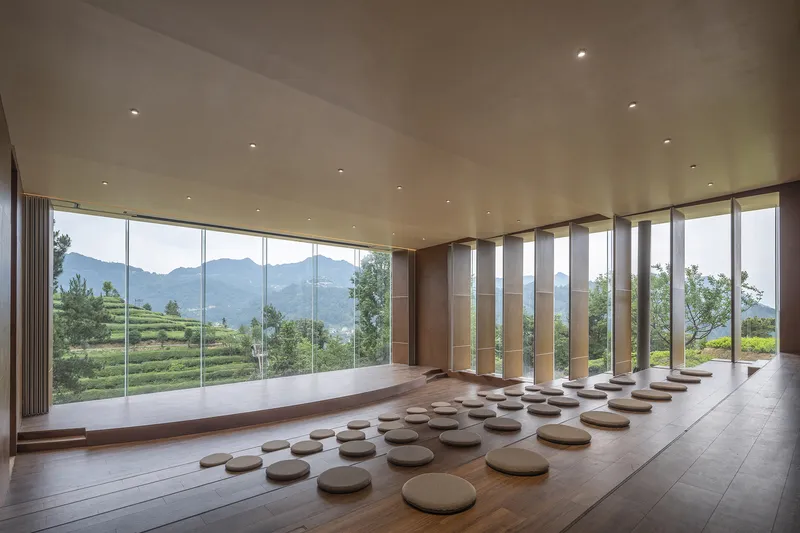
Plot B, situated at a turning point in the road, was conceived as a scenic viewpoint. ARCHSTUDIO introduced two large “viewing windows” that frame both nearby tea fields and distant mountain vistas. These architectural apertures form a tranquil, branch-like pavilion that doubles as a small outdoor performance space, topped by a public terrace accessible from the main road. This design not only maximizes the site's natural elevation changes but enhances visual engagement with the landscape.
Circulatory Experience: Walking Through Architecture
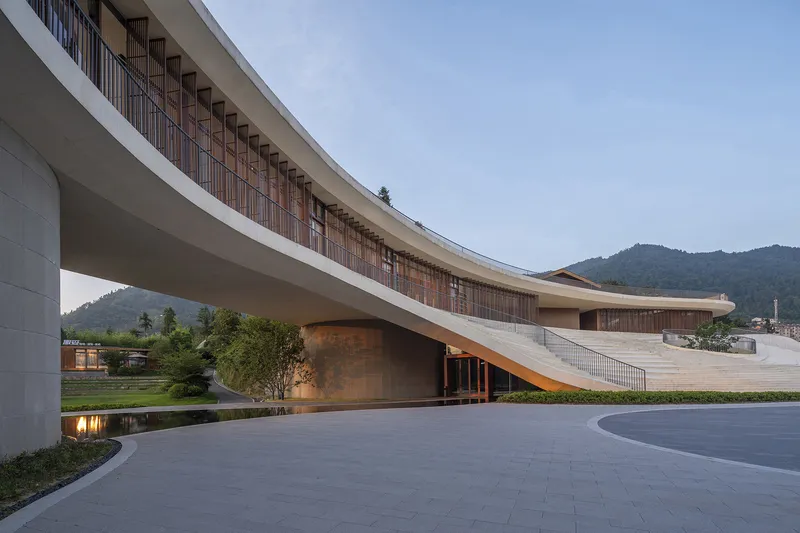
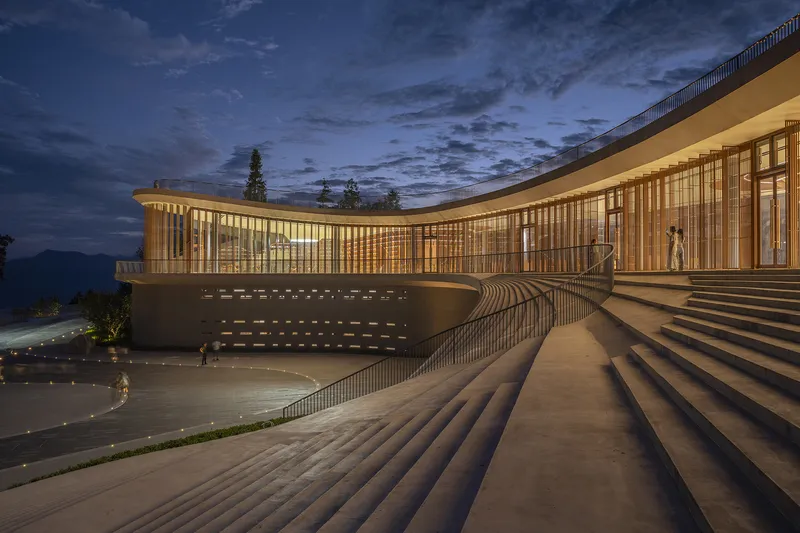
One of the most striking features of the design is the looping circulation path that allows visitors to wander seamlessly through and around the building, echoing the flow of a Mobius strip. Transparent facades, varied entry points, and stepped terraces encourage exploration from all angles and elevations.
The outdoor steps mimic the layering of tea fields and function as both seating and stage. They lead upward to the second floor, home to leisure and hospitality spaces, while acting as a natural amphitheater for events held in the plaza below.
Cultural and Functional Complexity
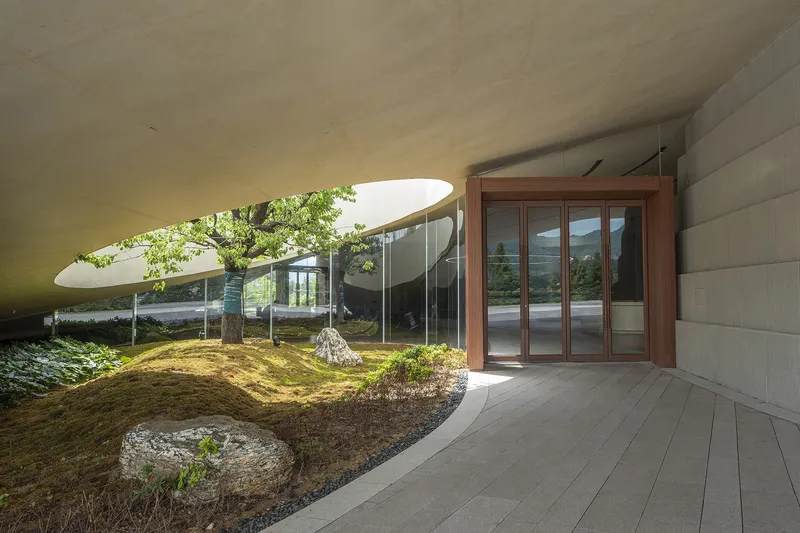
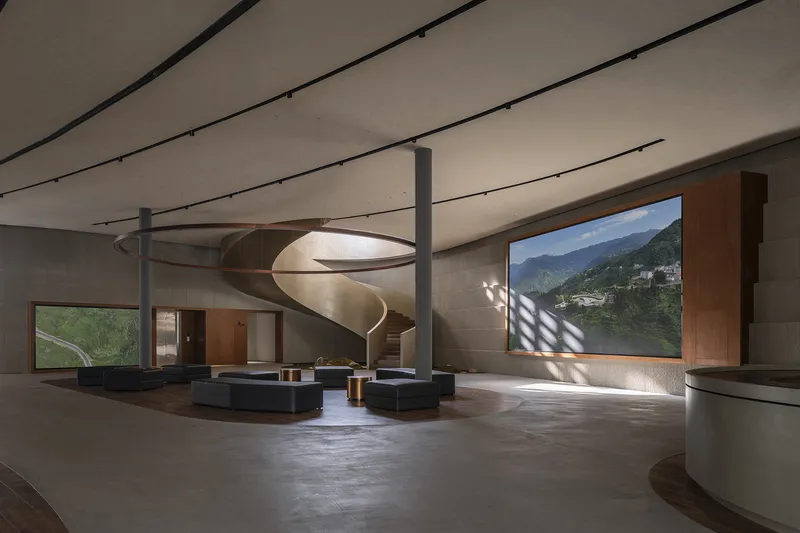
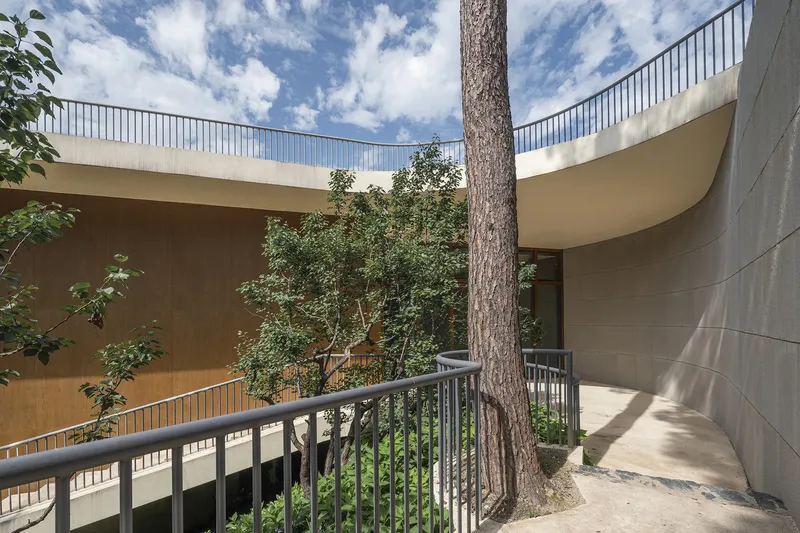
The first floor of Plot A accommodates a tourist reception center and a coworking area, housed beneath the sculptural form of the outdoor steps. The interior maintains the fluidity of the architectural form, with island-style arrangements of spaces and a central tea tree courtyard that guides visitors into the building.
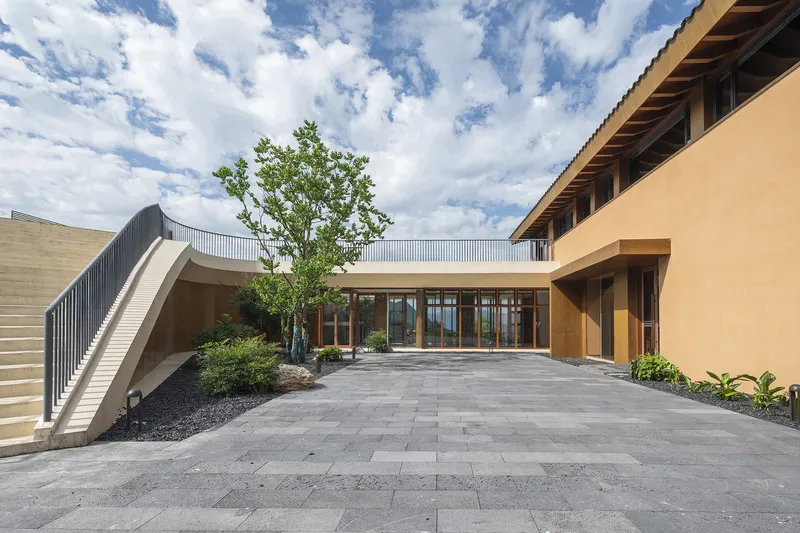
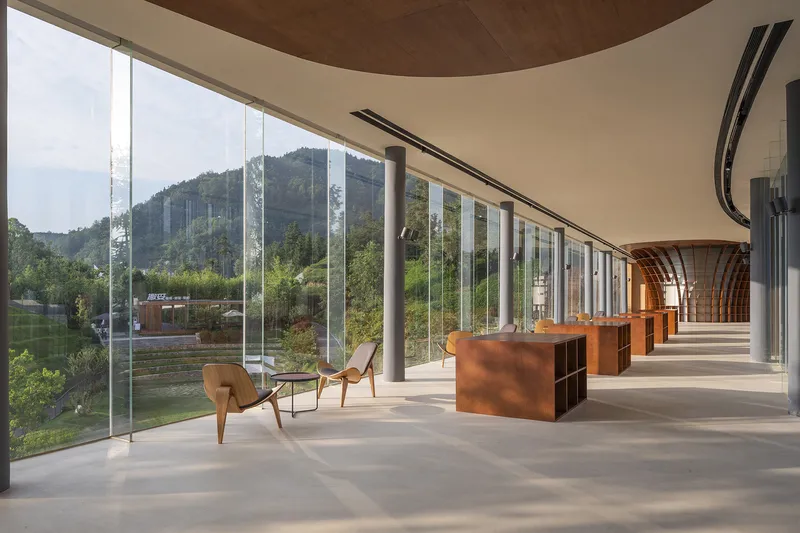
Above, the second floor forms the heart of social life, featuring a café and book bar outfitted with curved laminated bamboo bookshelves inspired by terraced tea fields. The adjacent renovated traditional house, constructed with local materials like timber and rammed earth, serves as a restaurant, tea room, and event venue. Its adaptive reuse bridges heritage with contemporary hospitality, providing spaces for private dining, tea ceremonies, and chess games. The rooftop terrace offers a spectacular 360-degree view, ideal for stargazing, camping, or private gatherings.
Performance, Projection, and Multi-functionality
In Plot B, the building hosts an audio-visual hall that can seat up to 100 people, equipped with a motorized screen panel system for flexible configuration. This hall doubles as a performance venue and exhibition space, with the ability to transform from a darkened theater to an open-air stage framed by the tea garden, depending on the position of the retractable panels.
This level of flexibility underlines ARCHSTUDIO’s commitment to hybrid functionality—allowing the building to respond to a wide variety of uses, from film screenings to wedding ceremonies, with architectural grace.
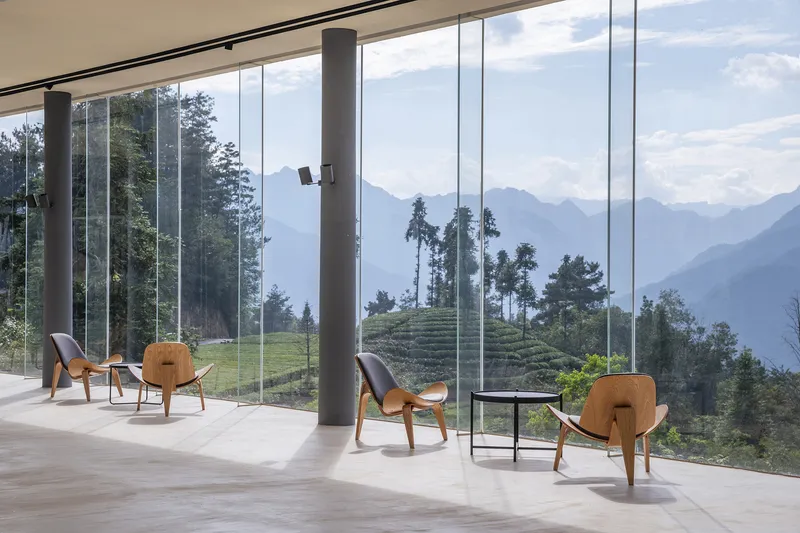
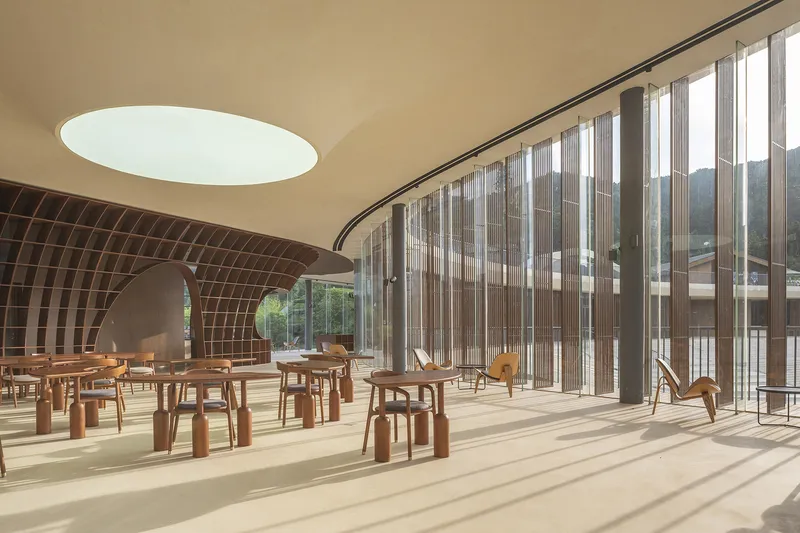
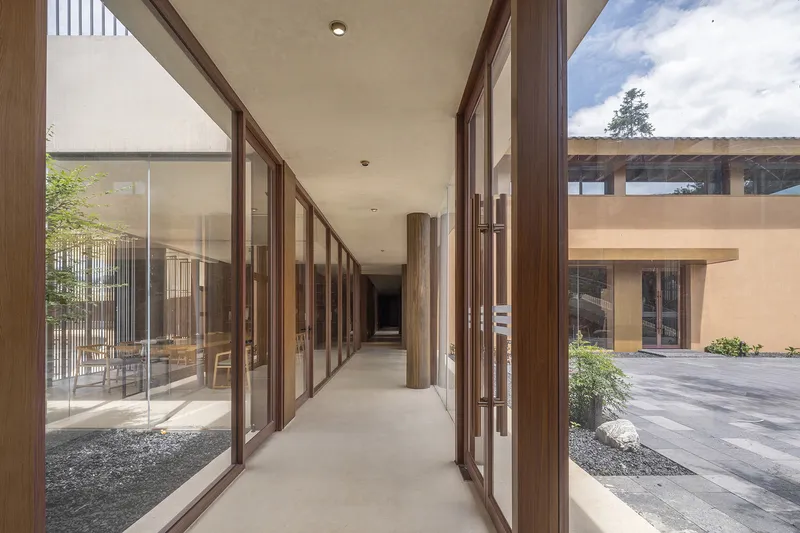
All Photographs are works of Weiqi Jin




Popular Articles
Popular articles from the community


Co-life: Sustainable Architecture for Age-Friendly Community Living
Co-life reimagines sustainable architecture for seniors through courtyards, rammed earth, shared gardens, and spaces designed for belonging.

The Ocean Hive: Sustainable Architecture for a Self-Sufficient Civilization at Sea
The Ocean Hive imagines sustainable architecture at sea, where modular habitats, algae, wave power and ocean waste sustain a growing colony.

Riyadh For All: Intergenerational Urban Design for Active Aging in Rabat
Riyadh For All reimagines urban design in Rabat with intergenerational co-living, adaptive courtyards, and Moroccan cultural exchange today.

Lunar Spiral: Space Architecture Shaped by the Mathematics of the Universe
Lunar Spiral reimagines space architecture through Fibonacci geometry, lunar regolith, levitating habitats, and self-sustaining Moon living.


Similar Reads
You might also enjoy these articles


Hodi-Mandai Geram
Project Function: Preservation and revitalization of the Intangible heritage and socio-spatial identity of the Hodi by Housing, Cultural Memory Center, Sacred Grove, landscape, local tourism economy


Olio Towers: A Mid-Rise for Performers That Fuses Housing, Rehearsal, and Stage
Located blocks from Houston's Theater District, this modular tower stacks living units around a central performance atrium.

Oasis: Modular Green Housing Carved into Dhaka's Urban Fabric
A shortlisted Plugin Housing entry reclaims unauthorized settlements in Dhaka with stepped concrete volumes, green roofs, and ventilation-driven design.

Black Hole: A Floating Megastructure for the Post-Physical Era
Emiliano Mazzarotto envisions a spherical, self-scaling arena where e-sports, digital hotels, and holographic stadiums replace traditional public space.

Explore Landscape Design Competitions
Discover active competitions in this discipline



Challenge to reimagine the Iron Throne


Photograph architecture without architects


Illustrate the lost glory of Angkor Wat - Render Challenge


Design challenge to reuse E-waste
Comments (0)
Please login or sign up to add comments
No comments yet. Be the first to comment!