
School of Thought: Reimagining Student-Centered School Architecture
A student-centered school architecture that blends open learning, social interaction, and nature to shape a holistic and engaging educational environment.


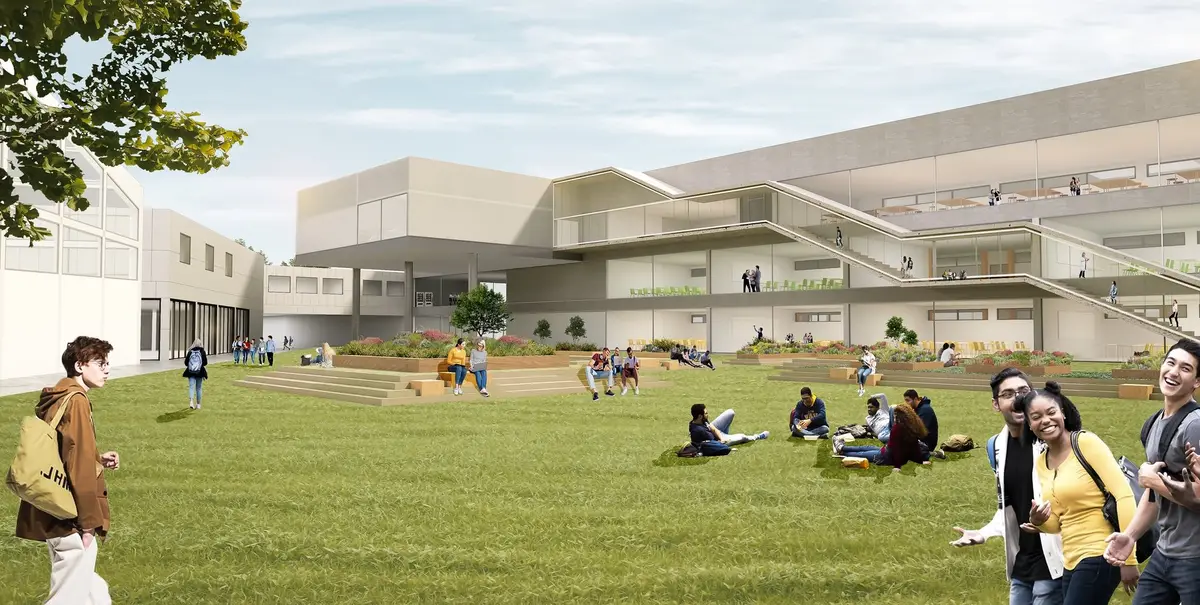
The project School of Thought explores a progressive approach to student-centered school architecture, where spatial design becomes an active participant in shaping learning experiences. Designed by Elly Yang andSijing Liu, this shortlisted entry of School Of Thought 2020 redefines how educational environments can support emotional, social, and intellectual development through architecture.
At its core, the project challenges conventional school typologies by shifting the focus from rigid classroom structures to a fluid, experience-driven environment. The design recognizes that learning extends beyond formal instruction and integrates spaces for interaction, relaxation, creativity, and exploration.
Designing for Emotional and Spatial Experience
A defining aspect of this student-centered school architecture is its emphasis on emotional well-being. The spatial composition carefully considers circulation, materiality, color palettes, and natural lighting to influence how students feel and engage within the environment.
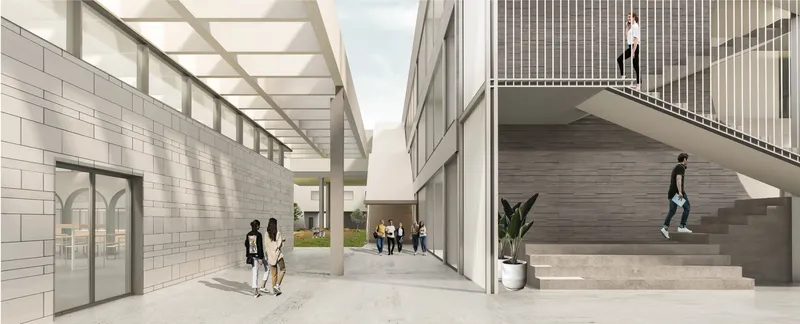
Open corridors, interconnected levels, and transparent boundaries create a sense of visual continuity and openness. These elements reduce stress, enhance concentration, and promote a sense of belonging among students.
Natural light plays a critical role in shaping the spatial atmosphere. Large openings and semi-open courtyards allow daylight to penetrate deep into the building, creating dynamic lighting conditions that evolve throughout the day. This integration of natural elements supports both mental well-being and environmental awareness.
Programmatic Diversity and Flexibility
The project introduces a layered programmatic strategy that supports multiple modes of learning. Instead of isolating functions, the design integrates academic, social, and recreational spaces into a cohesive system.
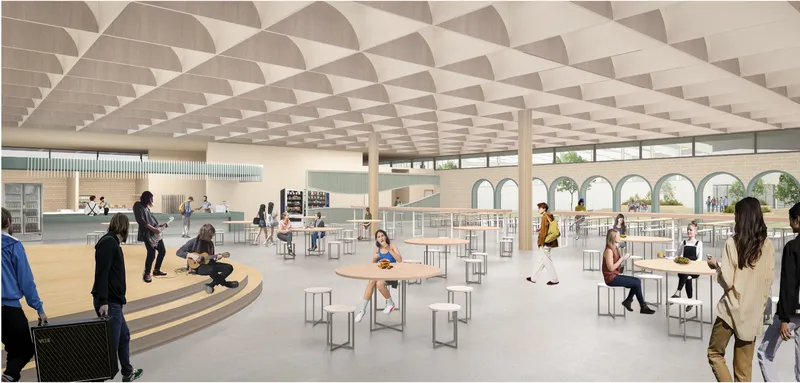
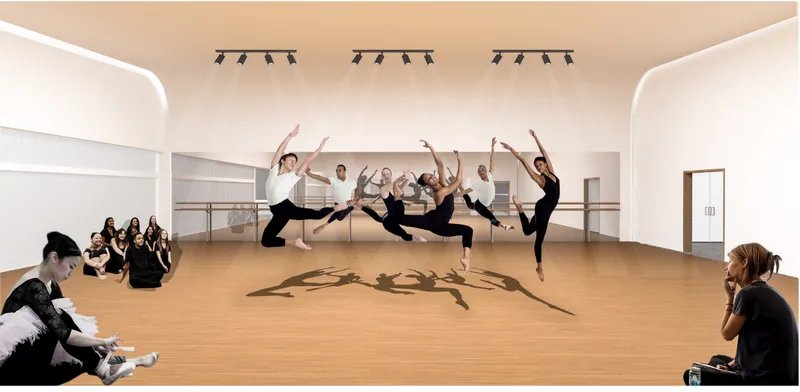
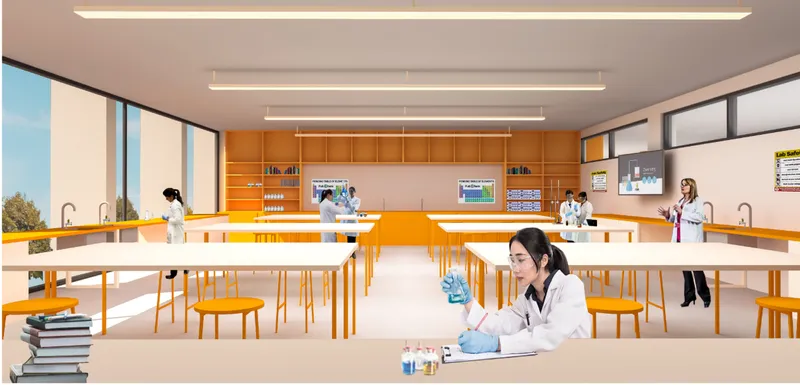
Key programmatic components include classrooms, laboratories, a library, workshop areas, a gym, a lecture theatre, and a cafe. These are complemented by semi-public and open spaces such as atriums, courtyards, and informal study corners.
This diversity allows students to shift seamlessly between focused learning and collaborative engagement. The architecture encourages self-directed exploration, enabling users to choose environments that suit their learning preferences.
Open Plan and Visual Connectivity
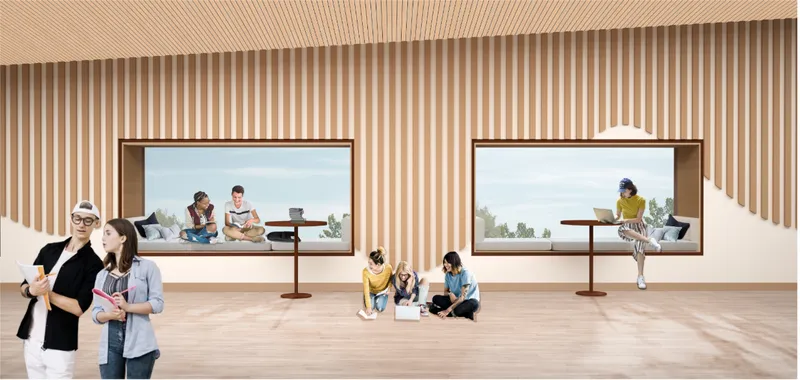
A significant departure from traditional school design is the adoption of an open plan layout. Classrooms are no longer isolated units but are integrated with shared spaces that encourage interaction and dialogue.
Visual connectivity is reinforced through transparent facades, overlooking platforms, and layered spatial relationships. For example, students can visually connect across different levels, observe activities in adjacent spaces, and engage with a broader learning ecosystem.
This approach fosters a sense of community and shared learning, where education becomes a collective experience rather than an individual task.
Integration of Public and Semi-Public Spaces
The project extends beyond a closed institutional model by incorporating public and semi-public zones. These areas serve as interfaces between the school and the larger community, allowing for interaction, cultural exchange, and social engagement.
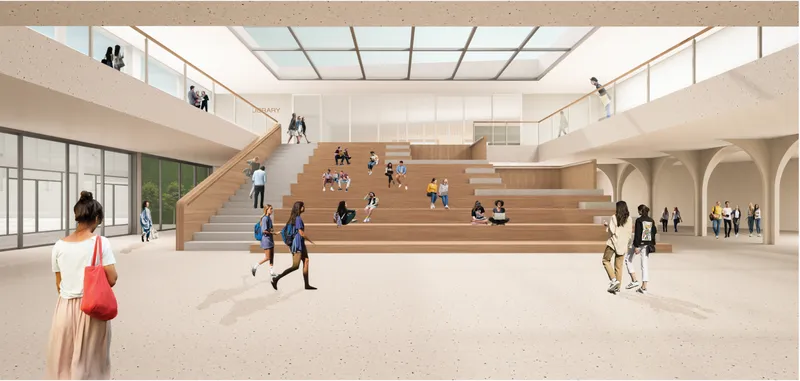
Spaces such as the outdoor courtyard, atrium, and library study corner function as flexible environments that support both individual and group activities. These zones blur the boundaries between learning and living, reinforcing the idea that education is an ongoing, holistic process.
Architectural Language and Material Strategy
The architectural expression is grounded in simplicity and universality. The use of materials such as concrete, stone, and timber creates a neutral yet warm environment that adapts to diverse contexts.
The facade system employs light framing and repetitive elements to maintain visual coherence while allowing flexibility in spatial organization. This restrained material palette ensures durability while enhancing the sensory quality of spaces.
Interior environments further reinforce this approach through soft textures, warm tones, and human-scaled proportions. Together, these elements create a balanced atmosphere that supports both focus and comfort.
Spatial Innovation and Hybrid Learning Environments
The project introduces hybrid spatial typologies that merge traditional functions with new forms of engagement. For instance, the cafe incorporates a performance stage, transforming it into a social and cultural hub. Classrooms are integrated with lounge areas to support informal discussions and relaxation.
Similarly, visual connections between the gym and academic spaces encourage cross-program interaction, breaking down functional silos. These hybrid environments reflect contemporary educational needs, where learning is dynamic, collaborative, and multidisciplinary.
Landscape and Environmental Integration
The integration of green and open spaces is central to the design. Landscaped courtyards, stepped seating areas, and outdoor gathering zones provide opportunities for informal learning and social interaction.
These spaces also allow students and teachers to experience seasonal changes, reinforcing a connection with nature. This relationship enhances environmental awareness and contributes to a healthier learning environment.
The outdoor areas are not treated as secondary spaces but as integral components of the educational framework. They extend the learning environment beyond the built form and support a more holistic approach to education.
Rethinking the Future of School Architecture
School of Thought positions itself as a forward-looking model of student-centered school architecture. By prioritizing flexibility, openness, and emotional engagement, the project redefines how educational spaces can function in contemporary contexts.
It demonstrates that architecture can actively shape behavior, influence learning outcomes, and foster a sense of community. Through its integration of diverse programs, open spatial systems, and environmental responsiveness, the project offers a compelling vision for the future of educational design.
Ultimately, this proposal moves beyond the idea of a school as a static institution and reimagines it as a dynamic, evolving ecosystem where learning, interaction, and experience coexist seamlessly.


Popular Articles
Popular articles from the community


Opera on the Sea: Driftwood Logic Shapes a Timber Opera House on Estonia's Coast
Trevor Orgill's opera house translates the entangled drift of floating timber into a civic building where wood, water, and music converge.
Opera by the Sea Estonia: Three Shells Dissolving Architecture into Tallinn's Coastline
A winning opera house proposal replaces monumental form with interconnected shells that blur the boundary between building, park and Baltic Sea.

Singing Woman: Contemporary Architecture Inspired by Estonia’s Voice and the Sea
Singing Woman turns Estonia’s song culture into flowing opera house architecture, blending public life, landscape, sea, and national memory.

Tsunami Convergenics: Turning Catastrophic Ocean Forces into Underwater Housing Infrastructure
A speculative underwater settlement off the coast of Onagawa, Japan, treats tsunamis and typhoons as energy sources rather than threats.

Similar Reads
You might also enjoy these articles

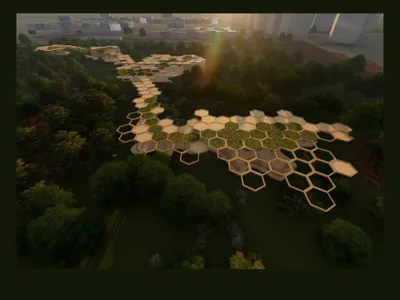
Eco Chapel: A Green Architecture Pavilion Designed in Symbiosis with the Forest
Eco Chapel uses green architecture to weave prayer, learning and reuse into a forest pavilion shaped by modular hexagonal canopies for life.
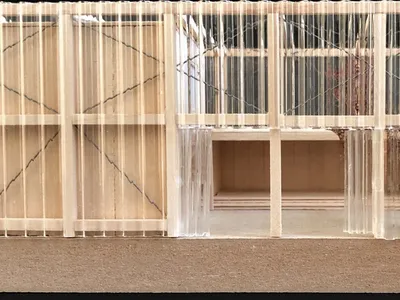
Kaffeebühnen: Coffee Shop Architecture Designed as a Civic Stage Between Vienna’s City and Park
Kaffeebühnen turns coffee shop architecture into a civic stage, linking Vienna’s park edge, urban life, warm timber yards, and coffee craft.
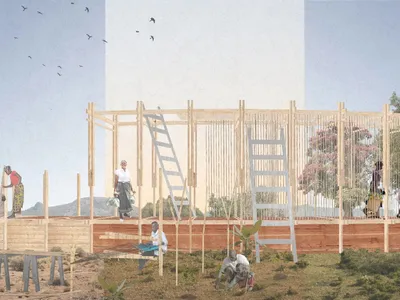
Healing Façade: Sustainable Architecture for Reforestation, Community, and Sacred Ecology in Ethiopia
Healing Façade reimagines sustainable architecture as a living wall that restores soil, catches water and renews Ethiopia's forest churches.


Urban Forest: A Vertical Ecosystem for 5,000 Workers in Singapore's Changi Business Park
Radially stacked pods and layered green decks turn a 7-acre plot into 47 acres of ecological workspace projected for 2040.

Explore Mes School Of Architecture Competitions
Discover active competitions in this discipline

Challenge to design public laboratory

Challenge to design luxury tourism on rails

Challenge to reimagine the Iron Throne

Photograph architecture without architects
Comments (0)
Please login or sign up to add comments
No comments yet. Be the first to comment!