
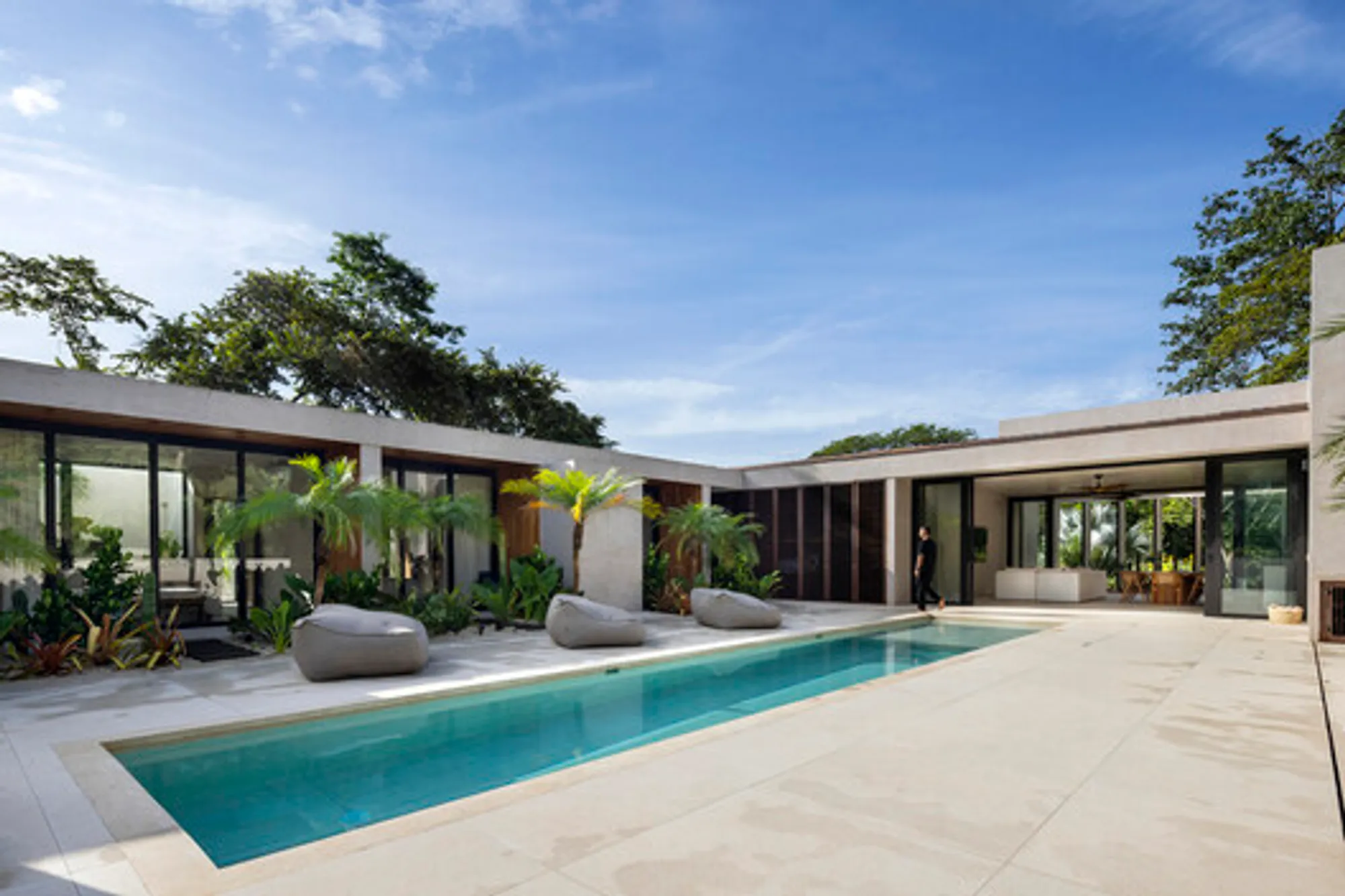
Six Courtyards House by VOID, Guanacaste, Costa Rica
A tropical courtyard house blending art, nature, and climate-responsive design through six patios, creating fluid indoor-outdoor living in Costa Rica.


Located in Guanacaste, Costa Rica, the Six Courtyards House by VOID is a refined exploration of tropical living, where architecture dissolves into nature through a sequence of spatial voids. Designed for an art collector, the 400 m² residence operates simultaneously as a home and a livable gallery, merging environmental responsiveness with expressive interior design.
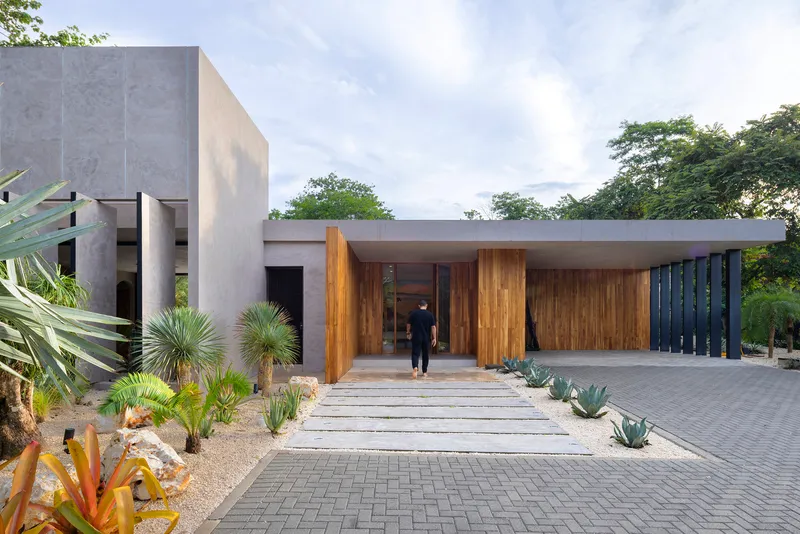
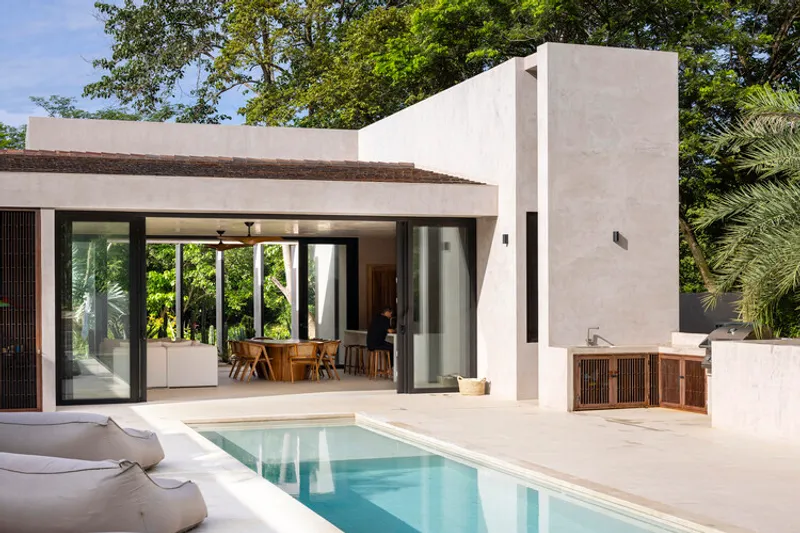
The project is structured around six courtyards, which function as the organizing principle of the house. Rather than treating patios as secondary outdoor elements, VOID elevates them to the role of spatial generators. These voids introduce natural light, enable cross ventilation, and embed vegetation into every part of the dwelling. As a result, the boundaries between interior and exterior are continuously blurred, creating a fluid and immersive living environment.
At the center of the composition lies the main courtyard, anchored by a pool. This space acts as the social heart of the house, where the architecture opens completely, encouraging gathering, relaxation, and interaction. Surrounding rooms orient themselves toward this central void, reinforcing a sense of cohesion while maintaining visual and climatic connectivity.
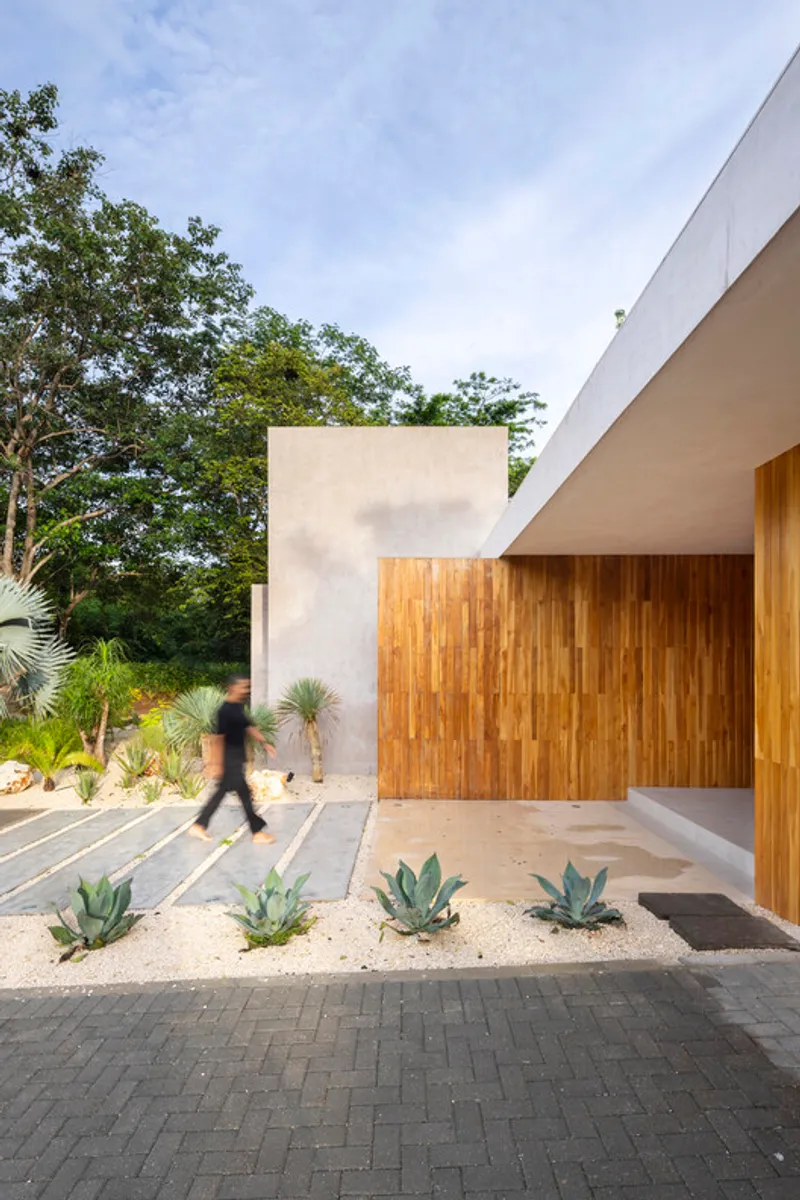
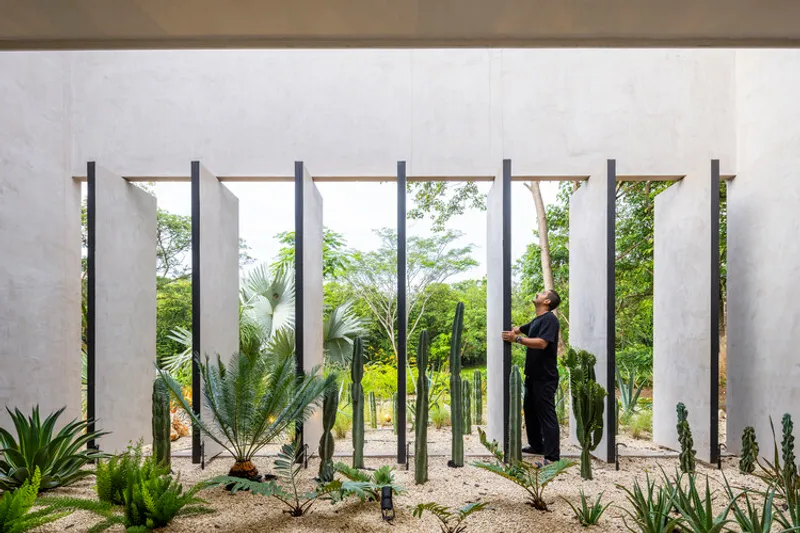
The house’s façade incorporates a system of pivoting panels that allows the building to adapt dynamically to its tropical climate. When opened, these panels maximize airflow and natural ventilation, reducing the need for mechanical cooling. This responsive envelope transforms the façade into an active environmental filter, mediating light, air, and privacy throughout the day.
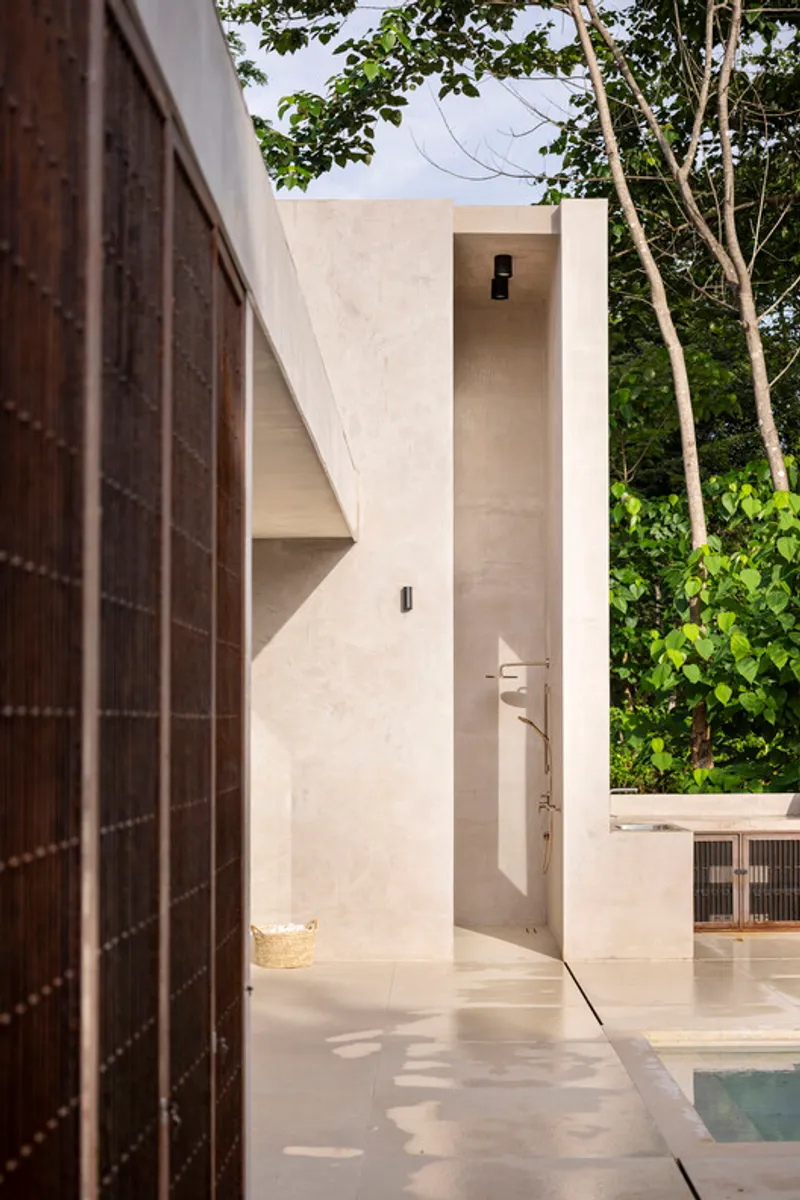
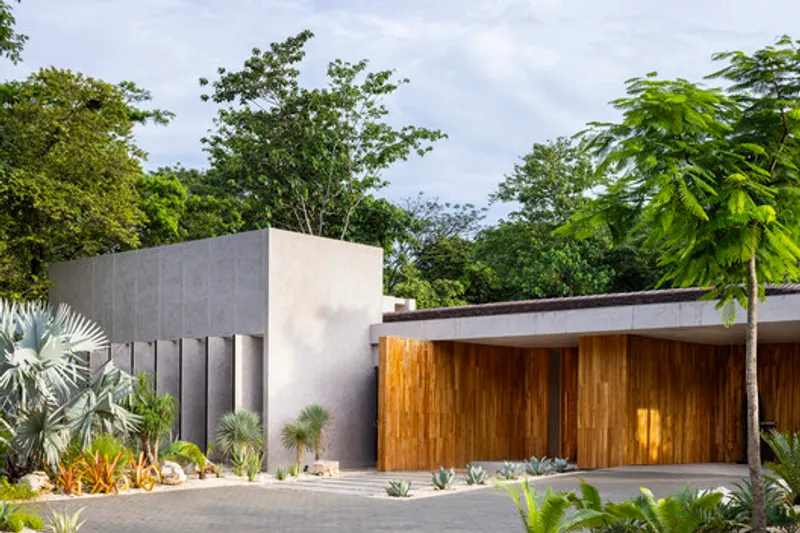
Materiality is intentionally restrained yet tactile. Exposed concrete provides thermal mass and structural clarity, while local wood introduces warmth and a connection to regional craftsmanship. Glass and metal elements further enhance transparency and openness, allowing light to penetrate deep into the interiors. Together, these materials create a balanced palette that is both robust and sensitive to its surroundings.
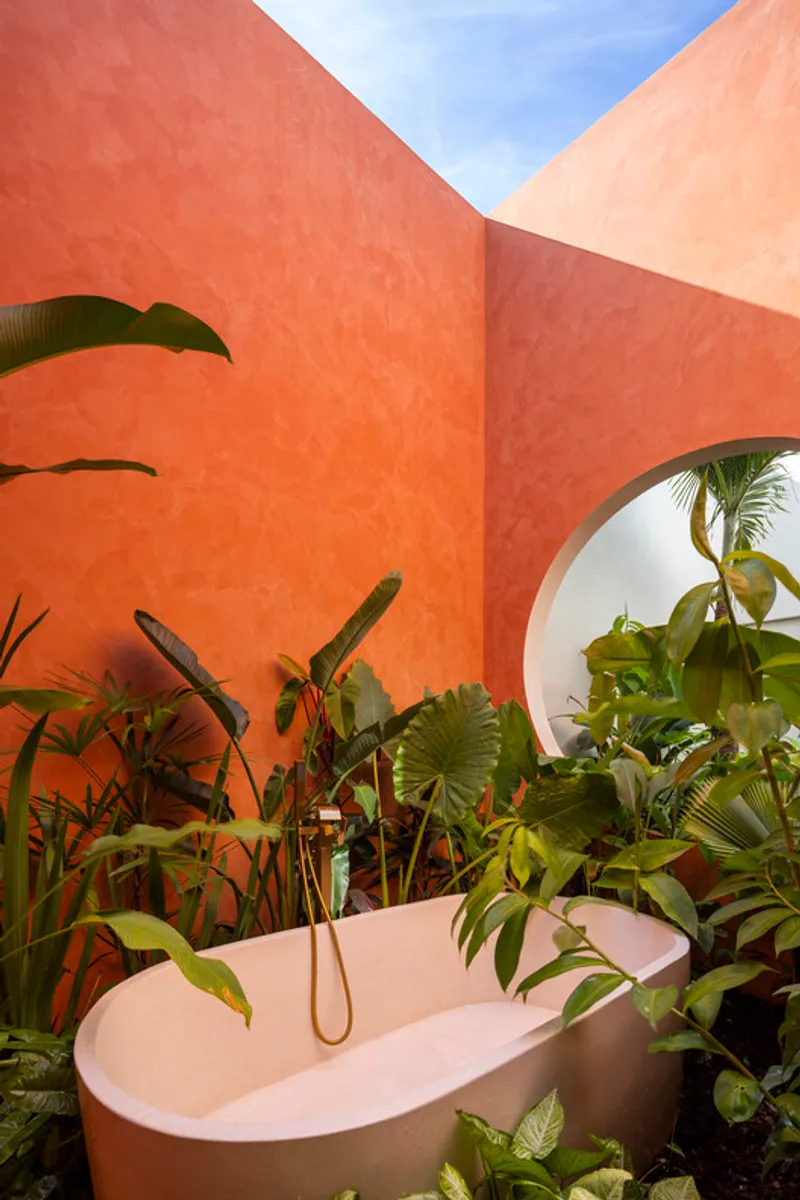
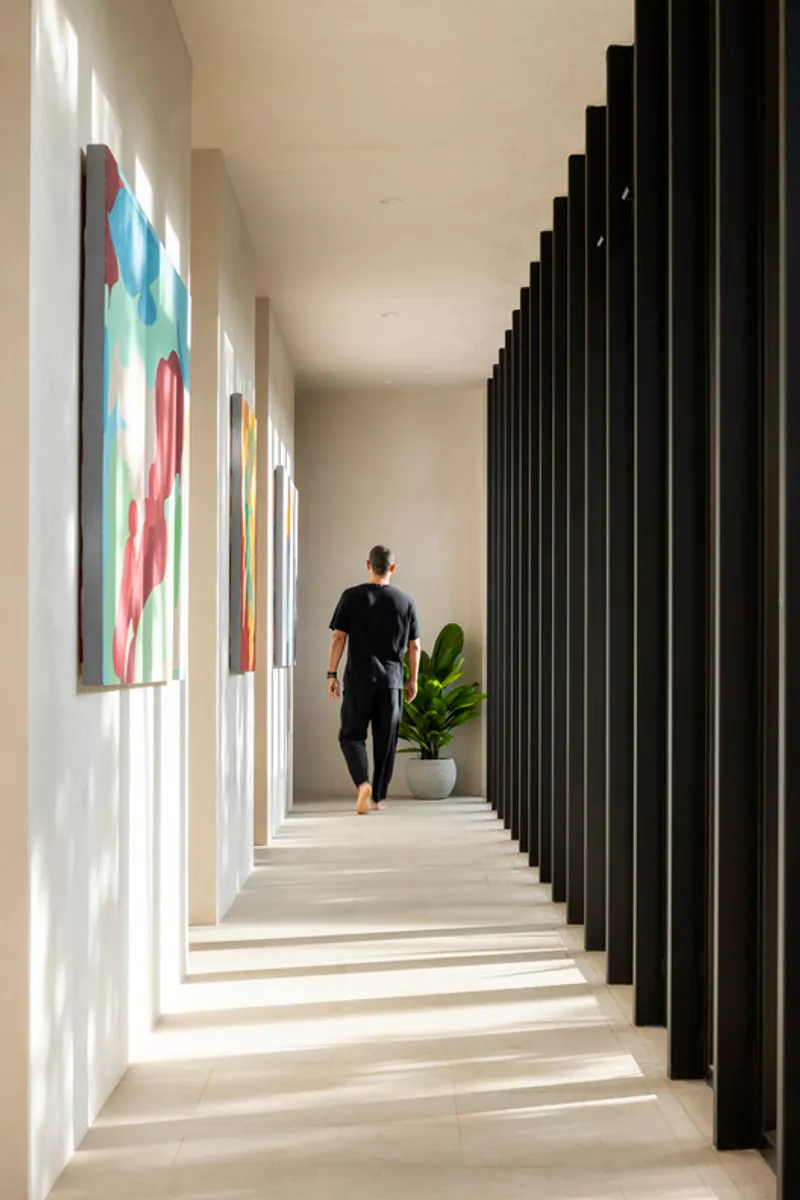
A distinctive feature of the project is its approach to color and art. Conceived as a domestic gallery, the house integrates artworks into everyday life, transforming circulation spaces and rooms into curated environments. Color is used boldly and strategically, not only in living areas but also in unexpected spaces such as bathrooms, adding layers of identity and sensory richness to the architecture.
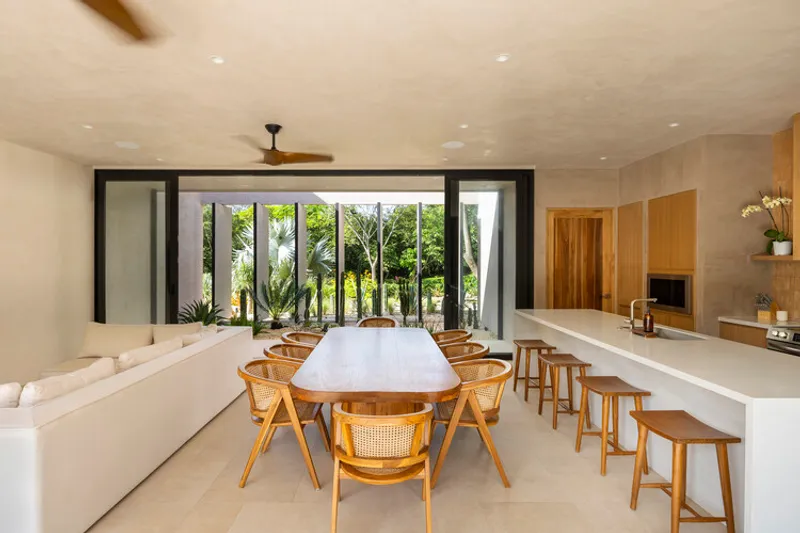
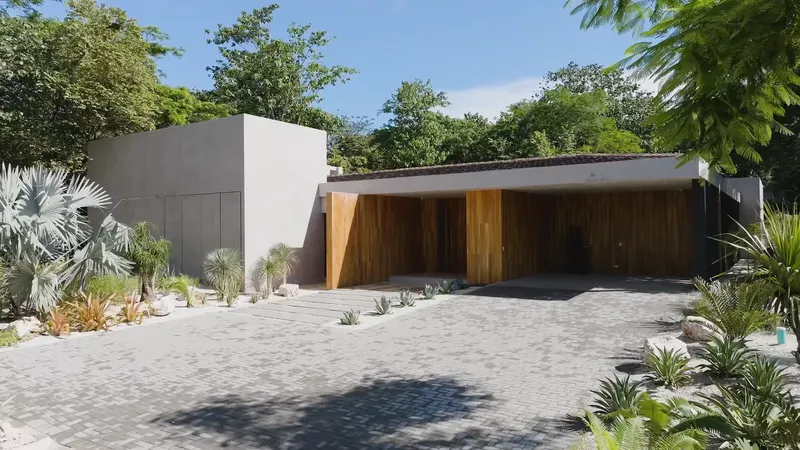
Spatial transitions are carefully choreographed to create a gradual interplay between light and shadow. As one moves through the house, each courtyard introduces a new atmosphere, a different relationship to vegetation, and a unique quality of light. This sequence enhances the experiential dimension of the architecture, making daily routines feel dynamic and engaging.
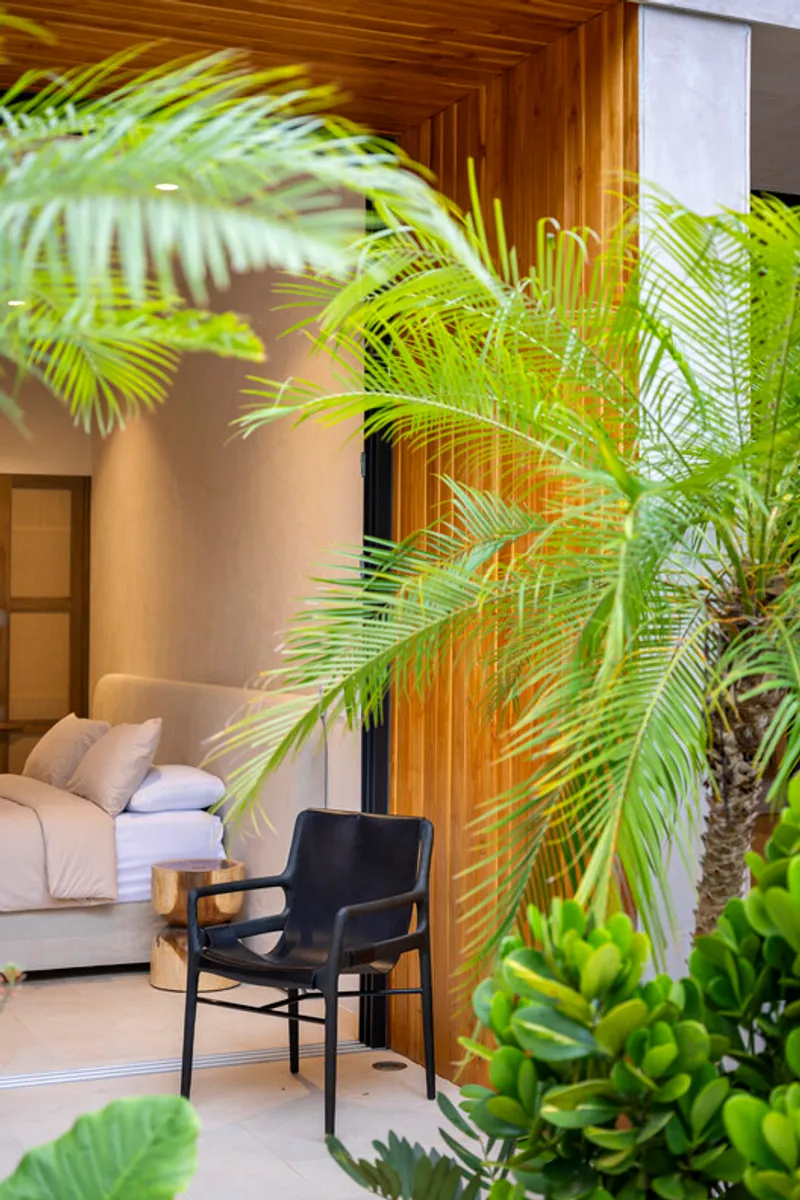
Ultimately, the Six Courtyards House exemplifies a contemporary approach to tropical architecture: one that prioritizes climate responsiveness, spatial fluidity, and emotional connection to place. By integrating art, landscape, and passive design strategies, VOID creates a home that is both intimate and open, offering a lifestyle deeply attuned to nature while celebrating creativity and individuality.
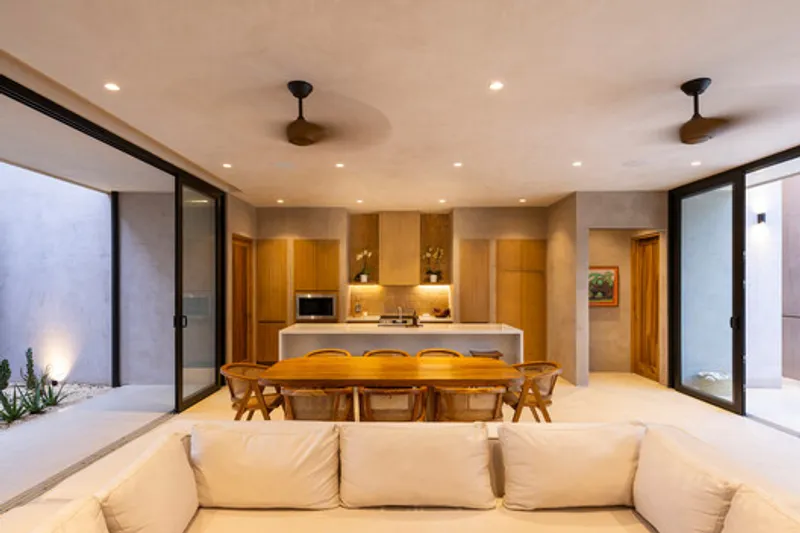
All the Photographs are works of Andres Garcia lachner



Popular Articles
Popular articles from the community


Co-Life: Senior Housing Design That Reconnects Older Adults With the City
Co-Life reimagines senior housing design through healing gardens, shared streets, workshops, and a sustainable community across generations.

The Earth Pod: 3D Printed Homes for Resilient Refugee Communities
The Earth Pod reimagines refugee housing through 3D printed homes made from clay, combining resilience, self-sufficiency, and rapid shelter.

The Ocean Hive: Sustainable Architecture for a Self-Sufficient Civilization at Sea
The Ocean Hive imagines sustainable architecture at sea, where modular habitats, algae, wave power and ocean waste sustain a growing colony.

EW PARK: Sustainable Architecture Reimagines the Future of Urban Parking
EW PARK reimagines city parking as a modular wooden tower combining automation, solar energy, electric mobility, and adaptable urban design.


Similar Reads
You might also enjoy these articles

FAMM Arquitectura Organizes Ten Villas Around Courtyards and Jungle in Nosara, Costa Rica
El Molino pairs two elongated volumes with deep overhangs and timber louvers to build a compact coastal community five minutes from the beach.
Oscar Niemeyer's Ibirapuera Park Pavilions Define São Paulo's Cultural Identity in Concrete and Curve
A constellation of modernist volumes set within São Paulo's most important urban park, conceived for the city's 400th anniversary in 1954.
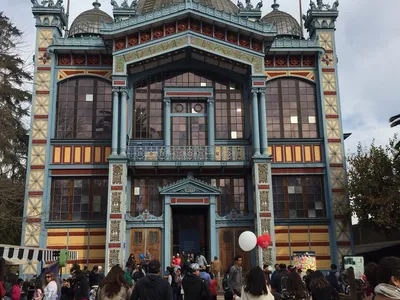
How Henri Picq's 1889 Paris Pavilion Traveled 11,000 Kilometers to Become Santiago's Artequín Museum
A prefabricated iron and glass pavilion built for the Paris Universal Exposition found a second life as a children's art museum in Chile.
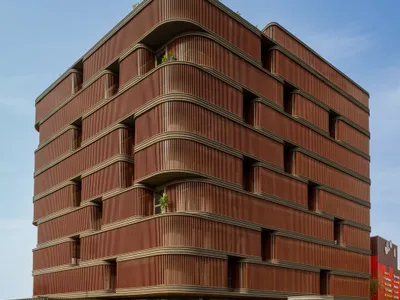
Sanjay Puri Architects Wraps a Jaipur Office Tower in Capsule-Shaped Green Buffers
A nine-level climate-responsive workplace near Jaipur Airport uses stacked planter terraces and aluminium screens to fight 40°C heat.
Explore Architecture Competitions
Discover active competitions in this discipline



Challenge to reimagine the Iron Throne


Photograph architecture without architects


Illustrate the lost glory of Angkor Wat - Render Challenge


Design challenge to reuse E-waste
Comments (0)
Please login or sign up to add comments
No comments yet. Be the first to comment!