
SomA Architects Stack Old Craft and New Thinking in a Tirunelveli Family House
Project X22 weaves filler slabs, five brick bond patterns, and lime plaster into a courtyard home for three generations in southern India.

There is a genre of residential project that announces itself as "experimental" and delivers little more than an odd angle or a recycled shipping container. Project X22, completed in 2022 by SomA Architects in Tirunelveli, India, is not one of those. Designed for a family of seven spanning three generations, the house treats craft and climate strategy as its primary structure, layering at least five distinct brick bonding patterns, filler slabs, lime plaster, and handmade cement tiles into a building that reads as both deeply local and formally sharp.
What makes the project genuinely compelling is its refusal to treat these techniques as ornamental gestures. Every material decision maps to a thermal or spatial logic: the east orientation buffers morning sun through soleil cells, a courtyard on the south side mediates heat gain, louvered screens filter the harsh western light, and skylights pull daylight deep into the plan. The result is a house that performs passively in one of India's hotter regions while looking nothing like the white-box modernism that dominates aspirational residential design in the subcontinent.
A Facade That Does Real Work
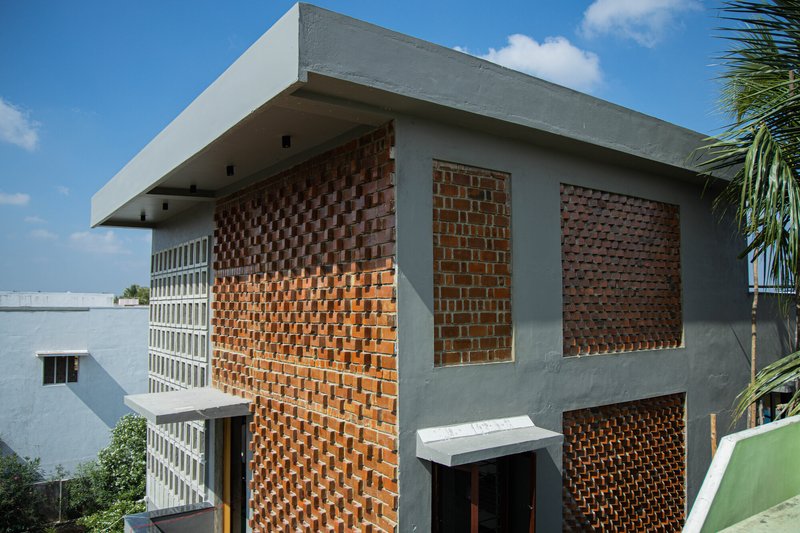
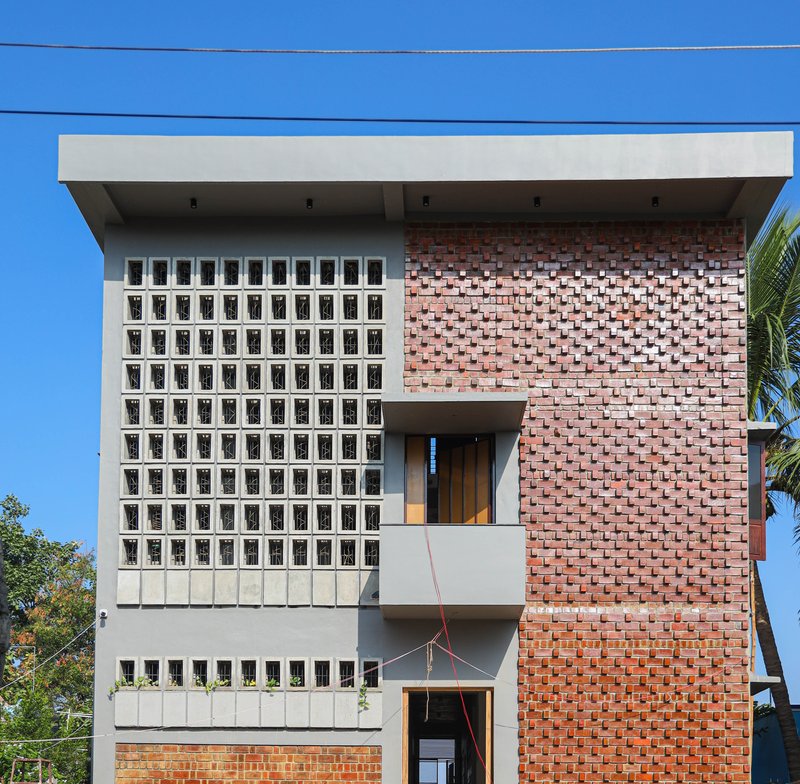
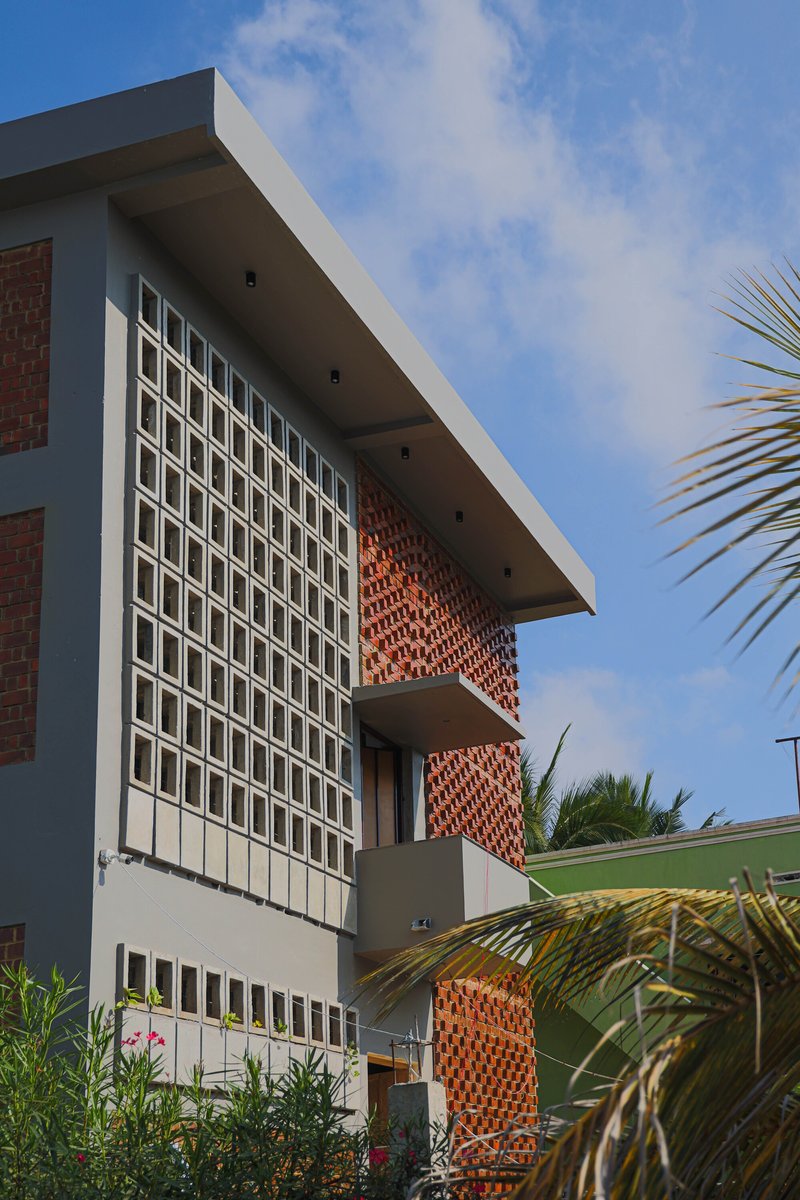
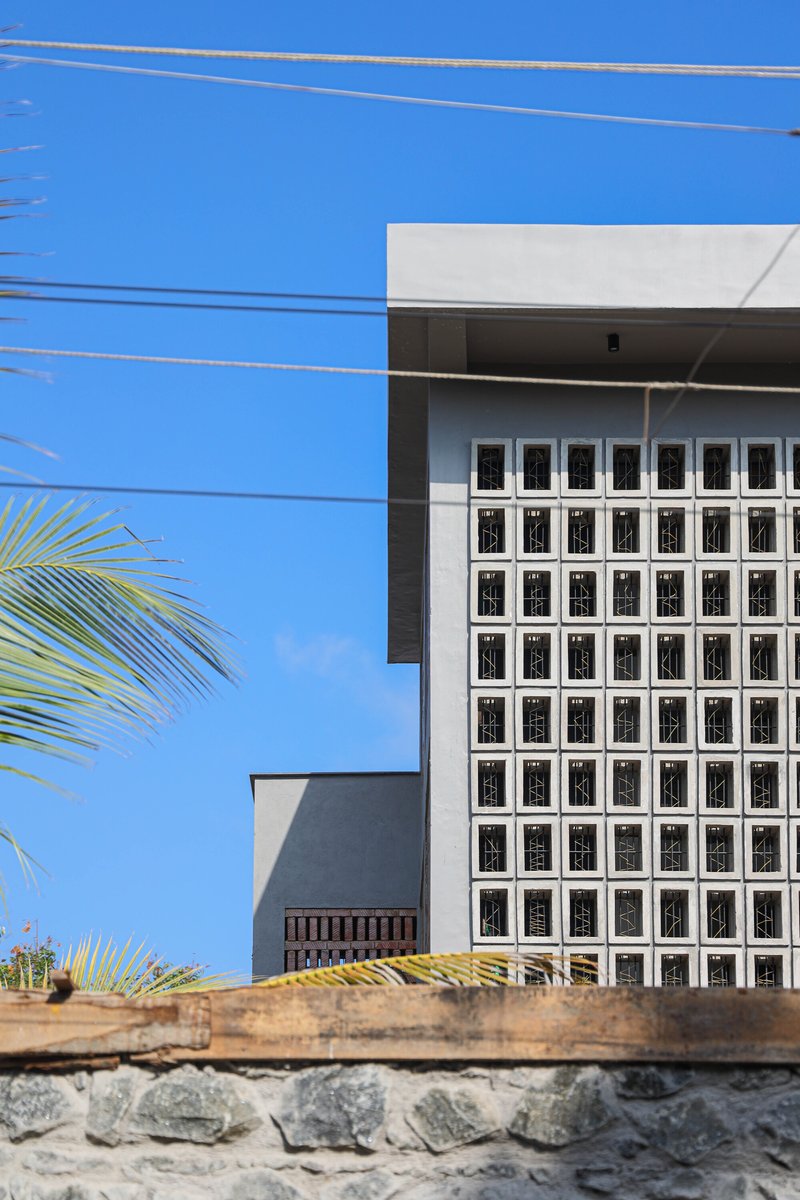
The street elevation is a controlled collage. White concrete block screens sit alongside panels of perforated brickwork, each using a different bonding pattern: rat trap, dogtooth, basket weave, stack bond, and what the architects call brick jail. From the sidewalk, these read as a single textured surface. Step closer and you see that each panel responds to the room behind it, calibrating privacy and ventilation differently for a bedroom than for a stairwell.
Palm fronds and overhead wires frame the composition from the street, grounding it in the messy reality of a South Indian neighborhood rather than the manicured emptiness of a magazine set. The facade is honest about its context, and it is better for it.
Brick as Language, Not Decoration
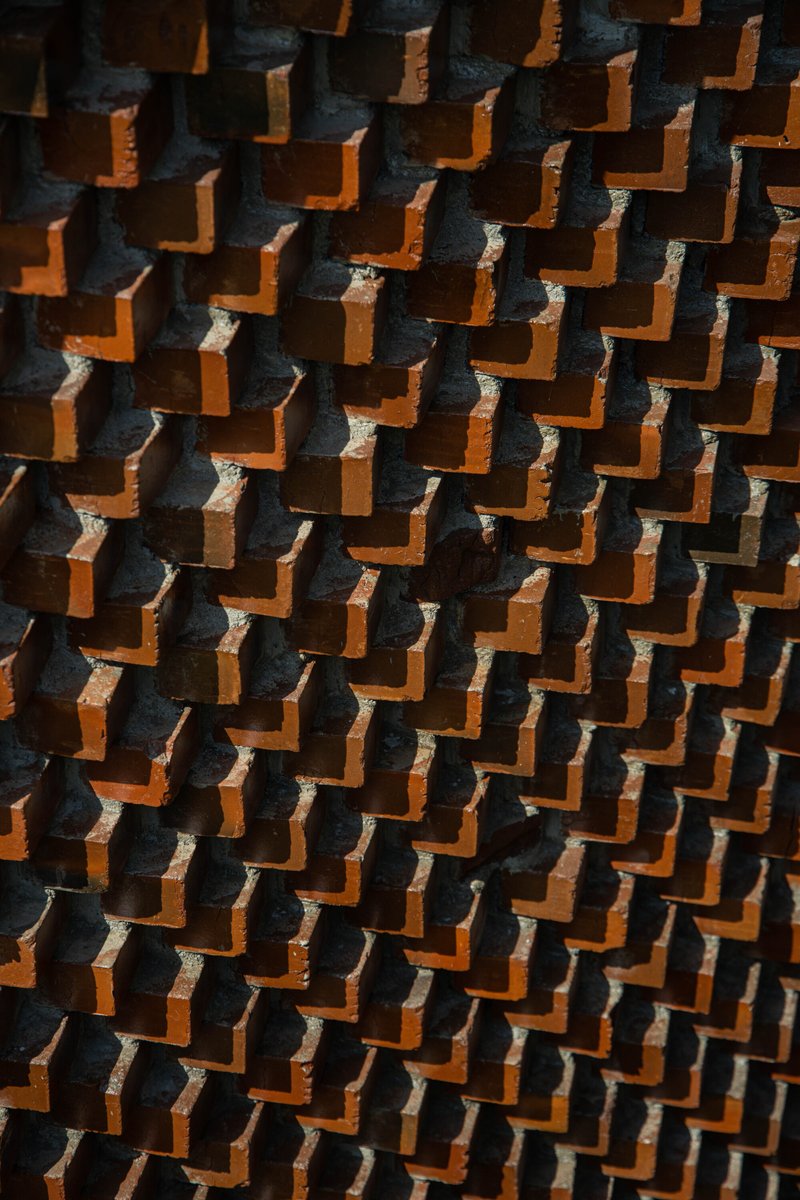
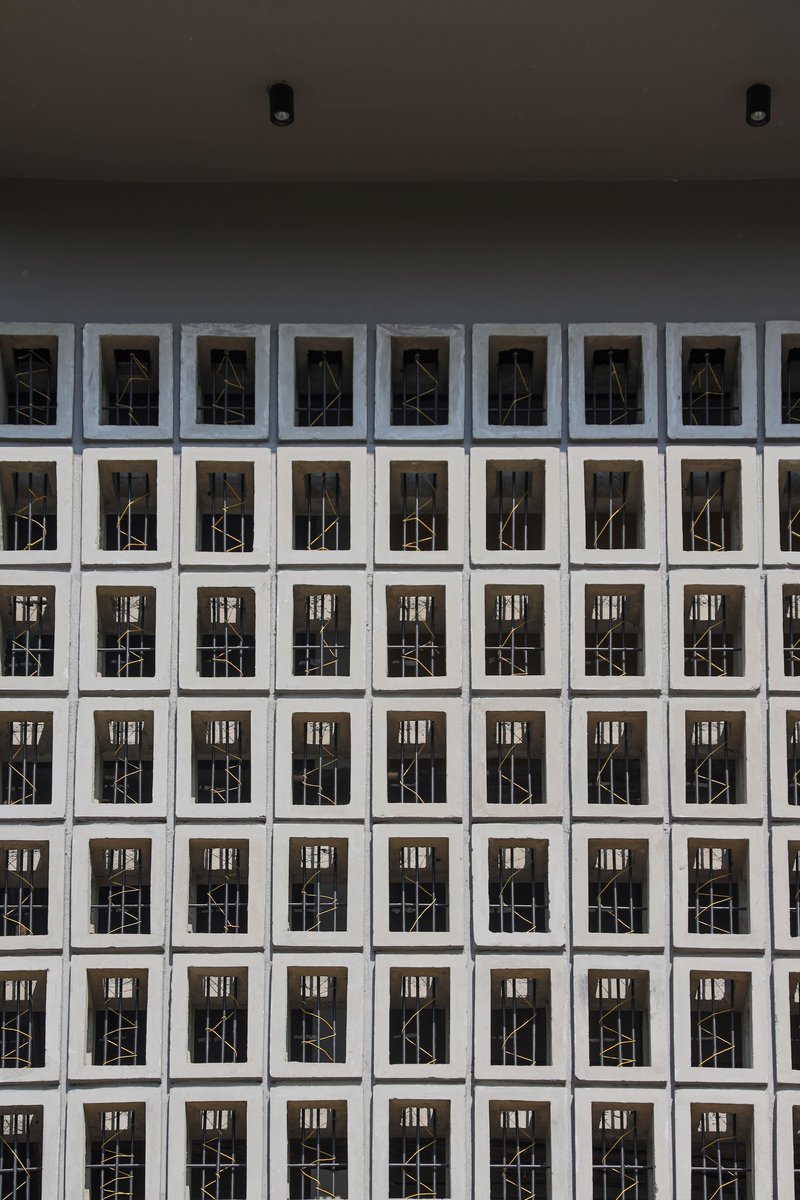
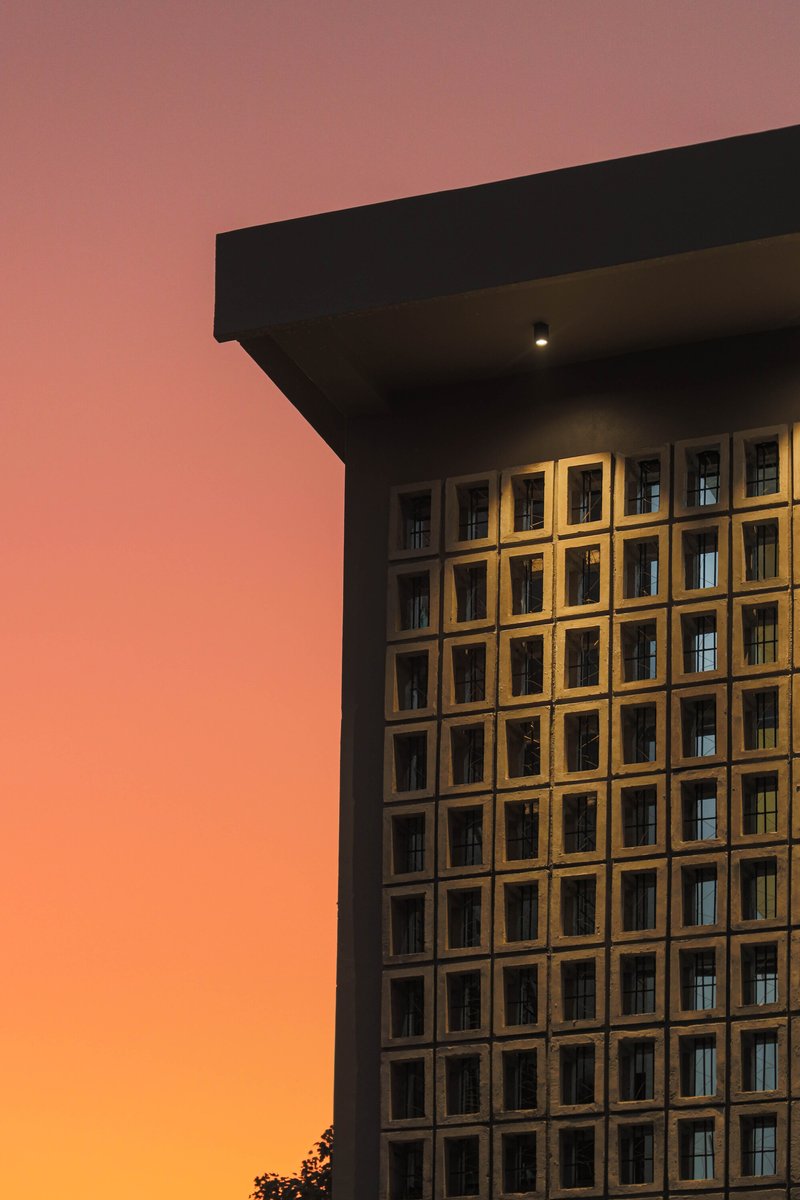
Zoom into the brickwork and the ambition becomes clear. A close-up of the projecting terracotta units reveals a stepped diagonal pattern that throws sharp shadows across the wall throughout the day, turning sunlight into a clock. Elsewhere, white concrete blocks are arranged in a grid with geometric metal screens recessed into openings, producing a second register of pattern that is cooler in tone but equally disciplined.
The decision to use five different bond patterns in a single house is a risk. In lesser hands it would fragment the building into a sampler. Here, the concrete frame acts as a unifying datum, holding each brick panel in place the way a gallery wall holds canvases. The variety reads as intentional rather than indecisive.
The Central Atrium as Climate Machine
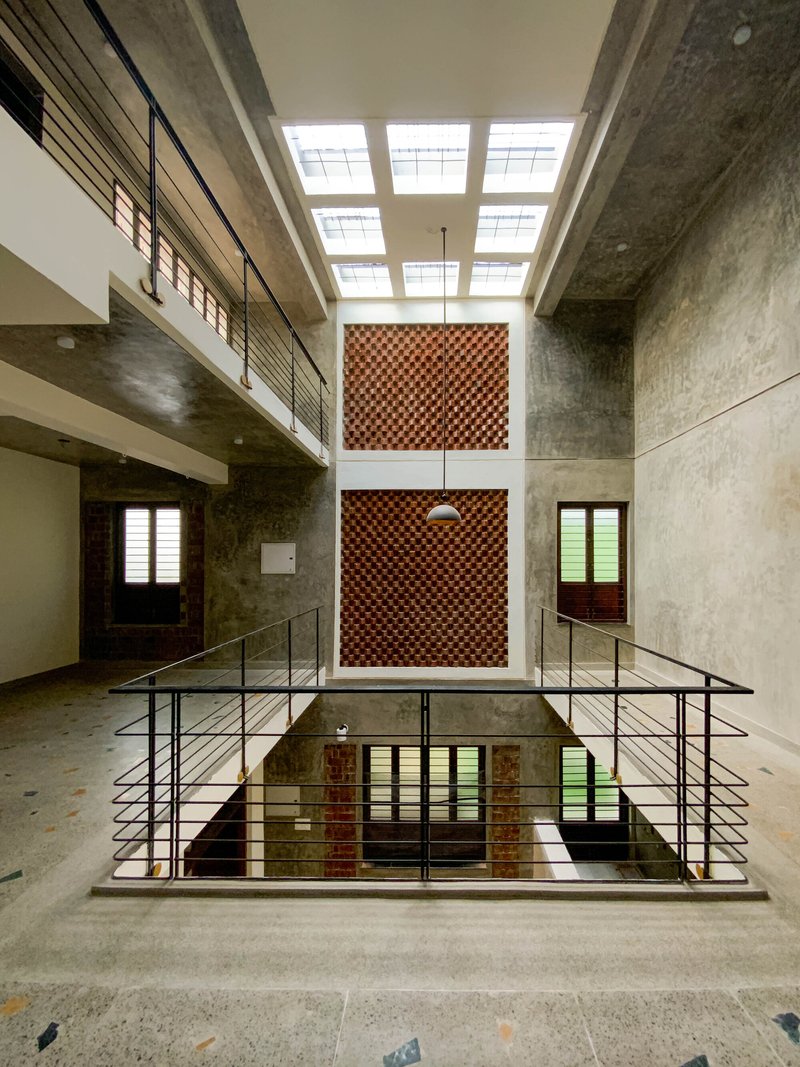
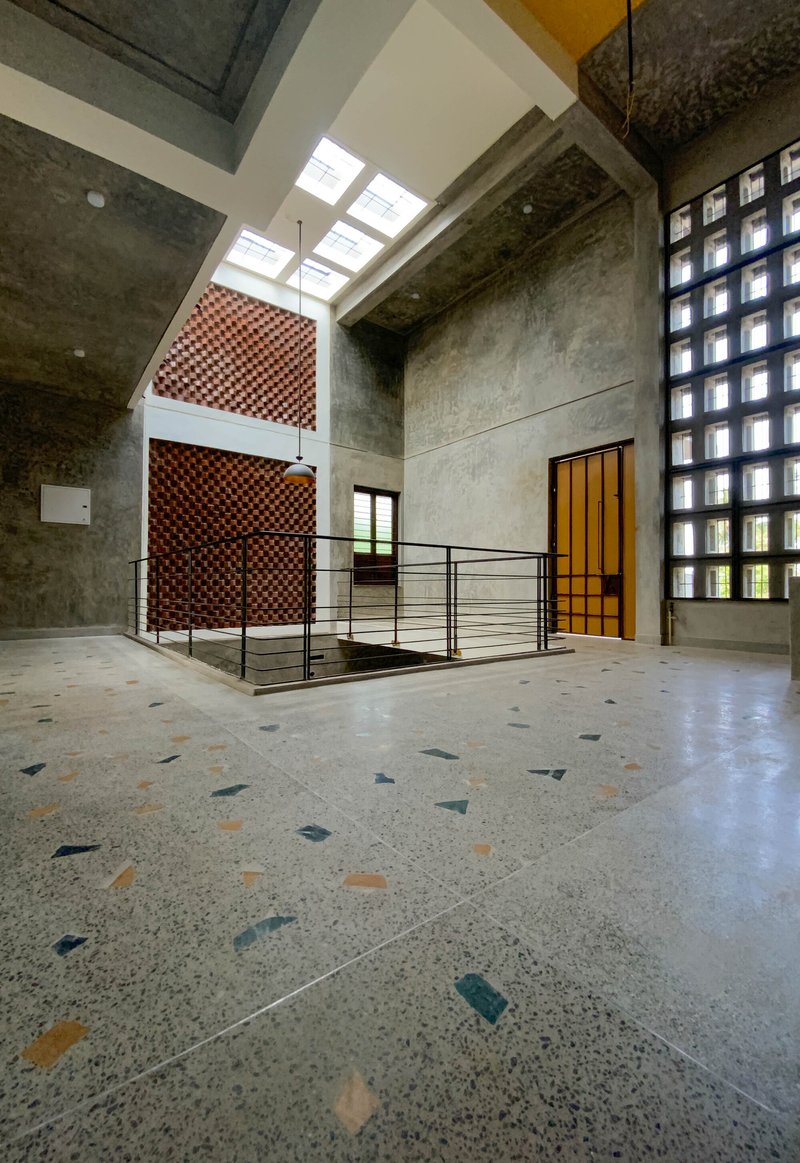
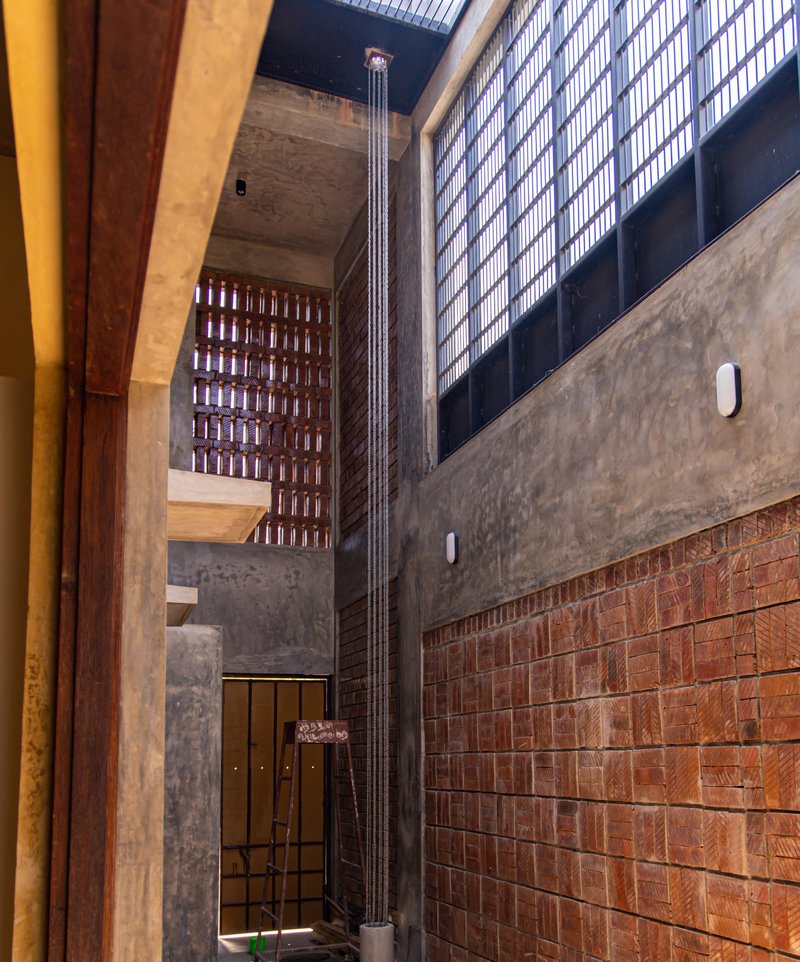
The heart of the plan is a triple-height atrium crowned by skylights. It functions as both a social spine and a stack ventilation chimney, drawing warm air upward and pulling cooler air through the lower openings. A central perforated brick screen runs from ground to roof, filtering light and providing visual continuity between floors without sealing them off from each other.
At ground level, terrazzo flooring with colored aggregate chips picks up the warmth of the brick above. Fluted concrete columns and exposed concrete ceilings keep the palette restrained, letting the brick screen do the talking. The effect is a room that feels both open and enclosed, simultaneously domestic and slightly monumental.
Vertical Circulation as Spatial Event
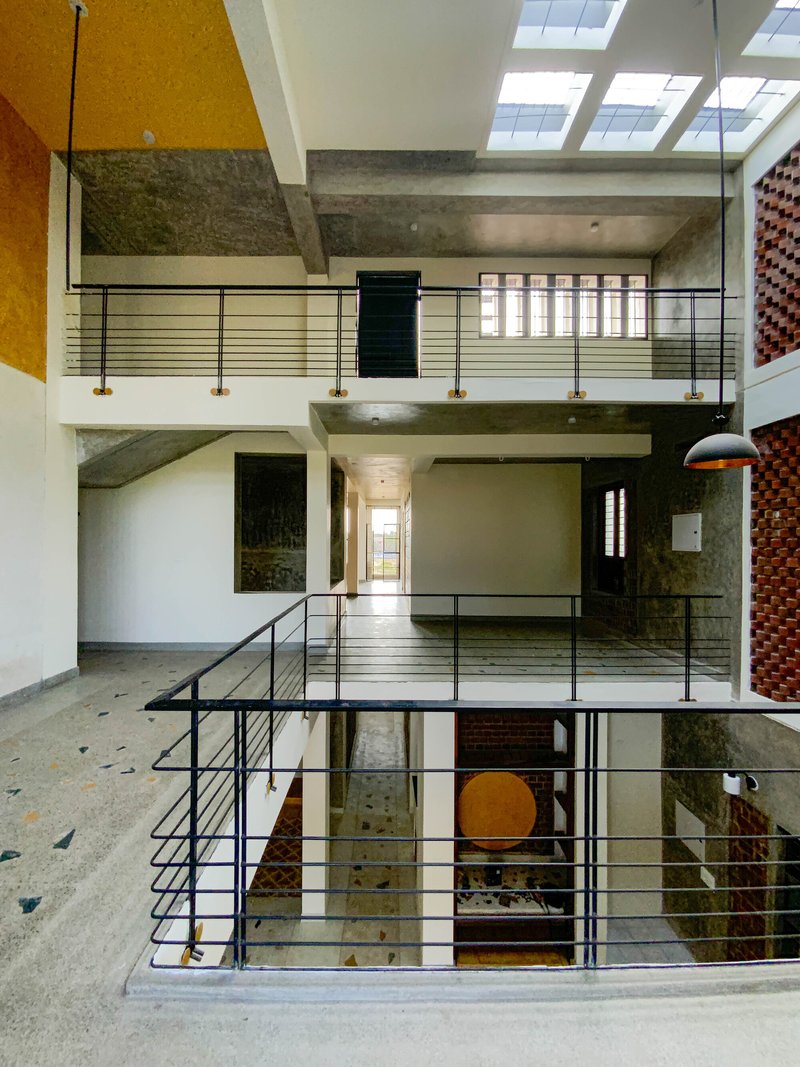
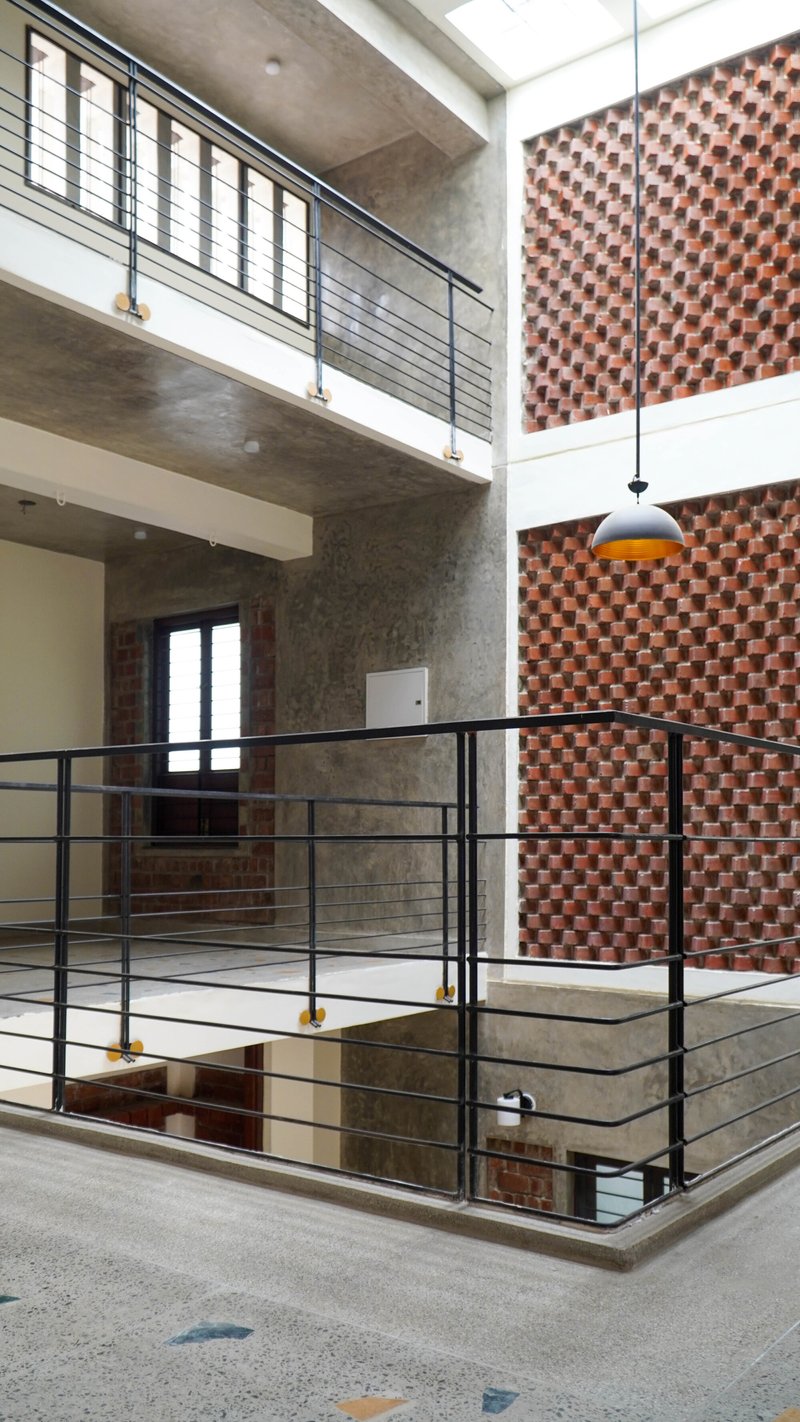
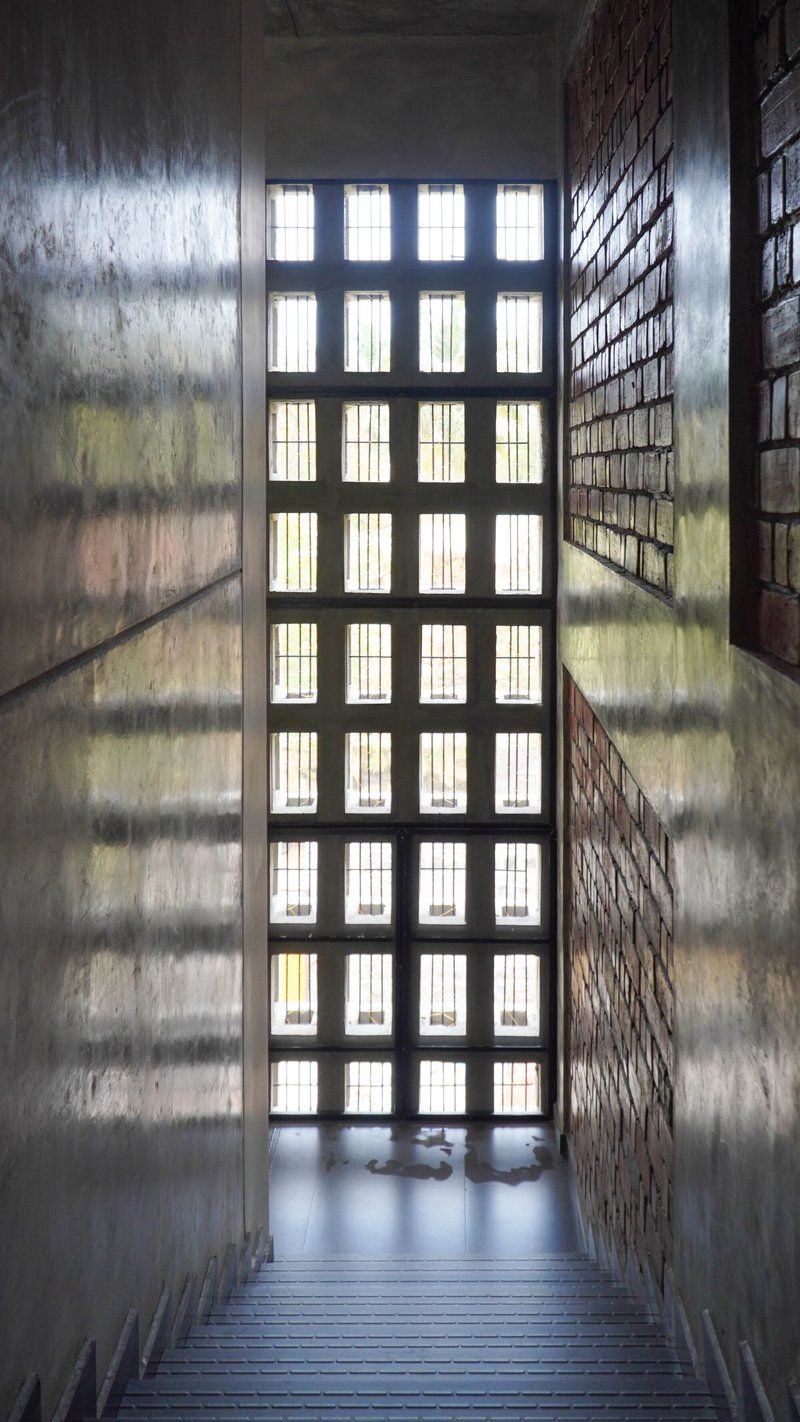
The stairwell is not a leftover space here. Looking down through steel-railed balconies, you see the atrium compress and expand with each half-landing. A gridded window wall casts sharp geometric shadows across concrete side walls and the brick screen behind the stair, turning the daily climb into something worth paying attention to.
A pendant light drops through the stairwell void, marking the vertical axis. It is a small gesture, but it anchors the eye and gives each floor a reference point. The exposed concrete ceilings above reveal the filler slab construction: a system that replaces the bottom portion of a conventional slab with lighter, often recycled infill material, reducing both material use and dead load.
Interior Warmth and Material Honesty
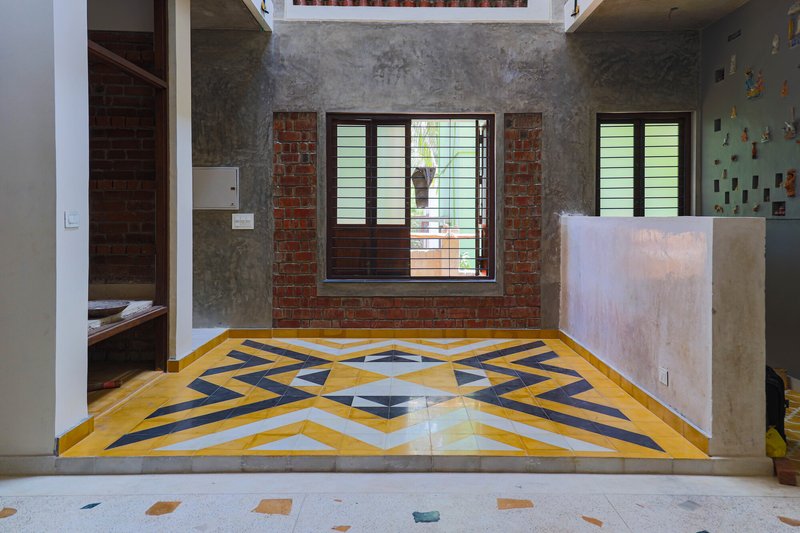
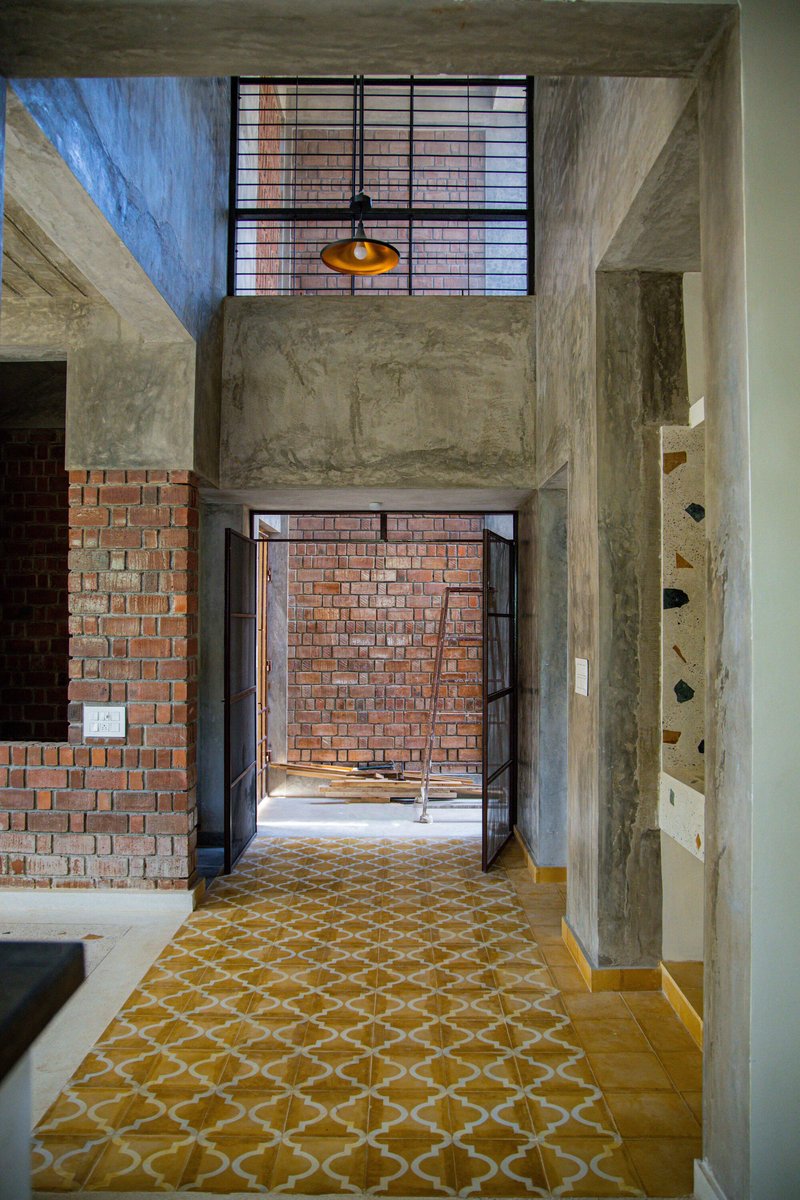
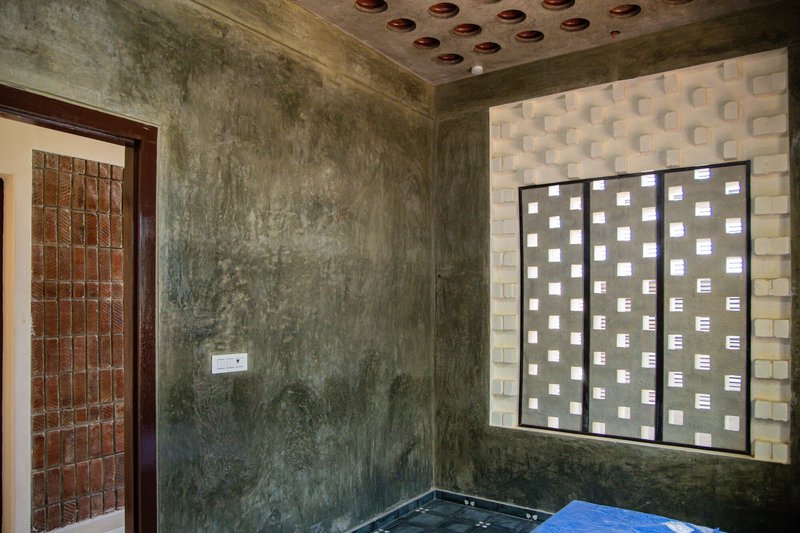
Inside the rooms, the handmade cement tiles steal the scene. Geometric patterns in yellow and grey cover the floors, each tile slightly imperfect in the way only hand-poured work can be. They pair with exposed brick reveals around windows and perforated brick screen doors that maintain airflow even when closed.
Concrete walls and ceilings are left unfinished where lime plaster is not applied, creating a tonal conversation between rough grey surfaces and the warmer terracotta and yellow tones at floor level. Patterned ceiling inserts add another layer, suggesting that no surface in the house was treated as an afterthought.
Filtering Light, Framing Landscape
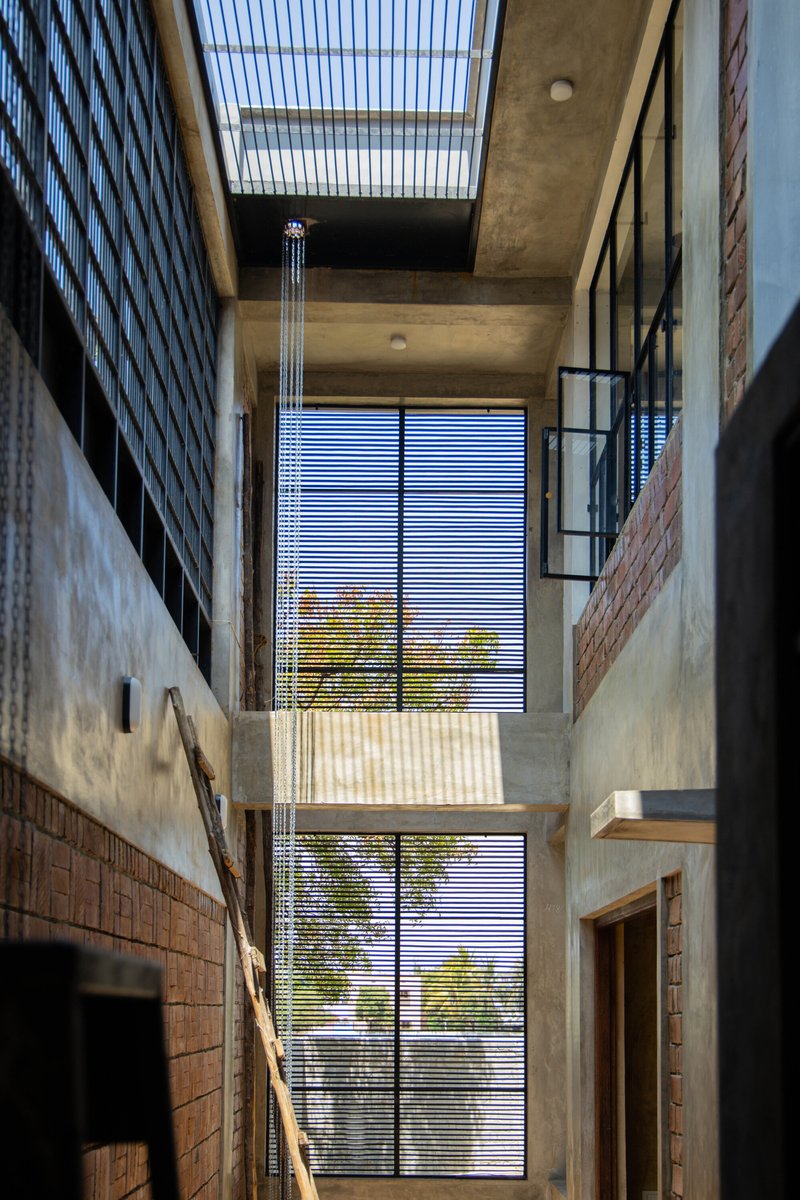
A double-height interior courtyard on the south side uses horizontal louvered screens to frame the surrounding trees. The effect is cinematic: foliage appears in controlled horizontal bands, reducing glare while maintaining a visual connection to the garden. On the west facade, timber lattice panels sit beneath a deep overhang, catching the amber tones of sunset while blocking direct radiation.
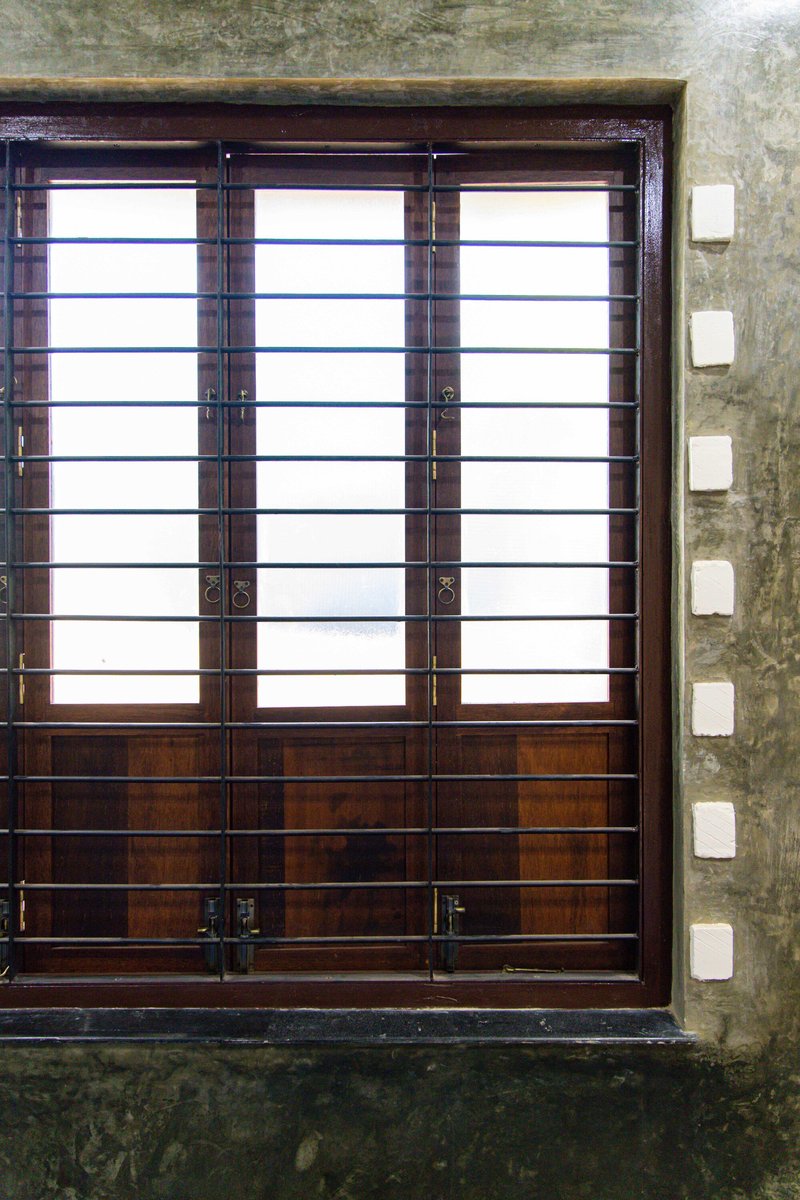
Dark timber shutters with horizontal metal bars appear at smaller openings, offering a more intimate scale of control. Each window type in the house seems calibrated to its orientation, which is the kind of discipline that separates a well-reasoned passive strategy from a marketing bullet point.
After Dark
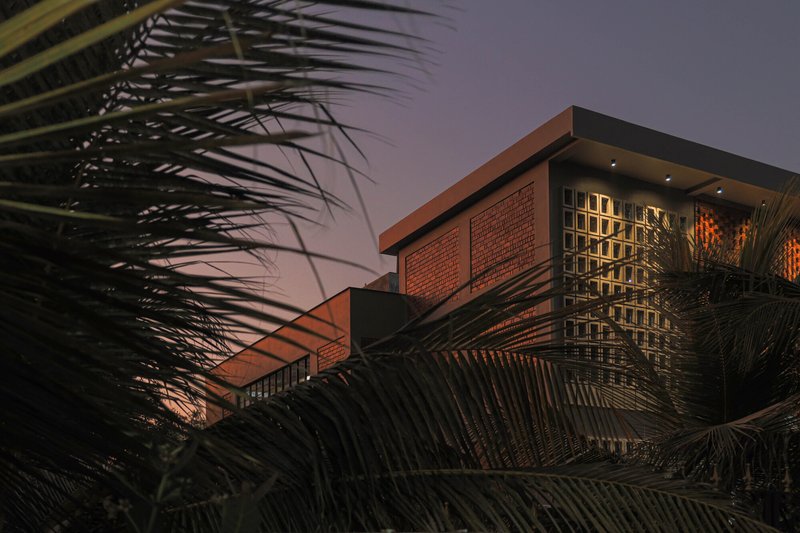
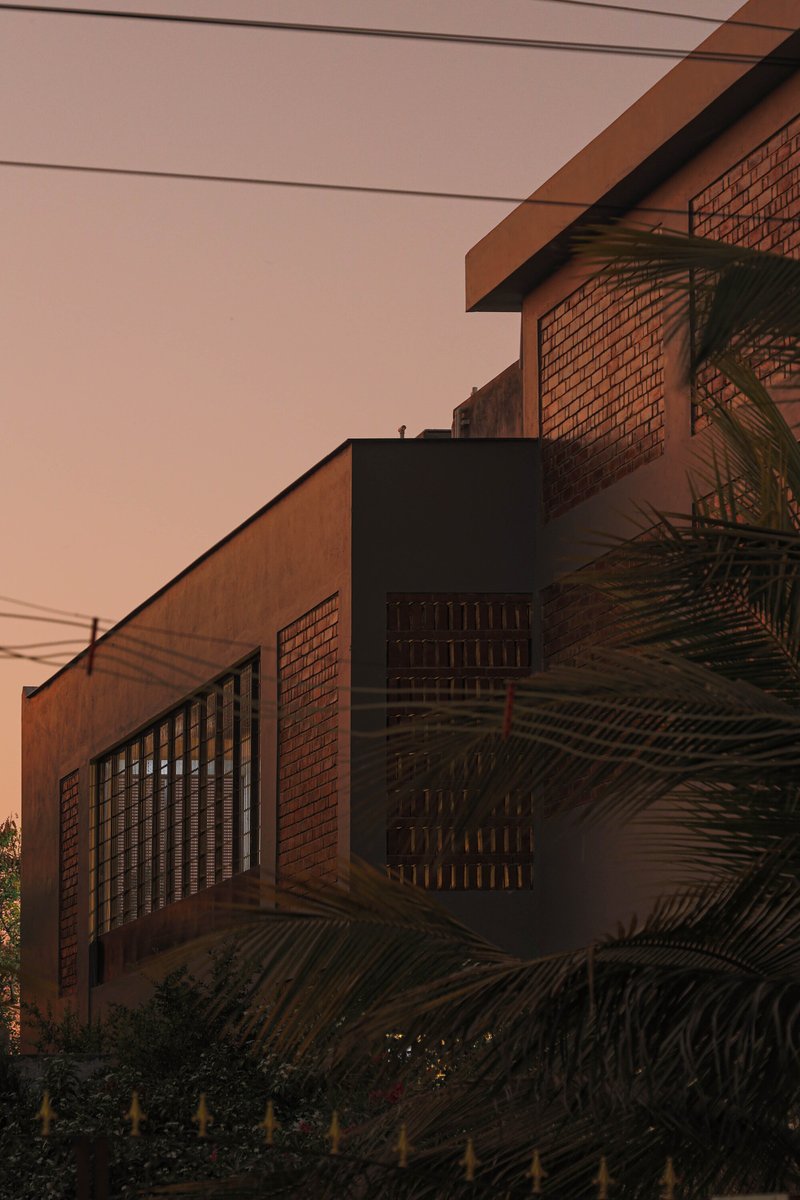
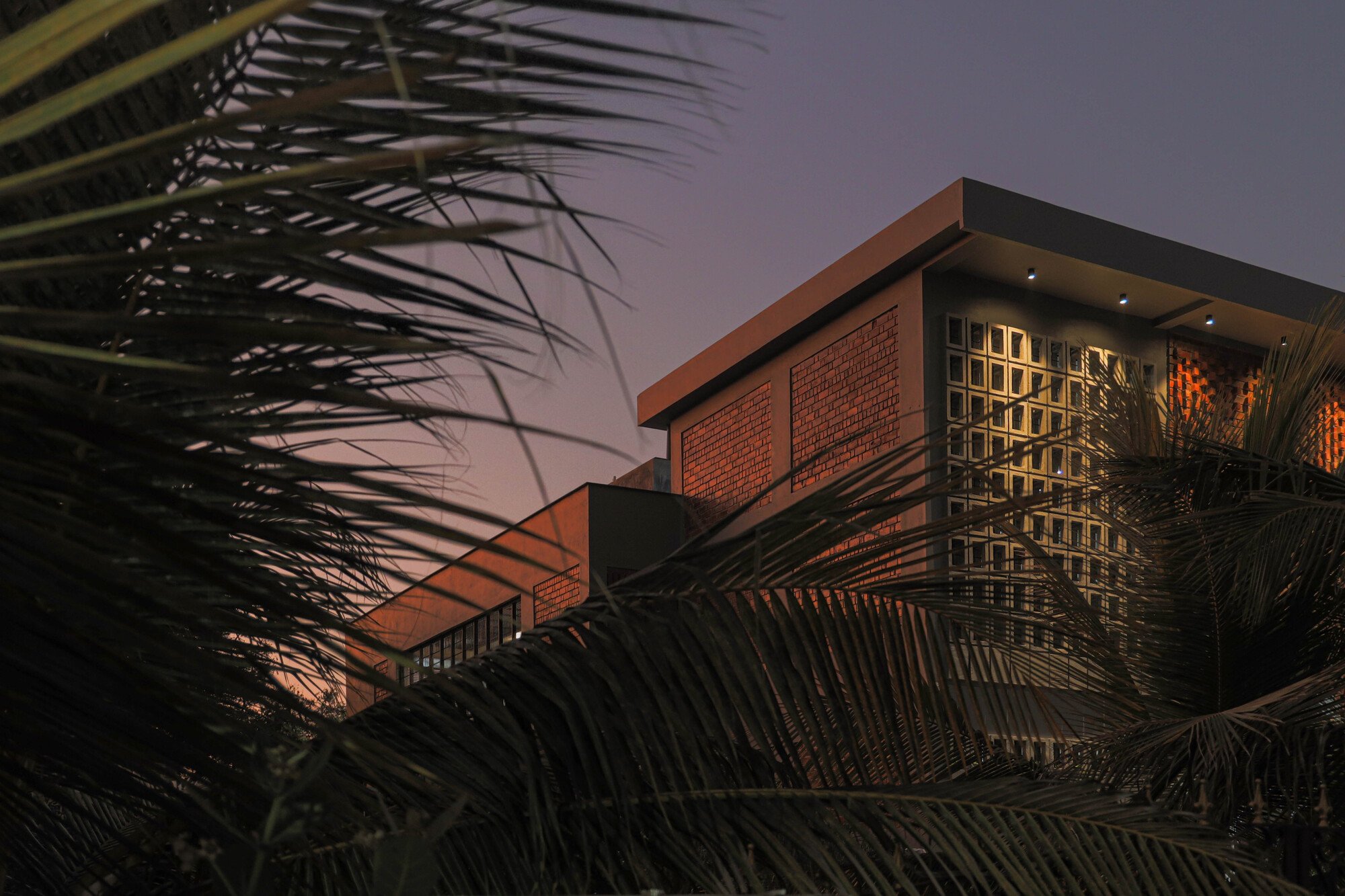
At dusk, the perforated brick screens transform. Interior light leaks through hundreds of small openings, turning the facade into a lantern that reveals the depth of the wall assembly. Stacked balconies with brick cladding and lattice screens glow against silhouetted palm fronds, and the house becomes legible as a layered section rather than a flat elevation.
The nighttime photographs make explicit what the daytime shots only imply: this is a building designed in section as much as in plan. The interplay between solid and void, screen and structure, is orchestrated to shift with the light, giving the house different characters at different hours.
Plans and Drawings
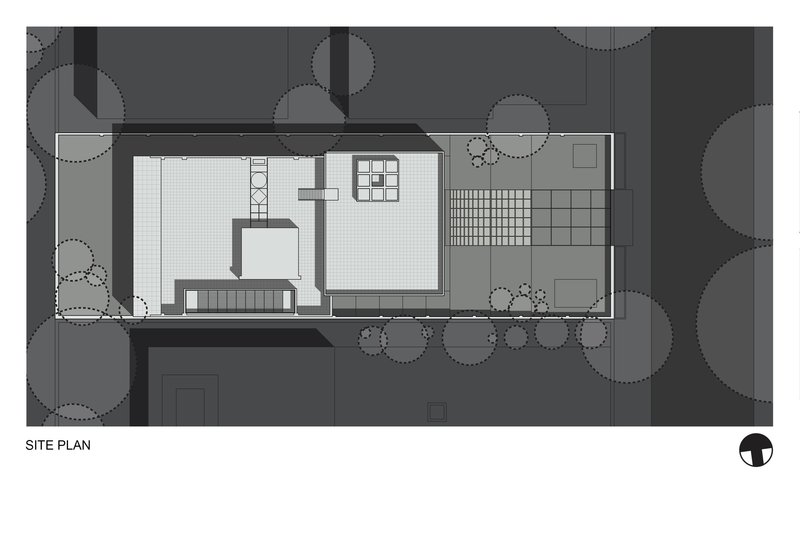
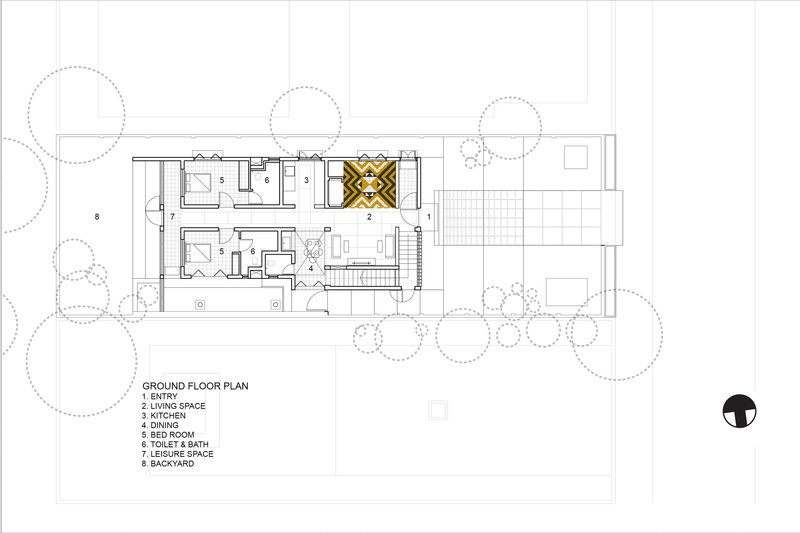
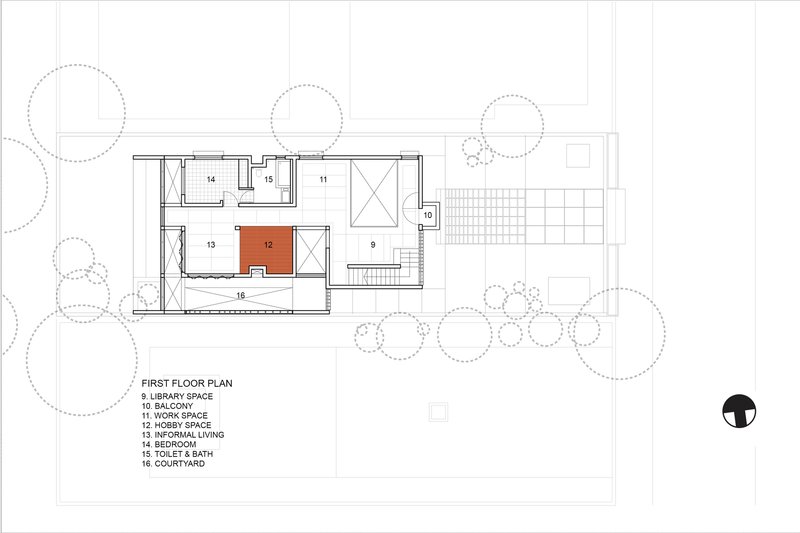
The site plan reveals a compact rectangular footprint set tightly within its plot, with circular tree canopies indicating the vertical garden and rain collector strategies that supplement the passive design. The ground floor plan shows a central skylight grid that maps directly to the atrium seen in the photographs, with living spaces wrapping around it. On the first floor, bedrooms flank a courtyard opening, giving each room cross-ventilation and a borrowed view through the central void.
Reading the plans against the built photographs, the logic holds together: the orientation, the screen placements, the courtyard positions all correspond to the climate strategy outlined in the design concept. There is no disconnect between diagram and experience, which is rarer than it should be.
Why This Project Matters
Project X22 matters because it treats alternative construction techniques not as novelties or cost-saving hacks but as a design vocabulary with real expressive range. Filler slabs, lime plaster, and handmade tiles are often discussed in sustainability circles as worthy but aesthetically neutral choices. SomA Architects demonstrate that these materials, combined with serious attention to orientation and ventilation, can produce a house that is spatially rich, visually distinctive, and climatically appropriate without relying on mechanical systems to compensate for lazy design.
For a multigenerational family in one of India's warmer cities, the house also offers a social argument: that shared vertical space, mediated by screens and courts, can give seven people both togetherness and privacy. The atrium is the mechanism. The brick screens are the negotiation. And the craft, evident in every tile and every bond, is what makes the negotiation feel generous rather than grudging. In an era when residential architecture in India increasingly defaults to sealed glass boxes with oversized air conditioning, this is the kind of project worth studying closely.
Project X22 House by SomA Architects. Lead architects: Pradheep Lakshman and Karpaga Muthu Meenakshi Structural. Tirunelveli, India. Completed 2022. Photography by Ulaganathan Brilly & Keshav.
About the Studio
Share Your Own Work on uni.xyz
If projects like this are the kind of work you want to make, uni.xyz is a place to publish your own, find collaborators, and enter design competitions.




Popular Articles
Popular articles from the community

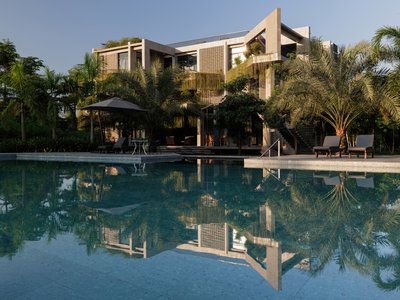
Reincarnation Weaves a Three-Story Retreat into the Green Landscape of Rural Bangladesh
Ara Manor in Narsingdi dissolves the line between domestic architecture and its lush surroundings through screens, courtyards, and planted rooftops.
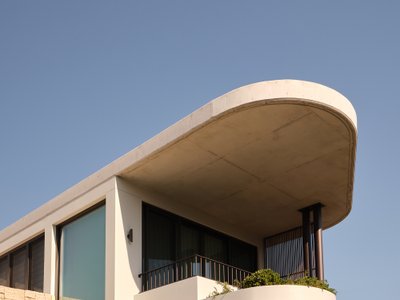
Stanton Architects Sculpts a Curving Family Home into Sydney's Inner West Fabric
Five Dock House uses cantilevers, curved concrete, and layered courtyards to carve out privacy on a tight suburban lot in Sydney.
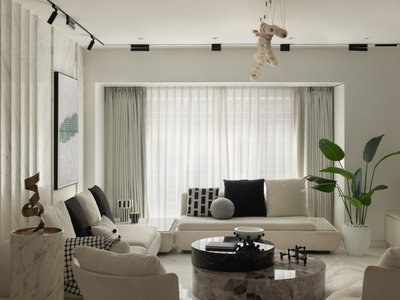
Inside a Timeless Mumbai Residence by Aether Studio
Aether Studio's 2,250 sq ft apartment in Malad, Mumbai uses marble, brass, boucle, and disciplined restraint to build a quiet retreat from the city.

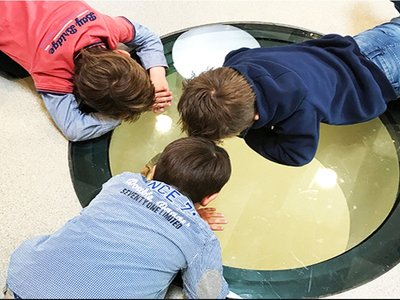
IKC de Geluksvogel: Sustainable School Architecture Designed for Free Movement and Digital Learning
IKC de Geluksvogel turns sustainable school architecture into a flexible Maastricht campus for digital learning, nature, and free movement.


Similar Reads
You might also enjoy these articles
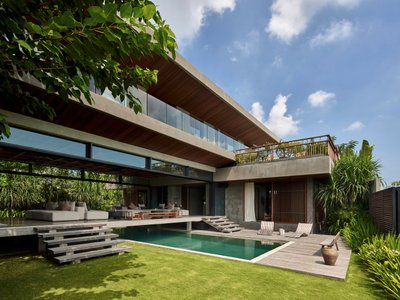
Freebird Residence by Alexis Dornier: A Tropical Modernist Sanctuary in Bali
Floating living pavilion above pool anchors H-shaped tropical villa, blending Japanese minimalism, sustainable strategies, lush landscape, and sculptural interiors.
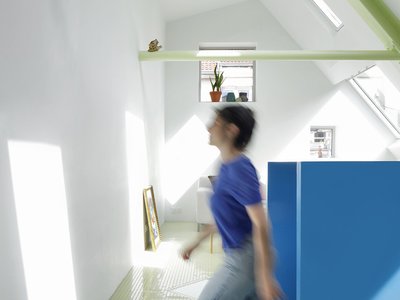
127af Flips a Tiny Bagnolet Rowhouse Upside Down with a Handcrafted Roof Extension
A 55-square-meter terraced house on the edge of Paris gains a luminous upper living floor through lightweight timber and steel.
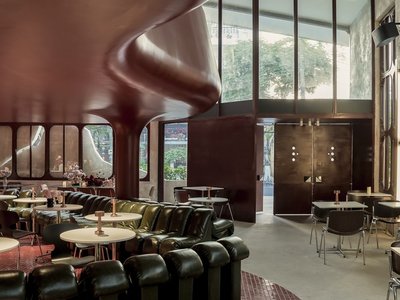
1.61 Design Workshop Wraps a 600-Square-Meter Café in Vietnam in Sculptural Burgundy Drama
Reden Café & Bistro pairs a helical staircase, mosaic floors, and deep red interiors to rethink Vietnamese hospitality space.

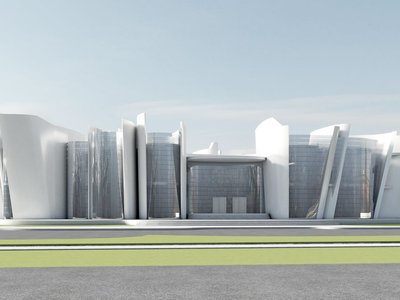
The Unbound Brain: A School Shaped by Cognitive Architecture
Cylindrical learning pods radiate like neurons from a central cortex, turning the floor plan into a spatial model of human thought.


Explore Residential Building Competitions
Discover active competitions in this discipline




The International Standard for Design Portfolios


The Global Benchmark for Architecture Dissertation Awards


The Global Benchmark for Graduation Excellence


Challenge to design mud housing for contemporary communities
Comments (0)
Please login or sign up to add comments
No comments yet. Be the first to comment!