
Sterrenbos Youth Building: Innovative Community Architecture in Nazareth, Belgium
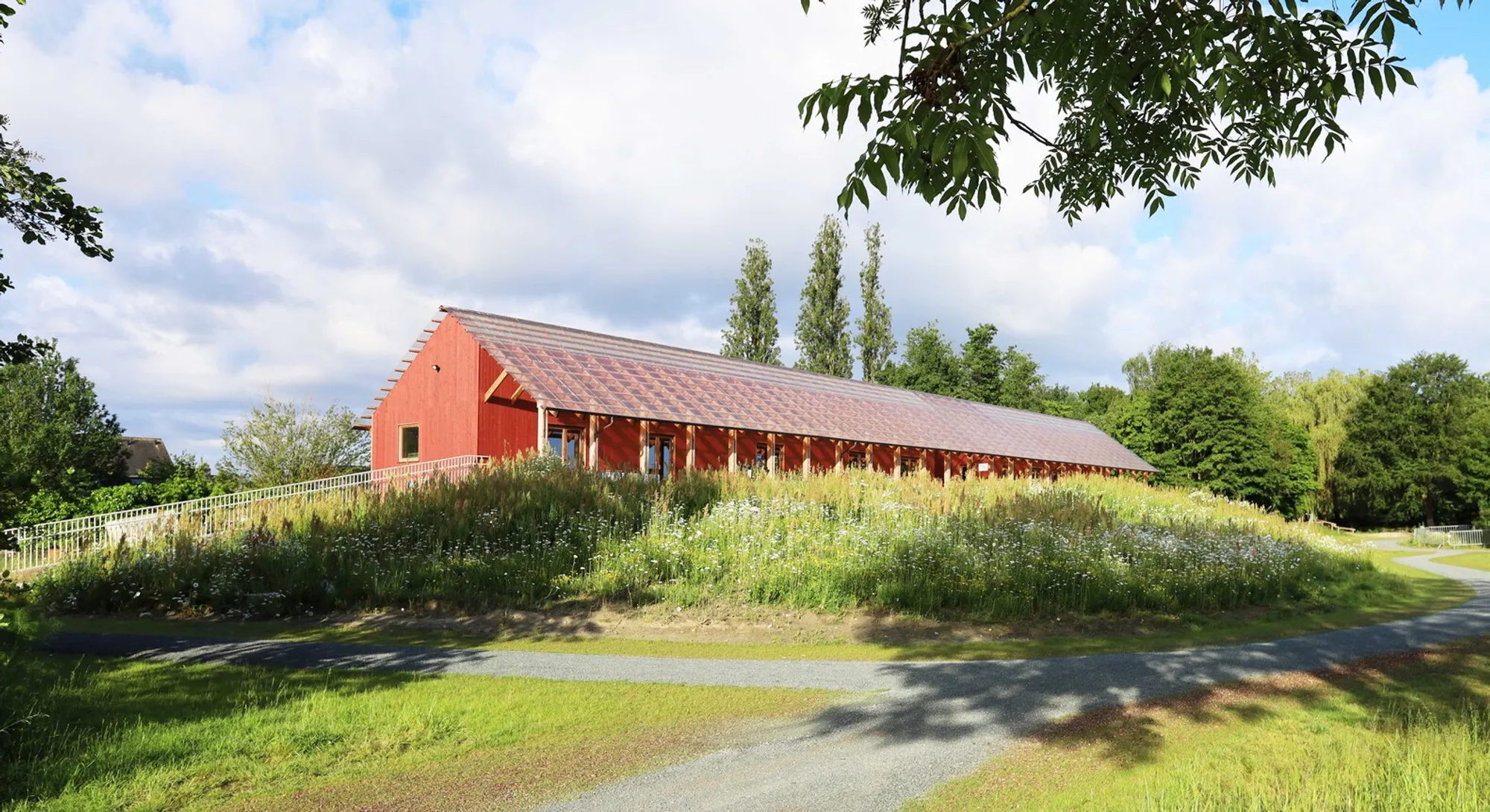
The Sterrenbos Youth Building in Nazareth, Belgium, is a modern, accessible, red-clad community hub connecting interior spaces, gallery, and landscape.\


The Sterrenbos Youth Building, designed by Atelier Vens Vanbelle, replaces an outdated municipal youth facility, transforming it into a contemporary, multifunctional hub. Located on a site that previously hosted a football field, tennis club, and playground, the new design resolves previous spatial fragmentation by creating a cohesive and legible layout.
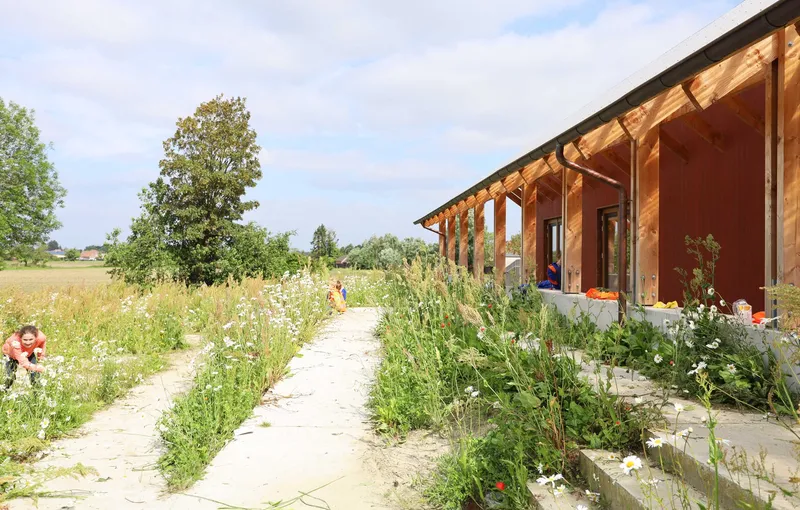
The architects focused on uniting the previously isolated functions through a clear spatial strategy. This approach not only facilitates access and circulation but also enhances the site’s usability for a variety of community activities.
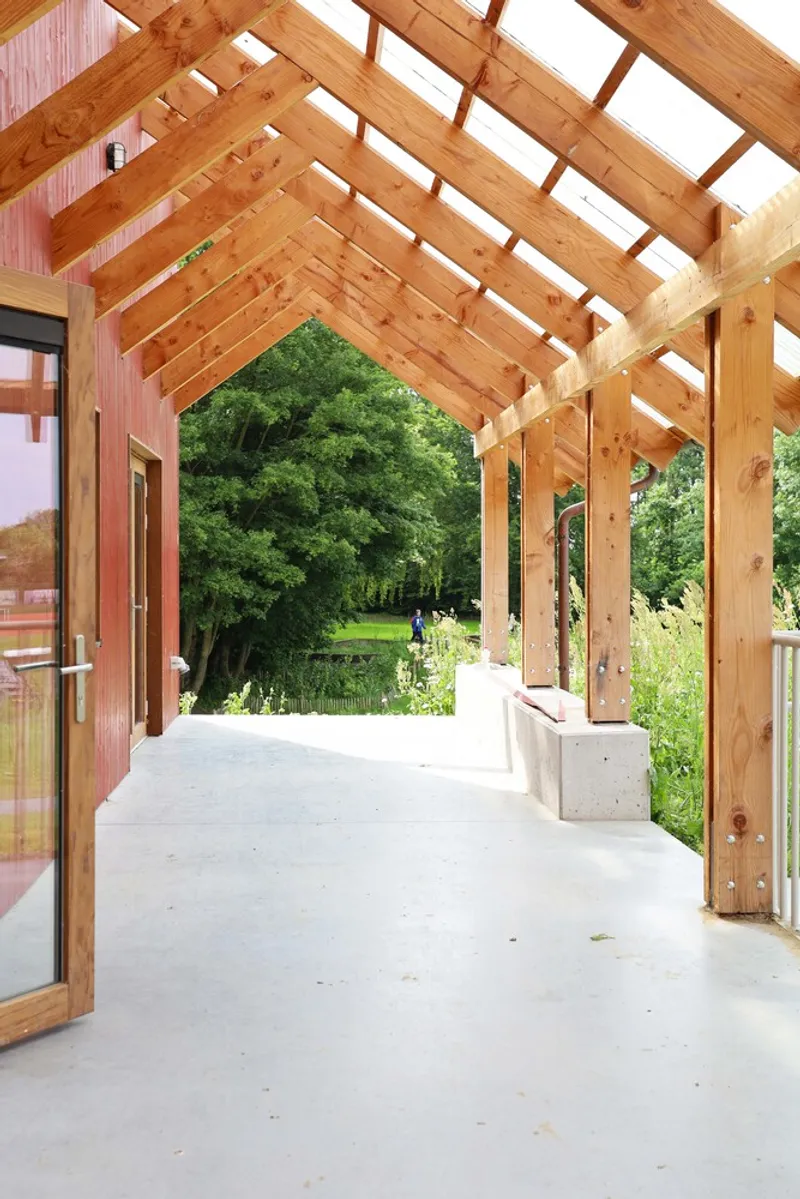
Architectural Concept: Clarity and Functionality
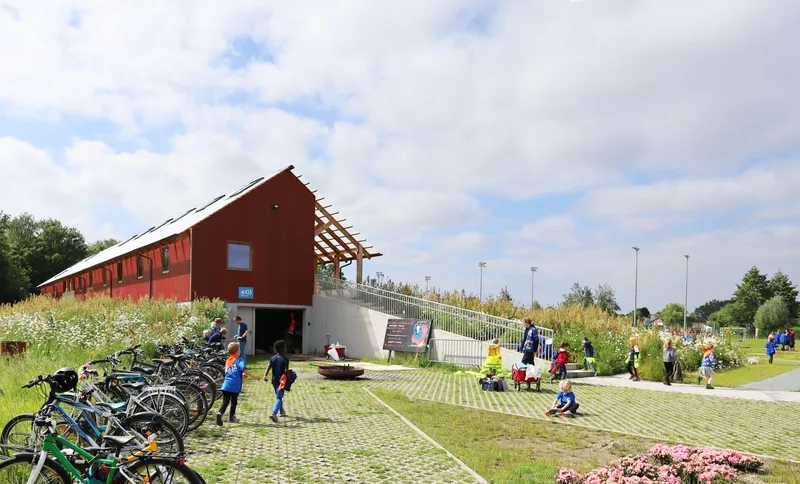
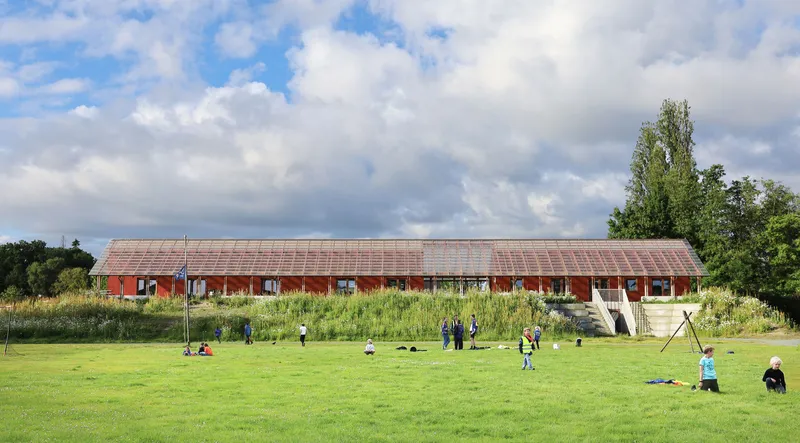
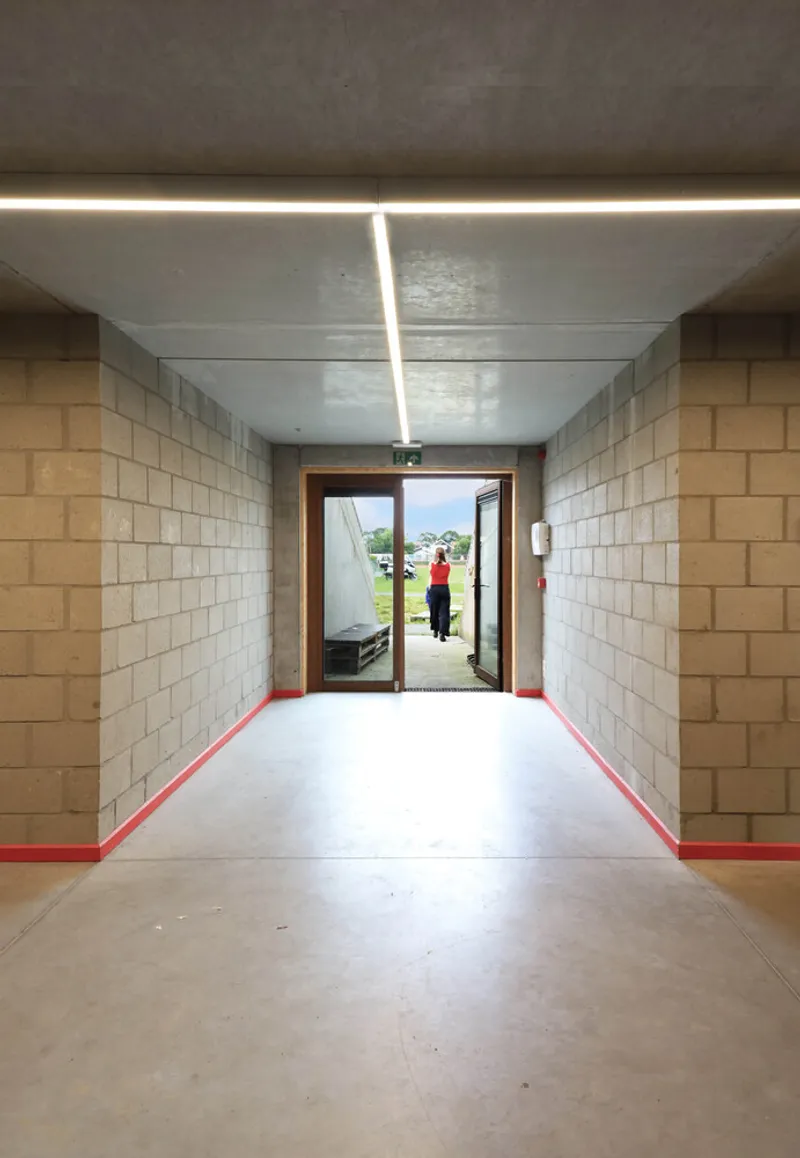
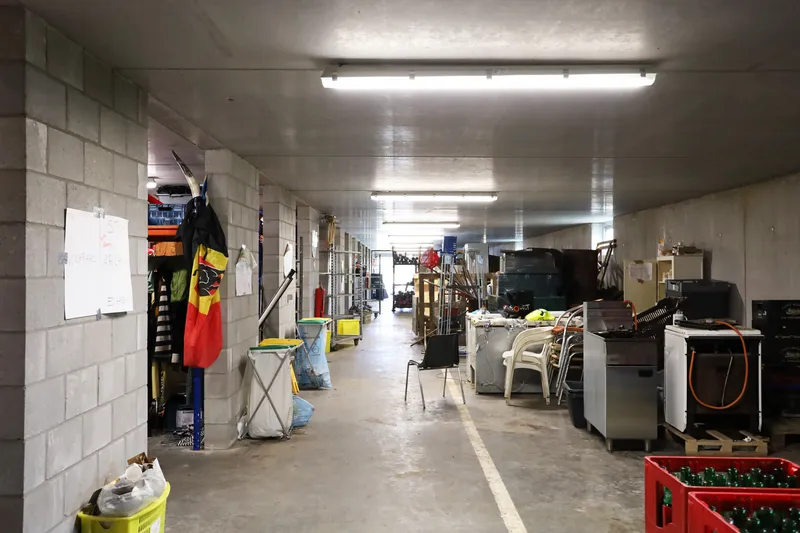
The design features a long concrete base along one side of the site, which accommodates storage and sanitary facilities. This practical foundation ensures smooth logistics for large equipment such as tents, play structures, and poles.
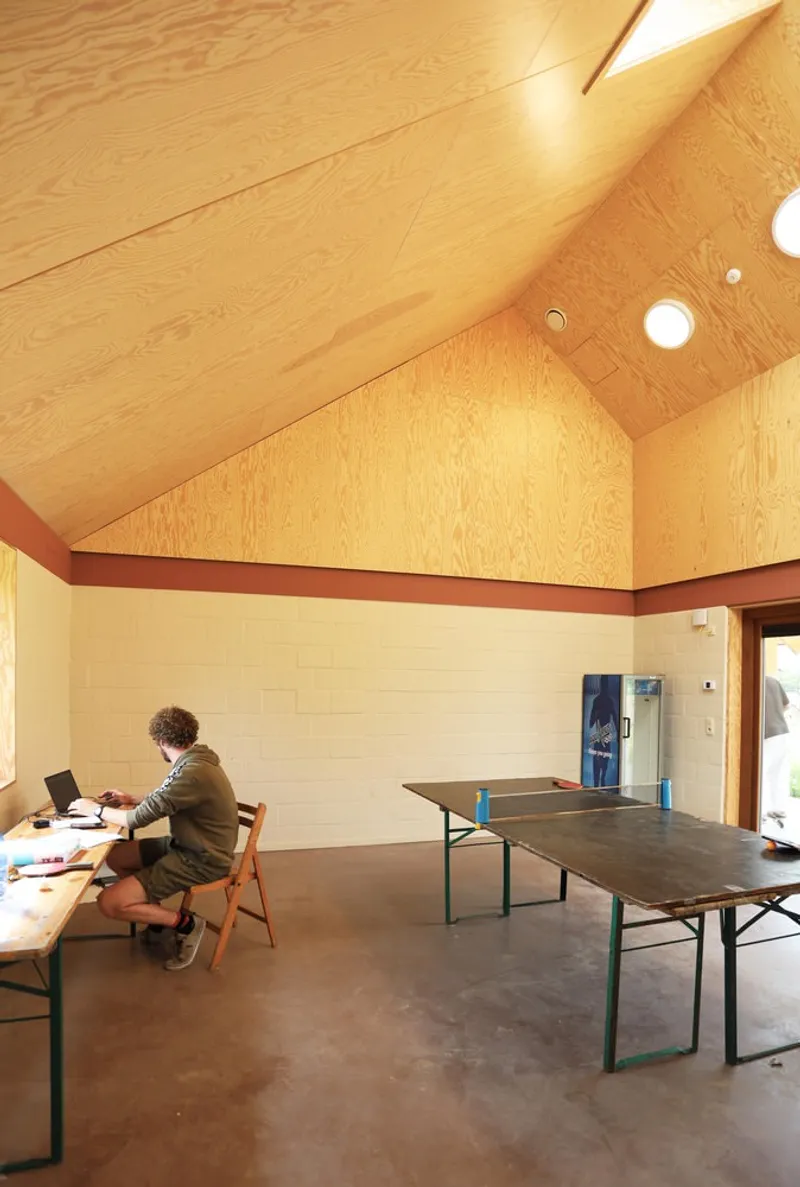
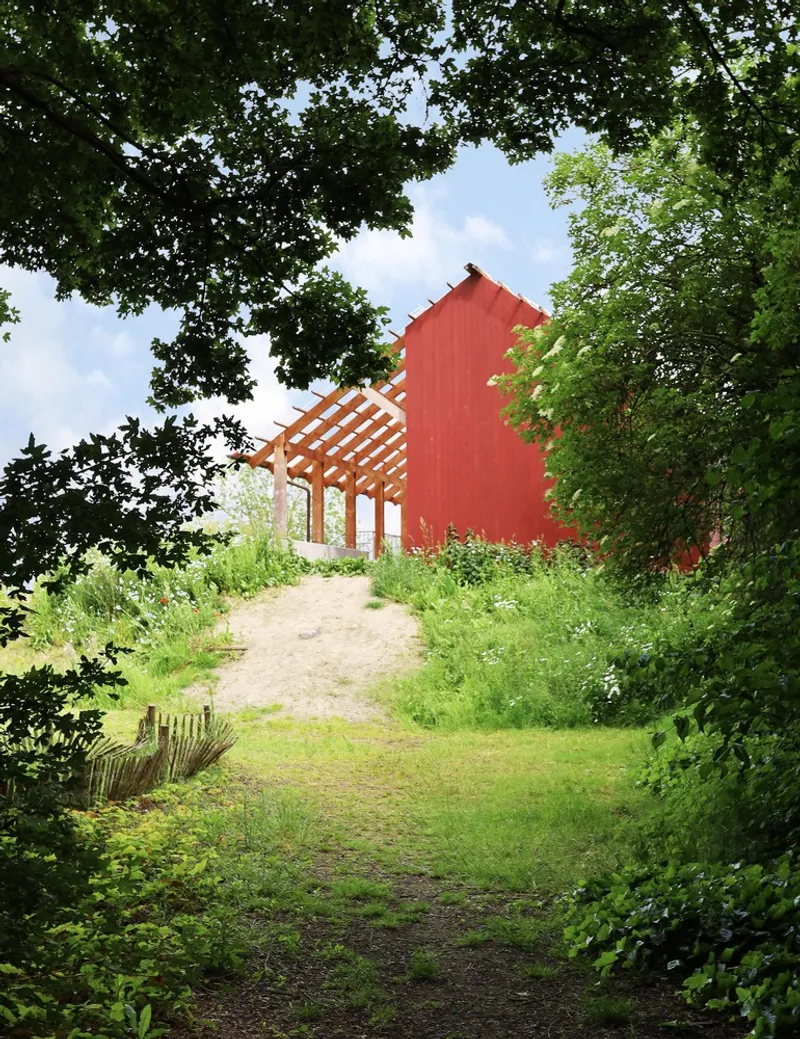
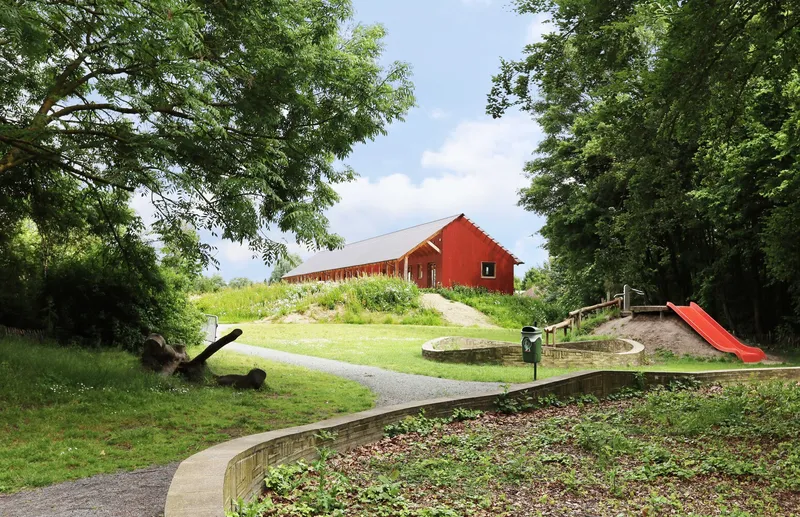
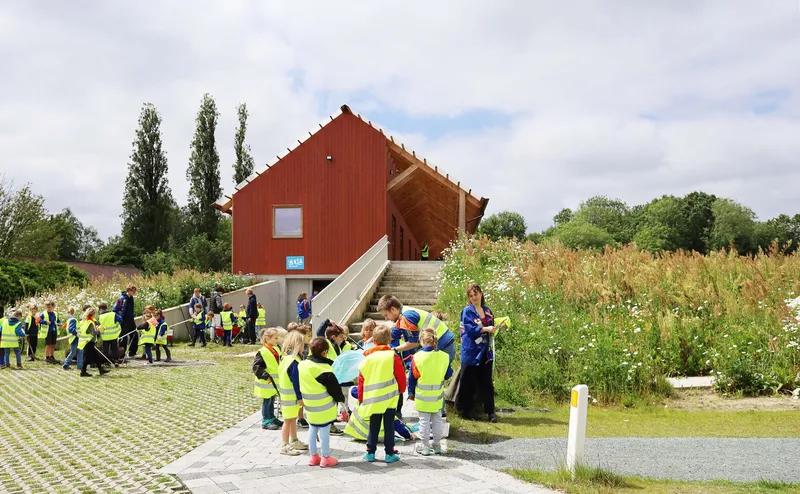
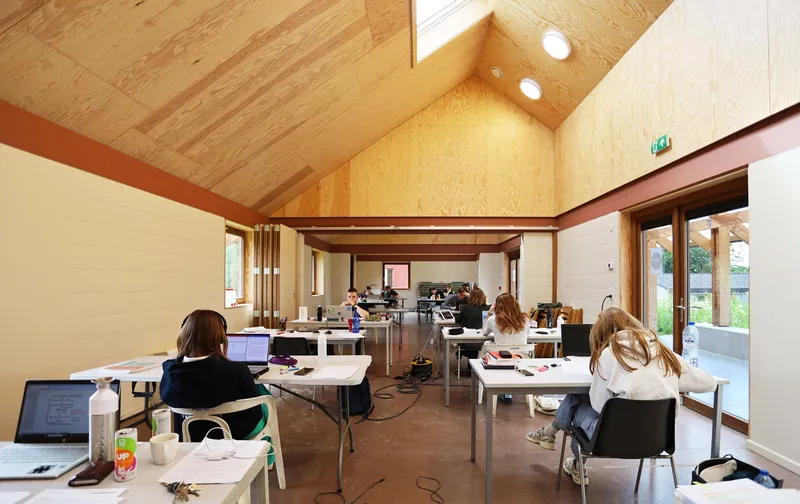
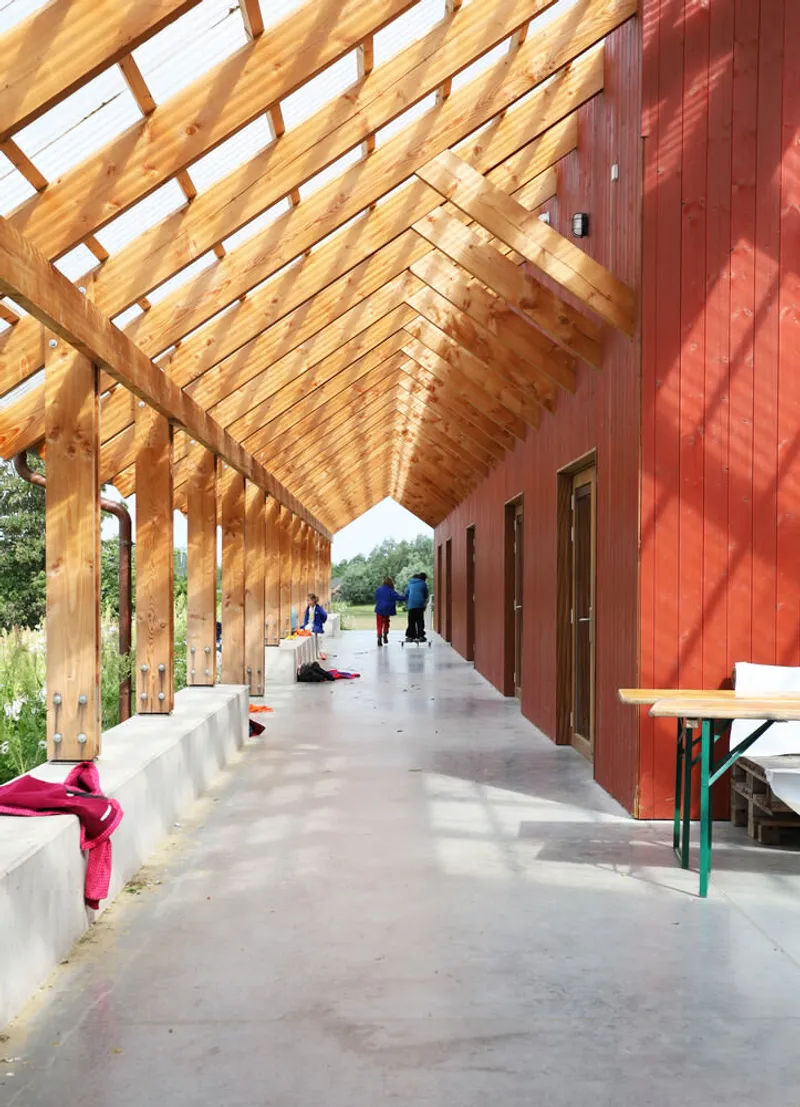
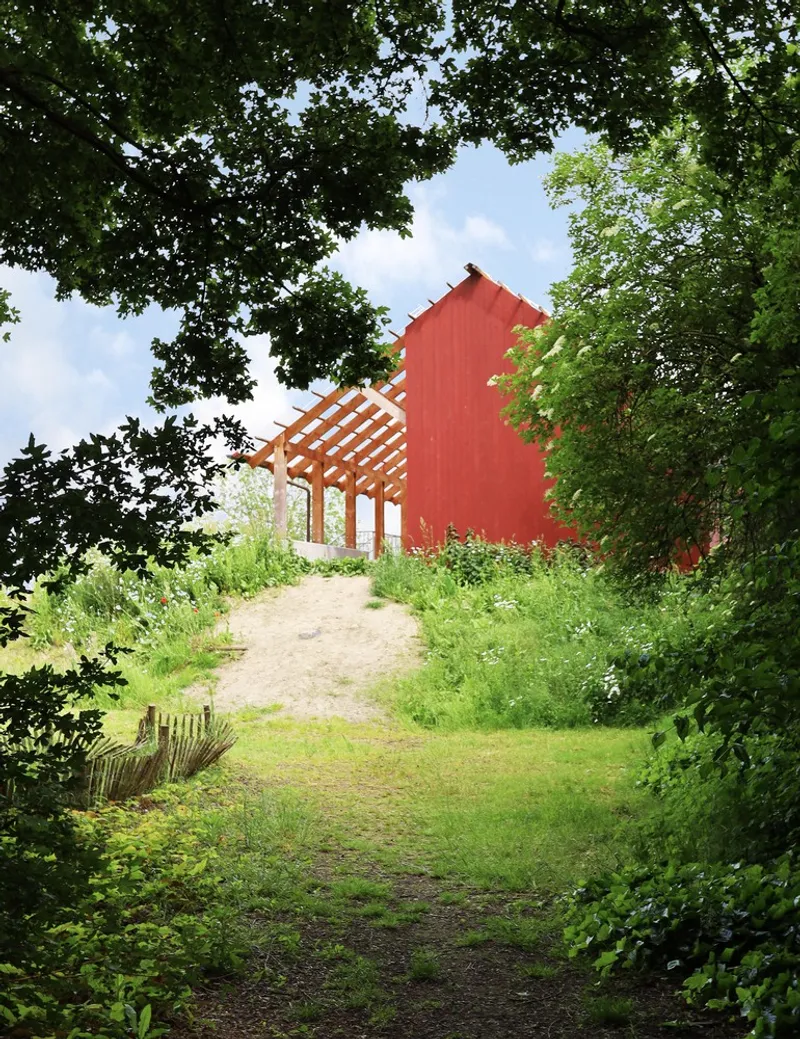
On top of this base, two elegant volumes house the heated interior spaces. Spacious and comfortable, these rooms are finished with homely materials and warm color palettes. The facades of the volumes are clad in characterful deep red planks, giving the building a distinct and inviting identity.
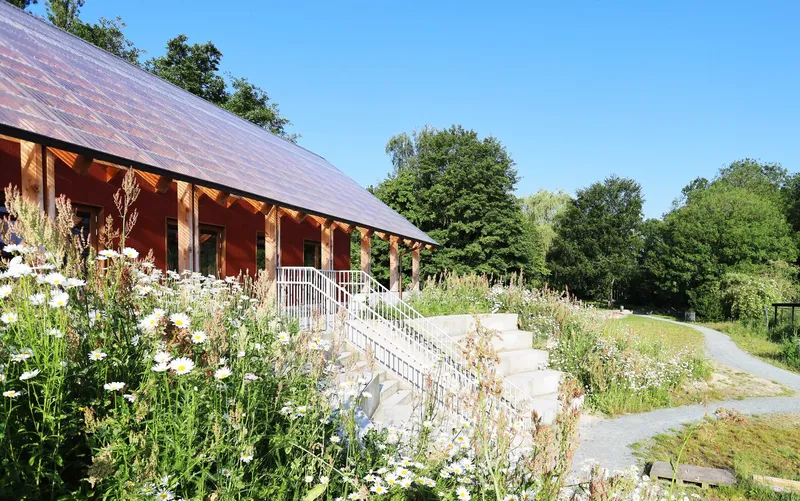
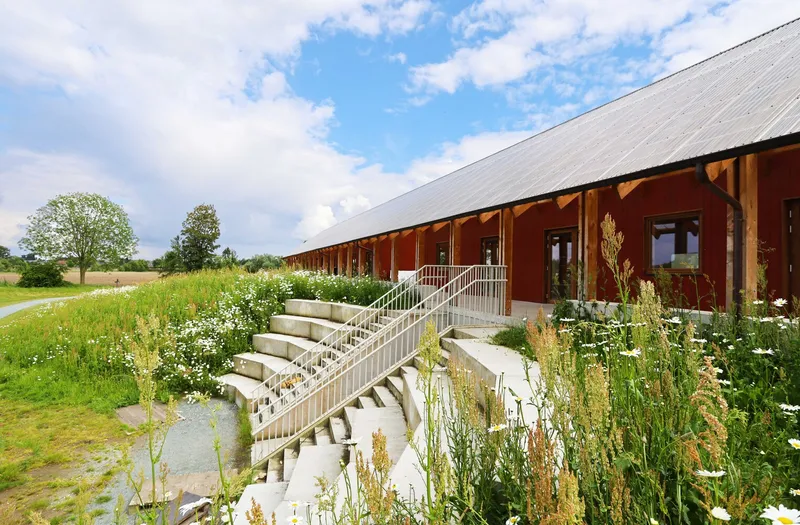
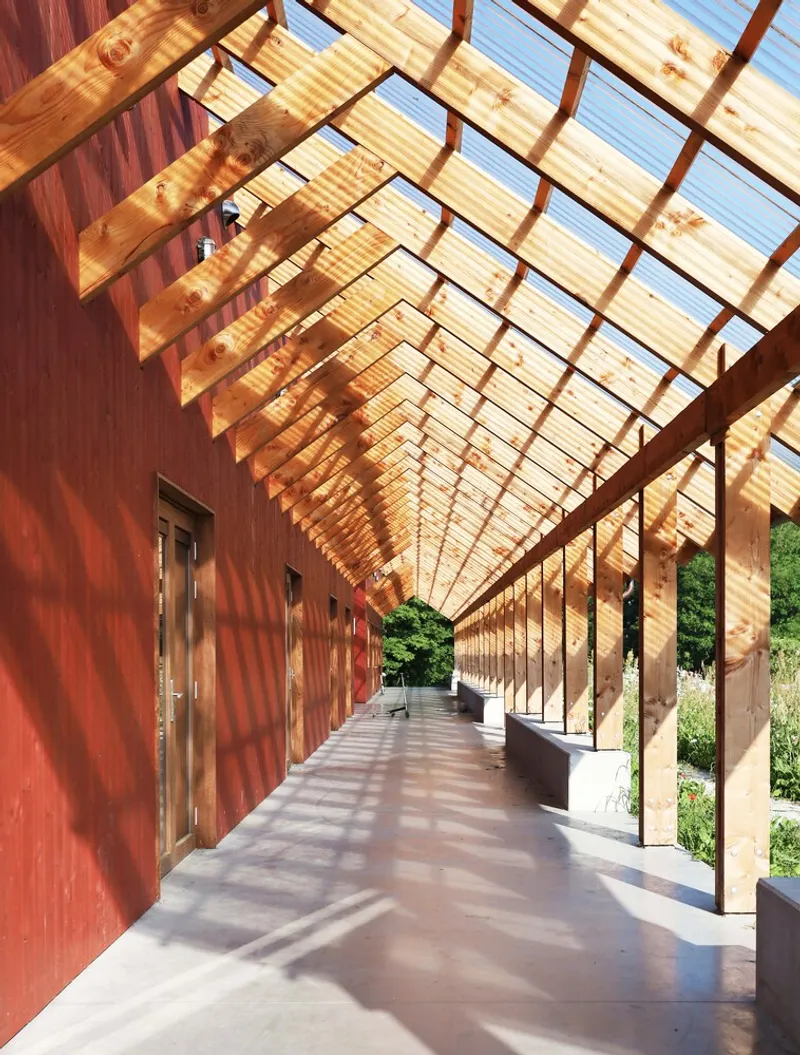
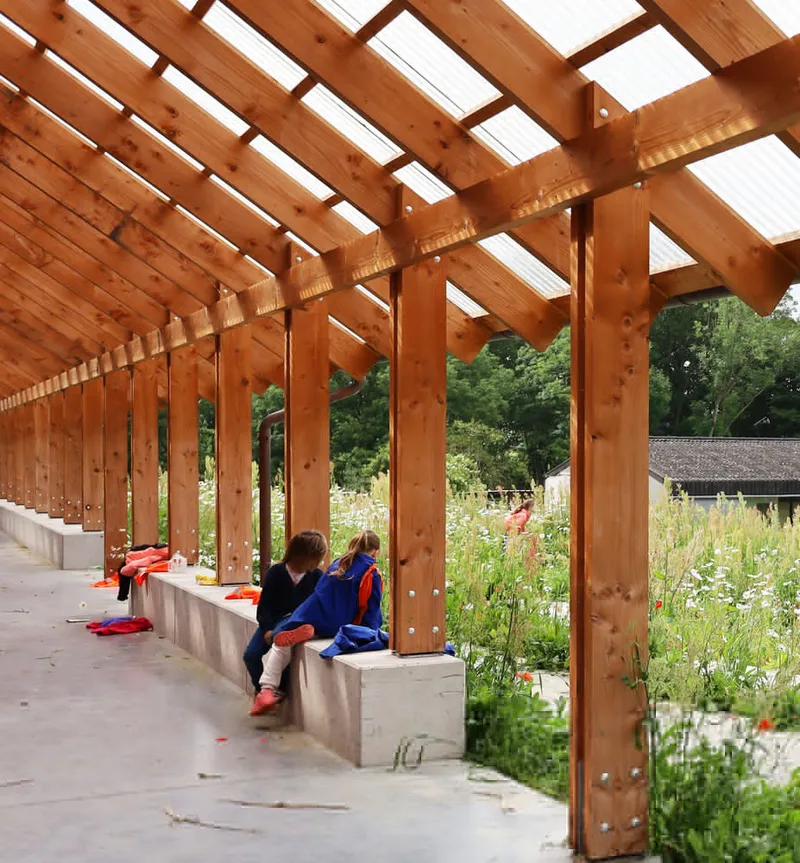
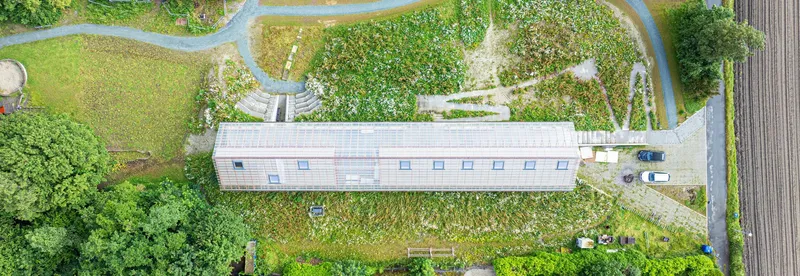
A large transparent polycarbonate roof covers the interior volumes, forming a sheltered gallery with benches. Between the red volumes, this roof also creates a covered outdoor space, visually and functionally connecting interior and exterior zones. All interior rooms open directly onto the gallery, ensuring clear and efficient circulation while fostering community interaction.
Landscape Integration and Accessibility
The architects elevated the ground level to meet the gallery, creating a new gentle hill that gives the building a light, elevated appearance while defining the site’s boundaries. This new topography encourages play, exploration, and social interaction across multiple levels.
Accessibility was a central consideration. A wheelchair ramp and staircase connect the parking zone for disabled visitors directly to the covered outdoor area. A small amphitheater integrated into the slope provides flexible seating for events, while hidden access points connect seamlessly to the sanitary and storage facilities.
Strengthening Community Connections
Thanks to its open and inviting character, the Sterrenbos Youth Building is easily accessible to local residents and is designed to support other community groups, including local associations. New soft pathways for pedestrians and bicycles, as well as semi-paved areas for vehicles, create a harmonious circulation network, making the site safer and more welcoming for everyone.
The building’s materials, spatial clarity, and thoughtful landscape design contribute to a warm, approachable, and functional public space. The combination of red planks, wooden gallery structures, and transparent roofing evokes familiarity and comfort, encouraging extended use and active engagement.
A Model for Future Community Architecture
The Sterrenbos Youth Building demonstrates how careful architectural intervention, thoughtful material choices, and site-sensitive design can revitalize public infrastructure. By creating a multifunctional, accessible, and inviting environment, Atelier Vens Vanbelle has provided a contemporary template for youth and community centers worldwide.



Popular Articles
Popular articles from the community


Lunar Spiral: Space Architecture Shaped by the Mathematics of the Universe
Lunar Spiral reimagines space architecture through Fibonacci geometry, lunar regolith, levitating habitats, and self-sustaining Moon living.

The Ocean Hive: Sustainable Architecture for a Self-Sufficient Civilization at Sea
The Ocean Hive imagines sustainable architecture at sea, where modular habitats, algae, wave power and ocean waste sustain a growing colony.

Co-Life: Senior Housing Design That Reconnects Older Adults With the City
Co-Life reimagines senior housing design through healing gardens, shared streets, workshops, and a sustainable community across generations.

Play: Fragments of Their World
Familiar architecture becomes modular playground design, creating safe spaces where displaced children can learn, connect, imagine and play.

Similar Reads
You might also enjoy these articles

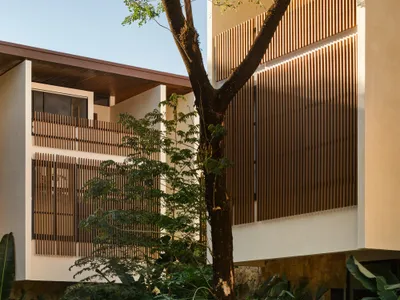
FAMM Arquitectura Organizes Ten Villas Around Courtyards and Jungle in Nosara, Costa Rica
El Molino pairs two elongated volumes with deep overhangs and timber louvers to build a compact coastal community five minutes from the beach.
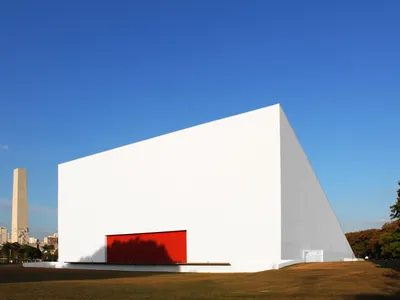
Oscar Niemeyer's Ibirapuera Park Pavilions Define São Paulo's Cultural Identity in Concrete and Curve
A constellation of modernist volumes set within São Paulo's most important urban park, conceived for the city's 400th anniversary in 1954.
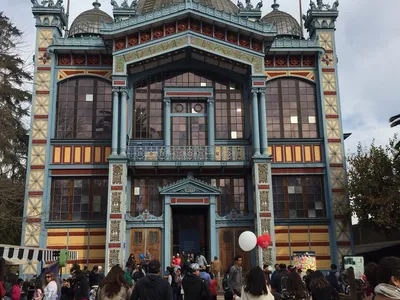
How Henri Picq's 1889 Paris Pavilion Traveled 11,000 Kilometers to Become Santiago's Artequín Museum
A prefabricated iron and glass pavilion built for the Paris Universal Exposition found a second life as a children's art museum in Chile.
Sanjay Puri Architects Wraps a Jaipur Office Tower in Capsule-Shaped Green Buffers
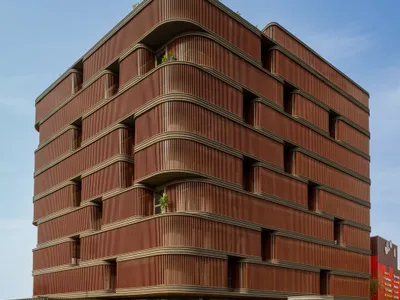
A nine-level climate-responsive workplace near Jaipur Airport uses stacked planter terraces and aluminium screens to fight 40°C heat.


Explore Architecture Competitions
Discover active competitions in this discipline



Challenge to reimagine the Iron Throne


Photograph architecture without architects


Illustrate the lost glory of Angkor Wat - Render Challenge


Design challenge to reuse E-waste
Comments (0)
Please login or sign up to add comments
No comments yet. Be the first to comment!