
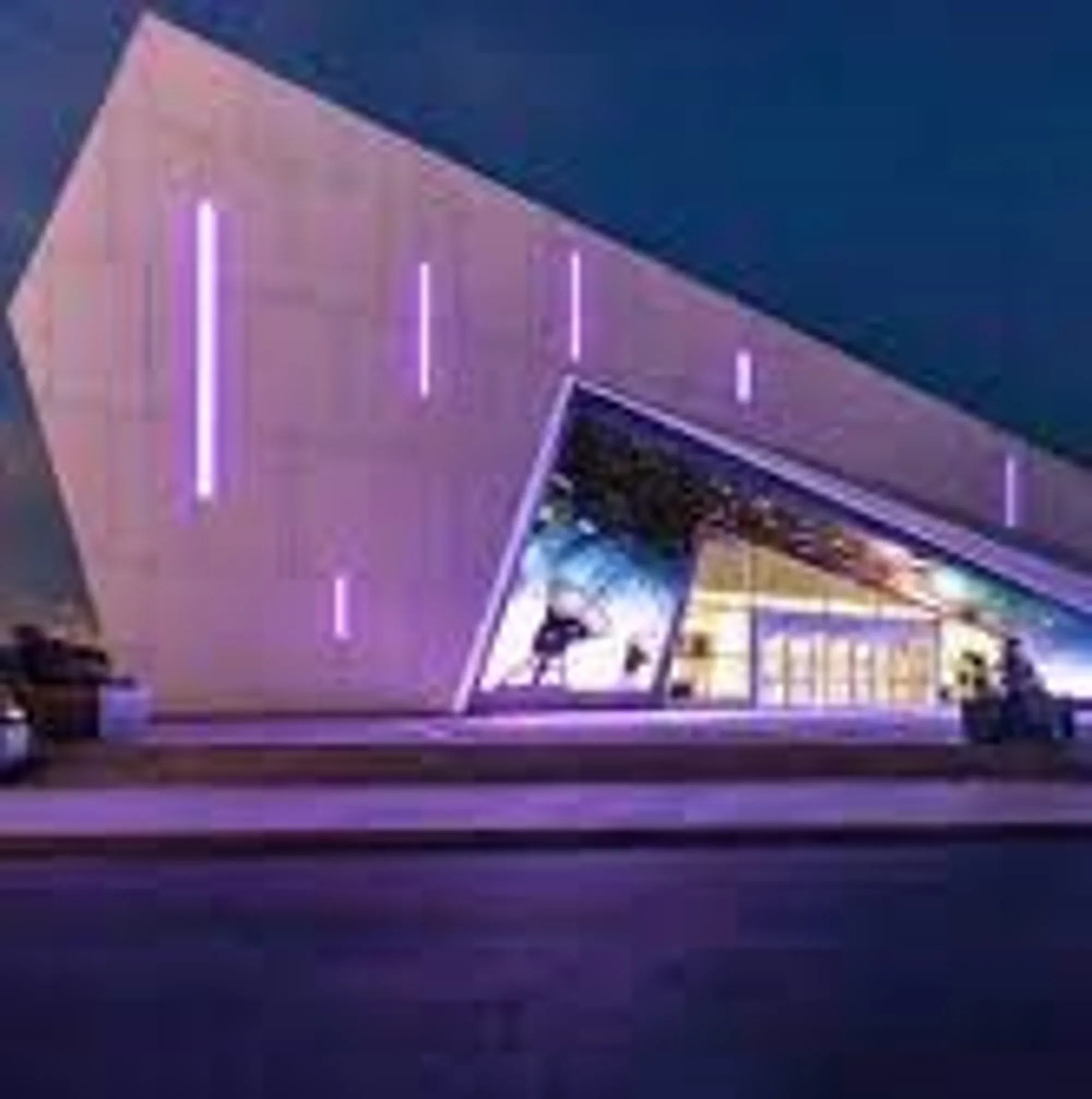
Stongehold of Art
The form of the building refers to the former Gniezno stronghold, and the interior design refers to a traditional house. The solid itself is a separate avant-garde art installation.
Technology available in the twenty-first century presents both art and architecture in a very different way than before the digital age. Before our eyes, both the process of creating works and the awareness of recipients are changing. Architecture, which accompanies various artistic forms, is a perfect link between artists and recipients in order to deepen this awareness and strengthen the bond not only between the artist, viewer and art, but also between people in general.
At first glance, the project "Stongehold of Art" resembles a bunker. It is a hermetically closed, uniform body that does not necessarily invite you inside. However, when we look around, there is something extraordinary about it. The clean façade and rounded shape stand out against the background of rectangular gray residential estates. The building is at the same time simple and well-suited to the surroundings, and also completely different, even avant-garde, by adopting an original round shape. Like art - it attracts attention in a subtle way, but it also resembles a house similar to the surrounding residential buildings.
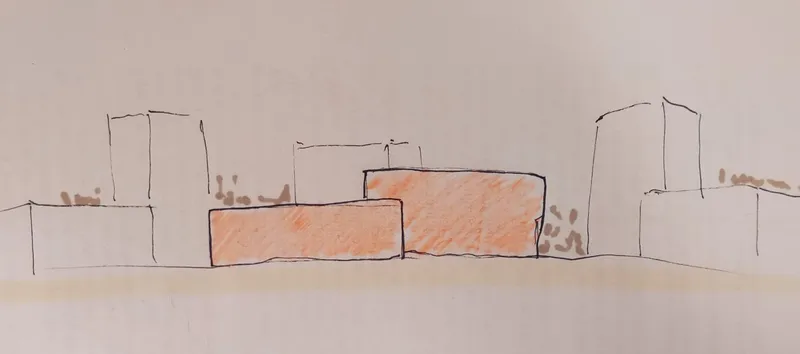
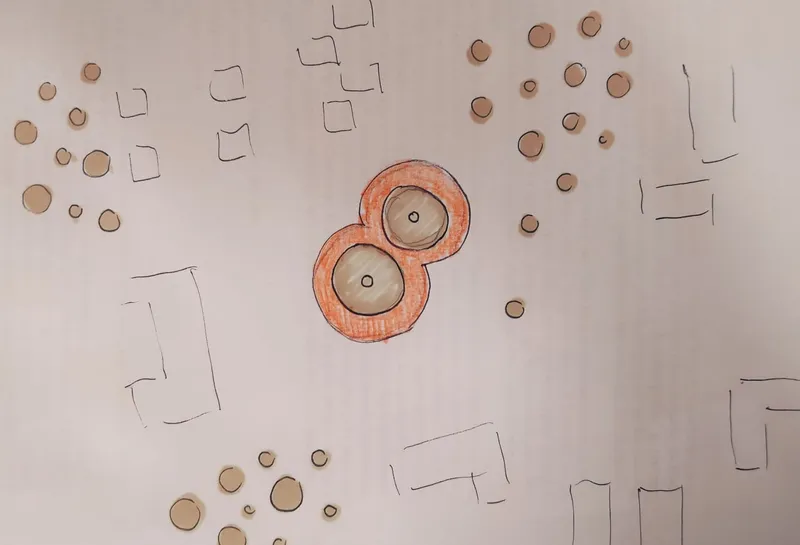
After the entry threshold is exceeded, an element of surprise occurs. It is completely different than it seemed at first. A safe bunker is really just a frame for green courtyards full of life, artistic installations, glass walls with a view of murals and bas-reliefs, as well as unexpected performances or outdoor workshops. The fortress of art is literally the frame for the artistic life, that is, the metaphorical image that lies within. Inside the building there are exhibitions, studios, open space and experiment zones, but it is in the courtyard - behind the frame, that there is a work of art - lively gardens, where the creators and recipients are integrated. They can discuss together, influence the space, work, create unusual things and take part in events.
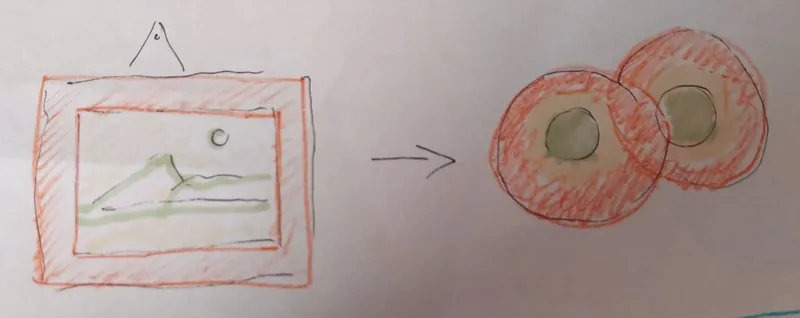
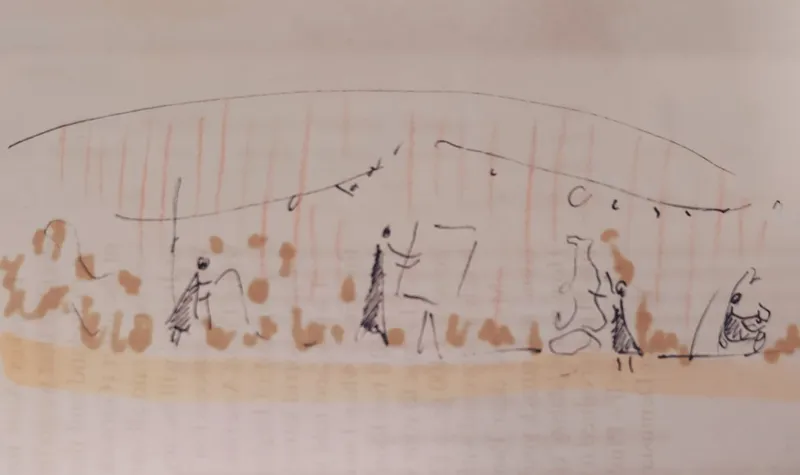
The shape of the Stongehold of Art also strongly refers to the history of the place. Gniezno was the most important location for the beginnings of Poland, the first capital of the country, and it was there that life, crafts, culture, history and many other areas began to take shape. The shape of the building resembles the original Gniezno stronghold. Inaccessible from the outside, like a defensive wall, which, however, leads to a rich interior, being protected the best. As in the old castles, to get to the city, and here to the house of art, you have to go through the gate. The roof is used as a walking passage, acting like the old elevated defensive walls that also were used for walks but in the other way - to check whether the city was in danger danger.
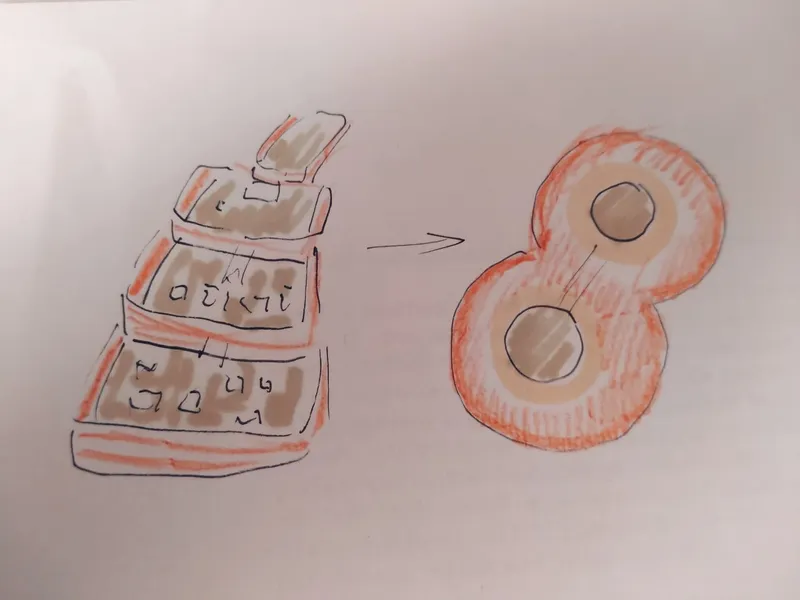
Apart from integration spaces, a large part of the building - living area, is also primaly intended for artists. The green courtyard, cut by a staircase into two smaller courtyards, allows to distinguish the loud zone from the more calm one. Visitors also have access to the courtyard from the side of the artists' apartments, but instead of events, there are quiet initiatives such as yoga, meditation, quiet landscapes and land art zones, and above all, you can admire large-format paintings and bas-reliefs displayed behind a glass facade. Residential zones are available only to artists, but thanks to the glass wall along the communication route, you can admire the art that decorates the corridors. Each artist can use any part of the corridor wall adjacent to his apartment. The walls of the building are like a canvas, and the architecture itself also creates one large art installation.
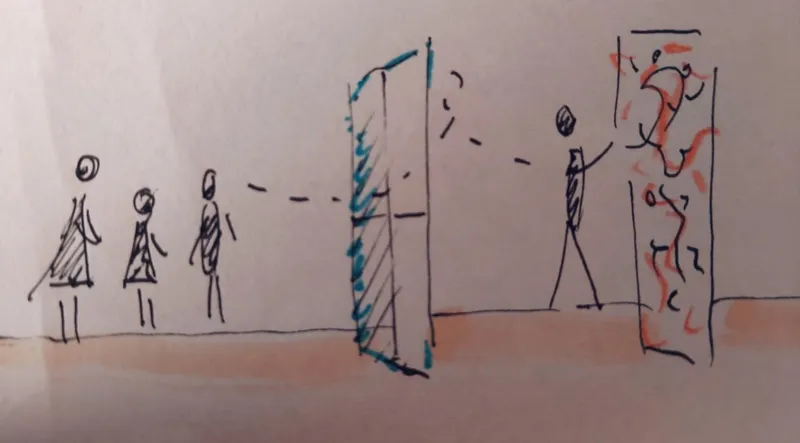
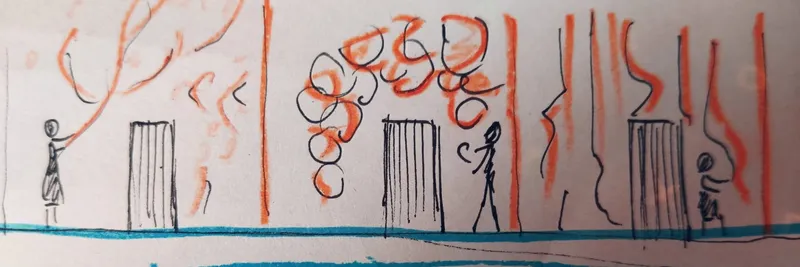
From the technical point of view, the percentage distribution of spaces and the height of the building were kept in line with the competition requirements. The two main blocks allow for easy division into public utility and residential functions. The shapes of the solid remain in active dialogue with each other and maintain a balance. They complement each other, give the impression of being connected at the perfect moment, the center of the art house is also a "golden mean", a compromise between providing artists with sufficient privacy and the recipients with sufficient contact with artists at every stage of creating works. It is extremely important that viewers can both see and independently participate in the creation process, and the entire building works with the artists, changes and constitutes a living art installation. Understanding art is possible thanks to the architecture designed in this way, and at the same time, through its action, it allows even to partially blur the boundaries between artists and recipients, the circles of solids are like a circle of life - fluid and based on mutual dependencies.
The rooms inside the building are arranged according to a specific pattern. The body is not only a fortress hiding a rich interior, but, like a typical house, it is also a literal house of art. At the entrance, we have a reception with a cloakroom and hidden toilets nearby. When going to the recreation, workshop and exhibition zones, we deal with open studios, where we can see art "from the kitchen", typically exhibition corridors, where art is consumed like in a dining room, while the courtyard, i.e. the living room, serves as a platform for discussions, events, louder events - just like in a residential building. It is also the most exposed part. Each zone is intertwined with each other, but they form a whole resembling a traditional open-plan house. The art house is not limited only to the walls of the building, but applies to the entire space that accompanies the architecture, similar as well as gardens next to houses, here also roofs, interiors courtyards, each element of the building refers to art, and at the same time allows you to feel at home, feel at home, gain inspiration and create surroundings, just like in your own home. The art house is not a museum, but a safe and friendly space for both artists and recipients, very comfortable and familiar.

Popular Articles
Popular articles from the community


Play: Fragments of Their World
Familiar architecture becomes modular playground design, creating safe spaces where displaced children can learn, connect, imagine and play.

The Musturak Paradise: Senior Living Architecture for a Connected Future in Temara, Morocco
The Musturak Paradise reimagines senior living architecture in Temara via private homes, social spaces, culture, community, and shared care.

Co-Life: Senior Housing Design That Reconnects Older Adults With the City
Co-Life reimagines senior housing design through healing gardens, shared streets, workshops, and a sustainable community across generations.

Hill & Cross Opera: Sculptural Opera House Architecture Shaped by Tallinn’s Landscape and Identity
Hill & Cross Opera reimagines opera house architecture in Tallinn through its sculptural hill, civic plaza, glass wave and a luminous cross.

Similar Reads
You might also enjoy these articles

Day and Night Park: A Time-Based Urban Newsstand in Beijing
A temporary urban newsstand in Beijing blending travel, light, and reading through poetic colors, compact form, and community-focused design.

Modernist Patio Renovation in El Masnou, Barcelona by Oliver Segura Arquitectura + Cebrià Arquitectura
Modernist patio renovation blending tradition and innovation with a movable pool, leveled floors, and Catalan materials in El Masnou.

Alto Residencial Coop: Cooperative Housing Development in Santiago de Compostela by Carbajo Barrios Arquitectos
A linear cooperative housing complex blending white volumes and perforated metal façades, enhancing community living, natural light, privacy, and urban integration.
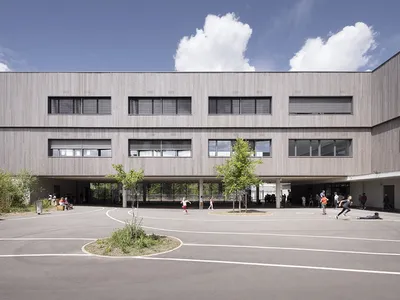
Vil Genis School by BPA ARCHITECTURE – Massy, France
Vil Genis School in Massy, France, features sustainable design, south-facing classrooms, community integration, accessible spaces, and modern educational architecture.
Explore Architectural Form Competitions
Discover active competitions in this discipline



Challenge to design locus for the upliftment of human rights

Bring back Drive In's


Design challenge to reuse E-waste
Comments (0)
Please login or sign up to add comments
No comments yet. Be the first to comment!