
Studio Stuckyi Wraps a Mangwon Commercial Building Around a Flagpole Staircase
A 295-square-meter mixed-use tower in Seoul's Mangwon-dong neighborhood treats its stairwell as both structure and protagonist.

Seoul's Mangwon-dong district is a labyrinth of tight lots and low-rise buildings where every square meter is contested. On a back road adjacent to a parking lot, Studio Stuckyi has inserted a four-story commercial building that turns its most mundane element, the staircase, into its defining architectural gesture. Commissioned by THINKofME, the REIKIS Mangwon Commercial Building packs retail space, dining, and a rooftop guest house into just 295 square meters of gross floor area on a site barely larger than a generous apartment.
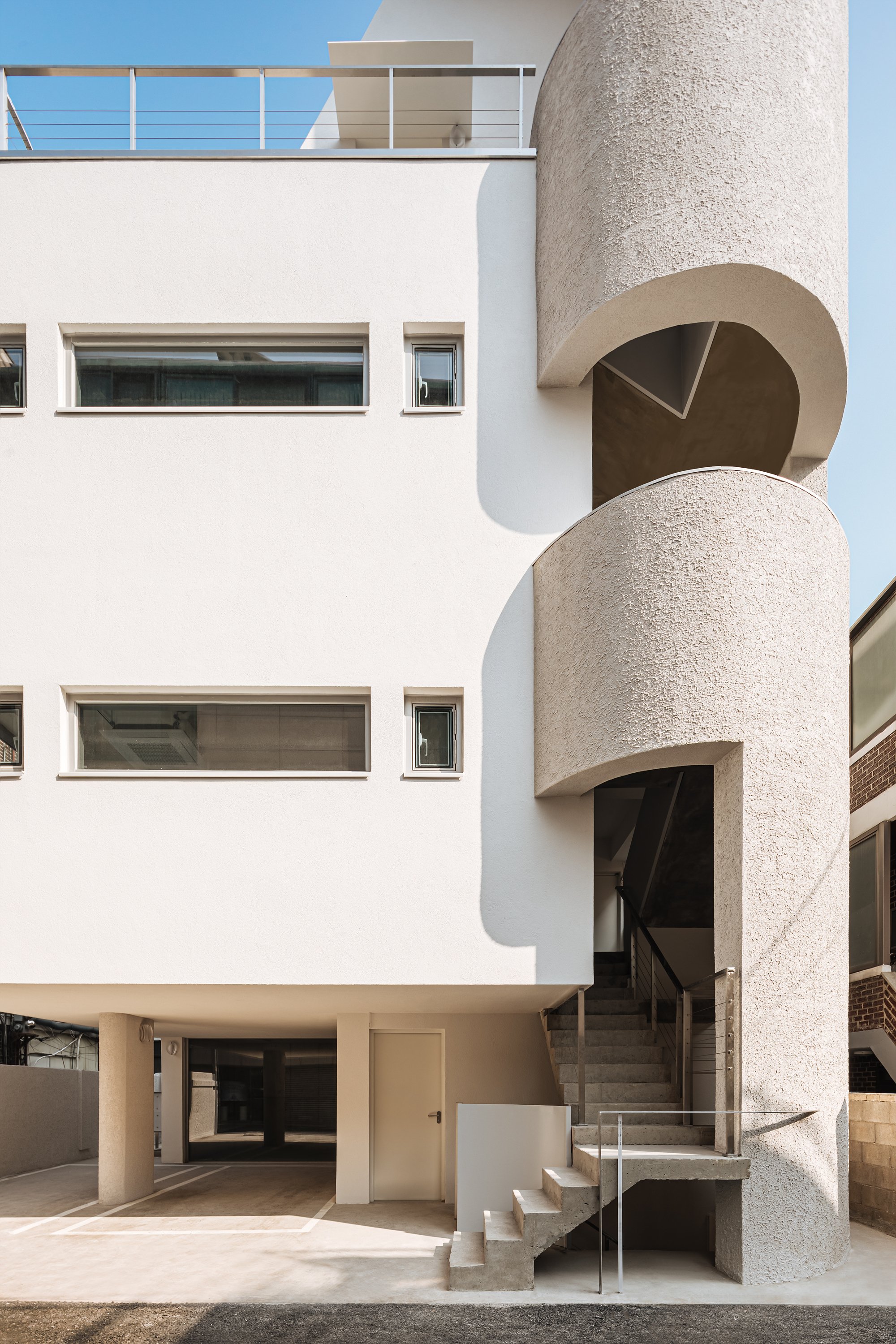
What makes the project worth examining is not its program, which is straightforward, but the way it resolves an absurdly constrained site through a single formal move. The cylindrical stairwell, finished in a rougher, darker plaster than the rest of the building, rises past the roofline like a flagpole. It anchors every floor plan, shapes the columns, and gives the building an identity visible from the main road even though the entrance sits on a quieter back street. It is a building designed to be read from a distance and then discovered up close.
A Cylinder Against the Grain
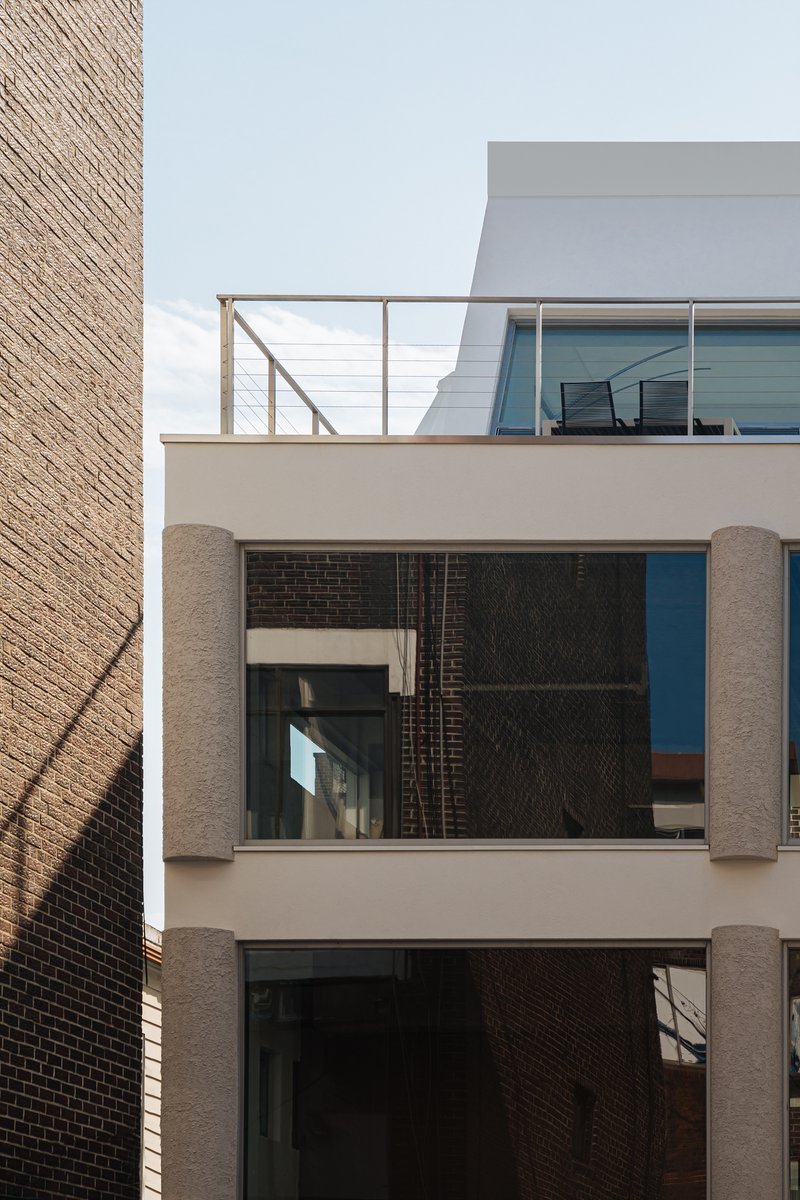
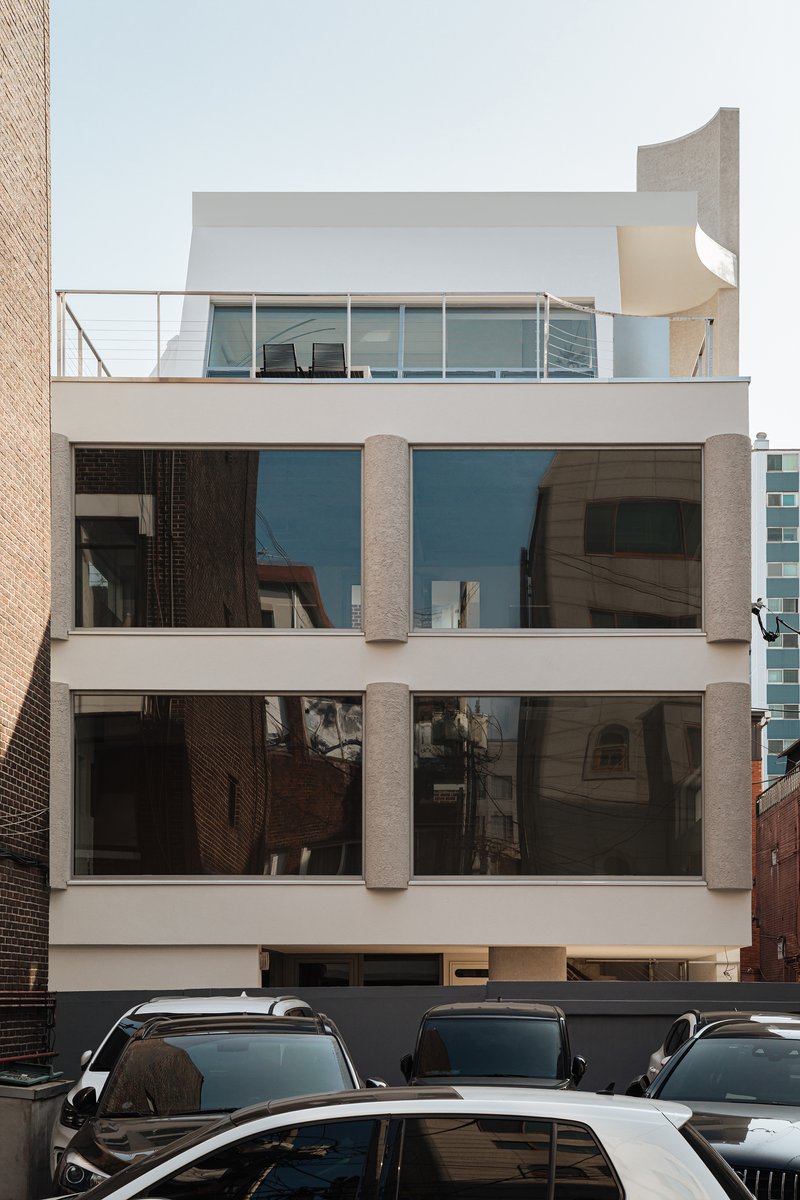
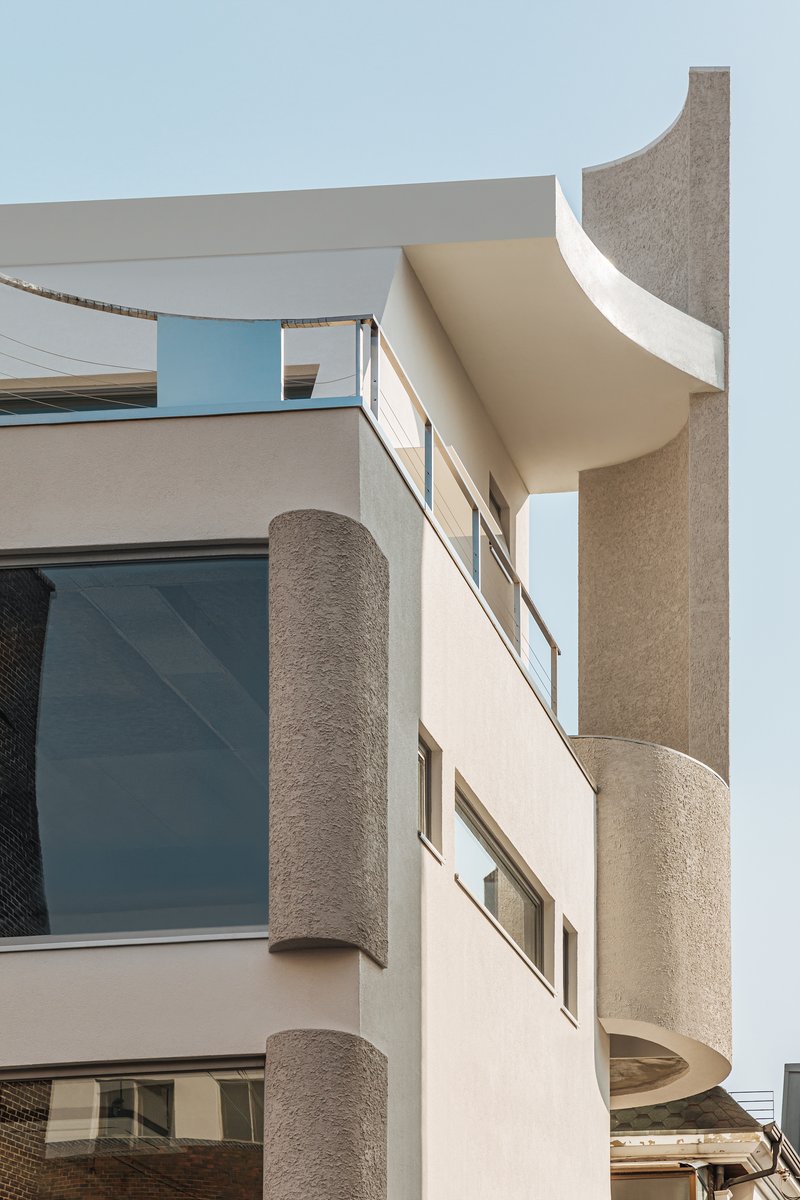
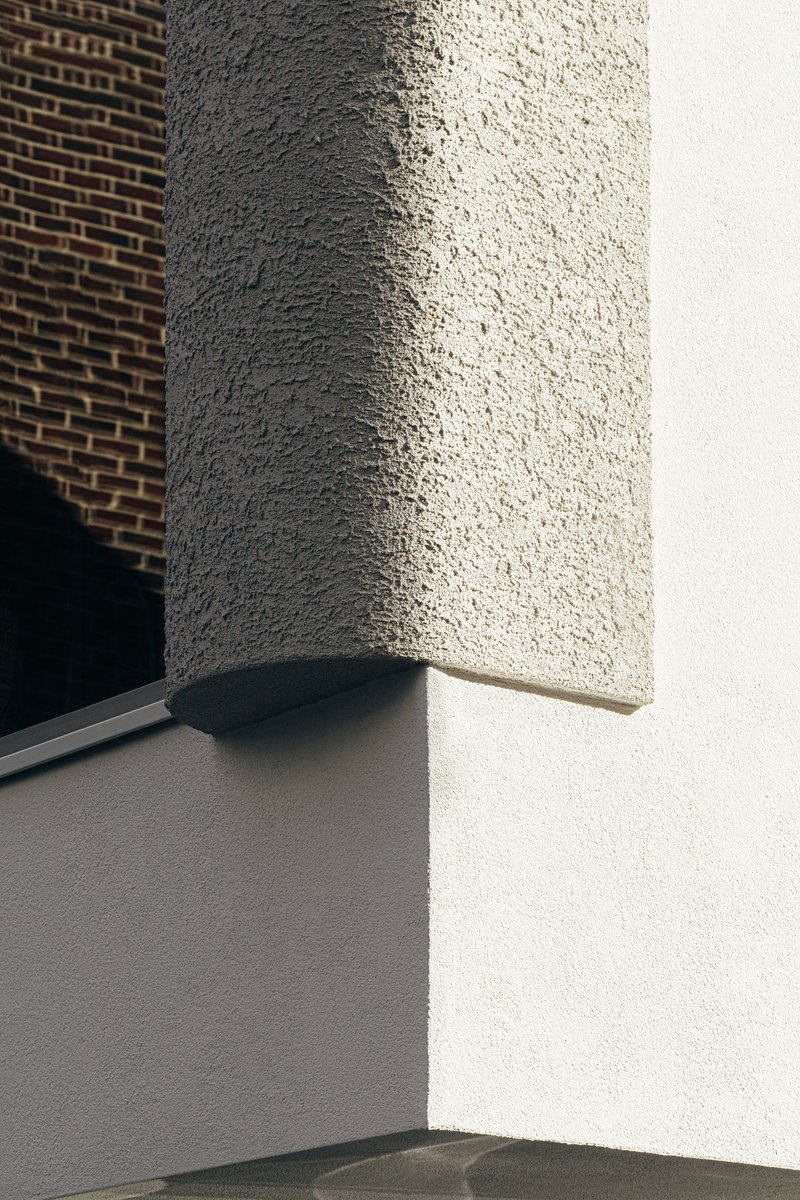
From the street, the building reads as a dialogue between two surface conditions. Smooth white stucco planes frame generous windows on the south-facing elevation, while the cylindrical stair shaft punches upward with a coarser, grainier texture. The semicircular geometry of the stairwell is not confined to a single element; it propagates into the building's columns, which echo its curvature and give the piloti level a soft, almost biomorphic quality against the hard edges of adjacent brick party walls.
Stacked balconies with floor-to-ceiling glazing give each floor its own relationship with the street. Between parked cars and overhead power lines, the facade manages to hold its composure. The textured cylinder acts as a visual anchor, pulling the eye upward and distinguishing the building from its neighbors without relying on material extravagance. The entire exterior is a reinforced concrete structure finished with an STO system, keeping things economical while allowing those careful surface contrasts.
The Stairwell as Building
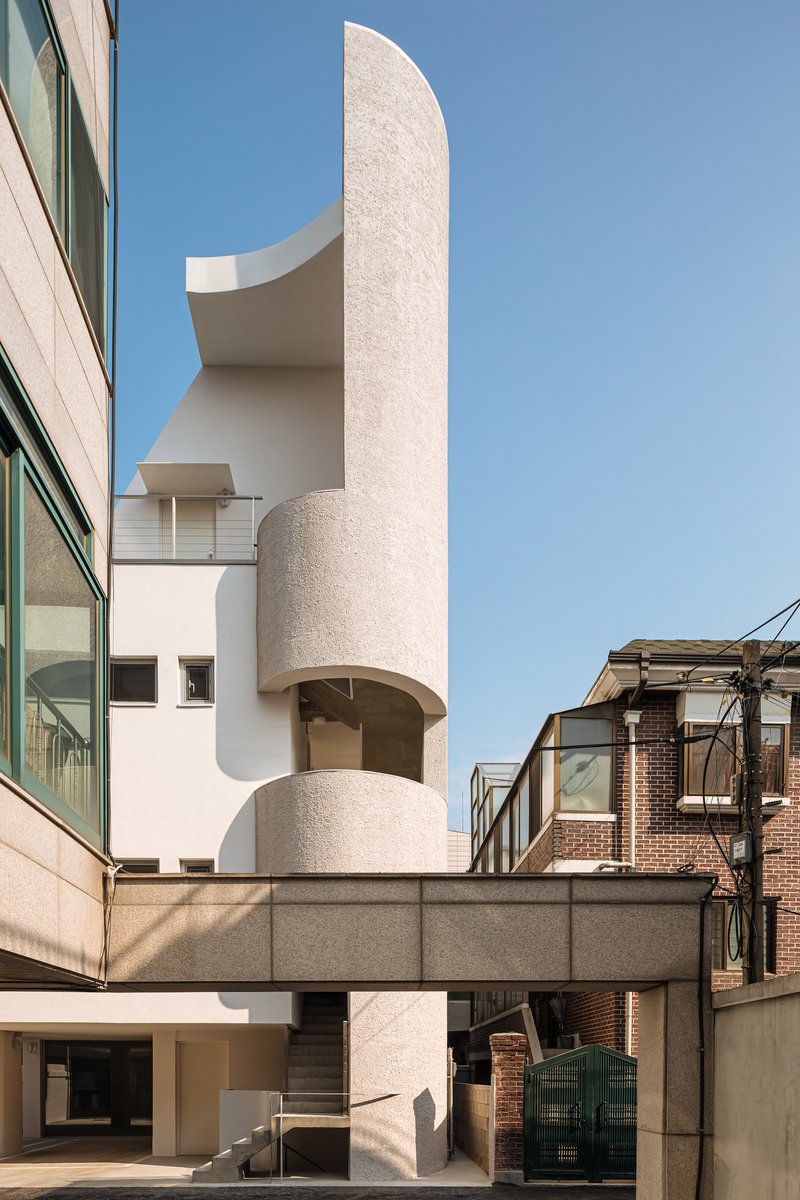
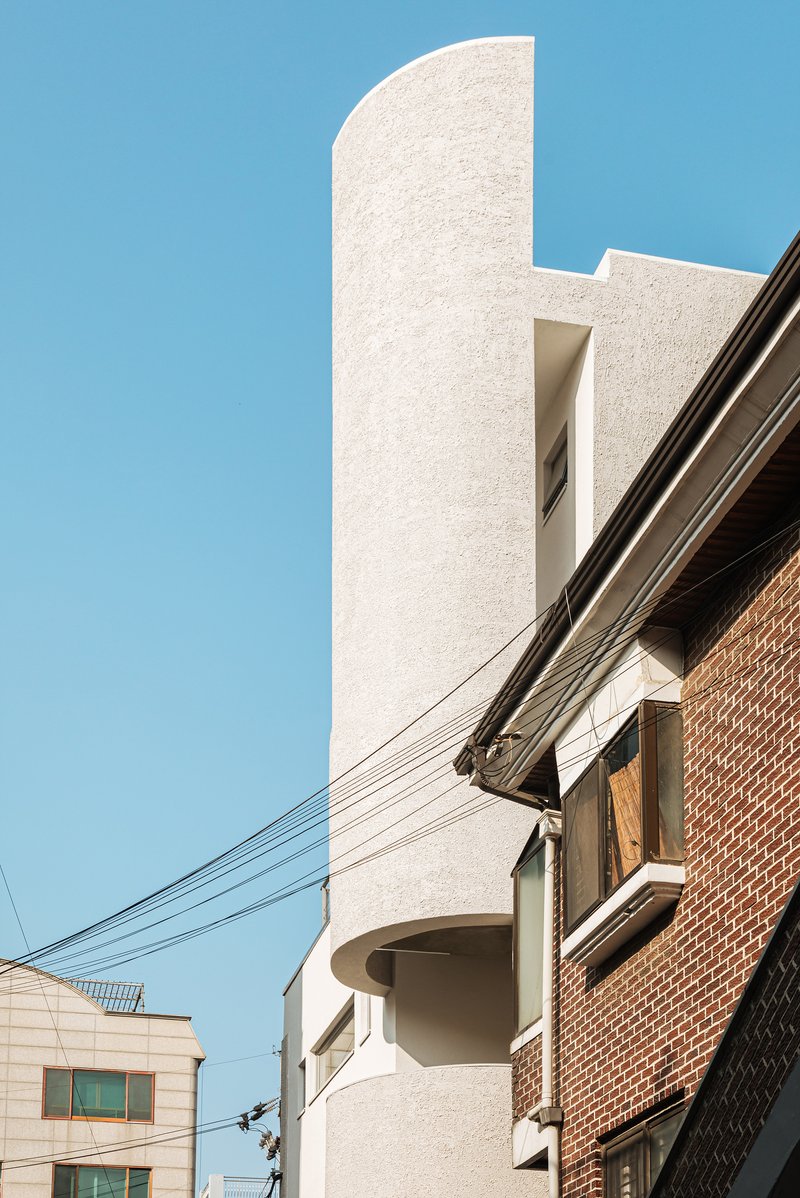
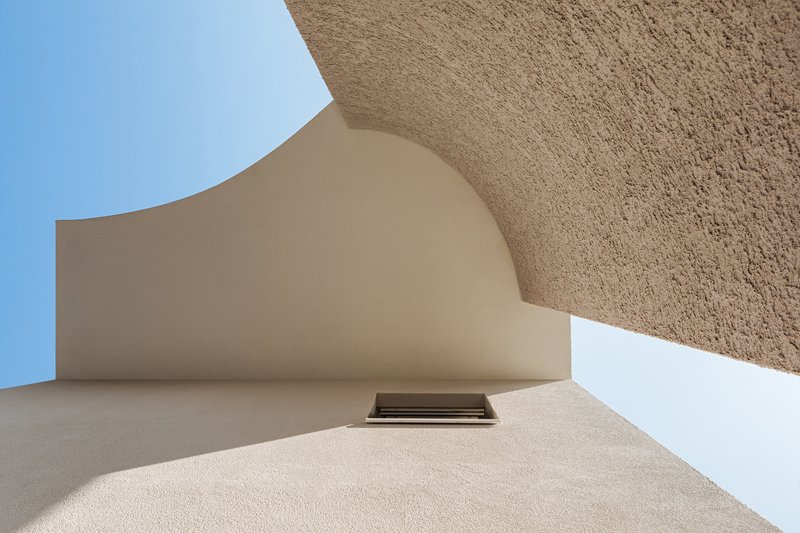
The staircase is not tucked away. It announces itself as a freestanding volume, its curved skin wrapping around the building's corners and rising above the roof as though the stairs simply refused to stop. The darker, rougher plaster finish marks it as an element apart from the clean white planes of the commercial floors. Looking up from the base, a small skylight pierces the top of the shaft, pulling daylight down through the core and giving the circulation spine its own interior atmosphere.
The decision to externalize the stairwell is pragmatic as much as it is expressive. On a 119-square-meter site with a building coverage ratio just under 60%, every centimeter of floor plate matters. Pushing the stair to the perimeter liberates the commercial floors, and the wider-than-usual hallways connected to it double as small display gardens, a clever move that transforms leftover corridor space into curated moments between floors.
Ground Level: Yard as Extension
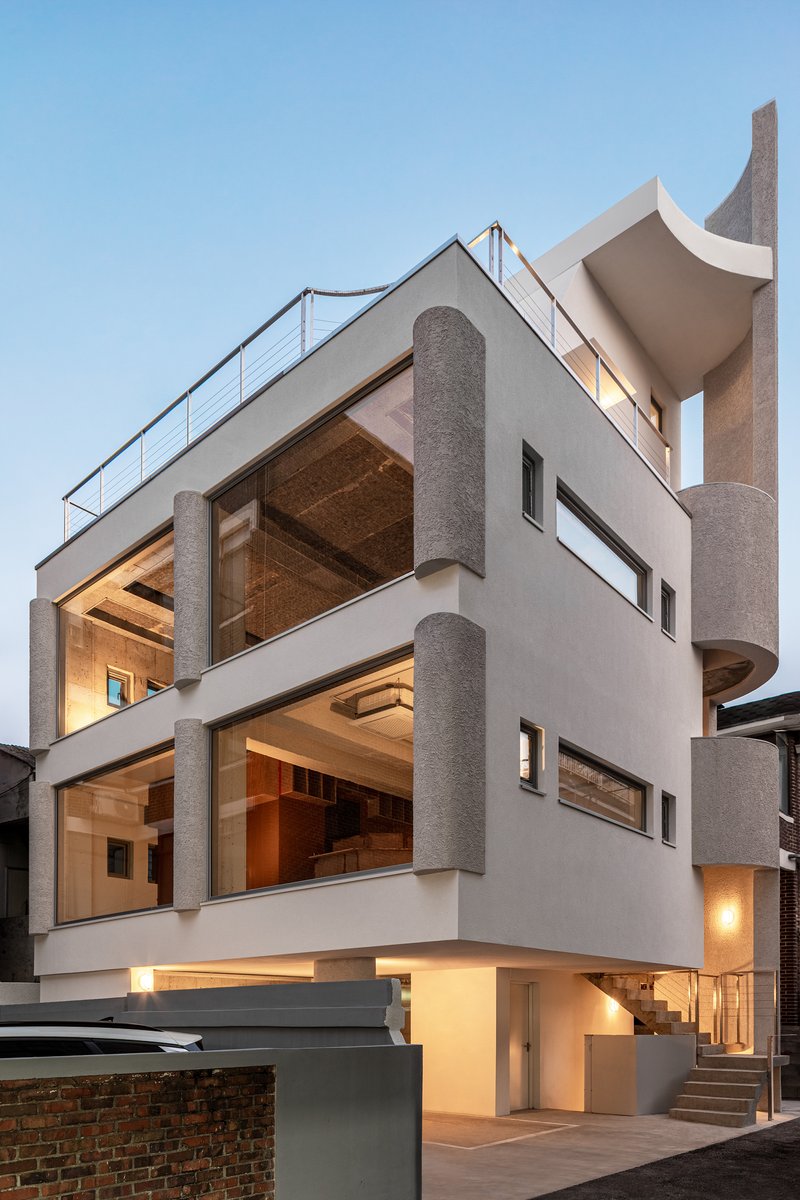
Approximately half of the first floor's area is given over to an outdoor yard, a generous sacrifice on a site this small. The yard extends the road surface, blurring the boundary between sidewalk and storefront and drawing pedestrians in. Cylindrical columns frame recessed glazing at the piloti level, and exposed timber ceilings glow warmly at dusk, signaling activity inside. The effect is more courtyard than commercial frontage, an invitation rather than a display.
The close-up texture of the corner pillars reveals careful plaster work, with angled sunlight catching the grain and lending the surfaces a tactile weight that photographs only partially convey. Against the neighboring brick wall, the stucco columns feel deliberate, almost geological. It is a building that rewards proximity.
Commercial Floors and Interior Logic
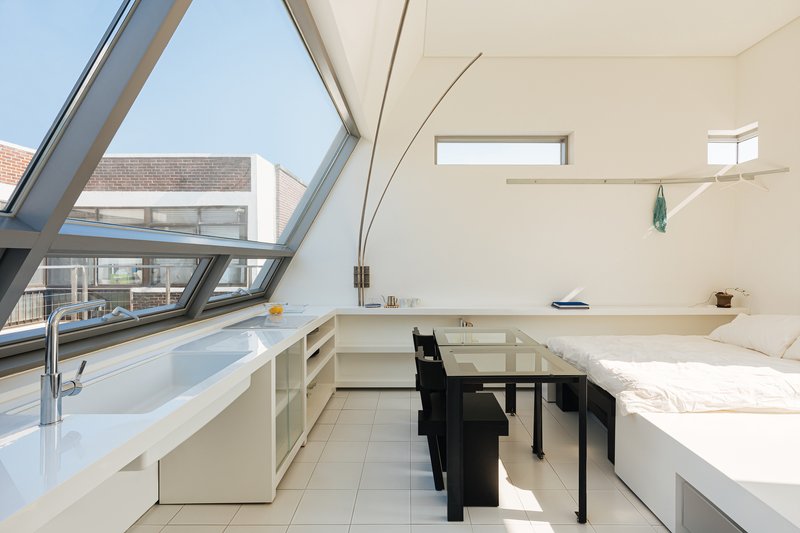
The second and third floors are each divided into two spaces, creating compact retail units organized around the central stair. Interiors are restrained: white tile floors, built-in counters, and generous glazing that floods the rooms with light. A studio space on an upper level features angled glazing and a skylight, giving a room that could easily feel boxed in a surprising sense of openness.
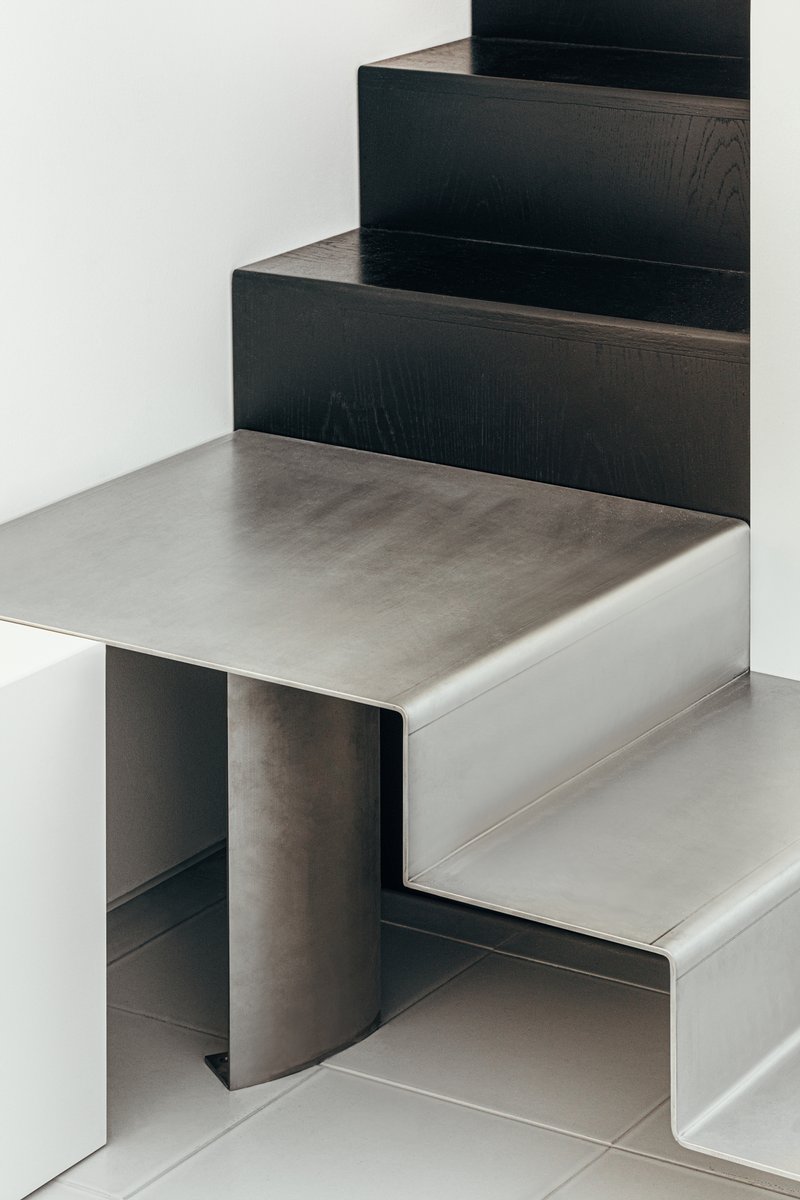
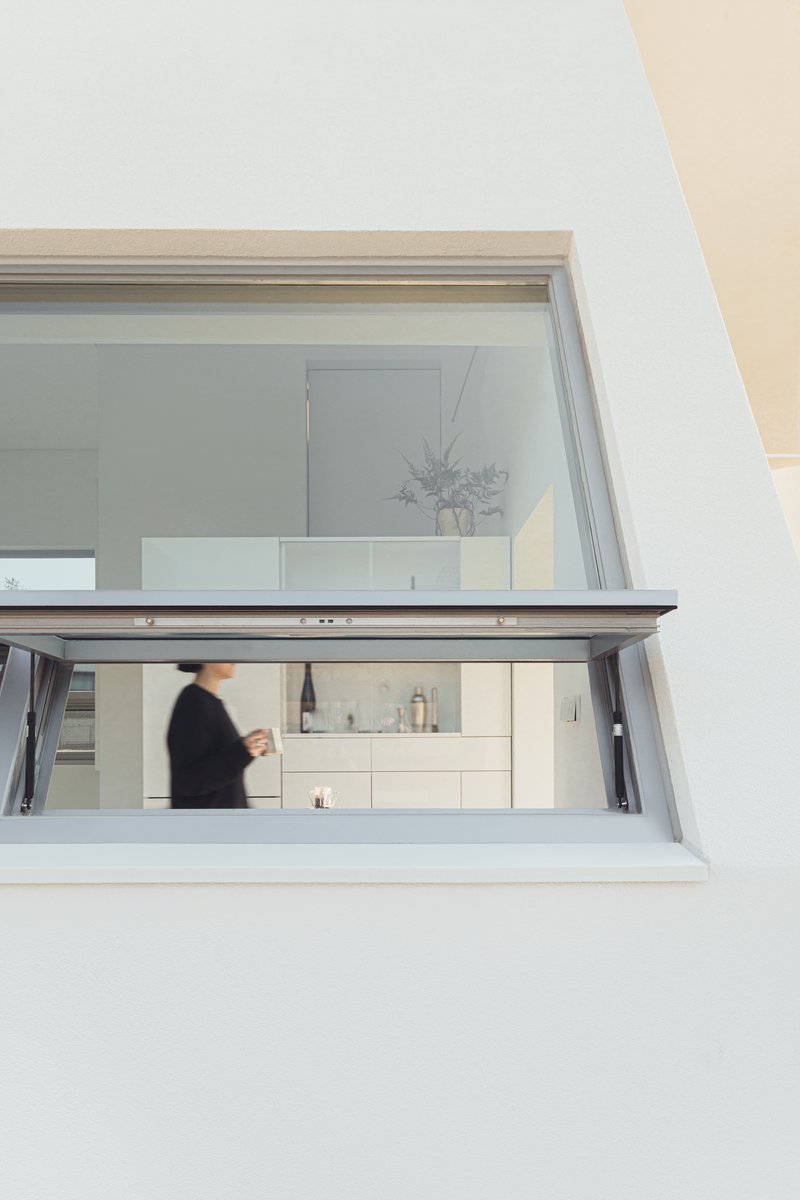
Material details are handled with precision. Folded metal stair treads meet black timber risers in crisp, legible joints. The kitchen on the fourth floor sits beside a window with glass folding doors that enable pass-through service to the terrace, a programmatic detail that reflects the designers' interest in how food, commerce, and hospitality overlap in contemporary Seoul. The cut window on the fourth floor's side wall further reinforces the indoor-outdoor interaction, treating the terrace not as leftover space but as a functional extension of the interior.
The Fourth Floor and Rooftop Guest House
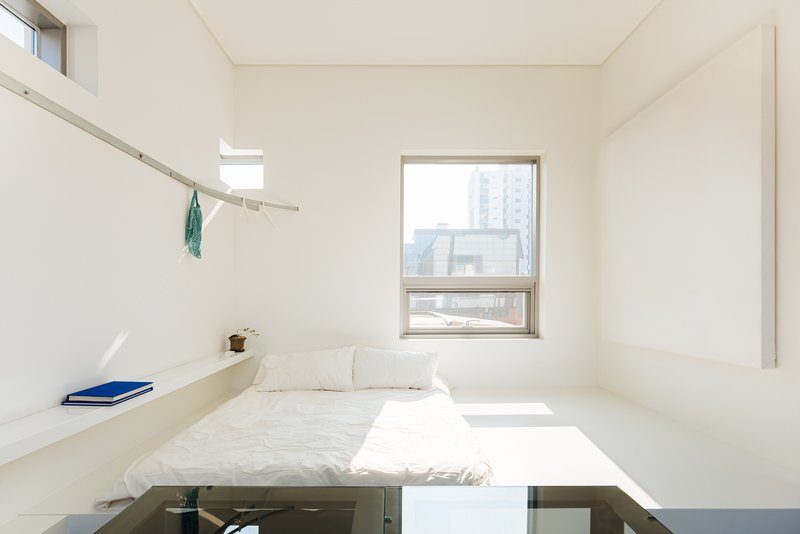
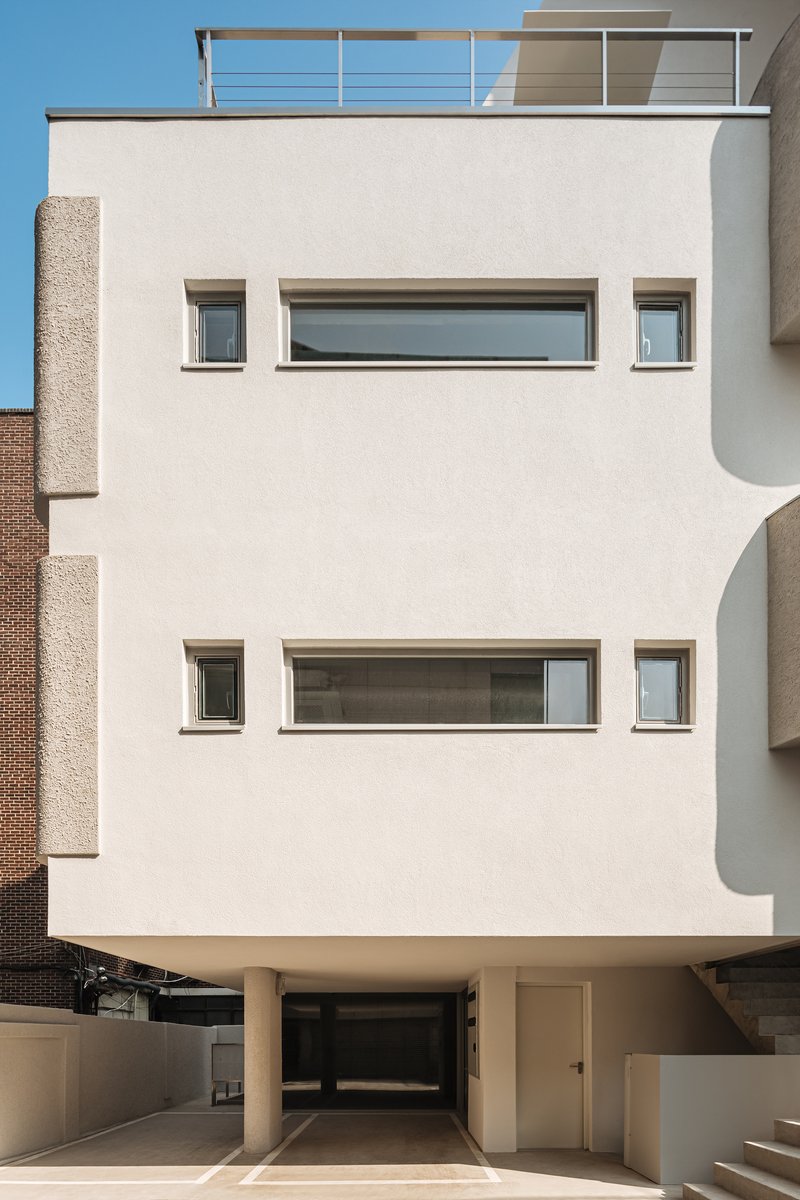
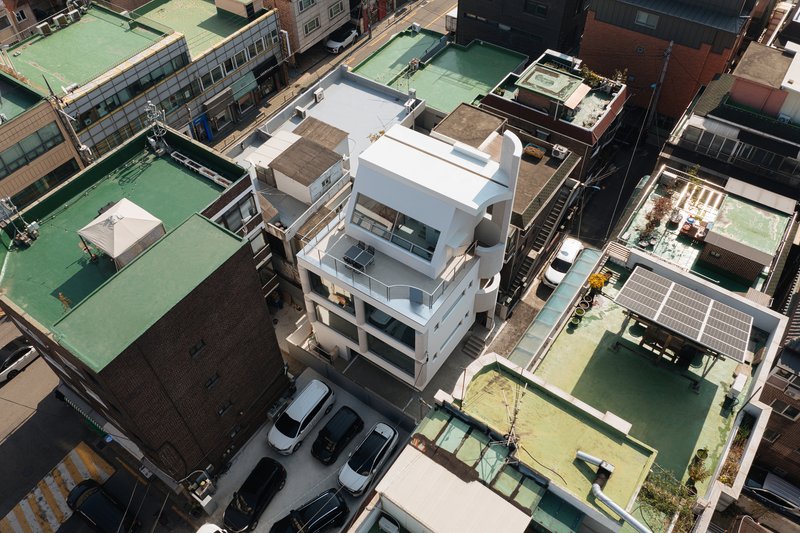
The fourth floor is significantly narrower than the floors below, stepping back to create a terrace and opening the building to light on three sides. A guest house occupies this level, complete with a built-in bed platform, a compact restroom tucked into the curved stairwell volume, and a single window that frames the dense rooftop landscape of Mangwon-dong. The room is spare and intentional, every surface white, every element built in.
From the aerial view, the building's white mass and rooftop terraces stand out sharply against the green metal cladding and mixed-use fabric of the surrounding blocks. The stepped massing is legible from above, each setback creating usable outdoor space rather than decorative gesture. It is a compact building that punches above its weight in terms of livable surface area.
Context and Urban Fabric
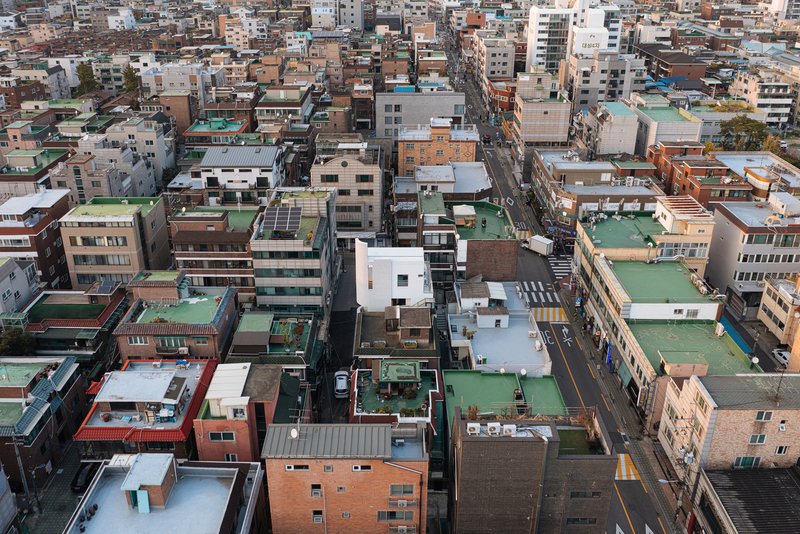
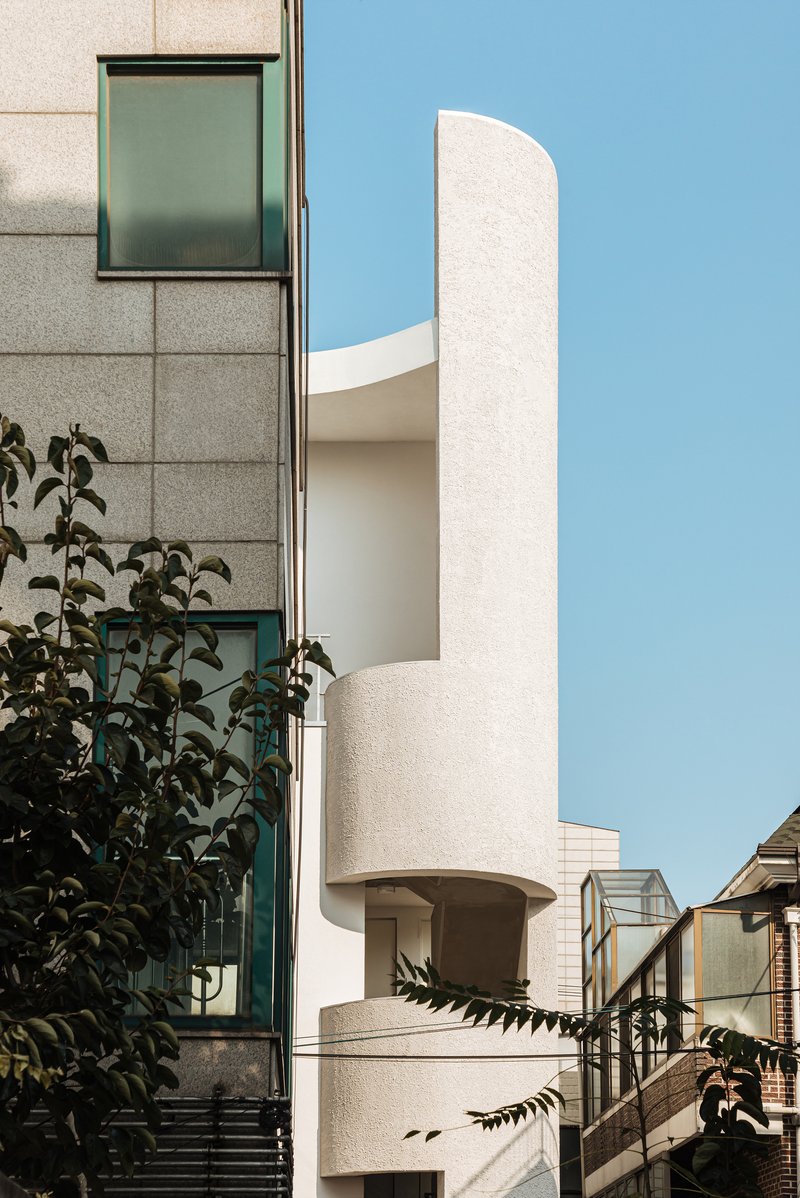
Mangwon-dong sits within Mapo-gu, a district that has undergone rapid gentrification as cafés, studios, and small retail operations fill its older residential grid. The REIKIS building is positioned on a back road, more visible from the main road than from the street it faces. This dual legibility is part of the strategy: the cylindrical stairwell acts as a beacon from afar, while the yard and piloti-level glazing engage passersby at close range.
Studio Stuckyi frames the project as a kind of territorial extension, a test case for designers acting as real estate developers. The building's client, THINKofME, represents a generation of creative entrepreneurs who see commercial buildings not as neutral containers but as spatial statements. Whether or not this model scales, the REIKIS building demonstrates that even on a postage-stamp lot, architectural ambition and commercial pragmatism can coexist without either party conceding much.
Plans and Drawings
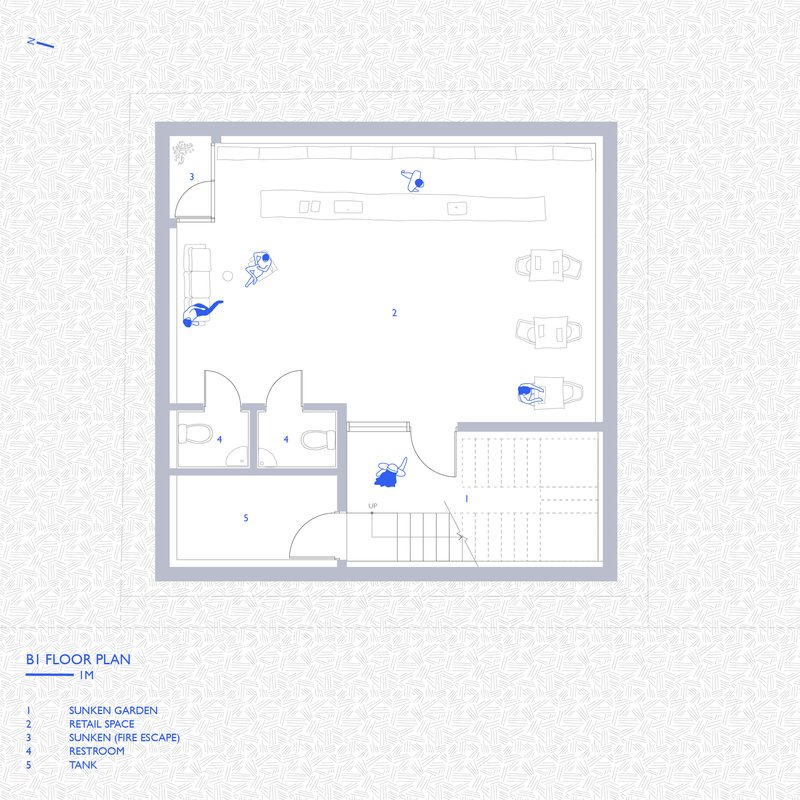
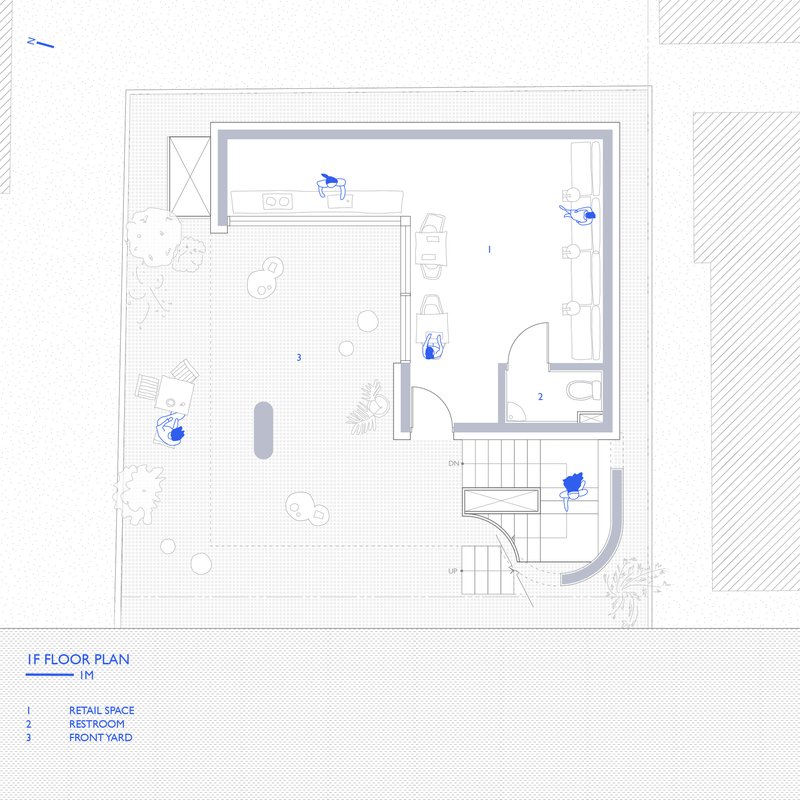
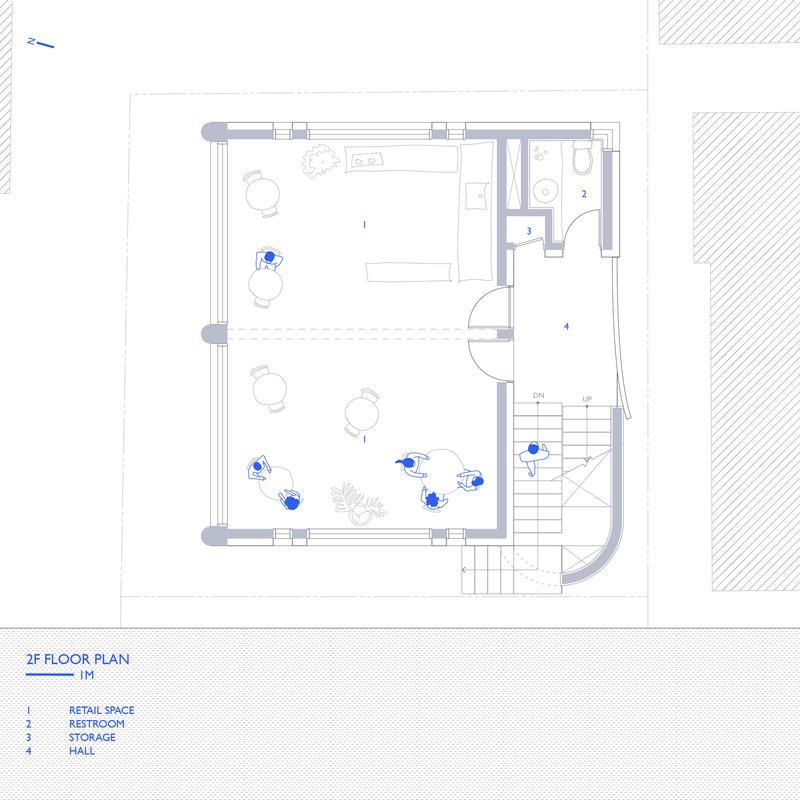
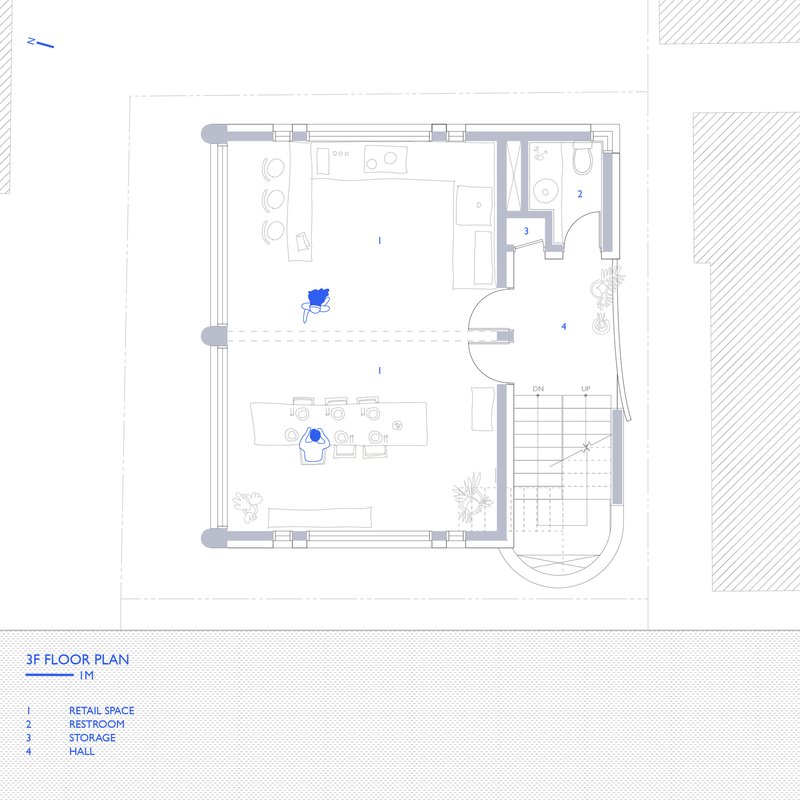
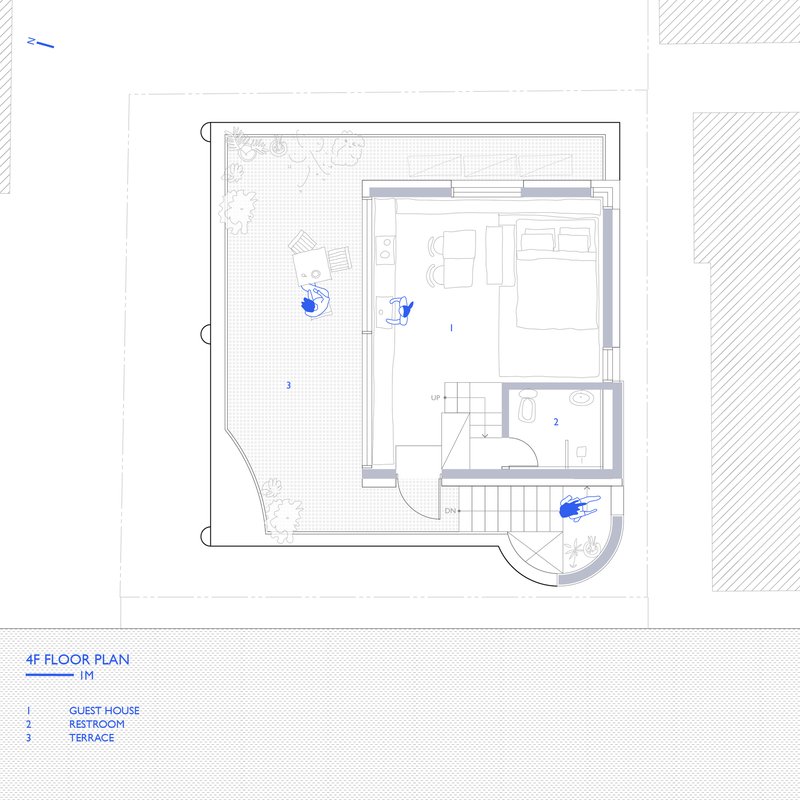
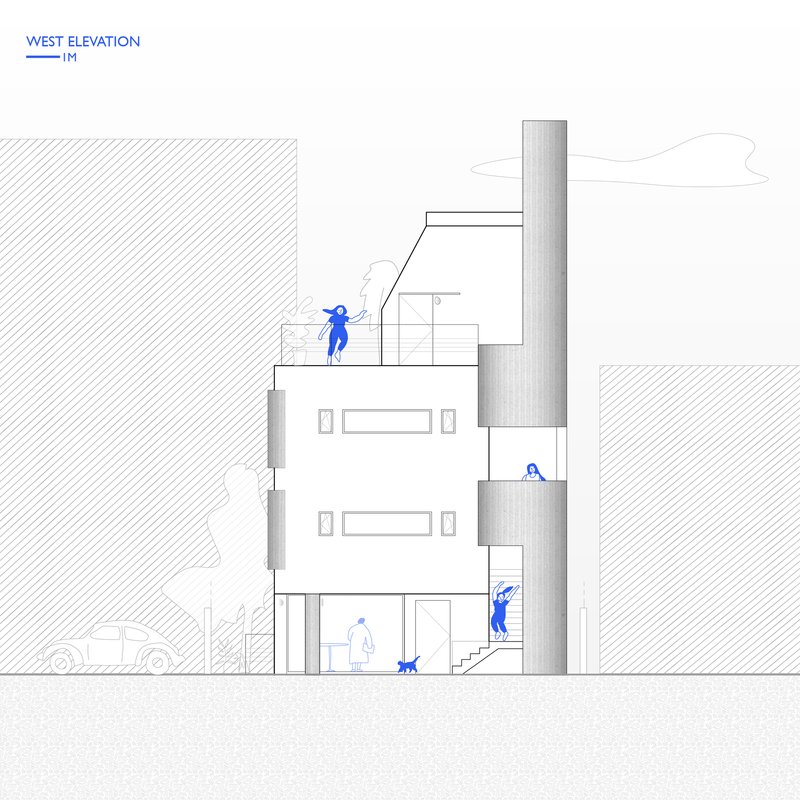
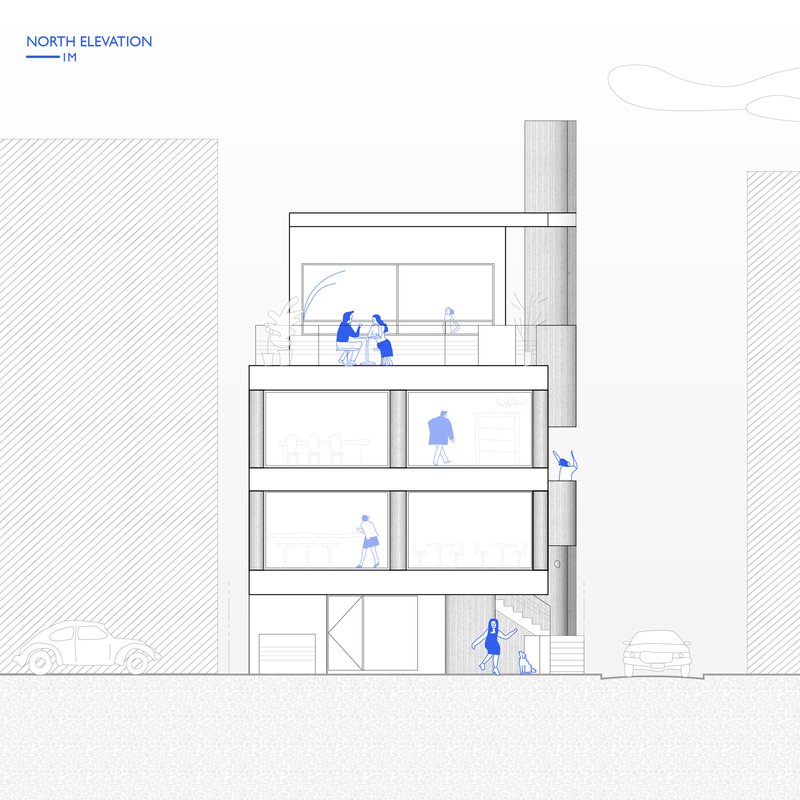
The floor plans reveal how tightly the program is stacked. The first floor surrenders its front half to the yard, pushing the retail footprint to the rear. The second and third floors split into paired commercial units flanking the stair, while the fourth floor contracts to a single guest house volume with a generous terrace. The west and north elevations show the cylindrical shaft's dominance: it anchors the composition, its curved profile visible in both section and plan, while figures on the stepped terraces indicate the scale of the outdoor spaces. The gross floor ratio of 185% is telling. Studio Stuckyi has extracted nearly twice the site area in usable floor space, a disciplined feat on a lot of this size.
Why This Project Matters
The REIKIS Mangwon Commercial Building is a reminder that small buildings carry outsized design responsibility. On a tight urban lot, there is no room for wasted moves, and every decision about where to place a stair, how to divide a floor, or when to sacrifice interior area for a yard becomes magnified. Studio Stuckyi has used the staircase as a device to solve multiple problems at once: it organizes circulation, structures the facade, creates display gardens in its hallways, and gives the building a vertical identity in a horizontal neighborhood.
The project also raises a question worth following: what happens when designers become their own developers? The overlap of creative authorship and financial stake tends to produce buildings that care about experience at scales the conventional development model ignores. Whether in the folding kitchen window, the courtyard that eats half the ground floor, or the textured plaster that distinguishes stair from wall, the REIKIS building is full of choices that only make sense if someone in the room cared about more than yield per square meter.
REIKIS Mangwon Commercial Building by Studio Stuckyi. Located in Mangwon-dong, Mapo-gu, Seoul, South Korea. Gross floor area: 295 m². Completed in 2022. Photography by Texture on Texture.
About the Studio
Studio Stuckyi
Official website of Studio Stuckyi, one of the studios behind this project.
stustu.workShare Your Own Work on uni.xyz
If projects like this are the kind of work you want to make, uni.xyz is a place to publish your own, find collaborators, and enter design competitions.




Popular Articles
Popular articles from the community

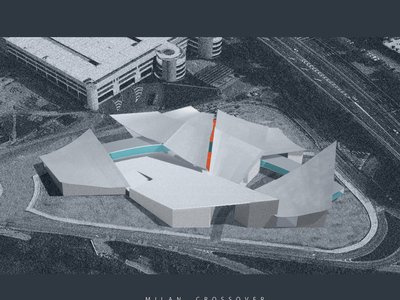
Milan Crossover: Sustainable Architecture for a New Fashion Culture in Milan
Milan Crossover transforms fashion culture through sustainable architecture, linking material libraries, remake studios, and public runways.

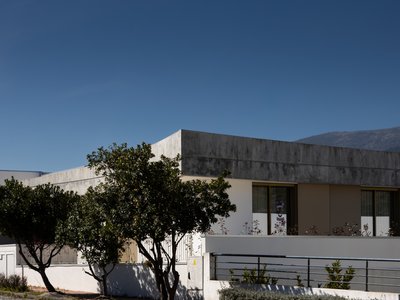
PLATAFORMArq Folds a Concrete Roof Over the Portuguese Mountains in House #474
A 220-square-meter residence in Teixoso, Portugal, wraps board-formed concrete into an angular canopy that frames the Serra da Estrela foothills.
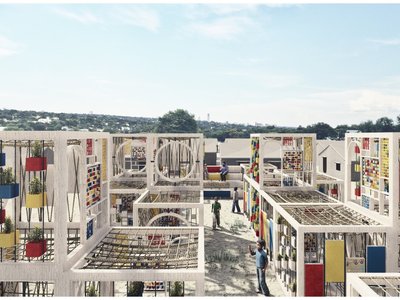
The Faith: Modular Architecture for Play, Learning, and Hope in Kutupalong Refugee Camp
A modular playground architecture project in Bangladesh where play, learning, safety, and hope rebuild childhood inside a refugee camp anew.
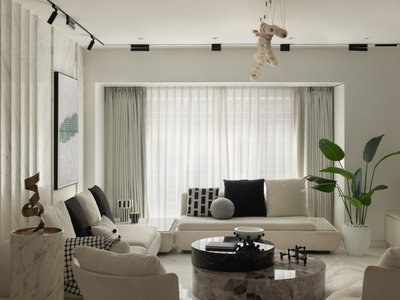
Inside a Timeless Mumbai Residence by Aether Studio
Aether Studio's 2,250 sq ft apartment in Malad, Mumbai uses marble, brass, boucle, and disciplined restraint to build a quiet retreat from the city.


Similar Reads
You might also enjoy these articles
Freebird Residence by Alexis Dornier: A Tropical Modernist Sanctuary in Bali
Floating living pavilion above pool anchors H-shaped tropical villa, blending Japanese minimalism, sustainable strategies, lush landscape, and sculptural interiors.
127af Flips a Tiny Bagnolet Rowhouse Upside Down with a Handcrafted Roof Extension
A 55-square-meter terraced house on the edge of Paris gains a luminous upper living floor through lightweight timber and steel.
1.61 Design Workshop Wraps a 600-Square-Meter Café in Vietnam in Sculptural Burgundy Drama
Reden Café & Bistro pairs a helical staircase, mosaic floors, and deep red interiors to rethink Vietnamese hospitality space.

The Unbound Brain: A School Shaped by Cognitive Architecture
Cylindrical learning pods radiate like neurons from a central cortex, turning the floor plan into a spatial model of human thought.


Explore Transportation Competitions
Discover active competitions in this discipline




The Global Benchmark for Architecture Dissertation Awards


Challenge to design mud housing for contemporary communities
Comments (0)
Please login or sign up to add comments
No comments yet. Be the first to comment!