
Sustainable Architecture in Education: A Case Study of The Technological Center in Ashdod
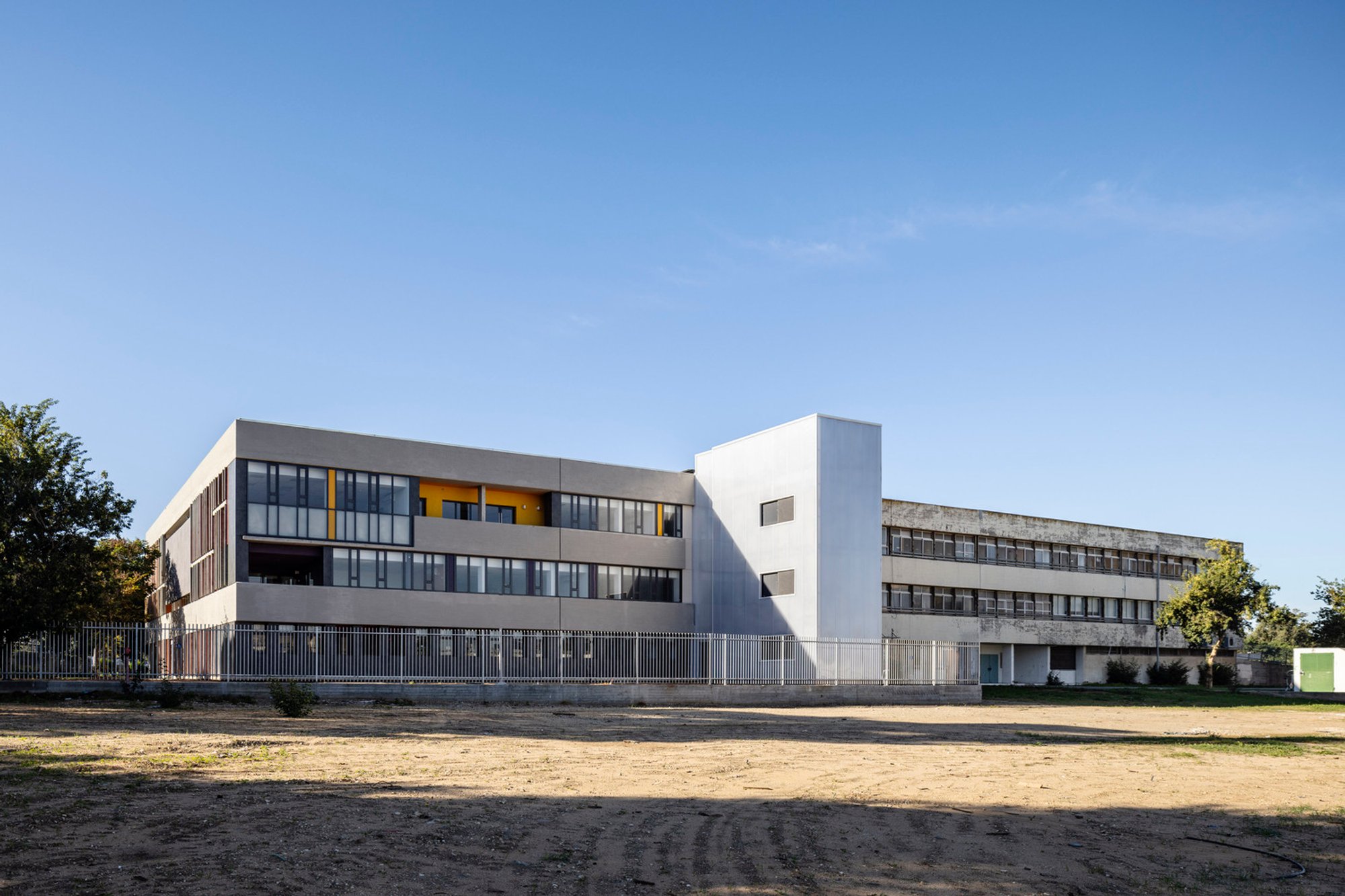
This article explores how "The Technological Center - Ashdod" by Daniel Azerrad Architects revolutionizes educational architecture through sustainable design and adaptive reuse.

In the heart of Ashdod, Israel, a revolutionary project stands as a testament to the possibilities of sustainable architecture within the educational sector. "The Technological Center - Ashdod," designed by Daniel Azerrad Architects, exemplifies how architectural ingenuity can transform an abandoned school building into a vibrant educational hub. This article delves into the sustainable architectural practices employed in the redevelopment of this 1960s brutalist structure, providing insights into the strategies that make it a landmark project in the realm of educational architecture.
Background
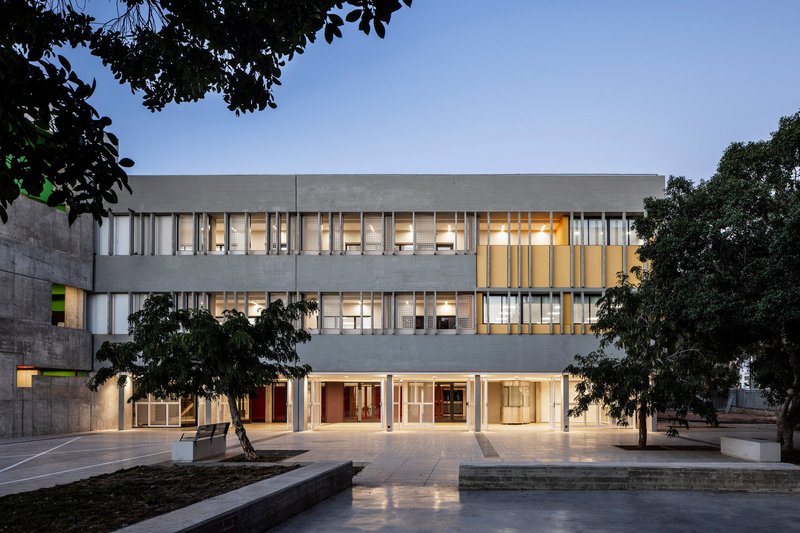
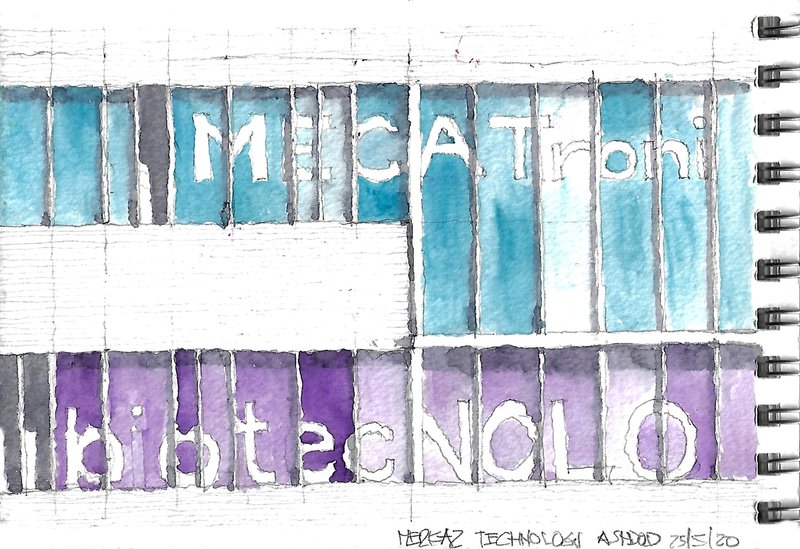
Originally designed by Architect Itzhak Perelshtein and serving as a secondary school, the building had fallen into partial disuse before its recent transformation. Daniel Azerrad Architects were tasked with not only refurbishing the existing structure but also imbuing it with a new purpose as a technological education center. The project represents a significant initiative by the Ministry of Education, aimed at integrating laboratories, workshops, classrooms, and offices dedicated to fostering research in biotechnology, robotics, and sustainable energy.
Sustainable Design Strategies
Adaptive Reuse
The project's cornerstone is its commitment to adaptive reuse. By repurposing the original building, the architects minimized the need for new construction materials, significantly reducing the project's carbon footprint. This approach not only preserves a piece of architectural history but also demonstrates respect for the environment.
Energy Efficiency
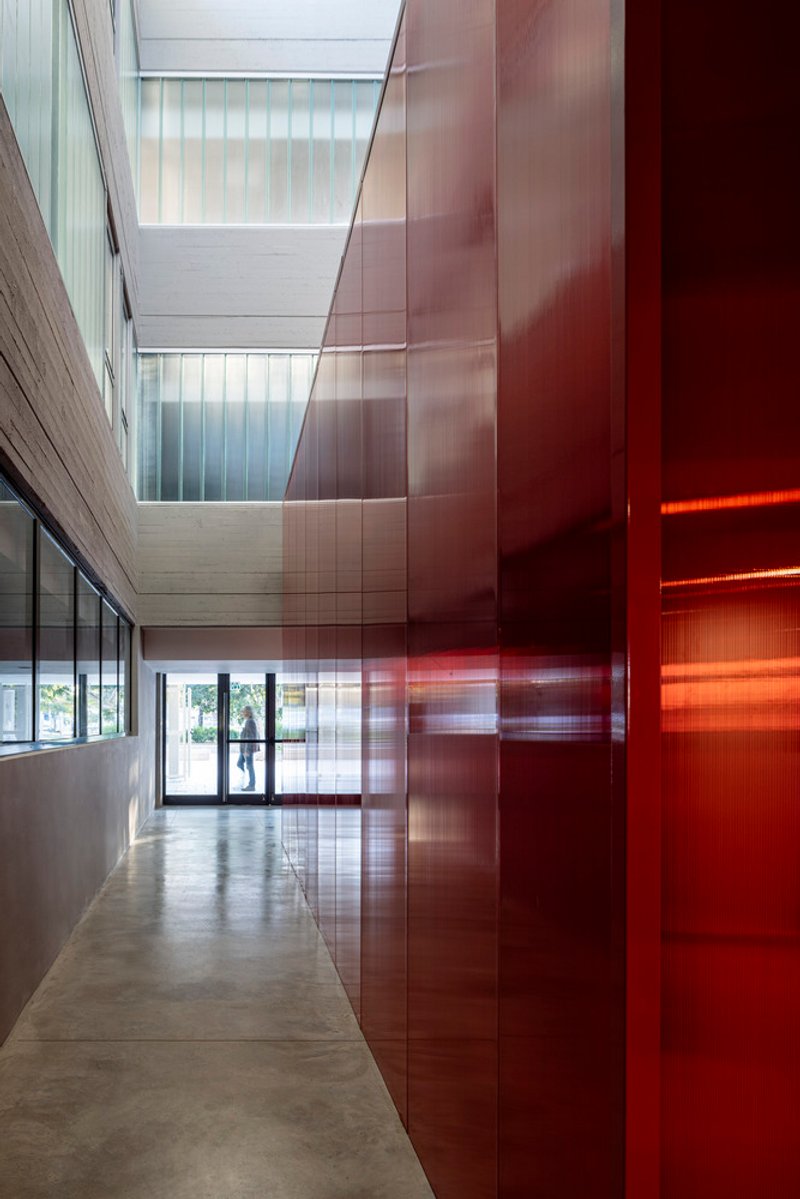
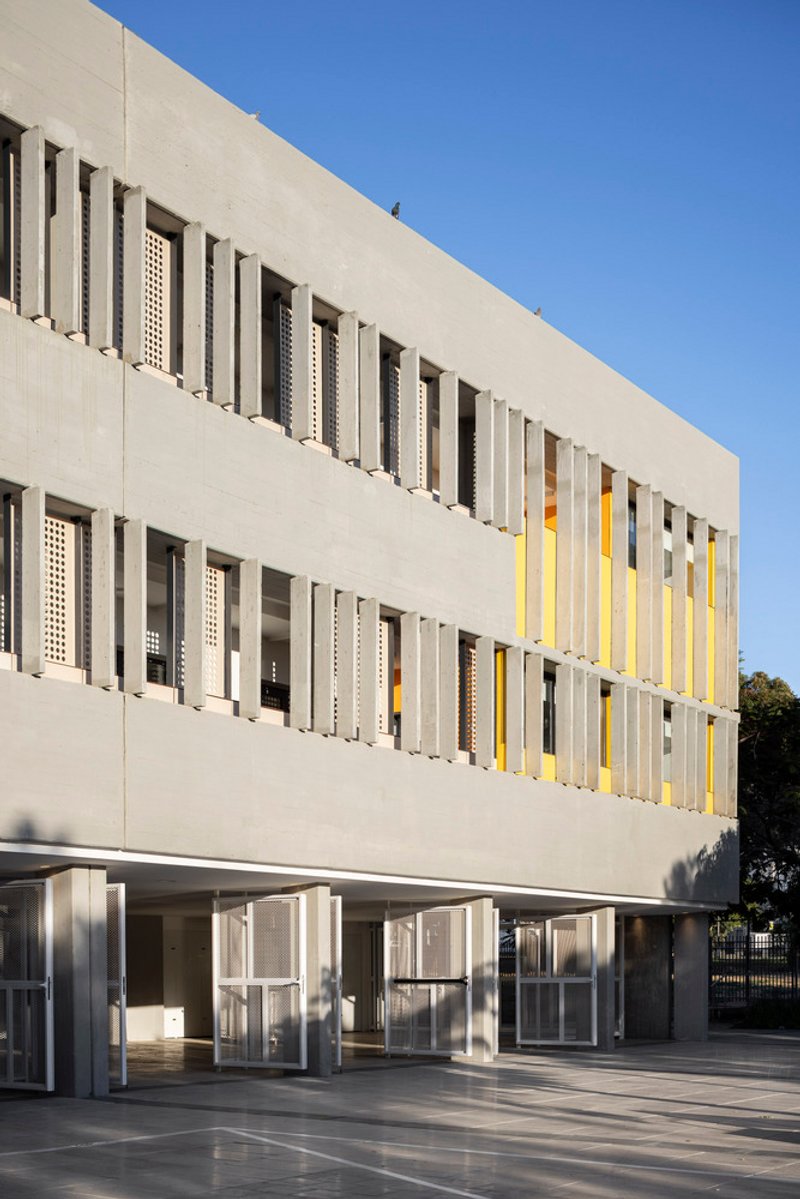
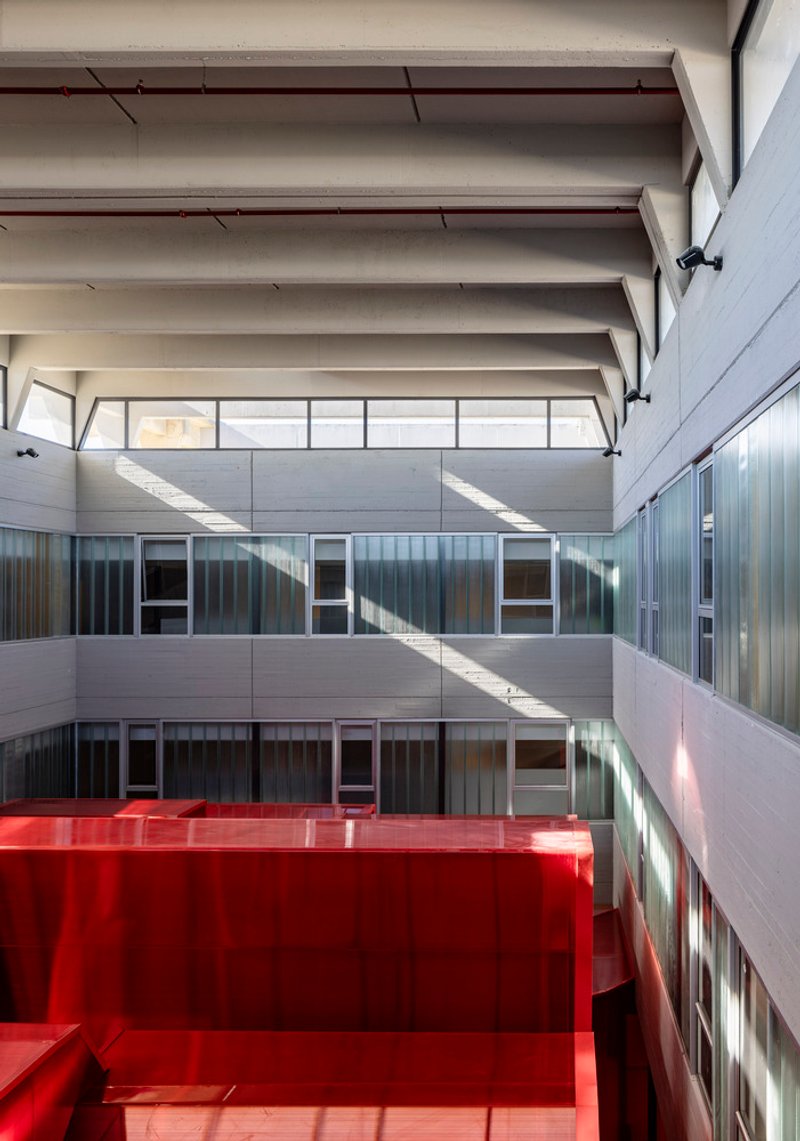
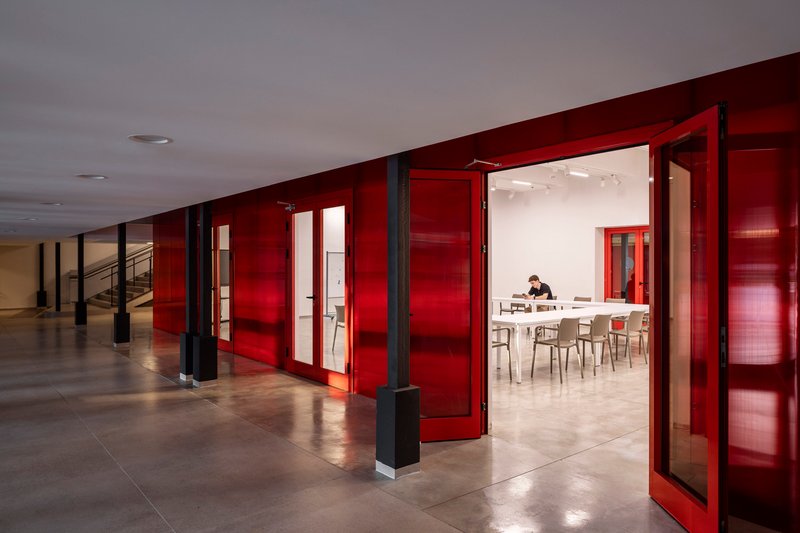
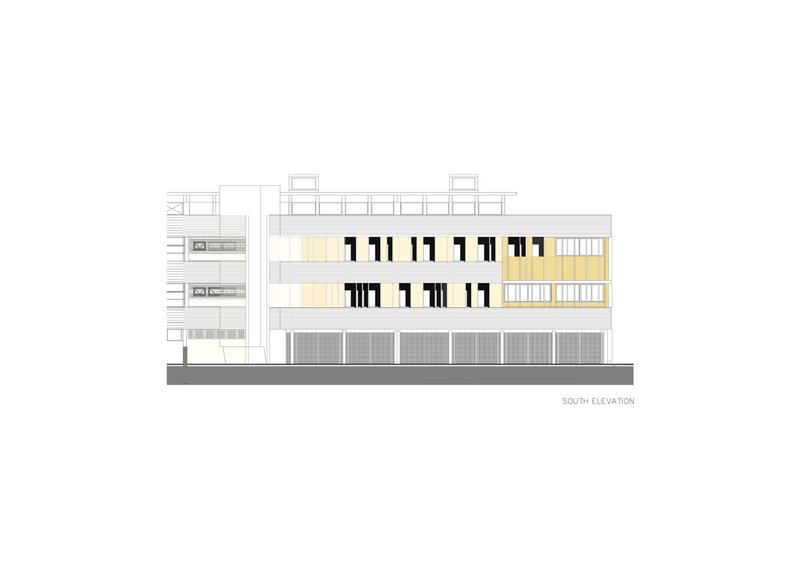
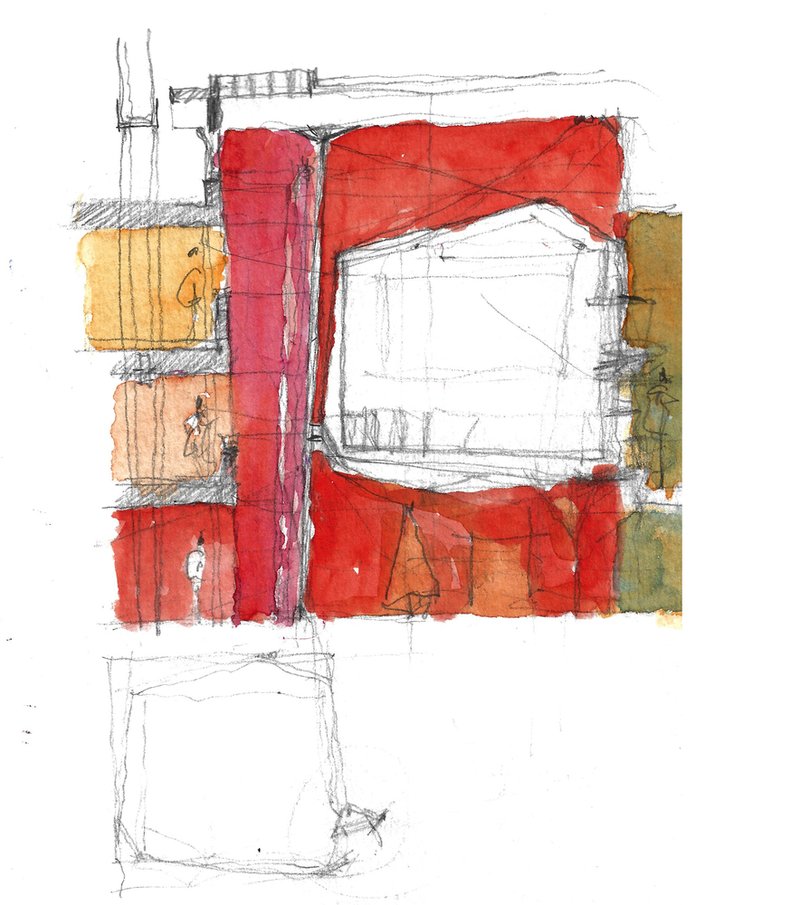
Addressing the challenge posed by the south elevation's exposure to intense heat, the design strategically relocates the hallway to act as a thermal buffer. This innovative solution enhances the building's energy efficiency, reducing the reliance on artificial cooling. Furthermore, the laboratories and classrooms are oriented northwards, benefiting from soft, natural light while minimizing heat gain.
The Use of Sustainable Materials
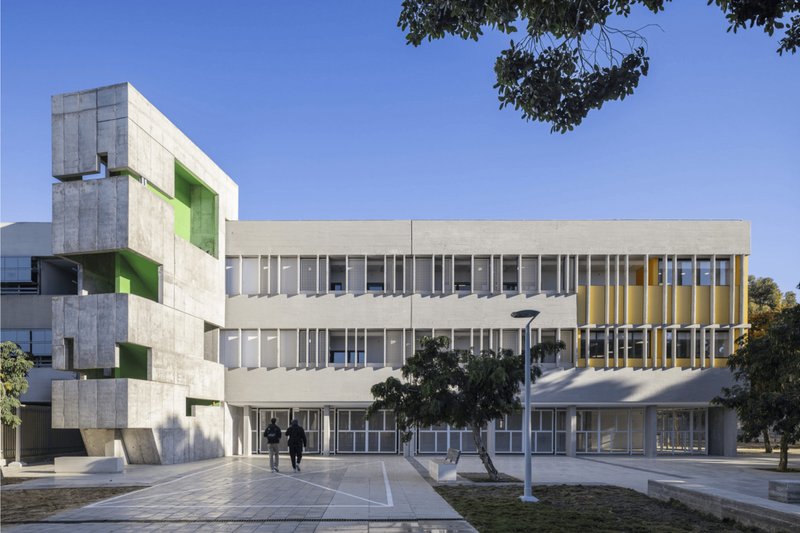
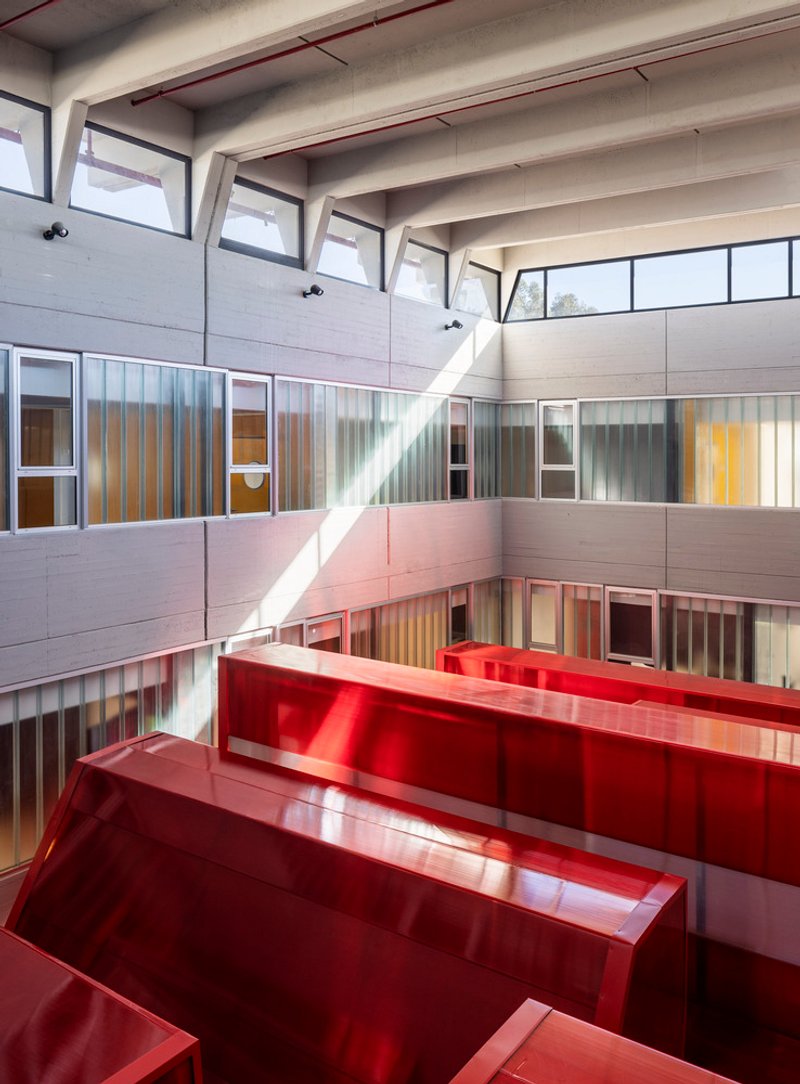
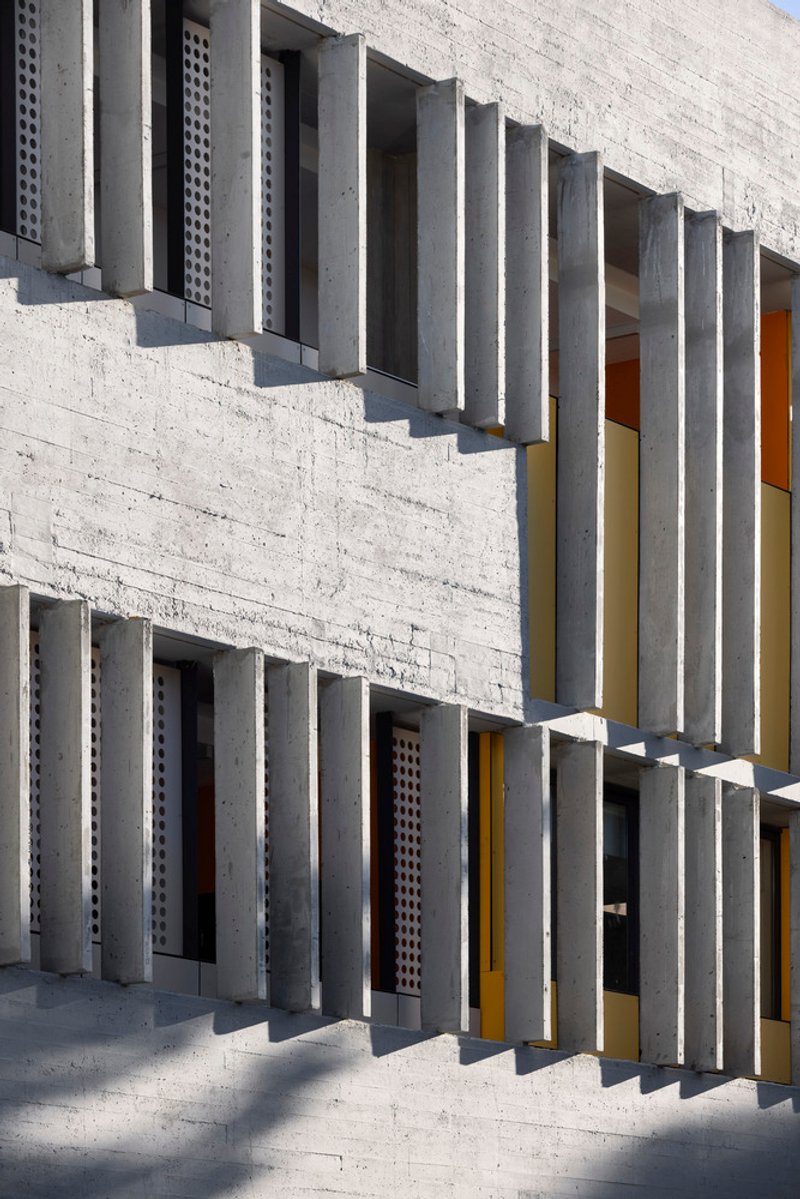
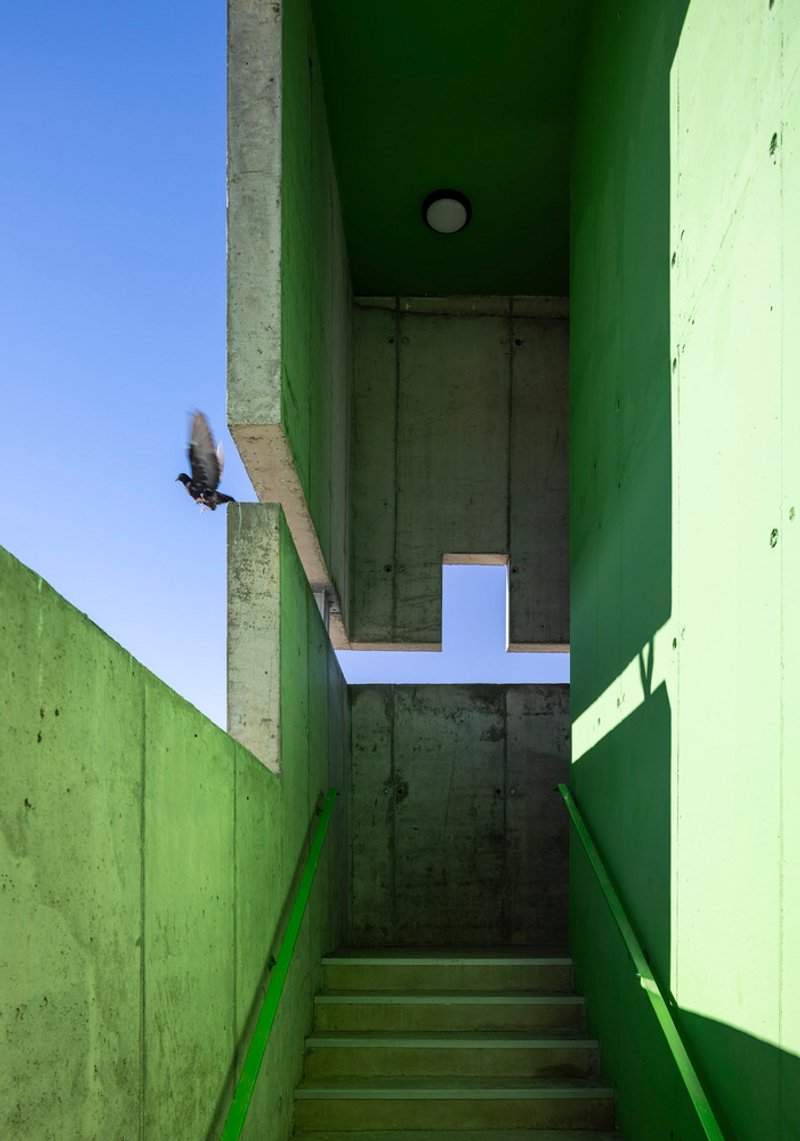
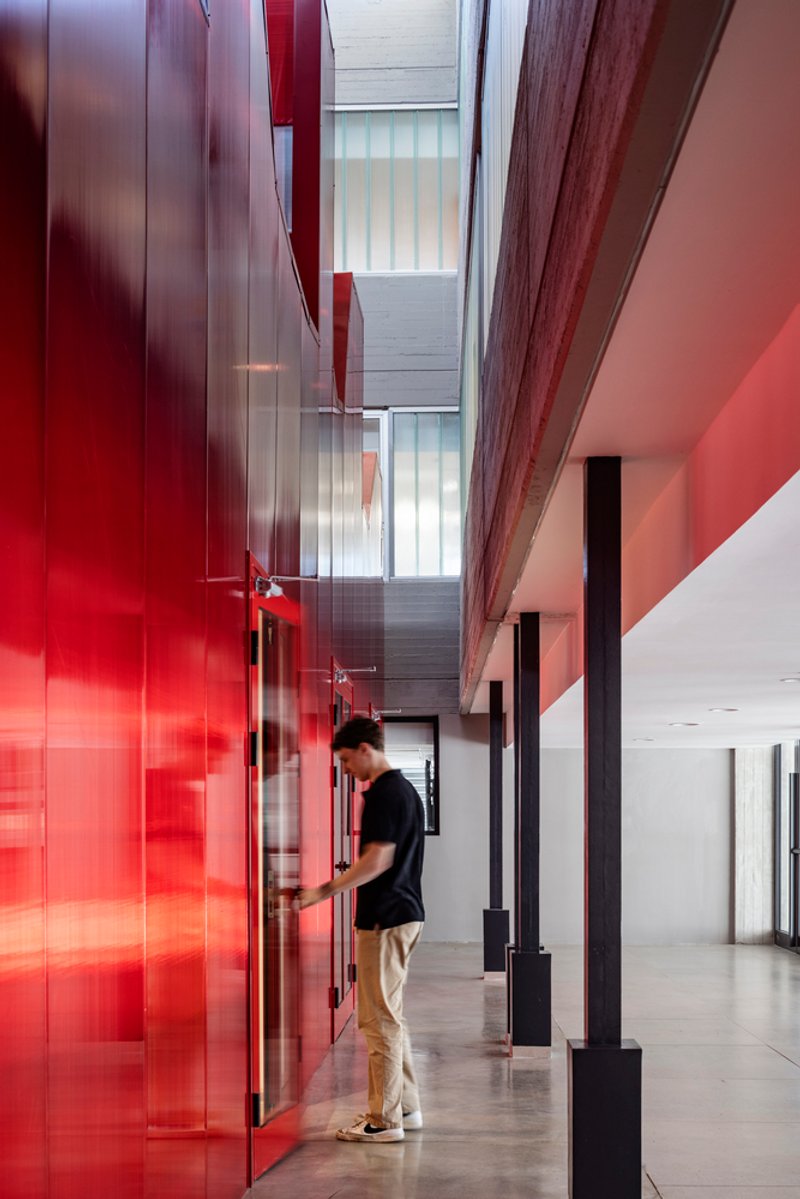
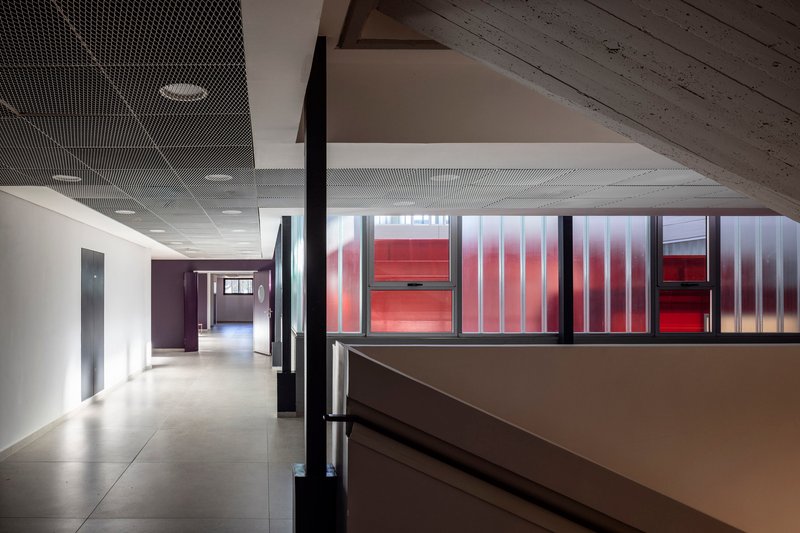
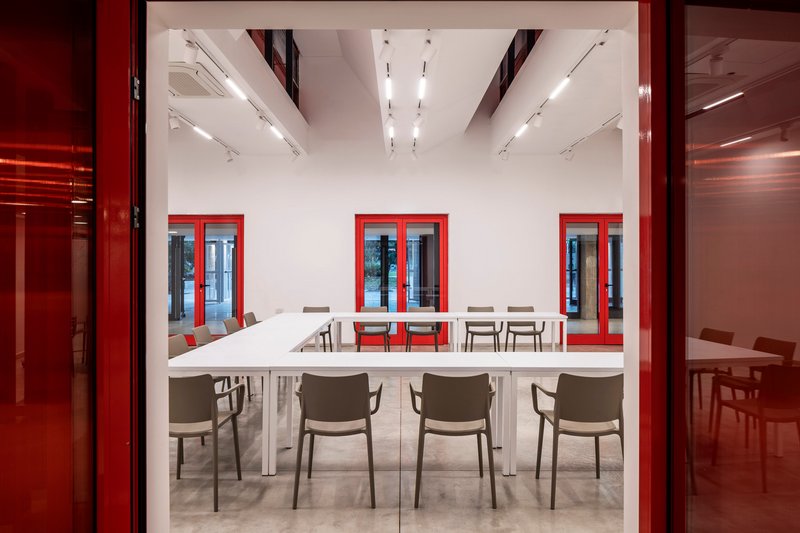
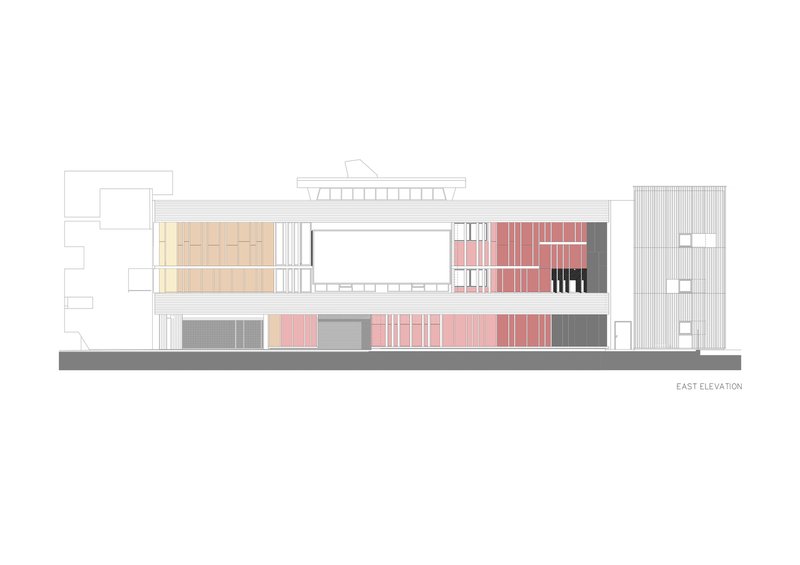
The technological center's exterior showcases a commitment to sustainability through the use of High-Pressure Laminate (HPL) skins and exposed concrete brise soleil. These materials not only contribute to the building's thermal performance but also add to its aesthetic appeal. The choice of UGLASS-profile glazing for the interior façade further underscores the project's dedication to energy-efficient design.
Landscape Integration
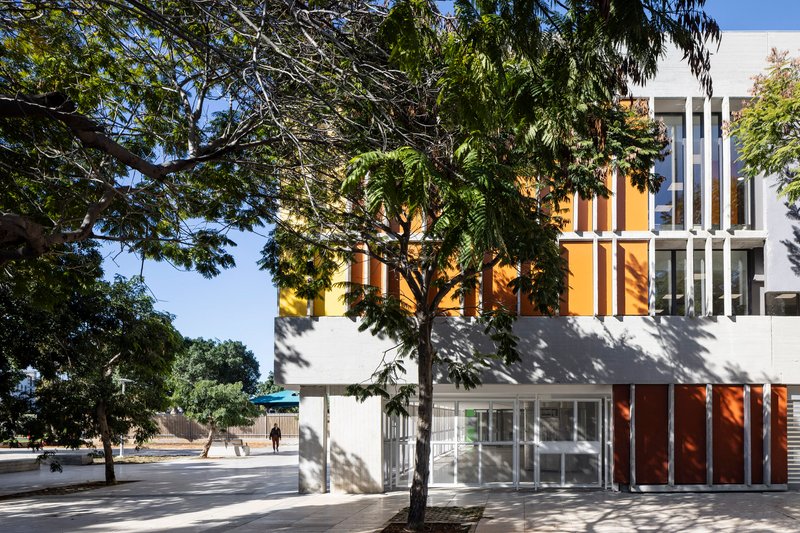
The preservation and incorporation of existing trees into the landscape design exemplify sustainable land use. The creation of shaded outdoor areas and the integration of green spaces enhance the site's biodiversity and contribute to the well-being of its occupants.
The Impact of Sustainable Architecture in Education
The Technological Center in Ashdod serves as a prime example of how sustainable architecture can revolutionize educational spaces. The project goes beyond aesthetic and functional refurbishment, embedding principles of sustainability at its core. By doing so, it not only provides a conducive learning environment but also instills the values of environmental stewardship in the next generation.
"The Technological Center - Ashdod" by Daniel Azerrad Architects is a pioneering project that marries the goals of educational advancement with those of sustainable design. As this case study demonstrates, sustainable architecture in education can play a pivotal role in shaping a future where built environments coexist harmoniously with the natural world. Through innovative design solutions and a commitment to environmental principles, projects like this pave the way for a greener, more sustainable future in architectural design.

All the photographs are work of Amit Geron




Popular Articles
Popular articles from the community

Foster + Partners Wraps a 200-Meter Shanghai Tower in Stainless Steel and Industrial Memory
The Suhe Centre Office Tower anchors a regenerated waterfront district in Shanghai with an all-steel structure that nods to local warehouse heritage.
BLDUS Turns a 250-Square-Foot Screened Porch into a Pine Forest Temple in East Hampton
A gabled cedar pavilion mimics the rhythm of surrounding pines, anchoring a 1990s wooded home to its hollow in Long Island.
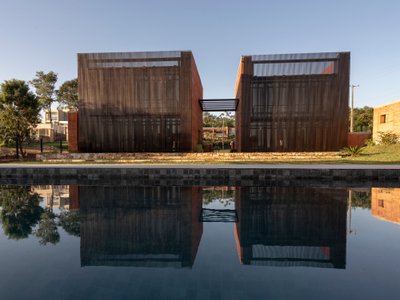
BAUEN Builds Two Rammed Earth Volumes in Paraguay Inspired by the Ovenbird's Nest
In San Bernardino, a house of compacted earth channels the instinct of a constructive bird to shelter life from the Paraguayan summer.
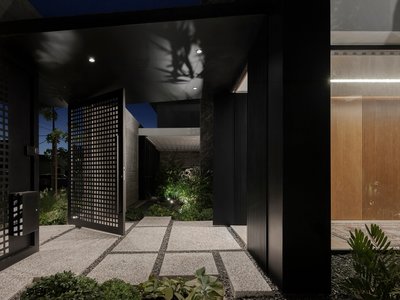
Constanti Architects Builds a Fortress of Privacy in Nicosia with House 345
A concrete and timber residence in Cyprus reinterprets the traditional introverted courtyard house for a new urban landscape.


Similar Reads
You might also enjoy these articles

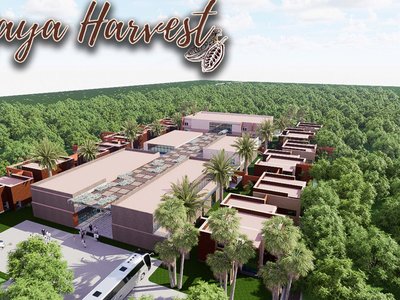
Maya Harvest: A Cacao Resort Village Rooted in Mayan Tradition and Local Craft
Situated within a Tabasco cacao plantation, this shortlisted resort proposal merges vernacular materials with hands-on cultural immersion.
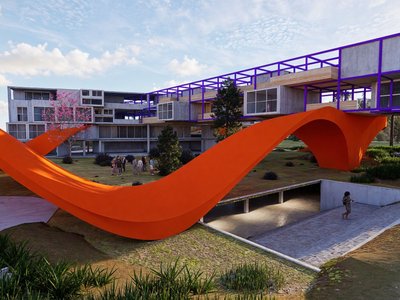
Harmonia: A River-Shaped Community That Grows Over Decades in Boa Vista
Curved pathways and modular grid structures along the Branco River create a phased settlement designed to evolve from 2030 to 2050.

The Architecture of Bathing: A Mughal Hammam Reimagined Across the Yamuna
Charlotte May's honorable mention entry for The Black Taj reinterprets Agra's bathing rituals through red sandstone, water, and framed views of the Taj Mah
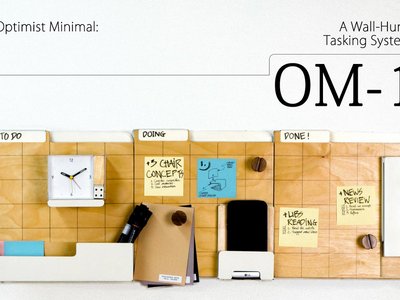
Om-1: A Wall-Hung System That Moves Your Workspace Off the Desk
Modular plywood boards, magnetic pegs, and utility elements migrate clutter from the horizontal surface to the vertical plane.


Explore Educational Building Competitions
Discover active competitions in this discipline




The International Standard for Design Portfolios


The Global Benchmark for Architecture Dissertation Awards


The Global Benchmark for Graduation Excellence


Challenge to design public laboratory
Comments (0)
Please login or sign up to add comments
No comments yet. Be the first to comment!