
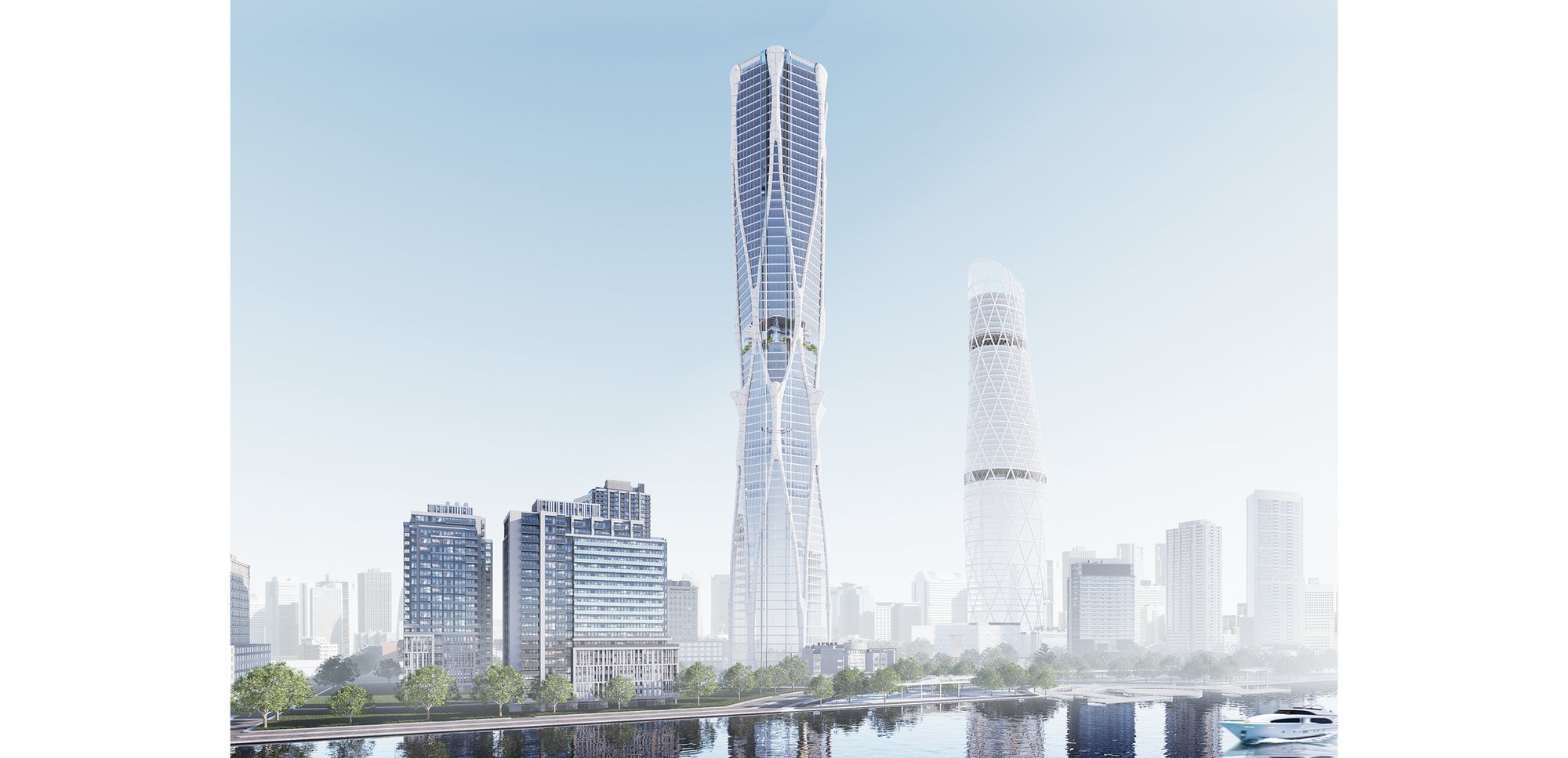
Sustainable Skyscraper in Thailand: Hexagon by Nattakan Kawichai
Hexagon: Shaping Bangkok's Future with Sustainable Innovation

A New Chapter for Bangkok's Skyline
The design for the Hexagon, a sustainable skyscraper in the heart of Bangkok, by Nattakan Kawichai, represents an architectural response to the evolving needs of the city. With a primary focus on ecology and environmental sustainability, the project aims to strengthen Bangkok’s urban identity while introducing modern design principles that engage with its local context. Towering near the historic Bangkok Port, this innovative structure is poised to reshape the skyline, drawing attention to the balance between nature and development in an increasingly urbanized world.
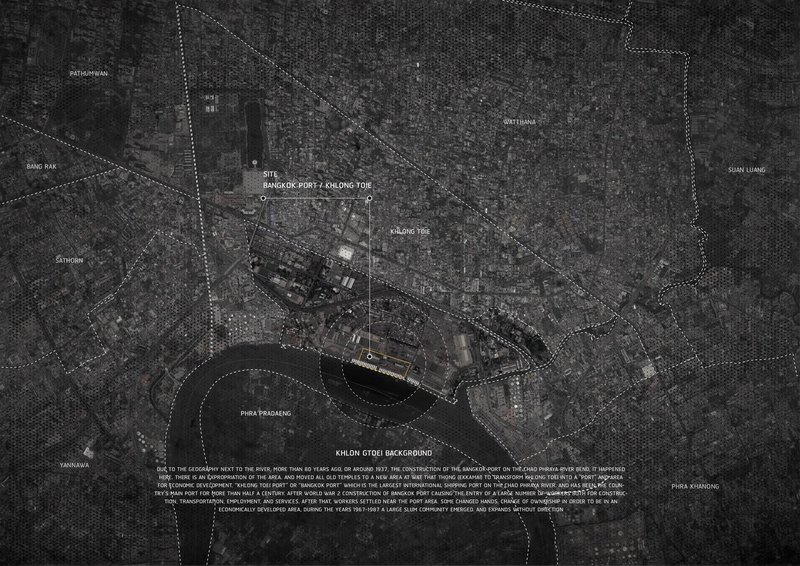
The Site: Bangkok Port and Khlong Toei's Industrial Legacy
The Hexagon is set in an area with a rich historical and economic background. Bangkok Port, also known as Khlong Toei Port, has been the nation's primary international shipping port for over 80 years, playing a vital role in the city's development. Established around 1937, the port was a cornerstone of post-World War II industrial growth, leading to a concentration of labor, transportation, and services in the region. The area saw significant transformations, with new residential zones forming around the port, including slum communities that grew from 1967 to 1987. These dynamics underscore the critical need for thoughtful, sustainable development in the neighborhood.
Ecological and Sustainable Architecture
Nattakan Kawichai's design for the Hexagon is rooted in sustainability, responding to both the urban challenges and environmental opportunities of the site. The building’s hexagonal structure is more than an aesthetic choice; it reflects the architect's desire to optimize space, energy, and resource efficiency while fostering a deeper connection between the city’s natural and built environments.
Key Sustainability Features:
Exoskeleton Structure: The skyscraper's exterior is defined by an exoskeleton, a structural framework visible from the outside that serves multiple purposes. This design reduces the building's reliance on internal columns, freeing up interior spaces for more flexible layouts. It also offers natural shading, minimizing heat gain and reducing the need for artificial cooling..
Curtain Wall with Coated Glass: The use of a curtain wall system with coated glass is a vital component of the building’s energy efficiency. The coated glass allows natural daylight to penetrate deep into interior spaces, reducing the need for artificial lighting during the day. Simultaneously, the coating provides solar control, minimizing glare and excessive heat buildup. This not only enhances comfort for the building's occupants but also reduces energy consumption for cooling.
Daylighting and Solar Control: A major focus of the design is to maximize daylighting. By using coated glass, the building reduces dependence on artificial lighting while preventing UV damage to interiors. The glass also helps in controlling the solar heat gain, significantly lowering indoor temperatures and energy demands for air conditioning systems.
A Reflection of the Urban Context: Enhancing Bangkok's Identity
The Hexagon aims to be more than just another skyscraper in the city. Its design is tailored to the geographic and cultural context of Bangkok, especially its relationship with the Chao Phraya River and the industrial legacy of Khlong Toei. The building's exoskeletal frame, with its geometric precision and organic influence, reflects the port's logistical efficiency while hinting at the natural geometry found in the surrounding environment.
The architecture also pays homage to the city's rich history by occupying a space that has been economically significant for decades. While Bangkok Port has evolved as a center for trade and commerce, the presence of a sustainable skyscraper signals a shift towards more ecologically responsible urban development.
Urban Revitalization and Public Engagement
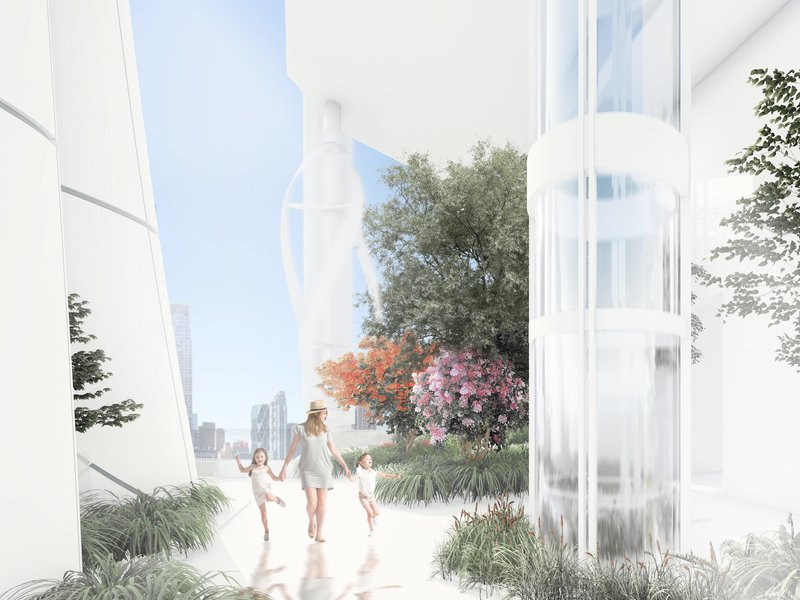
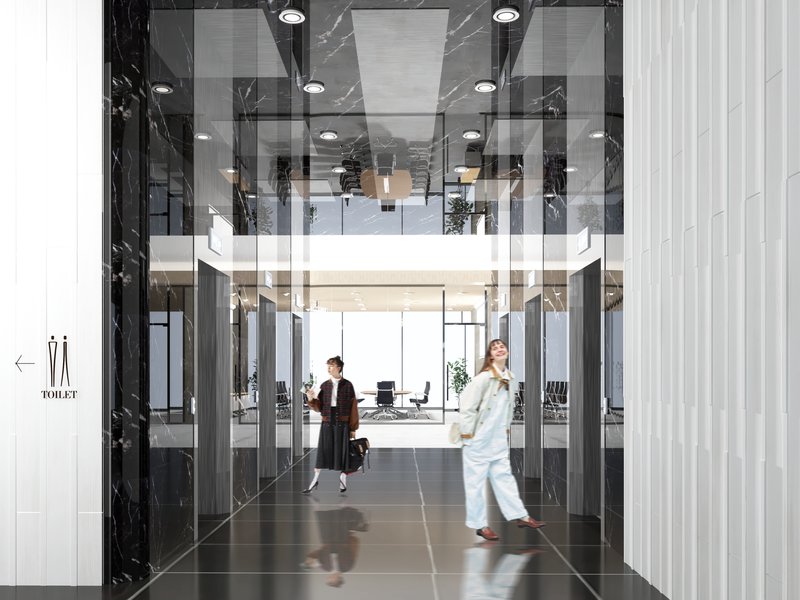
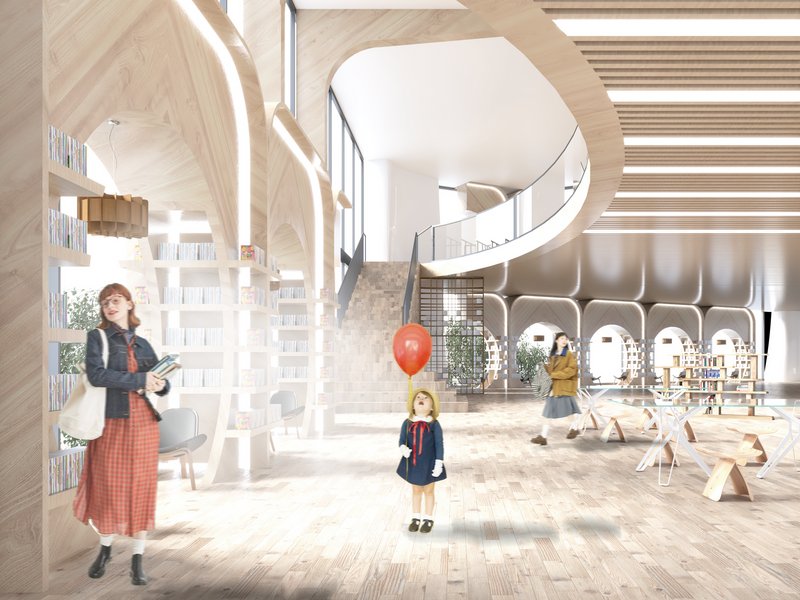
In addition to addressing ecological concerns, the Hexagon is designed to draw people into the space, making it not only a landmark for visual identity but also a functional hub for urban life. The layout and organization of interior spaces have been planned to maximize usability, making it a versatile structure for different types of activities. Public spaces within and around the building encourage community interaction, blending commerce, recreation, and environmental education.
Architectural Elements: Merging Form with Function
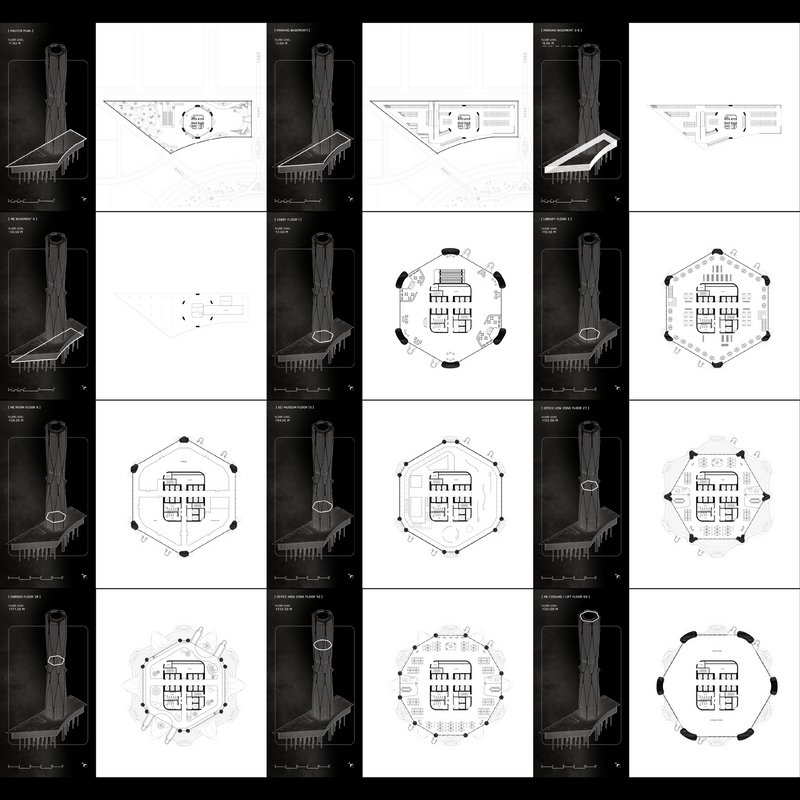
The Hexagon’s architecture is a study in balancing form and function. Each element of the design has been thoughtfully chosen to serve both aesthetic and practical purposes:
Spandrel Panels and Glazing Systems: Spandrel panels are used in conjunction with the building’s glazing to further reduce heat transfer and enhance the thermal efficiency of the structure. These panels act as a key insulating layer, keeping the building cool in Bangkok’s hot and humid climate.
Facades for Heat Reduction: The facade is designed not only to be visually striking but also to play an integral role in reducing heat accumulation. The exoskeletal design and materials used on the facade create a buffer between the external environment and the interior, improving overall energy efficiency.
Fixed-to-Slab Edge Curtain Wall: The curtain wall is fixed to the slab edges of the structure, ensuring stability while also allowing the seamless integration of energy-saving glass. This provides a sleek and modern look, maintaining structural integrity while minimizing visual obstructions.
The Role of Sustainable Skyscrapers in Urban Development
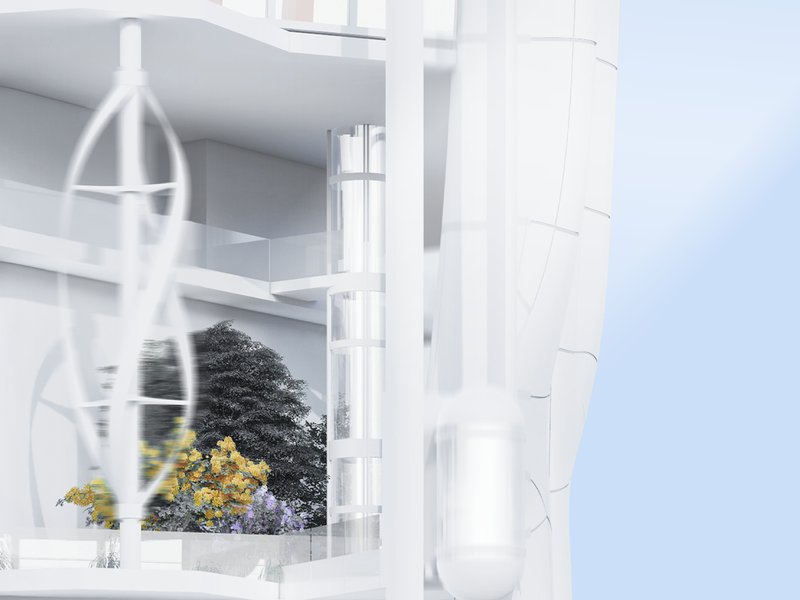
In a rapidly urbanizing world, skyscrapers are often seen as a solution to space constraints, but they can also become symbols of excessive energy consumption. The Hexagon, however, reimagines the role of high-rise buildings by focusing on sustainability. It addresses some of the most pressing issues in urban development, including energy efficiency, environmental impact, and the need for green spaces within cities.
By incorporating sustainable materials, optimizing natural light, and reducing energy consumption, the Hexagon sets a new standard for skyscrapers in Thailand and beyond. The project is not only a response to the growing demand for space in Bangkok but also an example of how architecture can coexist with the environment, promoting ecological balance in urban settings.




Popular Articles
Popular articles from the community

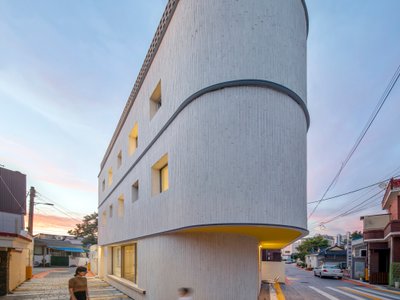
YOAP Architects Round a Corner in Yeongcheon with a Cylindrical Community Hub
A 197-square-meter brick and ribbed-clad tower turns a forgotten alley corner in South Korea into a public garden with a low threshold.
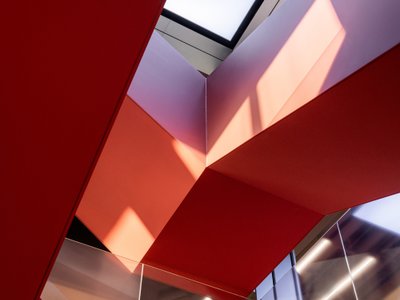
Ippolito Fleitz Group Identity Architects Turn Eight Floors in Shanghai into a Vertical Creative City
Publicis Groupe's new headquarters in Xintiandi reimagines the office as a courtyard-driven urban landscape stacked across eight floors.
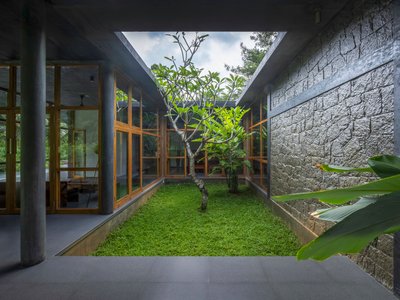
3dor Concepts Wraps a Kerala Home in Mirrored Concrete Arcs Around a Courtyard Tree
In the Western Ghats foothills of Thamarassery, a 270 m² single-story house uses two curved volumes to frame nature as its center.
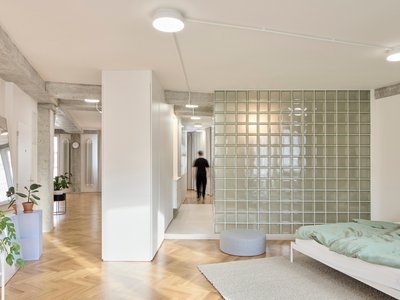
RDTH architekti Rips Out Nearly Every Wall in a Prague Apartment and Replaces Them with Furniture
A 101-square-meter post-war flat in Prague trades rigid partitions for a single rotated furniture block, curtains, and glass concrete.


Similar Reads
You might also enjoy these articles

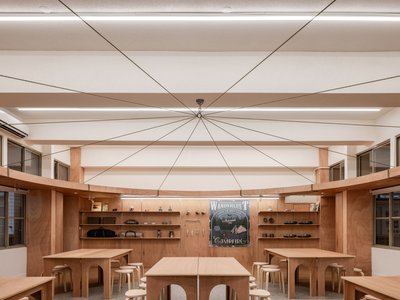
317studio Turns an 87 m² Classroom into a Forest Clearing for Scouts in New Taipei City
A rope canopy, student-made specimens, and campfire geometry replace rows of desks in this Scouting classroom in Xizhi District.
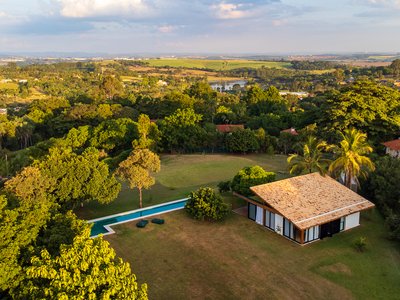
24 7 Arquitetura Builds a Timber Pavilion as a Family's First Act on a 5,000 m² Brazilian Plot
In Jaguariúna, a prefabricated glulam house nestles among mature trees as the opening move of a larger residential masterplan.
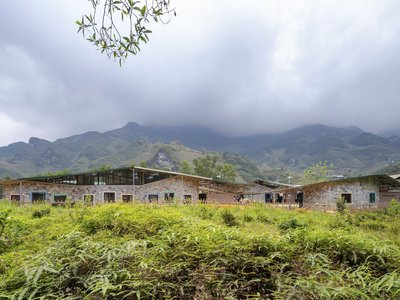
1+1>2 Architects Build a School from 900 Blocks of Hmong Stone on Vietnam's Rocky Plateau
On a barren valley in Ha Giang province, a community quarried its own stone to raise a kindergarten and primary school rooted in Hmong identity.
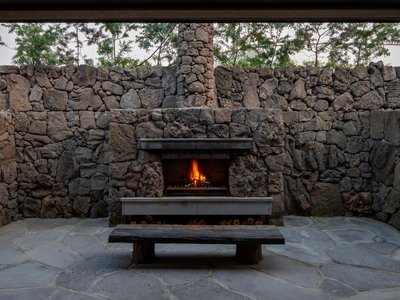
100A Associates Builds a Volcanic Stone Retreat on Jeju Island Rooted in Ritual and Restraint
Watarstay [Wa:Tar] in Bongseong-ri channels Jeju's basalt, reed, and hemp into a 150 m² hospitality space shaped by contemplation.


Explore Architecture Competitions
Discover active competitions in this discipline




The International Standard for Design Portfolios


The Global Benchmark for Architecture Dissertation Awards


The Global Benchmark for Graduation Excellence


Challenge to reimagine the Iron Throne
Comments (0)
Please login or sign up to add comments
No comments yet. Be the first to comment!