
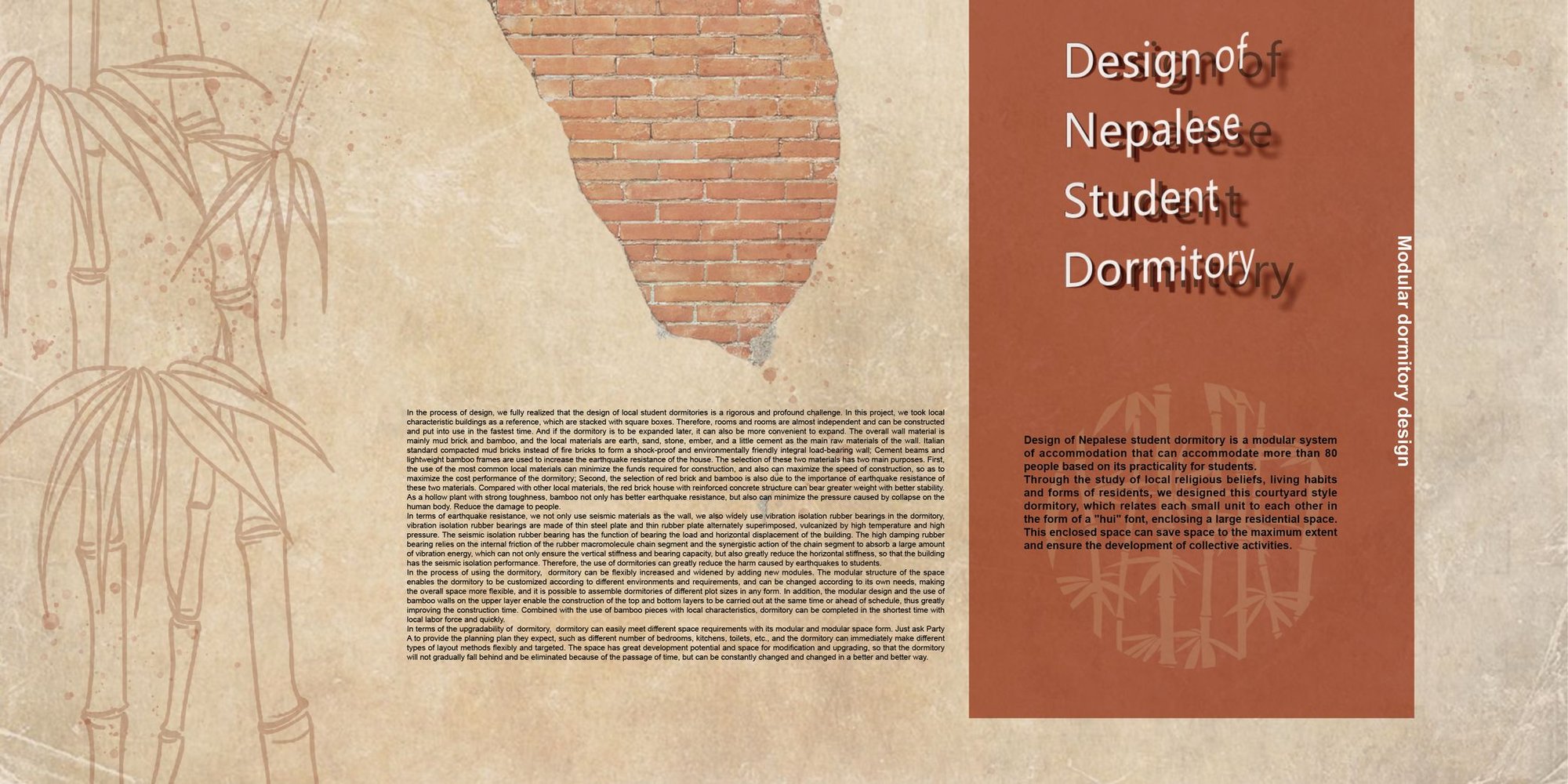
Sustainable Student Dormitory Design: The Future of Educational Architecture in Nepal
This article discusses the design of a sustainable, culturally integrated student dormitory in Nepal.

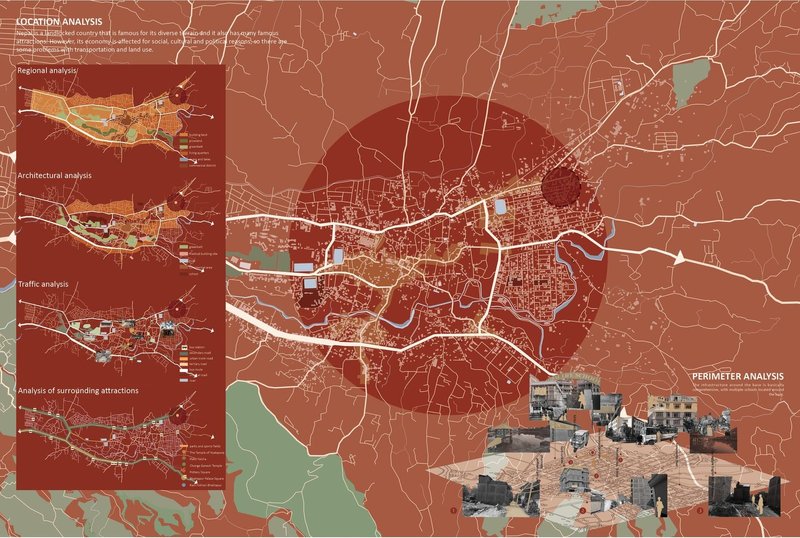
In Nepal, a unique architectural approach emerges as a beacon of innovation and sustainability in educational infrastructure. The design of the Nepalese student dormitory, a collaborative creation by Qiyue Wang, Xuhan Qian, and Yang Tingting, emerged as the Winner of the Board competition. This project, more than just a building, encapsulates a philosophy aimed at enhancing student life while harmonizing with Nepal's cultural and environmental landscape. This article delves deep into the aspects of this sustainable student dormitory design, showcasing how it caters to the local needs effectively and sustainably.
Design Overview: Modular and Sustainable
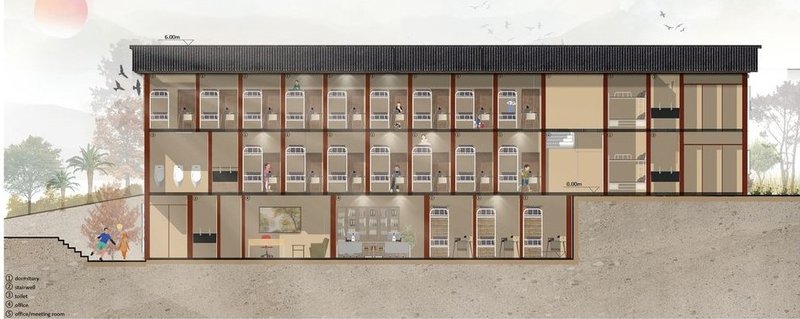
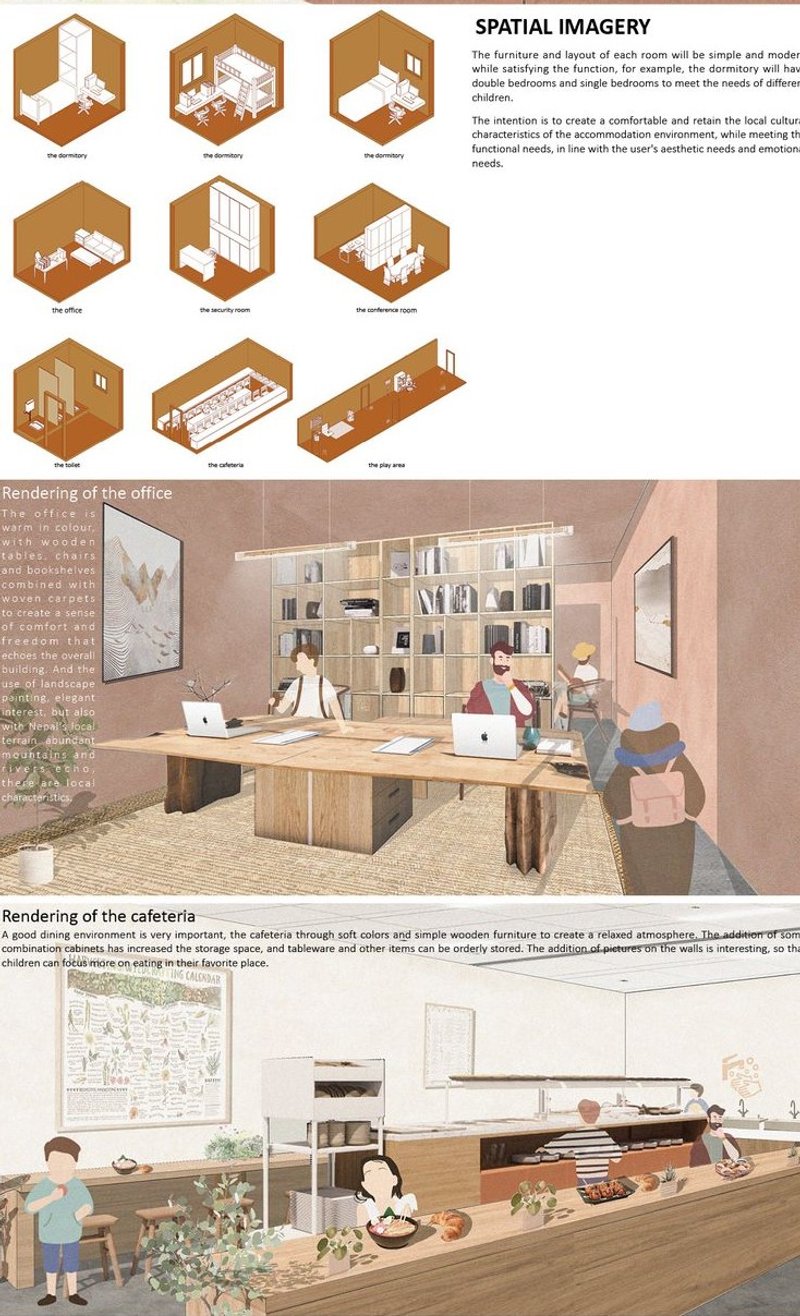
The core concept of the Nepalese student dormitory revolves around modularity and sustainability. Each module within the design can be easily combined, decomposed, or replaced, reflecting a dynamic approach to architectural needs. This design accommodates more than 80 students, ensuring each unit is soundproof, safe, and comfortable, addressing the daily life requirements of local students.
Embracing Local Materials and Techniques
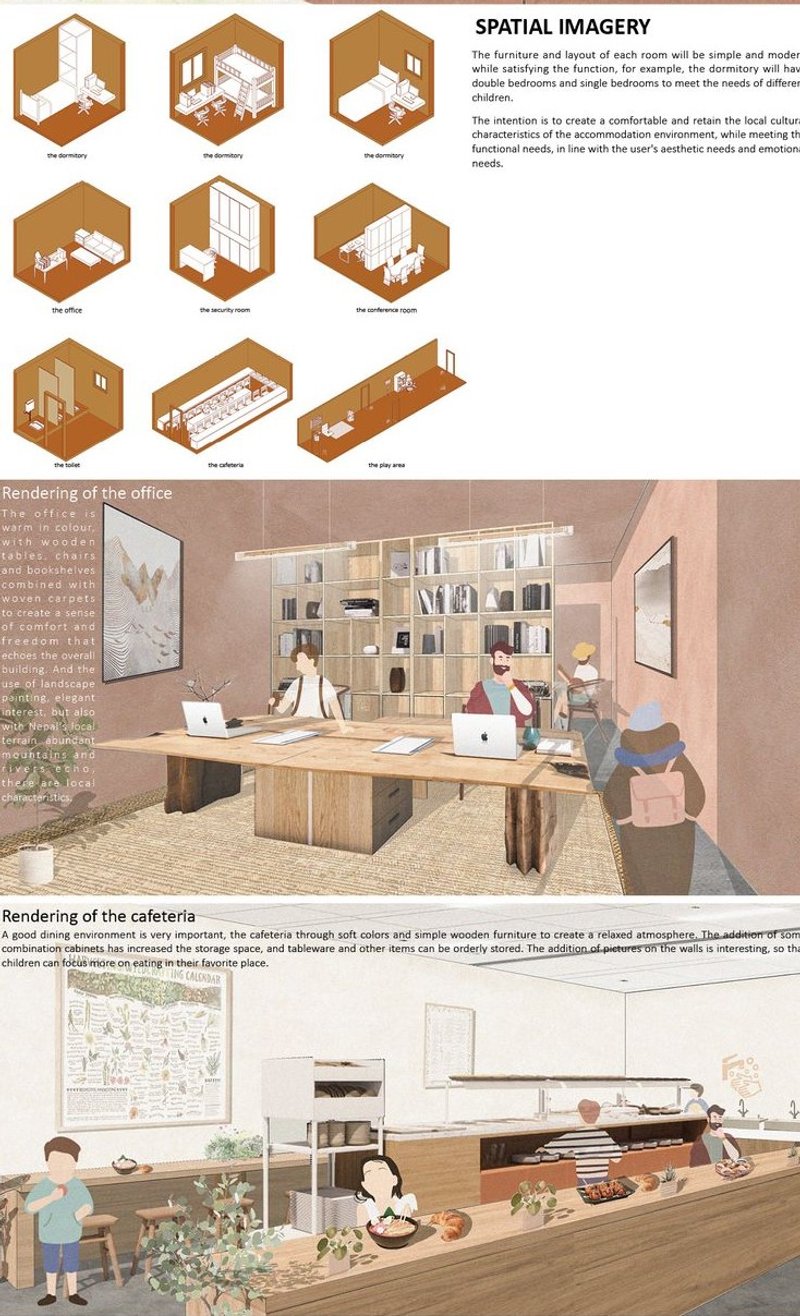
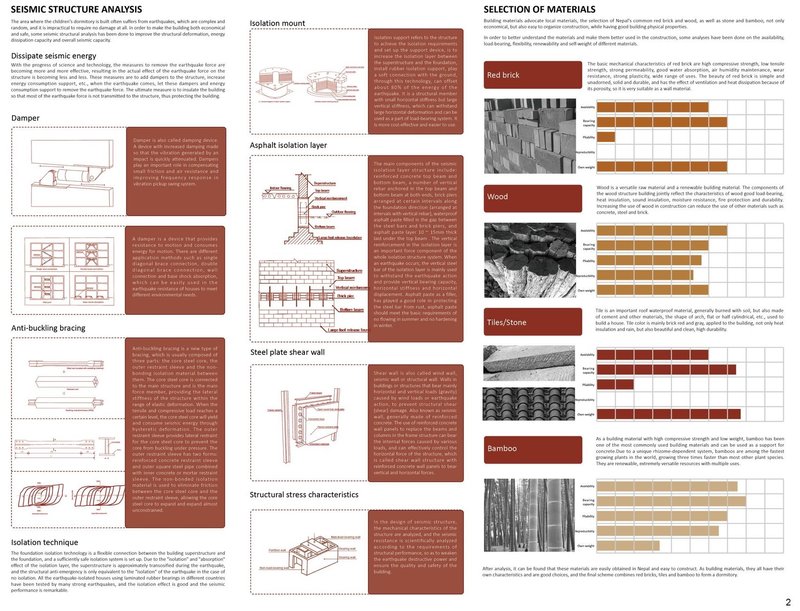
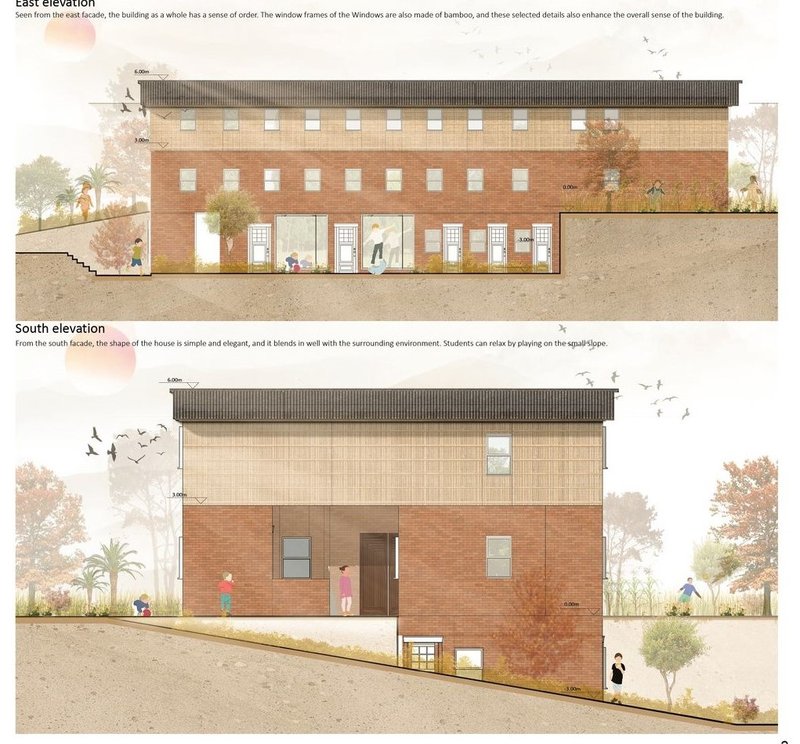
The choice of materials plays a pivotal role in the sustainability of the dormitory. Traditional mud bricks, known locally as 'Italian mud bricks', have been chosen over conventional fire bricks to provide shock absorption and environmental benefits. Cement bears the load, but the use of common local materials like red brick and bamboo minimizes construction costs and environmental impact. These materials are not only economically feasible but also culturally resonant, supporting the local economy and reducing the ecological footprint.
Seismic Safety Considerations
Given Nepal's seismic activity, the structural integrity of educational buildings is paramount. The dormitory's design incorporates advanced seismic safety measures such as vibration isolation rubber bearings made from layers of thin steel plate and rubber, vulcanized under high pressure. These bearings support the building's load and horizontal displacement during earthquakes, significantly enhancing the dormitory's resilience.
Cultural and Educational Integration
Reflecting Nepali Culture
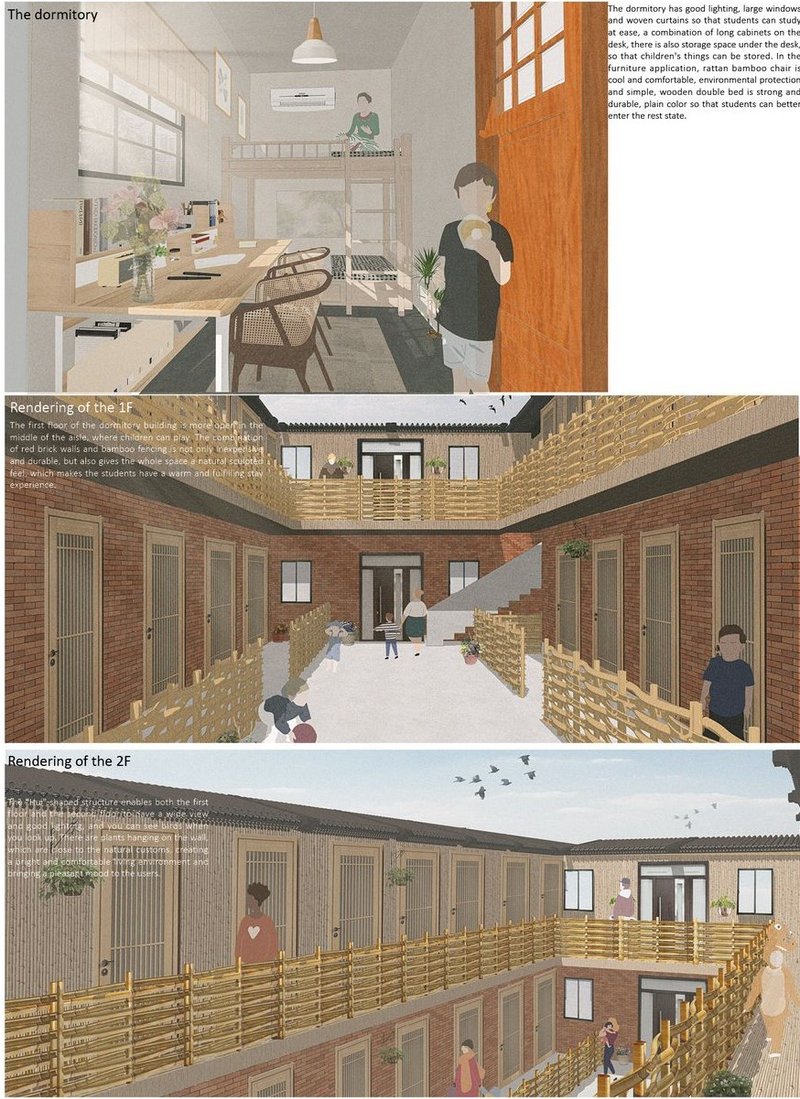
The design of the dormitory goes beyond functionality; it is deeply intertwined with Nepali cultural elements. From the spatial arrangements to the selection of materials, every aspect of the dormitory reflects a keen awareness of local traditions, religious beliefs, and communal needs. For instance, the courtyard style, common in Nepali architecture, fosters a sense of community and maximizes space efficiently, which is crucial in densely populated educational settings.
Addressing Educational Disparities
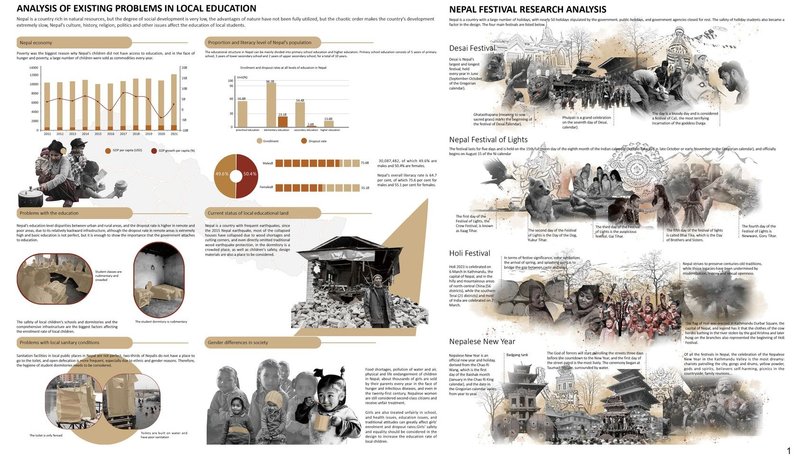
Nepal faces significant challenges in education, particularly in rural areas where dropout rates are high and infrastructure is lacking. This dormitory design directly addresses these issues by creating a safe, accessible, and conducive learning environment. The design not only provides a place of residence but also fosters educational engagement through its communal areas and resource-efficient layout.
Environmental and Economic Sustainability
Utilization of Local Resources
The project emphasizes the use of local resources not only in construction materials but also in labor. By engaging the local workforce in the building process, the project stimulates the local economy and builds community ownership of the educational facility.
Energy Efficiency and Sustainability
The choice of materials like bamboo and red brick not only respects traditional Nepali building practices but also contributes to the building's energy efficiency. Bamboo, for example, provides natural insulation properties, reducing the need for artificial heating and cooling, thereby lowering the dormitory's carbon footprint.
The Nepalese student dormitory is a prime example of how architectural design can align with environmental sustainability, cultural integrity, and educational enhancement. As Nepal continues to develop and face modern challenges, projects like these serve as critical models for sustainable development in educational infrastructure. This holistic approach not only supports the physical and educational needs of students but also instills a sense of cultural pride and environmental responsibility.




Popular Articles
Popular articles from the community

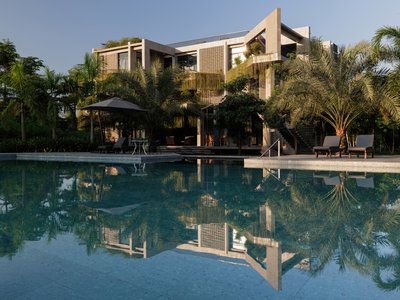
Reincarnation Weaves a Three-Story Retreat into the Green Landscape of Rural Bangladesh
Ara Manor in Narsingdi dissolves the line between domestic architecture and its lush surroundings through screens, courtyards, and planted rooftops.
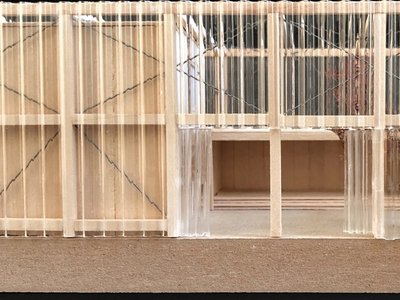
Kaffeebühnen: Coffee Shop Architecture Designed as a Civic Stage Between Vienna’s City and Park
Kaffeebühnen turns coffee shop architecture into a civic stage, linking Vienna’s park edge, urban life, warm timber yards, and coffee craft.

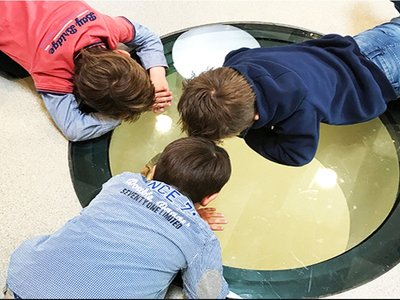
IKC de Geluksvogel: Sustainable School Architecture Designed for Free Movement and Digital Learning
IKC de Geluksvogel turns sustainable school architecture into a flexible Maastricht campus for digital learning, nature, and free movement.
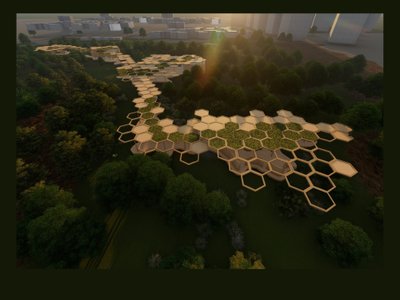
Eco Chapel: A Green Architecture Pavilion Designed in Symbiosis with the Forest
Eco Chapel uses green architecture to weave prayer, learning and reuse into a forest pavilion shaped by modular hexagonal canopies for life.


Similar Reads
You might also enjoy these articles
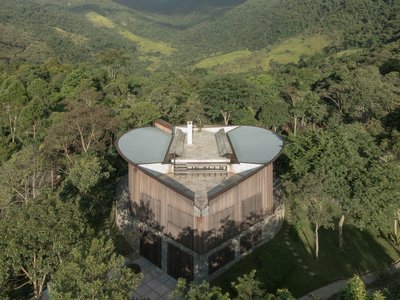
House in Bocaina by Ana Altberg + Cesar Jordão: A Circular Retreat Embracing the Atlantic Forest
Circular forest home in Brazil by Ana Altberg and Cesar Jordão, blending sustainable materials, passive design, and immersive landscape integration.
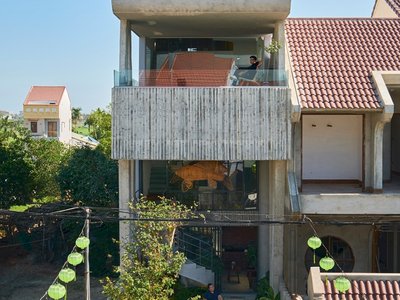
Cherry Homestay: A Harmonious Blend of Modern Design and Traditional Hoi An Architecture
Cherry Homestay blends modern architecture with traditional Hoi An elements, featuring spiral stairs, rooftop mezzanine, sustainable materials, and open, airy spaces.
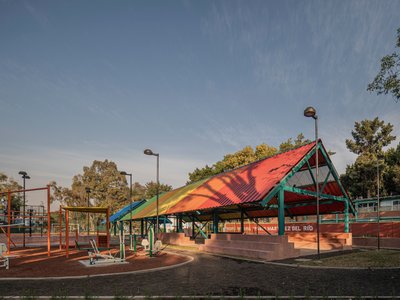
Revitalizing Culhuacán: Housing Unit Infonavit CTM Square by AMASA Estudio
AMASA Estudio revitalized CTM Culhuacán Square, transforming neglected housing unit spaces into vibrant, accessible, community-focused public areas with sustainable design elements.
FR House by Andrade Morettin Arquitetos Associados: A Coastal Retreat Embedded in Brazil’s Native Landscape
Coastal vacation house blending into native vegetation, using translucent polycarbonate, timber structure, passive shading, and elevated design for climate-responsive living.

Explore Educational Building Competitions
Discover active competitions in this discipline




The International Standard for Design Portfolios


The Global Benchmark for Architecture Dissertation Awards


The Global Benchmark for Graduation Excellence


Challenge to design public laboratory
Comments (0)
Please login or sign up to add comments
No comments yet. Be the first to comment!