
Tabanlioglu Architects Weave a Transit Terminal into the Fabric of Kadıköy's Waterfront
Terminal Kadıköy transforms Istanbul's Anatolian rail infrastructure into a 26,575 square meter civic destination on the Marmara shore.

Transit hubs have a reputation for dividing the cities they serve. Rail viaducts cut neighborhoods in half, station plazas become dead zones after rush hour, and the spaces beneath elevated tracks turn into leftover voids no one quite knows how to use. Terminal Kadıköy, completed in 2025 by Tabanlioglu Architects, tackles that problem head on. The 26,575 square meter project on Istanbul's Asian side does not simply accommodate rail and road traffic; it threads a food hall, retail market, auditorium, public gardens, and pedestrian promenades through the structural skeleton of a working transportation node.
What makes the project genuinely interesting is the refusal to treat infrastructure and civic life as separate programs. The viaducts and platforms are not hidden or screened off. They are the armature around which everything else is organized: restaurants sit beneath the tracks, courtyards open between highway ramps, and a theater occupies space that a conventional terminal would have surrendered to parking. The result is a building that earns its ground-level life around the clock, not just during morning and evening commutes.
Orange Columns and Civic Legibility
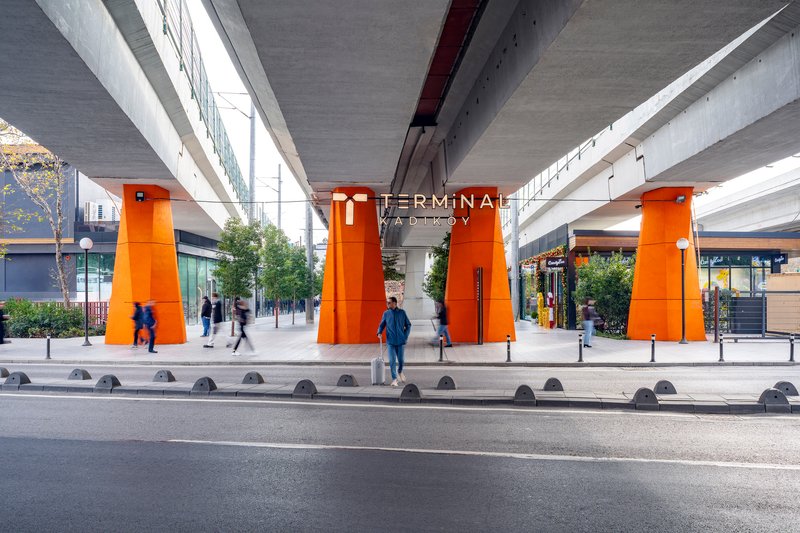
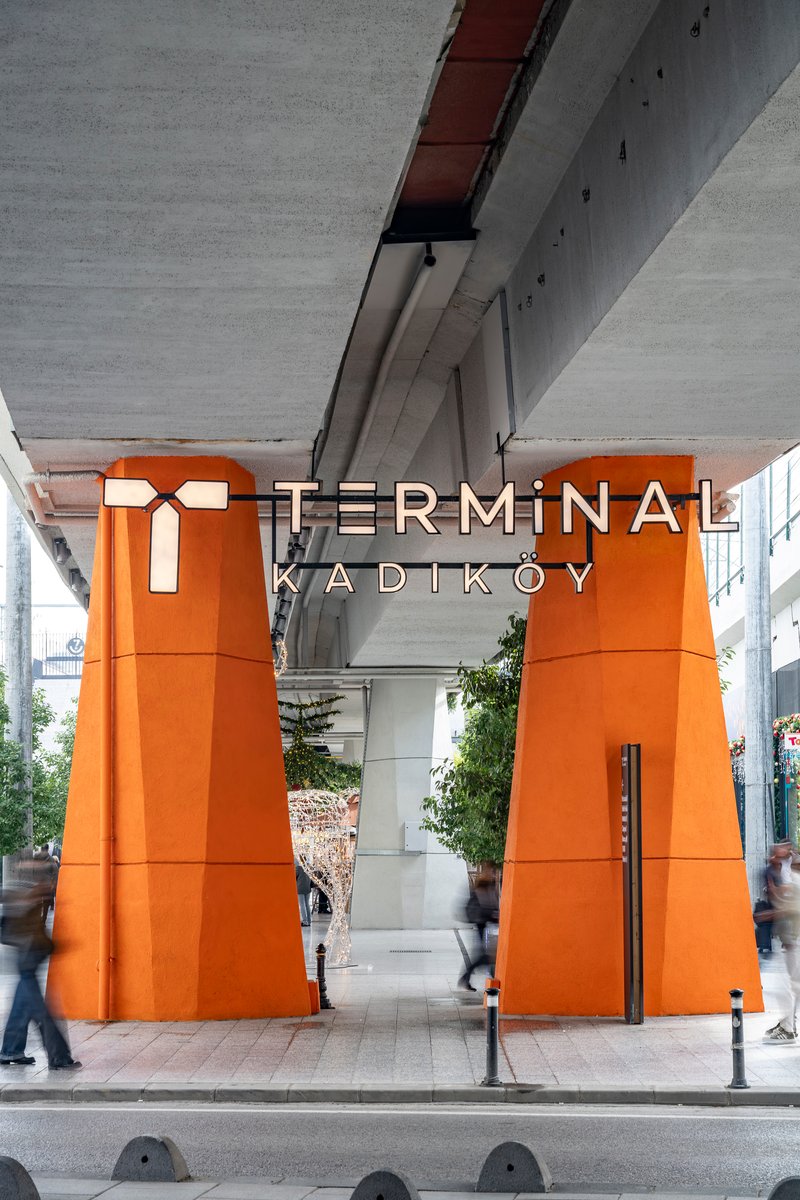
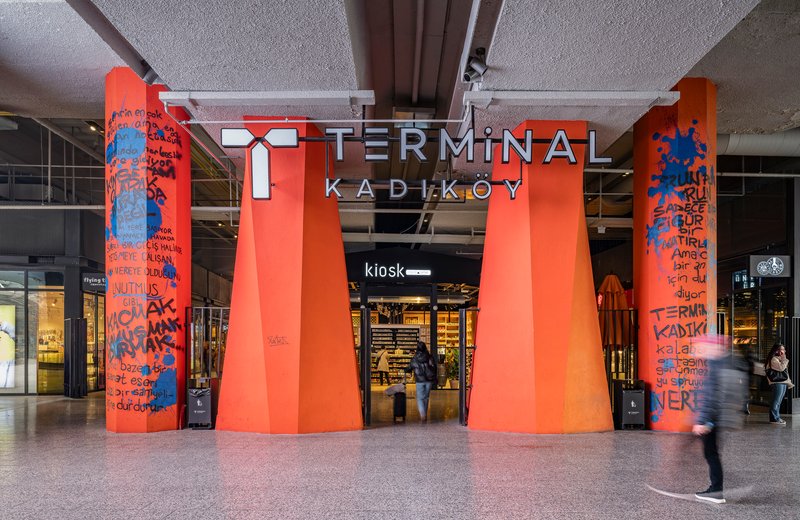
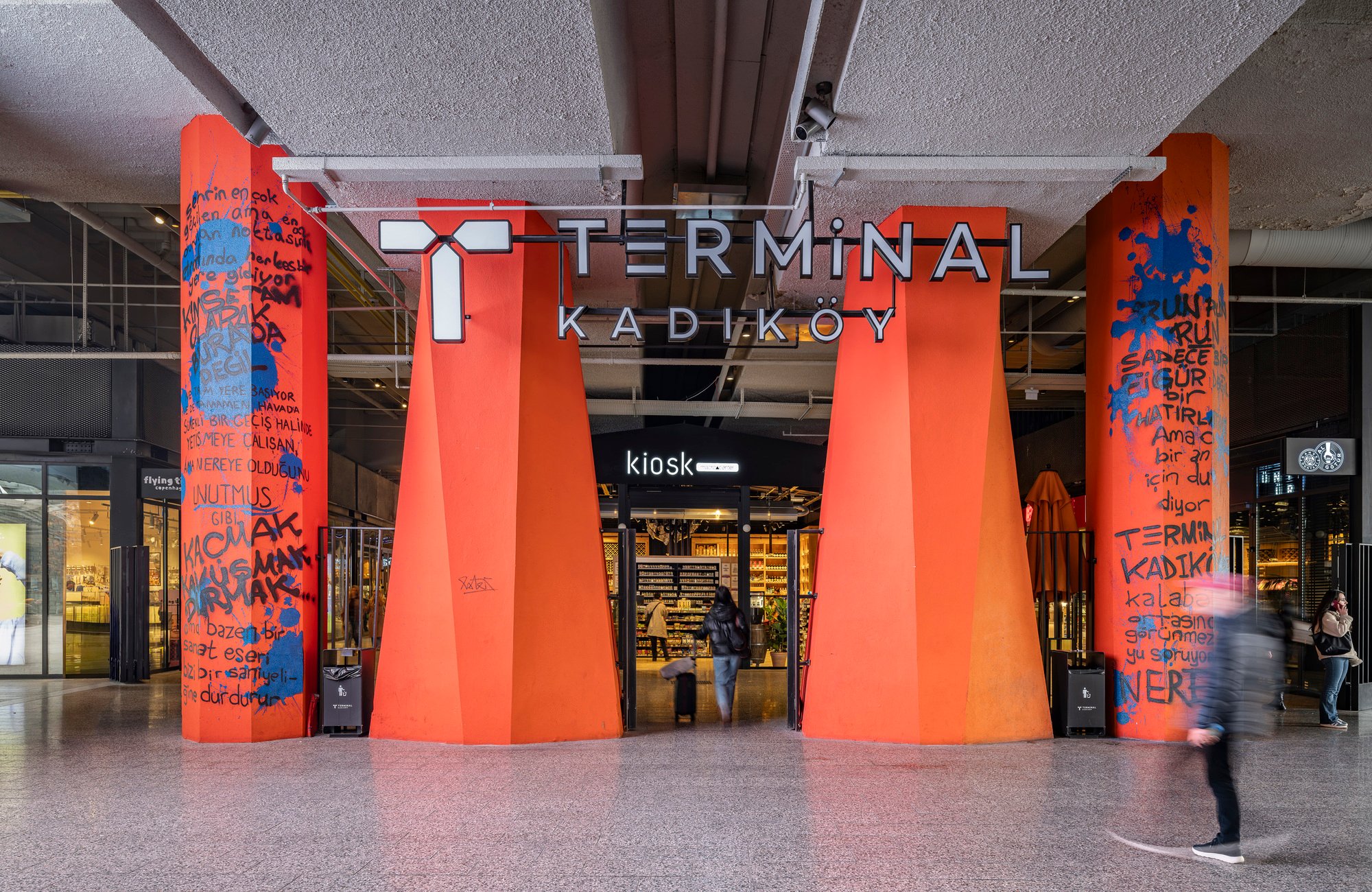
The most immediately recognizable element of Terminal Kadıköy is its array of tapered, orange-clad steel columns. Against the grey concrete of the viaduct, these supports read as deliberate markers rather than anonymous structural members. They give the ground plane a rhythm, establish thresholds, and signal where pedestrians are welcome to pass through. The color choice is bold without being decorative; it performs the practical work of wayfinding in a complex where highways, rail lines, and foot traffic converge at different levels.
Viewed from the street, the columns frame generous portals that invite movement across the site rather than along its edges. This is a critical detail. A transit hub that funnels everyone to a single entrance is a bottleneck; one that distributes entry points along its length becomes permeable. Tabanlioglu treats the viaduct as a colonnade, not a wall.
The Platform as Landscape
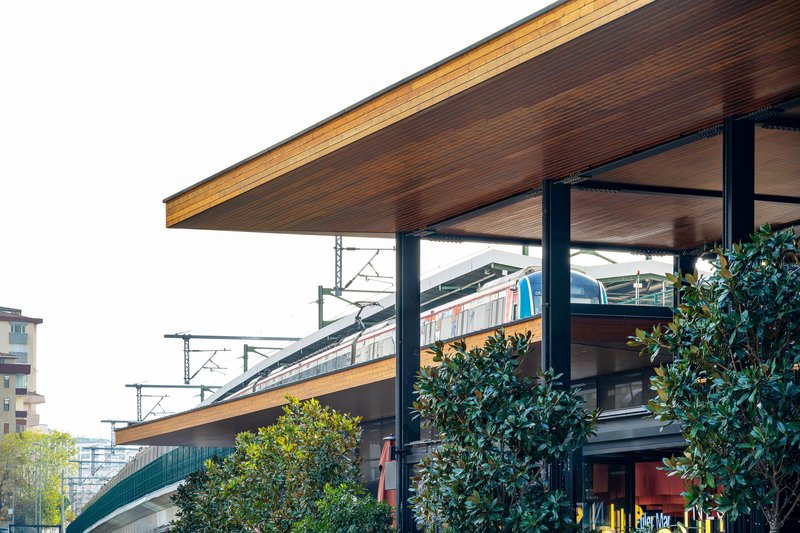
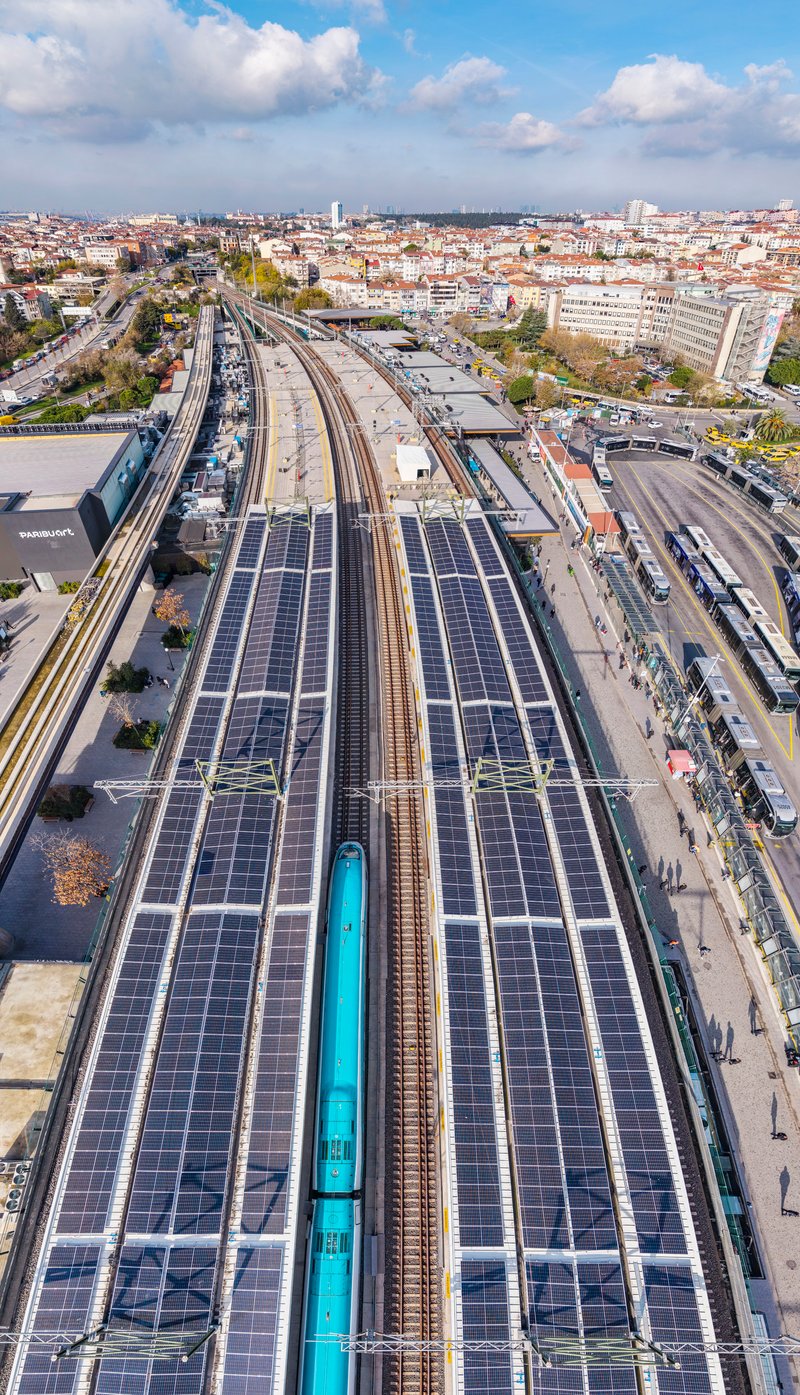
Above the civic program, the rail platforms stretch beneath cantilevered timber-soffit roofs supported on steel columns. The canopies are lined with photovoltaic panels, turning what is usually a pure shelter element into a productive surface. From the air the station reads as a long, luminous bar of energy infrastructure running parallel to the Marmara coast. At platform level, the warm timber underside softens the experience of waiting for a train.
Look at the image of a train gliding beneath the timber canopy and you notice how the architecture recedes. The scale of the roof is enormous, yet the proportions feel comfortable because the soffit material is domestic rather than industrial. It is a small move with outsized effects: passengers perceive shelter, not a shed.
Market and Food Hall Beneath the Tracks
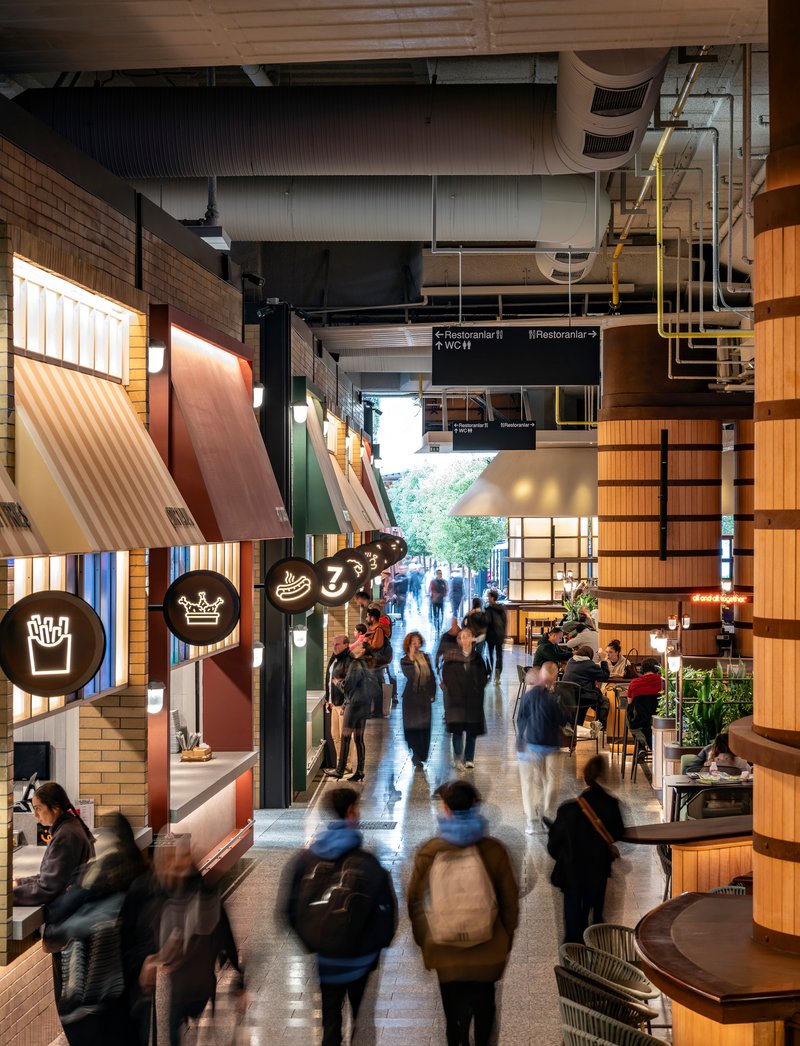
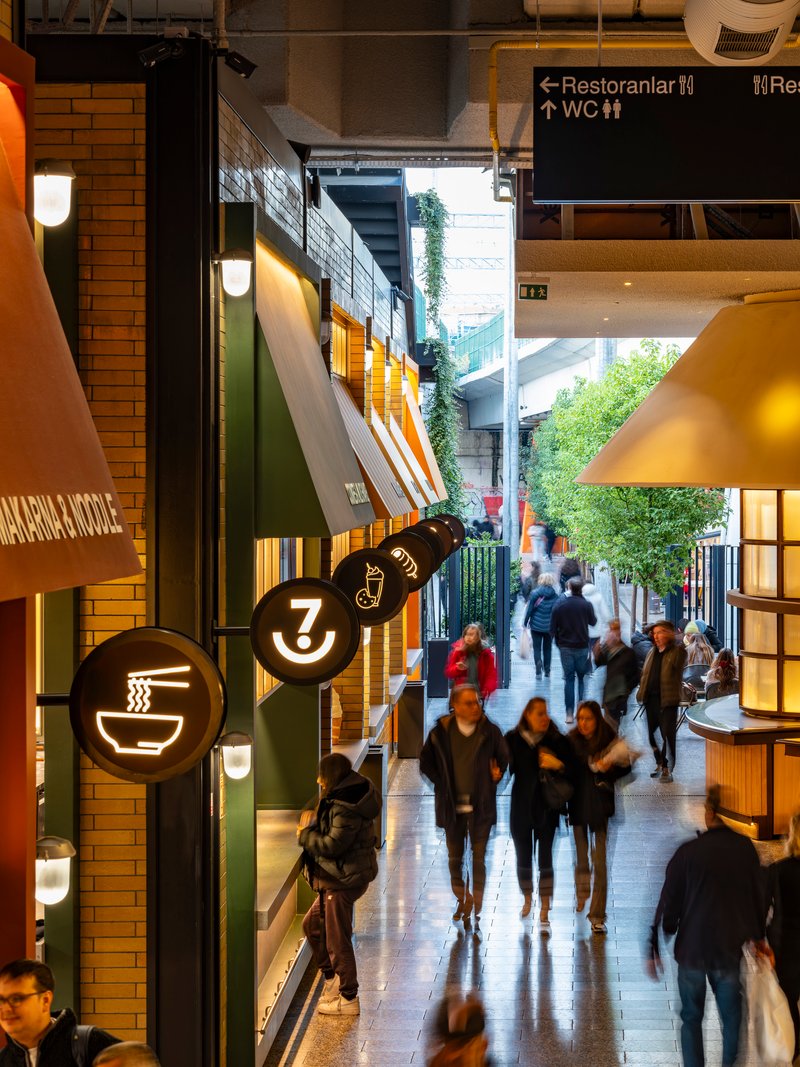
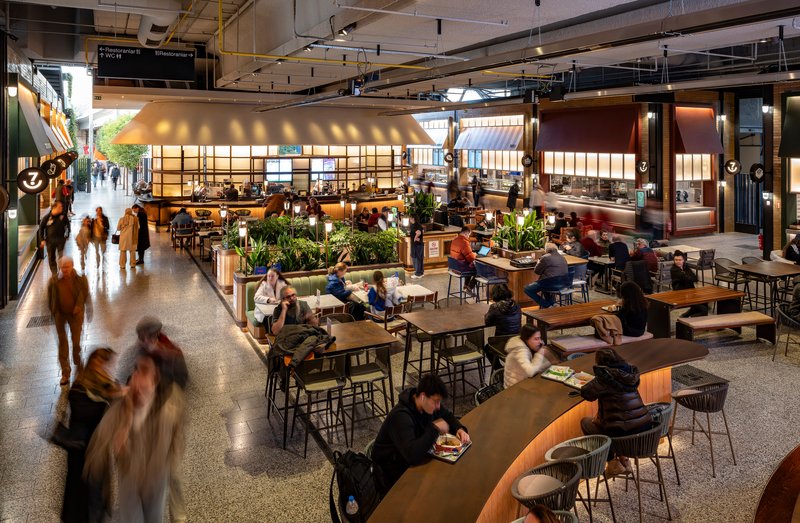
Kadıköy's existing market culture, one of the most vibrant on the Asian side of Istanbul, clearly shaped the decision to embed a food hall and retail market inside the terminal. The corridors beneath the viaduct are lined with tiled kiosks, angled awnings, and circular signage that borrows the visual language of a street bazaar rather than a shopping mall. Exposed ductwork overhead keeps the palette raw and legible, reinforcing the sense that this is an extension of the neighborhood, not a hermetically sealed commercial insert.
Communal tables occupy a central hall where kiosk canopies glow beneath the structural slab. The layout encourages the kind of lingering and overlap that makes markets work: a commuter grabs coffee, a family sits down for a meal, someone cuts through on the way to the waterfront. All of these movements coexist without choking each other off.
Courtyards, Gardens, and the Ground Plane
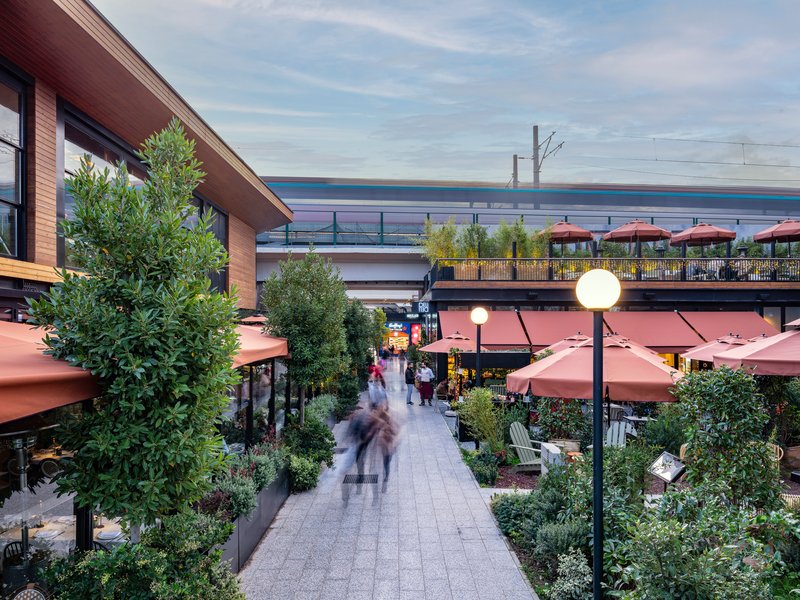
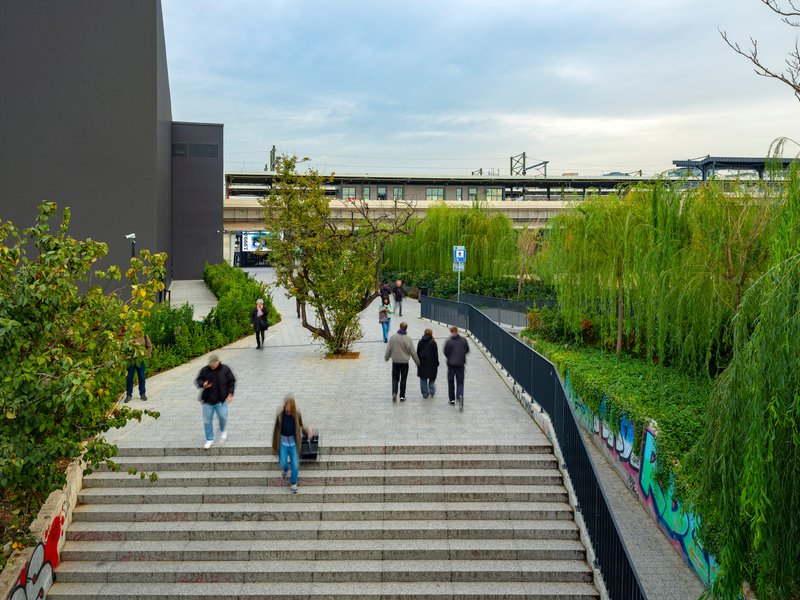
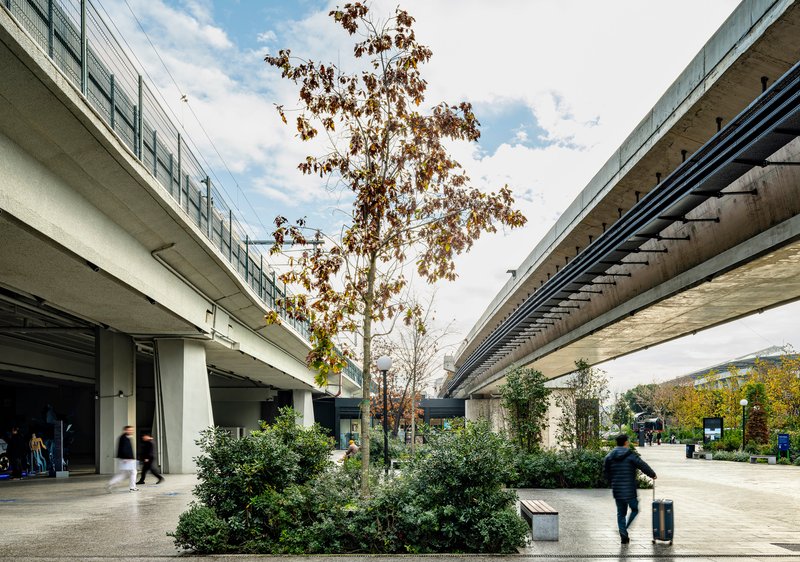
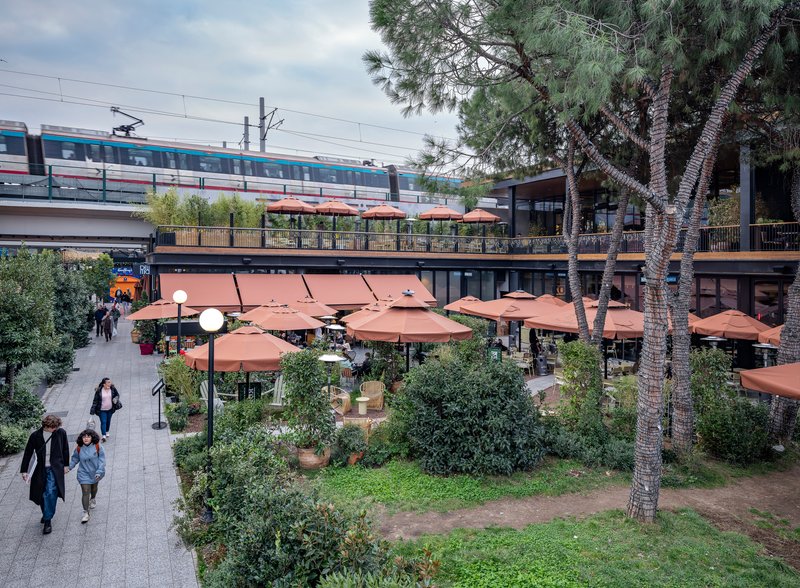
Terminal Kadıköy's most convincing argument for integrated infrastructure is its ground plane. Pedestrian promenades are lined with planters and cafe umbrellas. Stone staircases descend into planted plazas. Between the parallel viaducts, courtyard gardens open to the sky, softening the acoustic and visual presence of moving vehicles overhead. These are not token green patches; they are connecting tissues that stitch the terminal into the surrounding residential neighborhoods.
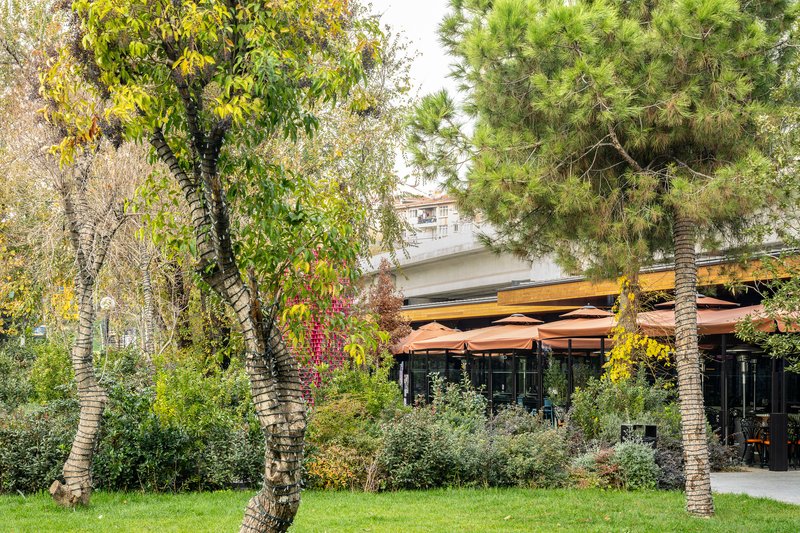
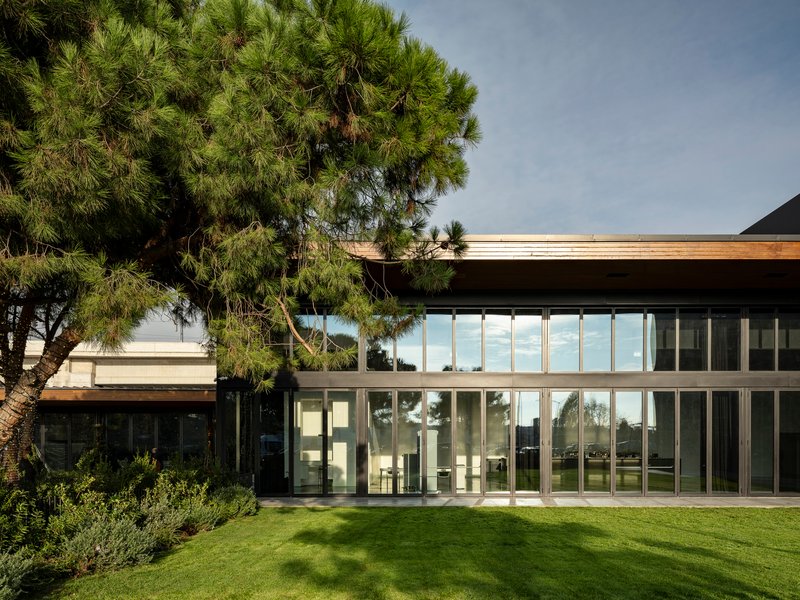
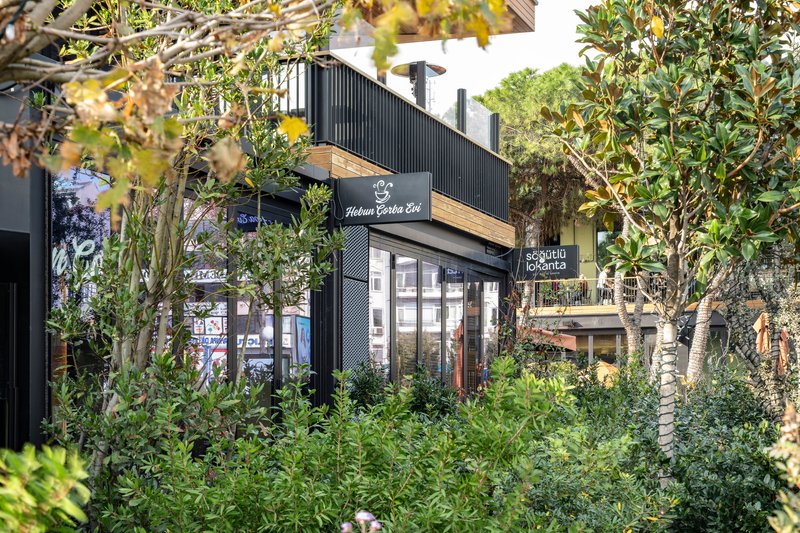
Mature pine trees and palms appear in several of the garden views, suggesting either transplanted specimens or, more likely, preservation of existing vegetation that pre-dated construction. Either way, the landscape registers as established rather than freshly planted, which matters enormously for public perception. People trust green spaces that look like they have been there a while.
Pavilions and Timber Architecture at the Edge
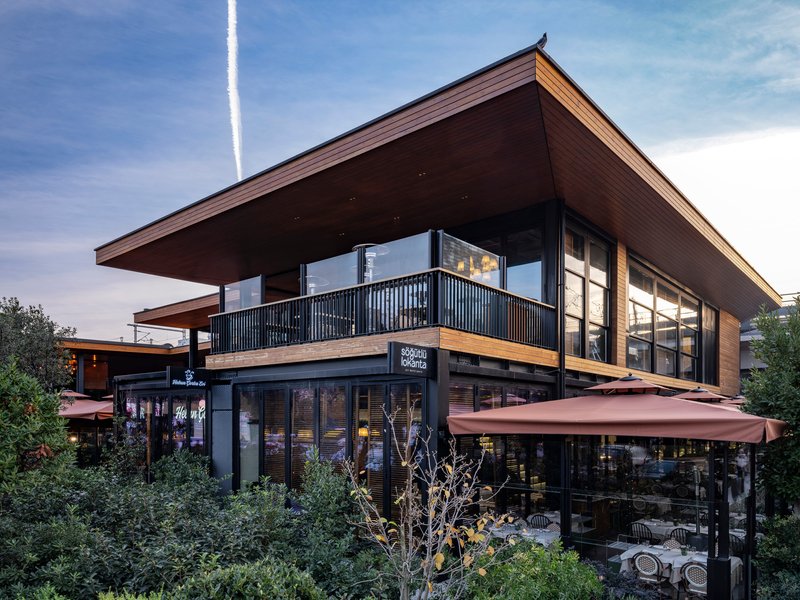
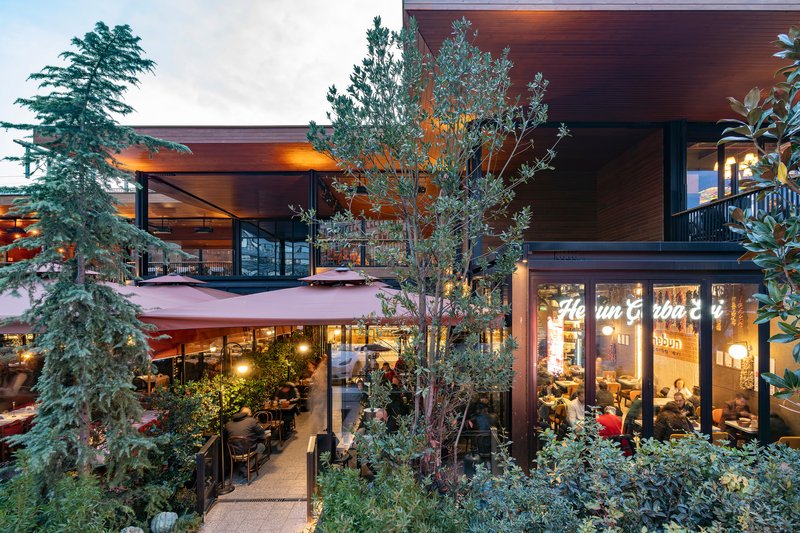
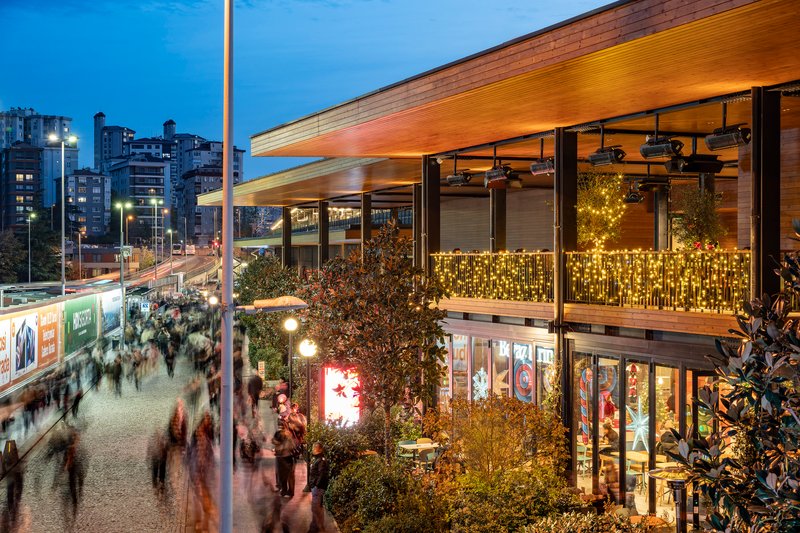
At the perimeter of the site, smaller pavilions with deep overhanging timber eaves and planted terraces mediate the scale between the heavy infrastructure of the viaducts and the finer grain of the surrounding streets. Two-story glass facades open onto garden courtyards, and string lights at evening activate the facades for after-hours use. The material palette here shifts from concrete and steel to timber cladding, terracotta accents, and copper-toned canopies, grounding the project in a warmth that the transit structure alone cannot provide.
These pavilions house dining, retail, and event spaces that do not require proximity to the platforms. By pulling them to the edge, Tabanlioglu allows the terminal's identity to bleed outward, so the boundary between the station and the district becomes genuinely ambiguous. That ambiguity is a feature, not a flaw.
A Hidden Auditorium
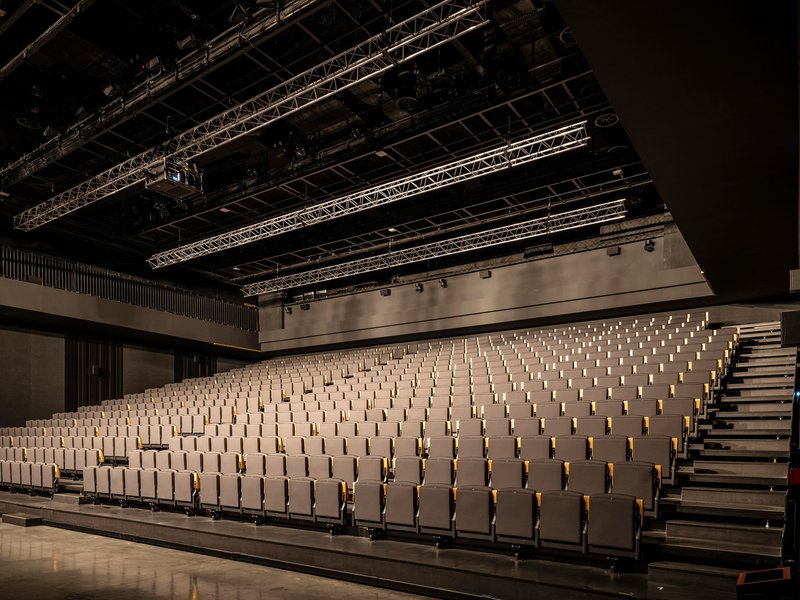
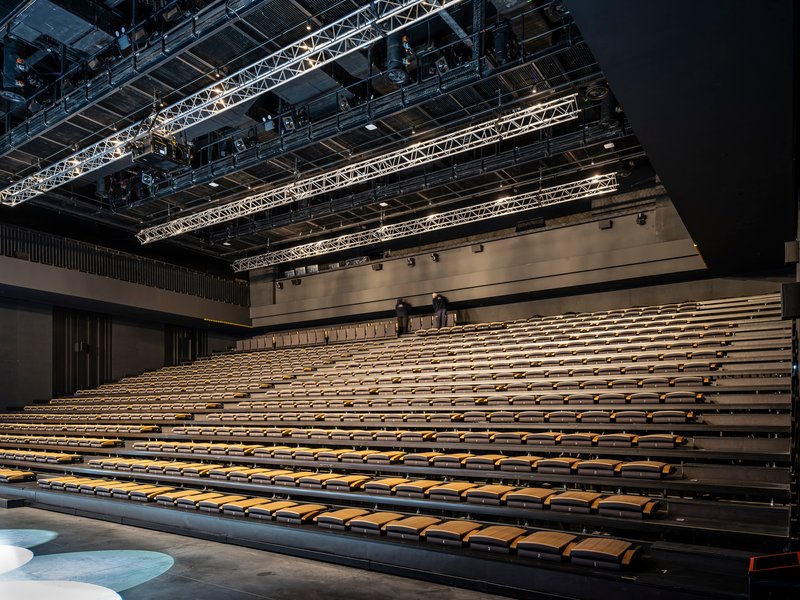
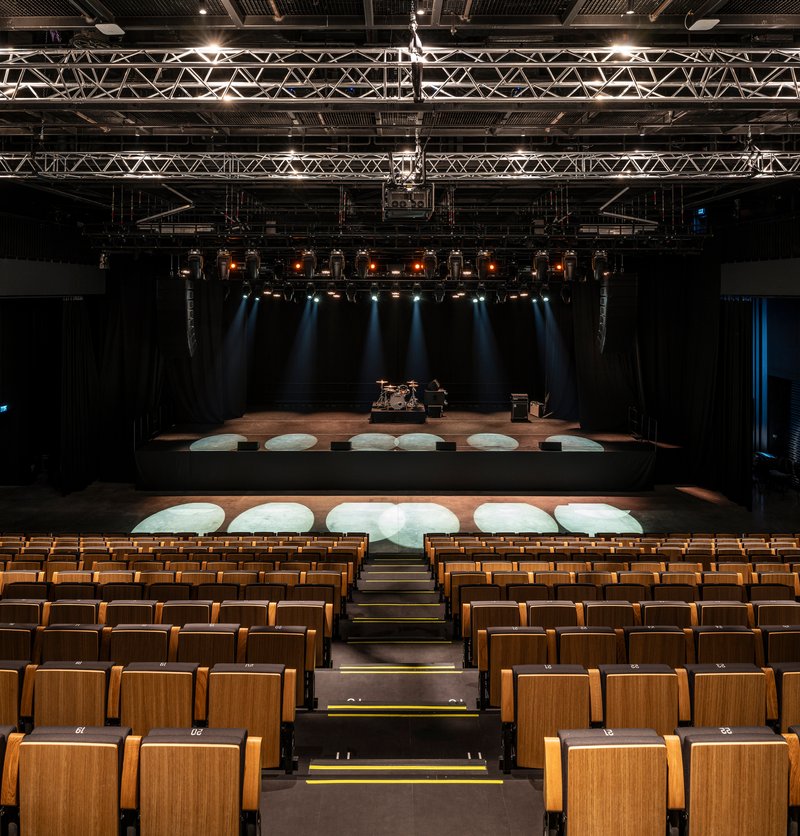
Perhaps the most unexpected program in the terminal is a full-scale auditorium with raked timber seating, a theatrical lighting rig, and retractable bleachers. The space is industrial in feel: exposed metal trusses, black ceiling grid, polished concrete floor. It could host performances, lectures, community meetings, or film screenings, and its location inside a transit complex means it is, by definition, one of the most accessible venues in the city.
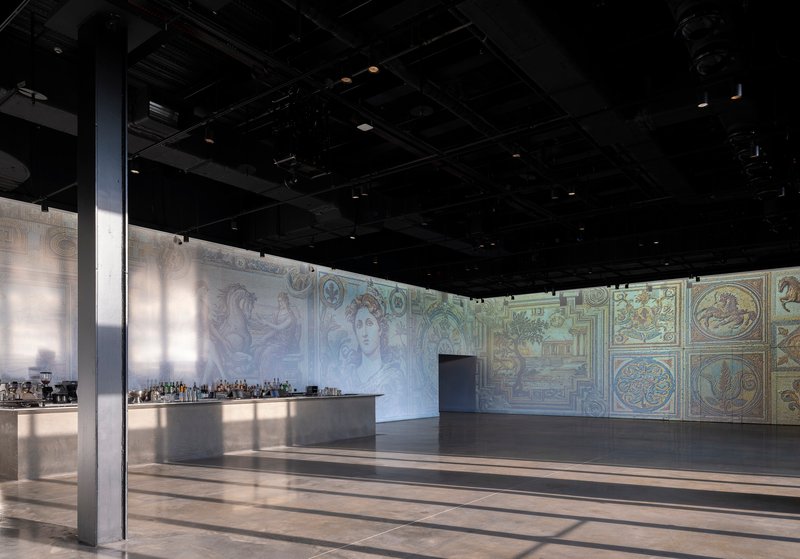
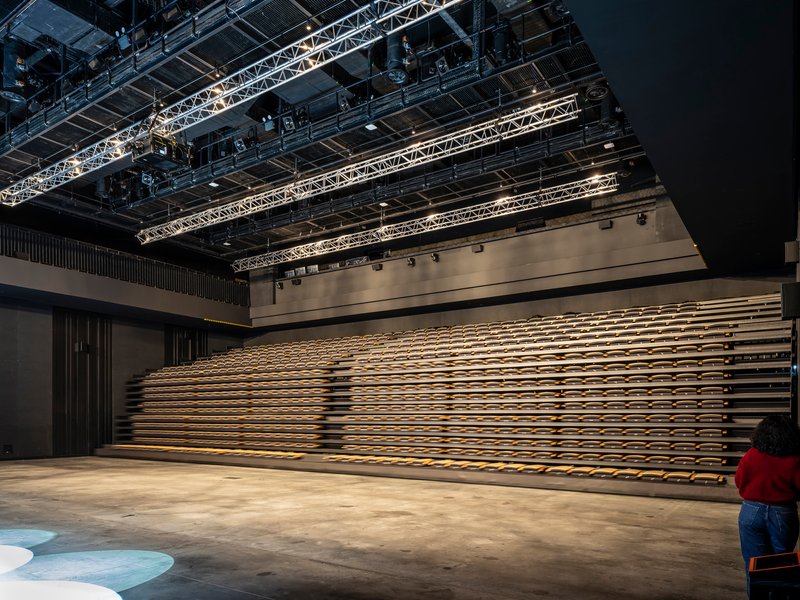
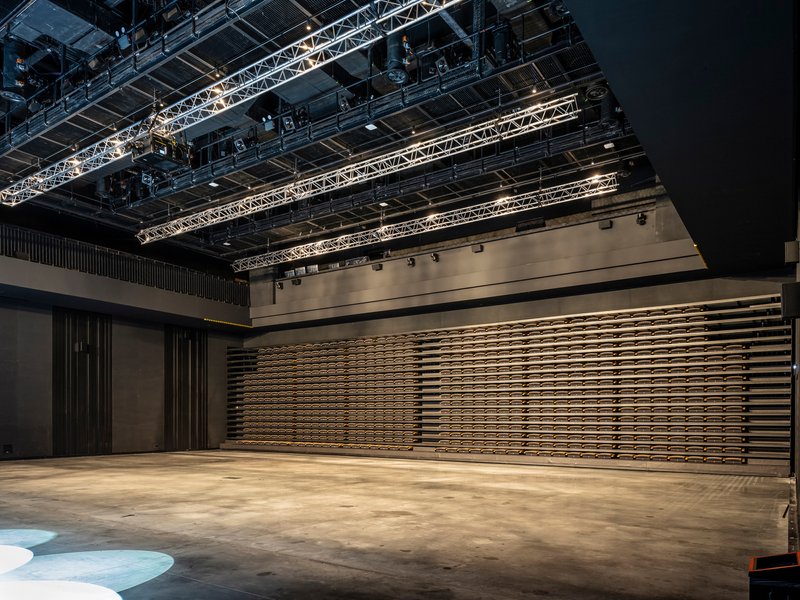
The auditorium's flexibility is worth noting. Retractable timber bleachers fold against the wall, and a horizontal wooden slat system can reconfigure the volume. A nearby event hall with decorative fresco walls and a polished reflective floor adds a second large gathering space. Together, these rooms make an argument that a transit hub can serve as a cultural institution, not merely a transfer point.
Thresholds and Retail Passages
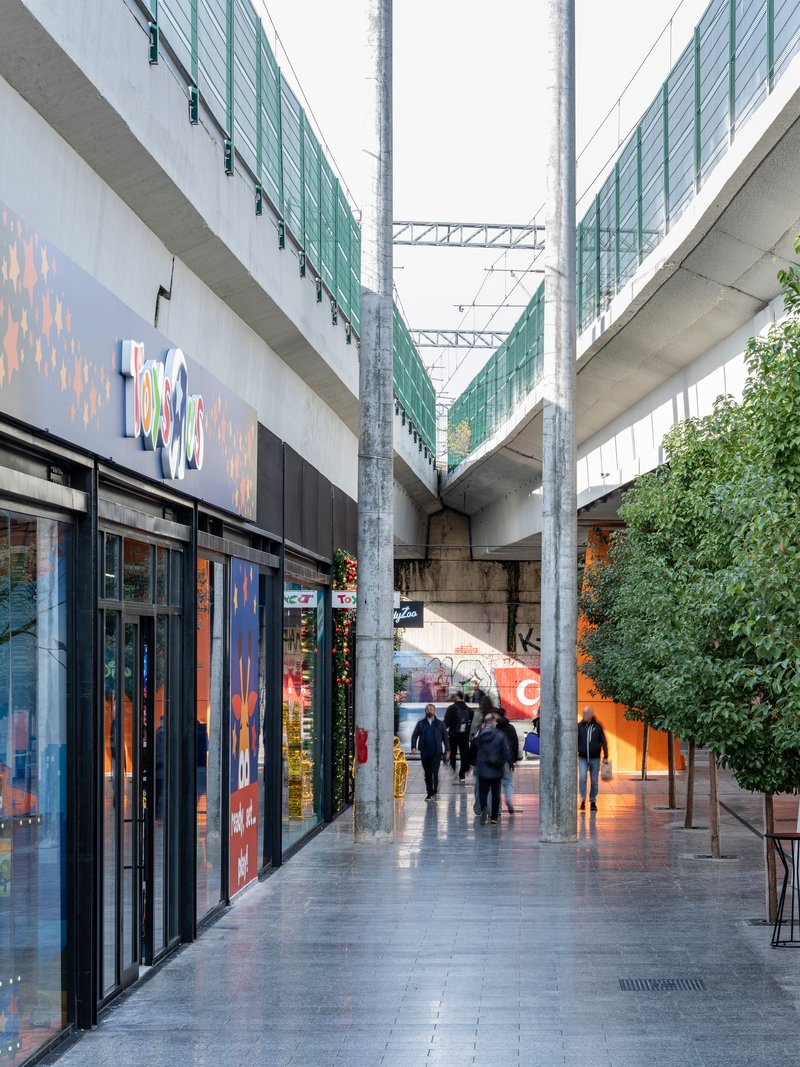
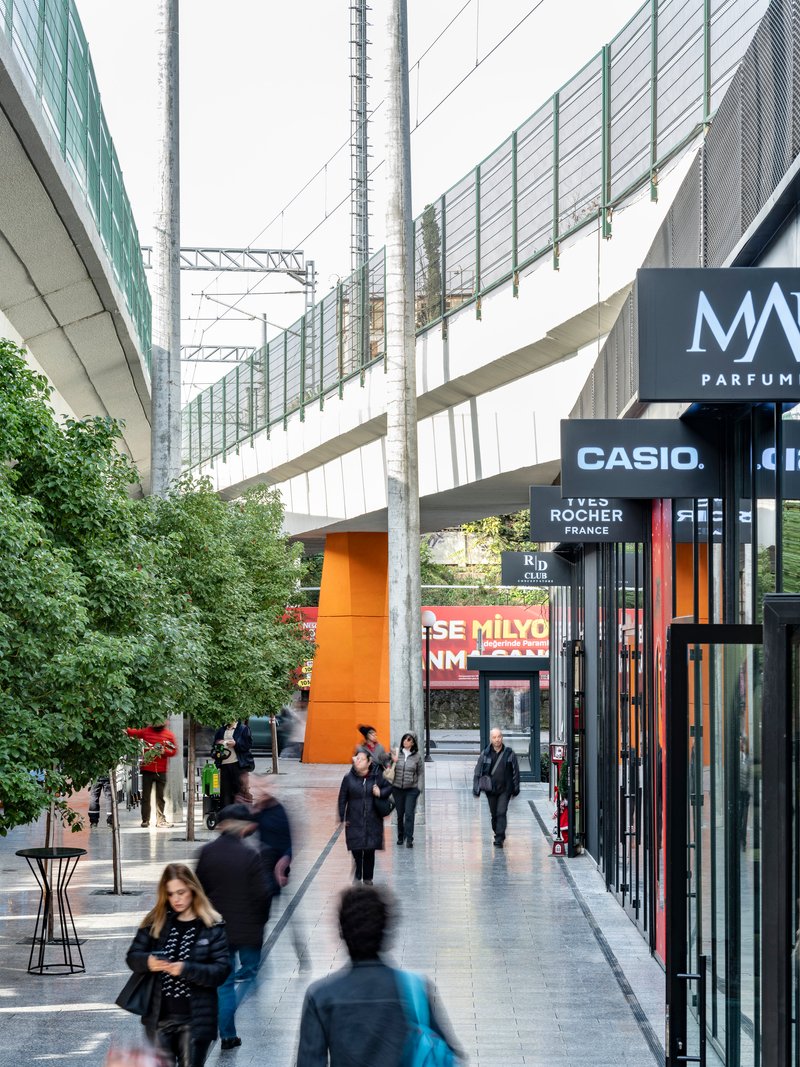
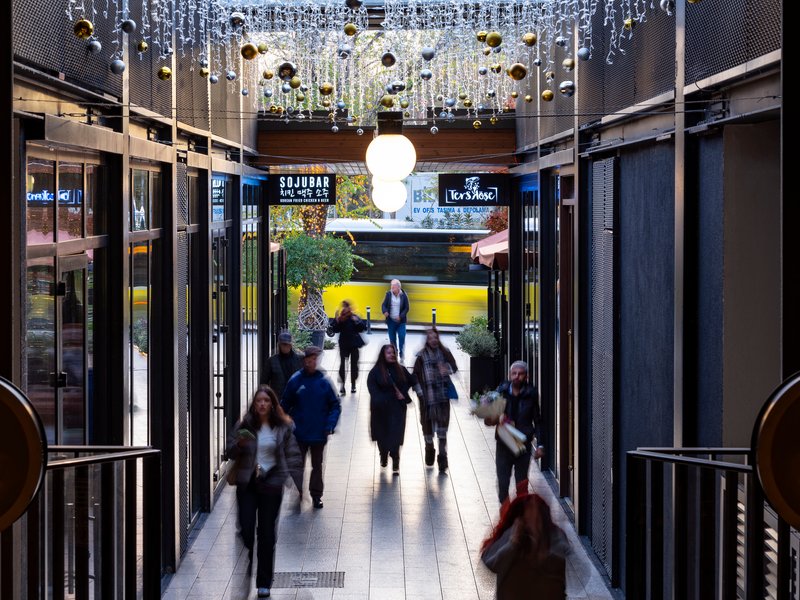
Glazed corridors, polycarbonate screen walls, and perforated metal portals organize movement through the commercial zones. These passages are lit from above and from the sides, avoiding the claustrophobic tunnel quality that plagues many under-viaduct retail strips. Planted trees punctuate the corridors, and circular light installations, including a suspended sphere chandelier visible through one of the entry thresholds, elevate the atmosphere beyond utilitarian.
The entry sequence at the turnstile gates features a suspended ornament installation overhead, a gesture that signals arrival. It is a small theatrical touch, but it tells visitors they are entering a destination, not just passing through a checkpoint. That psychological shift is essential for a building that wants to be more than infrastructure.
Plans and Drawings
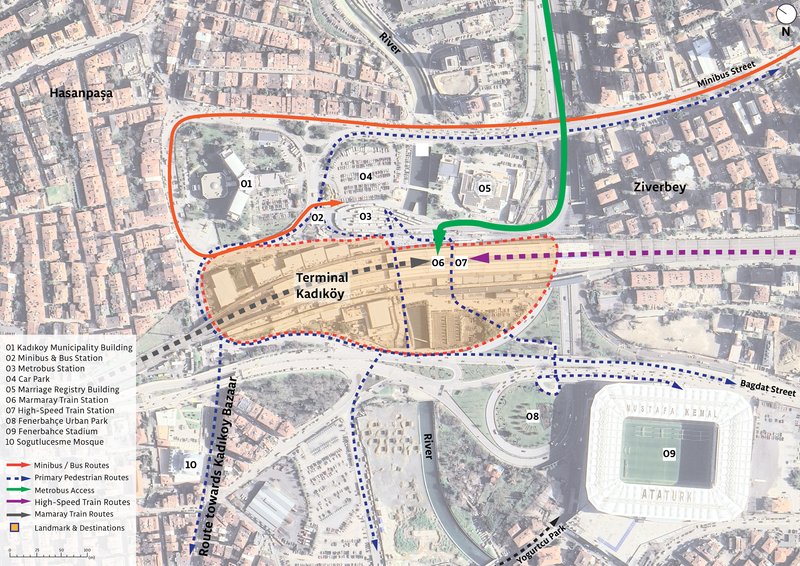
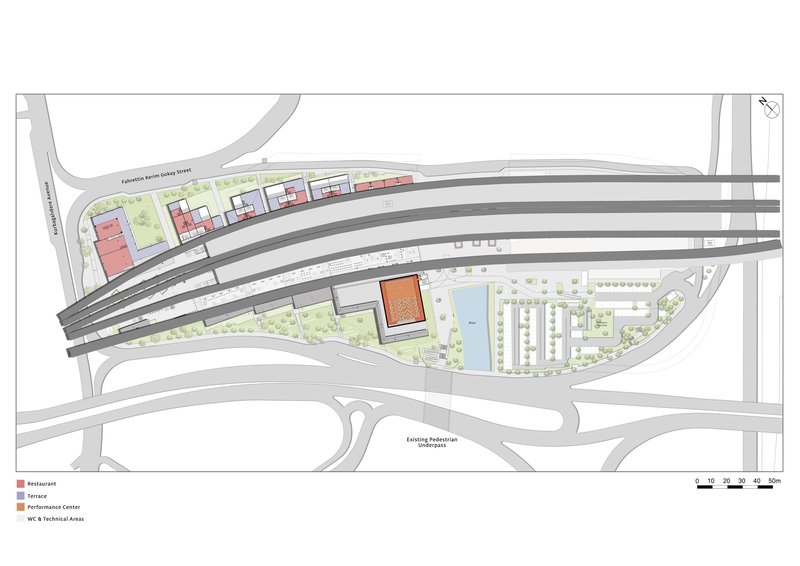
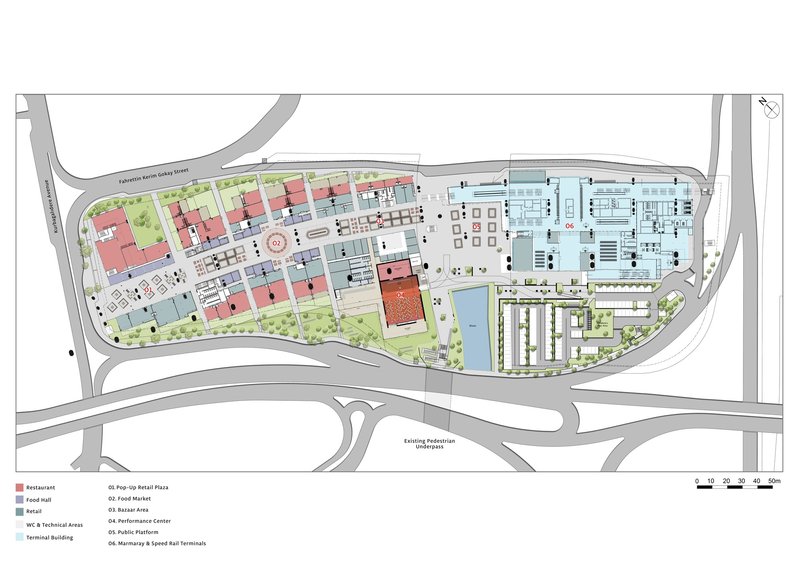
The site plan drawings reveal the full ambition of the project. Colored pedestrian routes radiate outward from the terminal toward neighboring districts and urban landmarks, making explicit the intention to reconnect a waterfront zone that had been severed by highway and rail corridors. The master plan shows how the curved rail tracks and highway infrastructure are not obstacles to be designed around but spines from which the program branches.
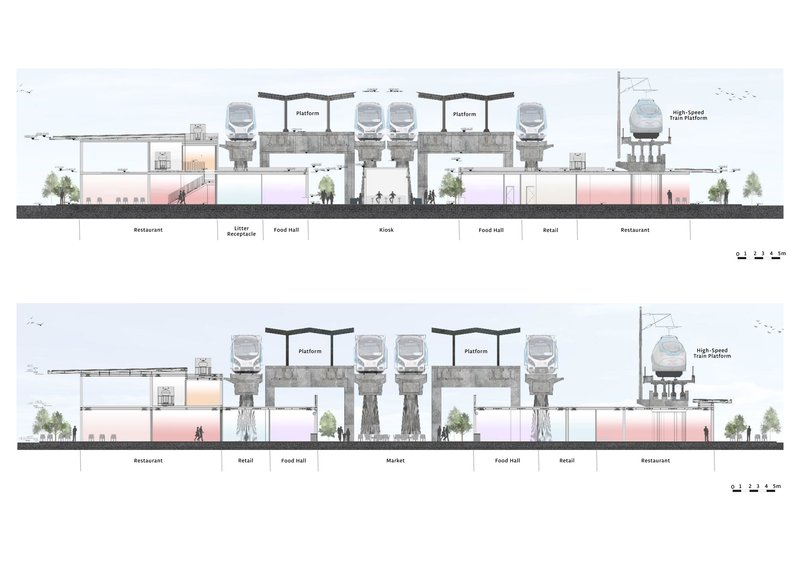
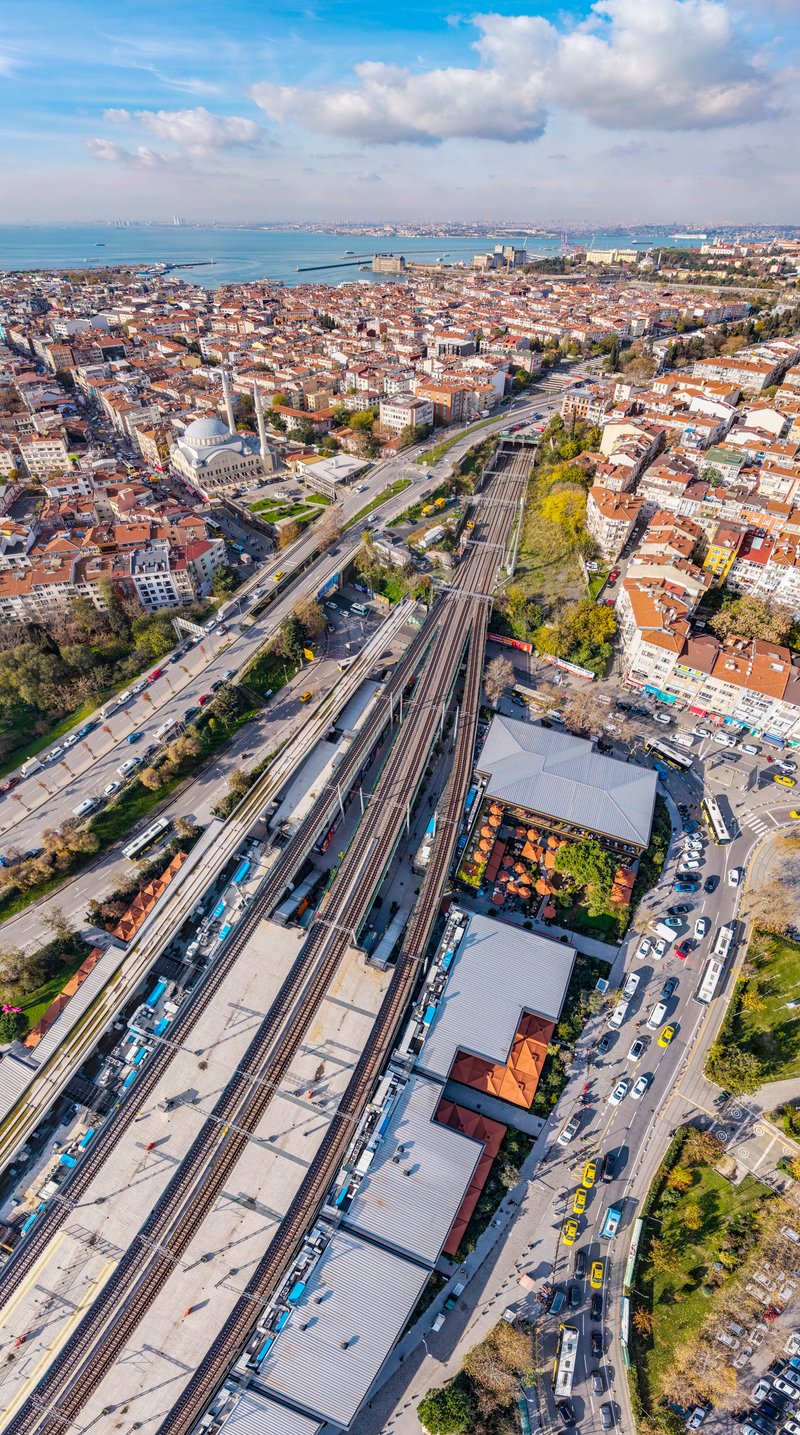
Cross sections confirm the vertical layering: elevated platforms sit above retail, food halls, and restaurant programs, with planted trees occupying the ground level between structural bays. The relationship between the section and the aerial photographs is remarkably consistent. What is drawn is what was built, and that alignment suggests a design process that understood its constraints from the beginning rather than negotiating them away during construction.
Why This Project Matters
Terminal Kadıköy matters because it demonstrates that transit infrastructure can generate civic life rather than suppress it. Too many cities treat rail stations as problems to be minimized: sunken, screened, or surrounded by buffer zones of parking. Tabanlioglu's approach is the opposite. The concrete viaduct becomes a market roof. The highway underpass becomes a courtyard. The structural bay becomes an auditorium. Every leftover void is claimed for public use, and the resulting building feels like a neighborhood rather than a station.
For Istanbul specifically, a city where the Bosphorus divide and sprawling highway networks have long fragmented urban continuity, the project offers a working model for how transportation investment can repair rather than rupture. Terminal Kadıköy does not pretend the infrastructure is invisible. It makes it legible, permeable, and, against all odds, hospitable.
Terminal Kadıköy by Tabanlioglu Architects. Istanbul, Türkiye. 26,575 m². Completed 2025. Photography by Murat Germen.
About the Studio
Share Your Own Work on uni.xyz
If projects like this are the kind of work you want to make, uni.xyz is a place to publish your own, find collaborators, and enter design competitions.


Popular Articles
Popular articles from the community

GGR Architectes Anchors a New Neighborhood in Frouzins with a Brick and Timber School Complex
A cruciform plan of terracotta brick and exposed wood frames four courtyards for 140 students outside Toulouse, France.

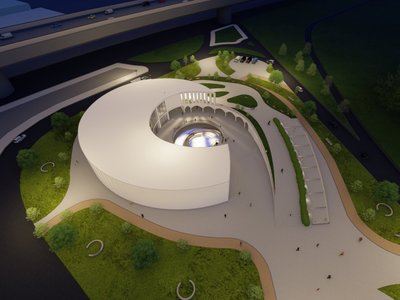
The Heart of Milano: Slow Fashion Architecture for a New Circular Culture
The Heart of Milano turns slow fashion architecture into a civic landmark where learning, making, sharing, and circular culture meets daily.
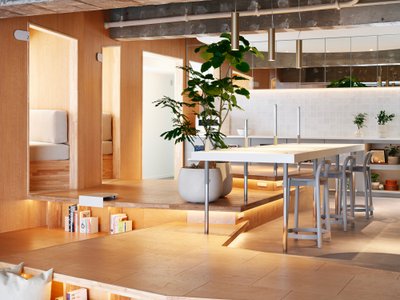
R/URBAN DESIGN OFFICE Carves a Communal Living Room from a Tokyo Corporate Dormitory
In Shinagawa's Oi district, a 35-year-old reinforced concrete tower becomes a 49-unit rental residence with shared spaces that redefine cohabitation.
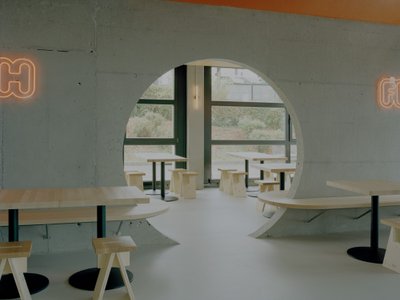
Noue Studio Organizes a Swiss Restaurant Around a Single Concrete Wall
In Granges-Paccot, Switzerland, a 216-square-meter renovation turns raw materials and a central spine into a legible dining experience.


Similar Reads
You might also enjoy these articles
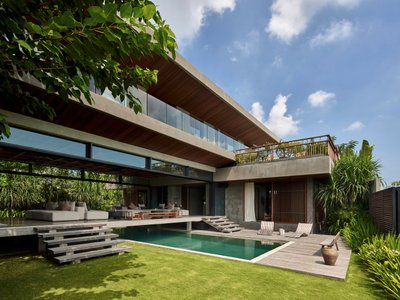
Freebird Residence by Alexis Dornier: A Tropical Modernist Sanctuary in Bali
Floating living pavilion above pool anchors H-shaped tropical villa, blending Japanese minimalism, sustainable strategies, lush landscape, and sculptural interiors.
127af Flips a Tiny Bagnolet Rowhouse Upside Down with a Handcrafted Roof Extension
A 55-square-meter terraced house on the edge of Paris gains a luminous upper living floor through lightweight timber and steel.
1.61 Design Workshop Wraps a 600-Square-Meter Café in Vietnam in Sculptural Burgundy Drama
Reden Café & Bistro pairs a helical staircase, mosaic floors, and deep red interiors to rethink Vietnamese hospitality space.

The Unbound Brain: A School Shaped by Cognitive Architecture
Cylindrical learning pods radiate like neurons from a central cortex, turning the floor plan into a spatial model of human thought.

Explore Commercial Buildings Competitions
Discover active competitions in this discipline




The Global Benchmark for Architecture Dissertation Awards


The Global Benchmark for Graduation Excellence

Bring back Drive In's
Comments (0)
Please login or sign up to add comments
No comments yet. Be the first to comment!