
Tadu Arquitetura Packs a Rio-Inspired Tavern into 50 Square Meters in São Paulo
De Primeira channels the spirit of Rio de Janeiro's neighborhood bars through colorful tiles, red floors, and a sidewalk-first social life in Vila Madalena

São Paulo and Rio de Janeiro are sibling cities that could not be more different. One is vertical, gray, driven by commerce. The other is horizontal, loud with color, organized around the sidewalk. De Primeira, a 50 m² tavern in São Paulo's Vila Madalena neighborhood, takes the architectural DNA of Rio's beloved corner bars and grafts it onto the dense fabric of its rival city. Designed by Tadu Arquitetura under lead architect João Duayer, with project development by Diego Curcio, the result is a renovation that feels like a postcard from another place, edited just enough to belong where it stands.
What makes the project worth studying is not its scale but its precision. In a footprint barely larger than a studio apartment, Tadu manages to fit a sidewalk terrace, a dining room, a full bar counter, an open kitchen, a bathroom, and an upper storage mezzanine. Every surface is doing work: the yellow and white checkerboard tile is simultaneously decoration and wayfinding, the red floor anchors the palette, and the existing exposed brick walls serve as both structure and atmosphere. The building's pre-existing bones are preserved and celebrated rather than concealed, turning renovation into a form of curation.
The Corner Facade as Urban Stage
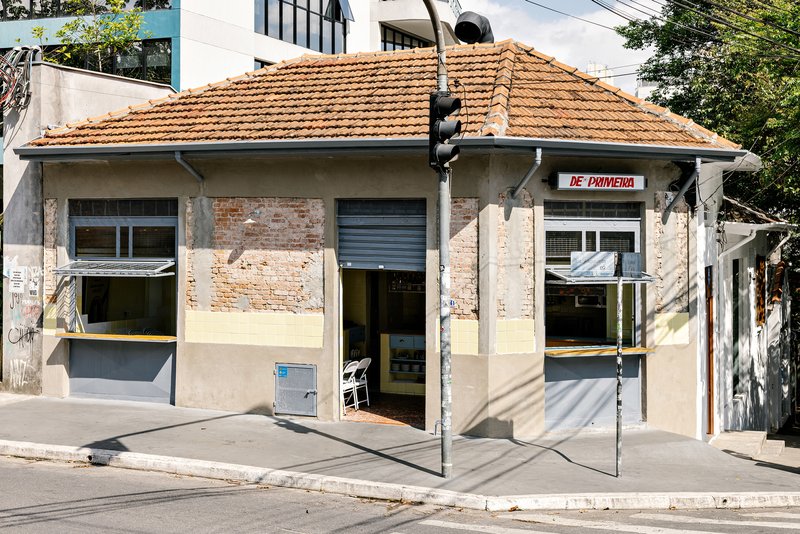
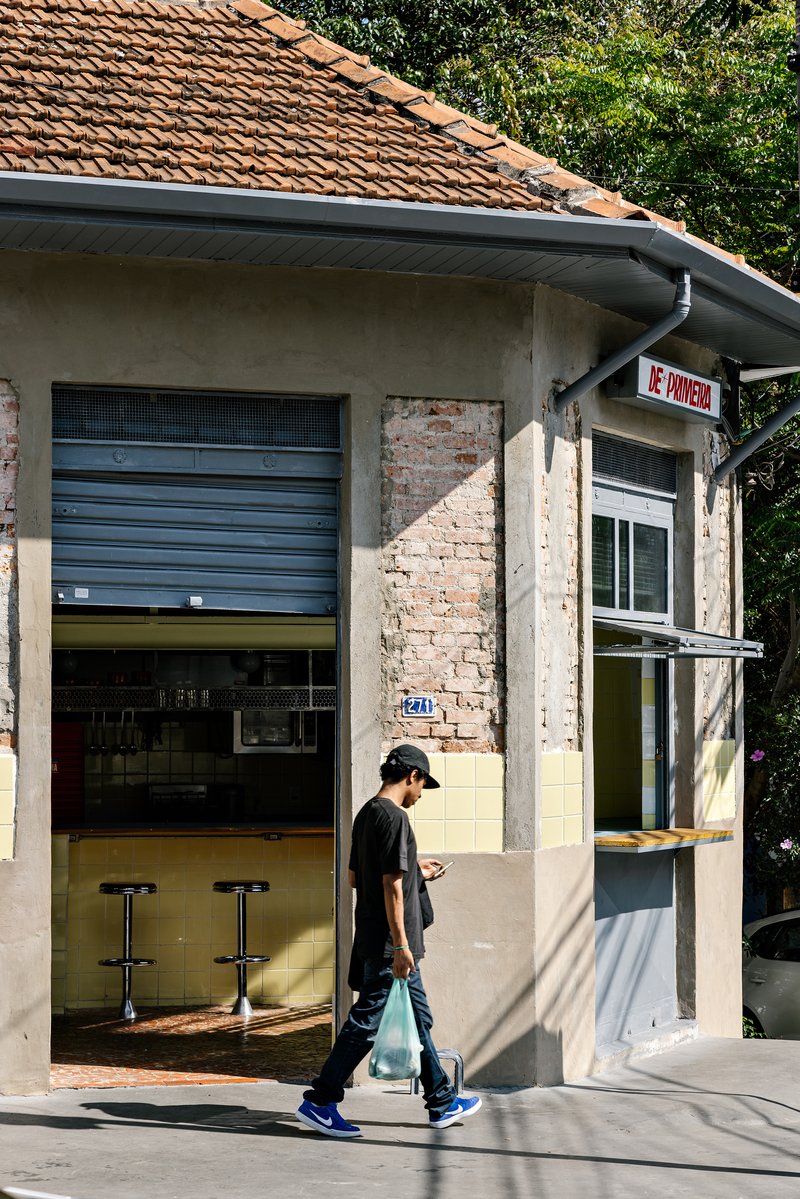
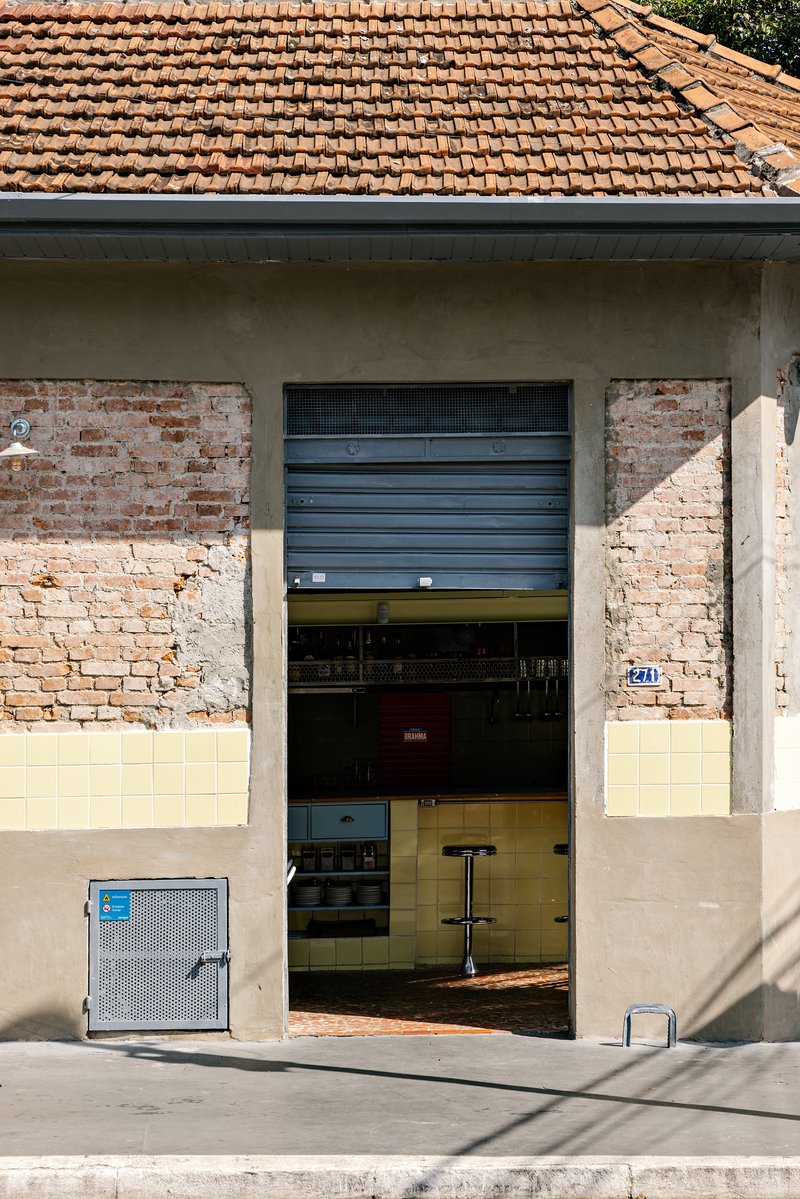
De Primeira occupies a corner lot, and Tadu treats that condition as a gift. The terracotta tile roof, patched plaster walls, and exposed brick fragments give the exterior the look of a building that has been there for decades, quietly weathering. That impression is deliberate. Rather than imposing a polished new skin, the architects let the facade telegraph its age, selectively stripping back layers to reveal the masonry underneath while leaving other patches of plaster intact.
The rolling metal shutters are critical to the concept. When open, they dissolve the boundary between interior and street, turning the sidewalk into the tavern's first room. A pedestrian walking past sees directly into the bar. A diner seated inside watches the neighborhood pass. This porosity is borrowed straight from Rio's boteco tradition, where the line between public space and private enterprise barely exists.
Yellow Tile, Red Floor, and the Color Strategy
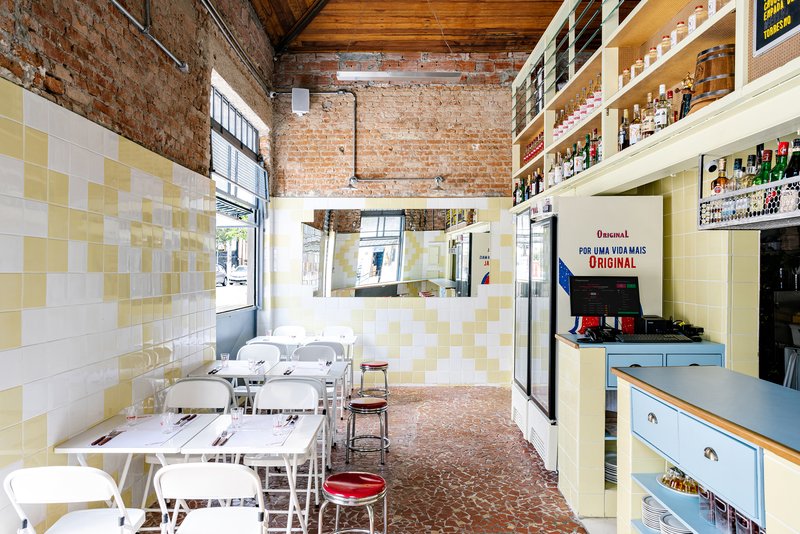
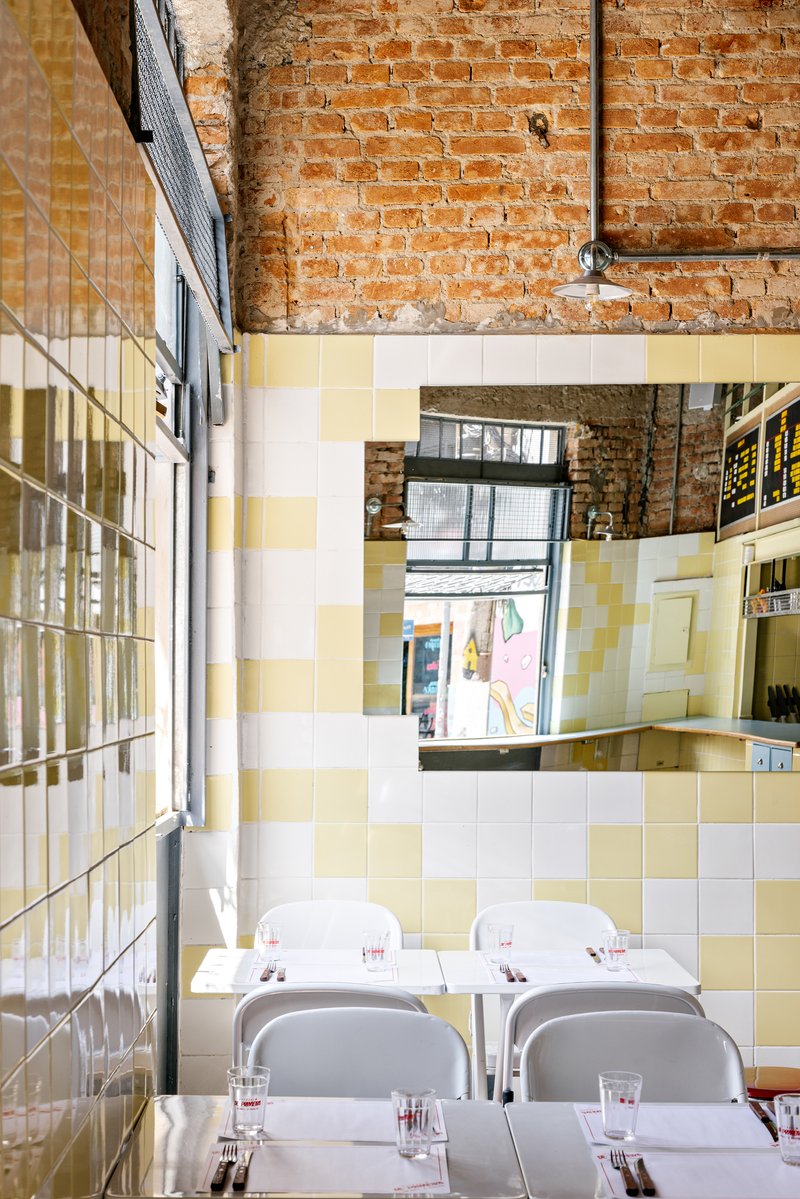
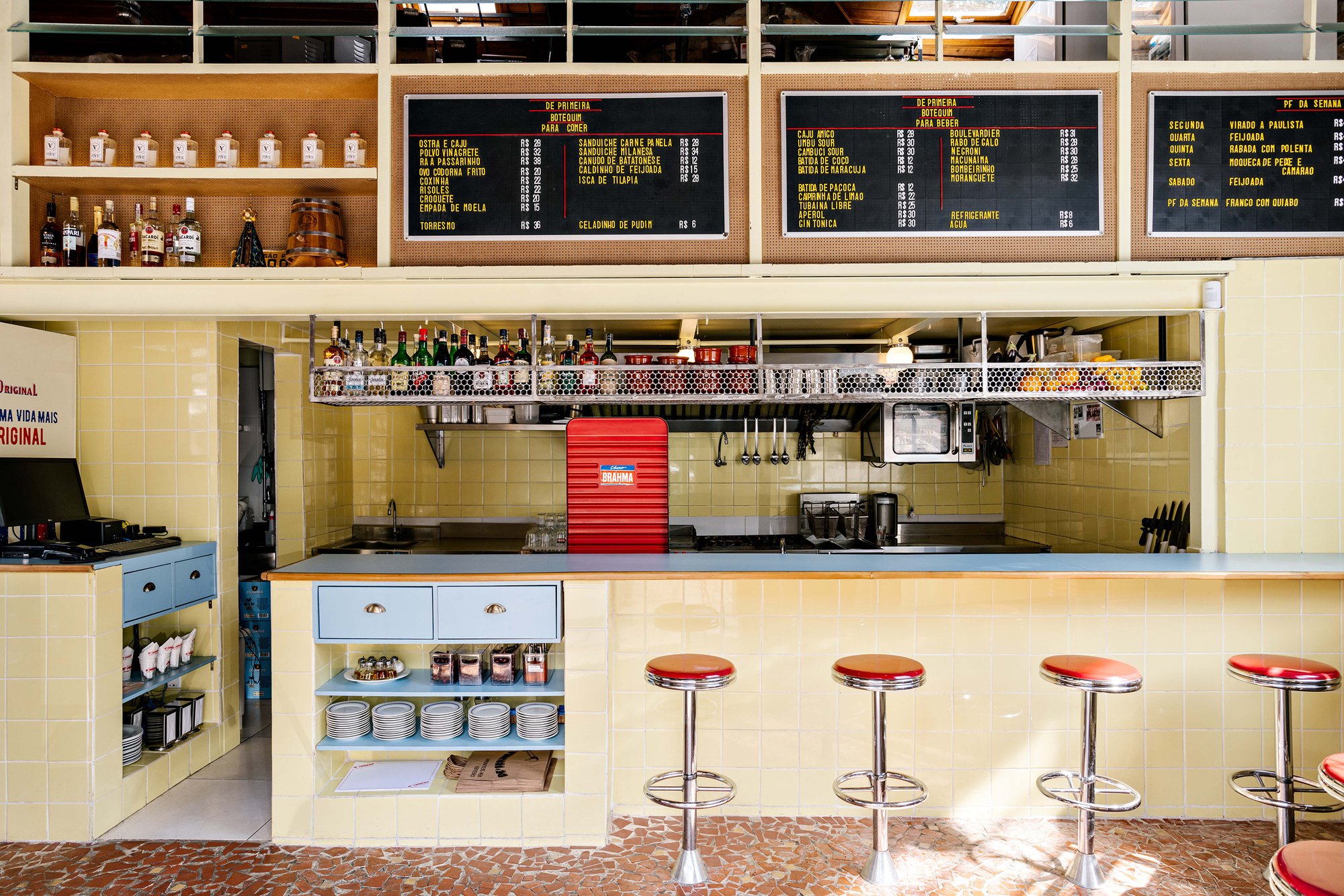
The interior palette is built around three moves: yellow and white checkerboard tile on the walls, a saturated red floor, and the warm ochre of exposed brick. Together they create a space that reads as festive without tipping into kitsch. The tiles, supplied by Loja de Azulejos, are applied as wainscoting rather than full wall covering, which keeps the effect grounded and prevents the small room from feeling overwrought.
A mirrored wall on one side doubles the visual depth of the dining area, reflecting the checkerboard pattern and the brick above it. It is a classic small-space trick, but it works here because the materials being reflected are strong enough to hold up under repetition. Weak finishes fall apart in a mirror. These hold.
The Bar Counter as Heart of the Operation
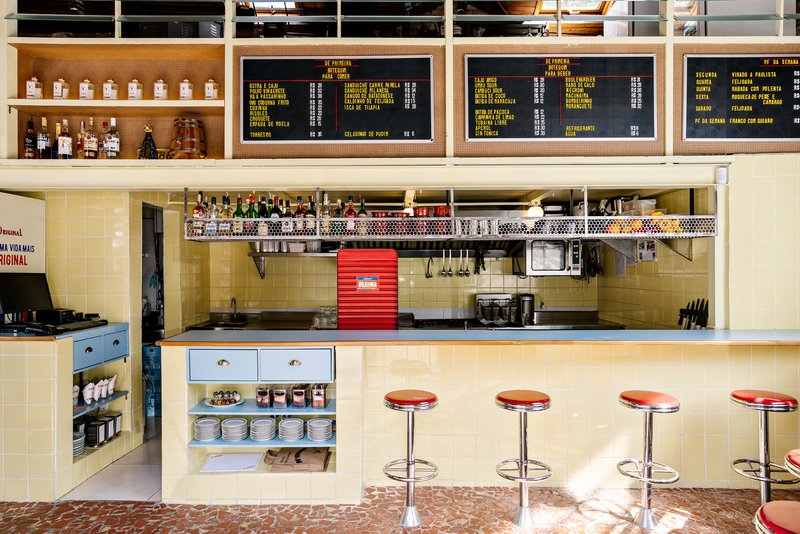
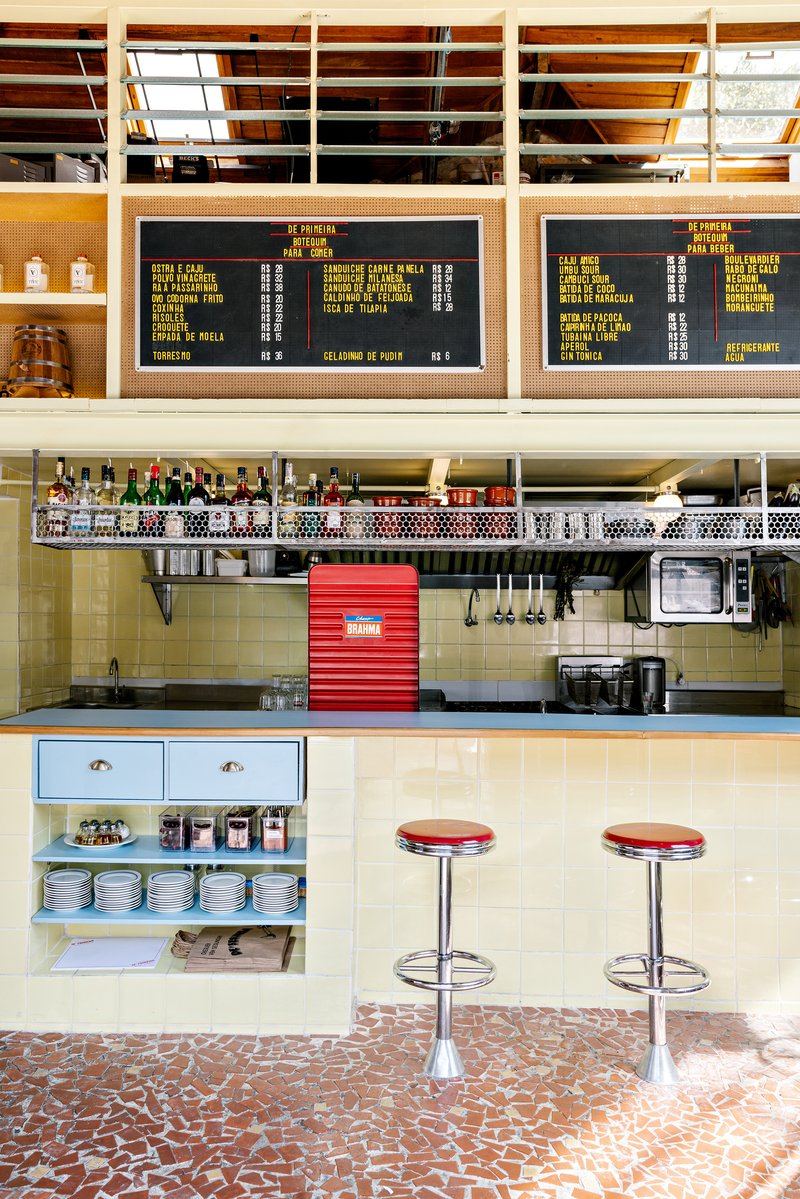
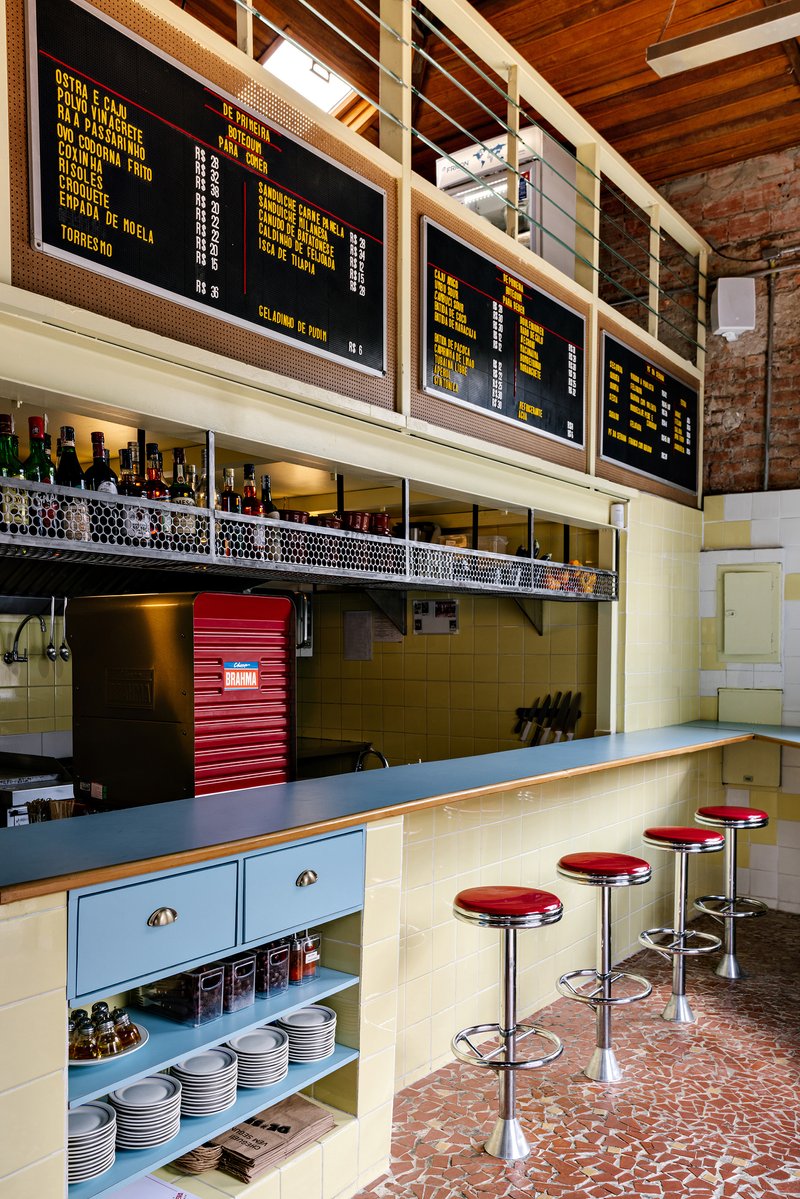
The bar counter is the spatial and social center of De Primeira. Chrome stools line its face, digital menu boards float above, and the open kitchen unfolds directly behind it. The decision to keep the kitchen visible is both practical and theatrical: in a 50 m² space, there is no room for a separate back-of-house, so the preparation becomes part of the performance. Guests watch their food being made, which is a trust exercise that only works when the kitchen is kept tight.
Perforated metal shelving and pegboard storage behind the counter keep bottles, jars, and equipment organized in full view. The detailing here is careful. Nothing is hidden, but nothing looks cluttered. The timber ceiling overhead adds warmth to what could otherwise read as an industrial service zone, softening the chrome and steel below.
Sidewalk and Threshold
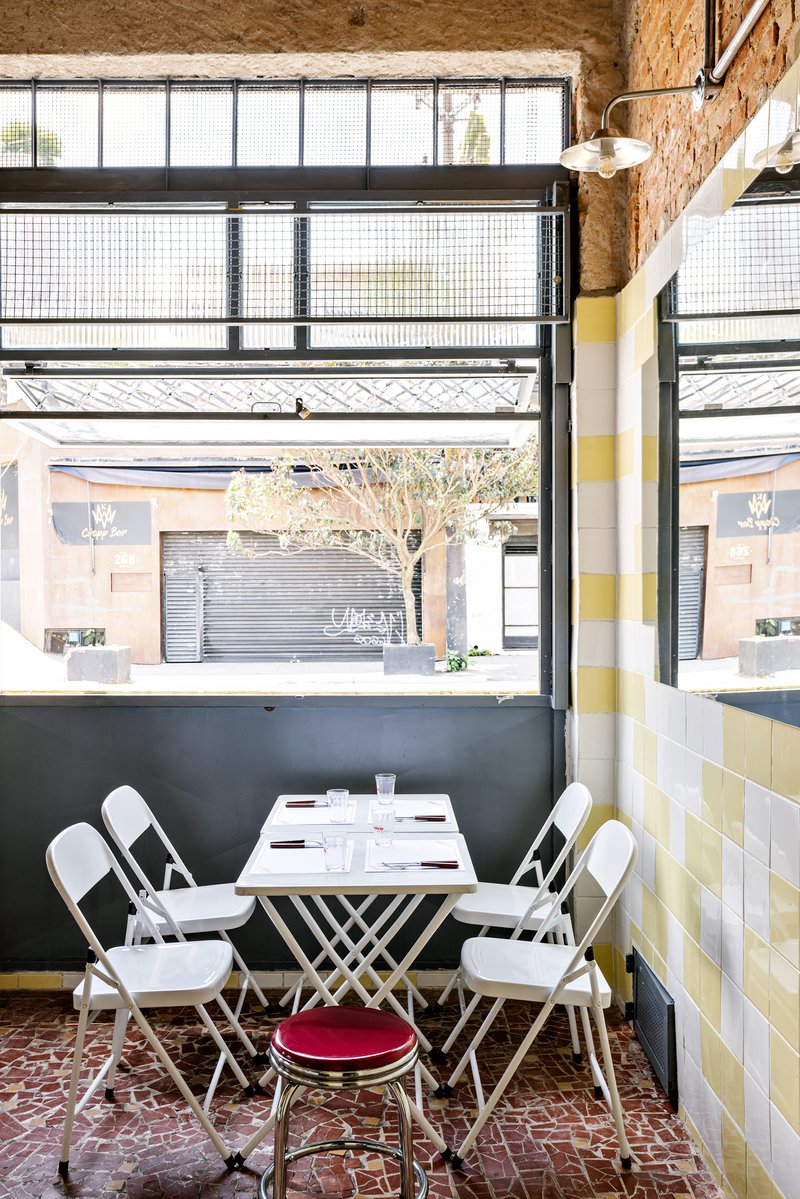
A steel-framed window at one of the dining tables creates a second threshold between inside and outside. Guests seated here are simultaneously in the tavern and on the street, framed by the window like figures in a painting. It is a simple architectural gesture, but it reinforces the project's central idea: that the best bars are the ones that belong to the neighborhood, not just to the people who walk through the door.
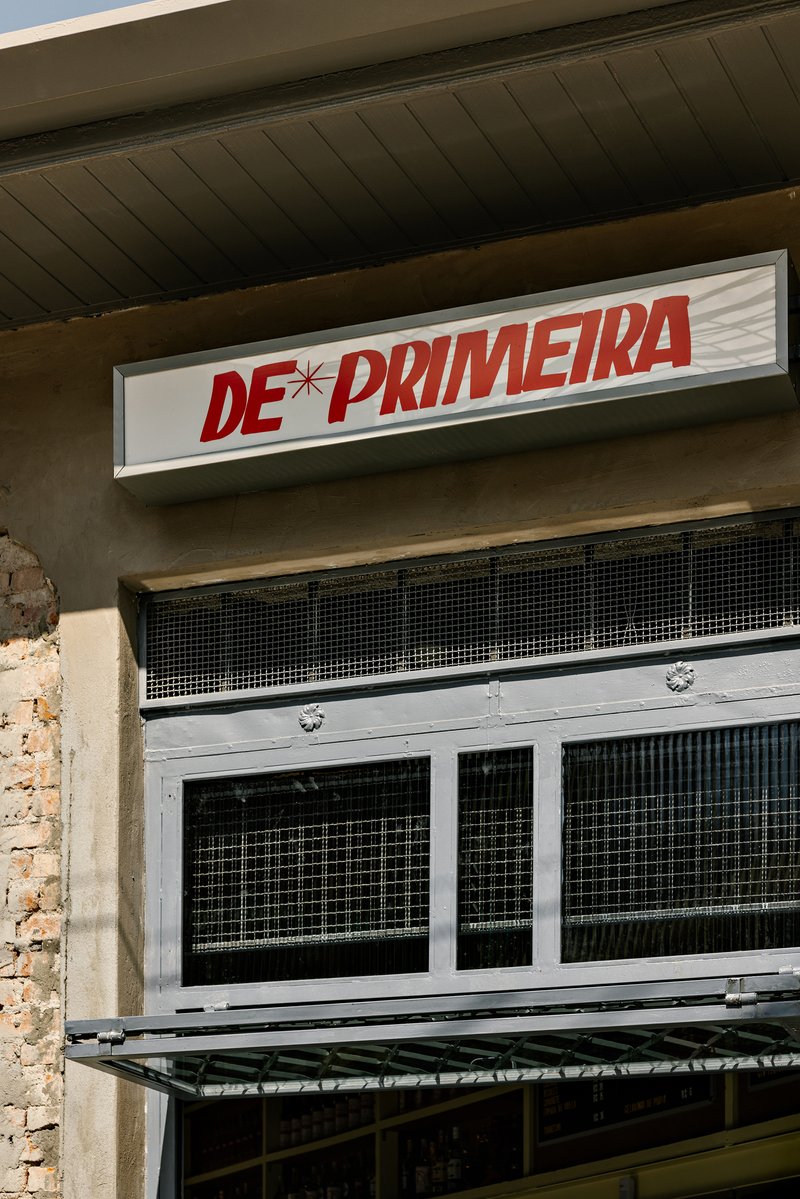
The entrance detail, with its metal mesh ventilation panel tucked under a timber soffit, reveals the care Tadu brought to even the smallest transitions. Ventilation in a compact kitchen-bar is a real functional challenge, and rather than hiding it, the architects turned it into a textured element that complements the rough materiality of the facade.
Storage and Detail
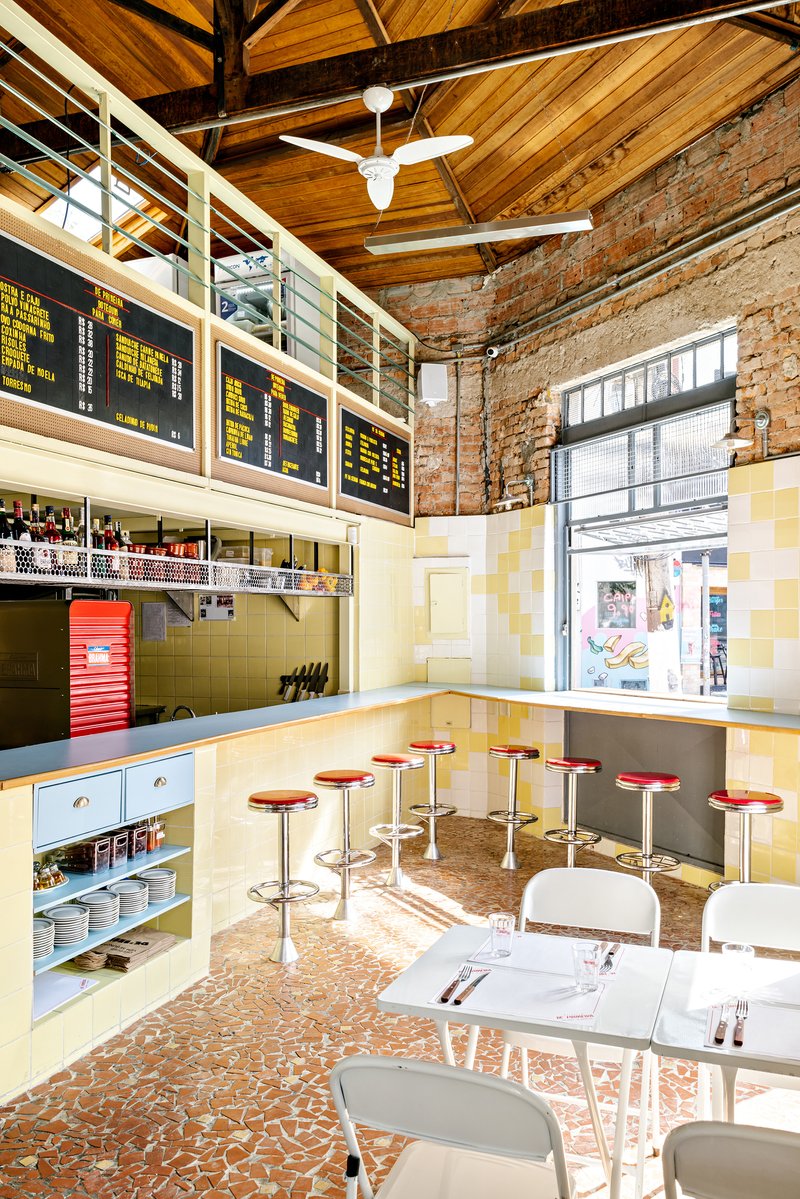
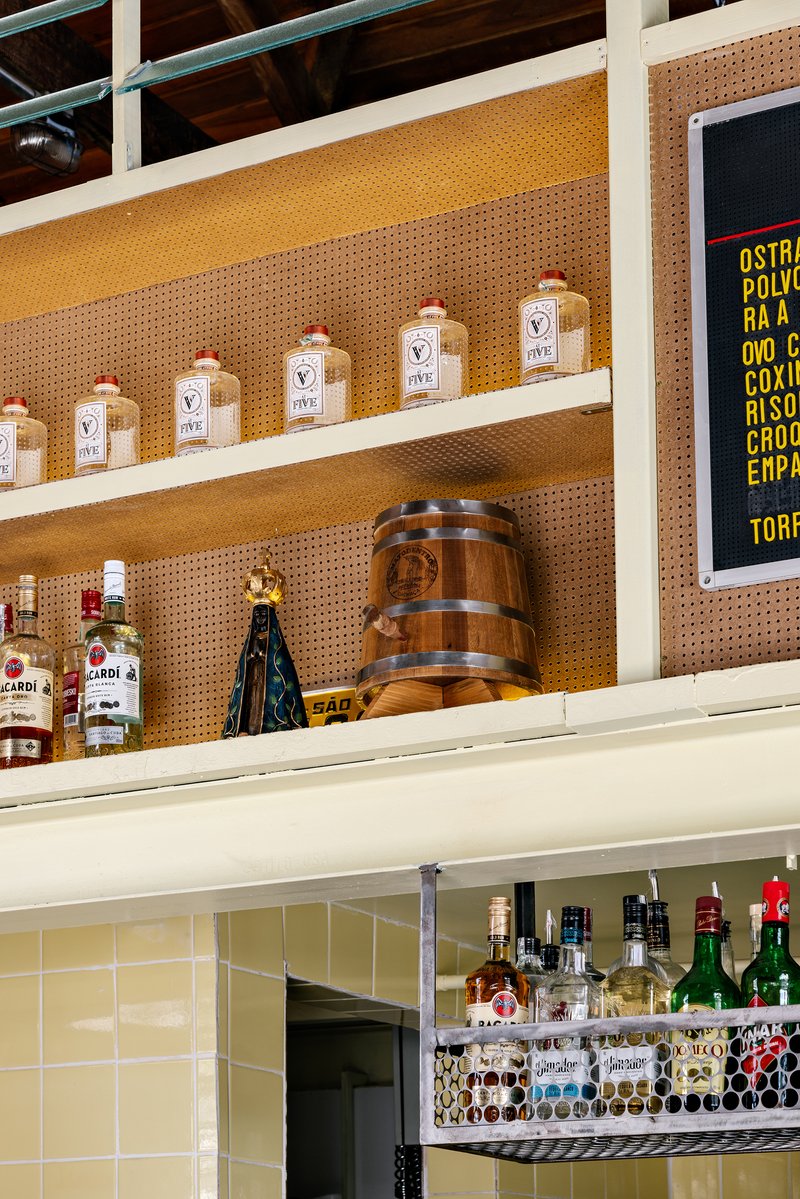
The red bar stools, the glass jars lined up on pegboard, the wooden barrel tucked beneath a digital screen: these details add up to a specific atmosphere that is neither retro nor contemporary but somewhere in between. The two chefs who conceived De Primeira wanted a place that felt rooted in the traditions of Rio's tavern culture, and Tadu delivered that without resorting to nostalgia. The digital menu boards, for instance, are unapologetically modern, mounted directly above hand-laid tile. The juxtaposition works because both elements are treated with equal seriousness.
Plans and Drawings
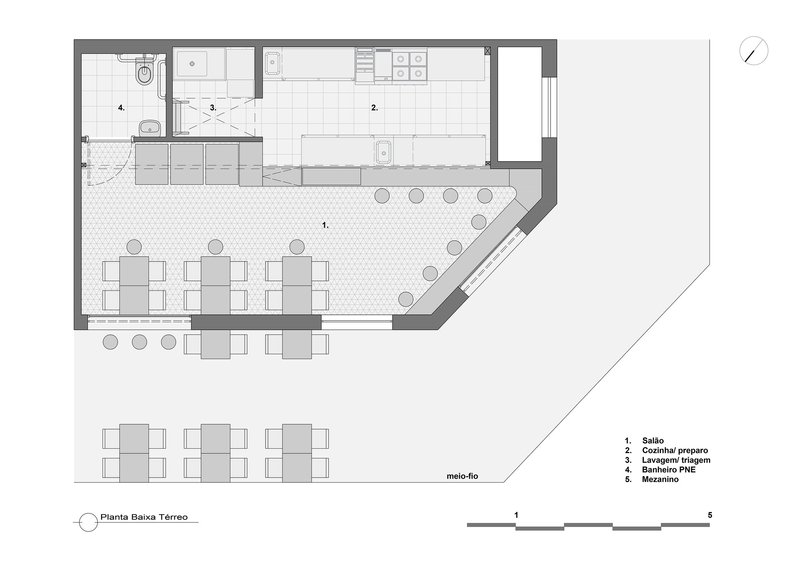
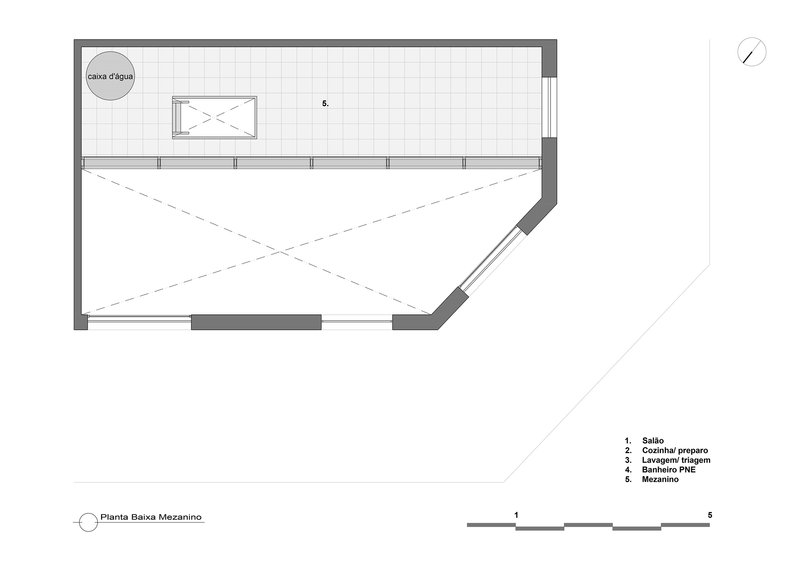
The ground floor plan reveals just how efficiently the 50 m² footprint is organized. The sequence from sidewalk seating through the dining room to the bar counter and kitchen reads as a single linear flow, with the bathroom tucked to the side. The mezzanine plan shows the upper storage level and a viewing area that looks down over the main space, squeezing utility out of every vertical centimeter. In a project this small, the plan is not a diagram. It is the design.
Why This Project Matters
De Primeira is proof that hospitality architecture does not need a generous budget or a large footprint to be compelling. Tadu Arquitetura took a modest corner lot in Vila Madalena and produced a space with real identity, one that draws from Rio's bar culture without mimicking it and belongs to São Paulo without surrendering to its polished commercial instincts. The preservation of existing brick and structural elements shows a maturity that many larger projects lack: an understanding that renovation is not about erasure but about negotiation.
For architects working on small-scale commercial interiors, the lessons here are concrete. Use color boldly but limit your palette. Make the kitchen visible if you can keep it clean. Dissolve the facade when the street is your best asset. And treat every square meter as if it were the last one you have, because in 50 m², it very nearly is.
De Primeira Tavern, designed by Tadu Arquitetura (lead architect João Duayer, project development Diego Curcio). Located in Vila Madalena, São Paulo, Brazil. 50 m². Completed in 2022. Photography by Fran Parente.
About the Studio
Share Your Own Work on uni.xyz
If projects like this are the kind of work you want to make, uni.xyz is a place to publish your own, find collaborators, and enter design competitions.




Popular Articles
Popular articles from the community

IDIN Architects Wraps a Hua Hin Hotel Around a Private Courtyard to Escape the City
Dusit D2 Hua Hin turns an urban infill site in Thailand's family vacation heartland into a self-contained resort through courtyard planning.
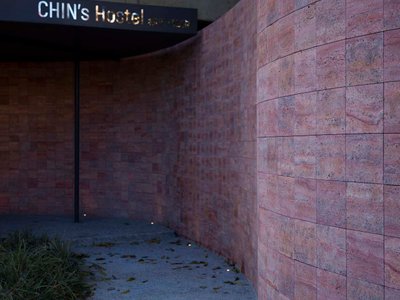
VEIVE Architects Builds a Mountain Hostel That Disappears into a Hangzhou Hillside
On the Huihang Ancient Trail in Xiangjian Village, a shelter of wood, steel, and rammed earth roots itself in the rural landscape.
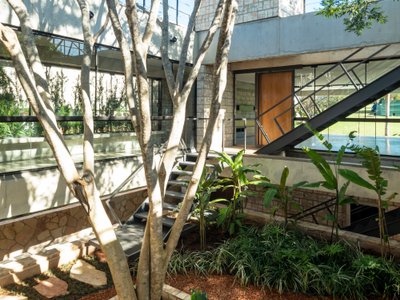
OMCM arquitectos Builds a Summer House in Paraguay from Quarry Waste Blocks and Three Sacred Trees
In the young hillside neighborhood of Altos, a 696-square-meter concrete volume hovers on six pillars around three preserved native Yvyraju trees.
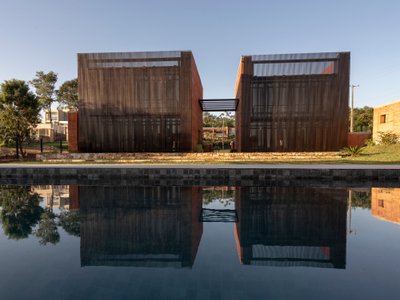
BAUEN Builds Two Rammed Earth Volumes in Paraguay Inspired by the Ovenbird's Nest
In San Bernardino, a house of compacted earth channels the instinct of a constructive bird to shelter life from the Paraguayan summer.


Similar Reads
You might also enjoy these articles

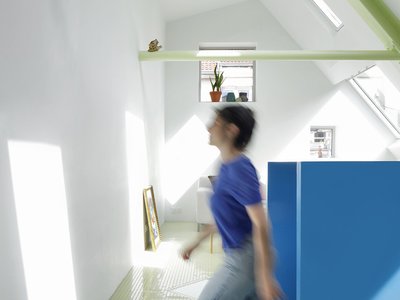
127af Flips a Tiny Bagnolet Rowhouse Upside Down with a Handcrafted Roof Extension
A 55-square-meter terraced house on the edge of Paris gains a luminous upper living floor through lightweight timber and steel.
1.61 Design Workshop Wraps a 600-Square-Meter Café in Vietnam in Sculptural Burgundy Drama
Reden Café & Bistro pairs a helical staircase, mosaic floors, and deep red interiors to rethink Vietnamese hospitality space.

The Unbound Brain: A School Shaped by Cognitive Architecture
Cylindrical learning pods radiate like neurons from a central cortex, turning the floor plan into a spatial model of human thought.
Revival Vernacular Architecture: Rammed Earth Settlements for the Sahara
A modular desert community in Mauritania that fuses passive cooling techniques with earthen construction and local craftsmanship.


Explore Commercial Buildings Competitions
Discover active competitions in this discipline




The Global Benchmark for Architecture Dissertation Awards


Challenge to design luxury tourism on rails


VR headsets Storefront design competition


Designing a staircase for a client
Comments (0)
Please login or sign up to add comments
No comments yet. Be the first to comment!