

Tatiana Apartment by Risso Arquitectura: A Light-Filled Adaptation in Vicente López, Argentina
Tatiana Apartment blends adaptive reuse and transparency, transforming a compact Buenos Aires space into a light-filled, multifunctional modern home.


Located in the tranquil, leafy neighborhood of Vicente López in the northern part of Greater Buenos Aires, Tatiana Apartment is a compact yet expressive architectural renovation project led by Elena Risso of Risso Arquitectura. The 65-square-meter apartment, originally part of a modest housing complex composed of layered residences and interconnected gardens, has been transformed to meet the contemporary needs of a new resident while maintaining the charm and structure of the original dwelling.
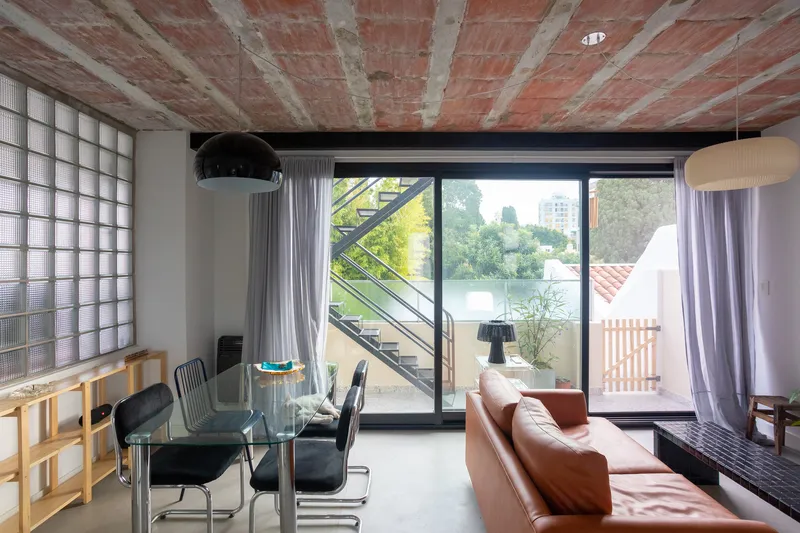
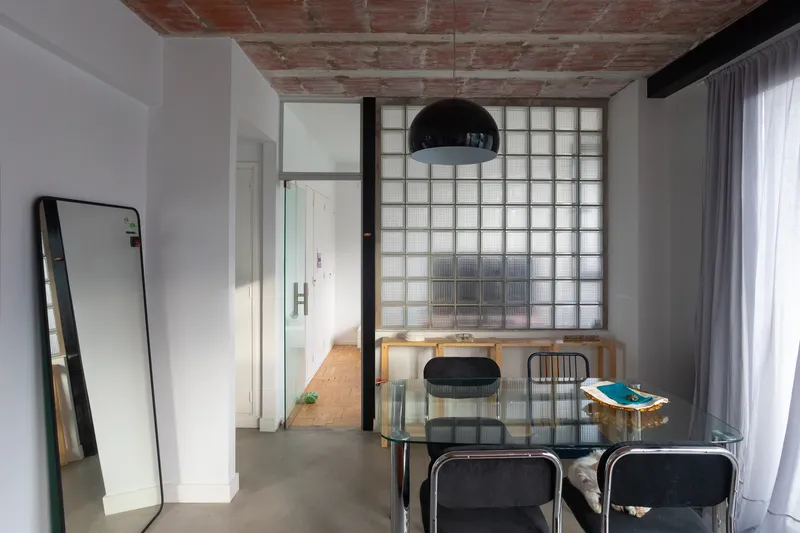
Contextual Integration and Spatial Flow
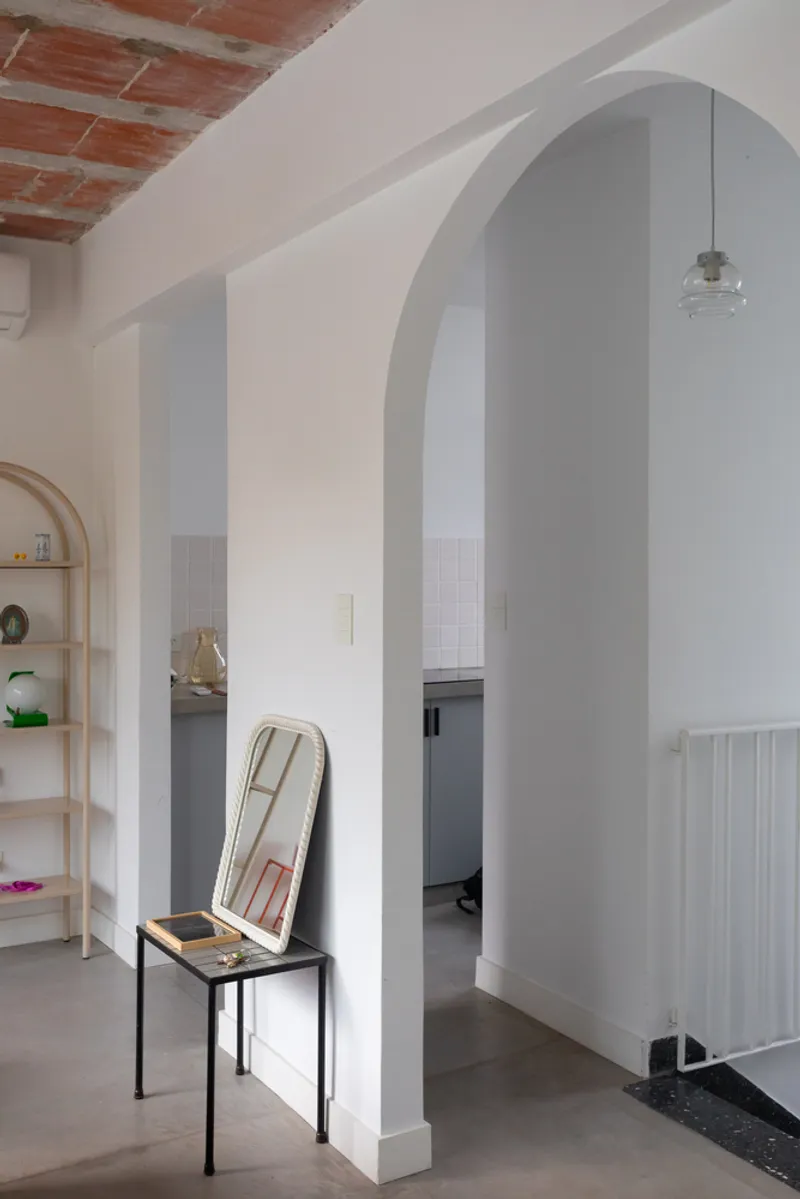
Access to the apartment begins at the ground level, where a stair ascends to the upper floor and connects to a corridor that becomes the central spine of the redesigned home. This corridor links all primary spaces while respecting the building’s original structural integrity. The architectural team retained much of the existing framework, choosing instead to emphasize spatial reconfiguration and interior connectivity over demolition.
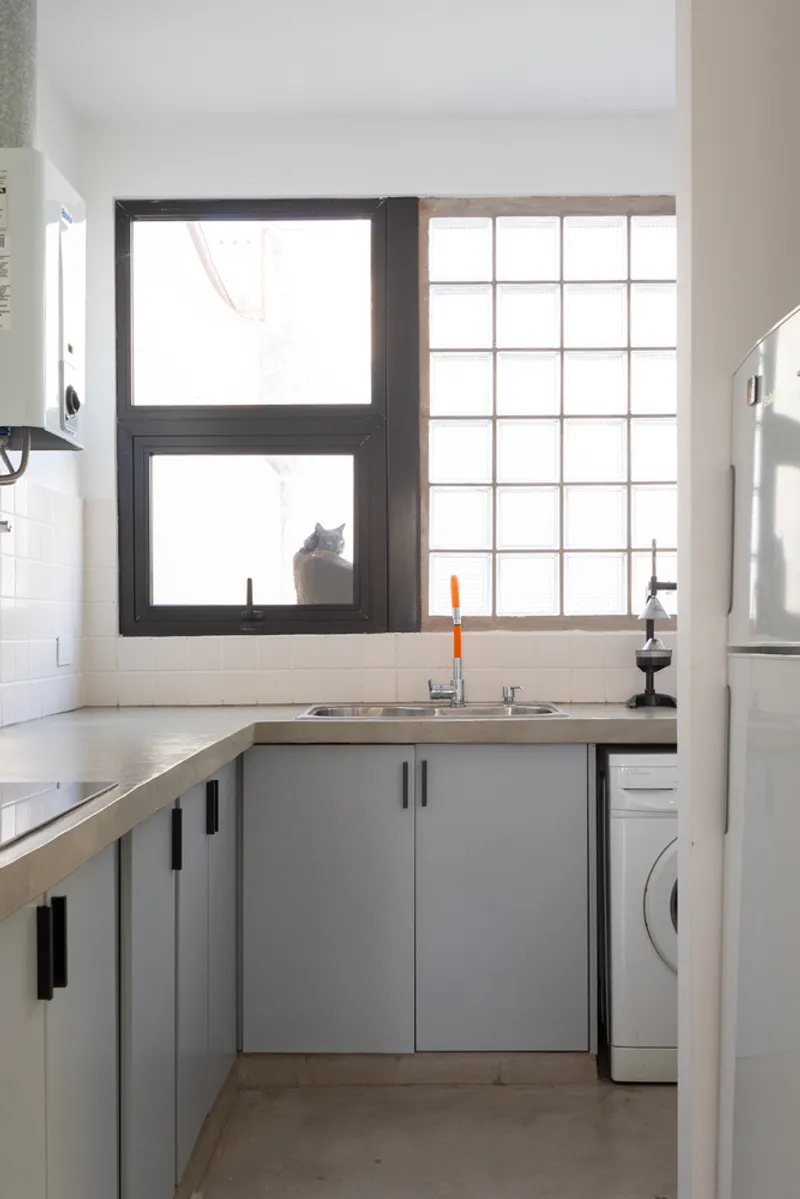
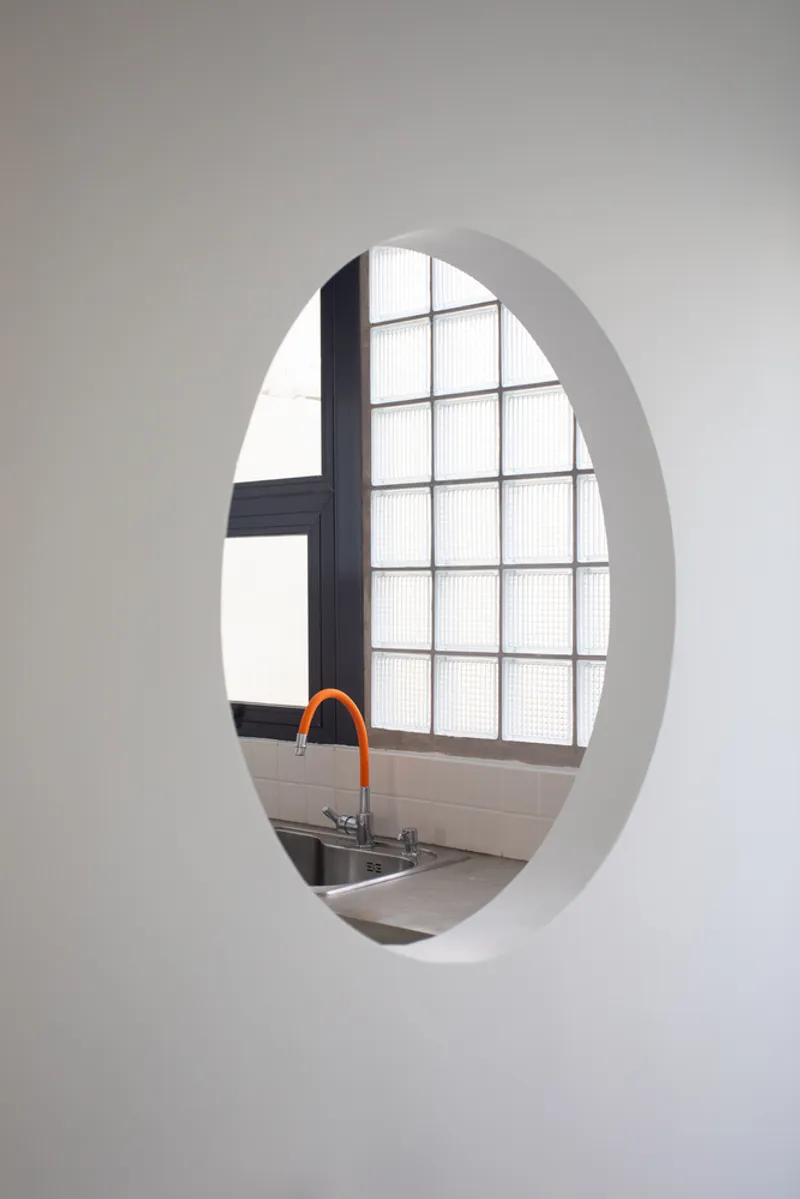
Adaptive Reuse with Minimal Intervention
Rather than completely overhauling the apartment, Risso Arquitectura pursued a strategy of minimal yet meaningful intervention. Key services, such as the bathroom and kitchen, were preserved in their original locations but modernized with updated finishes and improved spatial relationships.
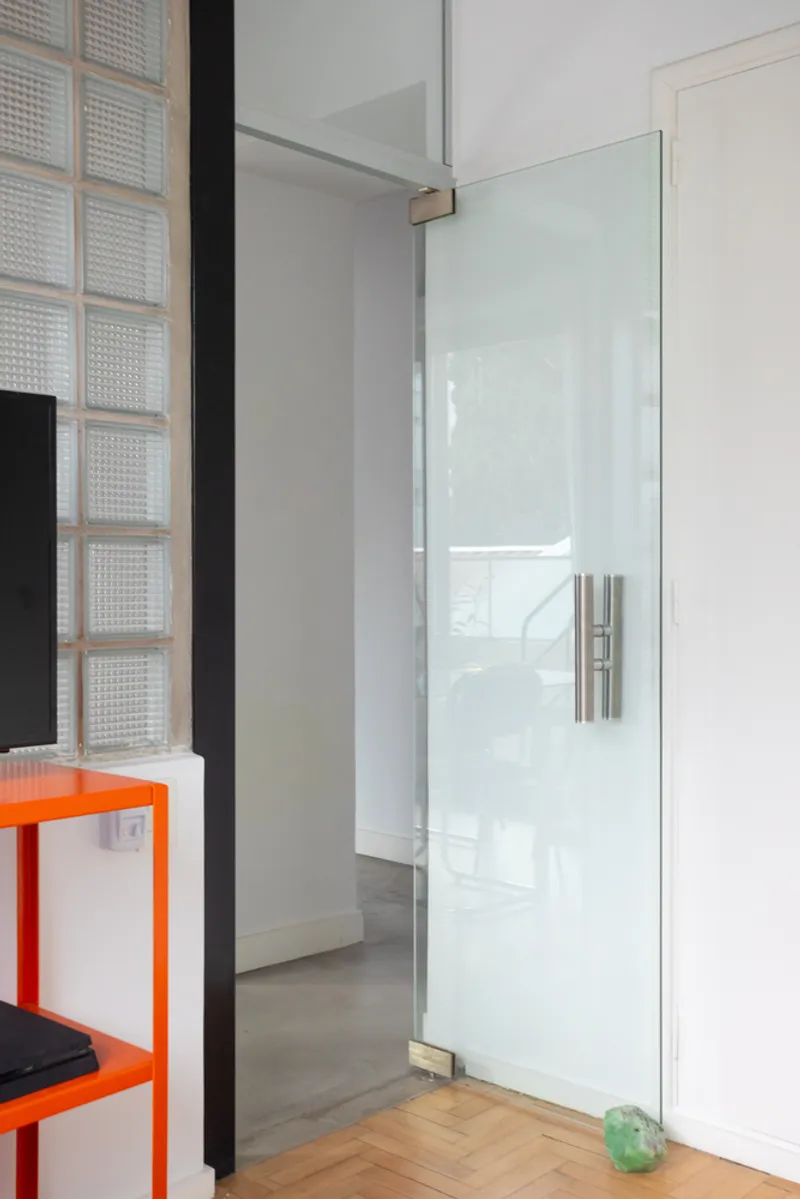
The living and dining area received the most substantial transformation. By removing a partition wall, the designers expanded the space and introduced a new layer of transparency. A glass brick wall and a translucent door now demarcate two zones within the open-plan room, allowing separation without sacrificing light or visual flow.
Enhanced Light, Transparency, and Privacy
Throughout the apartment, a new series of custom window panels—some fully transparent, others partially composed of glass bricks—were installed. This thoughtful mix responds to privacy needs in different rooms while strengthening the relationship between the interior spaces and the exterior garden views. These materials bring filtered daylight deep into the apartment, creating a constantly shifting play of light and shadow.
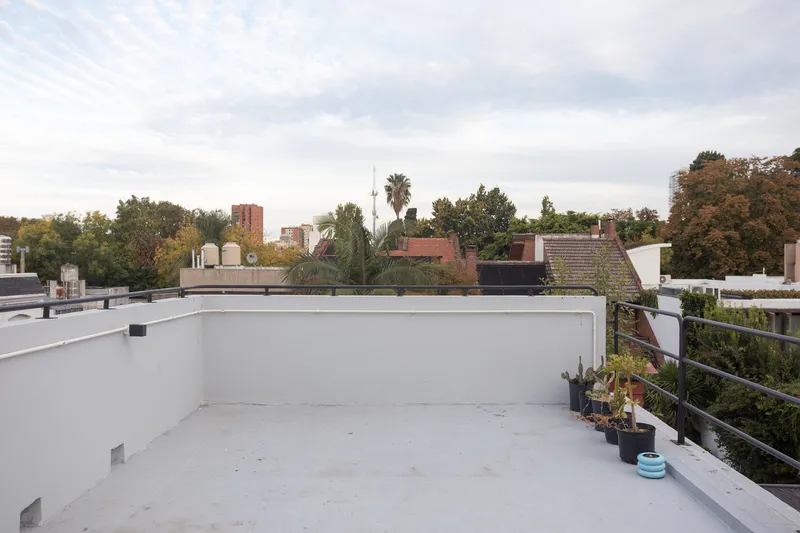
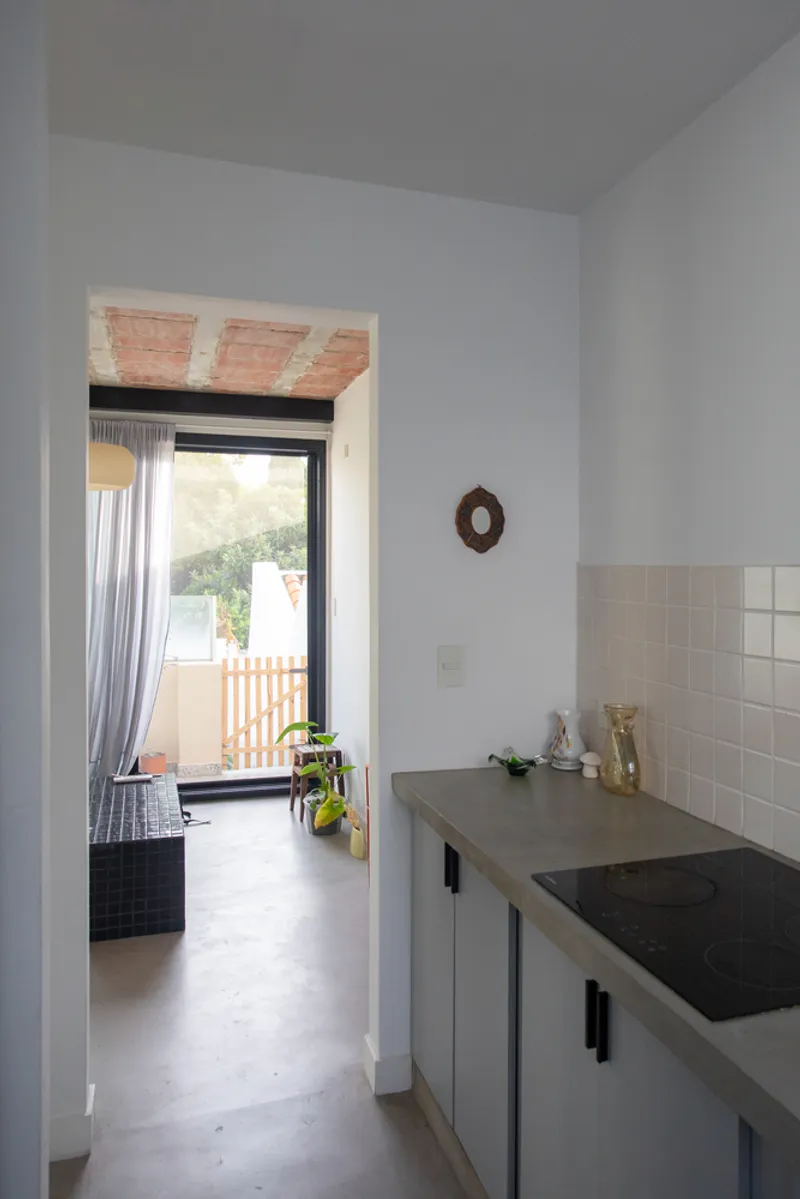
In the central living space, a fully transparent, floor-to-ceiling window opens directly onto a balcony, visually and physically linking the interior with the outdoors. A newly added staircase extends upward from this point to a rooftop terrace, where panoramic views of the city and the building’s shared garden complete the architectural narrative.
Reconfigured Kitchen and Interspatial Dialogue
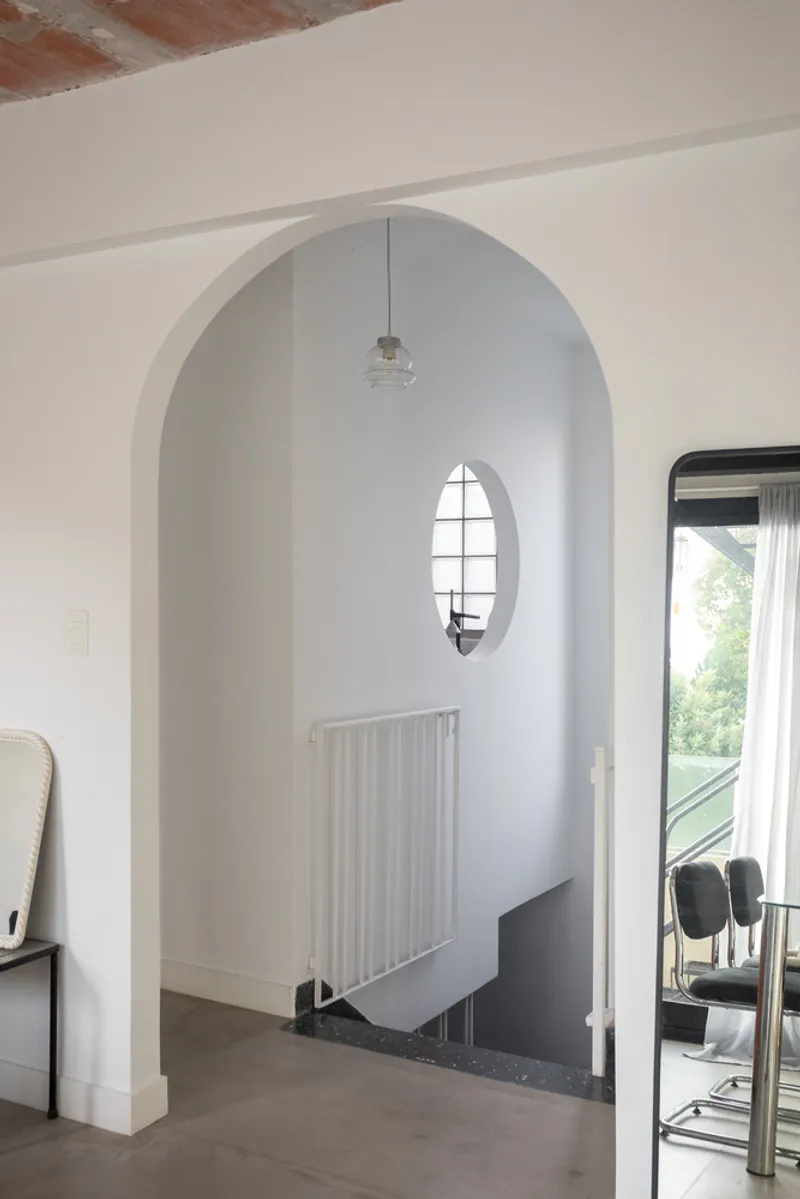
The kitchen was reimagined around an open aperture that now visually and spatially connects it to the dining area. A newly introduced circular opening between the stairwell and kitchen wall adds a playful visual gesture, enhancing the sense of continuity and interspatial dialogue across previously enclosed areas.
This careful dance between preservation and transformation gives the apartment a renewed sense of purpose. It now offers flexibility, natural light, spatial efficiency, and a deeper relationship to its urban and garden surroundings—without erasing its architectural memory.
All Photographs are works of Fernando Schapochnik


Popular Articles
Popular articles from the community


Juan García Correa, John González and Claudia Rueda Sink a Circular Amphitheater into a Manizales Engineering Building
On the La Nubia campus in Manizales, Colombia, the S1 Building folds labs and offices into a hillside of ramped lawns that double as a campus route.

GROUP A Strips a 1969 Rotterdam Harbor Headquarters to Its Frame and Wraps It in Timber Louvers
In Rotterdam's M4H harbor district, Ferro Offices reuses a 1969 frame, adds one timber storey and reaches BREEAM-NL Outstanding.

longwave studio Reorganizes a 112 m² Tainan Apartment Around the Daily Routines of a Family and Two Cats
In Tainan, Taiwan, birch plywood, rust-red furniture and a freestanding plaster wall link arrival, storage, work and family life in one apartment.

David Macias Steps a Doorless Stone and Plaster House Down a Tropical Colombian Hillside
In the humid hills of Colombia, Threshold House replaces the front door with an open void and terraces its 850 m² down the slope instead of fighting it.

Similar Reads
You might also enjoy these articles


Hodi-Mandai Geram
Project Function: Preservation and revitalization of the Intangible heritage and socio-spatial identity of the Hodi by Housing, Cultural Memory Center, Sacred Grove, landscape, local tourism economy


Olio Towers: A Mid-Rise for Performers That Fuses Housing, Rehearsal, and Stage
Located blocks from Houston's Theater District, this modular tower stacks living units around a central performance atrium.

Oasis: Modular Green Housing Carved into Dhaka's Urban Fabric
A shortlisted Plugin Housing entry reclaims unauthorized settlements in Dhaka with stepped concrete volumes, green roofs, and ventilation-driven design.

Black Hole: A Floating Megastructure for the Post-Physical Era
Emiliano Mazzarotto envisions a spherical, self-scaling arena where e-sports, digital hotels, and holographic stadiums replace traditional public space.

Explore Architecture Competitions
Discover active competitions in this discipline

Challenge to reimagine the Iron Throne

Photograph architecture without architects

Illustrate the lost glory of Angkor Wat - Render Challenge

Design challenge to reuse E-waste
Comments (0)
Please login or sign up to add comments
No comments yet. Be the first to comment!