
The Clay Mui Ne Resort: A Sustainable Village Retreat in Coastal Vietnam
A sustainable coastal resort in Vietnam, reusing local materials and existing structures to create a village-like retreat promoting slow, community-centered living.


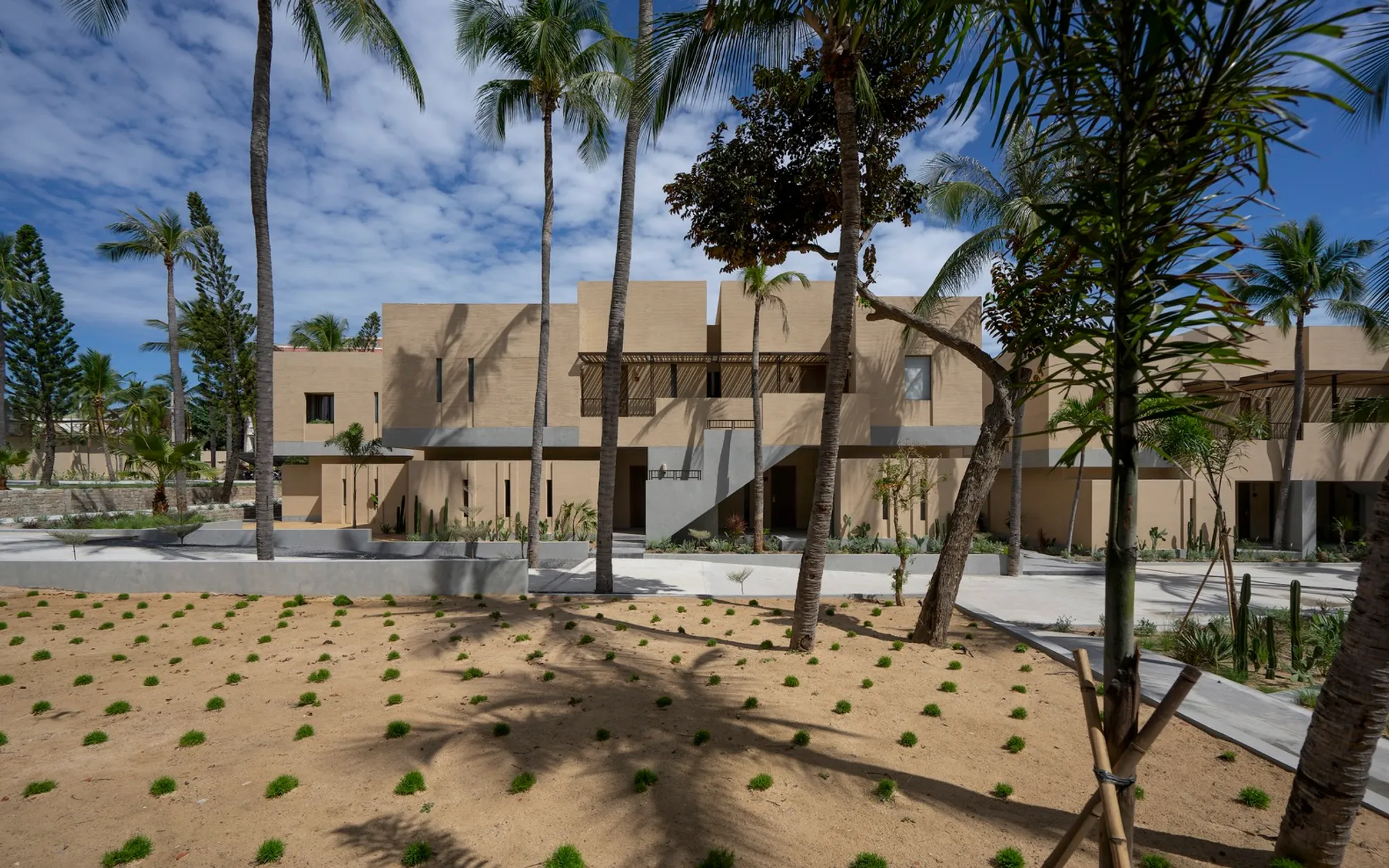
Designed by Tad.atelier, The Clay Mui Ne Resort is a contemporary hospitality project rooted in sustainability, contextual sensitivity, and architectural restraint. Located in Phan Thiet City, a renowned coastal destination in southeast Vietnam, the resort reimagines an aging seaside property into a calm, community-oriented retreat that celebrates both nature and local building traditions.A sustainable coastal resort in Vietnam, reusing local materials and existing structures to create a village-like retreat promoting slow, community-centered living.


Reclaiming a Coastal Site with Care
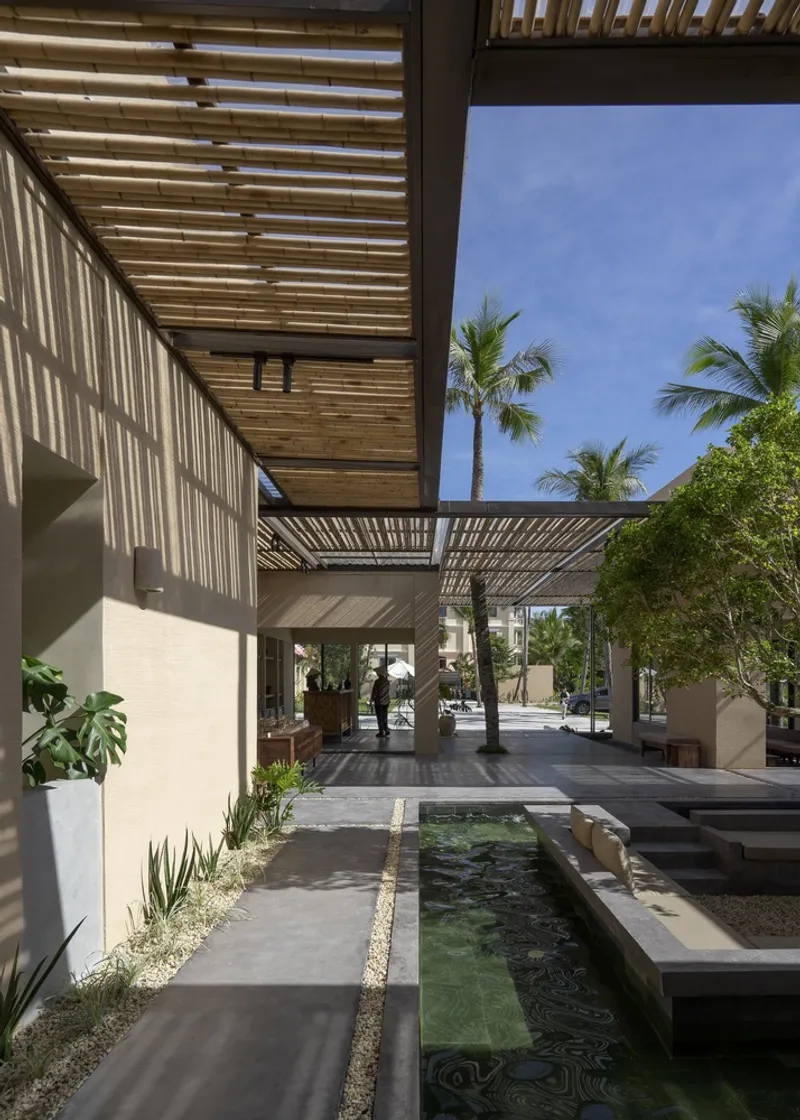
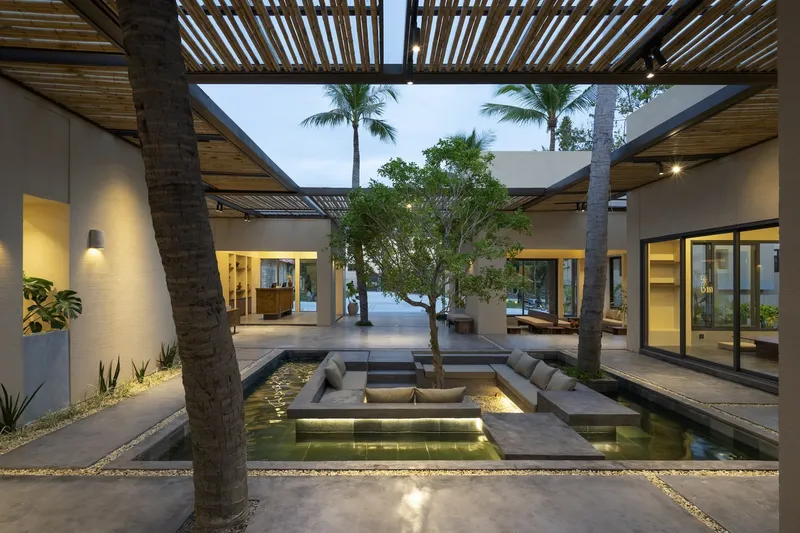
The project occupies the site of a former resort built more than two decades ago on land gently sloping toward the sea. Rather than erasing the past, the architects chose a strategy of adaptive reuse, recognizing the site’s existing strengths: mature coconut trees, established circulation patterns, and natural topography. By working with the terrain instead of against it, the design minimizes environmental disruption while enhancing spatial quality.

Careful balancing of excavation and landfilling allowed most of the existing vegetation to remain intact. This approach not only preserves the tropical landscape but also reinforces the resort’s immersive connection to nature, a key aspect of sustainable resort architecture in Vietnam’s coastal regions.

Local Materials and Circular Construction
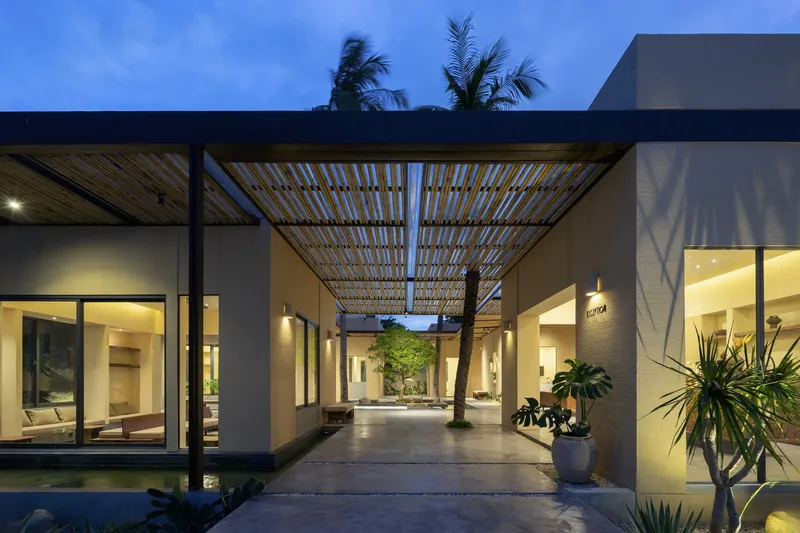
Sustainability is central to the project’s architectural language. The Clay Mui Ne Resort relies on locally sourced and recyclable materials, including stone, wood, steel, and unbaked bricks. To reduce the extraction of new resources, stones and timber salvaged from the old resort structures were reused, extending their material life and embedding memory into the new architecture.
The use of unbaked bricks and natural finishes contributes to passive thermal comfort while expressing a raw, tactile aesthetic that resonates with the coastal environment. These material choices reflect a growing emphasis on circular construction and low-impact building methods within contemporary Southeast Asian architecture.

A Village-Like Spatial Concept
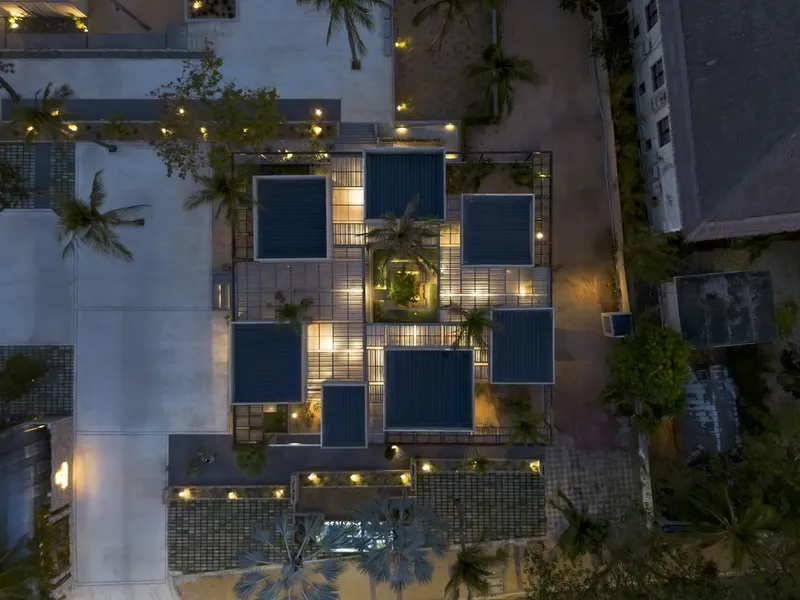
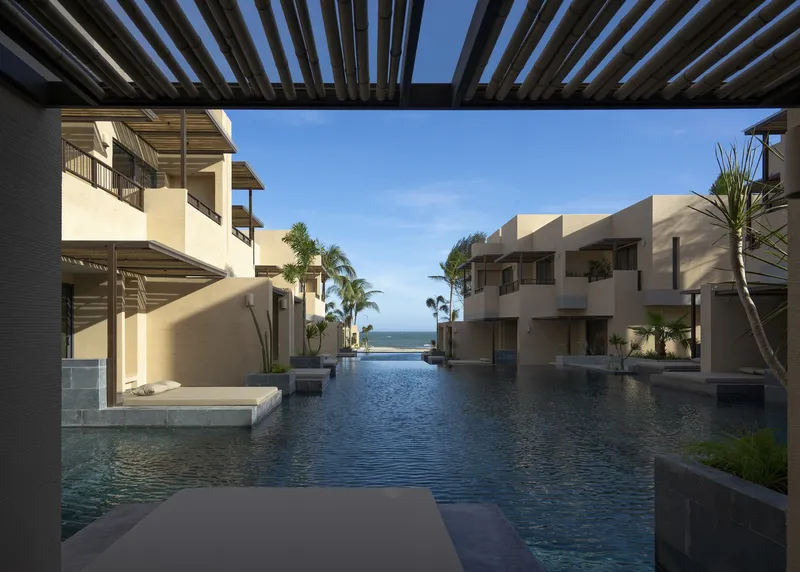
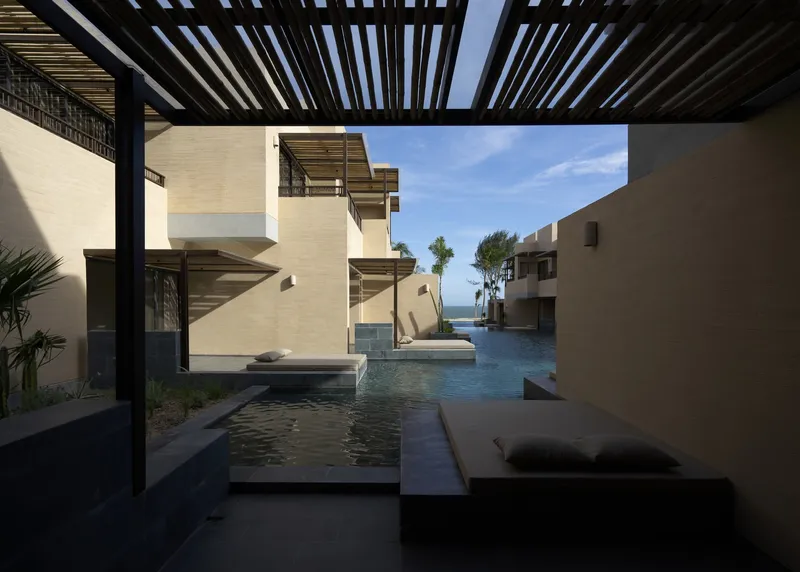
Instead of introducing a single large hotel block, Tad.atelier divided the program into smaller, human-scaled structures, forming clusters that resemble a traditional village. Existing villas along the boundary wall were preserved and renovated into new accommodation units, further reducing demolition waste and maintaining continuity with the site’s history.
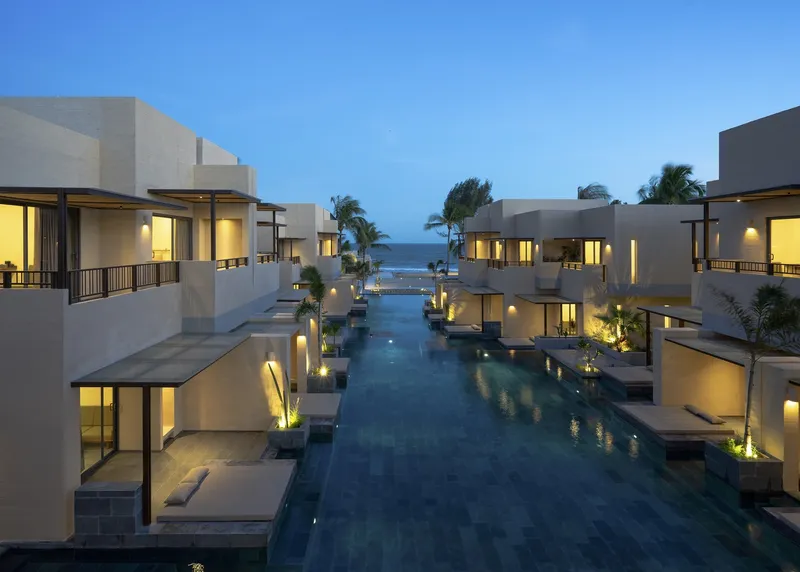
At the heart of the resort lies a central swimming pool, functioning as both a landscape anchor and a social focal point. Accommodation clusters are arranged around this shared space, encouraging interaction while maintaining openness and visual permeability. This layout fosters a sense of community, an increasingly rare quality in contemporary urban and resort developments.

Slow Living by the Sea
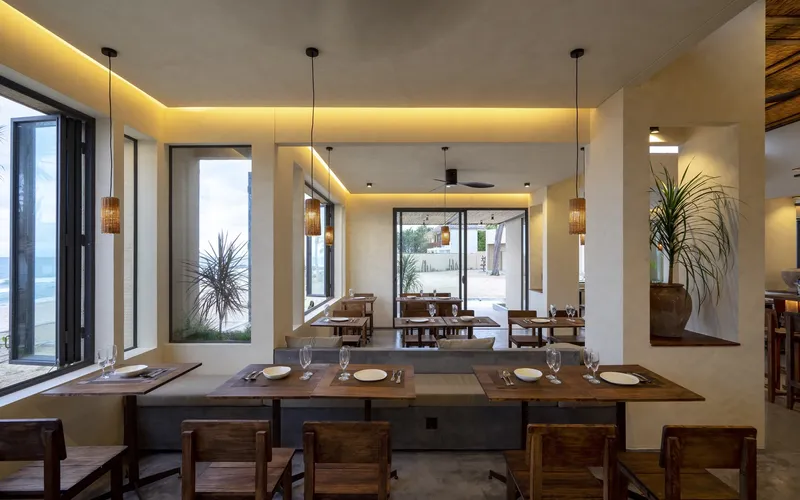
The Clay Mui Ne Resort embodies a philosophy of slow, gentle living, offering guests a tranquil alternative to large-scale, commercial beach resorts. The architecture promotes walking, social encounters, and visual connection to nature, evoking the atmosphere of a “village within the city.” In a rapidly urbanizing Vietnamese context, this approach reintroduces spatial intimacy and cultural familiarity into modern hospitality design.
A Model for Contextual Resort Architecture
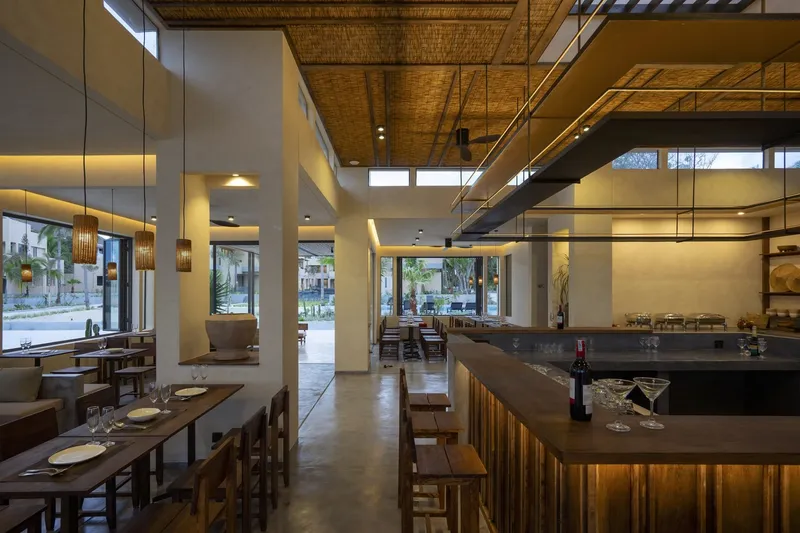
By blending adaptive reuse, sustainable materials, and village-inspired planning, The Clay Mui Ne Resort sets an example for environmentally responsible tourism architecture. It demonstrates how contemporary resorts can honor local identity, minimize ecological impact, and create meaningful spatial experiences, without excess or spectacle.




Popular Articles
Popular articles from the community


AL-JANNAH: Sustainable Architecture and Permaculture for Afghan Widows
AL-JANNAH uses sustainable architecture and permaculture to create resilient oasis of housing, learning, work and renewal for Afghan widows.

EW PARK: Sustainable Architecture Reimagines the Future of Urban Parking
EW PARK reimagines city parking as a modular wooden tower combining automation, solar energy, electric mobility, and adaptable urban design.

Conexión: Biophilic Design Reimagines High-Rise Living in Hong Kong
Conexión reimagines high-rise living in Hong Kong through biophilic design, green facades, shared spaces, daylight, water and nature within.

The Musturak Paradise: Senior Living Architecture for a Connected Future in Temara, Morocco
The Musturak Paradise reimagines senior living architecture in Temara via private homes, social spaces, culture, community, and shared care.


Similar Reads
You might also enjoy these articles

FAMM Arquitectura Organizes Ten Villas Around Courtyards and Jungle in Nosara, Costa Rica
El Molino pairs two elongated volumes with deep overhangs and timber louvers to build a compact coastal community five minutes from the beach.
Oscar Niemeyer's Ibirapuera Park Pavilions Define São Paulo's Cultural Identity in Concrete and Curve
A constellation of modernist volumes set within São Paulo's most important urban park, conceived for the city's 400th anniversary in 1954.

How Henri Picq's 1889 Paris Pavilion Traveled 11,000 Kilometers to Become Santiago's Artequín Museum
A prefabricated iron and glass pavilion built for the Paris Universal Exposition found a second life as a children's art museum in Chile.
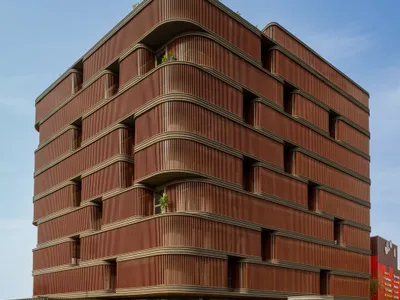
Sanjay Puri Architects Wraps a Jaipur Office Tower in Capsule-Shaped Green Buffers
A nine-level climate-responsive workplace near Jaipur Airport uses stacked planter terraces and aluminium screens to fight 40°C heat.
Explore Hospitality Building Competitions
Discover active competitions in this discipline



Challenge to reimagine the Iron Throne


Photograph architecture without architects


Illustrate the lost glory of Angkor Wat - Render Challenge


Design challenge to reuse E-waste
Comments (0)
Please login or sign up to add comments
No comments yet. Be the first to comment!