
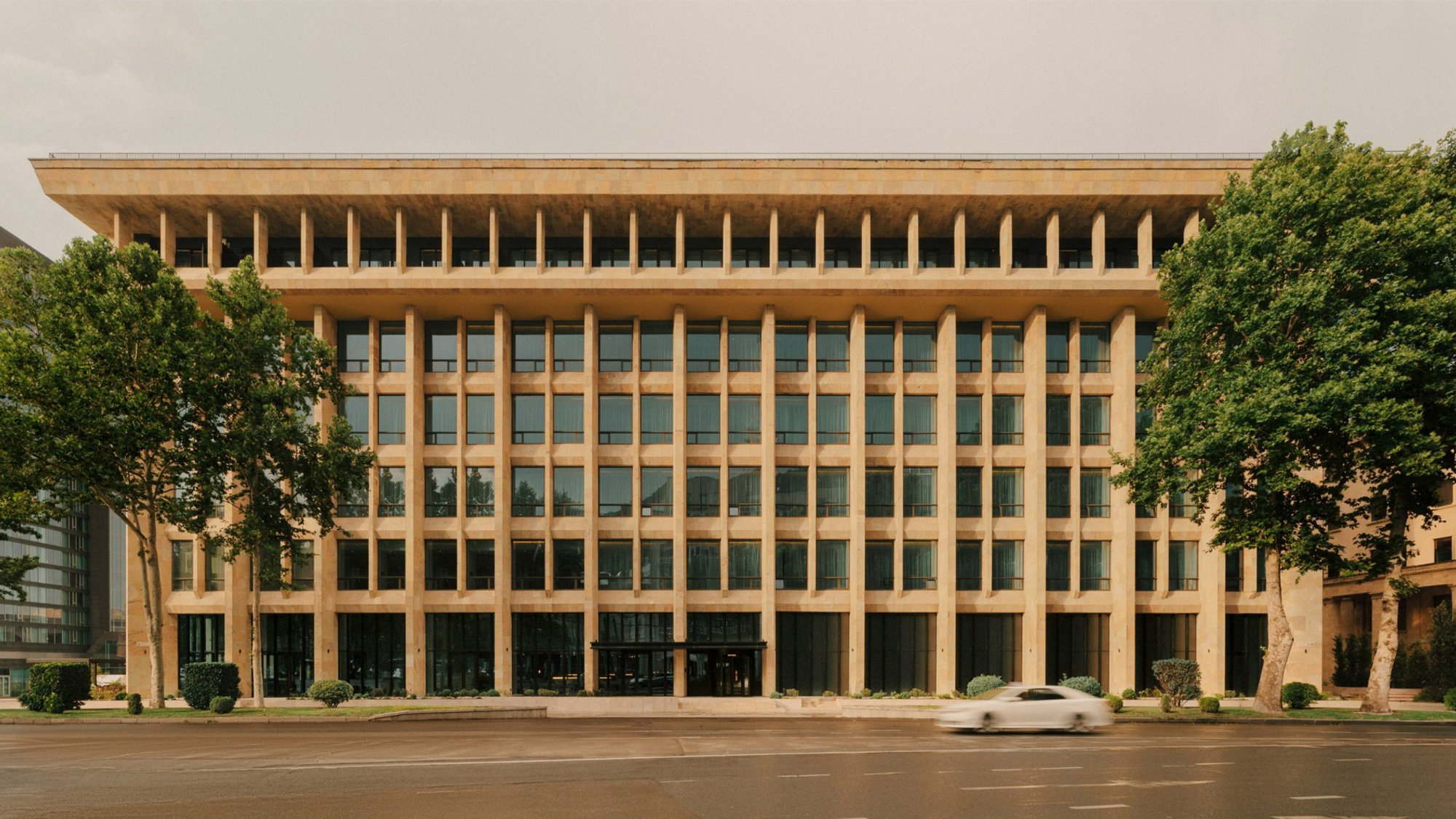
The Telegraph Hotel: Critical Reinterpretation of a Soviet Landmark in Tbilisi
Brutalist Tbilisi landmark reimagined as layered hotel, blending raw concrete, civic memory, and Silk Road-inspired spatial narrative.

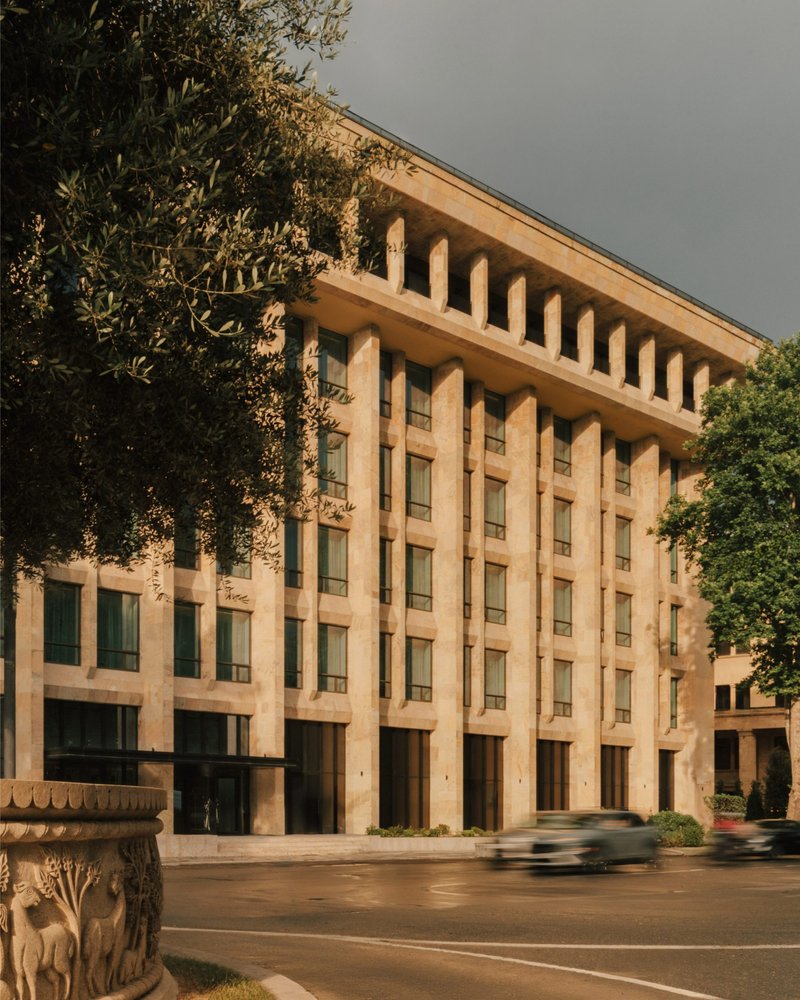
Originally constructed in the 1960s and completed in the 1970s, the former Telegraph Building in Tbilisi stands as a defining Brutalist landmark of Georgia’s Soviet-era architecture. Designed by Lado Alexi-Meskhishvili and Teimuraz Mikashavidze, the building once functioned as the city’s central post and telegraph office, a symbolic and literal hub of communication. Awarded the State Prize of Georgia in 1983, it represented civic gathering, exchange, and collective identity.
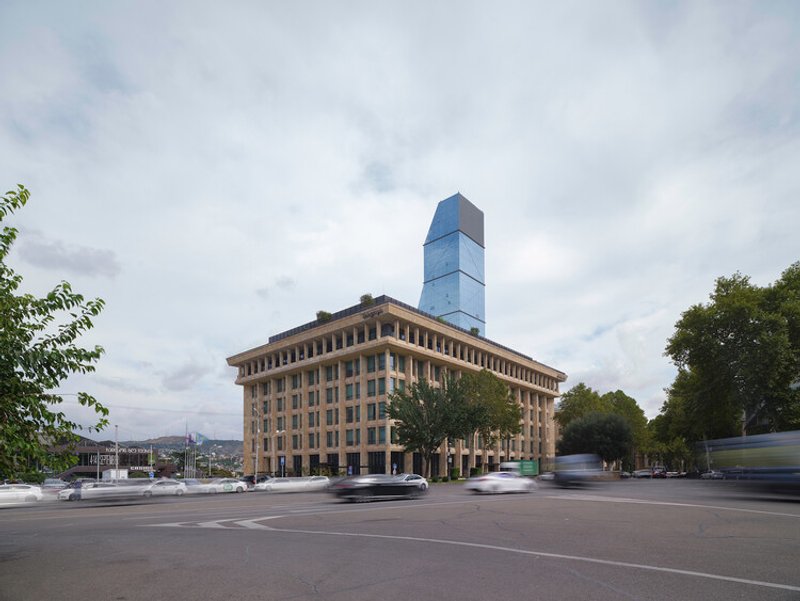
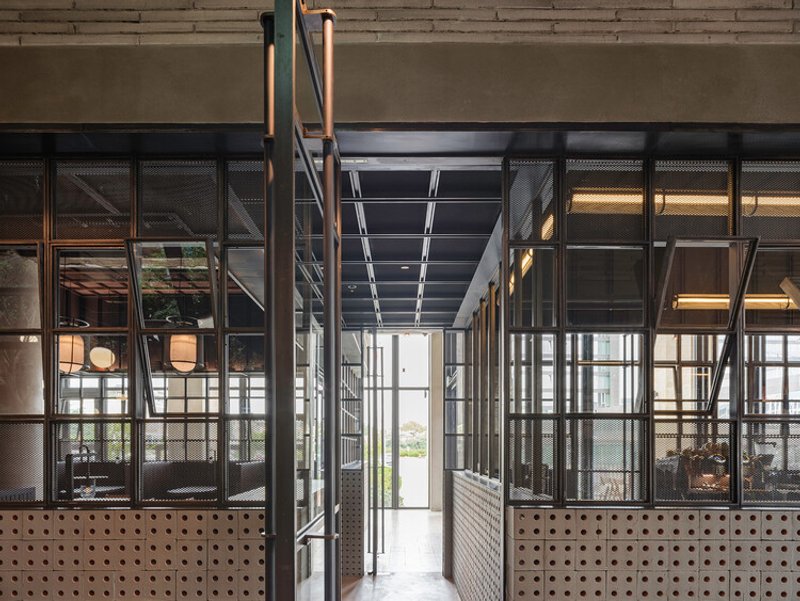
Following years of abandonment, the building was reimagined as The Telegraph Hotel by Neri&Hu Design and Research Office, commissioned by George Ramishvili of Silk Road Group. Rather than treating the project as a conventional restoration, the architects adopted a philosophy of “critical reinterpretation,” aiming to revive the building’s social relevance while preserving its raw material presence.
Reflective Nostalgia and Layered Preservation
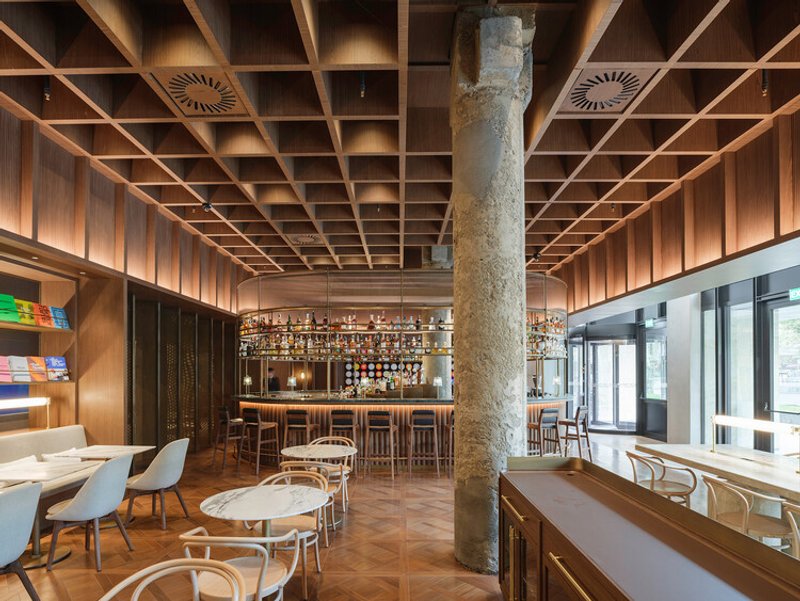
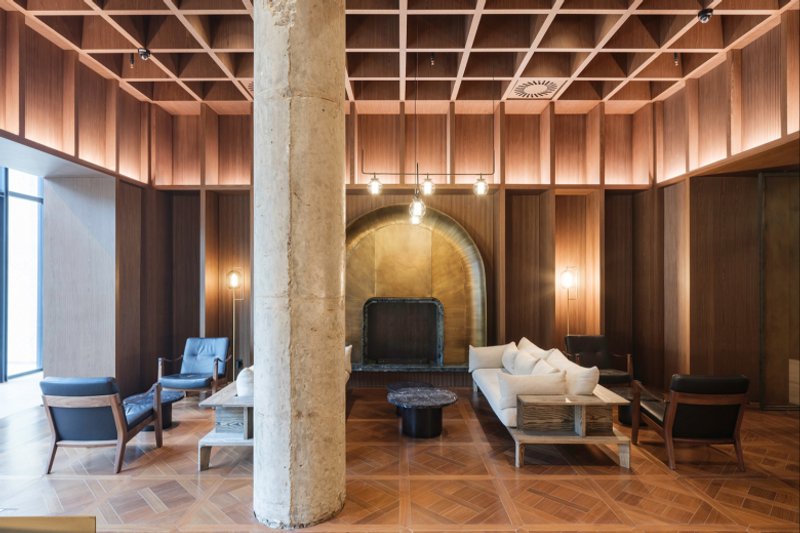
The design draws conceptually from Svetlana Boym’s theory of “reflective nostalgia,” which values fragments, incompleteness, and poetic memory over idealized reconstruction. Instead of concealing the marks of time, Neri&Hu emphasize them: allowing exposed concrete, structural scars, and patina to coexist with refined contemporary insertions.
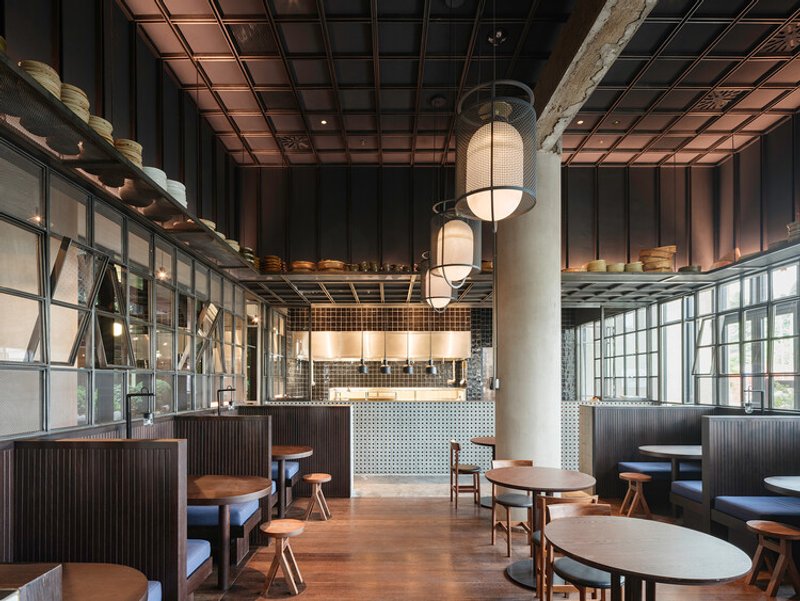
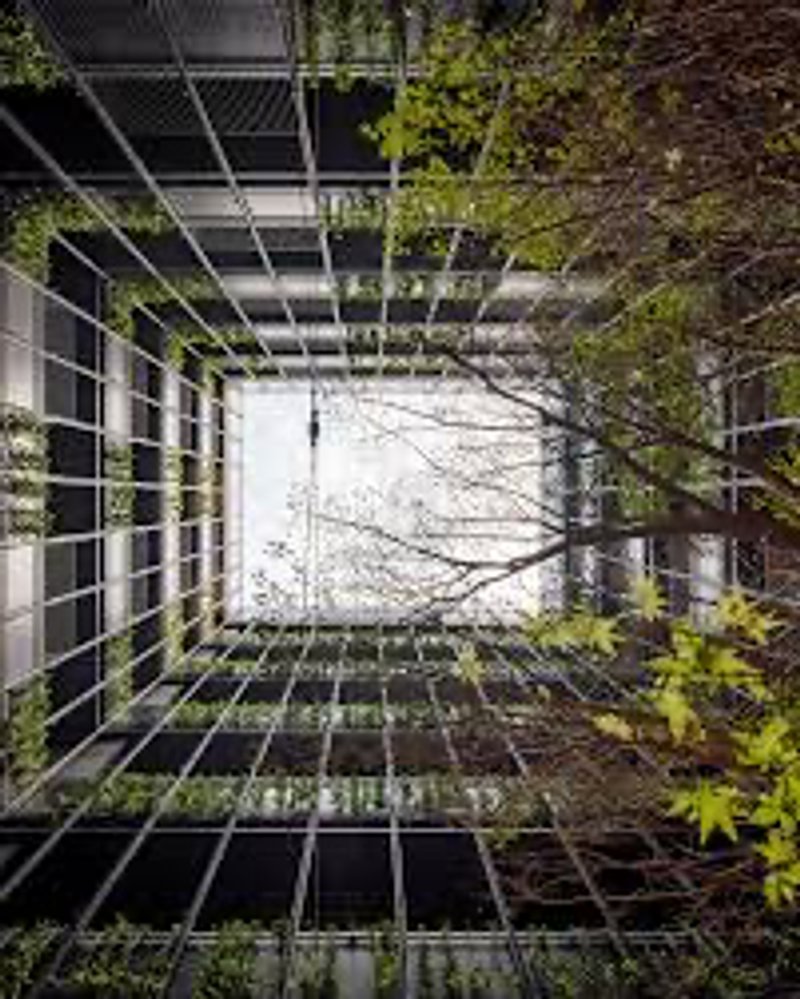
This layered strategy resonates with Aldo Rossi’s notion of architecture as a repository of collective memory. The building is not embalmed as a relic; it is activated. Its former role as a civic connector is reinterpreted through hospitality, transforming telegraphic exchange into social encounter.
Ground Floor as Urban Continuum
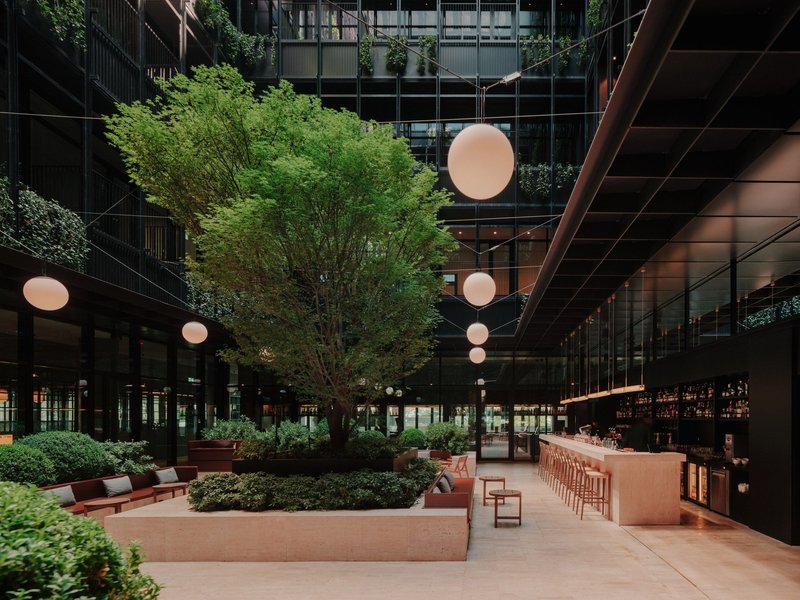
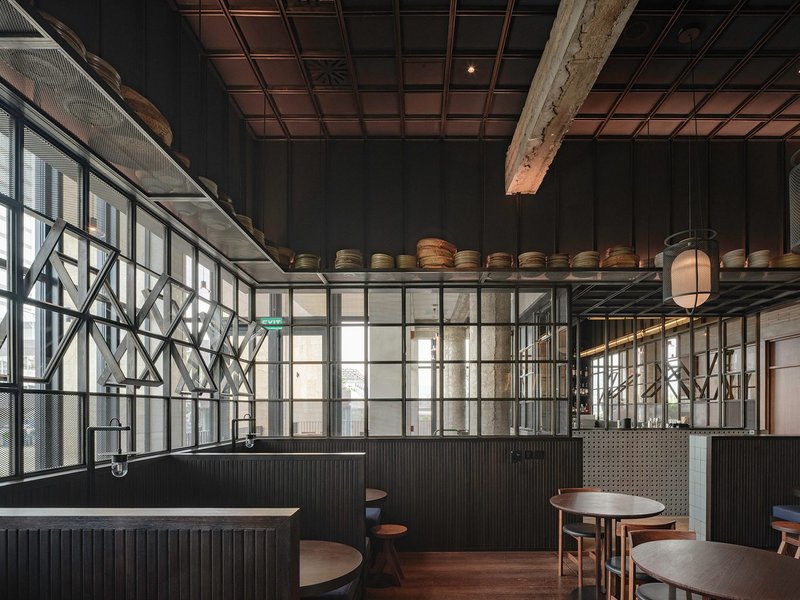
The ground level is conceived as an extension of Tbilisi’s public realm. Corridors echo the city’s narrow alleyways, guiding visitors through restaurants, a library, a club, and gathering spaces that converge at a central courtyard.
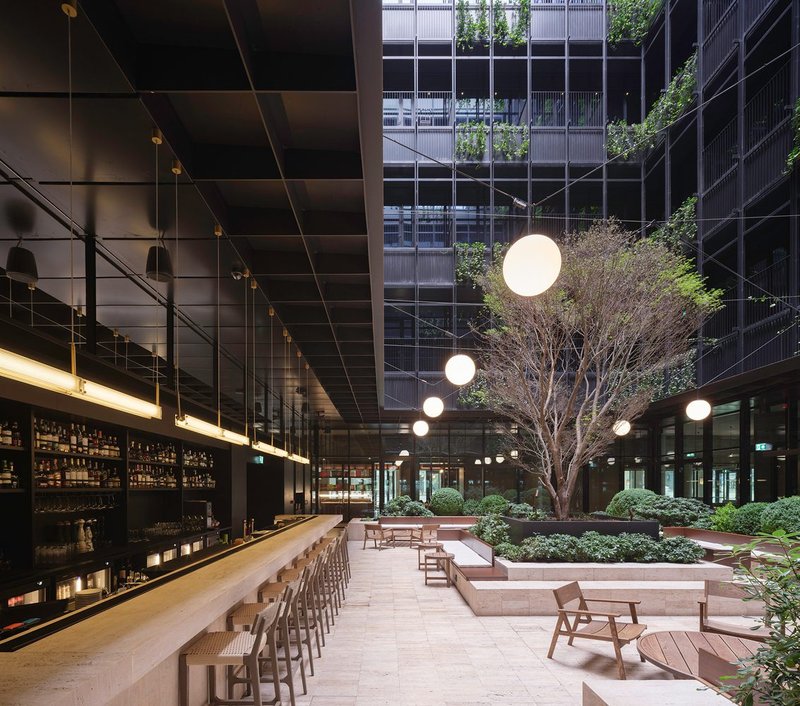
This courtyard, reimagined as an interior urban square, mirrors the communal balconies typical of Georgian residential blocks. The porous threshold between street and interior embodies Richard Sennett’s concept of “urban porosity,” dissolving rigid boundaries between public and private domains.
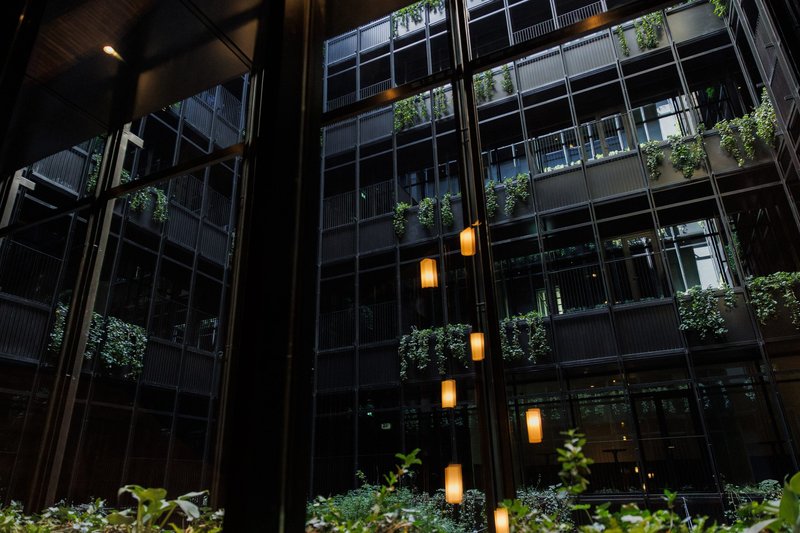
Through spatial sequencing and permeability, the hotel restores the building’s civic DNA, once again positioning it as a gathering point within the city’s collective life.
Rooms as Journeys Along the Silk Road
On the upper floors, guest rooms are organized within the original structural grid. Their linear arrangement, from entrance to lounge to window, evokes the spatial rhythm of a railway carriage, referencing the historic Silk Road.
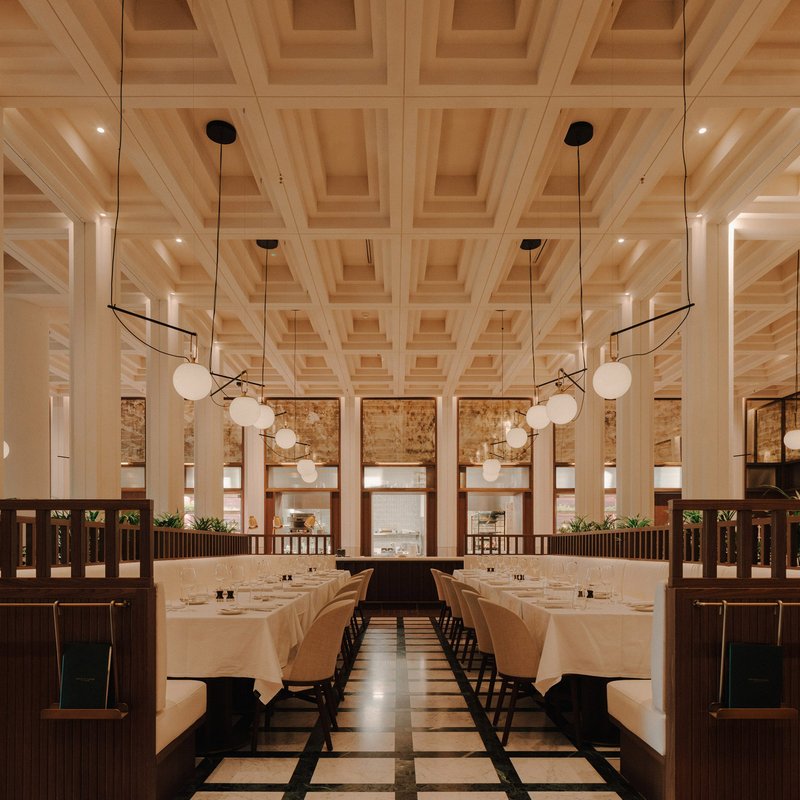
This narrative is conceptually aligned with Paul Bowles’s reflections in The Sheltering Sky, distinguishing the passive tourist from the immersive traveler. The hotel is designed for the latter, those who seek connection rather than consumption.
Materially, timber and soft lighting temper the Brutalist concrete shell, creating a contemplative environment that frames the city beyond. Each room becomes a quiet vessel for reflection, reinforcing the metaphor of journey and pause.
Brutalism Reanimated
The Telegraph Hotel exemplifies adaptive reuse as living preservation. Rather than erasing its Soviet past or romanticizing it, Neri&Hu craft a nuanced architectural dialogue between permanence and transformation.
Raw concrete volumes coexist with elegant furnishings and curated lighting. Public spaces invite interaction; private rooms encourage introspection. The building’s narrative of communication evolves into one of hospitality and cultural engagement.
Today, what once transmitted messages across distances now fosters encounters within place. The Telegraph Hotel stands not as a dormant monument, but as an active civic participant: an architectural narrative of memory, mobility, and belonging in contemporary Tbilisi.




Popular Articles
Popular articles from the community

YOAP Architects Round a Corner in Yeongcheon with a Cylindrical Community Hub
A 197-square-meter brick and ribbed-clad tower turns a forgotten alley corner in South Korea into a public garden with a low threshold.

20 Most Popular Office Building Projects of 2025
From biophilic workspaces in India to net-positive energy offices in New Delhi, 20 office building projects that defined architecture in 2025.
20 Most Popular Furniture Design Projects of 2025
Modular street systems, parametric benches, and insect hotels: the furniture design projects that captivated architects on uni.xyz in 2025.
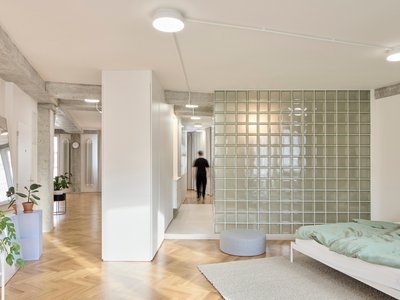
RDTH architekti Rips Out Nearly Every Wall in a Prague Apartment and Replaces Them with Furniture
A 101-square-meter post-war flat in Prague trades rigid partitions for a single rotated furniture block, curtains, and glass concrete.


Similar Reads
You might also enjoy these articles

Kokaistudios Wraps a Shanghai Retail Podium in Horizontal Louvers That Echo Its Foster + Partners Neighbor
A four-storey glass-roofed gateway links an underground commercial valley to the revitalized north bank of Shanghai's Suzhou River.

Fausto Terán and Toro Fuse Japanese Craft with Mexican Tradition in a Lakeside Retreat
Nakamura House pairs Shou-Sugi-Ban charred pine with handmade clay tile at the foot of Atlangatepec Lagoon in Mexico.
RDTH architekti Rips Out Nearly Every Wall in a Prague Apartment and Replaces Them with Furniture
A 101-square-meter post-war flat in Prague trades rigid partitions for a single rotated furniture block, curtains, and glass concrete.

SWA Group Spirals a Landscape Memorial into the Woods of Sandy Hook
A 1.8-acre clearing in Newtown, Connecticut, honors 26 lives lost with water, stone, and a single sycamore tree.

Explore Architecture Competitions
Discover active competitions in this discipline




The International Standard for Design Portfolios


The Global Benchmark for Architecture Dissertation Awards


The Global Benchmark for Graduation Excellence


Challenge to reimagine the Iron Throne
Comments (0)
Please login or sign up to add comments
No comments yet. Be the first to comment!