

The Tropical Forest
The design of compact houses with wide open, landscaped areas resembles a tropical forest.

Evolution of Concept:
The title of this project is ‘The Tropical Forest’ because the design resembles the features of the tropical forest. The evolution of the concept started with an analysis of the design brief, which predominantly focuses on sustainability, protection, and enhancement of the Amazon tropical forest in Manaus, Brazil. Keeping these basic inputs in mind, the design takes the shape of the site, leaving a 5-meter margin as described in the brief, resulting in a huge open courtyard for tropical landscapes and ample light and ventilation for the common areas. The shape of the plot is triangular, and it poses a challenge to design flats at the narrow edge of the plot. This edge is used for the landscape and the parking for a few 4-wheelers. There are 4 entrances to the building 2 on north side and 2 on south side. Both sides are provided with recessed compound walls for two-wheeler parking. As per the design requirement, the ground cover was only 30%, therefore design focuses on providing more green areas, all the flats on the ground floor and the lower ground floor are designed as garden flats. The gardens of these flats include trees, which help in screening for hot air entering the building and as a shading device to reduce the overall temperature of the building. They also resemble buildings built in a tropical forest. Also, the longer sides of the site are facing north-south, there is no harsh sunlight entering most of the building, and a shading device in terms of balcony and building projections is present.
There are 16 flats on each floor, making it 48 on all three floors, and 2 flats are on the lower ground floor on the narrow side of the plot, thus a total of 50 flats in this building. The site has natural contours with an overall difference of two meters. Using this level difference, the design uses cutting and filling and accommodates two flats on the lower ground floor. The two flats on the narrow edge are designed differently considering the site condition, and the rest are the same with all utility services such as water supply, sanitation, and waste disposal, one on top of each other for optimum use of resources. On the east side, there are 6 flats for a family of 8, and the rest of the 44 flats are for a family of 4. There is a connecting bridge between the north and south sides of the building for ease of circulation. The lower ground-floor flats are accessed by the stairs in the courtyard area near the feature wall and can be accessed through the connecting bridge and the common passage. Considering the height restrictions, the floor-to-floor height of each floor is 2.9 meters. There are five stairs in all for vertical circulation and for emergency situations such as fire.
Energy Reduction Strategy:
This design has an optimum use of materials, natural light, and cross-ventilation within flats as basic sustainable principles addressing the climate emergency. The size of the windows was kept large to address enough light and ventilation, and they were shaded with extended balconies to prevent harsh sunlight from entering the windows. The structure was designed in such a way that there was no waste of extra spaces and passages within the flats, adding to the economy of space and sustainability. There was a use of vacuum tube solar water heaters being put on terraces for the requirement of hot water for bathing, reducing its dependency on electricity. There was enough margin left on the ground floor for accommodating green infrastructure in terms of garden flats, resembling the forest cover that the area had in the Amazon Forest. The central courtyard acts as a landscaped area to bring the atmospheric temperature further down and as a source for light and ventilation in common areas.
Water Reduction Strategy:
Low-flow fixtures have been installed throughout the building. A recycled gray water and drip irrigation system was used for irrigating landscaped areas. Recycling plants are installed underground in the courtyard, where all the wastewater lines can be reached with a short pipe length, achieving economy and sustainability. As the site is in tropical areas, further water gains can be possible through rainwater harvesting. Furthermore, a significant reduction in water usage was possible with the help of digital technologies such as submetering systems (e.g., for irrigation and toilet flushing). Having more information about the water flows would provide building operators with the needed information to improve conservation solutions.
Improvement In Indoor Air Quality Using Intelligent Building:
This is an Intelligent building design that contributes to the idea of demand engagement into the energy supply chain via the smart grid, to maintain a balance between supply and demand and ensure the reliability of electrical grid operation. An intelligent building (1) perceives its environment through indoor environment monitoring system; (2) communicates with occupants and know their needs; (3) makes energy-related decisions by its energy management system (EMS); (4) takes energy-related actions through its energy management and control systems (EMCS), (5) have a learning capability to improve its performance, and (6) have a proper communication to the grid. This approach focusses on improvement of comfort level for the building occupants and indoor air quality. Considering the main occupants’ requirements and building facilities, intelligent buildings can be classified into automated buildings, smart homes, green buildings, energy-efficient buildings, and grid-interactive efficient buildings. Automated buildings concentrate on the automated operation of electrical and mechanical facilities, while the focus of smart homes is on designing a user-friendly environment for occupants. The overall comfort of an occupant represents her or his quality of life inside a building. Occupants interact with the indoor environment through their senses. Several factors have positive or negative impacts on occupants’ overall satisfaction, including the level of thermal comfort, visual comfort, acoustic comfort, and indoor air quality. All factors together define IEQ, inside an enclosed space. Predicting and learning occupants’ preferences and behavior can provide significant energy-saving opportunities.


Popular Articles
Popular articles from the community


Opera on the Sea: Driftwood Logic Shapes a Timber Opera House on Estonia's Coast
Trevor Orgill's opera house translates the entangled drift of floating timber into a civic building where wood, water, and music converge.

The Amber Palace Opera: A Geological Fiction Surfaces on Tallinn's Baltic Waterfront
Pierre Brillard reimagines a Baltic legend as a public landscape, opera house, and waterfront promenade rooted in Tallinn's coastal identity.
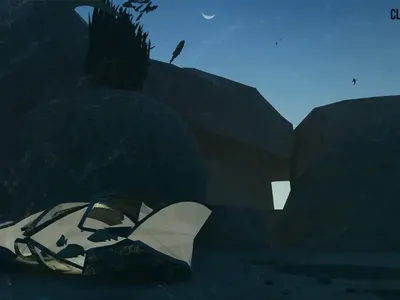
Cloaked Colonization: A Mobile Underwater Habitat That Moves Like a Fish
Micah Abaya's shortlisted EHC Pacific entry reimagines ocean settlement as a dispersed network of self-sustaining architectural organisms.

Manzana Morphosis: Stretching Barcelona's Grid into a Living Landscape for 2050
A radical reworking of the Eixample manzana turns density into a tool for generous public space, vertical ecology, and environmental performance.

Similar Reads
You might also enjoy these articles

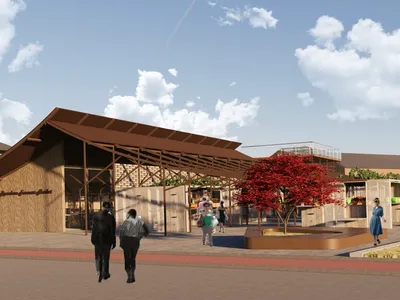
The Rhythm of Seasons
A Farmers' Market Connecting Nature and the City
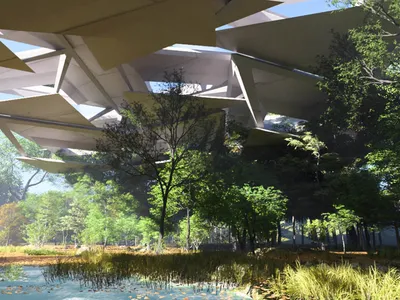

More Than a Building-Designing a Living System
More Than a Building-Designing a Living System
Base Beyond
DESERT COMPOUND ARID: TOURISM OF ABSENCE AND ABUNDANCE

Explore Building Design Competitions
Discover active competitions in this discipline


Challenge to reimagine the Iron Throne

Photograph architecture without architects

Illustrate the lost glory of Angkor Wat - Render Challenge

Design challenge to reuse E-waste
Comments (0)
Please login or sign up to add comments
No comments yet. Be the first to comment!