

The Urban Link (T.U.L.): A New Era of Parametric Bridge Architecture
A visionary parametric bridge architecture redefining Copenhagen’s waterfront through sustainable mobility, fluid design, and public space.


The Urban Link (T.U.L.), a visionary project by Nikita Negov, reimagines contemporary bridge design through the lens of parametric bridge architecture. Moving beyond the conventional perception of bridges as purely infrastructural elements, this proposal transforms the crossing into a multifunctional urban landmark that integrates sustainable mobility, public space, and sculptural form.
Located across the Port of Copenhagen, approximately 100 meters in length and positioned near Knippels Bridge, the intervention strategically enhances both sides of the waterfront. With rich public spaces and community centers nearby, the bridge becomes not merely a connector but an active urban catalyst.
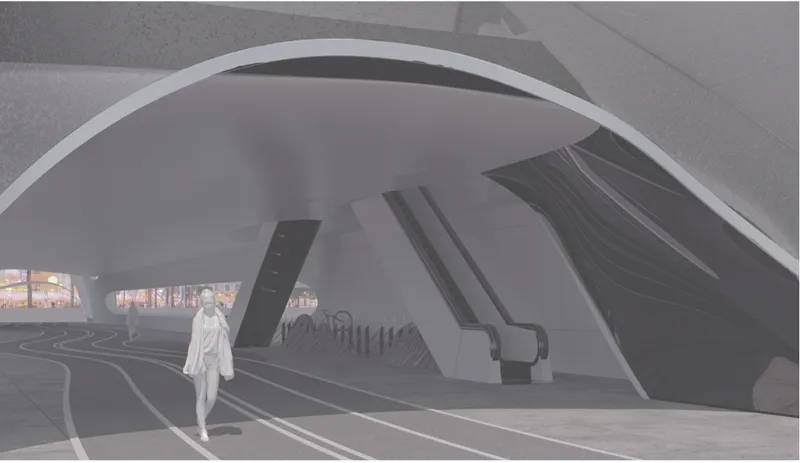
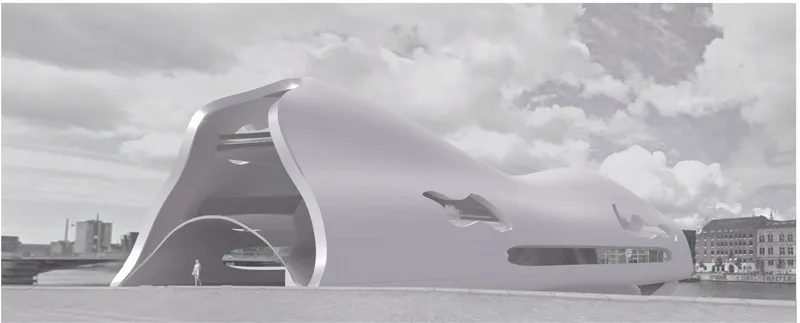
Rethinking Bridge Architecture Through Parametric Form
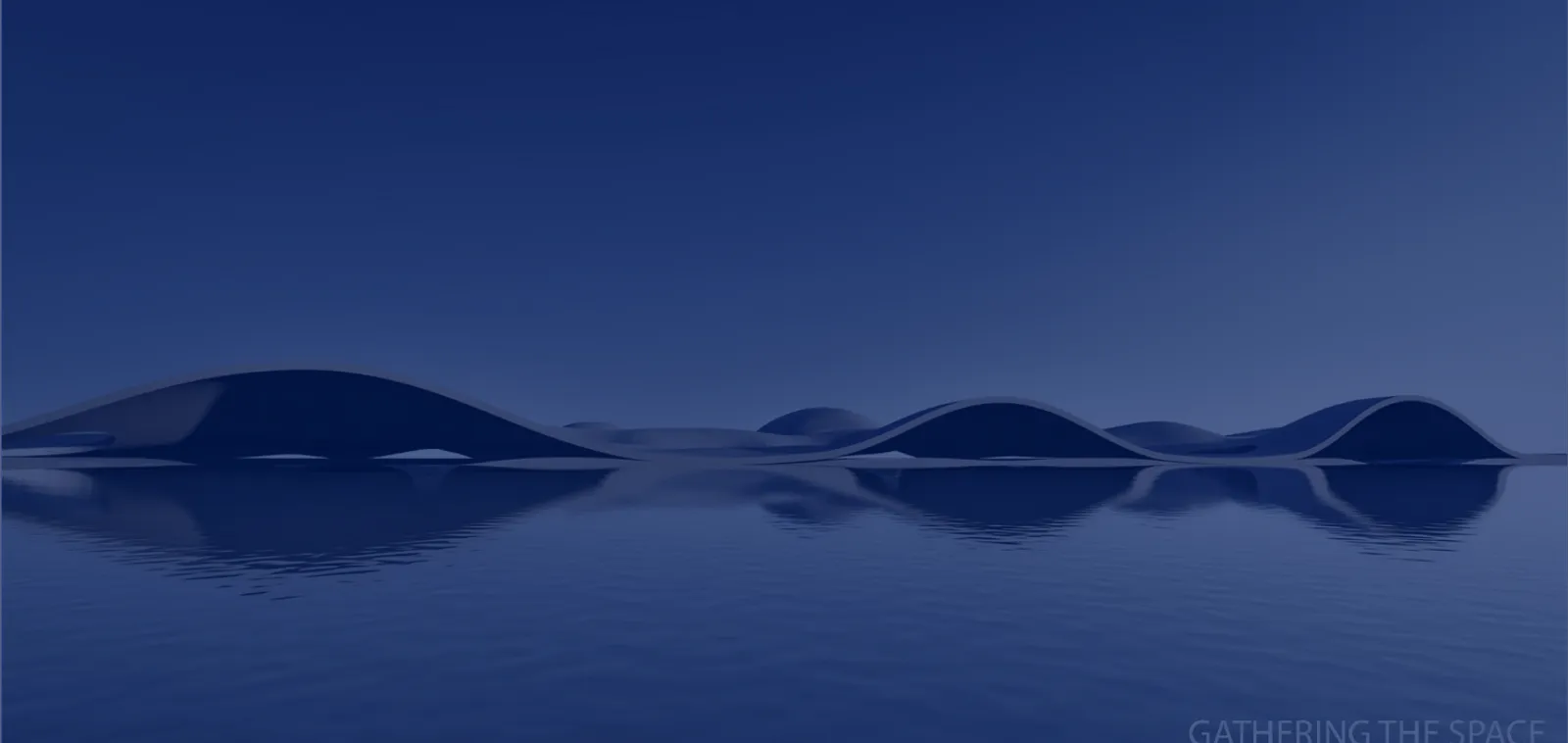
Unlike traditional linear bridge typologies, The Urban Link embraces smooth, organic geometries inspired by nature. Parametric bridge architecture allows the structure to evolve from fluid algorithms rather than rigid standards, resulting in a form that feels sculpted by wind and water.
The streamlined silhouette reflects natural systems: where curves, continuity, and seamless transitions define both beauty and efficiency. By departing from conventional structural language, the bridge establishes a strong visual identity while maintaining functional clarity.
This architectural approach brightens the urban environment and reconnects citizens with natural forms, reminding us that infrastructure can be both rational and poetic.
Sustainable Urban Design and Bicycle Infrastructure
At its core, The Urban Link champions sustainable transportation. The project reinforces Copenhagen’s cycling culture by prioritizing bicycles as a primary mode of movement.
A well-designed urban system encourages eco-friendly mobility through thoughtful spatial organization. The bridge includes:
- A dedicated first-floor cycling route
- Bicycle parking and rental facilities
- Workshop and retail components
- Clearly separated pedestrian circulation
By physically separating bicycle traffic from pedestrian areas, the design ensures safety, comfort, and uninterrupted movement. This layered approach demonstrates how parametric bridge architecture can respond intelligently to contemporary urban demands.
Bicycles remain relevant more than a century after their invention because they are affordable, eco-friendly, efficient, and socially inclusive. The Urban Link supports this philosophy by embedding cycling infrastructure directly into the architectural core.
A Three-Tier Public Space System
Beyond circulation, the bridge operates as a vertical public ecosystem.
Level 1, Movement and Community
The ground level accommodates cyclists while integrating gathering spaces, cafés, information centers, and retail zones. This transforms transit into experience.
Level 2, Public Amenities
The mezzanine level houses staff facilities, service areas, and landscaped elements. Plants and eco-friendly materials reinforce the environmental narrative, reminding visitors that urban spaces must coexist with nature.
Level 3, Panoramic Restaurant
The upper tier features a restaurant with panoramic waterfront views, turning infrastructure into destination. The interior spaces are designed to remain active year-round, offering comfort in all weather conditions.
This three-tier configuration illustrates how modern bridge architecture can function as both infrastructure and civic building.
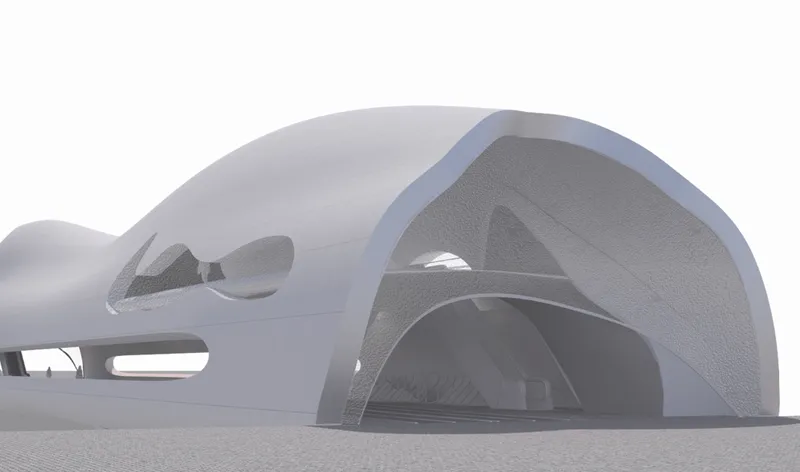
Urban Landmark and Architectural Identity
A bridge becomes a landmark when it transcends function. The Urban Link achieves this through:
- Fluid line compositions
- Sculptural curvature
- Integrated lighting design
- Multi-functionality
- Modern construction technologies
The distinctive form makes it a must-see tourist attraction while serving residents daily. Its openable central section (minimum 25 meters) allows ships and boats to pass, ensuring operational efficiency without compromising aesthetics.
With an intervention area of approximately 1500 m² and a height limit of 15 meters, the structure respects contextual constraints while asserting a bold architectural presence.
Parametric Architecture and Environmental Sensitivity
The project intentionally moves away from rigid structural repetition. Instead, it adopts eco-friendly materials and landscaping strategies that soften the transition between built and natural environments.
Parametric modeling enables optimized structural performance while maintaining spatial fluidity. The organic envelope filters light, shapes interior atmospheres, and enhances mental well-being, especially important in elongated infrastructural spaces.
Lighting, ceiling height, and spatial rhythm are carefully calibrated to produce a welcoming experience rather than a purely transit-oriented one.
A Model for Future Cities
The Urban Link demonstrates how parametric bridge architecture can be adapted to other cities striving for modernization and sustainable development. Its advanced functionality, layered circulation, and integrated public programs make it replicable yet context-responsive.
As cities worldwide seek resilient infrastructure, bridges like T.U.L. redefine what mobility structures can represent: cultural icons, environmental statements, and social platforms.
The Urban Link (T.U.L.) by Nikita Negov is more than a crossing over water. It is a transformative example of parametric bridge architecture that integrates sustainability, urban vibrancy, and sculptural form into a single cohesive vision.
By merging infrastructure with public life, technology with nature, and function with aesthetics, the project positions itself as a forward-thinking prototype for the future of urban architecture.
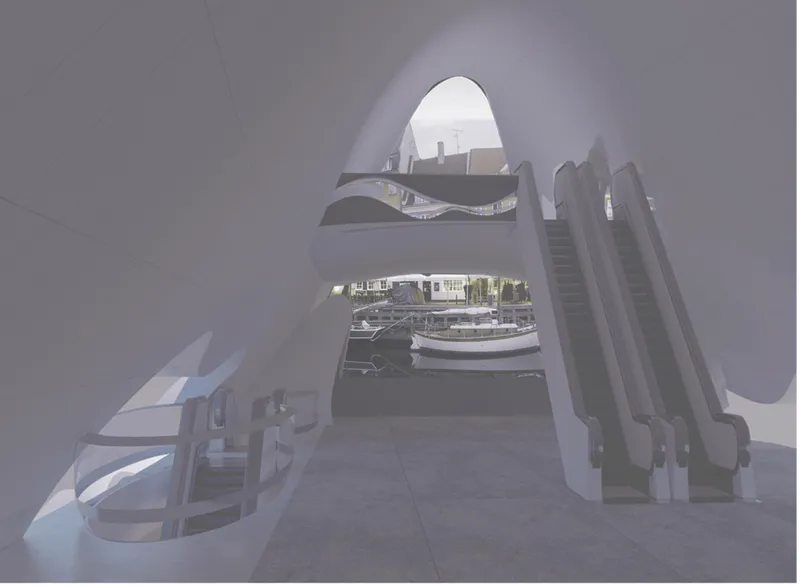




Popular Articles
Popular articles from the community


Riyadh For All: Intergenerational Urban Design for Active Aging in Rabat
Riyadh For All reimagines urban design in Rabat with intergenerational co-living, adaptive courtyards, and Moroccan cultural exchange today.

Co-Life: Senior Housing Design That Reconnects Older Adults With the City
Co-Life reimagines senior housing design through healing gardens, shared streets, workshops, and a sustainable community across generations.

Lunar Spiral: Space Architecture Shaped by the Mathematics of the Universe
Lunar Spiral reimagines space architecture through Fibonacci geometry, lunar regolith, levitating habitats, and self-sustaining Moon living.

The Earth Pod: 3D Printed Homes for Resilient Refugee Communities
The Earth Pod reimagines refugee housing through 3D printed homes made from clay, combining resilience, self-sufficiency, and rapid shelter.

Similar Reads
You might also enjoy these articles

Eco Chapel: A Green Architecture Pavilion Designed in Symbiosis with the Forest
Eco Chapel uses green architecture to weave prayer, learning and reuse into a forest pavilion shaped by modular hexagonal canopies for life.
Kaffeebühnen: Coffee Shop Architecture Designed as a Civic Stage Between Vienna’s City and Park
Kaffeebühnen turns coffee shop architecture into a civic stage, linking Vienna’s park edge, urban life, warm timber yards, and coffee craft.
Healing Façade: Sustainable Architecture for Reforestation, Community, and Sacred Ecology in Ethiopia
Healing Façade reimagines sustainable architecture as a living wall that restores soil, catches water and renews Ethiopia's forest churches.


Urban Forest: A Vertical Ecosystem for 5,000 Workers in Singapore's Changi Business Park
Radially stacked pods and layered green decks turn a 7-acre plot into 47 acres of ecological workspace projected for 2040.


Explore Architecture Competitions
Discover active competitions in this discipline



Challenge to reimagine the Iron Throne


Photograph architecture without architects


Illustrate the lost glory of Angkor Wat - Render Challenge


Design challenge to reuse E-waste
Comments (0)
Please login or sign up to add comments
No comments yet. Be the first to comment!