

Thesis Idea.
Community-Based Eco-Tourism At Madhupur Sal Forest: An opportunity for integrated development for Garo people

The Garo community is one of the richest ethnic communities in terms of culture and diversity in our country. They are an integral part of the Madhupur Sal Forest. In the past few decades, Garo Community has been struggling for its existence. The main reason for this struggle is the degradation of the Madhupur Sal Forest. Poverty, lack of forest resources, and income opportunities are the primary reasons for this condition of the Garo Community. Tourism has been the most profitable venture worldwide in our country for many decades. Due to the beautiful landscape, bio-diversity, and accessibility, the tourism demand in Madhupur Sal Forest is increasing day by day. Although ill-conceived/unplanned development of Mass Tourism has been a key reason for the deterioration of natural resources and community disturbance. Here, in Madhupur, on one hand, the growing demand for tourism, and on the other hand, the socio-economic struggle of the Garo people demands a sustainable solution. Nowadays, Community-Based Eco-Tourism has been a role model for responsible tourism, a bottom-up approach that focuses on the community and nature's holistic development. This thesis will investigate how to improve the lives of the Garo community by integrating them into this Community-Based Tourism intervention and also promote their culture(eg, textiles, crafts, languages, practices, etc.) to the outside world. This thesis will also focus on the method for integrating them into the conservation of Madhupur Sal Forest. The outcome of this thesis aims to provide a sustainable Community Based Tourism Development integrating the Garo people, their culture, and practices. The architectural outcome will focus on the eco-sensitivity and the interpretation of the contextual archetype of this vibrant site.


Popular Articles
Popular articles from the community


The Amber Palace Opera: A Geological Fiction Surfaces on Tallinn's Baltic Waterfront
Pierre Brillard reimagines a Baltic legend as a public landscape, opera house, and waterfront promenade rooted in Tallinn's coastal identity.

Opera on the Sea: Driftwood Logic Shapes a Timber Opera House on Estonia's Coast
Trevor Orgill's opera house translates the entangled drift of floating timber into a civic building where wood, water, and music converge.
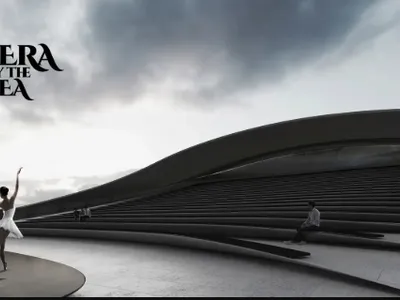
Opera by the Sea Estonia: Three Shells Dissolving Architecture into Tallinn's Coastline
A winning opera house proposal replaces monumental form with interconnected shells that blur the boundary between building, park and Baltic Sea.

Cloaked Colonization: A Mobile Underwater Habitat That Moves Like a Fish
Micah Abaya's shortlisted EHC Pacific entry reimagines ocean settlement as a dispersed network of self-sustaining architectural organisms.

Similar Reads
You might also enjoy these articles

Day and Night Park: A Time-Based Urban Newsstand in Beijing
A temporary urban newsstand in Beijing blending travel, light, and reading through poetic colors, compact form, and community-focused design.

Modernist Patio Renovation in El Masnou, Barcelona by Oliver Segura Arquitectura + Cebrià Arquitectura
Modernist patio renovation blending tradition and innovation with a movable pool, leveled floors, and Catalan materials in El Masnou.

Alto Residencial Coop: Cooperative Housing Development in Santiago de Compostela by Carbajo Barrios Arquitectos
A linear cooperative housing complex blending white volumes and perforated metal façades, enhancing community living, natural light, privacy, and urban integration.
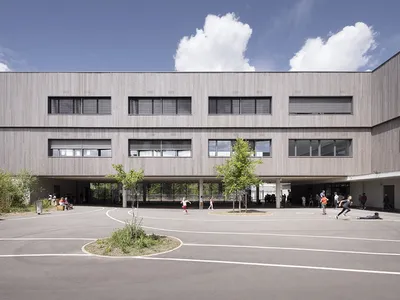
Vil Genis School by BPA ARCHITECTURE – Massy, France
Vil Genis School in Massy, France, features sustainable design, south-facing classrooms, community integration, accessible spaces, and modern educational architecture.

Comments (0)
Please login or sign up to add comments
No comments yet. Be the first to comment!