
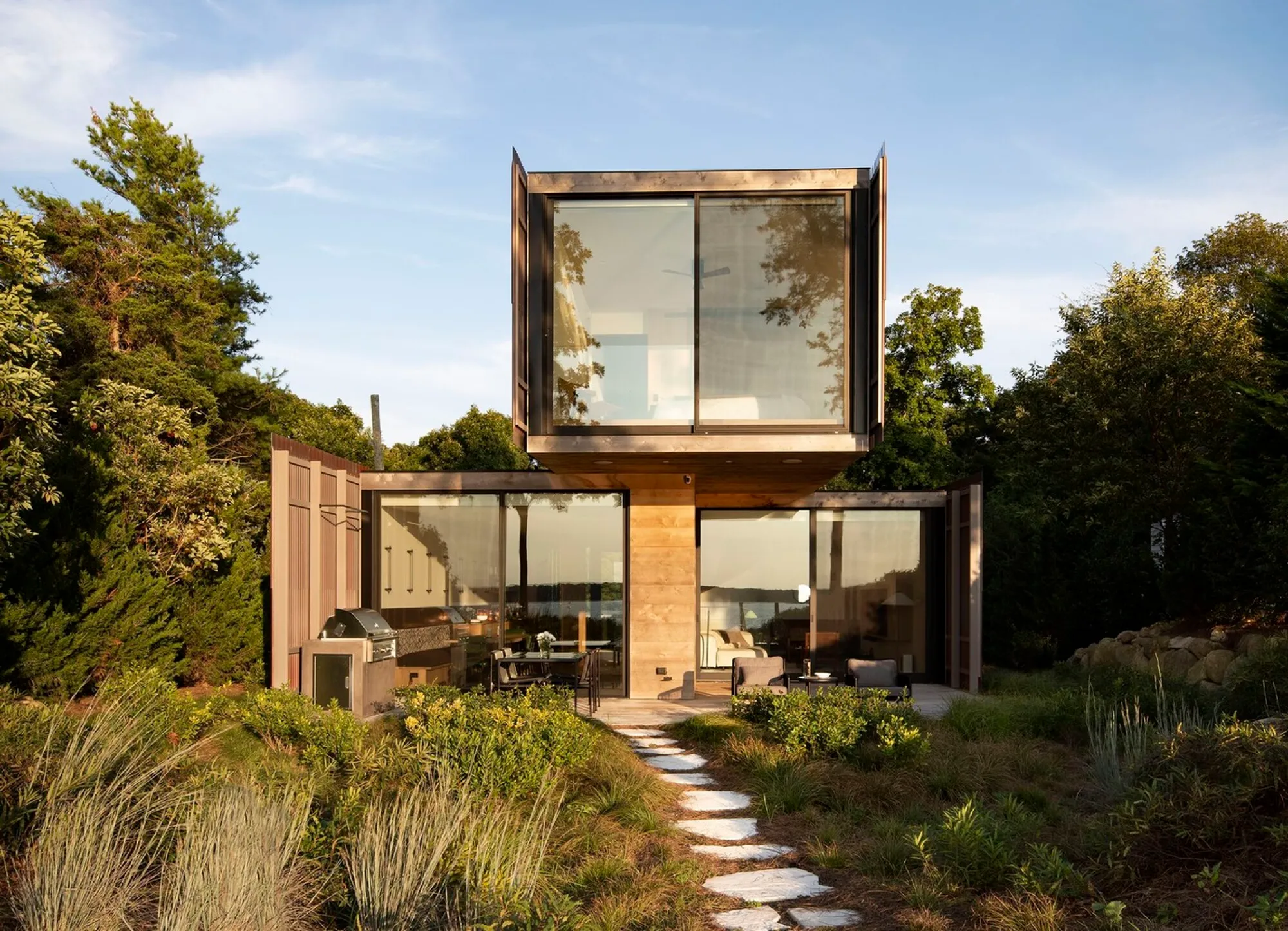
Three Mile Harbor House by Bates Masi + Architects: A Copper-Clad Waterfront Retreat in East Hampton
Copper-clad waterfront home in East Hampton featuring privacy walls, courtyards, spiral stair, and efficient maritime-inspired modern design.


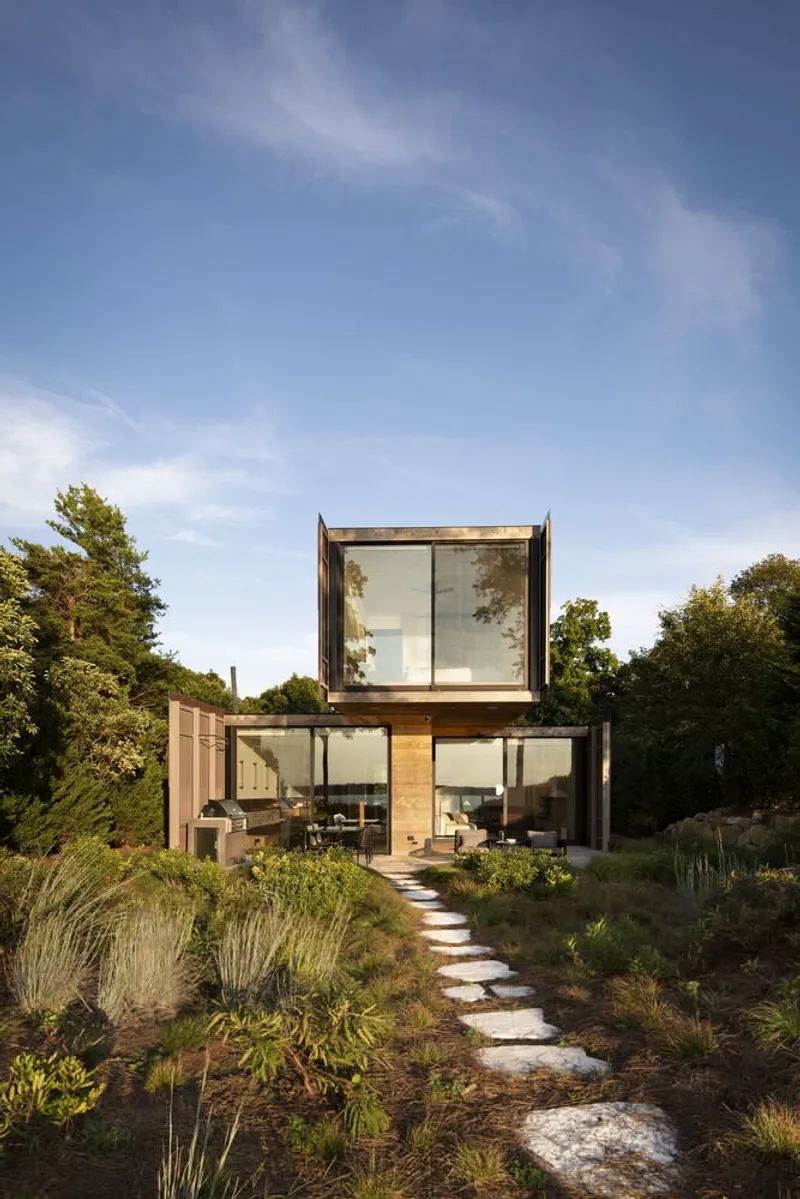
Located along the scenic shoreline of East Hampton, the Three Mile Harbor House redefines modern waterfront residential architecture through a thoughtful response to extreme site conditions and restrictive zoning regulations. Designed by Bates Masi + Architects, this 2,455-square-foot coastal home transforms narrow lot limitations into architectural innovation.
Shoreline properties in this neighborhood are subdivided into long, slender parcels, some nearly ten times deeper than their width, to maximize water access. However, strict zoning laws require setbacks from the harbor and limit building height based on proximity to property lines. The result is a dense row of homes aligned along a shared setback, each competing for optimal views while facing challenges related to privacy, daylight access, and natural ventilation.
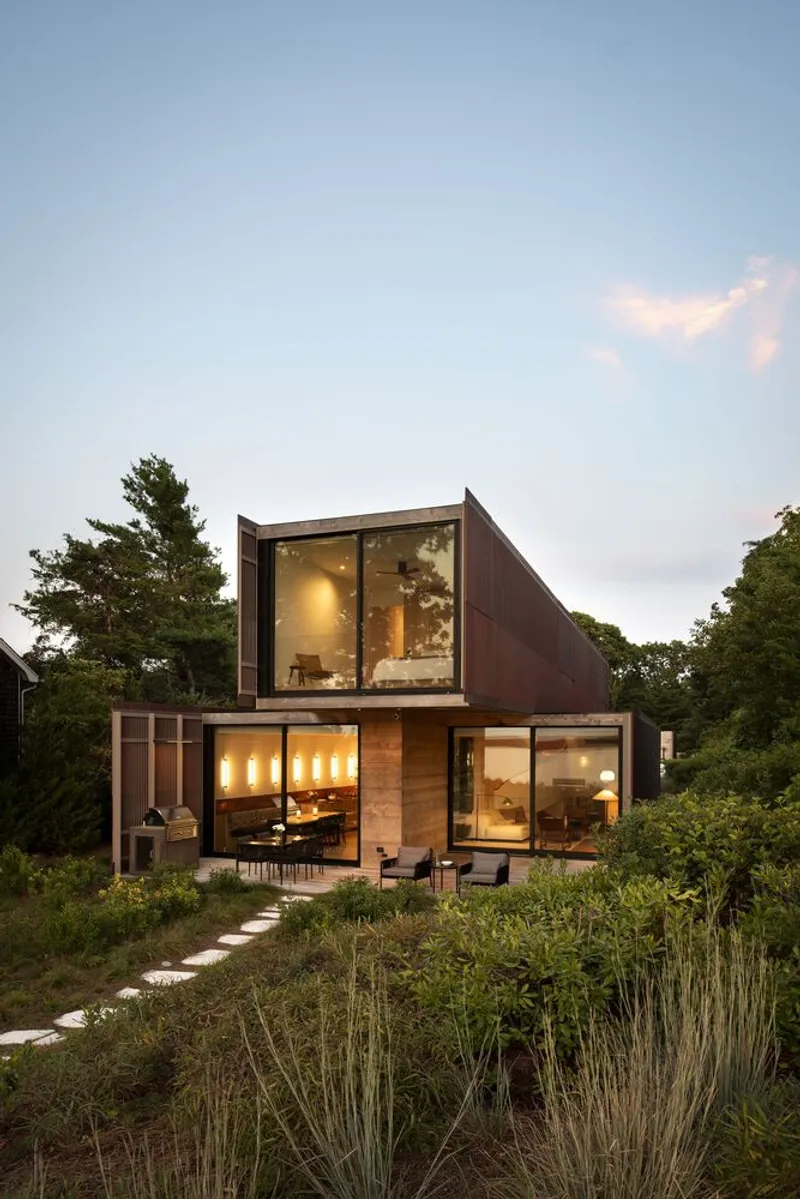
The homeowner: a builder and mariner who once lived aboard a boat: sought a residence with the efficiency, compactness, and ingenuity of maritime design. The architectural solution draws heavily from nautical principles, crafting a home that feels both purposeful and poetic within its coastal setting.
Copper Privacy Walls: A Sculptural Environmental Strategy
One of the defining features of the Three Mile Harbor House is its dynamic system of copper-clad privacy walls. These architectural elements address multiple site challenges simultaneously: privacy from neighboring homes, height restrictions, solar exposure, and air circulation.
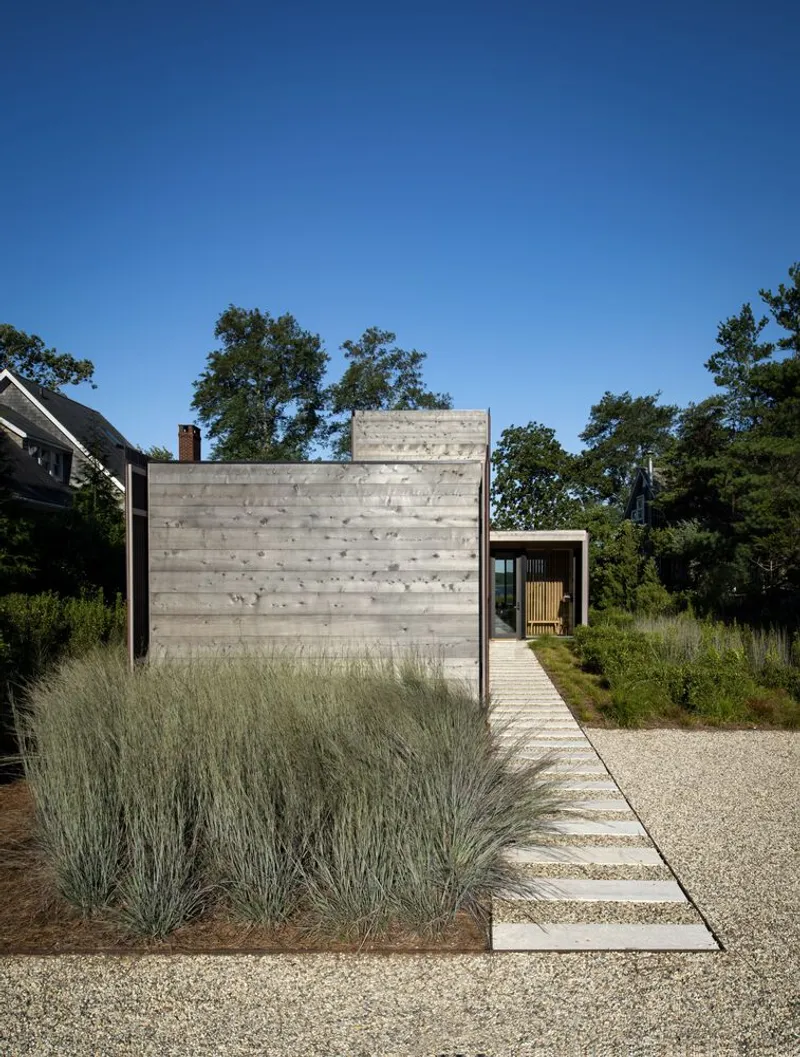
The walls splay open toward the harbor to maximize water views while tapering upward in response to the sloping topography and zoning constraints. By extending beyond enclosed volumes, they block lateral sightlines from adjacent properties while directing the interior experience toward the waterfront.
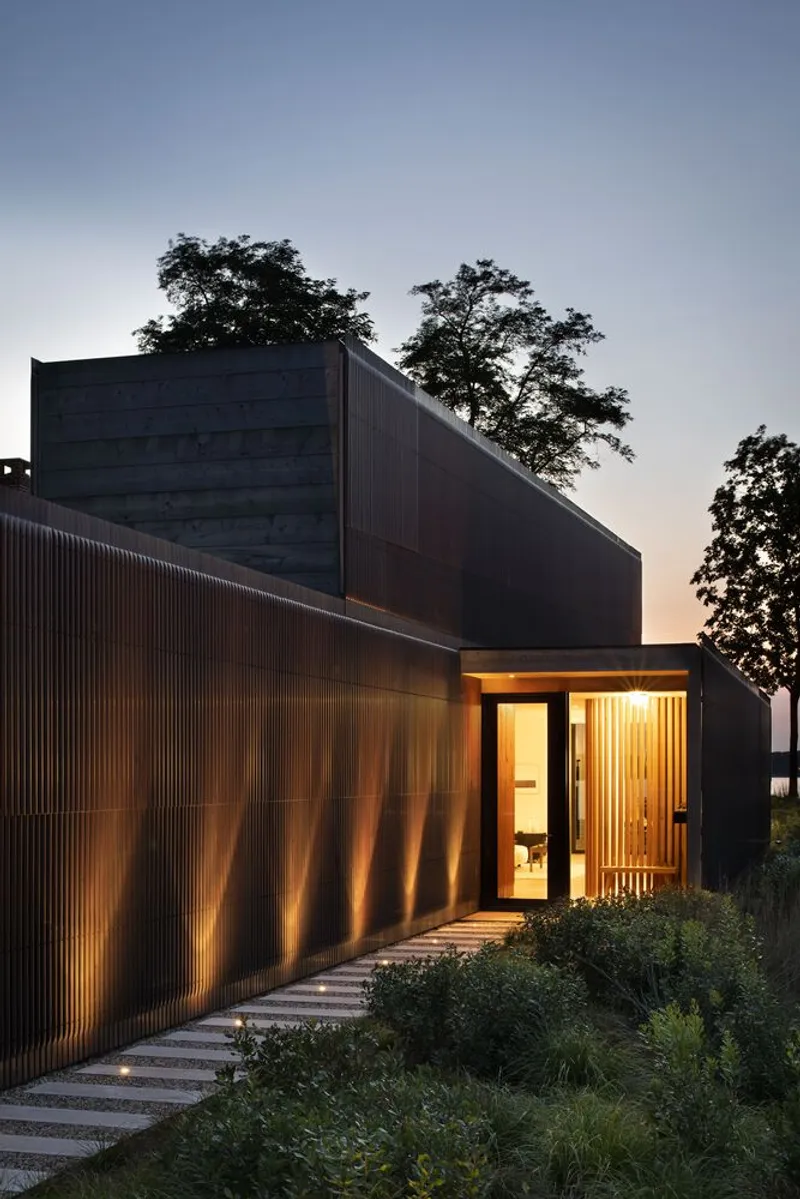
Clad in vertically tiered copper piping with flattened ends resembling oars, the facade subtly references the maritime heritage of the site. Each pipe telescopes, pipe within pipe, allowing precise calibration to follow grade changes and regulatory height limitations.
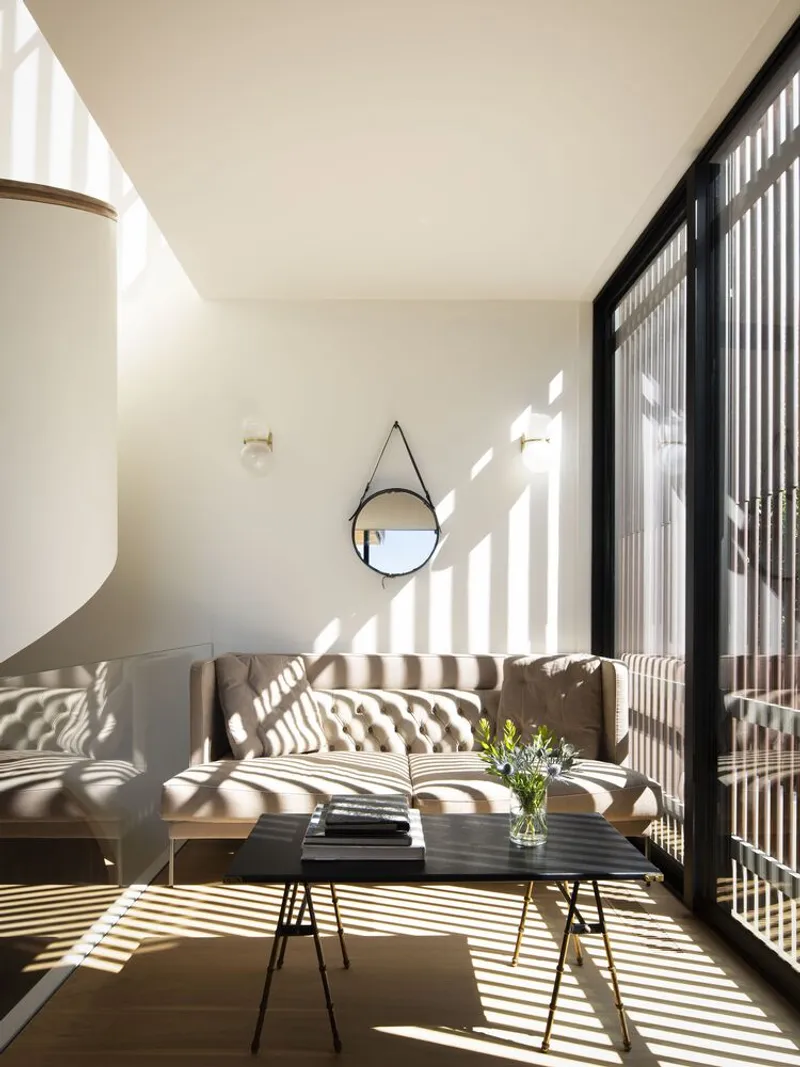
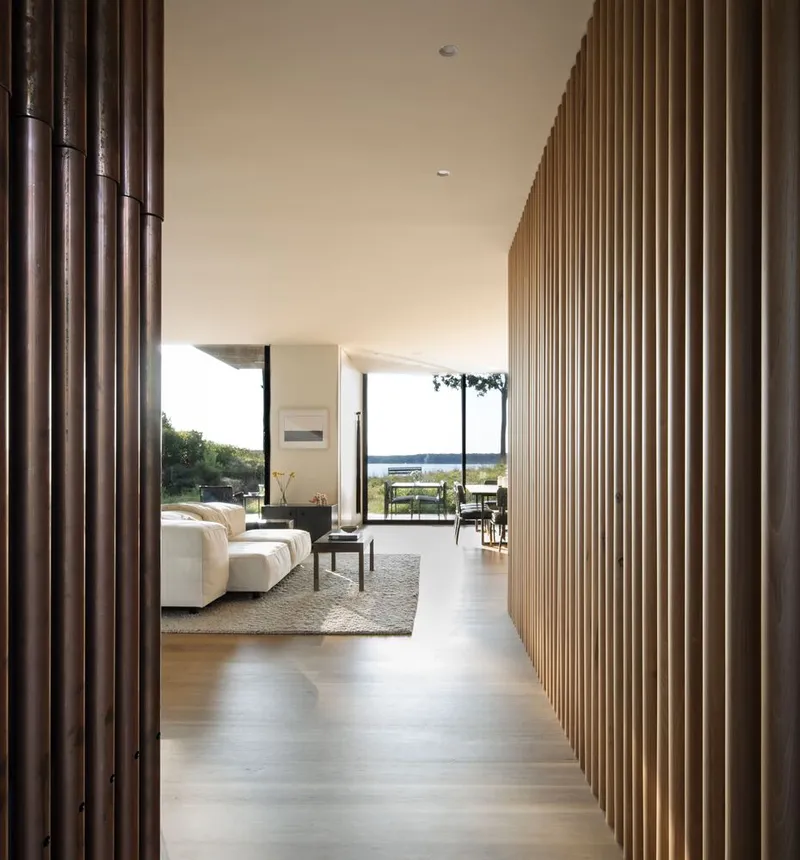
The spacing, diameter, and rotation of the flattened copper elements are carefully manipulated to control permeability. This innovative facade system filters daylight, promotes cross-ventilation, and creates a constantly shifting play of shadow and texture.
Over time, the copper will naturally patinate into warm reds, browns, and verdant greens. As the material ages, it will visually merge with the surrounding coastal landscape, softening the architectural presence while reinforcing the home’s connection to nature. Even more significantly, trace copper that leaches into the soil contributes nutrients that support the lush vegetation surrounding the house, enhancing its natural screening qualities.
Compact Interior Planning Inspired by Maritime Living
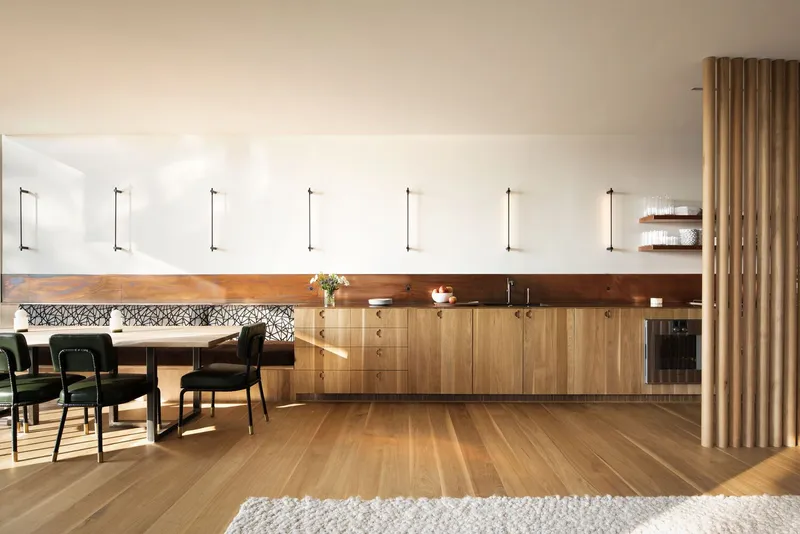
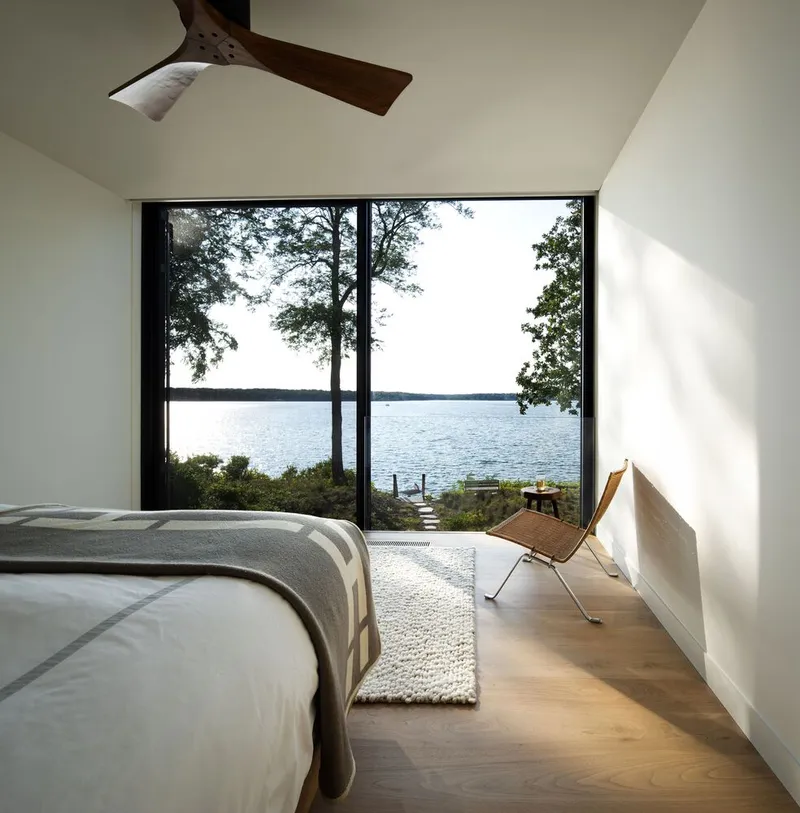
Inside, the house embraces efficient spatial sequencing, echoing the compact logic of boat design. Rooms are arranged in a linear progression that maximizes usable area while maintaining openness and flow.
Rear bedrooms, which would otherwise face neighboring properties, are paired with individual private courtyards. These intimate outdoor rooms:
- Introduce sky views and tree canopy perspectives
- Reflect sunlight into interior spaces
- Encourage natural ventilation through convective airflow
- Extend living areas outward with spa-like amenities
Outdoor showers and lounge seating transform these courtyards into personal retreats, reinforcing the home’s identity as a luxury coastal residence rooted in experiential living.
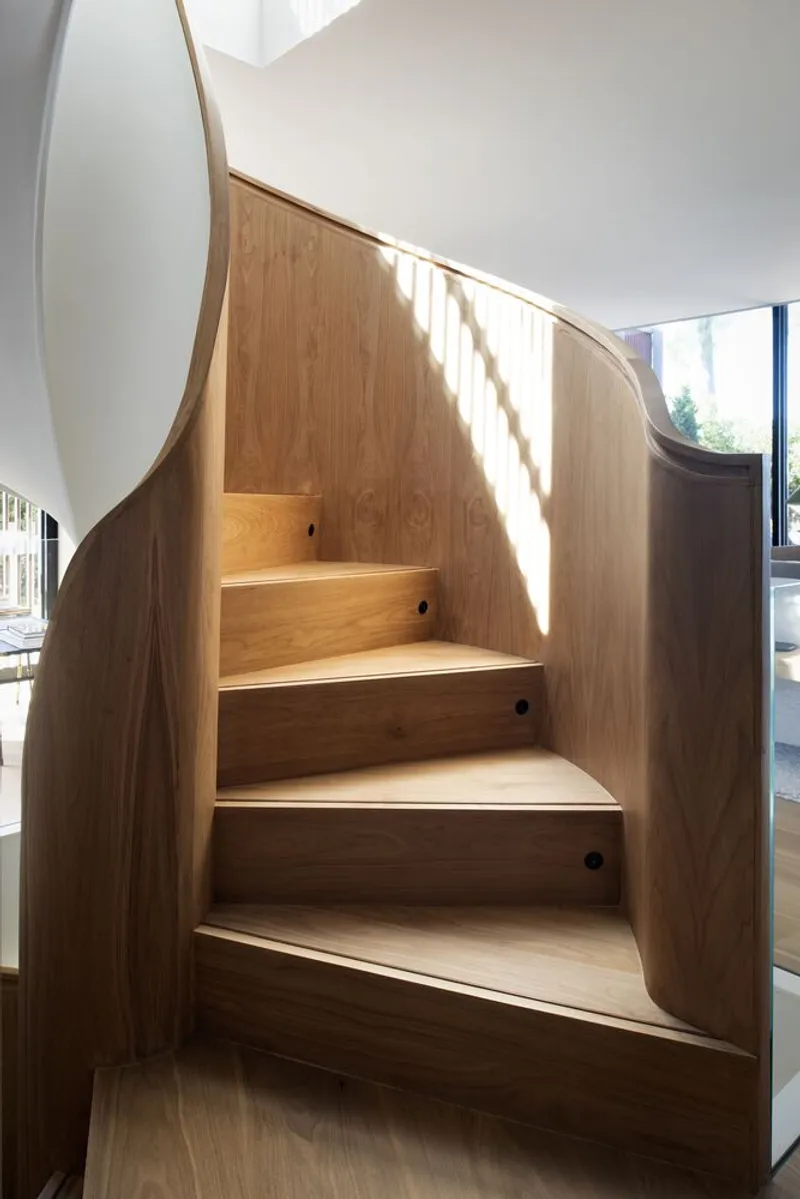
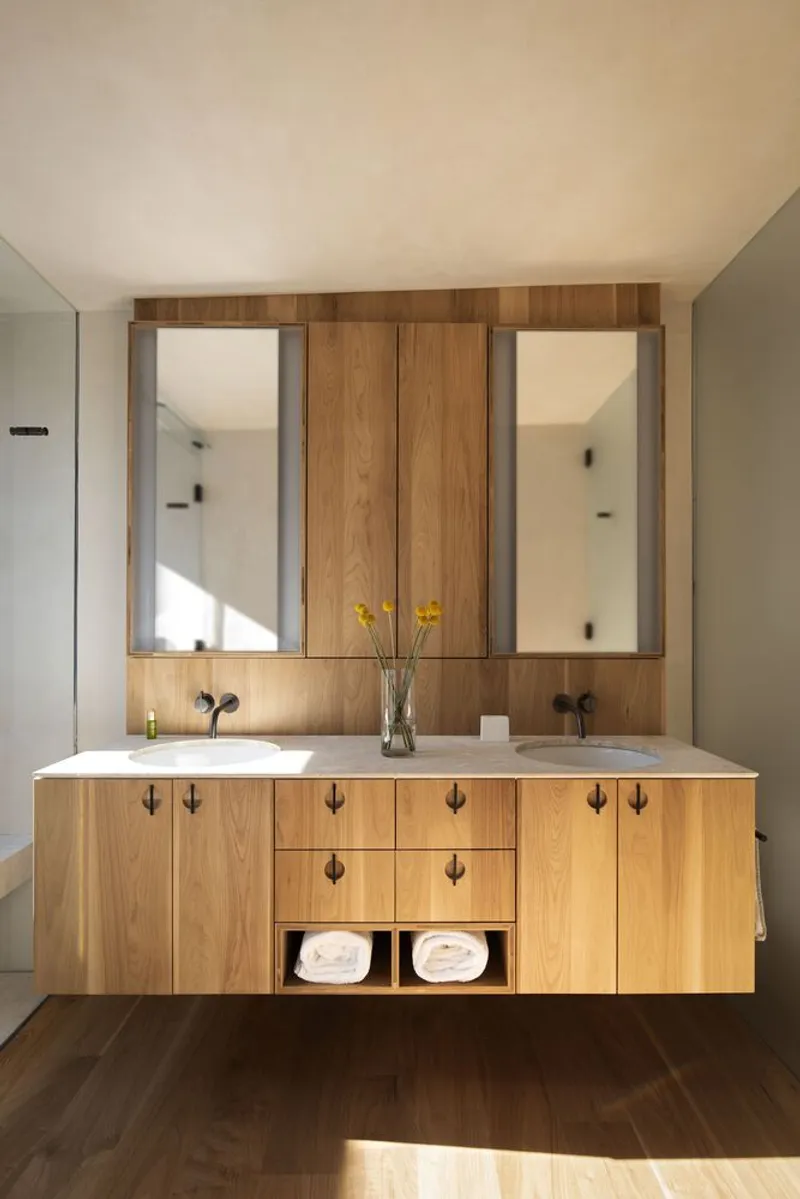
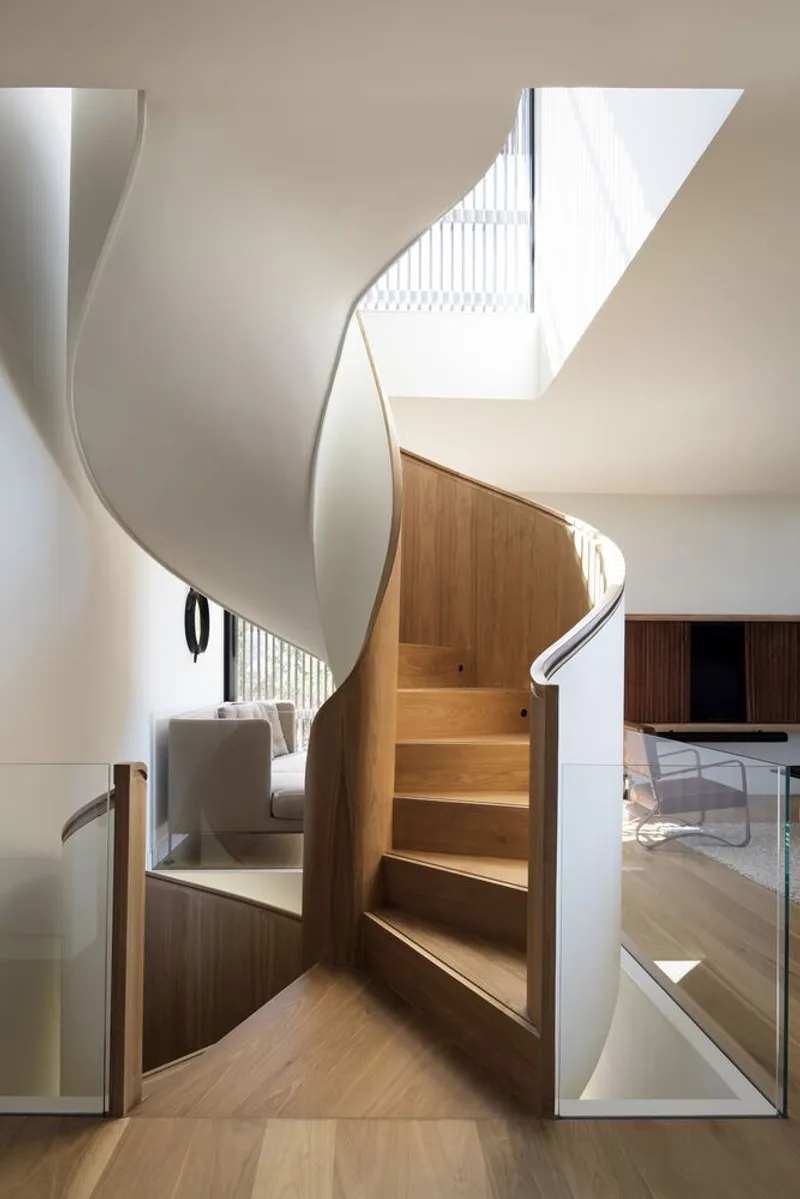
At the heart of the house, a sculptural spiral staircase connects all three stories. Beyond circulation, this vertical element functions as a daylight conduit. Natural light cascades downward through the core, illuminating living spaces, corridors, and service areas without sacrificing privacy. This strategy enhances the sense of openness while maintaining controlled exterior views.
Sustainable Coastal Design and Material Intelligence
The Three Mile Harbor House exemplifies climate-responsive architecture through passive strategies and material performance. The copper facade moderates sunlight and airflow. Courtyards enhance cross-ventilation. Strategic orientation focuses glazing toward harbor views while limiting exposure to adjacent structures.
By transforming regulatory limitations into generative design drivers, Bates Masi + Architects demonstrate how sustainable residential design can emerge from constraint. The project leverages:
- Passive daylighting strategies
- Natural ventilation systems
- Durable, weather-responsive materials
- Context-sensitive massing
Rather than imposing itself on the shoreline, the home evolves from its environmental and maritime context, resulting in architecture that feels both innovative and inevitable.
A Contextual Modern Waterfront Home
Three Mile Harbor House is more than a contemporary coastal residence: it is a carefully calibrated response to zoning law, narrow lot conditions, environmental exposure, and client identity. Through copper-clad privacy walls, telescoping facade systems, and compact yet luminous interiors, the house reinterprets modern waterfront architecture in East Hampton.
By embracing maritime references and environmental performance, the design achieves a balance between privacy and openness, density and spaciousness, protection and permeability. The result is a home that resonates deeply with its owner and landscape, an architectural expression shaped as much by regulation as by imagination.
All photographs are works of
Bates Masi + Architects




Popular Articles
Popular articles from the community


AL-JANNAH: Sustainable Architecture and Permaculture for Afghan Widows
AL-JANNAH uses sustainable architecture and permaculture to create resilient oasis of housing, learning, work and renewal for Afghan widows.

The Earth Pod: 3D Printed Homes for Resilient Refugee Communities
The Earth Pod reimagines refugee housing through 3D printed homes made from clay, combining resilience, self-sufficiency, and rapid shelter.

Co-Life: Senior Housing Design That Reconnects Older Adults With the City
Co-Life reimagines senior housing design through healing gardens, shared streets, workshops, and a sustainable community across generations.
EW PARK: Sustainable Architecture Reimagines the Future of Urban Parking
EW PARK reimagines city parking as a modular wooden tower combining automation, solar energy, electric mobility, and adaptable urban design.


Similar Reads
You might also enjoy these articles

FAMM Arquitectura Organizes Ten Villas Around Courtyards and Jungle in Nosara, Costa Rica
El Molino pairs two elongated volumes with deep overhangs and timber louvers to build a compact coastal community five minutes from the beach.
Oscar Niemeyer's Ibirapuera Park Pavilions Define São Paulo's Cultural Identity in Concrete and Curve
A constellation of modernist volumes set within São Paulo's most important urban park, conceived for the city's 400th anniversary in 1954.

How Henri Picq's 1889 Paris Pavilion Traveled 11,000 Kilometers to Become Santiago's Artequín Museum
A prefabricated iron and glass pavilion built for the Paris Universal Exposition found a second life as a children's art museum in Chile.
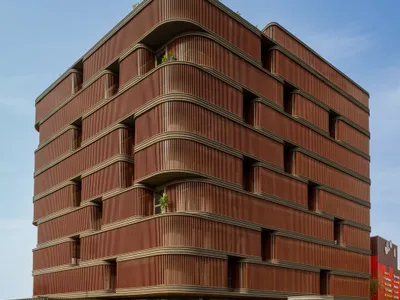
Sanjay Puri Architects Wraps a Jaipur Office Tower in Capsule-Shaped Green Buffers
A nine-level climate-responsive workplace near Jaipur Airport uses stacked planter terraces and aluminium screens to fight 40°C heat.


Explore Architecture Competitions
Discover active competitions in this discipline



Challenge to reimagine the Iron Throne


Photograph architecture without architects


Illustrate the lost glory of Angkor Wat - Render Challenge


Design challenge to reuse E-waste
Comments (0)
Please login or sign up to add comments
No comments yet. Be the first to comment!