
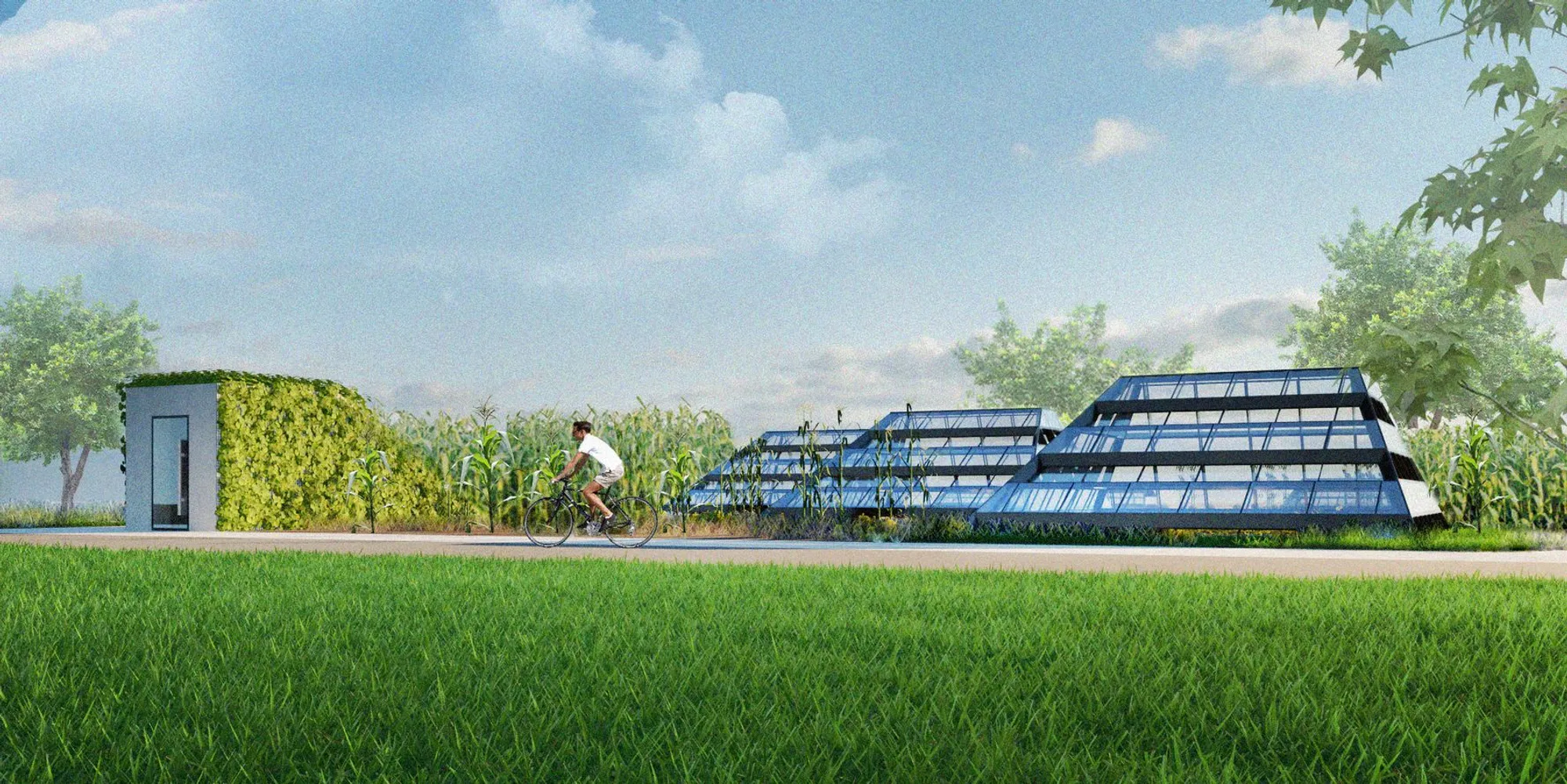
Three Sisters: An Architectural Revolution in Sustainable Farm-to-Table Dining
Blending Architecture with Agriculture, Three Sisters Redefines Urban Sustainability and Community Engagement.


In an era where sustainable design and local food production are increasingly critical, the "Three Sisters" project by Mateusz Kuczyński and Dawid Andrzejczak offers a visionary blueprint for merging architecture, agriculture, and community. Designed as the winning entry in the Farm-EAT competition, this project is more than just a building—it is a self-sustaining ecosystem that fosters local food production while engaging the community in the entire journey from seed to table. Through careful design choices and innovative agricultural practices, "Three Sisters" stands as a model of how architecture can serve as a platform for environmental education and community empowerment.
Conceptual Foundation: Blending Tradition with Modernity
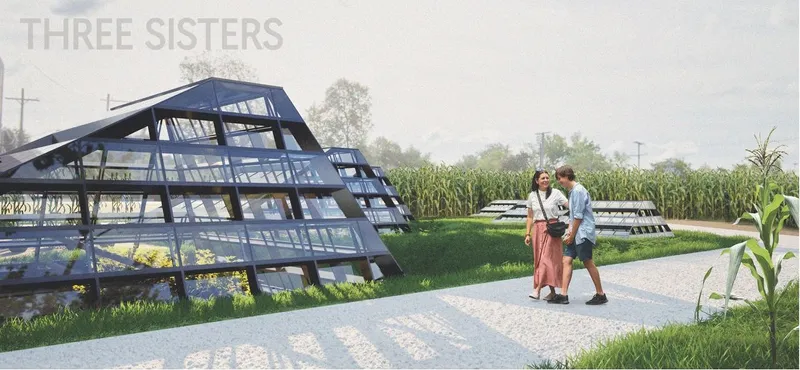
Named after the Native American "Three Sisters" agricultural method—where corn, beans, and squash grow symbiotically—this project similarly combines diverse elements to form a balanced and resilient ecosystem. The "Three Sisters" greenhouse complex uses modular design principles that integrate nature, advanced agricultural techniques, and educational spaces, allowing urban visitors to experience and understand sustainable food production in an interactive and immersive setting.
Design Philosophy
The designers focused on creating a simple, repetitive structure that maximizes light, saves space, and allows for year-round crop growth. The architectural form incorporates modern farming techniques such as hydroponics and vertical growing systems, enabling high-density, resource-efficient plant cultivation. By replicating greenhouse modules, the design can be scaled up or down based on the needs of the community or available space, making it versatile and adaptable for urban areas around the world.

Site Layout and Orientation: Designed for Optimal Growth
The project is located in Chelyabinsk, Russia, where sunlight and climate conditions vary significantly throughout the year. The greenhouses are positioned with careful orientation to maximize sunlight exposure, essential for supporting plant growth in all seasons. A key design decision was to place access points on the north side of the site, ensuring that the greenhouse faces southward to capture the most sunlight—a vital consideration for optimizing energy efficiency and thermal control.
Pathways and Visitor Experience
The landscaping features well-defined pathways that lead visitors through different zones of the site, guiding them from the planting and production areas to the dining space. The circular flow encourages exploration, creating an educational journey that highlights each stage of food production. By moving from greenhouse to table, visitors gain a tangible understanding of the growth process, reinforcing a connection to their food sources.
Architecture Meets Agriculture: Innovative Farming Techniques
A cornerstone of the "Three Sisters" project is the integration of advanced, sustainable farming systems within the architectural framework. Each greenhouse module houses a variety of farming methods suited to different crops, including:
Hydroponics: This soil-less cultivation technique conserves water and nutrients, delivering these directly to the roots for optimal growth. Hydroponics is ideal for leafy greens and herbs, which can be harvested quickly and require minimal space.
Aeroponics: Another soil-less method, aeroponics suspends plant roots in the air, delivering nutrients through a fine mist. This technique allows for dense planting and high yields, making it effective for urban farming.
Vertical Farming: By stacking plants vertically, the structure maximizes limited space, making the greenhouses highly productive without requiring additional land. This arrangement allows for a large number of plants in a relatively small footprint.
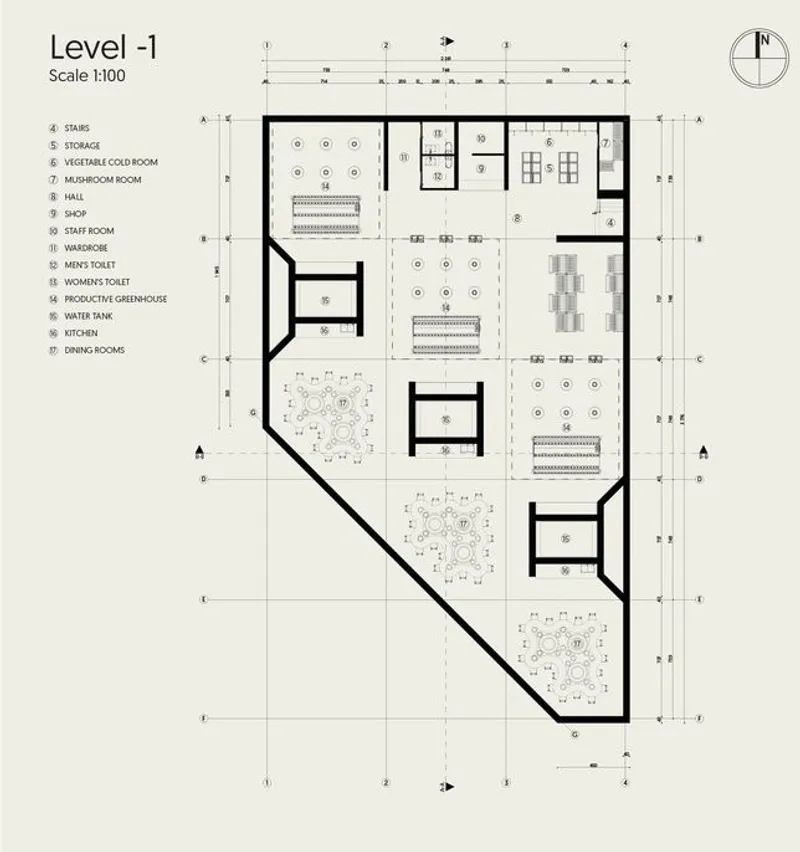
These systems are housed within custom-designed modules that support each type of plant's unique requirements, from temperature and humidity control to spacing and nutrient delivery. This approach enables the project to cultivate a diverse array of crops, from leafy greens to mushrooms, within a compact and efficient setup.
Sustainable Environmental Design: Harnessing Sunlight and Thermal Mass
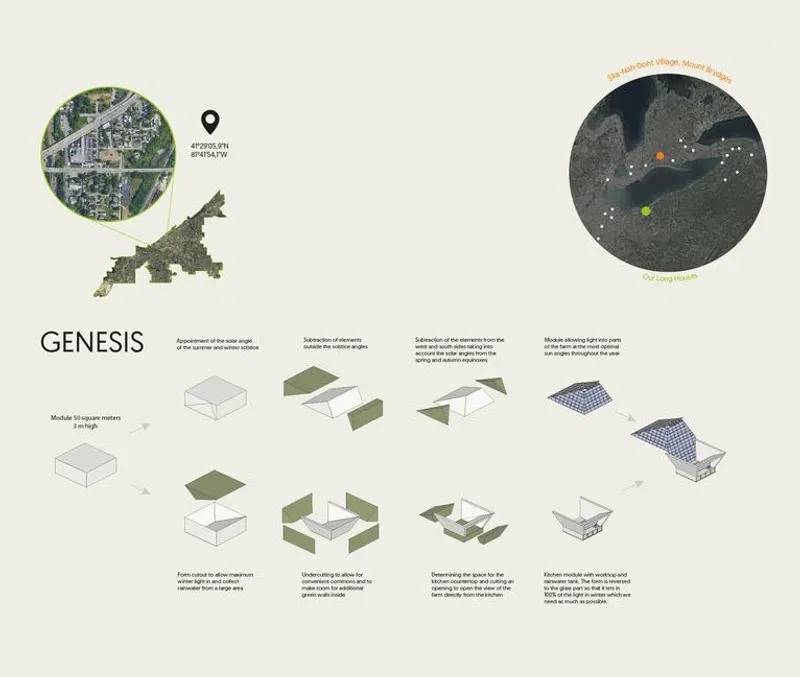
"Three Sisters" employs innovative design features to regulate the greenhouse environment naturally, minimizing energy consumption. A sun angle analysis was conducted to optimize the greenhouse's glazing angles, ensuring ideal light exposure across different seasons:
Summer Angle (25°): During the summer, the glazing and gabion wall structures create partial shading, preventing the interior from overheating.
Winter Angle (72°): In winter, sunlight fully enters the greenhouse, heating gabion walls that retain warmth and distribute it throughout the structure. This passive solar heating helps maintain a stable temperature, reducing the need for artificial heating.
This careful orchestration of natural light and heat retention not only creates a suitable environment for plant growth but also minimizes the building's ecological footprint, demonstrating how architecture can leverage natural resources to reduce energy dependency.

Spatial Organization: A Seamless Integration of Production and Dining
The facility is organized into specific functional zones that serve distinct purposes, making it both efficient and engaging. These zones include:
Production Area: Here, the main greenhouse spaces are dedicated to various types of plant cultivation. With specialized systems for hydroponics and aeroponics, this area supports a wide range of crops, facilitating a steady supply of fresh ingredients.
Educational Zone: Visitors are invited to engage with the farming processes, learning about sustainable cultivation practices and their environmental benefits. This educational approach not only informs but empowers visitors to consider the impact of their food choices.
Dining Space: The journey concludes in a dining area where visitors can enjoy a farm-to-table meal made from ingredients grown on-site. This experiential dining reinforces the value of locally sourced, sustainably grown food.

Community Engagement and Educational Impact
Beyond providing fresh food, "Three Sisters" serves as a learning platform where visitors can participate in the cultivation, harvesting, and preparation of their meals. This hands-on involvement is designed to foster a deeper appreciation for sustainable practices, encouraging visitors to adopt similar habits in their own lives. The interactive nature of the project transforms it into a living classroom, blending architecture, agriculture, and culinary arts into a holistic educational experience.
By involving the community in the production process, "Three Sisters" strengthens the local food system, reduces food miles, and minimizes waste. The project exemplifies how urban agriculture can go beyond food production to create spaces that educate and inspire, fostering a culture of sustainability.

A Blueprint for Future Urban Farming
"Three Sisters" is a testament to the potential of architectural design to drive sustainable change. By combining modular architecture, advanced agricultural techniques, and educational outreach, it redefines what a community-focused food system can be. As cities around the world face challenges related to food security and environmental sustainability, the model presented by "Three Sisters" offers a scalable, adaptable solution that can be replicated in various urban contexts.
This project serves as both a prototype and a symbol of a new era in sustainable architecture, where buildings do more than shelter—they cultivate, educate, and feed. The integration of food production into the urban fabric has implications that extend far beyond the plate, suggesting a future where architecture itself contributes to a healthier, more resilient society.



Popular Articles
Popular articles from the community


Hill & Cross Opera: Sculptural Opera House Architecture Shaped by Tallinn’s Landscape and Identity
Hill & Cross Opera reimagines opera house architecture in Tallinn through its sculptural hill, civic plaza, glass wave and a luminous cross.

The Musturak Paradise: Senior Living Architecture for a Connected Future in Temara, Morocco
The Musturak Paradise reimagines senior living architecture in Temara via private homes, social spaces, culture, community, and shared care.
AL-JANNAH: Sustainable Architecture and Permaculture for Afghan Widows
AL-JANNAH uses sustainable architecture and permaculture to create resilient oasis of housing, learning, work and renewal for Afghan widows.

Riyadh For All: Intergenerational Urban Design for Active Aging in Rabat
Riyadh For All reimagines urban design in Rabat with intergenerational co-living, adaptive courtyards, and Moroccan cultural exchange today.


Similar Reads
You might also enjoy these articles

Day and Night Park: A Time-Based Urban Newsstand in Beijing
A temporary urban newsstand in Beijing blending travel, light, and reading through poetic colors, compact form, and community-focused design.

Modernist Patio Renovation in El Masnou, Barcelona by Oliver Segura Arquitectura + Cebrià Arquitectura
Modernist patio renovation blending tradition and innovation with a movable pool, leveled floors, and Catalan materials in El Masnou.

Alto Residencial Coop: Cooperative Housing Development in Santiago de Compostela by Carbajo Barrios Arquitectos
A linear cooperative housing complex blending white volumes and perforated metal façades, enhancing community living, natural light, privacy, and urban integration.
Vil Genis School by BPA ARCHITECTURE – Massy, France
Vil Genis School in Massy, France, features sustainable design, south-facing classrooms, community integration, accessible spaces, and modern educational architecture.

Explore Sustainable Design Competitions
Discover active competitions in this discipline



Challenge to design locus for the upliftment of human rights


Design challenge to reuse E-waste
Comments (0)
Please login or sign up to add comments
No comments yet. Be the first to comment!