

Tower of Wisdom: A Library That Ascends Through Modes of Knowledge
Thomas Gössler's shortlisted Libgen 2019 entry stacks virtual reality, book archives, and creative labs inside a sharply inclined tower.


A library that tilts toward the sky like a shard driven into the earth: the Tower of Wisdom refuses to treat knowledge storage as a neutral, horizontal act. Instead, it turns the program on its side, stacking virtual reality rooms, digitized archives, physical book collections, and collaborative labs along a dramatic incline, so that moving upward through the building mirrors a shift from communal engagement to solitary contemplation. The form itself becomes argument, proposing that the contemporary library is not a warehouse but a vertical narrative.
Designed by Thomas Gössler, the Tower of Wisdom was shortlisted in Libgen 2019, a competition asking designers to rethink the library typology for an era of accelerating digital access. Gössler's response is unapologetically sculptural: a triangular volume wrapped in rhythmic horizontal louvers that shift optically as light moves across them throughout the day. The project sits at the intersection of spectacle and rigor, pairing its striking silhouette with a carefully sequenced interior program that maps different modes of learning onto distinct floors.
A Shard of Louvers Against the Dusk Sky
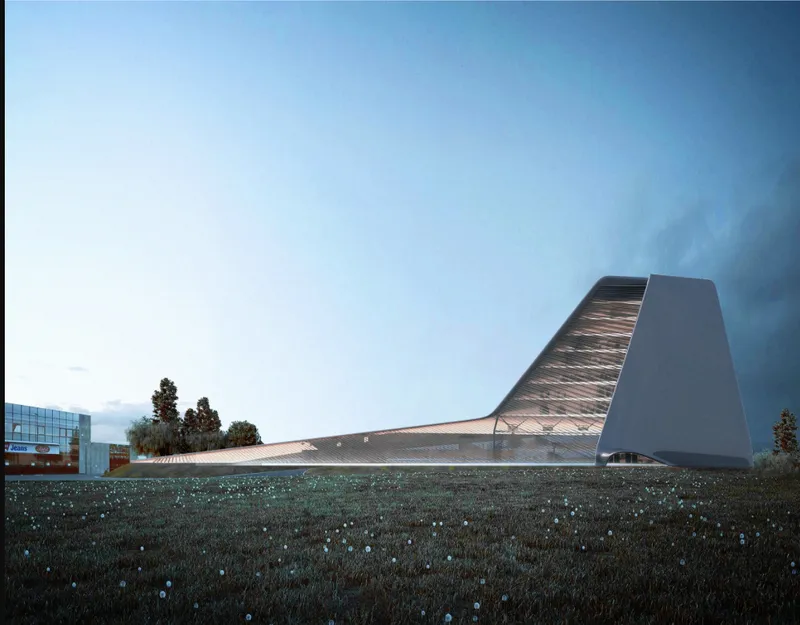
Seen from the outside at dusk, the tower reads as a single decisive gesture: an angled mass of tightly spaced horizontal metal louvers that rises from a sloped base. The facade is kinetic by design, its reflective vertical and horizontal elements catching and redirecting natural light so the building never looks quite the same twice. Where a conventional library might present a solid, institutional front, this one signals transparency and movement. The louvers filter daylight into the interior while giving the exterior a textured, almost textile quality that softens the building's aggressive lean.
Triangular Volume Tested in Physical Models

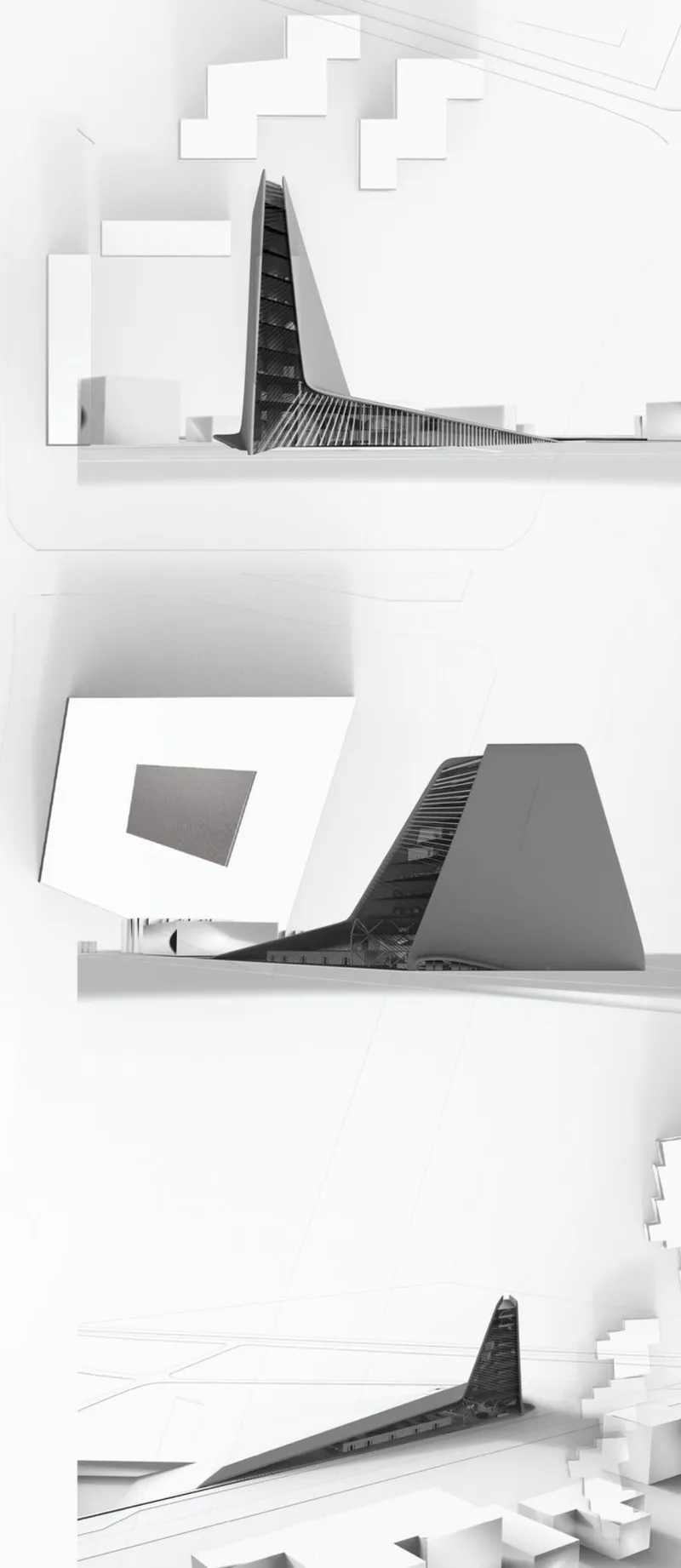
The physical site model reveals how the tower's triangular footprint negotiates its urban context. Set among white massing blocks representing neighboring buildings, the slatted volume reads as both alien and deliberate, its sharp geometry carving a distinct presence without overwhelming its surroundings. Multiple perspectives of the model confirm that the louvered facade wraps the form continuously, maintaining consistency at every angle. There is no back of the building; every elevation is treated with equal rigor, reinforcing Gössler's intent to make the structure a landmark legible from all directions.
Immersive Chambers for Digital Knowledge
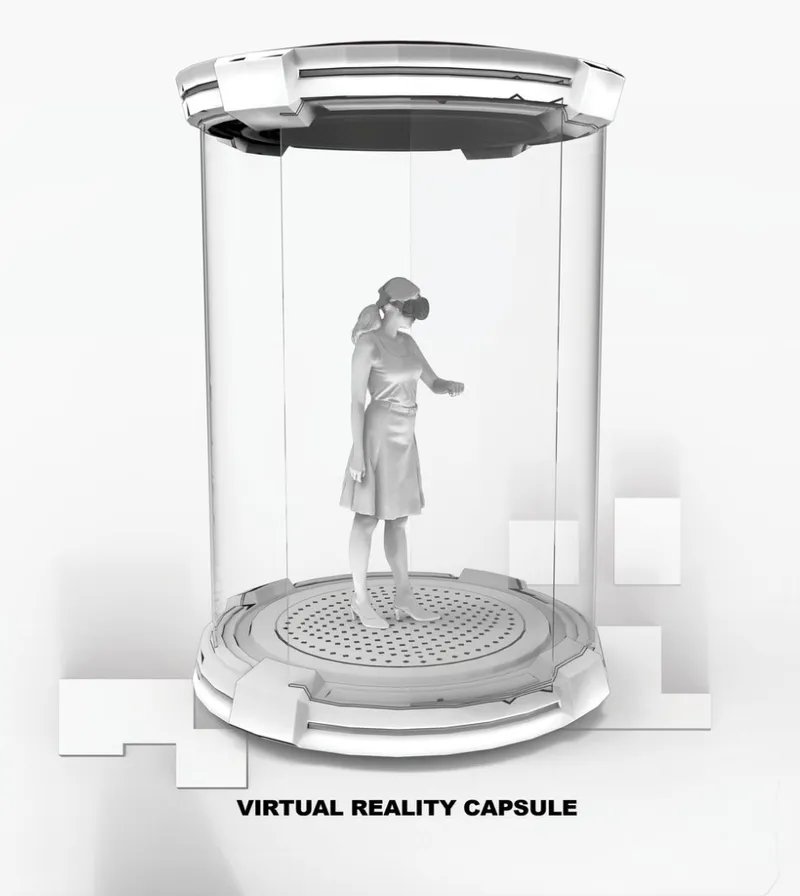
Inside the tower, the program unfolds as a sequence of purpose-driven environments. The cylindrical glass chamber shown here, with its perforated metal floor platform and overhead mounting ring, appears designed to serve as the virtual reality space where visitors can engage with information in three-dimensional, experiential formats. It is a space stripped to its essentials: a transparent enclosure that isolates the user sensorially while keeping them visually connected to the broader building. The detail of the perforated floor suggests integrated services beneath, allowing for flexible technical setups without cluttering the room.
Where the Coffee Shop Meets the Open Library
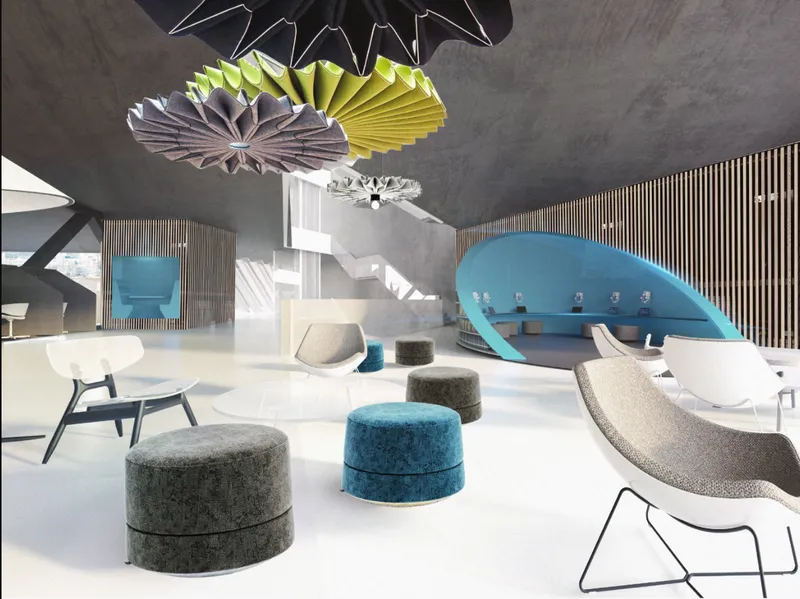
The interior lounge captures the social end of the tower's programmatic spectrum. White flooring, cylindrical ottomans, a turquoise seating niche, and folded paper ceiling fixtures create an atmosphere closer to a well-designed café than a reading room. This is the zone Gössler designates for spontaneous conversation and community engagement, blending the coffee shop with open library space. The ceiling fixtures deserve attention: their origami-like geometry echoes the angular logic of the building's exterior, creating a material dialogue between inside and out. By placing this convivial program at the base, the design anchors the tower in public life before ascending toward increasingly introspective spaces, from the 200-seat auditorium and meeting rooms to the quiet computer areas and the climatically controlled book archive higher up.
Why This Project Matters
The Tower of Wisdom makes a convincing case that the library of the digital age needs architectural ambition, not just technological upgrades. By organizing virtual reality, digital archives, physical books, creative laboratories, and social spaces along a single ascending trajectory, Gössler gives spatial form to an argument about how knowledge is produced, stored, and shared in the twenty-first century. The building is didactic without being literal: you learn its logic by moving through it, not by reading a plaque.
What elevates the proposal beyond formal provocation is the care taken with each interior condition. The VR chamber is technically precise, the lounge is genuinely inviting, and the louver system does real environmental work while generating the building's identity. Gössler demonstrates that a bold silhouette and a thoughtful program are not competing goals. For a competition asking what the library should become, this entry answers with a structure that refuses to separate the spectacle of architecture from the quiet discipline of organizing knowledge.
View the Full Project
About the Designers
Designer: Thomas Gössler
Enter a Design Competition on uni.xyz
uni.xyz runs architecture and design competitions year-round that reward proposals with spatial conviction and real site intelligence.
Project credits: Tower of Wisdom by Thomas Gössler Libgen 2019 (uni.xyz).


Popular Articles
Popular articles from the community

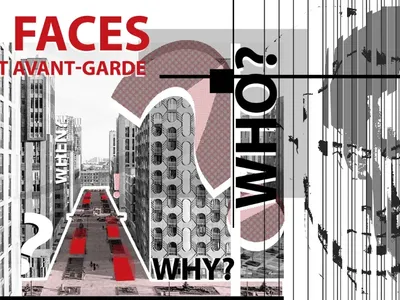
Faces of the Soviet Avant-Garde: Turning Moscow's Street Names into an Open-Air Museum
A network of sculptural installations across a Moscow residential district transforms forgotten architect names into spatial encounters with cultural memor

Manzana Morphosis: Stretching Barcelona's Grid into a Living Landscape for 2050
A radical reworking of the Eixample manzana turns density into a tool for generous public space, vertical ecology, and environmental performance.
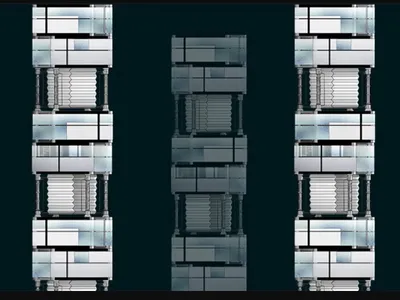
Tsunami Convergenics: Turning Catastrophic Ocean Forces into Underwater Housing Infrastructure
A speculative underwater settlement off the coast of Onagawa, Japan, treats tsunamis and typhoons as energy sources rather than threats.
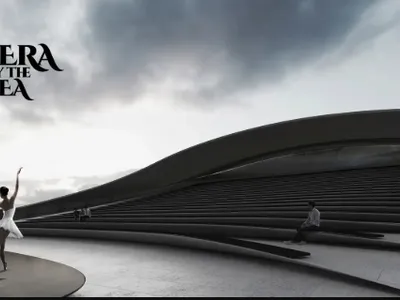
Opera by the Sea Estonia: Three Shells Dissolving Architecture into Tallinn's Coastline
A winning opera house proposal replaces monumental form with interconnected shells that blur the boundary between building, park and Baltic Sea.

Similar Reads
You might also enjoy these articles

Shakur's House: Exposed Brick as an Interior Organiser in a 168 m² Mashhad Residence
Brick moves indoors in this Mashhad residence, where masonry walls, glass partitions and teal planes sequence a compact home without closing it off.

Day and Night Park: A Time-Based Urban Newsstand in Beijing
A temporary urban newsstand in Beijing blending travel, light, and reading through poetic colors, compact form, and community-focused design.

Modernist Patio Renovation in El Masnou, Barcelona by Oliver Segura Arquitectura + Cebrià Arquitectura
Modernist patio renovation blending tradition and innovation with a movable pool, leveled floors, and Catalan materials in El Masnou.

Alto Residencial Coop: Cooperative Housing Development in Santiago de Compostela by Carbajo Barrios Arquitectos
A linear cooperative housing complex blending white volumes and perforated metal façades, enhancing community living, natural light, privacy, and urban integration.


Comments (0)
Please login or sign up to add comments
No comments yet. Be the first to comment!