
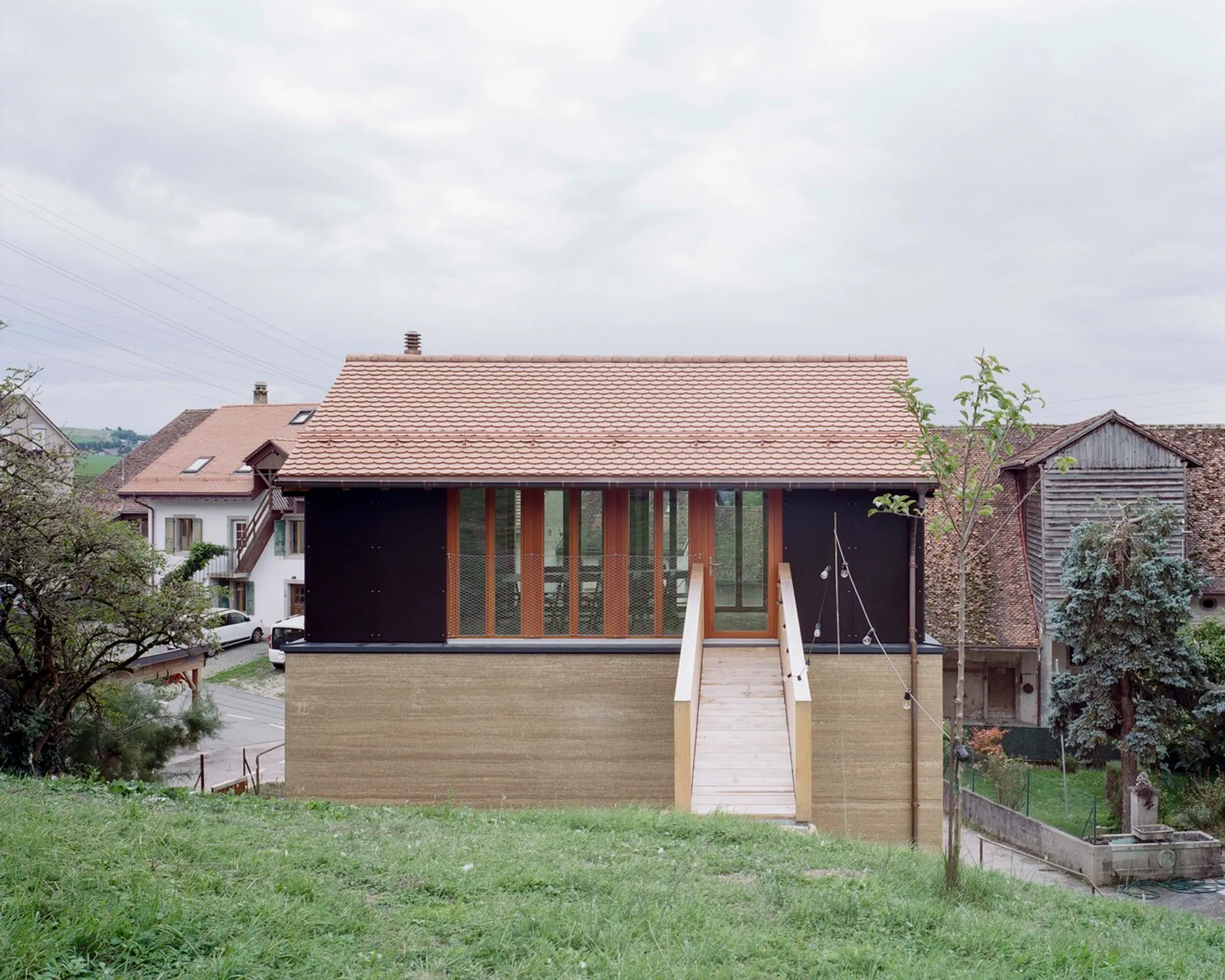
Transformation of a Pigsty in Chavornay by Madeleine architectes + Studio François Nantermod
A former pigsty in Chavornay transformed into a sustainable retreat and workspace, blending rural heritage, modern design, and natural materials.


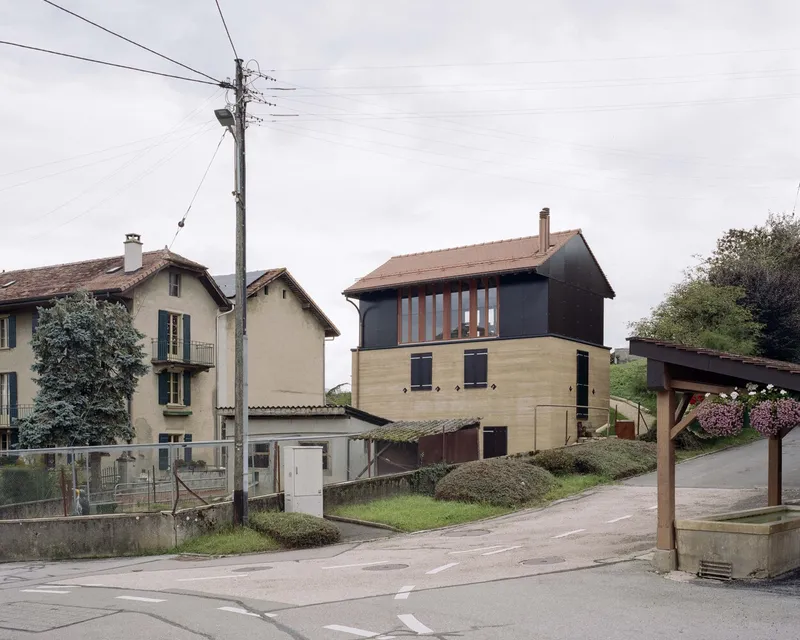
Once a modest pigsty nestled between a farm and a henhouse in the rural village of Chavornay, Switzerland, this agricultural building has been transformed into a refined residential and professional retreat. Designed by Madeleine architectes in collaboration with Studio François Nantermod, the project demonstrates the power of adaptive reuse in architecture, breathing new life into a forgotten structure while preserving its rural character.
From Pigsty to Contemporary Home
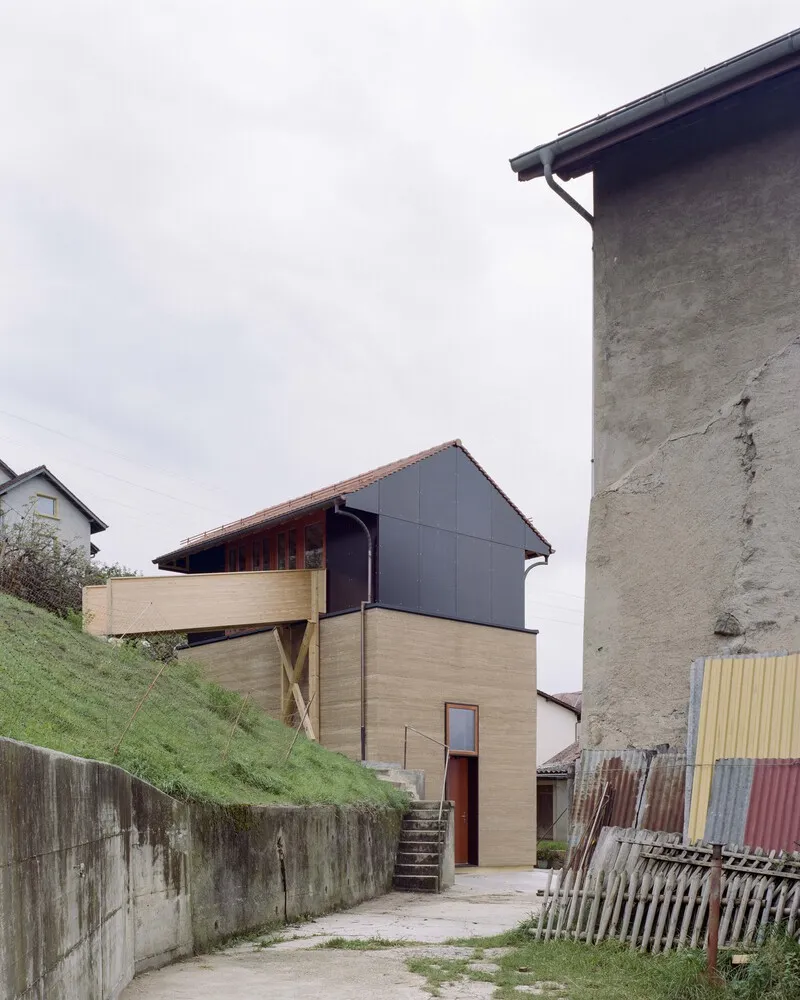
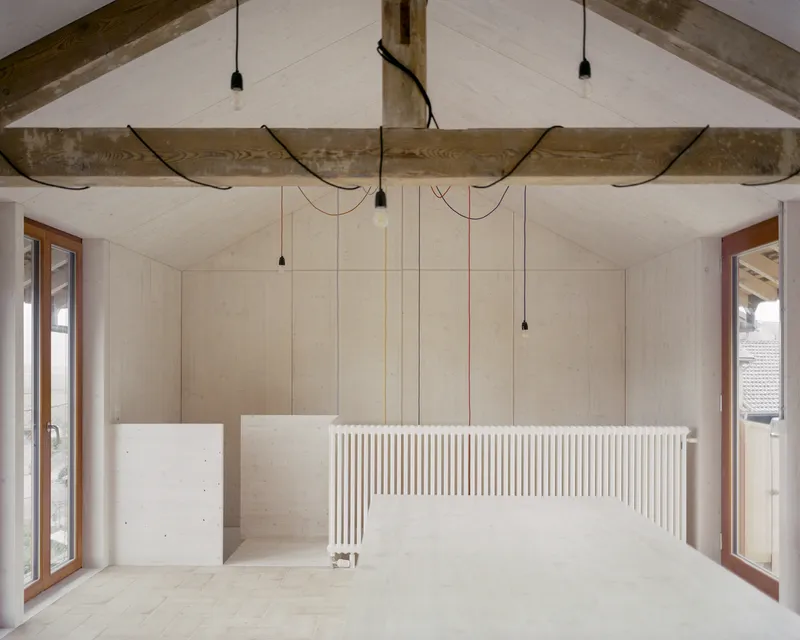
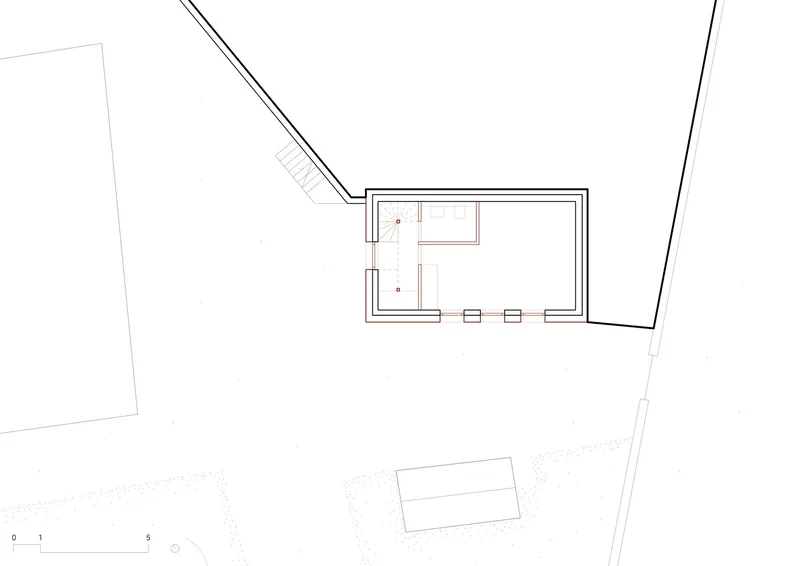
The project, spanning 150 m², reinvents the existing volume to serve the dual purpose of a private parental retreat and a professional workspace. The ground floor now accommodates a liberal profession, while the upper level is reimagined as a residential haven for the parents of a large family. This transformation maintains a strong dialogue with the surrounding context: to the east, the picturesque orchard offers a serene morning atmosphere, while to the west, the setting sun bathes the barn roofs in warm twilight hues, echoing the romantic landscapes of Caspar David Friedrich.
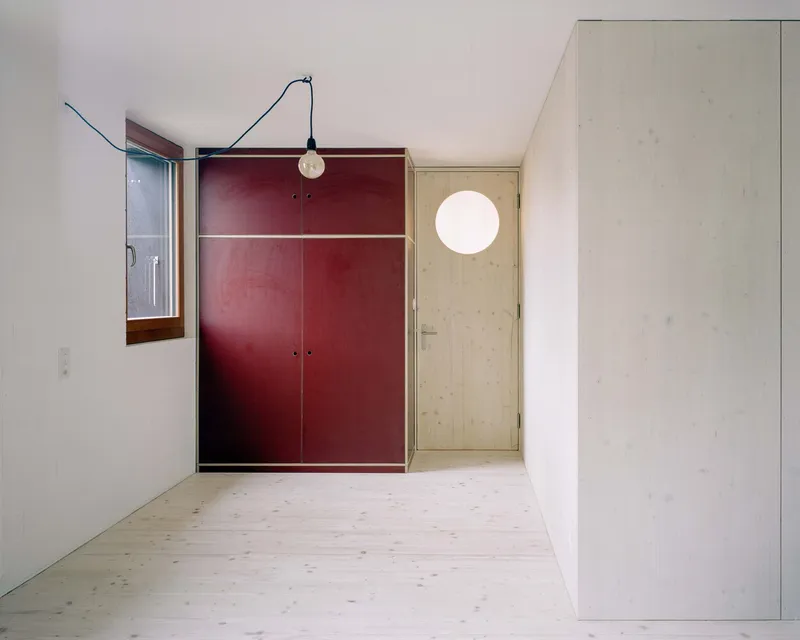
Spatial Circulation and Design
A pair of wooden helicoidal staircases act as vertical connectors, creating a sculptural circulation core that emphasizes verticality while separating professional and private functions. The entrance sequence follows a winding path through tall grasses, culminating in a wooden footbridge — a vernacular detail deeply rooted in Swiss rural architecture. This element completes the architectural promenade, blending practicality with a poetic sense of arrival.
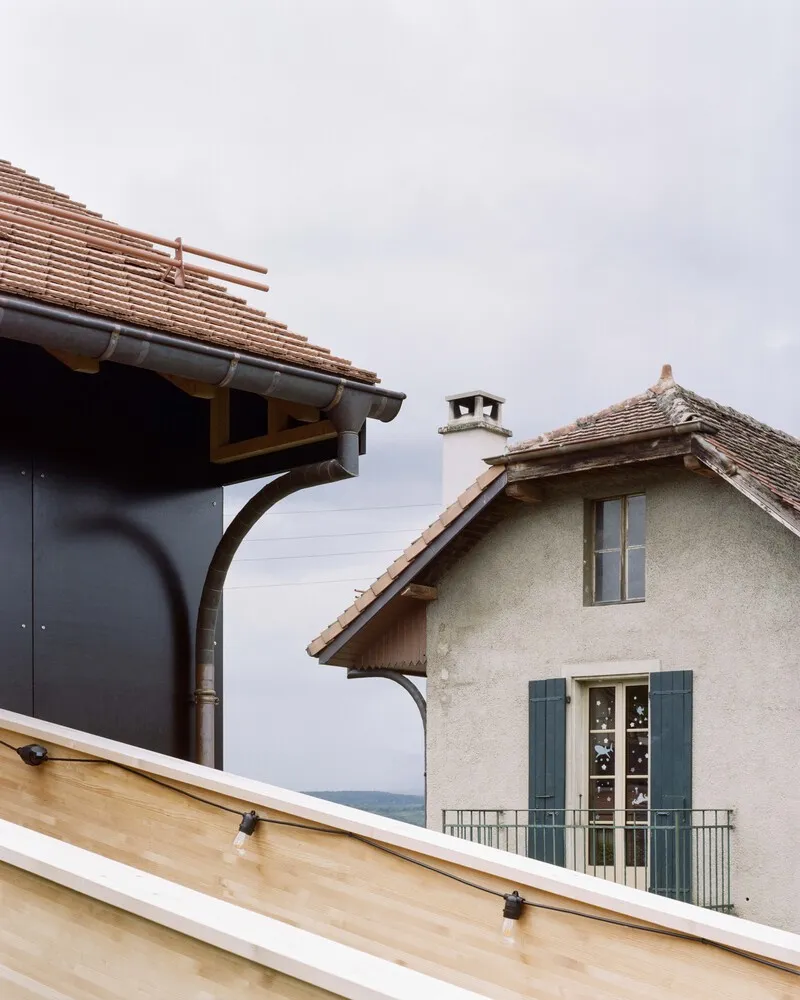
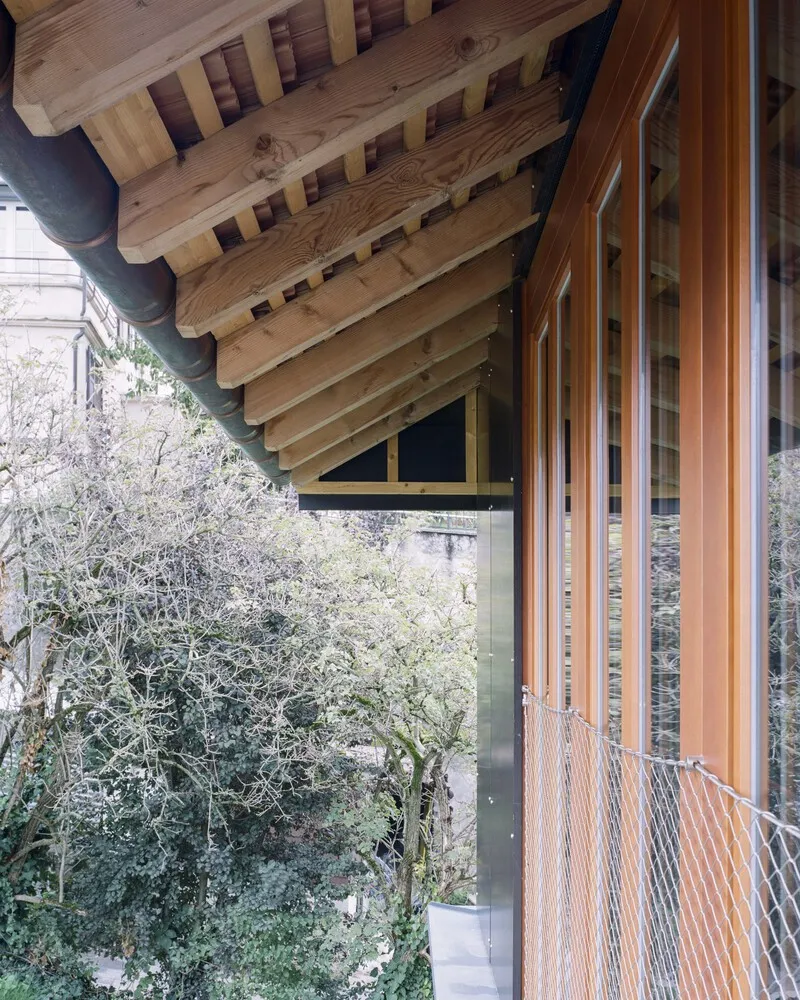
Materiality and Sustainability
The renovation embraces a sustainable material palette, combining mineral and vegetal elements for both insulation and aesthetics. An innovative mixture of lime and hemp forms a breathable insulating layer, applied directly onto the old facade. This “new skin” was crafted in a participatory workshop involving the architects, craftsmen, and clients, reinforcing the building’s authenticity and community-driven spirit. The resulting facade treatment feels raw, honest, and deeply connected to the site’s agrarian heritage.
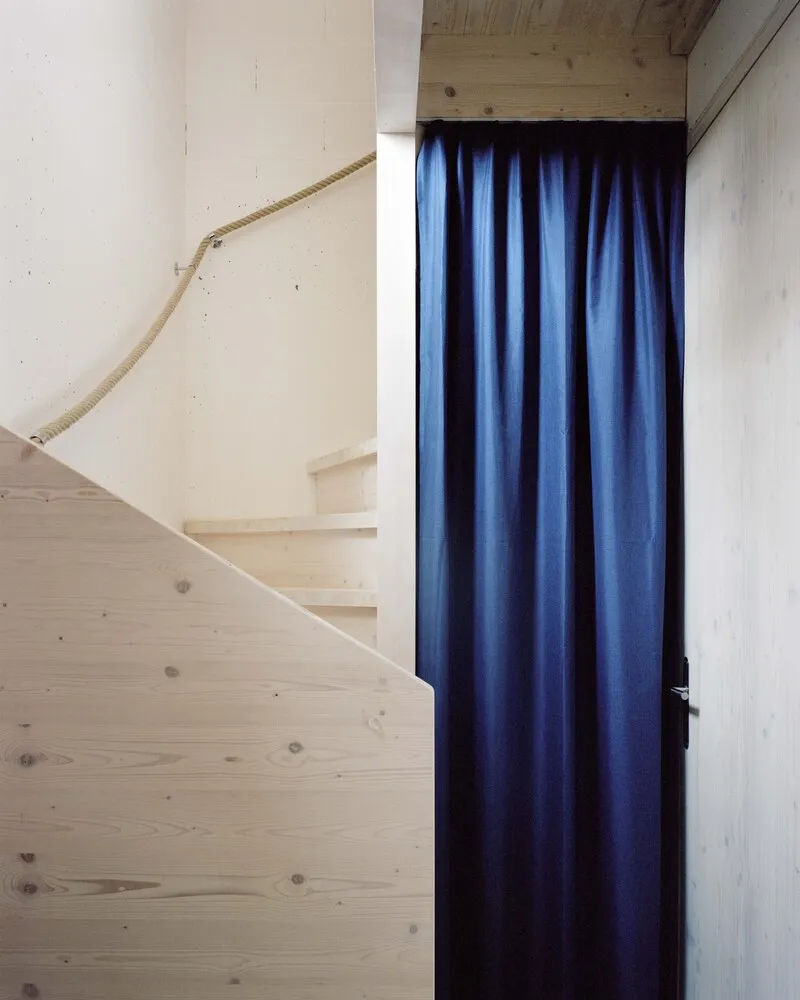
Architecture of Continuity
Rather than erasing the past, the project celebrates continuity. By retaining the rural essence of the original pigsty and enhancing it with modern spatial strategies, the transformation creates a meaningful balance between heritage and contemporary living. The architecture embodies values of reuse, sustainability, and contextual sensitivity, offering a model for future rural revitalization projects.




Popular Articles
Popular articles from the community


Lunar Spiral: Space Architecture Shaped by the Mathematics of the Universe
Lunar Spiral reimagines space architecture through Fibonacci geometry, lunar regolith, levitating habitats, and self-sustaining Moon living.

Hill & Cross Opera: Sculptural Opera House Architecture Shaped by Tallinn’s Landscape and Identity
Hill & Cross Opera reimagines opera house architecture in Tallinn through its sculptural hill, civic plaza, glass wave and a luminous cross.

Conexión: Biophilic Design Reimagines High-Rise Living in Hong Kong
Conexión reimagines high-rise living in Hong Kong through biophilic design, green facades, shared spaces, daylight, water and nature within.

Play: Fragments of Their World
Familiar architecture becomes modular playground design, creating safe spaces where displaced children can learn, connect, imagine and play.


Similar Reads
You might also enjoy these articles


Hodi-Mandai Geram
Project Function: Preservation and revitalization of the Intangible heritage and socio-spatial identity of the Hodi by Housing, Cultural Memory Center, Sacred Grove, landscape, local tourism economy


Olio Towers: A Mid-Rise for Performers That Fuses Housing, Rehearsal, and Stage
Located blocks from Houston's Theater District, this modular tower stacks living units around a central performance atrium.

Oasis: Modular Green Housing Carved into Dhaka's Urban Fabric
A shortlisted Plugin Housing entry reclaims unauthorized settlements in Dhaka with stepped concrete volumes, green roofs, and ventilation-driven design.

Black Hole: A Floating Megastructure for the Post-Physical Era
Emiliano Mazzarotto envisions a spherical, self-scaling arena where e-sports, digital hotels, and holographic stadiums replace traditional public space.


Explore Architecture Competitions
Discover active competitions in this discipline



Challenge to reimagine the Iron Throne


Photograph architecture without architects


Illustrate the lost glory of Angkor Wat - Render Challenge


Design challenge to reuse E-waste
Comments (0)
Please login or sign up to add comments
No comments yet. Be the first to comment!