
Typsa Clusters Three Circular Pavilions into a Library Oasis for Luanda's Technology Park
A trio of interlocking rotundas, laced with perforated screens and planted courtyards, carves out a civic refuge in Angola's capital.

Luanda is not a city that pauses. Its density, its traffic, its sprawl all push outward in every direction, and whatever open ground survives tends to be claimed fast. So planting a public library on a 70,000 m² science and technology park site, one that had previously been a patchwork of neglected colonial modernist buildings, slums, and structures of little merit, is already an assertion of civic ambition. But the building that Typsa, led by architects Marina González and Joaquín Beltran, has delivered goes further: it treats the library not as a box of books but as a landscape of circular rooms that breathe, shade themselves, and grow trees at their centers.
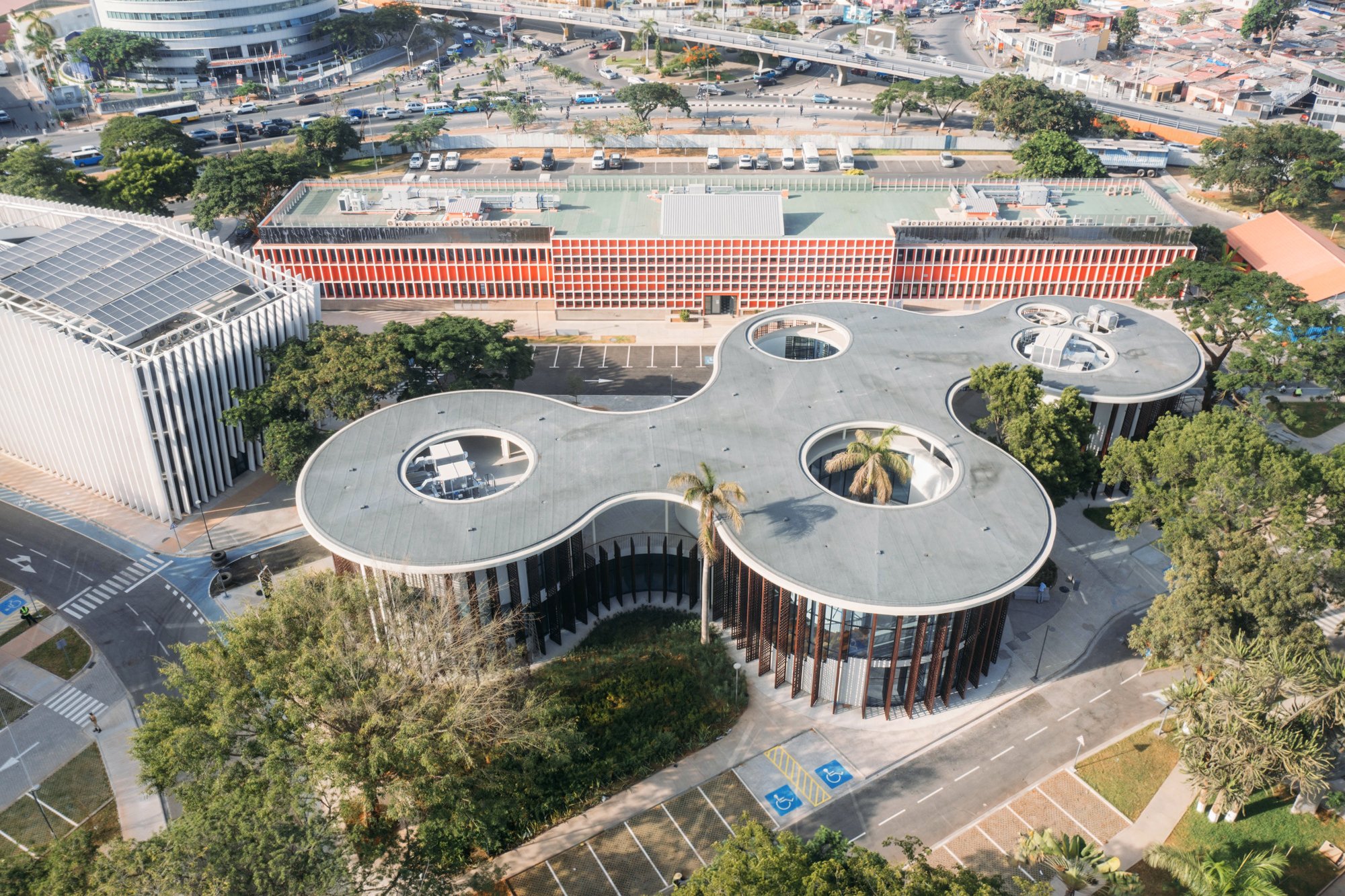
Completed in 2026 and totaling 1,918 m², the Luanda Library Technology Park is composed of three interlocking cylindrical volumes, each organized around an open courtyard oculus. The geometry is legible from above: concentric rings of structure radiate outward from planted cores, while curved passages stitch the volumes together into a continuous interior circuit. The result is a building that operates less like a conventional library floor plate and more like a sequence of sheltered clearings, each one calibrated to a different register of light, sound, and activity.
Circles as Organizing Logic
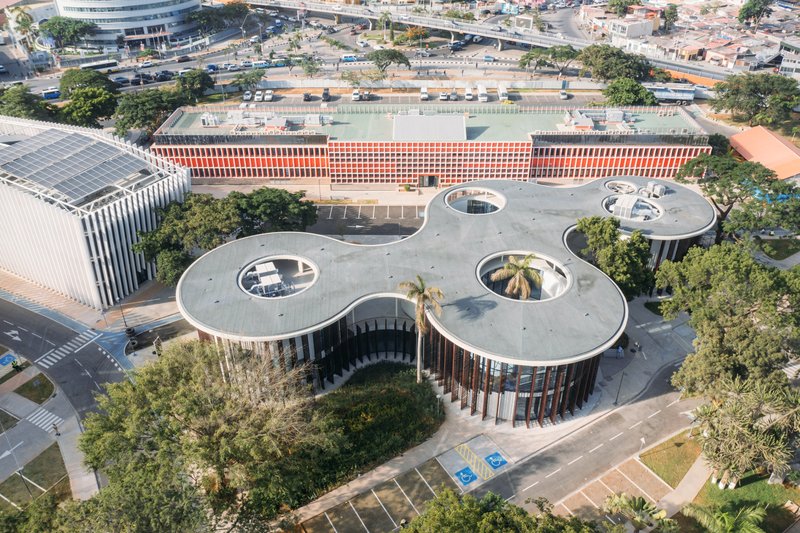

The aerial views make the parti unmistakable. Three circles overlap and interlock across a landscaped plaza, their roofs punctured by oculi that reveal courtyards below. Concentric paving rings extend outward from each void, grounding the geometry in the ground plane and reinforcing the centripetal pull of the plan. Radial columns fan out from the center of each volume, giving the structure a rhythmic, almost organic logic, like cross-sections through the trunks of enormous trees.
It is worth noting what this geometry achieves beyond visual spectacle. Each circular volume naturally defines a territory, a reading room here, group workspaces there, a café in another. The intersections between circles become transitional spaces, curved passages that link programs without corridors. The plan avoids dead ends and instead keeps you moving along gentle arcs, always returning to a courtyard view.
The Courtyard as Climate Machine
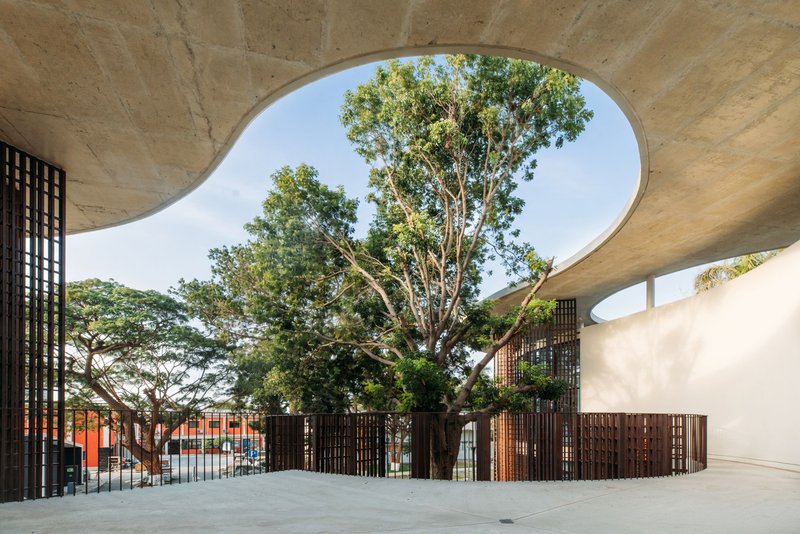
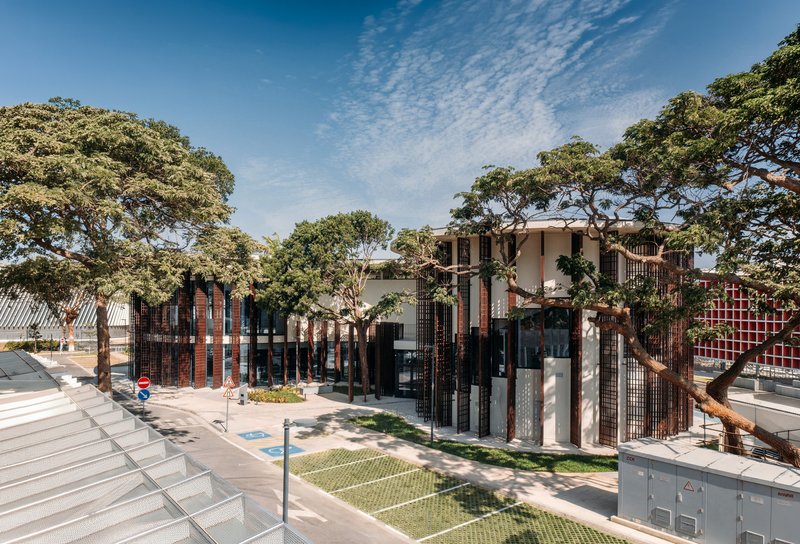
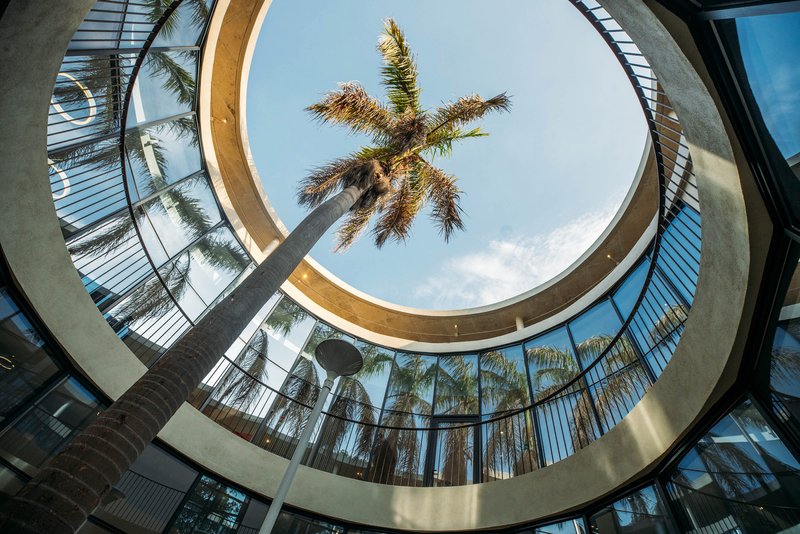
In a city that sits less than nine degrees south of the equator, shade is not a luxury. The central courtyards do heavy lifting here. Mature trees, including palms, are preserved and framed by the oculi, their canopies filtering light down into the interior volumes. The undulating concrete canopy that rings each courtyard creates deep overhangs, keeping direct sun off the glass while allowing reflected light to enter at low angles. Vertical metal screens woven between the trees add another filtration layer, casting patterned shadows across terraced planting beds.
The upward view through one circular skylight captures the strategy in a single frame: a timber ring beam defines the oculus edge, palm fronds reach across the opening, and sky floods in. It is a detail that could feel gratuitous, but in context it functions as a stack ventilation driver, pulling warm air upward and out while drawing cooler courtyard air into the reading spaces.
Screens, Brick, and the Texture of Shade
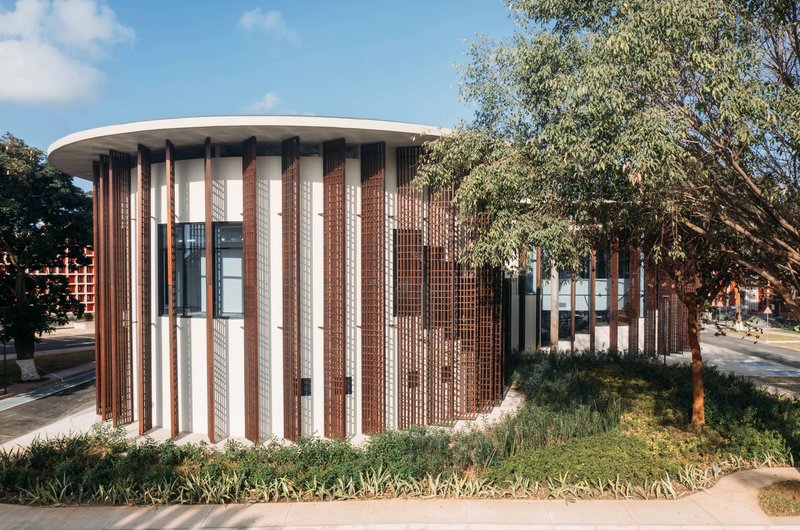
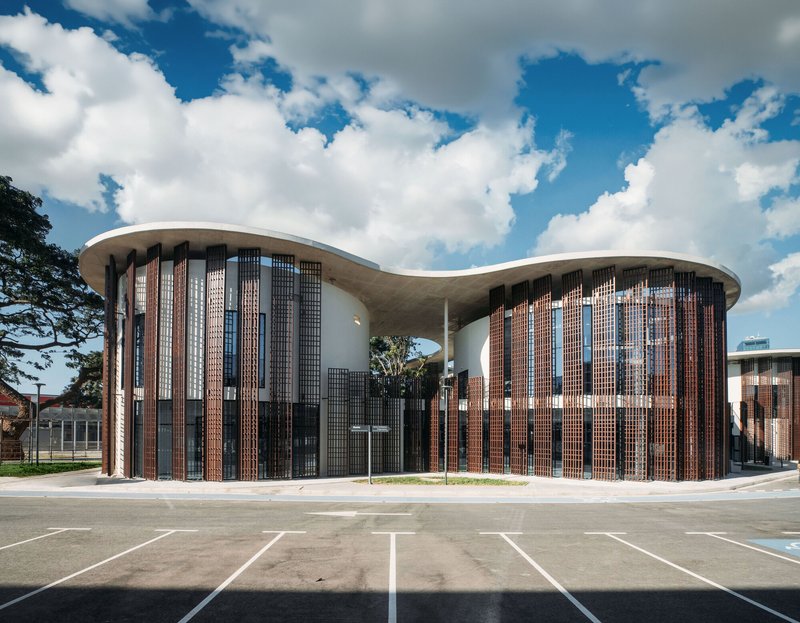
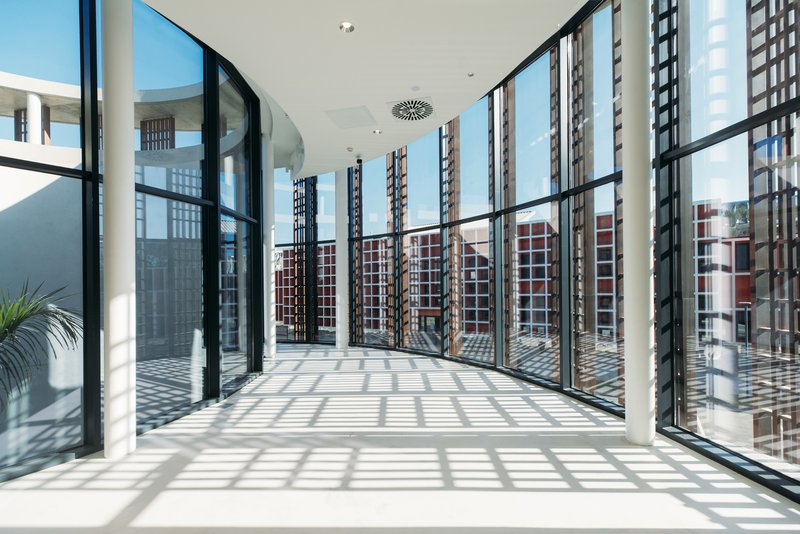
The facade is where the building declares its material identity. Alternating panels of terracotta brick and perforated screens wrap each cylinder, creating a layered skin that modulates light before it reaches the interior glass wall. The rhythm is deliberately varied: solid brick panels absorb and radiate heat slowly, while the perforated metal or glass block sections throw geometric shadow patterns onto the interior floors. The effect recalls the brise-soleil strategies of mid-century Portuguese colonial architecture that once defined this very site, updated here into a more refined and repetitive screen logic.
Inside the corridor spaces, floor-to-ceiling glass sits behind these outer screens, and the resulting light condition is remarkable. Dappled, shifting, never harsh. The patterned shadows move through the day, animating the polished floors and giving the interior a quality of being gently inhabited by the weather outside without ever being exposed to it.
Timber Warmth and Interior Atmosphere
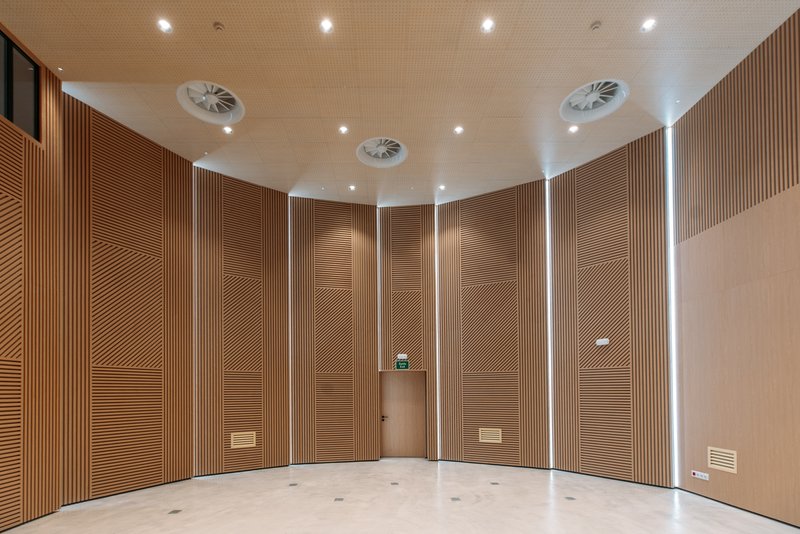
If the exterior is about filtration and defense against climate, the interior pivots to warmth. Curved walls lined with chevron-patterned timber panels wrap the main hall, softening the acoustic environment and giving the reading rooms a quality of enclosure that concrete and glass alone would not achieve. The ceiling is recessed with integrated lighting that washes the timber surfaces evenly, avoiding the institutional glare that plagues so many public libraries.
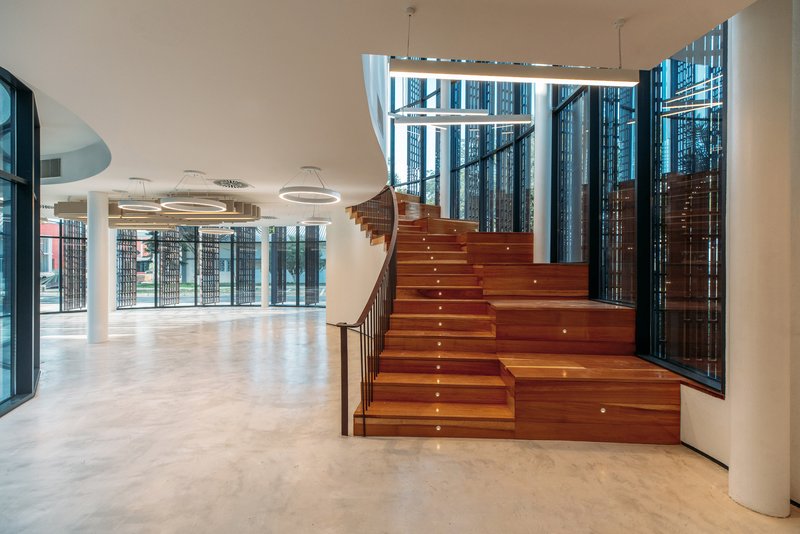
A wide timber staircase, flanked by floor-to-ceiling glazed screening panels, connects levels with generous proportions. The stair treads are lit from below, a subtle detail that lends the vertical circulation a sense of occasion. You are not just moving between floors; you are ascending into a different register of light and view, from the sheltered ground-floor reading rooms up toward event terraces and open sky.
Plans and Drawings
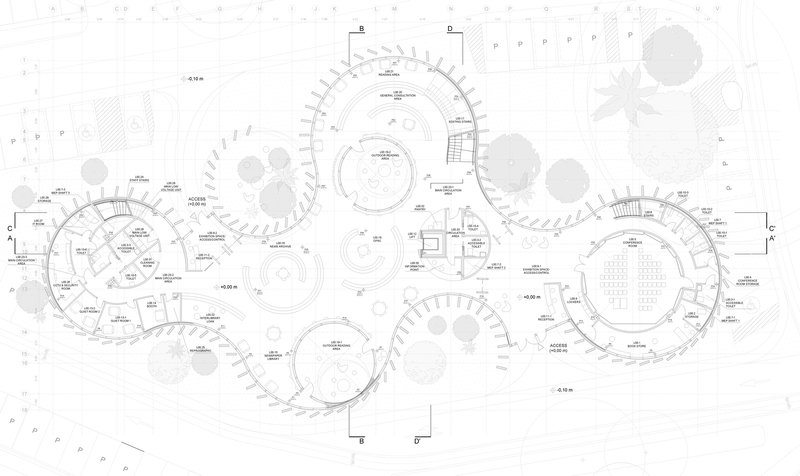
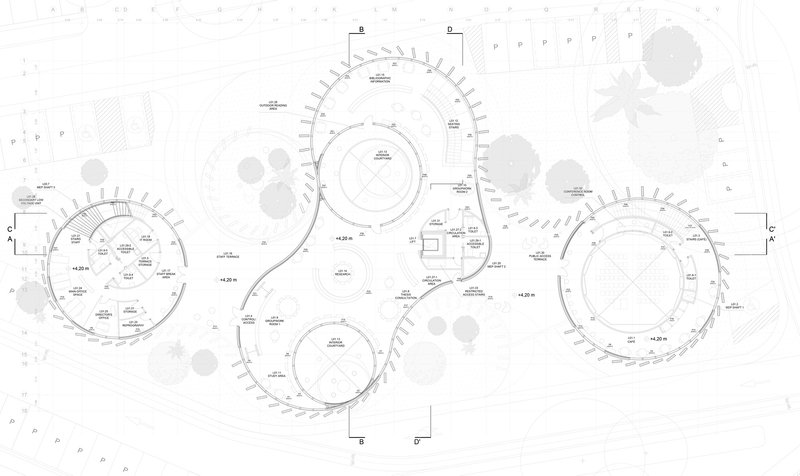
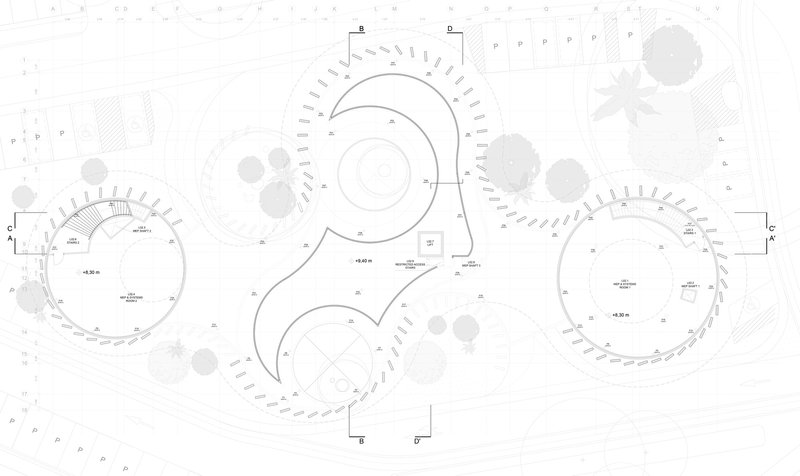
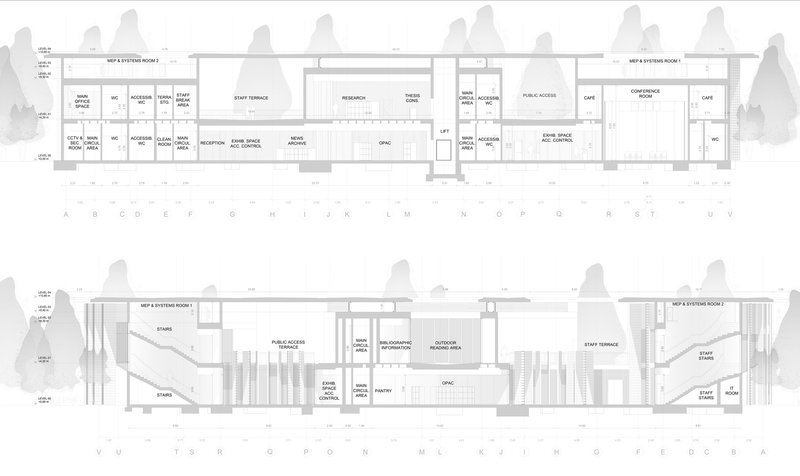
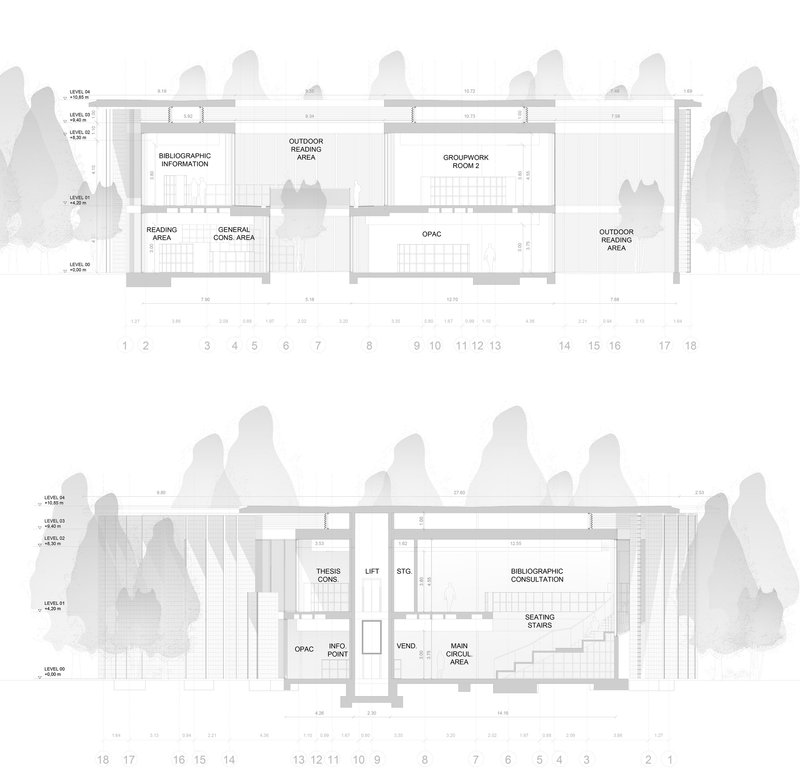
The floor plans across multiple levels reveal how the three circular volumes distribute program. At the ground level, the circles spread wide, their radial column grids defining generous, column-free zones between the structural bays. Planted courtyards anchor the center of each volume, and the intersections between circles create naturally wider zones suited to communal gathering. Upper levels compress the program into reading areas, group work rooms, and bibliographic consultation spaces, each oriented toward the courtyard views.
The sections are equally instructive. They show how the building steps down and up across the site, creating event terraces and staff terraces at different elevations while maintaining a continuous canopy line. The café occupies one of the lower, outward-facing positions, its section revealing direct access to an exterior terrace shaded by both the building overhang and adjacent tree canopies. Silhouetted trees in the drawings are not decorative: they represent specific preserved specimens that the plan was shaped around.
Why This Project Matters
Libraries in sub-Saharan Africa rarely get this level of architectural investment, and when they do, the results can be generic imports that ignore local climate and civic culture. Typsa's Luanda Library does neither. Its circular plan is not a formal indulgence but a direct response to the need for shade, ventilation, and a building perimeter that can accommodate multiple screen conditions simultaneously. The courtyards are not decoration; they are the building's primary environmental strategy, combining tree cover, stack ventilation, and daylighting into a single architectural move.
More importantly, the project redefines what a technology park can contain. By placing a public library at the heart of a science campus, and by making that library porous, shaded, and oriented around living trees, Typsa argues that knowledge work is not only about labs and offices. It is about the slower, quieter spaces where people read, meet, and sit under a tree. In a city as relentlessly kinetic as Luanda, offering that kind of stillness is an act of generosity that goes well beyond the 1,918 square meters the building occupies.
The Luanda Library Technology Park, designed by Typsa (lead architects Marina González and Joaquín Beltran), Luanda, Angola. 1,918 m². Completed 2026. Photography by Flavio Ricardo Gomes.
About the Studio
Share Your Own Work on uni.xyz
If projects like this are the kind of work you want to make, uni.xyz is a place to publish your own, find collaborators, and enter design competitions.



Popular Articles
Popular articles from the community

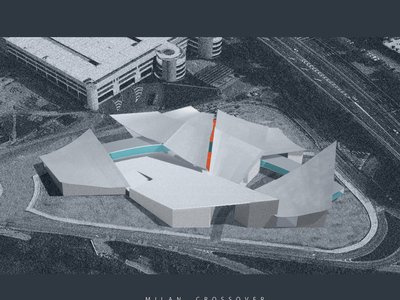
Milan Crossover: Sustainable Architecture for a New Fashion Culture in Milan
Milan Crossover transforms fashion culture through sustainable architecture, linking material libraries, remake studios, and public runways.

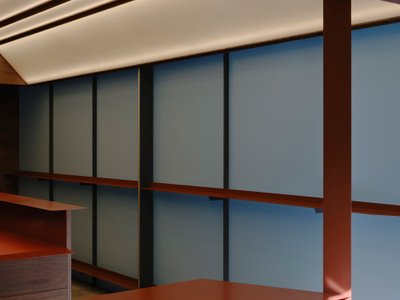
Kerry Kounnapis Packs 800 Daily Coffees into a 43-Square-Metre Melbourne Laneway Bar
Palace Coffee channels Pellegrini's and European standing bars through oxide-red steel and spotted gum timber in a Ridgway Place sliver.
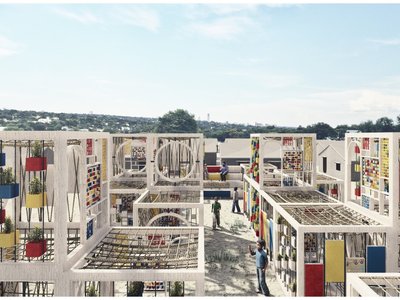
The Faith: Modular Architecture for Play, Learning, and Hope in Kutupalong Refugee Camp
A modular playground architecture project in Bangladesh where play, learning, safety, and hope rebuild childhood inside a refugee camp anew.
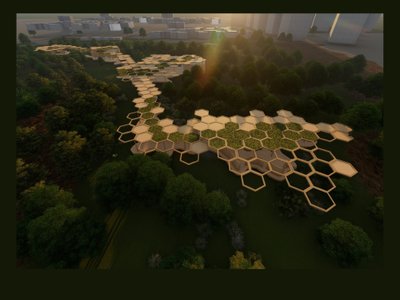
Eco Chapel: A Green Architecture Pavilion Designed in Symbiosis with the Forest
Eco Chapel uses green architecture to weave prayer, learning and reuse into a forest pavilion shaped by modular hexagonal canopies for life.


Similar Reads
You might also enjoy these articles
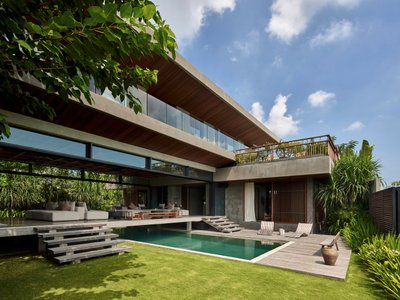
Freebird Residence by Alexis Dornier: A Tropical Modernist Sanctuary in Bali
Floating living pavilion above pool anchors H-shaped tropical villa, blending Japanese minimalism, sustainable strategies, lush landscape, and sculptural interiors.
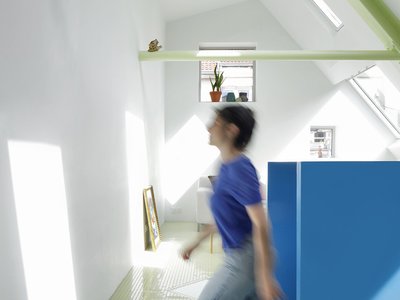
127af Flips a Tiny Bagnolet Rowhouse Upside Down with a Handcrafted Roof Extension
A 55-square-meter terraced house on the edge of Paris gains a luminous upper living floor through lightweight timber and steel.
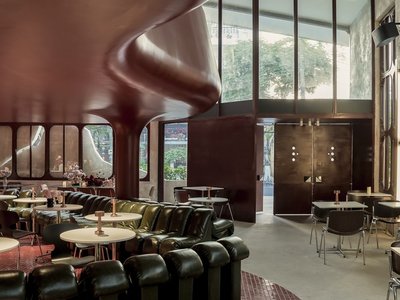
1.61 Design Workshop Wraps a 600-Square-Meter Café in Vietnam in Sculptural Burgundy Drama
Reden Café & Bistro pairs a helical staircase, mosaic floors, and deep red interiors to rethink Vietnamese hospitality space.

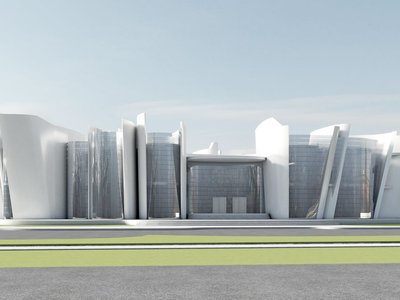
The Unbound Brain: A School Shaped by Cognitive Architecture
Cylindrical learning pods radiate like neurons from a central cortex, turning the floor plan into a spatial model of human thought.


Explore Installations Competitions
Discover active competitions in this discipline




The Global Benchmark for Architecture Dissertation Awards


Challenge to design a portable theatre


Challenge to design a portable music platform


Challenge to design public laboratory
Comments (0)
Please login or sign up to add comments
No comments yet. Be the first to comment!