
Unveiling the Stunning Tourist Center of Huangguoshu Scenic Area - A Collaborative Masterpiece by CAUPD + AEPA&TSC!
What Makes the Tourist Center of Huangguoshu Scenic Area a Must-Visit Destination for Travelers?

Huangguoshu Scenic Area, situated at the intersection of the west Guizhou Scenic Tourism Circle and Guiyang-Anshun-Xingyi Scenic Tourism Belt, is a renowned tourist destination known far and wide. Its popularity has only grown over the years, with tens of millions of visitors thronging the area every year. As a result, the facilities and venues in the scenic area have been unable to cope with the surge in demand.
To tackle this issue, the authorities have decided to upgrade the infrastructure of the scenic spot. Among the initiatives taken is the construction of a Fashion Store that is expected to cater to the growing needs of tourists. The Fashion Store is being designed by CAUPD + AEPA&TSC, renowned architectural firms that have partnered to create a collaborative masterpiece.
The Fashion Store will be located at the Tourist Center of Huangguoshu Scenic Area, which was established in the early 1990s. This centre serves as the gateway to the scenic area and is where visitors obtain their tickets and maps. With the new Fashion Store, tourists will have access to a wide range of products, including souvenirs, apparel, and local handicrafts. The store is expected to enhance the overall shopping experience of tourists and contribute to the economic growth of the area.
The Huangguoshu Scenic Area was selected as one of the first batch of national scenic spots in 1982 and was included in the World Heritage Reserve List in 2019. The Fashion Store is expected to be completed in the near future and will undoubtedly add to the charm and beauty of this already stunning location.
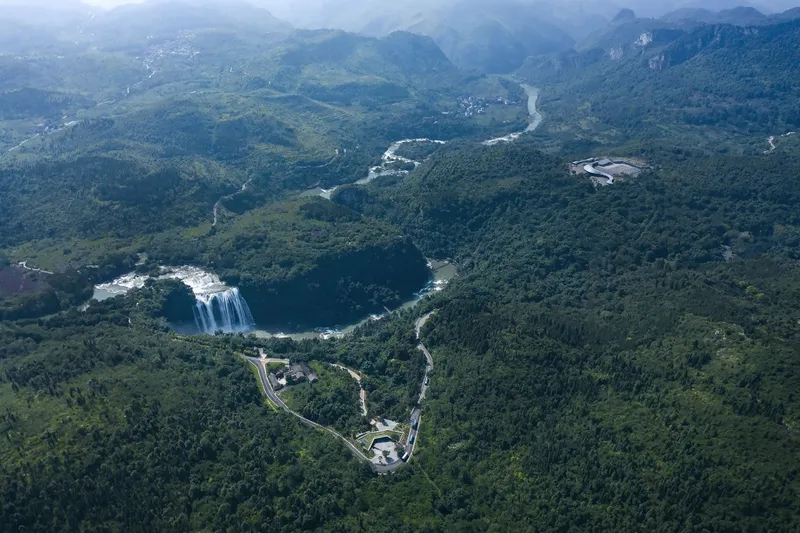
Looking for a way to upgrade the infrastructure and visitor experience of Huangguoshu Scenic Area, the authorities turned to CAUPD and AEPA&TSC to design and build a state-of-the-art tourist center. As one of the key projects of the area, the new center will focus on transforming and upgrading the entrance areas of the two core scenic spots of Huangguoshu – the Great Waterfall and Tianxing Bridge – while also optimizing the function of the visitor center and the organization mode of the tour.
But what makes this project truly unique is its focus on meeting the service needs of tourists in the new era. With the rise of e-commerce and online shopping, the Huangguoshu Scenic Area is looking to offer more than just breathtaking views. That's why the new tourist center will also feature a trendy Fashion Store that is sure to appeal to a younger, fashion-conscious crowd.
The designers are working hard to ensure that the Fashion Store blends seamlessly into the natural surroundings, creating a space that is both modern and organic. The store will feature a range of designer clothing, accessories, and souvenirs, all inspired by the beauty of the Huangguoshu Scenic Area. With its prime location at the entrance of the Great Waterfall and Tianxing Bridge, the Fashion Store is sure to attract visitors from all over the world.
Overall, the new tourist center at Huangguoshu Scenic Area promises to be a game-changer for the area's tourism industry. With its focus on modern design, state-of-the-art facilities, and trendy Fashion Store, it's sure to be a hit with visitors of all ages and backgrounds.
WaterfallScenic Area
presentsituation
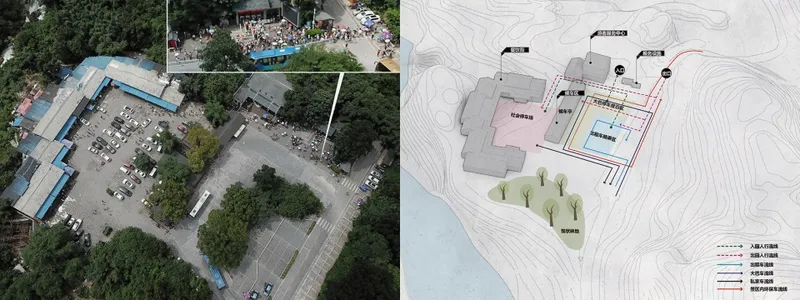
As the traffic flow to the Great Waterfall Scenic Area in Huangguoshu continues to increase, it has become increasingly evident that the facilities in the area are not sufficient to meet the needs of the tourists. In response, the managers of the scenic spot have identified two key areas that require urgent attention: enhancing the distribution and service functions of the entrance and optimizing the organization of traffic and tour lines at the entrance.
One solution to these issues is the introduction of a new Fashion Store in the square space in front of the entrance of the scenic spot. The current square space is narrow and crowded, leading to a chaotic mix of traffic, including shuttle buses, taxis, and social vehicles. The new Fashion Store would enhance the distribution and service functions of the entrance by providing a designated area for visitors to gather and receive information, reducing the congestion caused by the mixed operation of various vehicles.
In addition, the current drop-off and pick-up area for the one-way shuttle bus is located in a completely opposite direction to the entrance and exit of the scenic spot. This creates confusion and further contributes to the chaotic traffic situation. By introducing a new Fashion Store in the square space, it would be possible to optimize the organization of traffic and tour lines at the entrance, allowing for a smoother and more efficient flow of visitors.
Another issue that needs to be addressed is the insufficient toilet facilities. The total area of the original toilets is only 50 square meters, and the men's and women's toilets are combined. This is far from ideal for a tourist attraction that receives tens of thousands of visitors each day. By introducing a new Fashion Store, it would be possible to expand and upgrade the toilet facilities, ensuring that they are adequate for the number of visitors.
Finally, the restaurant street run by villagers on the south side of the site presents safety hazards due to wanton walking and soliciting customers. The chimney signs are also greasy and messy, detracting from the overall appeal of the area. By introducing a new Fashion Store, it would be possible to revitalize the area and improve the safety and cleanliness of the surroundings, making it a more enjoyable experience for visitors.
In conclusion, the introduction of a new Fashion Store in the Great Waterfall Scenic Area in Huangguoshu would be a welcome addition, addressing several key issues that have been identified by the managers of the site. The Fashion Store would enhance the distribution and service functions of the entrance, optimize the organization of traffic and tour lines, expand and upgrade the toilet facilities, and revitalize the surrounding area, making it a more enjoyable experience for visitors.
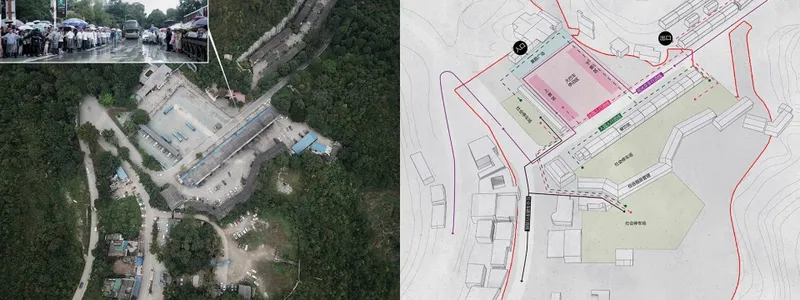
As one of the must-visit spots in China, the Great Falls in the scenic area of Huangguoshu has seen a significant increase in traffic over the years. However, with the surge in visitors, the existing facilities in the area have failed to keep up with the demand, causing inconvenience and chaos for both tourists and staff alike.
To address the key issues faced by the first party in charge, which include enhancing entrance distribution and service functions, optimizing entrance transportation routes, and creating an initial landscape for sightseeing, a new and upgraded tourist center has been designed and built by renowned architectural firms CAUPD and AEPA&TSC.
Before the upgrade, the entrance square was too small, leading to vehicles mixing and causing confusion. The one-way shuttle bus drop-off and pick-up area was opposite to the entrance, and the tourist distribution area was cramped by the shuttle bus parking lot. This resulted in shuttle buses, taxis, and social vehicles all congesting the area. Even with a flow of fewer than 50,000 tourists per day during peak season, staff had to pull extra shifts to maintain order.
In addition to these issues, the original bathroom had a total area of only 50 square meters, and the restaurant street run by locals on the south side of the site had greasy and messy chimneys, causing safety hazards and adding to the already chaotic traffic situation.
To tackle these problems, the new tourist center features an expanded entrance square and optimized transportation routes, ensuring a smooth and organized flow of vehicles and tourists. The center also has spacious and modern bathroom facilities and a designated restaurant area, providing visitors with a more comfortable and enjoyable experience.
What's more, the new center's initial landscape has been carefully designed to blend in with the surrounding natural beauty, incorporating elements of traditional Chinese architecture with modern design concepts. The addition of a fashion store adds a trendy touch to the center, providing visitors with a unique shopping experience amidst the breathtaking scenery.
With these upgrades, the Great Falls in Huangguoshu is set to become an even more popular destination, offering visitors a seamless and unforgettable experience amidst the wonders of nature.
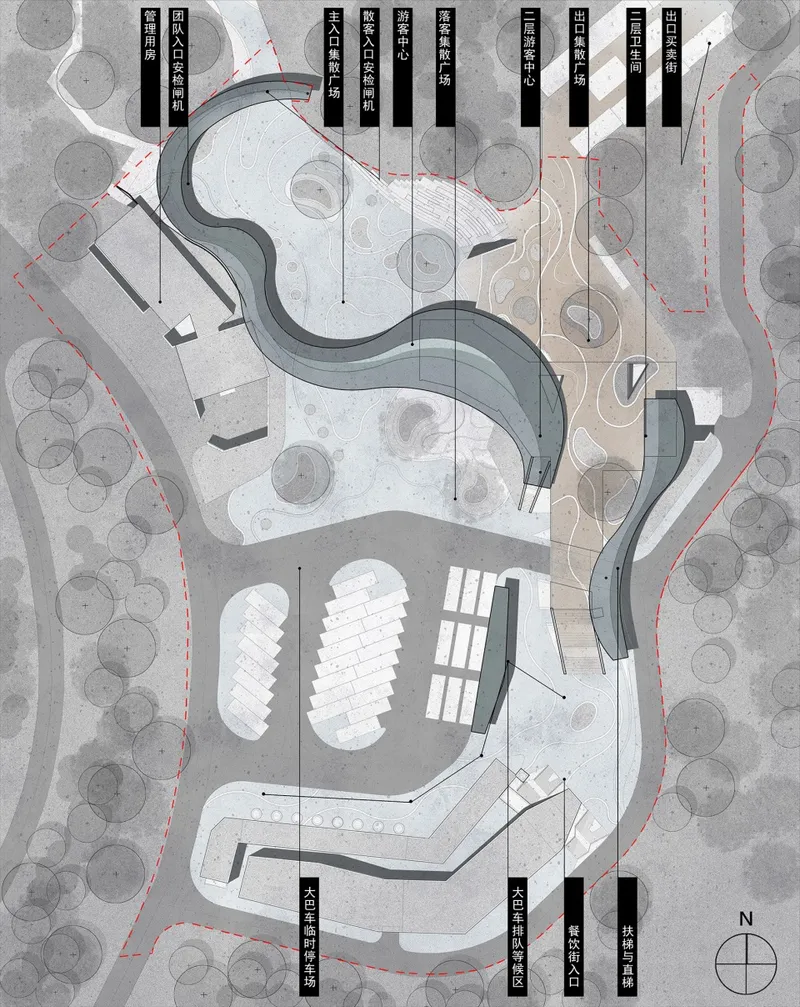
Remodeling and Optimize Streamline
As more and more people flock to tourist spots, traffic congestion becomes a common issue. In response to this problem, the planning and design team of Huangguoshu Scenic Area has come up with a unique solution to ensure smooth operation of connecting tourist vehicles within the core scenic spot.
To achieve this, the team has prohibited social vehicles and travel agency buses from entering the core tourist area by building new roads and setting checkpoints. However, the team did not stop there. They analyzed the original topography and landform to take advantage of the situation and solve the traffic problem between the streamlines.
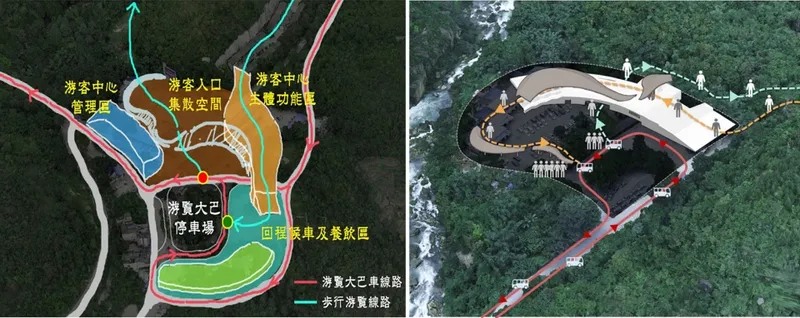
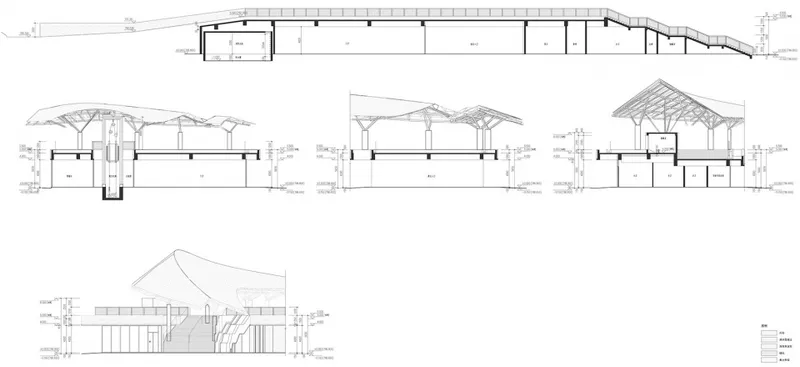
The team utilized the streamlines to drive the distribution of functions and created a three-dimensional tourist streamline system. By constructing the exit of the scenic spot about five meters higher than the entrance, the height difference forms two three-dimensional tourist streamlines. This not only eliminates the problem of crossing pedestrian flow lines but also allows shuttle vehicles to drop off at the ground floor and line up around the parking area at high places for the return tourists.
This design effectively separates the flow of people and vehicles, avoiding conflicts and ensuring a smooth flow of traffic. The new design not only solves the traffic problem within the scenic spot but also adds to the beauty and uniqueness of the area.
As a fashion store enthusiast, one might wonder how this relates to fashion. However, it is essential to note that a well-designed tourist spot with efficient traffic flow has the potential to attract more tourists. More tourists mean more business opportunities, including fashion stores, souvenir shops, and other retail outlets within the scenic area. By creating a seamless traffic flow, Huangguoshu Scenic Area is not only improving the experience of visitors but also creating opportunities for businesses to thrive.
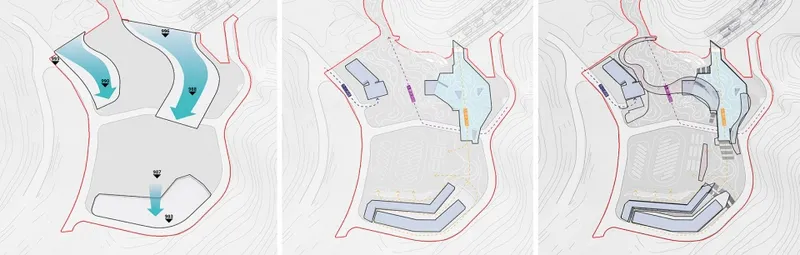
As the demand for sustainable and efficient solutions continues to increase, the Huangguoshu Scenic Area in China has taken a unique approach to traffic management within their park. The park's design team has adopted an environment-oriented, opportunistic diversion approach to solve traffic problems among different flow lines, with the goal of driving functional distribution with flow lines.
The park's entrance and exit location cannot be changed, which presented a challenge in crossing the incoming and outgoing pedestrian flow lines. However, by analyzing the original topography, the team identified an opportunity to leverage the height difference between the park entrance and exit, which created two three-dimensional tourist flow lines.
The solution involved separating vehicles and pedestrians completely, thereby eliminating conflicts. Inbound passengers arrive at the bottom pick-up area and wait in line in the parking area for returning tourists on the higher ground. The park has also prohibited social vehicles and travel agency buses from entering the core scenic area, ensuring the smooth running of the core scenic area buses.
The design team's innovative approach has enabled the park to solve traffic problems in a sustainable and efficient manner, while preserving the park's natural beauty. This approach aligns with the growing demand for sustainable solutions and environmentally friendly practices. The park's traffic management strategy serves as an example for other parks and attractions seeking to provide visitors with a seamless and enjoyable experience while maintaining the natural beauty of the area.
In conclusion, the Huangguoshu Scenic Area's environment-oriented, opportunistic diversion approach has set a new standard for traffic management in parks and attractions. The park's innovative approach has enabled it to solve traffic problems while preserving the natural beauty of the area, providing visitors with a seamless and enjoyable experience.
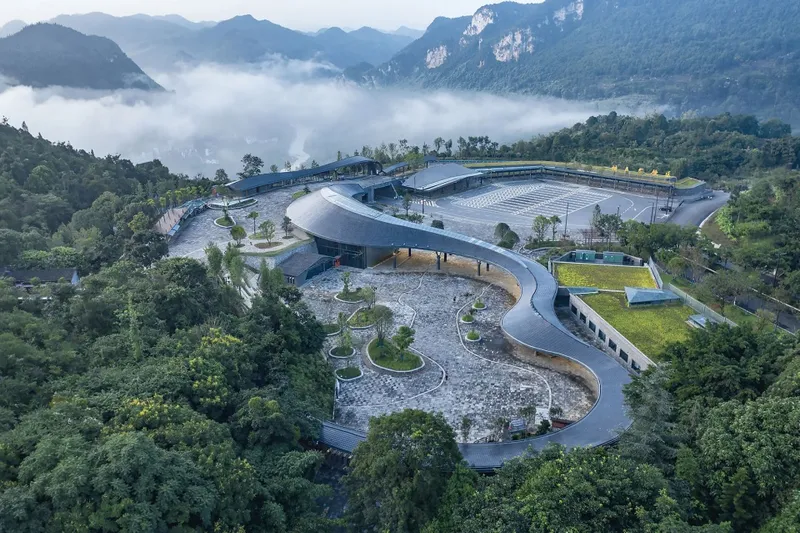
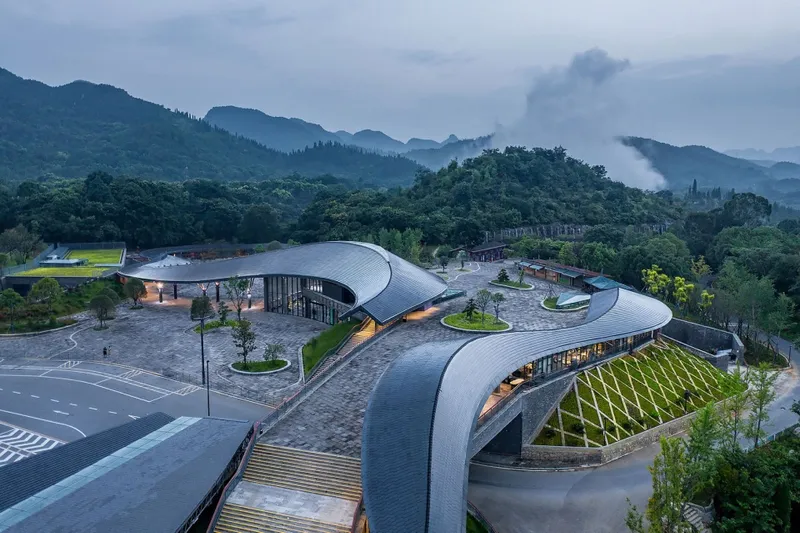
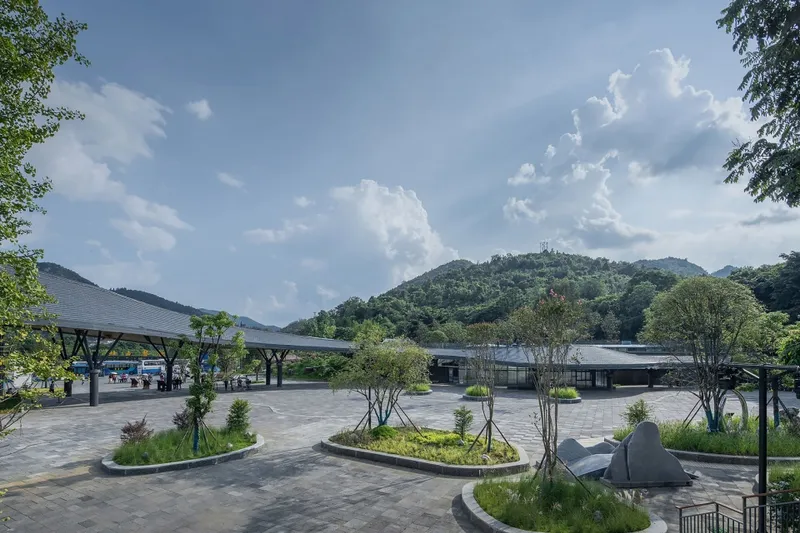
As the world continues to evolve, so does the way we think about architecture. In Huangguoshu Scenic Area, a unique tourist center has been constructed that combines both functionality and environmental sustainability into its design. The center, designed by CAUPD + AEPA&TSC, showcases an earth-covered building design that seamlessly blends in with the surrounding greenery.
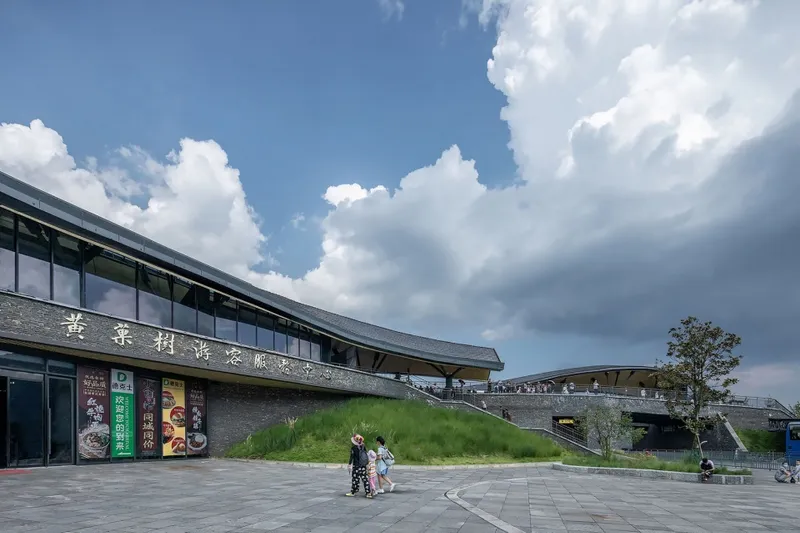
The main functions of the center, which include management rooms, relocation catering, and visitor services, are hidden within the earth-covered buildings, which are strategically placed on both sides and at the end of the flow line. By doing so, the center ensures that it does not disturb the natural landscape of the area, while also minimizing earthwork engineering.
The flow of people is also taken into consideration in the center's design. The different functions, such as reception, ticketing, inquiry, and catering, are arranged in layers to cater to the different needs of the visitors. Additionally, multiple toilets are available on each floor, solving the problem of long queues.
The catering services are hidden underground, in the form of a soil-covered landscape. This not only reduces the impact of soliciting customers but also avoids crossing with the bus flow. The entrance width is also limited to prevent the center from negatively affecting the surrounding landscape.
While the center's design is functional, it is also aesthetically pleasing. The earth-covered buildings blend seamlessly with the natural environment, giving visitors a sense of being in harmony with nature. It is this combination of functionality and design that makes the Huangguoshu Scenic Area tourist center a true masterpiece of modern architecture.
Furthermore, the design of the center can inspire architects and designers to rethink how buildings can blend in with their surroundings, a concept that is becoming increasingly important in the face of climate change. Overall, the tourist center at Huangguoshu Scenic Area is a must-see for visitors who appreciate sustainable architecture and a connection with nature.
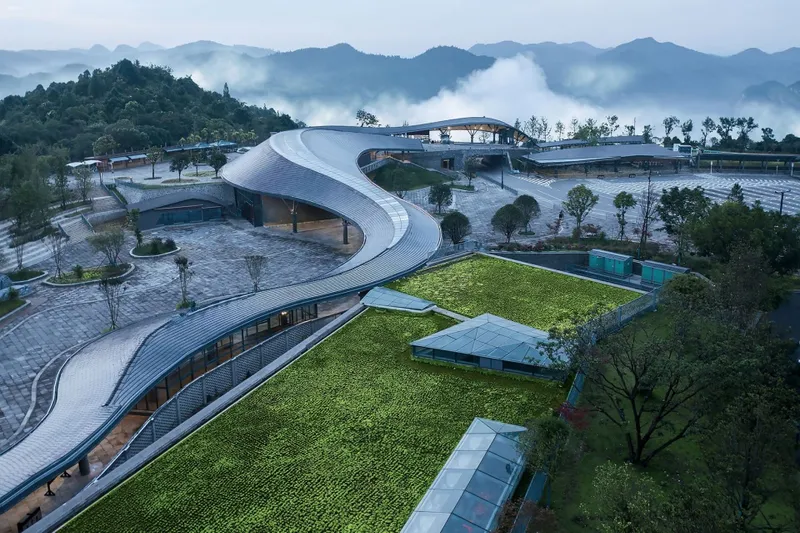

Mountainsand Rivers Blends with Heaven
As the saying goes, "You never get a second chance to make a first impression." This holds true for tourist centers, as they serve as the first point of contact for visitors. The Huangguoshu Scenic Area in China has recently unveiled its stunning tourist center designed by CAUPD and AEPA&TSC, and it's making waves in the architectural world.
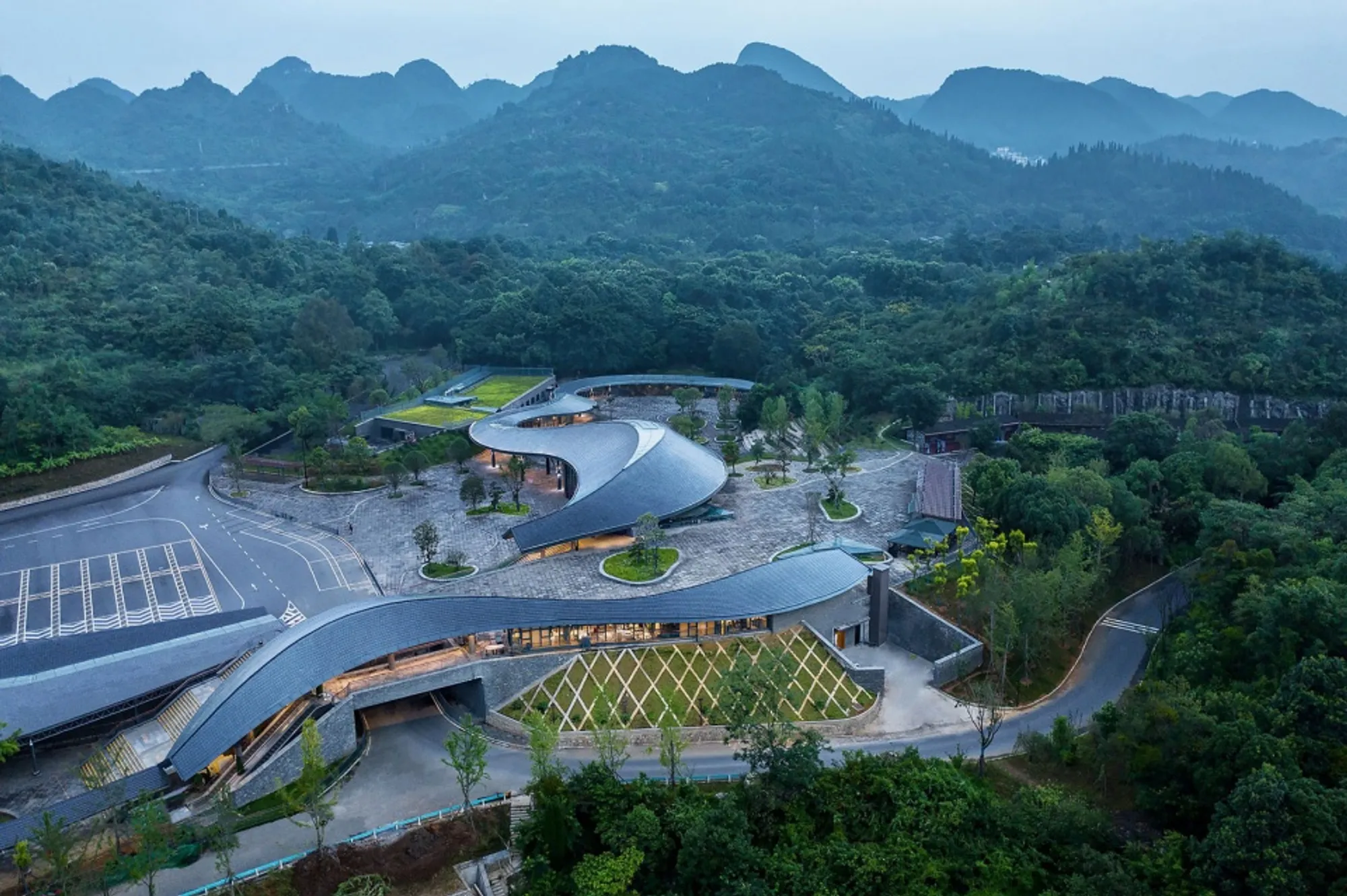
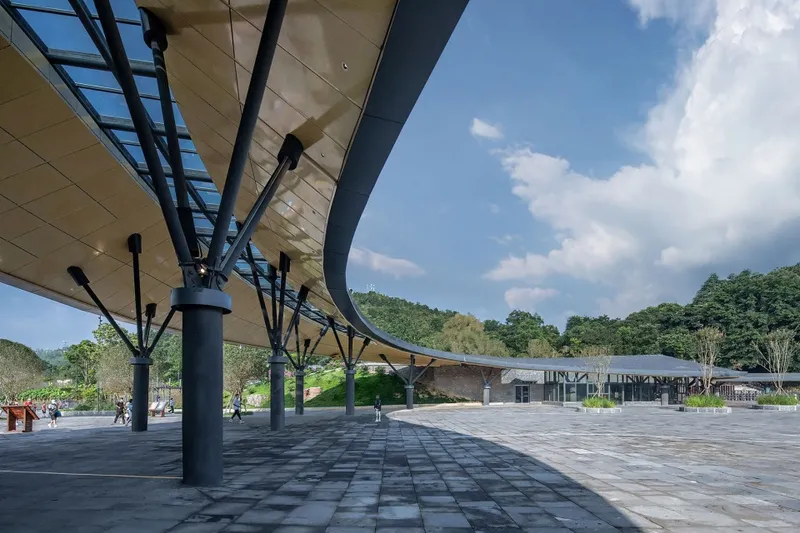
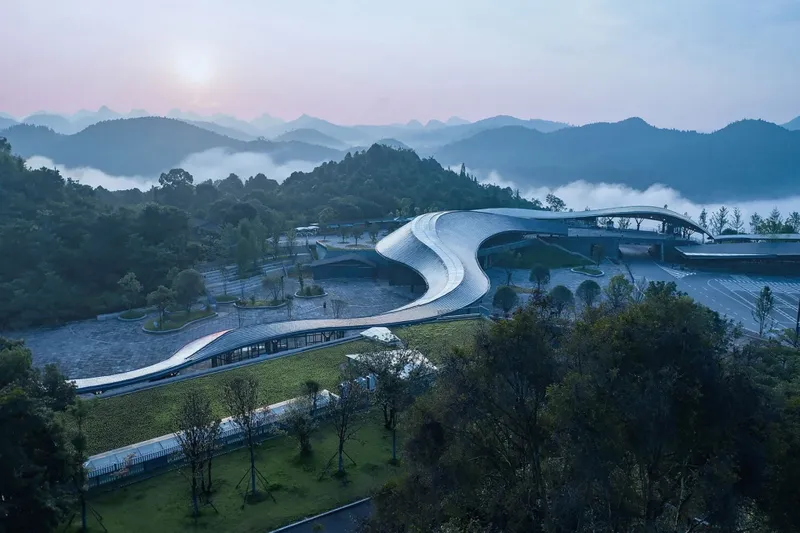
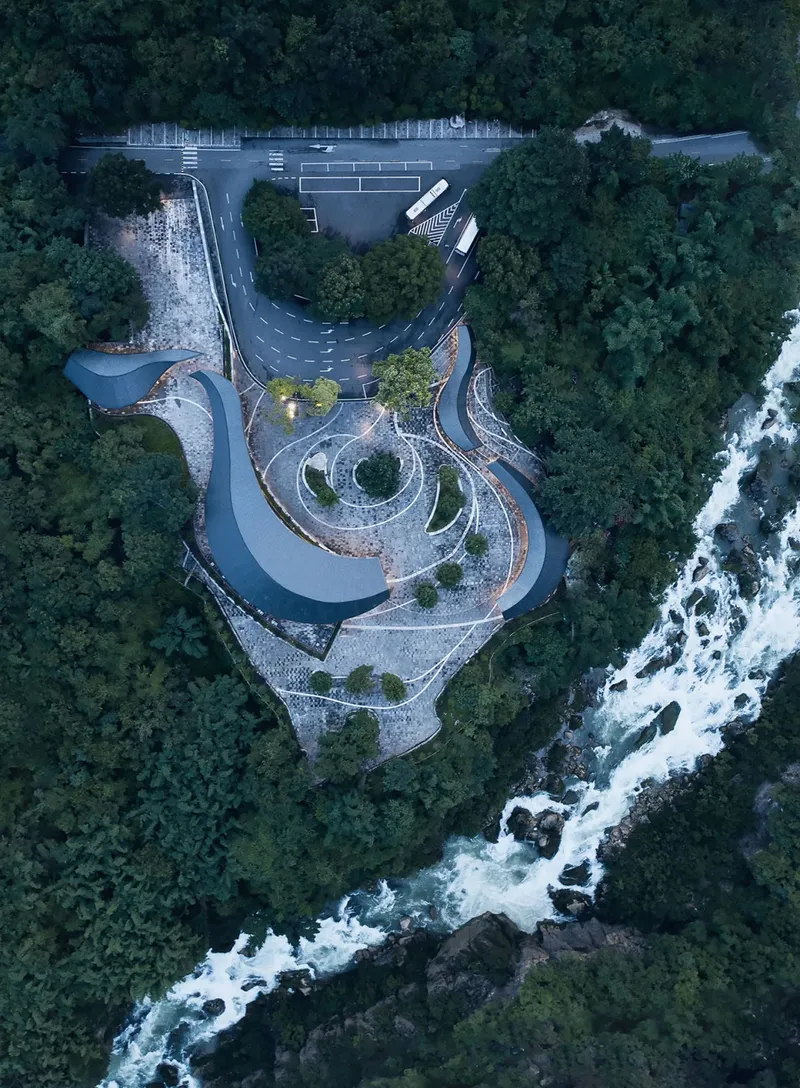
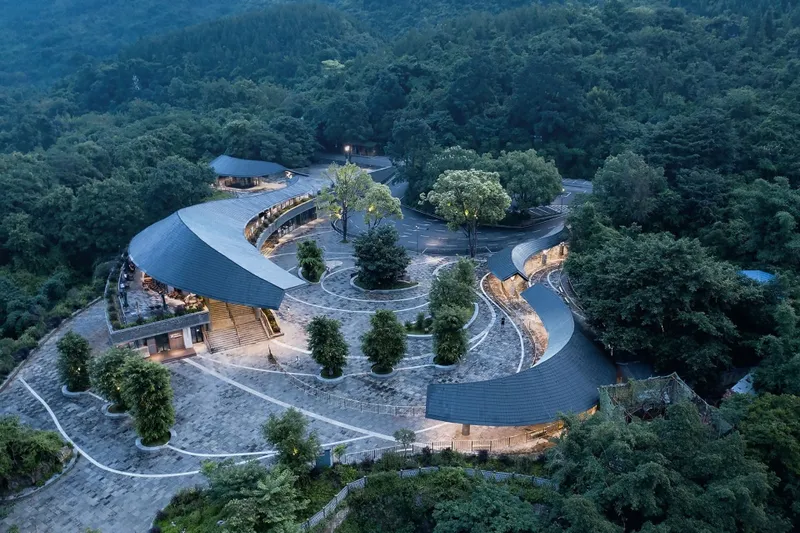
The overall planning concept of the center adheres to the natural landscape of the Baishui River, incorporating organic flowing lines that emulate the natural forms of waterfalls, foothills, and flowing water. The masonry method used for the buildings, including the shape and materials, integrates the atmosphere of the local mountains, rivers, bricks, and tiles.
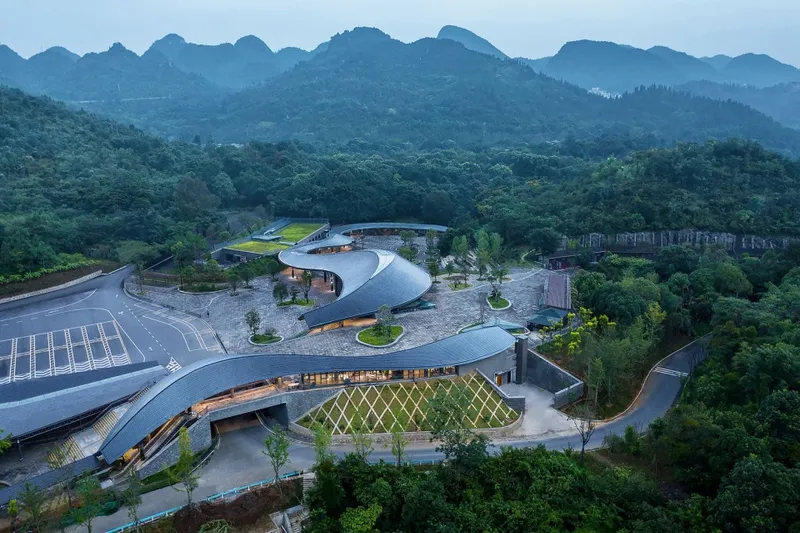
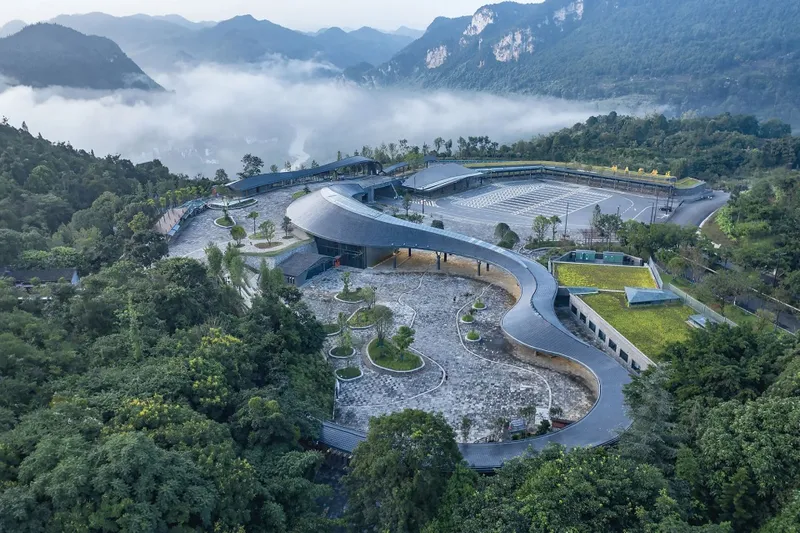
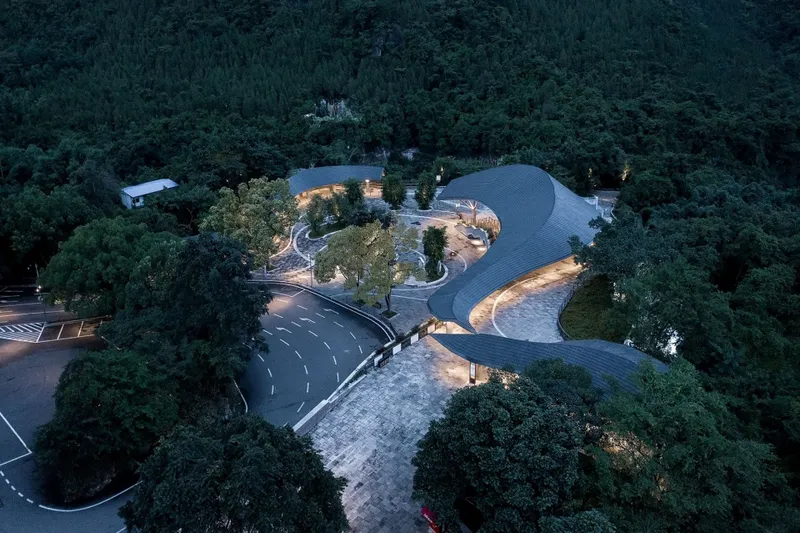
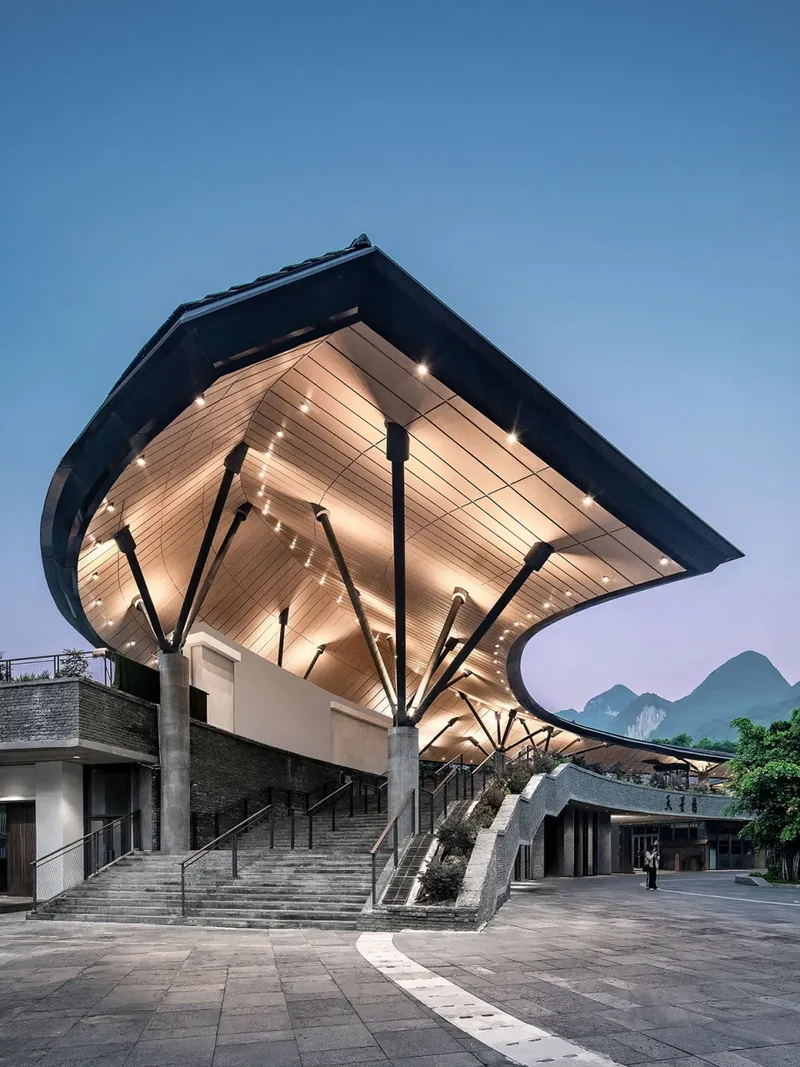
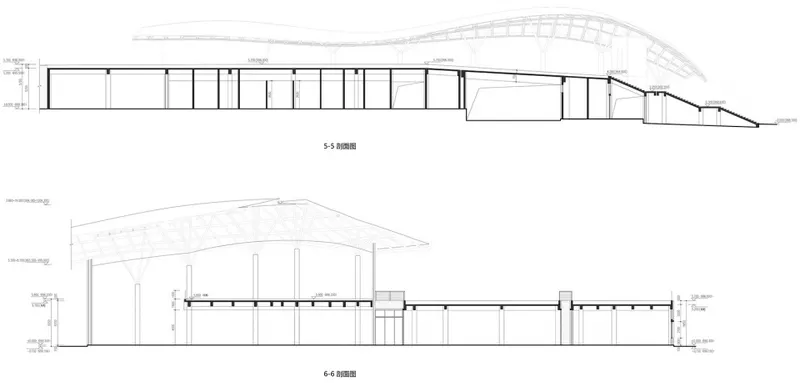
The entrance and exit paths are covered by two nearly 400-meter-long slate-tiled sloping roofs, shaped like a surging white water river. Unlike traditional buildings with sharp edges and corners, the design leaves the skyline to the undulating mountains, dissolving the building volume and integrating with the surrounding natural environment.
What's particularly striking about this tourist center is its incorporation of a fashion store. The management and catering street houses are covered with green plants at different elevations, hidden in the mountains. The fashion store seamlessly blends into the environment, adding to the center's charm.
It's clear that the architects behind this project were intentional about creating a space that not only serves a practical purpose but also leaves a lasting impression on visitors. The organic lines, incorporation of local materials, and dissolving of building volume demonstrate a deep appreciation for the natural surroundings.
In conclusion, the Huangguoshu Scenic Area's tourist center designed by CAUPD and AEPA&TSC is a must-see for anyone who appreciates stunning architecture and a deep connection to nature. And for fashion enthusiasts, the incorporation of a fashion store adds an extra element of allure to an already incredible space.

TianxingqiaoScenic Area
presentsituation
Tianxing Bridge is also one of the core tourist areas of Huangguoshu. Its natural landscape is famous for its "colorful fantasy, exquisite and beautiful", and it is also the scene of Journey to the West. With the development of the scenic spot, problems such as insufficient functions of the entrance area, cluttered traffic, and messy appearance are becoming more and more apparent. The managers of the scenic spot hope to strengthen the protection of the entrance and surrounding scenery resources and optimize the function of the tourist hub through the overall transformation and upgrading of the entrance area of Tianxing Bridge. Traffic organization, improving the service level of the visitor center, strengthening the viewing experience of the entrance landscape, making its function serve the tour and integrating the site into the scenery.
The Tianxing Bridge is also one of the core scenic spots of Huangguoshu, which is famous for its colorful and magical beauty and is also the shooting location of Journey to the West. With the development of the scenic spot, the problems of the inadequate functions in the entrance area, the traffic congestion and the messy style are increasingly prominent. The scenic area managers hope to upgrade the whole transformation of the Tianxing Bridge entrance area, strengthen the protection of the entrance and surrounding scenery resources, optimize the traffic organization of the tour hub, improve the service level of the tourist center and enhance the viewing experience of the entrance landscape, so as to make its functions serve the tour and melt the site into the scenery.
Purifying trafficand Remodeling function
As sustainability becomes a top priority in the architecture industry, designers are finding innovative ways to incorporate eco-friendly solutions into their projects. The Huangguoshu Scenic Area in China is a prime example of this trend, with its new tourist center designed by the China Architecture and Urban Planning Design Group (CAUPD) in collaboration with the Architectural Design and Research Institute of Tsinghua University (AEPA&TSC).
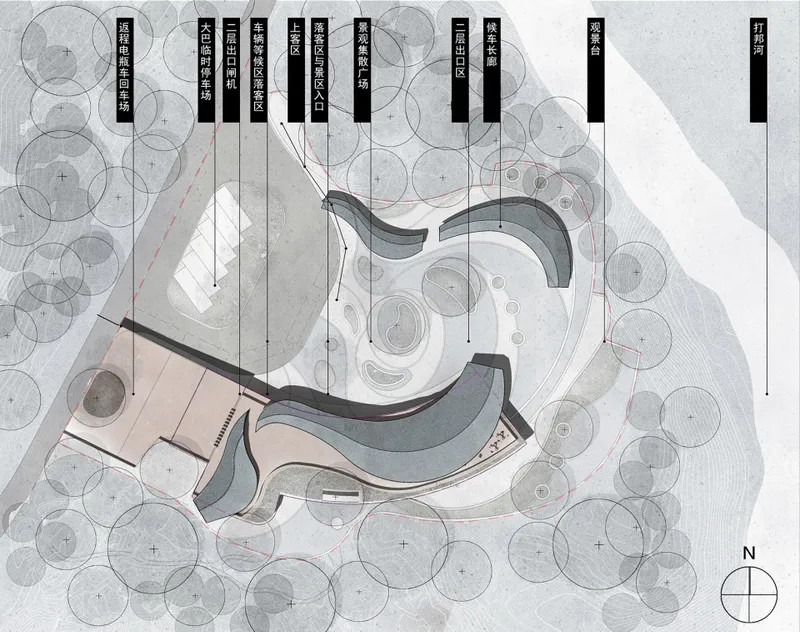
One of the key features of the tourist center is its site cleaning process, which relieved the traditional catering functions that had a greater impact on the ecological environment. This allowed for space to be made available for upgrading multiple service functions such as entrance guide inquiries, popular science exhibitions, and tea breaks. The designers also took into account traffic organization, utilizing the four-meter height difference between the tourist exit and entrance to form a three-dimensional traffic flow. This design solution solved the contradiction between the cross-collision between the flow of people entering and exiting and the flow of vehicles. The one-way ring line of the connecting bus no longer crosses the passenger area, further improving traffic flow.
To encourage visitors to stay and enjoy the scenic area, a viewing platform was set up and catering was positioned along the platform. This allowed for visitors to take in the natural surroundings while enjoying a snack or beverage. Additionally, the entire streamline is covered with a winding sloping roof that ensures the functions of the entrance and exit ticket inspection, and the waiting area is sheltered from wind and rain, while echoing the trend of mountains, forests and rivers.
The tourist center's design not only incorporates eco-friendly solutions but also improves the overall experience for visitors. The innovative traffic organization and the addition of service functions make for a more efficient and enjoyable visit to the Huangguoshu Scenic Area. The tourist center's design aligns with the current trend of sustainable architecture and sets a great example for future projects. With its modern design and functionality, the Huangguoshu Scenic Area's tourist center is a must-visit for architecture and nature enthusiasts alike.
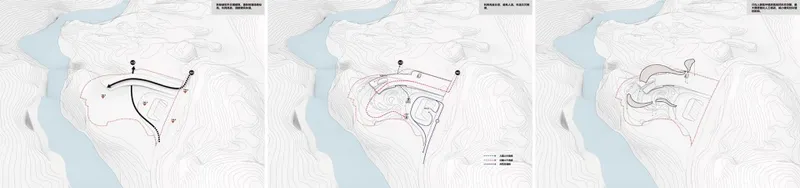
As the world becomes increasingly conscious of the impact of human activities on the environment, there has been a growing need for architectural designs that prioritize sustainability and conservation. This trend has not left out the tourism industry, which is one of the biggest contributors to environmental degradation in many regions. In response to this, CAUPD + AEPA&TSC have designed a tourist center at the Huangguoshu Scenic Area that not only enhances the visitor experience but also promotes environmental conservation.
The design of the tourist center involves the cleaning of the site and the removal of traditional catering functions that have been detrimental to the ecological environment. This has created space for the upgrading of entrance guiding, inquiry, popular science display, rest tea break, and other diversified service functions. This new setup offers a unique and enjoyable experience for visitors while also reducing their impact on the environment.
One notable feature of the tourist center's design is the three-dimensional traffic system that utilizes the four-meter height difference between the exit and the entrance. This system ensures that shuttle buses no longer intersect with the upper and lower passenger areas, thereby preventing cross-collision of people and vehicle flow. Visitors can enter the first-floor hall while the outflow of people leaves through the roof, solving the contradiction of cross-collision of people and vehicle flow in a three-dimensional traffic form.
In addition, the viewing platform has been set up to enhance the visitor experience, and catering is located on an extending platform, increasing the possibility of visitors staying longer. The whole flow line still covers the winding slope roof, ensuring the function of wind and rain protection in the entrance and exit ticketing and waiting area while also responding to the trend of mountains, forests, rivers, and water.
This new tourist center is not just a marvel of architectural design; it is also a step towards a more sustainable tourism industry. As the world continues to grapple with environmental challenges, it is essential that we adopt designs that prioritize conservation and sustainability. CAUPD + AEPA&TSC have demonstrated that this is possible without compromising on the visitor experience. This tourist center is undoubtedly a must-see destination for anyone looking to explore the beauty of the Huangguoshu Scenic Area in a sustainable and environmentally conscious way.
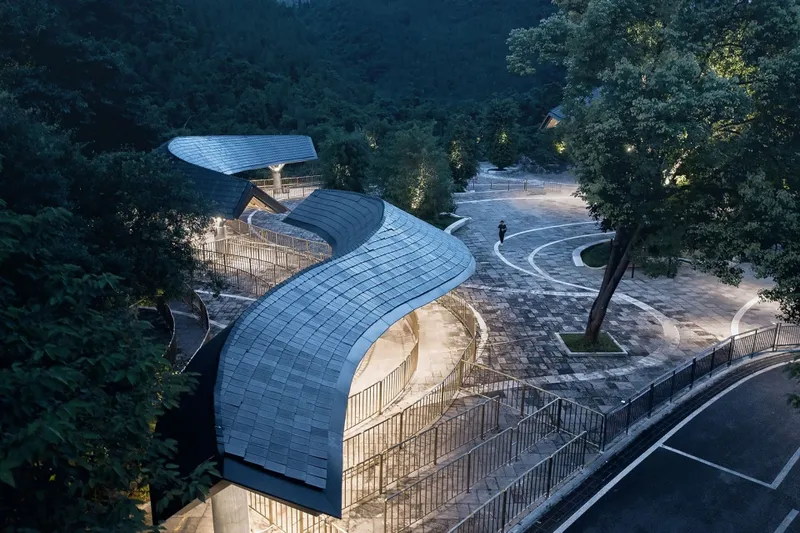
▼The returned exit under the roof © Wang Ziling
The harmony between water and stone forestThe harmony between water and stone forest
The Huangguoshu Scenic Area in China has recently become home to a new architectural masterpiece designed by CAUPD + AEPA&TSC. The tourist center boasts of an impressive roof system that blends in seamlessly with the surrounding landscape.
The design features a complete roof system that resembles a mountain and stream, with some parts elegantly curled up to give the appearance of dynamic cornices. The landscape design takes inspiration from the unique natural scenery of the Tianxingqiao Scenic Area, creating an overall landscape of mountain and stream blended in harmony with stone forests.
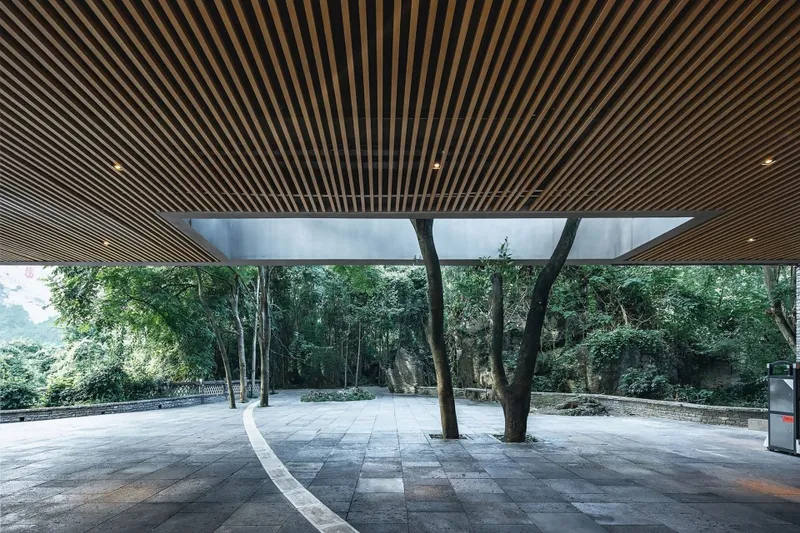
In the process of design and construction, all existing trees on the site were preserved, and incorporated in the new landscape and building design. This integrated approach broke the relationship of fragmentation and opposition between architecture and landscape and created a spatially integrated, functionally interactive, and scene-blending experience.
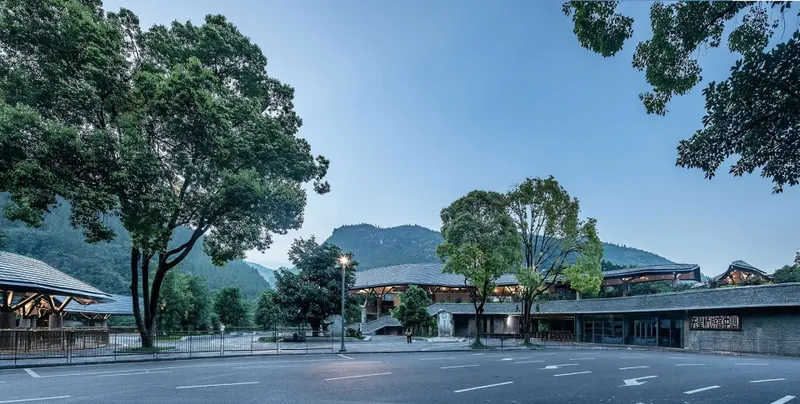
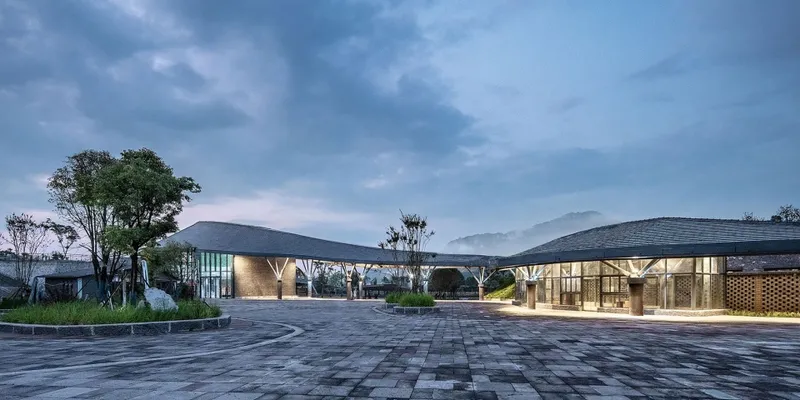
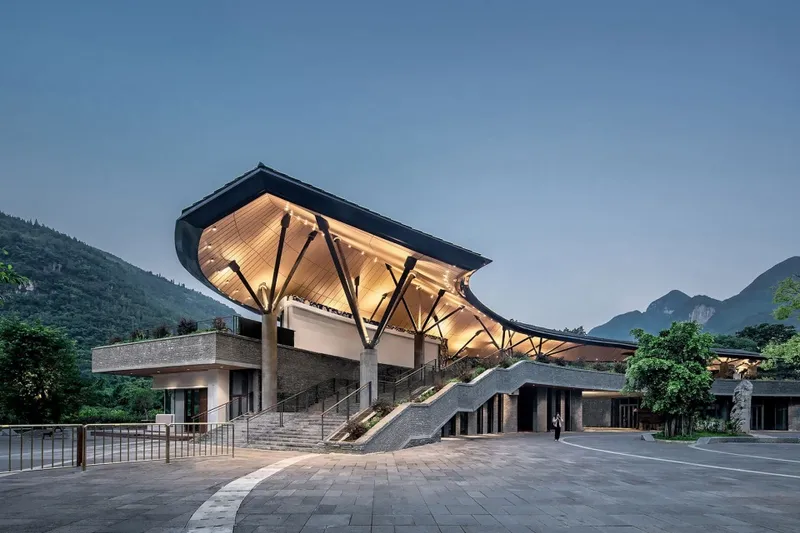
The building facades are made of bluestone blocks, inspired by the regional cultural characteristics of local folk houses. The roofs, covered by slate tiles, derive from the slate roofs of the local stone houses. The building volumes are mostly concealed in the site by covering the soil, creating a harmonious relationship with the natural environment.
The tourist center provides an immersive experience for visitors, with three viewing themes: “Listening to the Spring,” “Gazing at the Abyss,” and “Returning to the Forest.” These themes allow tourists to experience different perspectives and give them a sense of connection with the natural surroundings.

Building MaterialBuildingMaterial
The center offers a perfect setting for a fashion store, blending modern design with traditional cultural elements. The integration of architecture and landscape creates a unique and inspiring environment that offers a memorable shopping experience for customers.
In conclusion, the tourist center of Huangguoshu Scenic Area by CAUPD + AEPA&TSC is a collaborative masterpiece that showcases the perfect harmony between architecture and nature. The building's unique design, inspired by the surrounding landscape and regional culture, creates a perfect setting for a fashion store, offering a unique and inspiring shopping experience.
As the world continues to appreciate the beauty of nature, architects and designers have found innovative ways to incorporate natural elements into their creations. One such example is the tourist center at Great Falls and Tianxing Bridge scenic areas, designed by the China Architecture and Urban Planning Design (CAUPD) in collaboration with AEPA&TSC.
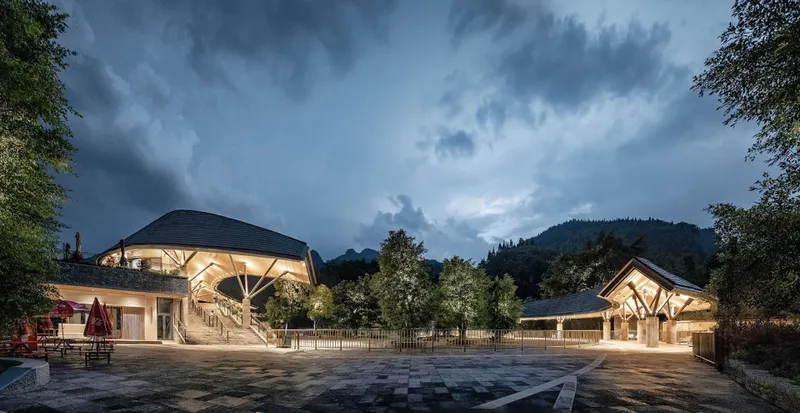
The tourist center, which includes a fashion store, is hidden in the site through soil covering. The roof covering for the main flow lines is made of slate tiles, inspired by the slate roof of the local folk house "Stone House." This unique design element not only pays homage to the region's cultural heritage but also seamlessly integrates the building into its surroundings.
To further incorporate regional cultural characteristics, the building facade is made of bluestone blocks used by folk houses. This creates a visual connection with the local architecture, while also adding a touch of elegance and sophistication to the building's overall design.
Epilogue_
The Huangguoshu Waterfall is one of the most representative scenic spots in the country. The series of problems it faces in its current situation are the epitome of the optimization, transformation and development of my country's scenic spots in the new development stage.
The project team received the task in 2018, and after three years, integrated planning, architecture, landscape and other majors, accompanied the scenic area from regional planning to design and construction, improved the functional layout, sorted out the traffic flow, and optimized the landscape experience from an overall perspective , Solving a series of problems such as functional shortage, traffic chaos, and hidden safety hazards that have plagued the scenic spot for a long time.
Hangguoshu Waterfall is one of the most representative scenic spots in the country, and the series of problems it faces are a microcosm of the optimization and transformation of the development of China’s scenic spots in the new stage of development.
The project team started the task in 2018 and, after three years of integration of planning, architecture, landscape and other disciplines, accompanied by the regional planning to design and construction of the scenic area, improved the functional layout, combed the traffic flow, and optimized the landscape experience, solving a series of problems that have plagued the scenic spot for a long time, such as functional shortcomings, traffic chaos and security risks.

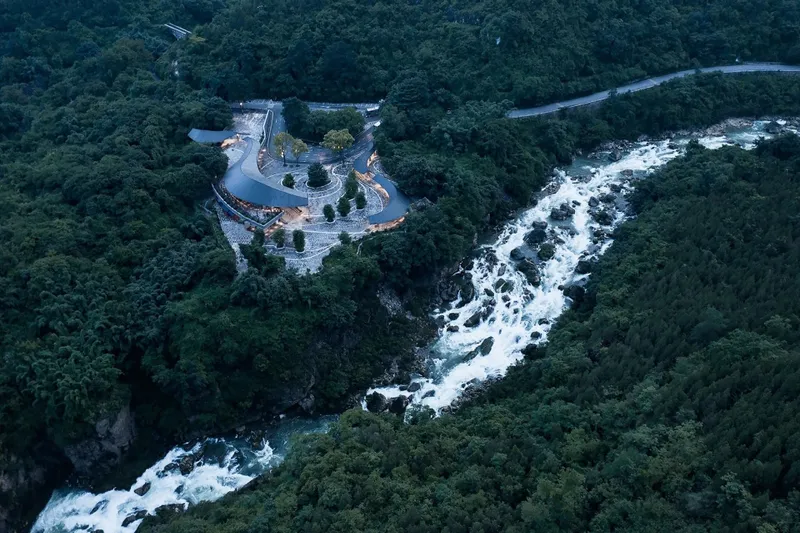
The Huangguoshu Scenic Area has recently gained attention for its two new tourist centers, which have been widely praised by visitors and scenic area managers alike. The entrance space is cleverly utilized as a linking point, seamlessly integrating the building into the surrounding natural landscape, making it the perfect starting point for any Huangguoshu tour sequence.
With a focus on modern architecture, these new tourist centers were designed by the China Architecture and Urban Planning Design Group (CAUPD) in collaboration with AEPA&TSC. They offer a unique experience that combines the natural beauty of the Huangguoshu Scenic Area with cutting-edge design.
One of the standout features of these centers is their use of the entrance space to create a smooth transition from the outside world to the interior. The space is carefully crafted to highlight the surrounding landscape, serving as a gateway to the stunning natural wonders that await visitors.
The design also emphasizes sustainability, with materials carefully selected to minimize the impact on the environment. The use of natural materials such as wood and stone helps to create a harmonious blend between the building and its surroundings.
Overall, the new tourist centers at the Huangguoshu Scenic Area are a testament to the power of modern design to enhance the natural world. With their seamless integration into the landscape and sustainable construction, they serve as a model for future architectural projects in natural settings.
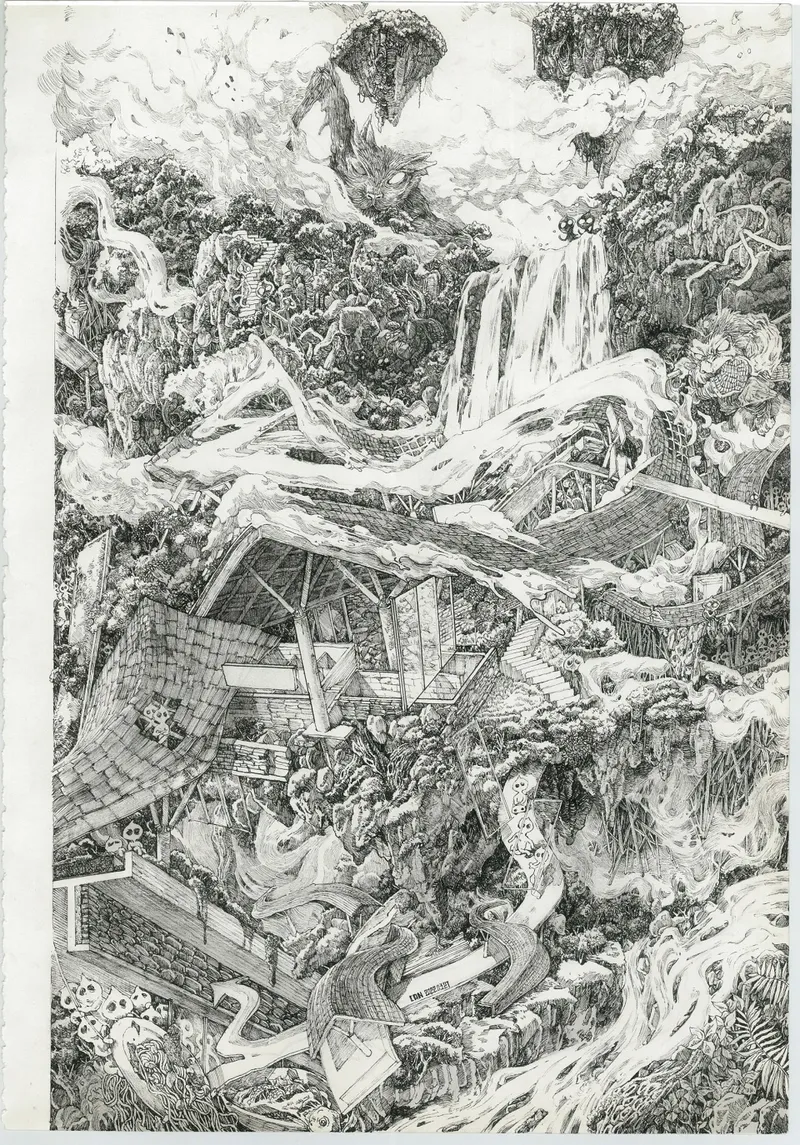
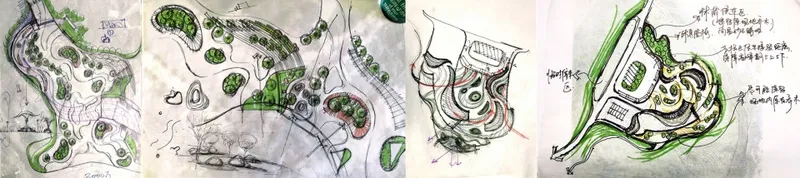

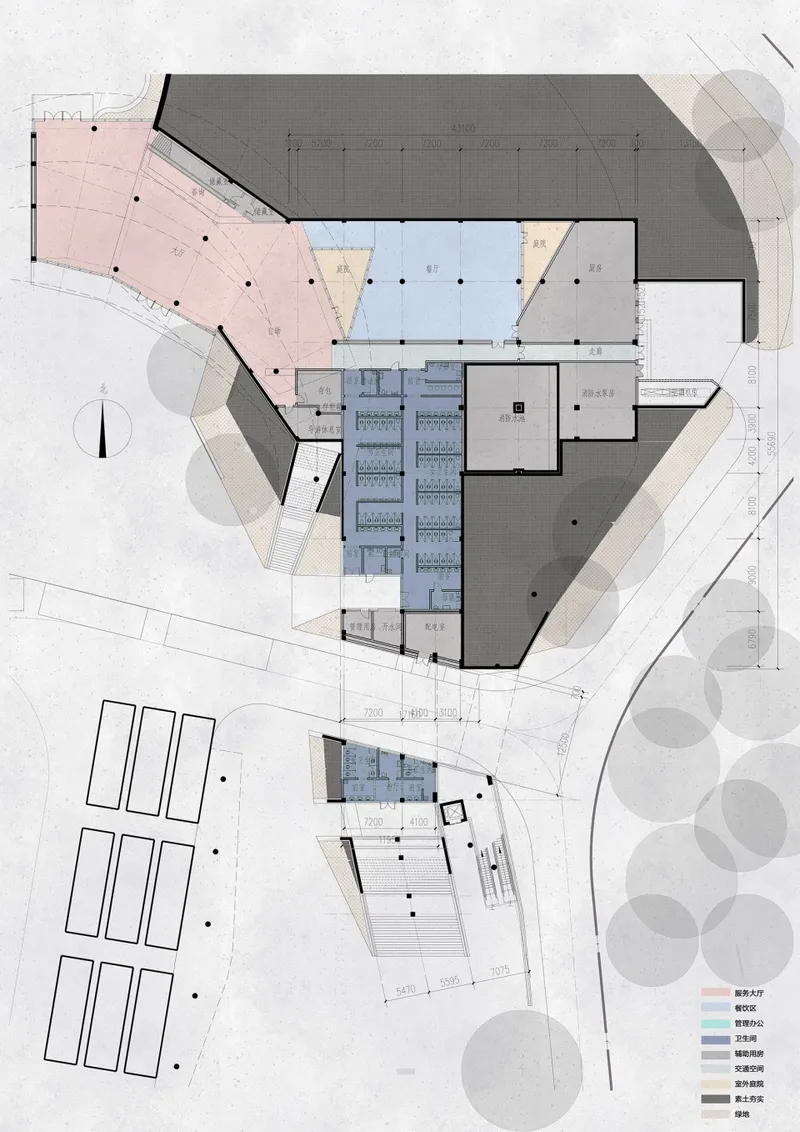
Project Name: Huangguoshu Waterfall/Tianxing Bridge Scenic Entrance Visitor Center
Architectural Firm/Company/Institution/Unit: China Urban Planning and Design Institute + Beijing Qingshui Aipai Architectural Design Co., Ltd.
Firm/Company/Unit Website: www.caupd .com / www.tsc.com.cn
Contact email: caupd@caupd.com / tsctsc_sc@126.com
Company location: Beijing
Design time: 2018
Year of completion: 2020
Construction area: Great Waterfall 6900㎡/Tianxing Bridge 1800㎡
Project address: Guizhou
Project Participants
Project Name: Visitor Center at the Entrance of Huangguoshu Waterfall/Tianxing Bridge Scenic Spot
Project Owner: Huangguoshu Tourist Area Planning and Construction Administration
Design Unit: China Urban Planning and Design Research Institute, Qingshui Aipai Architectural Design Co., Ltd.
Design Time: 2018- 2019
Completion time: 2019-2020
Project Location: Huangguoshu Scenic Area, Zhenning Buyi and Miao Autonomous County, Anshun City, Guizhou Province
Planning directors: Wang Zhongjie, Liu Ningjing
Architectural directors: Liu Yanyan, Zhang Can
Landscape directors: Sun Peibo, Shu Chenyang
Design team: Hao Yu, Xiao Can, Wang Wanying (planning, landscape) Yin Jin, Wen Sixuan, Pan Xiaodan, Song Changhua, Wang Liang (architect) Yao Yueliang, Ai Zhiyi, Hong Xianting, Liu Fengyi (interior) construction drawing team: Yang Xin, Zhu Lichang, Che
Li Jie, Li Baodong (architecture) Sui Yanhua, Xu Shengjie, Zhu Xuanyu (landscape) Yan Xuezhou, Sun Wen (structure) Luo Siwei (heating and ventilation) Xie Zhengtao, Zhang Bing, Zhang Xiaoqi (electrical) Zhou Yalin (water supply and drainage) Resident designers: Liu Fengyi, Li
Baodong
Lighting Design: Beijing Ningzhijing Lighting Design Co., Ltd.
Curtain Wall Design: Beijing Yourong Suofen Architectural Consulting Co., Ltd.
BIM Design: Beijing Baite Luyuan Engineering Design Consulting Co., Ltd.
Photographer: Wang Ziling



Popular Articles
Popular articles from the community


Hill & Cross Opera: Sculptural Opera House Architecture Shaped by Tallinn’s Landscape and Identity
Hill & Cross Opera reimagines opera house architecture in Tallinn through its sculptural hill, civic plaza, glass wave and a luminous cross.

The Earth Pod: 3D Printed Homes for Resilient Refugee Communities
The Earth Pod reimagines refugee housing through 3D printed homes made from clay, combining resilience, self-sufficiency, and rapid shelter.

Riyadh For All: Intergenerational Urban Design for Active Aging in Rabat
Riyadh For All reimagines urban design in Rabat with intergenerational co-living, adaptive courtyards, and Moroccan cultural exchange today.

Conexión: Biophilic Design Reimagines High-Rise Living in Hong Kong
Conexión reimagines high-rise living in Hong Kong through biophilic design, green facades, shared spaces, daylight, water and nature within.


Similar Reads
You might also enjoy these articles

Day and Night Park: A Time-Based Urban Newsstand in Beijing
A temporary urban newsstand in Beijing blending travel, light, and reading through poetic colors, compact form, and community-focused design.

Modernist Patio Renovation in El Masnou, Barcelona by Oliver Segura Arquitectura + Cebrià Arquitectura
Modernist patio renovation blending tradition and innovation with a movable pool, leveled floors, and Catalan materials in El Masnou.

Alto Residencial Coop: Cooperative Housing Development in Santiago de Compostela by Carbajo Barrios Arquitectos
A linear cooperative housing complex blending white volumes and perforated metal façades, enhancing community living, natural light, privacy, and urban integration.

Vil Genis School by BPA ARCHITECTURE – Massy, France
Vil Genis School in Massy, France, features sustainable design, south-facing classrooms, community integration, accessible spaces, and modern educational architecture.


Explore Hospitality Building Competitions
Discover active competitions in this discipline




Challenge to reimagine the Iron Throne


Photograph architecture without architects


Illustrate the lost glory of Angkor Wat - Render Challenge


Design challenge to reuse E-waste
Comments (0)
Please login or sign up to add comments
No comments yet. Be the first to comment!