
Vagón Arquitectura Sequences a Corner Lot House Through Layered Intermediate Spaces in Bahía Blanca
A 454-square-meter residence in Argentina's La Reserva neighborhood dissolves the line between inside and outside through timber, concrete, and light.

There is a particular kind of house that does not reveal itself all at once. It unfolds. You move through it and the architecture keeps renegotiating its terms: what counts as interior, what counts as exterior, and whether the distinction matters at all. The detached house that Vagón Arquitectura completed in 2023 in Bahía Blanca's La Reserva neighborhood belongs firmly to this category. Designed by lead architects Juan Giovino and Juan Olea, the 454-square-meter residence sits on a corner lot with a north orientation, the ideal solar exposure for Argentina's southern hemisphere latitude, and uses that advantage not merely for passive gain but as an organizing principle for the entire spatial sequence.
What makes the project genuinely interesting is its refusal to treat the house as a single object. Instead, the design reads as a collection of pavilion-like volumes linked by corridors, courtyards, and screened terraces that function as rooms in their own right. The material palette of board-formed concrete, black steel, and vertical timber slat screens is disciplined without being austere. Each element carries real spatial weight: the concrete anchors, the steel frames, and the timber filters. It is a house that rewards slow reading.
A Facade Built from Filters
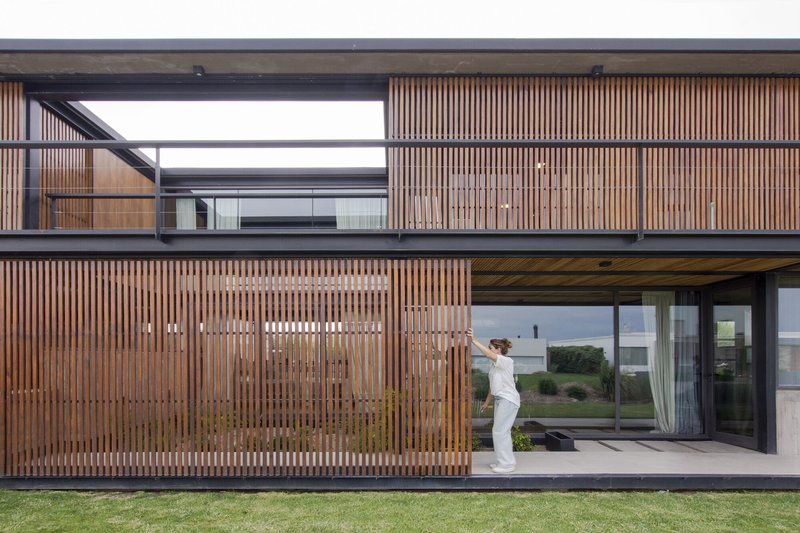
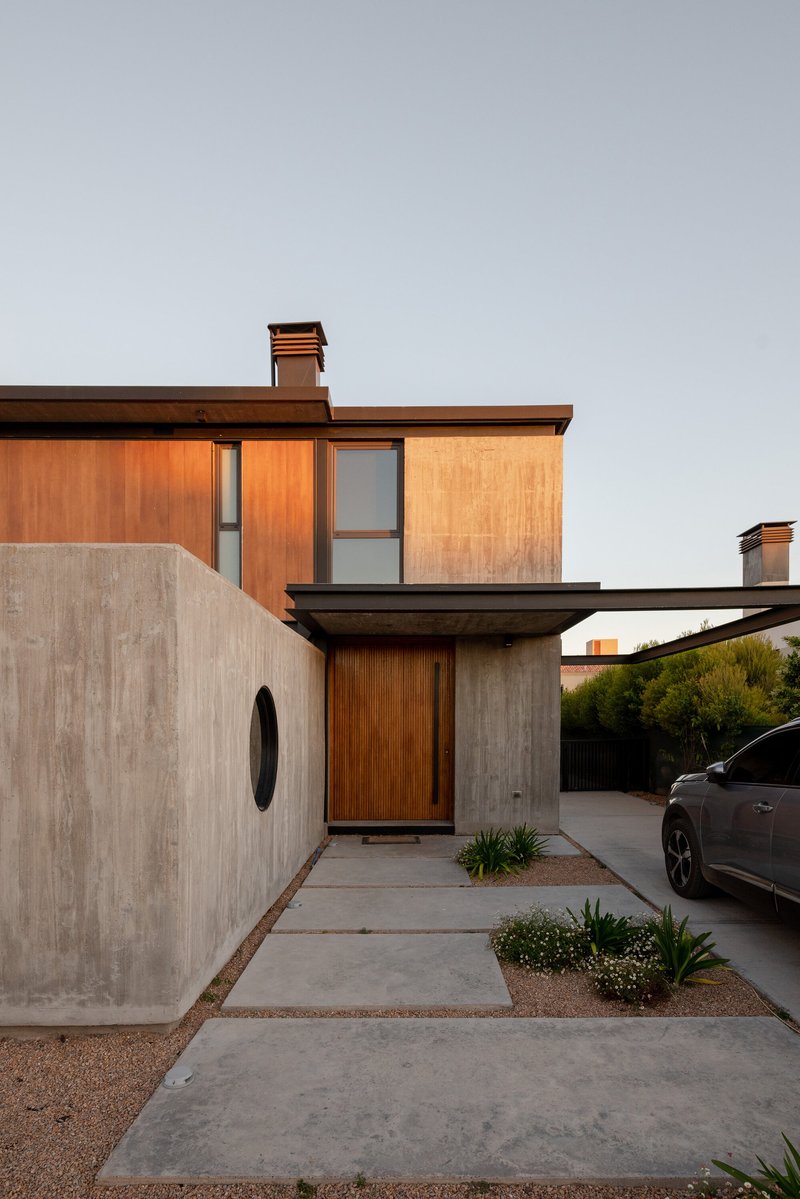
The street-facing elevations operate less as walls and more as a series of adjustable filters. Vertical timber slat screens, some operable and some fixed, wrap the upper and lower volumes and create a layered depth that shifts throughout the day. At dusk, when interior light spills through the gaps, the effect is striking: the house becomes a lantern whose warmth is modulated by the timber's rhythm. A circular porthole window punched into a solid concrete panel at the entry level adds a deliberate moment of compression, a point where the eye is focused instead of released.
The entry facade reads as a composition of contrasting opacities: dense concrete panels next to permeable timber screens, with glass recessed behind both. Nothing is flush. The stacking of volumes creates cantilevers and overhangs that produce deep shadows, giving the house a graphic quality that holds up from across the street and rewards closer inspection equally.
Courtyards as Connective Tissue
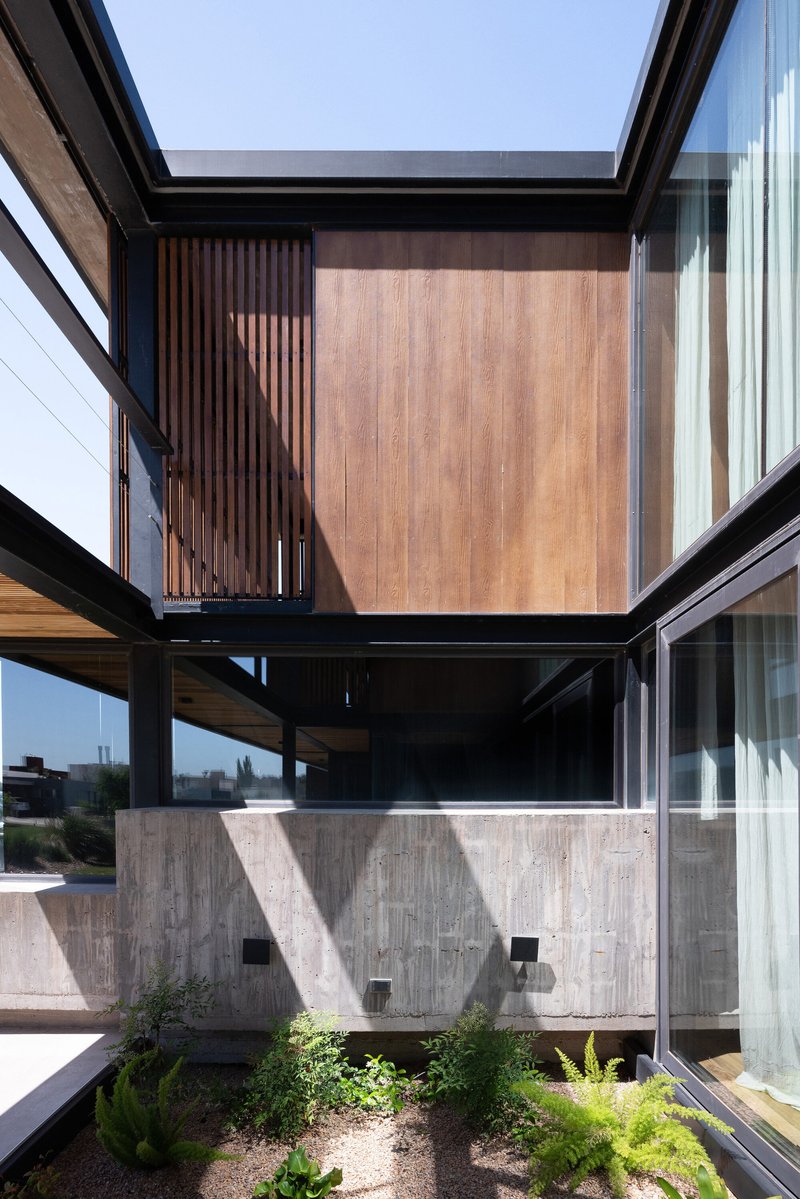
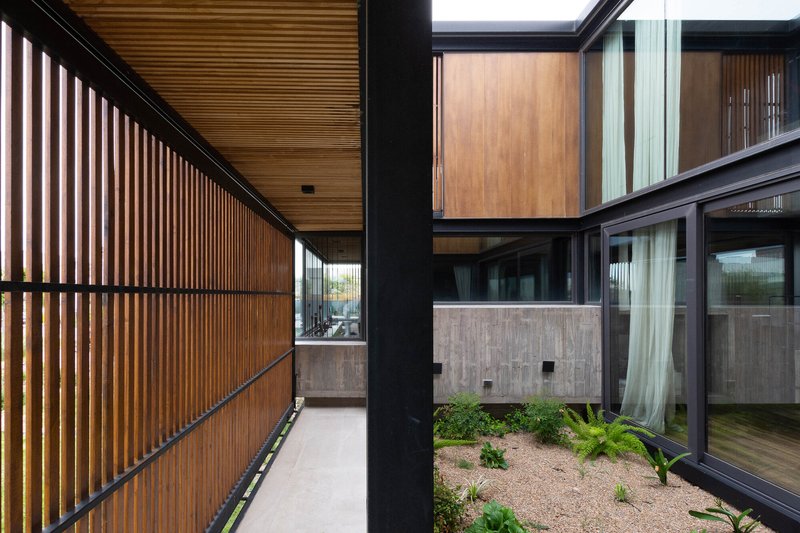
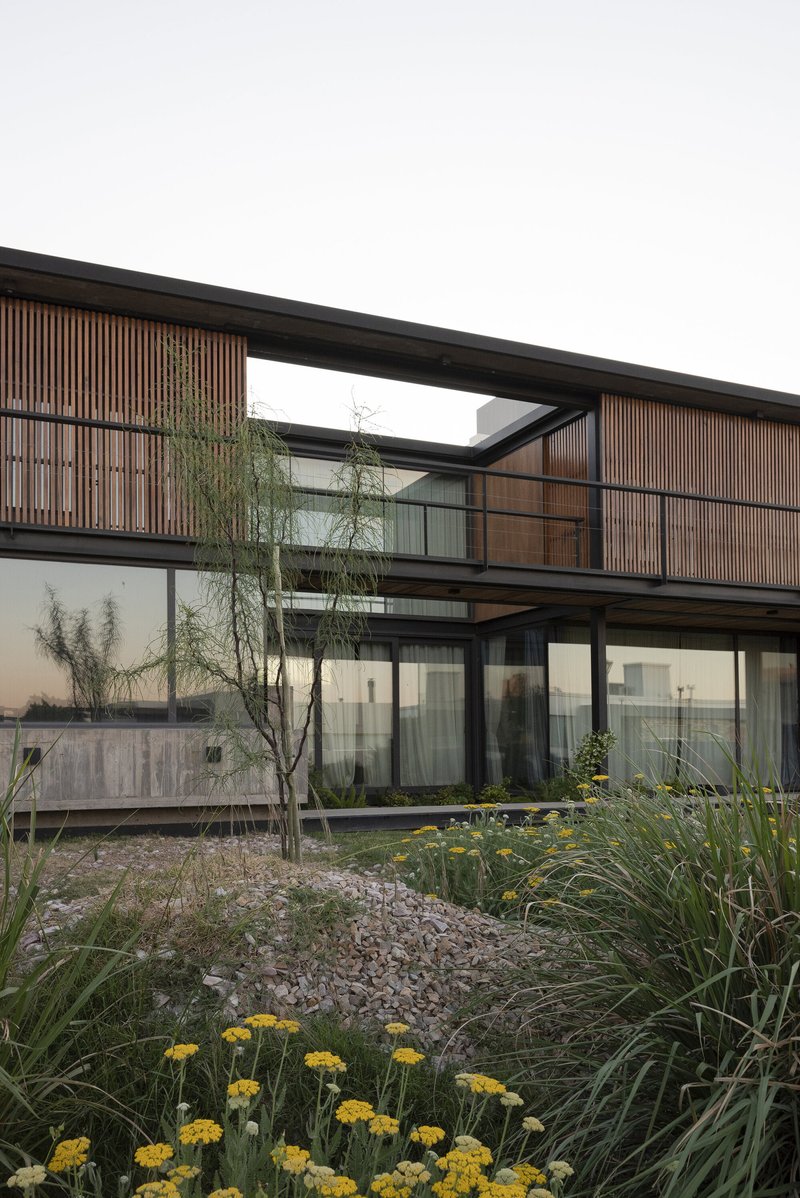
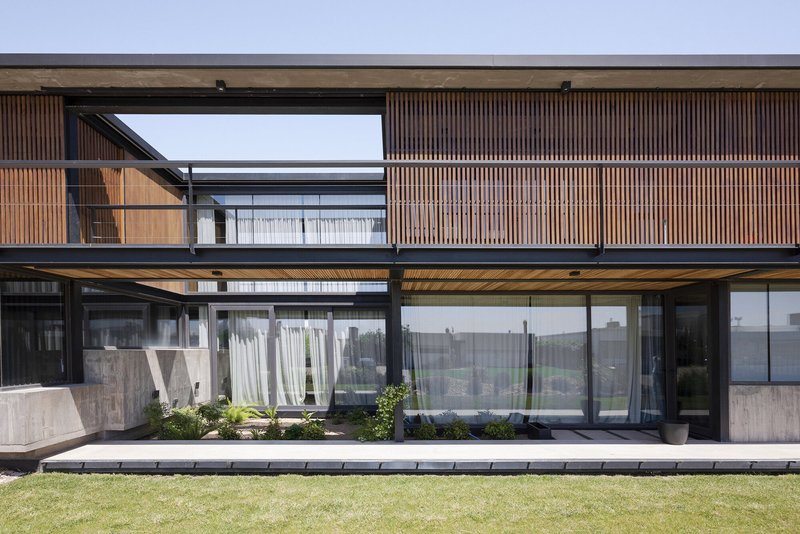
The courtyards here are not leftover voids. They are the organizational engine of the plan. Planted beds filled with gravel and low vegetation sit within board-formed concrete enclosures, framed overhead by exposed steel beams and timber-clad soffits. These spaces pull light and air into the center of the house and serve as visual anchors from nearly every major room. Yellow flowering plants introduce a controlled note of color against the otherwise muted material palette.
Covered walkways line the courtyard edges, screened on one side by vertical timber slats and open on the other to the planting. The experience of walking through the house is therefore never sealed off from the landscape. You are always partially outside, partially within a constructed frame. This is the real achievement of the project: it turns circulation itself into a spatial event rather than a utilitarian connector.
Timber Ceilings, Steel Bones
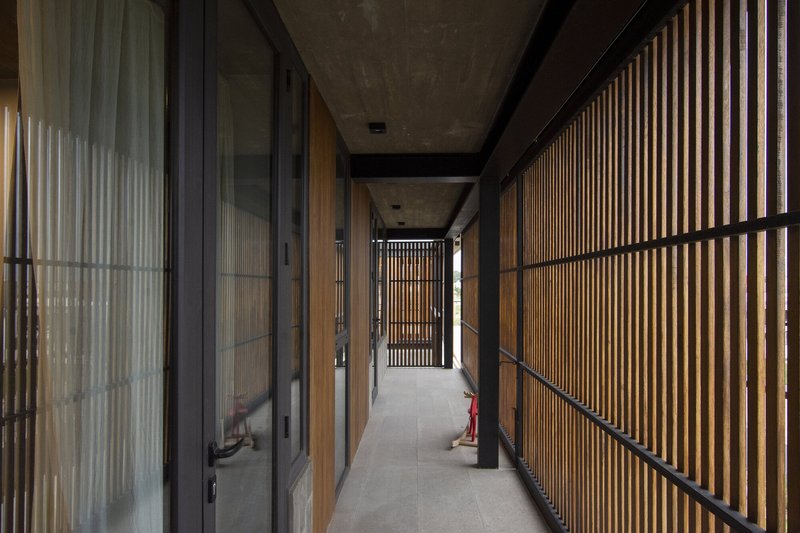
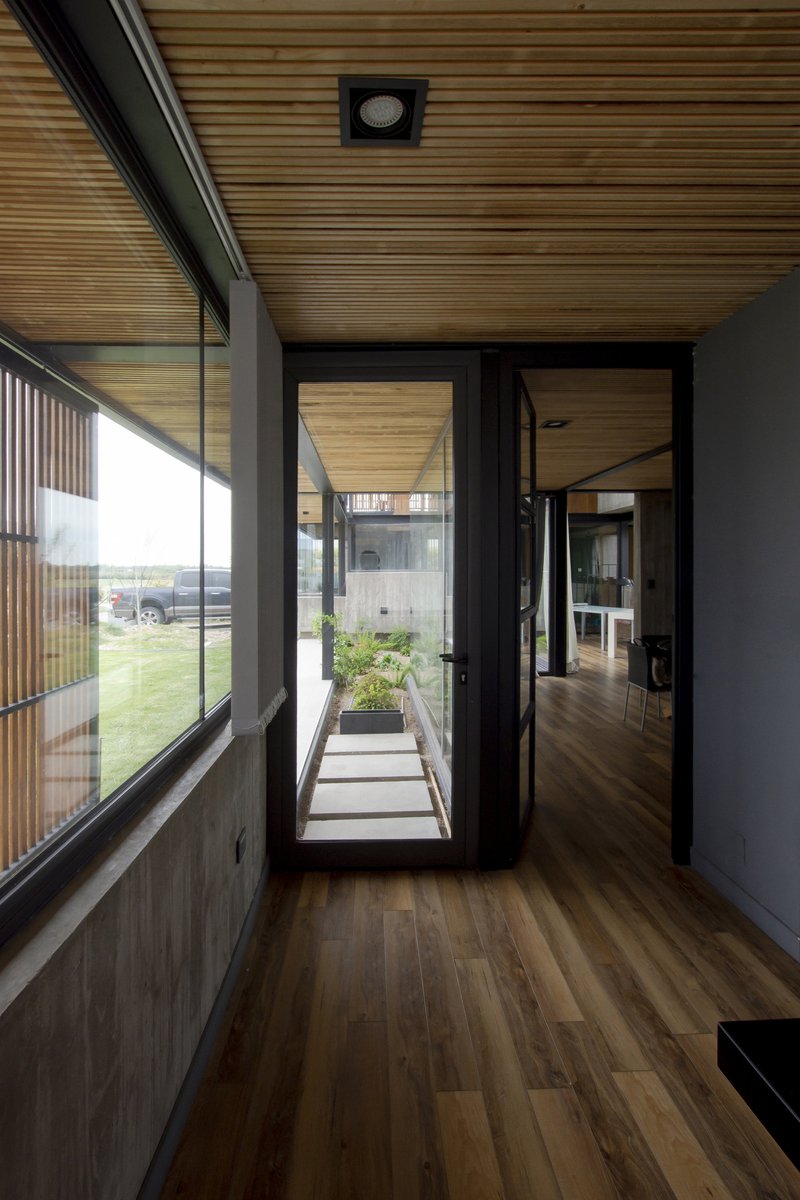
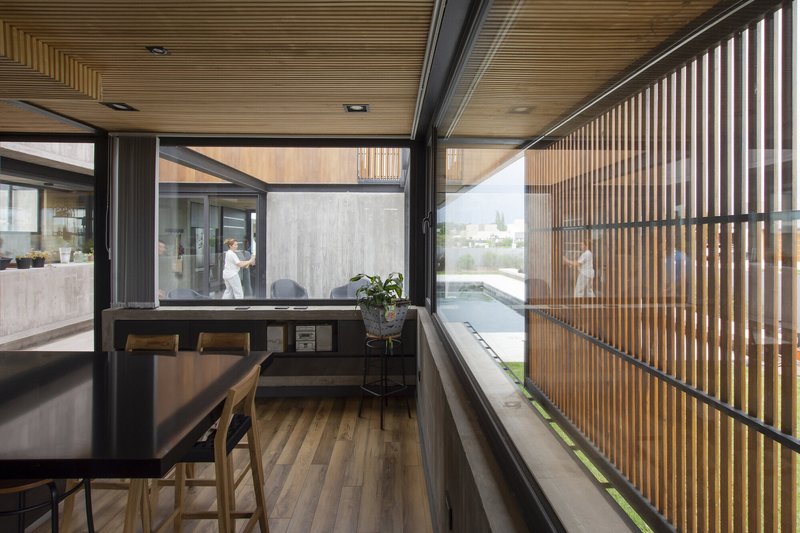
The interior corridors reveal the structural logic clearly. Concrete ceiling beams run perpendicular to the direction of movement, establishing a cadence that the slatted timber ceilings continue and refine. Black-framed glazing divides these corridors from the courtyards, but the glass is so recessive that the dominant impression is of the timber and concrete working together. The palette remains consistent: warm wood tones above and underfoot, cool concrete at the edges, and black steel as the thinnest possible structural gesture.
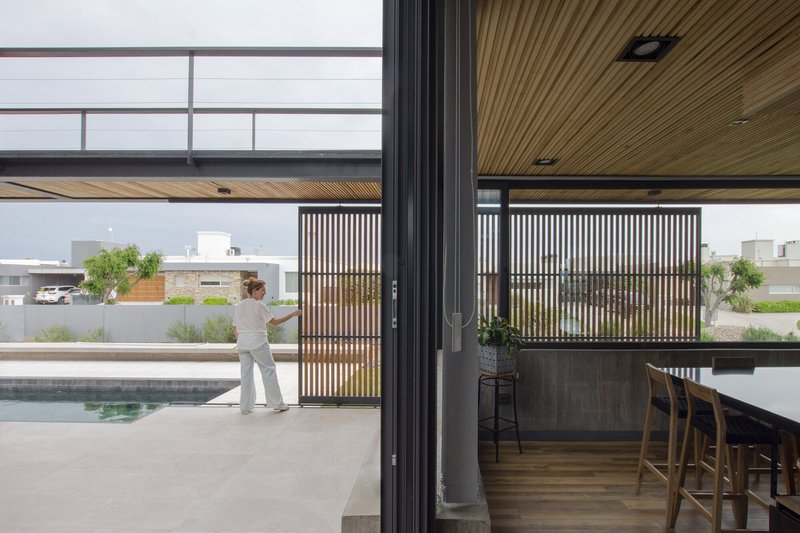
In the dining area, vertical timber slat screens wrap around the perimeter, and slatted wood soffits above diffuse natural light evenly across the room. The effect is closer to a garden pavilion than a conventional domestic interior. Vagón Arquitectura clearly understands that in a climate with strong northern sun, controlling light is as important as admitting it.
Living with the Pool Terrace
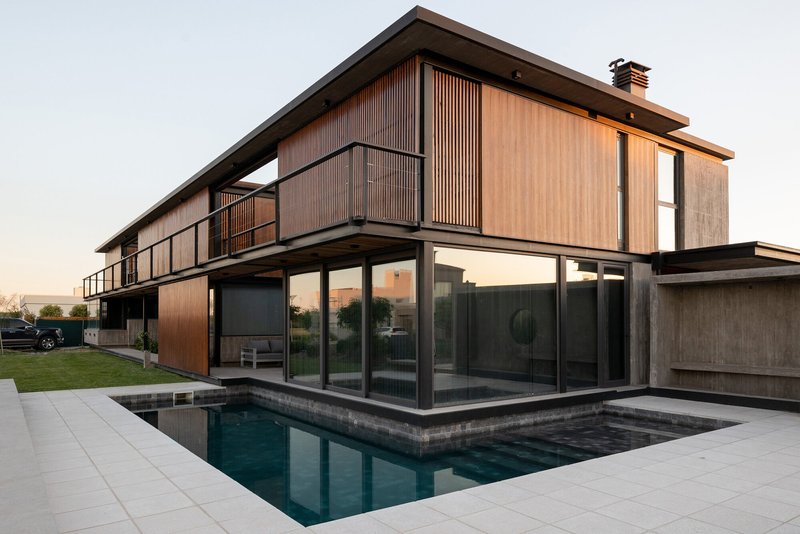
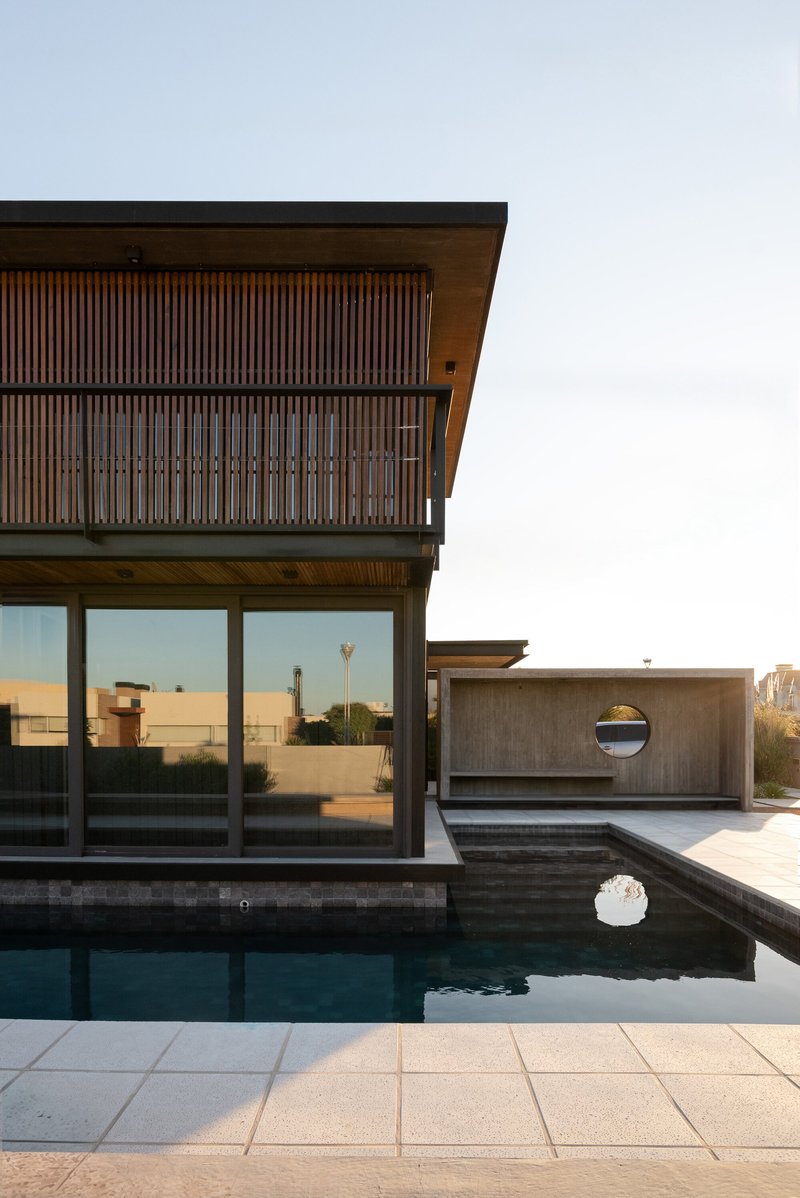
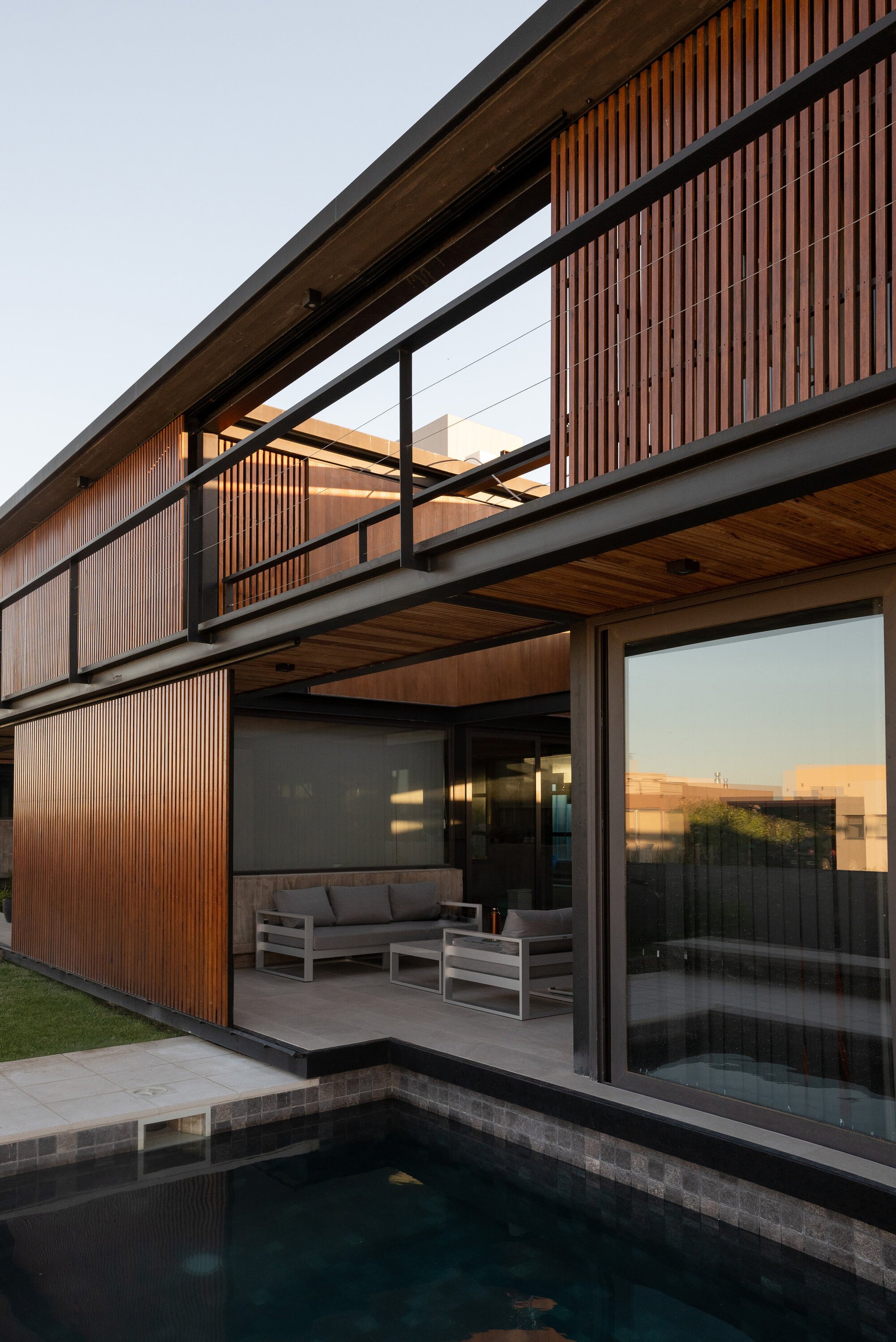
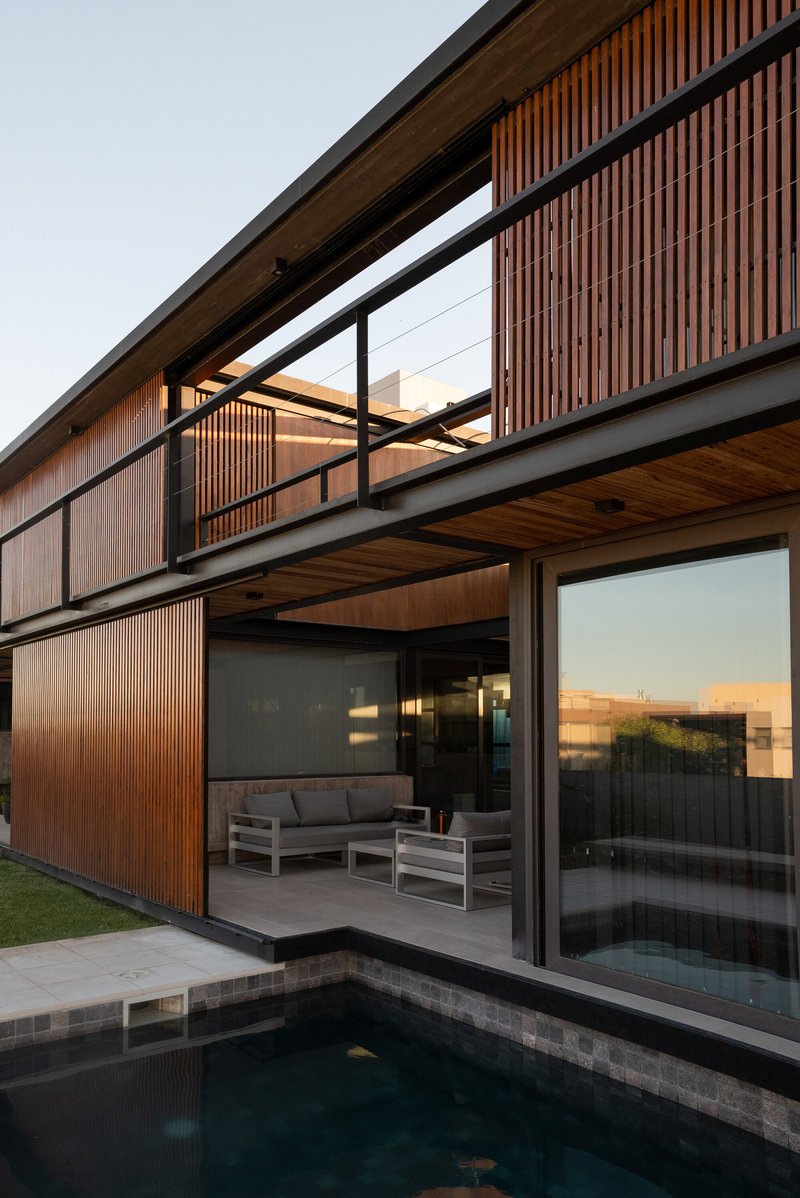
The pool terrace is where the house's layered approach reaches its most public expression. Viewed from the garden at dusk, the two-level composition stacks timber-clad volumes above a ground-level pool deck defined by black steel columns and slatted soffits. The upper terrace cantilevers outward, its slatted screens creating a filtered canopy that extends the usable shade area over the water below. A circular window volume pushes through the facade like a periscope, introducing a playful geometric disruption into an otherwise rectilinear scheme.
From inside, sliding doors open the living areas fully onto the pool terrace, and the timber ceiling continues uninterrupted from interior to exterior, collapsing any clear threshold. The house does not frame a view of the pool so much as fold itself around it, making the water an ambient presence rather than a destination.
Double Height and Interior Depth
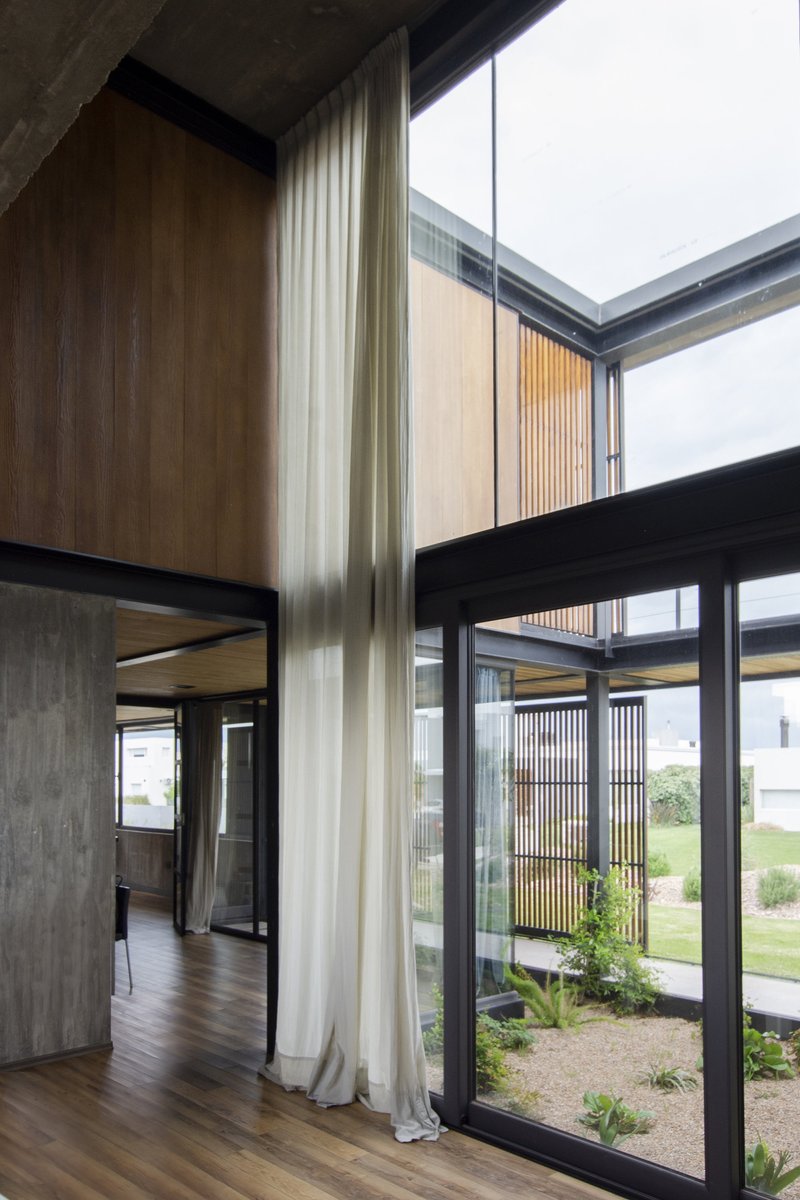
A double-height corner with floor-to-ceiling glazing opens directly onto a planted courtyard, pulling daylight deep into the interior and establishing a vertical counterpoint to the house's predominantly horizontal character. The timber screens visible beyond the glass maintain privacy while keeping the boundary between house and garden ambiguous. The proportions of this space are generous without being theatrical, scaled to domestic life rather than spectacle.
At the poolside terrace, the nighttime view reveals the full structural articulation: slender black steel columns support the slatted soffit overhead, and the warm glow from behind the timber screens lends the house a quiet presence on the lot. It is a house designed to be inhabited at all hours, not merely photographed in golden light.
Plans and Drawings
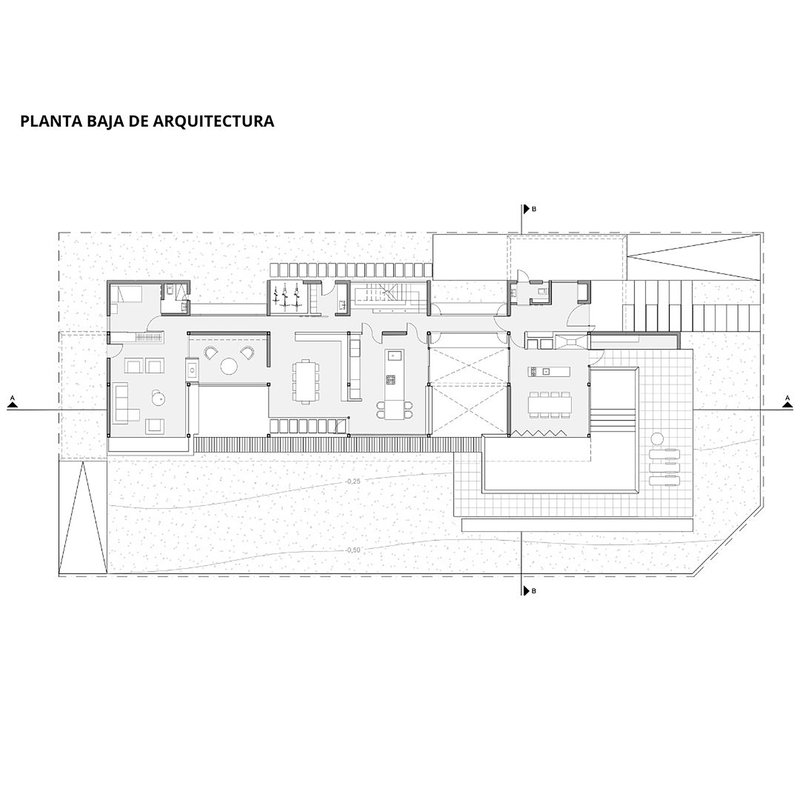
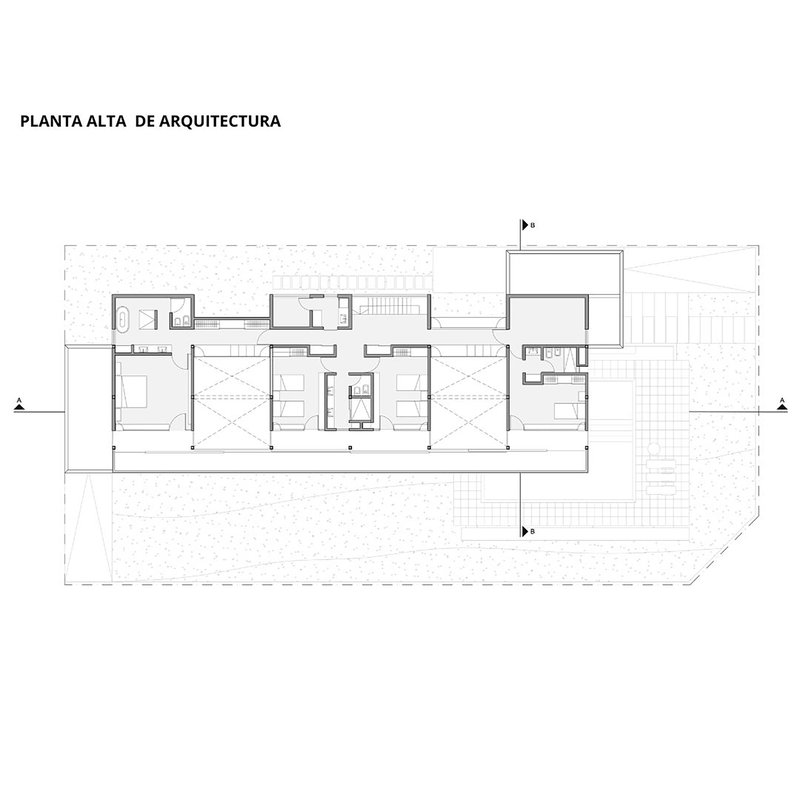
The ground floor plan confirms what the spatial experience suggests: the house is organized as a linear sequence of rooms and courtyards, with a central staircase acting as the hinge between the more collective living zones and the service areas. The upper floor plan concentrates the bedroom zones along a single corridor, keeping the private program compact and oriented toward the quieter edges of the lot.
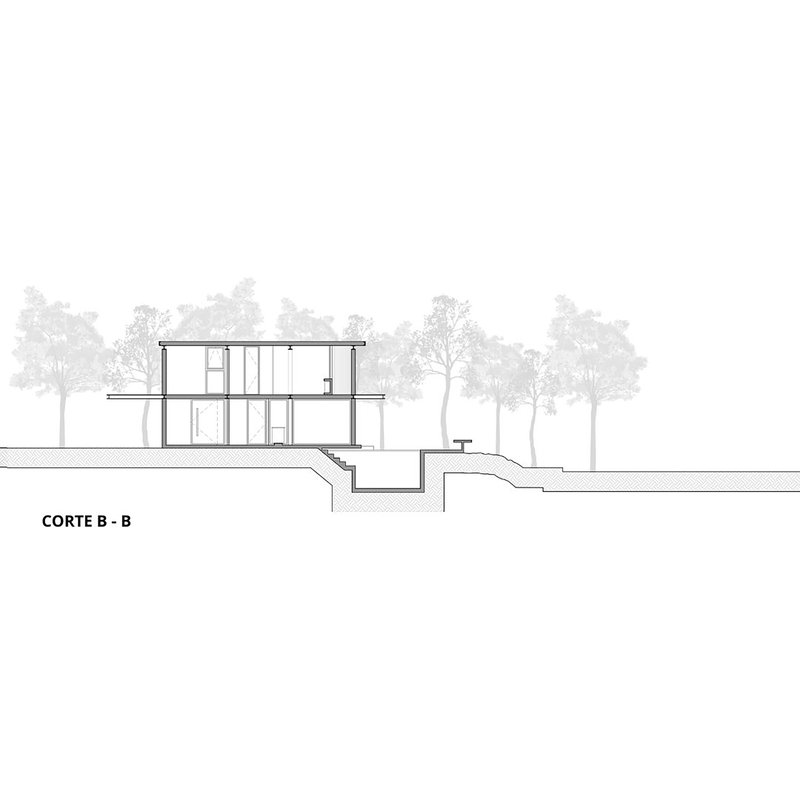
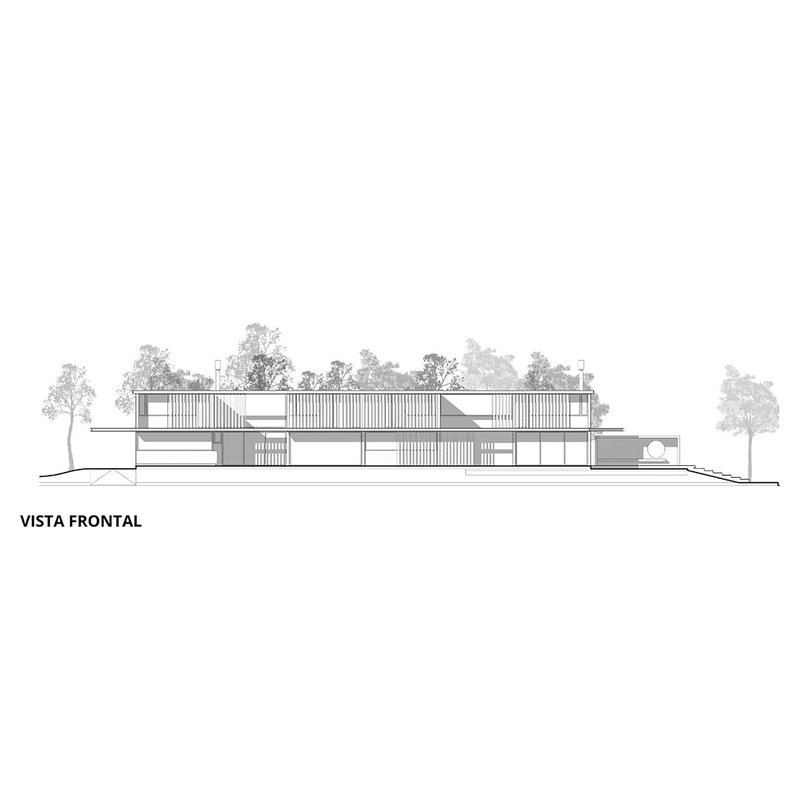
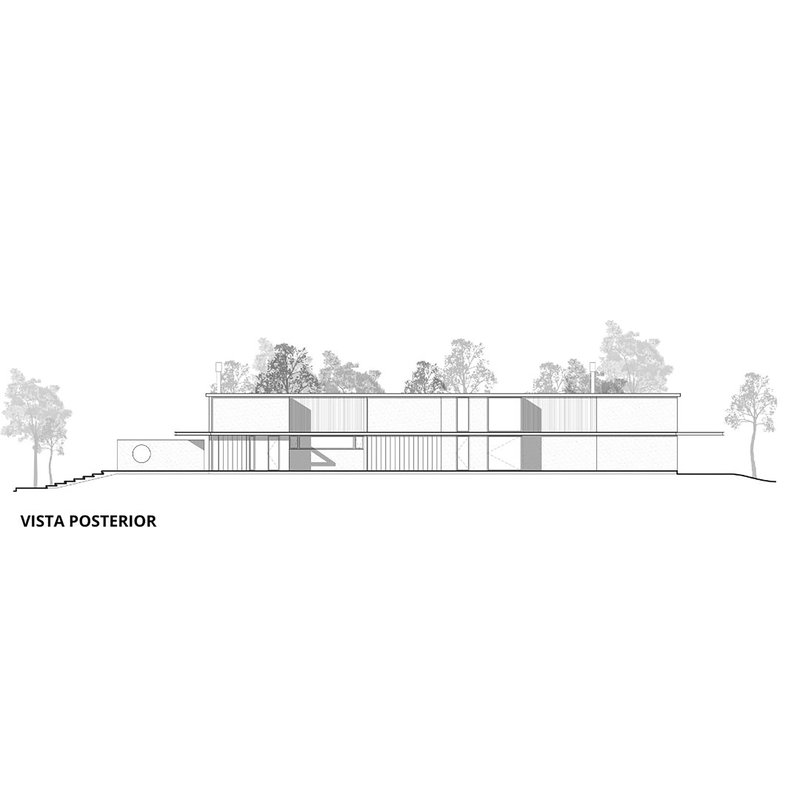
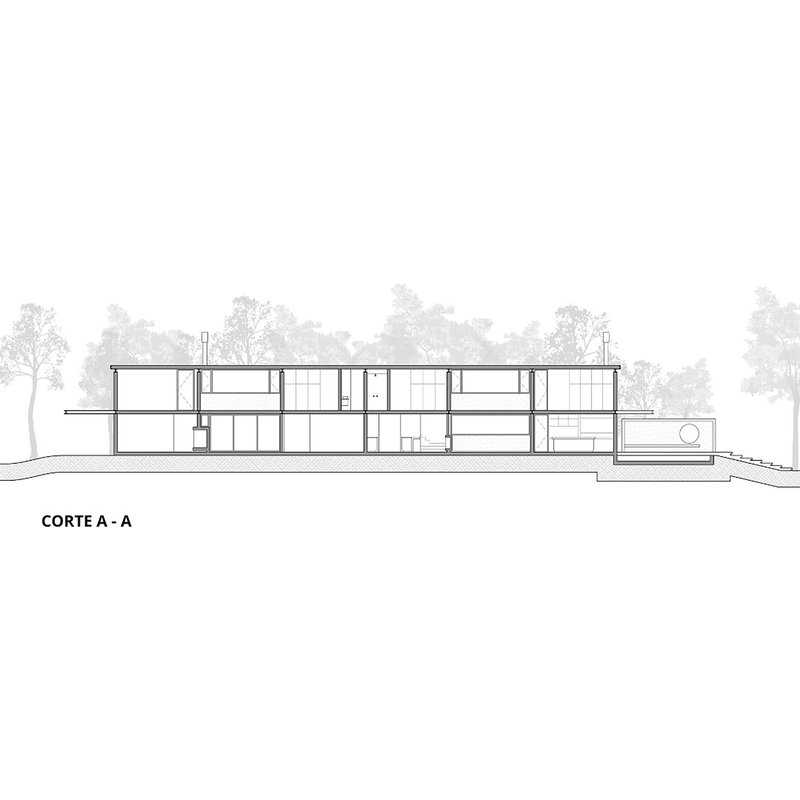
The section drawings reveal that the site slopes, and the house nestles into this topography rather than fighting it. The two-storey volume reads as compact from the street but gains height toward the garden, where the full elevation is exposed. The front and rear elevation drawings show how the vertical slat screens unify the composition across both levels while allowing each volume to read as distinct. Mature trees at the perimeter reinforce the sense of the house as embedded within its landscape.
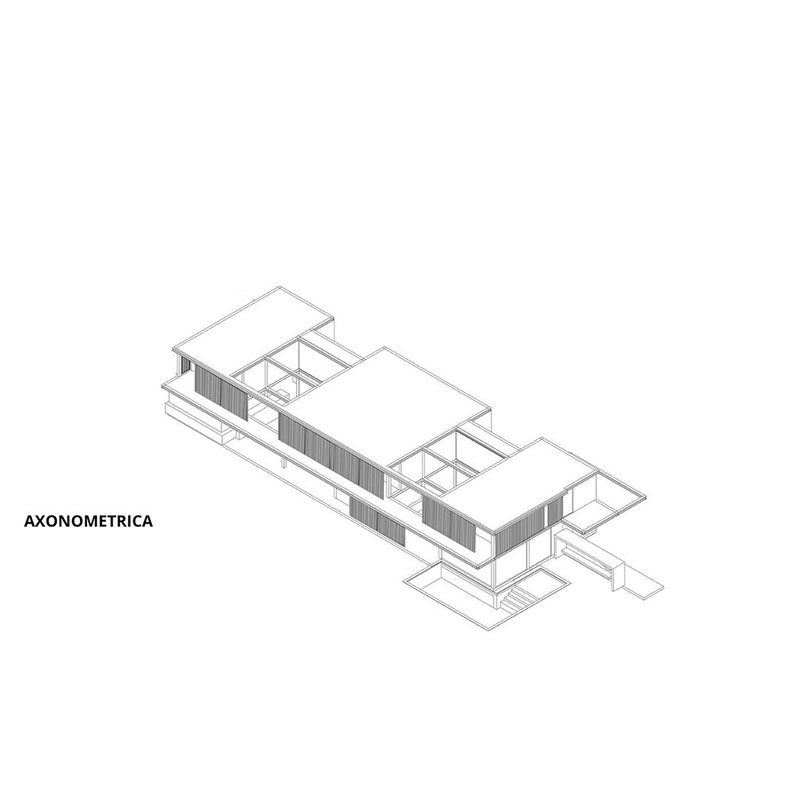
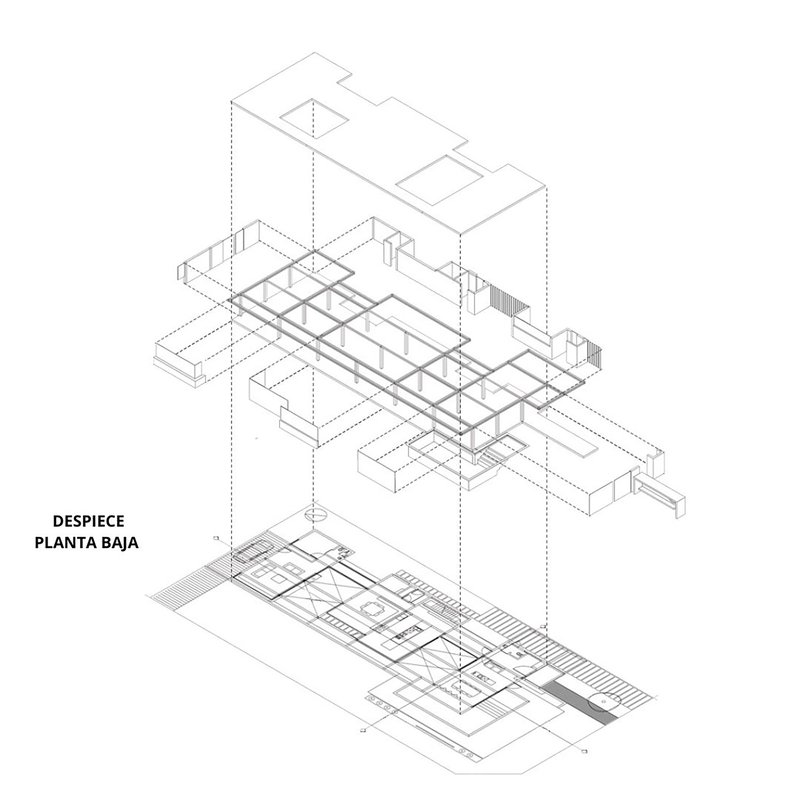
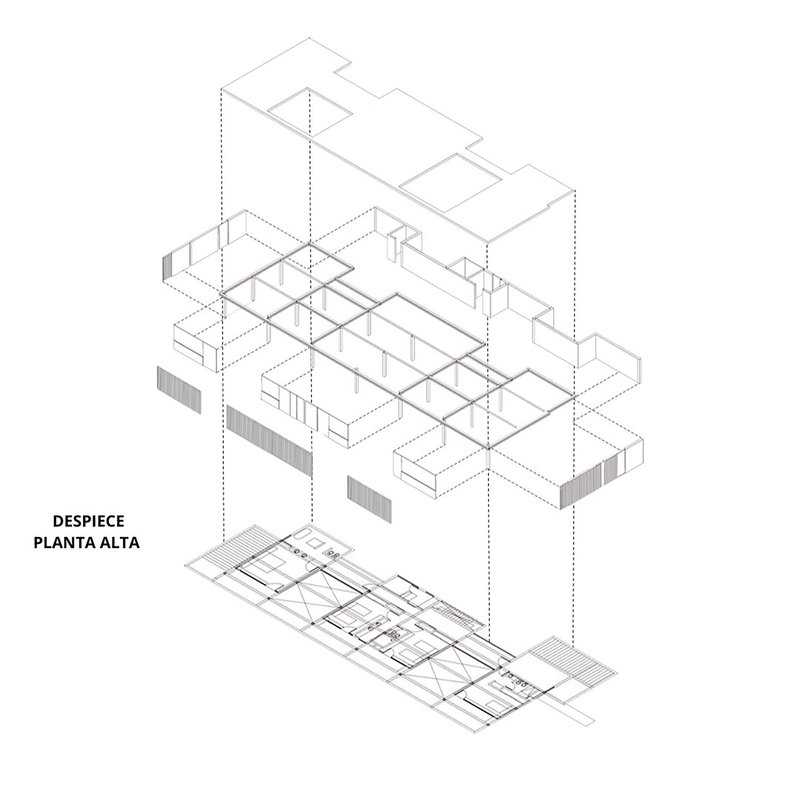
The axonometric drawings are the most revealing. The overall axonometric shows three flat-roofed pavilion volumes arranged linearly, linked by screening panels that fill the gaps between them. The exploded axonometrics separate the floor plans from the structural frame, making visible the steel skeleton that supports the timber screens and concrete panels. This is a house whose apparent material richness rests on a clear and legible structural logic.
Why This Project Matters
The temptation with houses on generous lots in private neighborhoods is to build outward, to claim as much ground as possible with a sprawling footprint. Vagón Arquitectura resists this. By breaking the program into discrete volumes connected by intermediate spaces, the house occupies the site selectively and gains something more valuable than area: spatial variety. Every transition between rooms passes through a threshold that reorients your relationship to light, air, and landscape. That rhythm is the architecture.
The material discipline matters too. Glass, steel, concrete, and timber are common enough ingredients, but the way they are deployed here, with each material carrying a specific spatial role rather than decorating a neutral box, elevates the project beyond its program. This is not a house about luxury finishes. It is a house about the intelligence of sequence, about making the act of moving through domestic space genuinely pleasurable. In a discipline that too often confuses complexity with quality, this house makes a compelling case for clarity.
Detached House in the La Reserva Neighborhood, Bahía Blanca, by Vagón Arquitectura (lead architects Juan Giovino and Juan Olea). Located in Bahía Blanca, Argentina. 454 m². Completed in 2023. Photography by Nicolas Herrero - Fotografia de Arquitectura.
About the Studio
Vagón Arquitectura
Share Your Own Work on uni.xyz
If projects like this are the kind of work you want to make, uni.xyz is a place to publish your own, find collaborators, and enter design competitions.




Popular Articles
Popular articles from the community

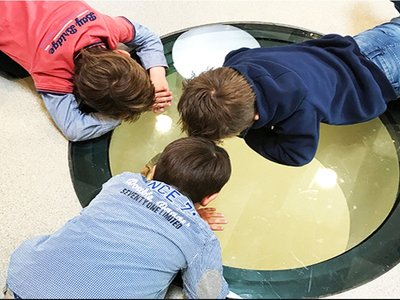
IKC de Geluksvogel: Sustainable School Architecture Designed for Free Movement and Digital Learning
IKC de Geluksvogel turns sustainable school architecture into a flexible Maastricht campus for digital learning, nature, and free movement.
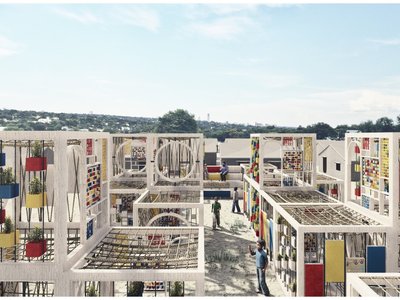
The Faith: Modular Architecture for Play, Learning, and Hope in Kutupalong Refugee Camp
A modular playground architecture project in Bangladesh where play, learning, safety, and hope rebuild childhood inside a refugee camp anew.
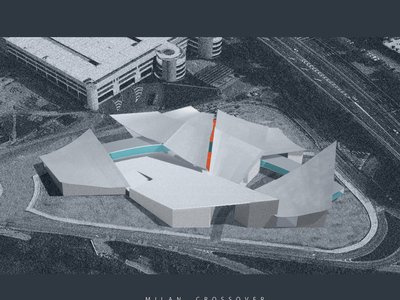
Milan Crossover: Sustainable Architecture for a New Fashion Culture in Milan
Milan Crossover transforms fashion culture through sustainable architecture, linking material libraries, remake studios, and public runways.

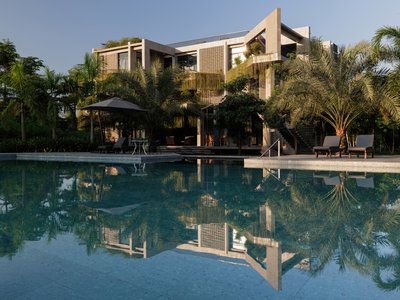
Reincarnation Weaves a Three-Story Retreat into the Green Landscape of Rural Bangladesh
Ara Manor in Narsingdi dissolves the line between domestic architecture and its lush surroundings through screens, courtyards, and planted rooftops.


Similar Reads
You might also enjoy these articles
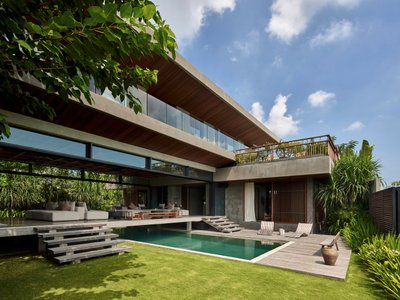
Freebird Residence by Alexis Dornier: A Tropical Modernist Sanctuary in Bali
Floating living pavilion above pool anchors H-shaped tropical villa, blending Japanese minimalism, sustainable strategies, lush landscape, and sculptural interiors.
127af Flips a Tiny Bagnolet Rowhouse Upside Down with a Handcrafted Roof Extension
A 55-square-meter terraced house on the edge of Paris gains a luminous upper living floor through lightweight timber and steel.
1.61 Design Workshop Wraps a 600-Square-Meter Café in Vietnam in Sculptural Burgundy Drama
Reden Café & Bistro pairs a helical staircase, mosaic floors, and deep red interiors to rethink Vietnamese hospitality space.

The Unbound Brain: A School Shaped by Cognitive Architecture
Cylindrical learning pods radiate like neurons from a central cortex, turning the floor plan into a spatial model of human thought.

Explore Residential Building Competitions
Discover active competitions in this discipline




The International Standard for Design Portfolios


The Global Benchmark for Architecture Dissertation Awards


The Global Benchmark for Graduation Excellence


Challenge to design mud housing for contemporary communities
Comments (0)
Please login or sign up to add comments
No comments yet. Be the first to comment!