

Versatile: Modular Housing That Treats Cultural Difference as Infrastructure
A flexible timber-and-fabric framework in Boa Vista, Brazil turns multicultural coexistence into a spatial design principle rather than an afterthought.


What if the diversity of a city's residents wasn't a problem to manage but a structural logic to build with? In Boa Vista, Brazil, where Indigenous, Venezuelan, and Brazilian communities overlap in an intensifying urban landscape, that question isn't abstract. It's spatial. Versatile takes it seriously, proposing a 10,000 m² modular housing system where living units can be added, rearranged, or merged based on shifting social dynamics. The architecture refuses to prescribe a single way of living. Instead, it offers a lightweight wooden framework, prefabricated volumes, and a tensile fabric canopy that together allow residents to configure spaces ranging from single-person dwellings to family clusters and neighborhood courtyards.
Designed by Selin Boyacıoğlu and Doruk Özyörük, Versatile was shortlisted in the Live Green competition on uni.xyz. The project positions cultural sustainability alongside ecological sustainability, arguing that the two are inseparable. In a city where coexistence generates both collaboration and friction, architecture that adapts to its inhabitants rather than constraining them becomes a form of social infrastructure.
A Structural Skeleton That Invites Reconfiguration

The axonometric drawing reveals the core logic: colorful volumetric units hang within a steel structural frame, connected by fabric membranes that stretch between them. The frame is the constant; everything else is variable. This distinction matters. By separating the permanent skeleton from the inhabitable modules, the designers create a system where spatial arrangements can evolve over time without demolition or waste. The color-coded volumes signal programmatic variety, each block potentially serving as a bedroom, workshop, classroom, or communal kitchen depending on the community's needs at any given moment.
The fabric connections are more than decorative. They regulate light, temperature, and privacy, functioning as a dynamic canopy that responds to Boa Vista's equatorial climate. Stretched and folded across the timber and steel armature, the membrane layer turns circulation into a shaded, semi-enclosed experience rather than exposed walkways baking in tropical heat.
Plans and Sections That Map Social Relationships

The floor plans and sectional elevations make visible what the axonometric only hints at: the project's spatial typologies operate at multiple scales simultaneously. Curved pathways wind between scattered program blocks, encouraging movement and chance encounters rather than the corridor-based isolation of conventional apartment buildings. The sections show multi-level stacking where farming zones and common areas occupy the lower levels, enabling a degree of self-sufficiency within an urban framework. This vertical organization mirrors the designers' diagrammatic evolution from past to now to future, a continuous layering of communal interactions and private retreats.
What stands out is the refusal of rigid spatial hierarchy. Individual, family, neighborhood, and courtyard typologies coexist on the same grid, each one adaptable to gatherings, education, or recreation. The shaded courtyards visible in section serve as natural meeting zones, carved out of the modular logic rather than imposed on it.
Fabric Pathways as Climate and Community Mediators

The rendered exterior view along the fabric pathways shows what daily life in Versatile might feel like. Timber columns rise vertically while tensile fabric surfaces weave between them, filtering daylight into a warm, diffused glow. The colorful cubic volumes punctuate the composition, each one legible as a discrete inhabitable unit. The spatial experience is closer to walking through a covered market or a tree canopy than through a housing block. That quality is intentional: the designers want circulation to function as a social space in itself, not merely as a route between private units.
The wooden frames visible here serve a double purpose. They minimize environmental impact by using renewable material and they promote local craftsmanship, anchoring the project in Boa Vista's existing construction culture rather than importing alien building technologies.
Interior Volumes Defined by Timber and Textile

The interior perspective confirms that Versatile's material palette is deliberately restrained: exposed timber framing and stretched fabric surfaces define the spatial boundaries between levels of colorful cubic volumes. There is no drywall, no suspended ceiling, no effort to conceal the structural logic. The honesty of the construction becomes a kind of invitation. If residents can see how their building works, they can more readily imagine reconfiguring it. This transparency supports the project's participatory ambition, where inhabitants are empowered to define their own spaces and develop a sense of ownership over the whole system, not just their private unit.
The interplay of timber warmth and fabric softness against the hard-edged colored volumes produces a spatial character that feels both provisional and cared for. It reads as architecture that knows it will change, and welcomes that change as evidence of a living community rather than a failure of design.
Why This Project Matters
Versatile's most significant contribution is conceptual, not technical. Modular housing exists. Timber frames exist. Fabric canopies exist. What Boyacıoğlu and Özyörük add is a convincing argument that modularity should be driven by cultural logic, not just construction efficiency. In a city like Boa Vista, where Venezuelan refugees, Indigenous communities, and long-established Brazilian residents share territory under pressure, the ability to reconfigure living space according to evolving social relationships is not a luxury. It is a necessity.
The project also demonstrates a mature understanding of what sustainability means when extended beyond carbon metrics. Farming zones on the lower levels, local timber construction, and fabric systems that passively regulate climate all contribute to ecological performance. But the deeper sustainability here is social: architecture that accommodates difference without forcing assimilation, and that treats flexibility not as indeterminacy but as a precise design response to the complexities of multicultural urban life.
View the Full Project
About the Designers
Designers: Selin Boyacıoğlu, Doruk Özyörük
Enter a Design Competition on uni.xyz
uni.xyz runs architecture and design competitions year-round that reward proposals with spatial conviction and real site intelligence.
Project credits: Versatile by Selin Boyacıoğlu, Doruk Özyörük Live Green (uni.xyz).


Popular Articles
Popular articles from the community


David Ortega Stacks a Two-Story Mexico City Penthouse Around a Steel Stair and a Pergola-Shaded Roof Terrace
In Colonia Roma, a 300 m² penthouse uses oak joinery, a planted steel stair and a slatted roof pergola to make a new-build apartment feel like a house.

Jaramillo Van Sluys Arquitectura and Urbanismo Turn a Demolished Registry Lot in Quito into an Orchard Plaza
In Quito's Centro Histórico, a 2,800 m² plaza exposes the San Agustín convent wall and redraws its lost Augustinian orchard in volcanic stone.

Cube Design Draws an Ecological Corridor Between Two Shenzhen Hills with the Nankai Building
Beside Shenzhen's container docks, the Nankai Building pairs stacked balconies with a climbing green screen to connect two hillsides across its height.

David Macias Steps a Doorless Stone and Plaster House Down a Tropical Colombian Hillside
In the humid hills of Colombia, Threshold House replaces the front door with an open void and terraces its 850 m² down the slope instead of fighting it.

Similar Reads
You might also enjoy these articles


Aquadapt: An Underwater Habitat That Rewrites Its Rooms by the Hour
Curved modules ring the seabed while one shell shifts from breakfast room to cinema, farm and football pitch as residents' needs change.

Play: Fragments of Their World: Remembered Architecture Rebuilt as a Modular Playground for Refugee Camps
Tom Gardner abstracts domes, arches and towers from the homelands of displaced families into a kit of child-scaled play parts for camp settlements.
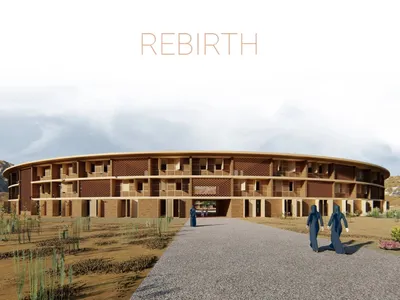
REBIRTH: A Circular Settlement Where Afghan Widows and Their Children Rebuild Life Together
A shortlisted Resile entry turns the circle into a protective ring of timber and brick, gathering homes, classrooms and gardens around a shared landscape.
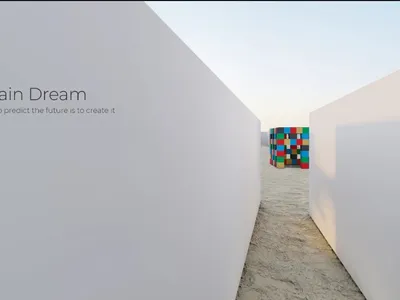
The Main Dream: A Recycled Plastic Kit That Lets Refugee Children Build Their Own Playground
Thirty-centimetre interlocking cubes that connect on three axes turn play into construction, letting children author the spaces they occupy.

Explore Architecture Competitions
Discover active competitions in this discipline

Challenge to reimagine the Iron Throne

Photograph architecture without architects

Illustrate the lost glory of Angkor Wat - Render Challenge

Design challenge to reuse E-waste
Comments (0)
Please login or sign up to add comments
No comments yet. Be the first to comment!