
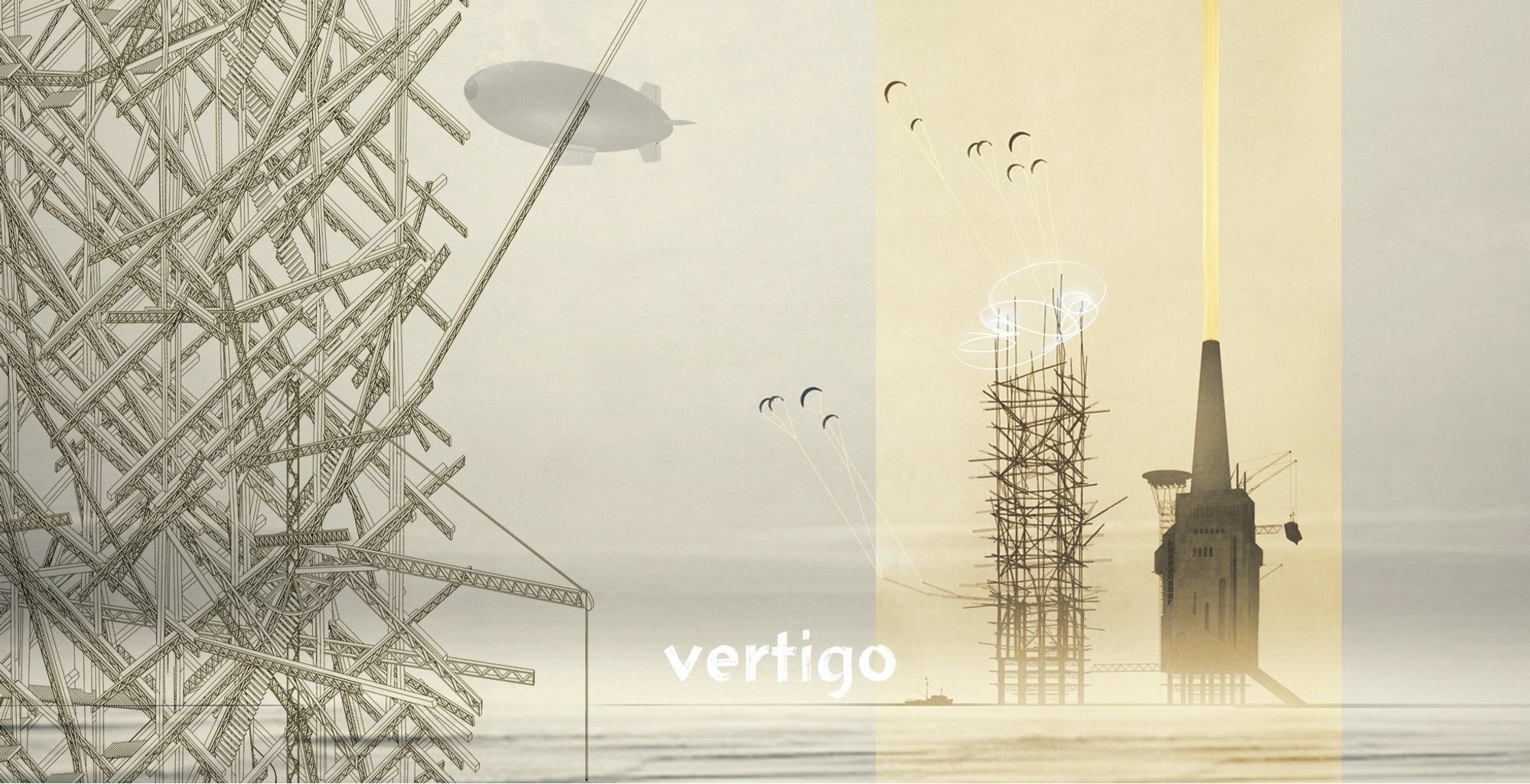
Vertigo: Adaptive Reuse Architecture Reimagines Offshore Oil Rigs as Floating Cultural Landmarks
An adaptive reuse architecture project transforming abandoned oil rigs into immersive cultural towers rising above the Mediterranean Sea.

Vertigo: A Visionary Adaptive Reuse Architecture Project at Sea
In an era where architecture increasingly addresses ecological transformation and industrial reinvention, Vertigo emerges as a provocative exploration of adaptive reuse architecture. Conceived by Gabriele Filippi, this Honorable Mention entry of Proximity Island 2019 transforms abandoned offshore oil rigs into monumental cultural towers suspended between fear, wonder, and discovery.
Rather than demolishing obsolete industrial infrastructure, the project imagines a new future for these forgotten structures. Rising dramatically from the sea, the twin towers become architectural landmarks that redefine how humans engage with isolation, distance, and the vastness of maritime landscapes. Through monumental verticality, immersive exhibition spaces, and symbolic spatial narratives, Vertigo proposes an entirely new typology of floating architecture.
The project positions architecture not simply as shelter, but as an emotional and experiential device capable of evoking awe, tension, curiosity, and contemplation.
Reimagining the Offshore Oil Rig Through Adaptive Reuse Architecture
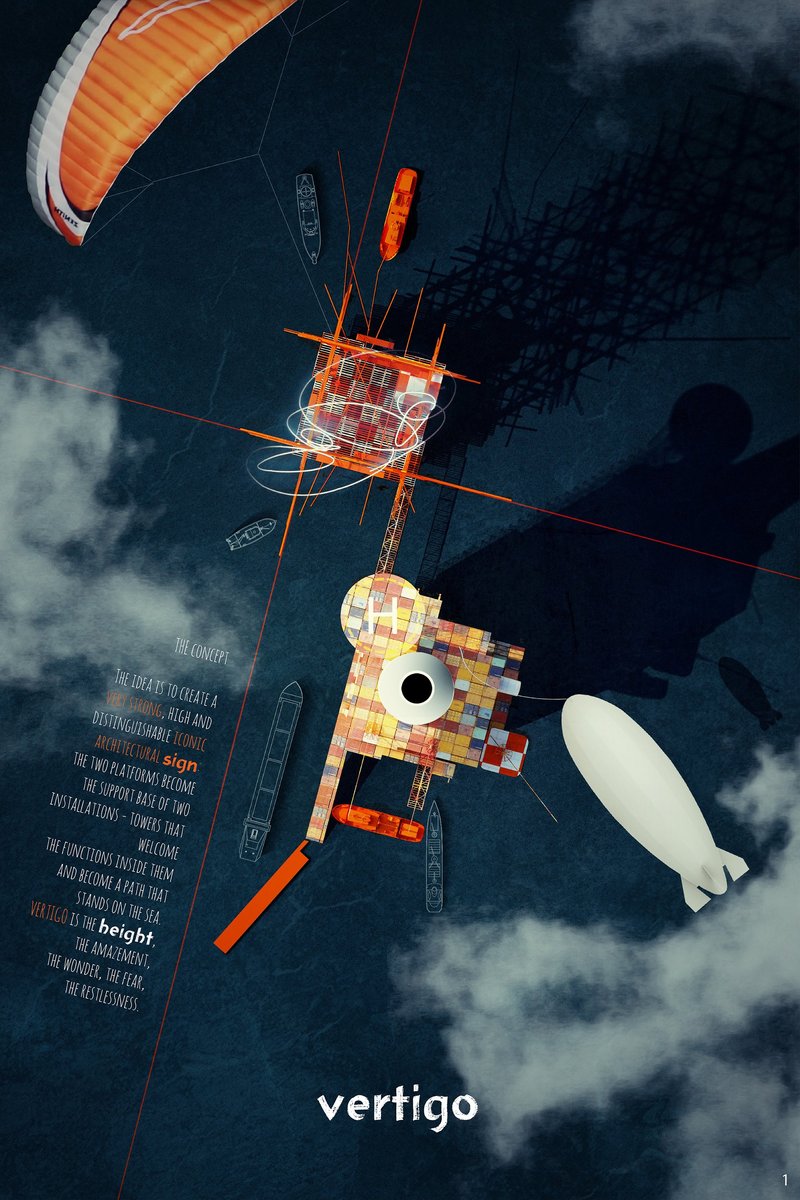
At the core of Vertigo lies the transformation of industrial ruins into cultural infrastructure. The abandoned oil platform becomes more than a remnant of extraction. It evolves into an “architectural sign” visible across the sea like a lighthouse, fortress, or mythical monument.
The two towers constructed upon the platforms function as destinations, exhibition spaces, observation structures, and symbolic beacons. They establish a dialogue between industrial memory and future sustainability, demonstrating how adaptive reuse architecture can preserve the identity of a place while fundamentally redefining its purpose.
The proposal challenges the conventional life cycle of industrial infrastructure. Instead of viewing oil rigs as obsolete mechanical artifacts destined for removal, Vertigo interprets them as opportunities for spatial reinvention. The sea platform becomes a foundation for cultural exchange, artistic installations, and public exploration.
This architectural strategy reflects a broader movement toward sustainable architectural reuse, where existing structures are repurposed to reduce environmental waste while creating new social and cultural value.
Architecture Between Fear and Fascination
The emotional foundation of Vertigo is deeply tied to mythology and maritime symbolism. The two towers are inspired by Scylla and Charybdis, the legendary sea monsters of ancient mythology that represented danger, uncertainty, and the fear of crossing unknown waters.
Filippi translates these mythological references into architecture through contrasting spatial experiences.
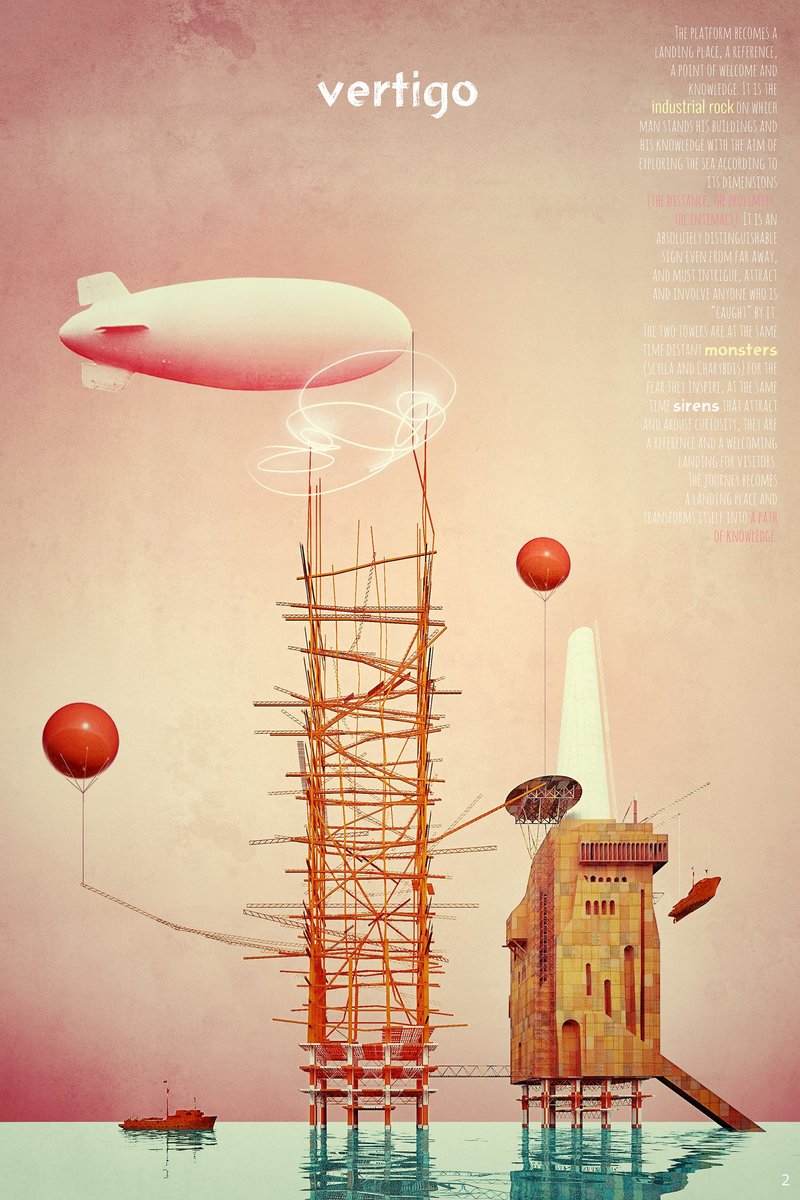
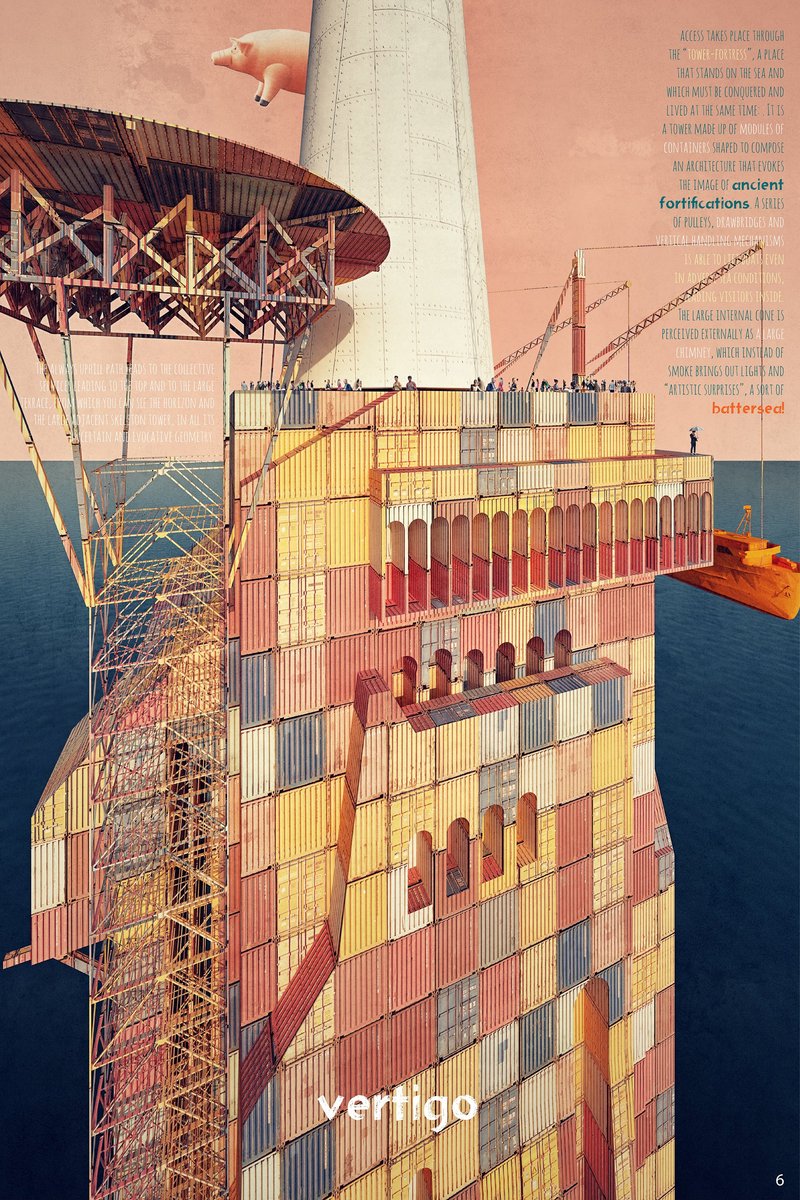
One tower functions as a fortress-like structure built from modular shipping containers. Massive, enclosed, and cavernous, it creates an atmosphere of compression, darkness, and introspection. The visitor moves through narrow pathways, elevated walkways, and immense hollow chambers where sound, silence, and light become spatial materials.
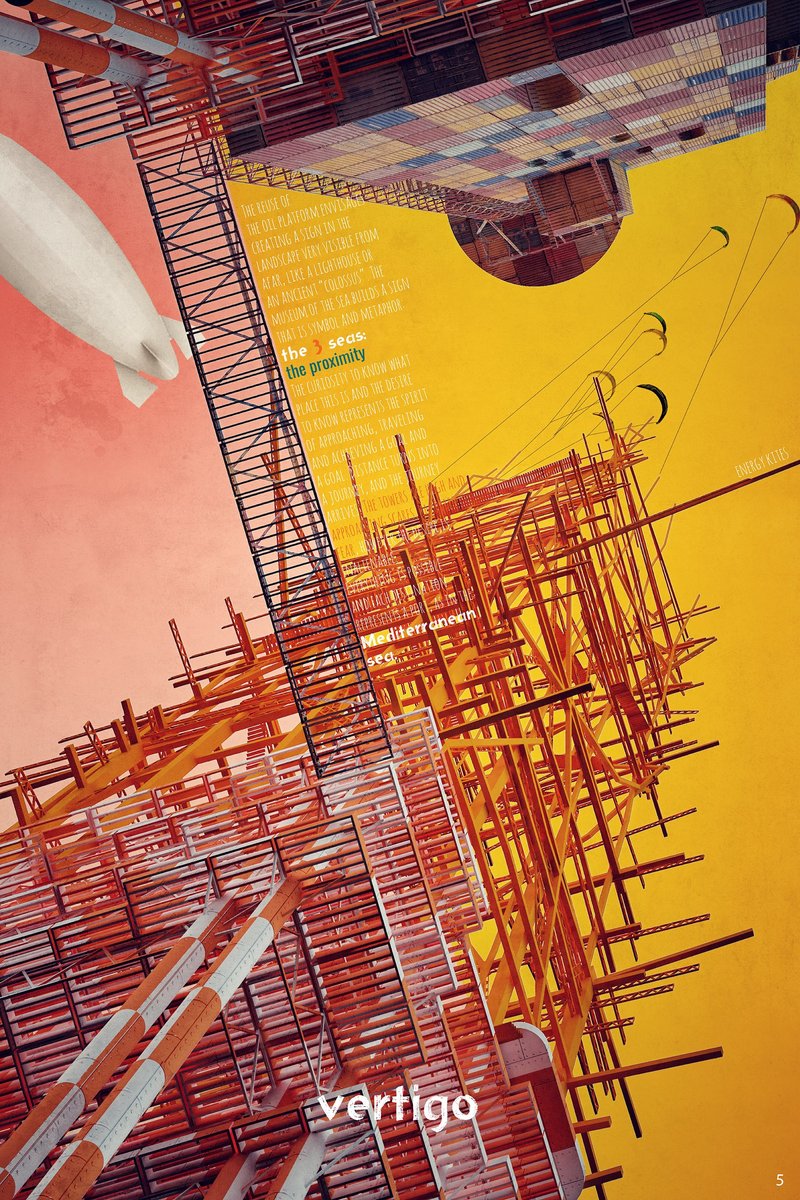
The second tower is radically different. Constructed as an open lattice structure resembling an eroded industrial scaffold, it embodies fragility and exposure. Visitors ascend through suspended pathways and skeletal frameworks exposed to wind, sunlight, and the endless horizon.
Together, the towers create a duality between protection and vulnerability, darkness and openness, heaviness and lightness.
The project transforms emotional tension into spatial experience.
A Floating Museum Above the Mediterranean Sea
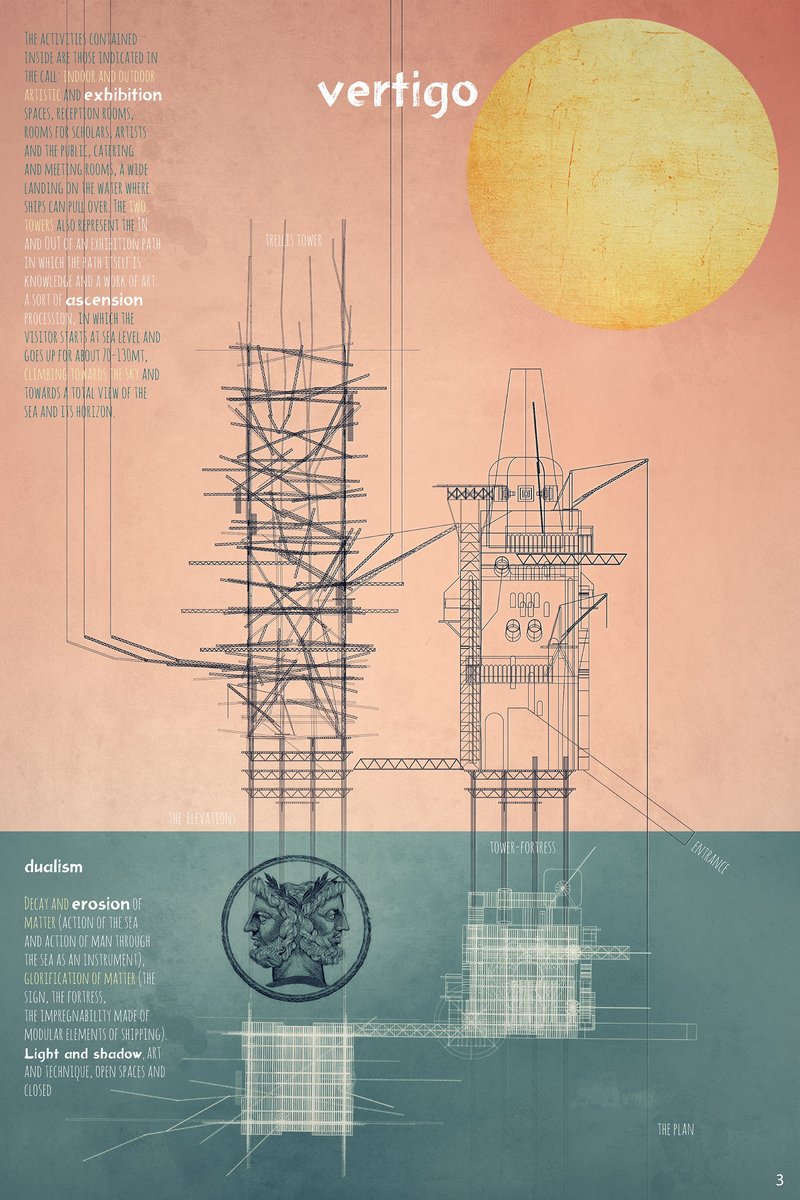
Rather than functioning as a conventional building, Vertigo operates as a vertical cultural landscape rising from the water. The towers contain exhibition galleries, artistic installations, public gathering spaces, accommodation modules, meeting rooms, educational areas, and outdoor viewing platforms.
The architectural journey begins at sea level and gradually ascends upward through ramps, stairways, bridges, and suspended circulation systems. Visitors move approximately 70 to 130 meters above the ocean surface, experiencing changing perspectives of the horizon and the surrounding environment.
This upward procession is conceived as both a physical and psychological transformation. Distance becomes movement. Curiosity becomes exploration. The architecture turns the act of climbing into an experiential narrative.
The project blurs the boundary between museum architecture, infrastructure design, environmental installation, and experimental tourism.
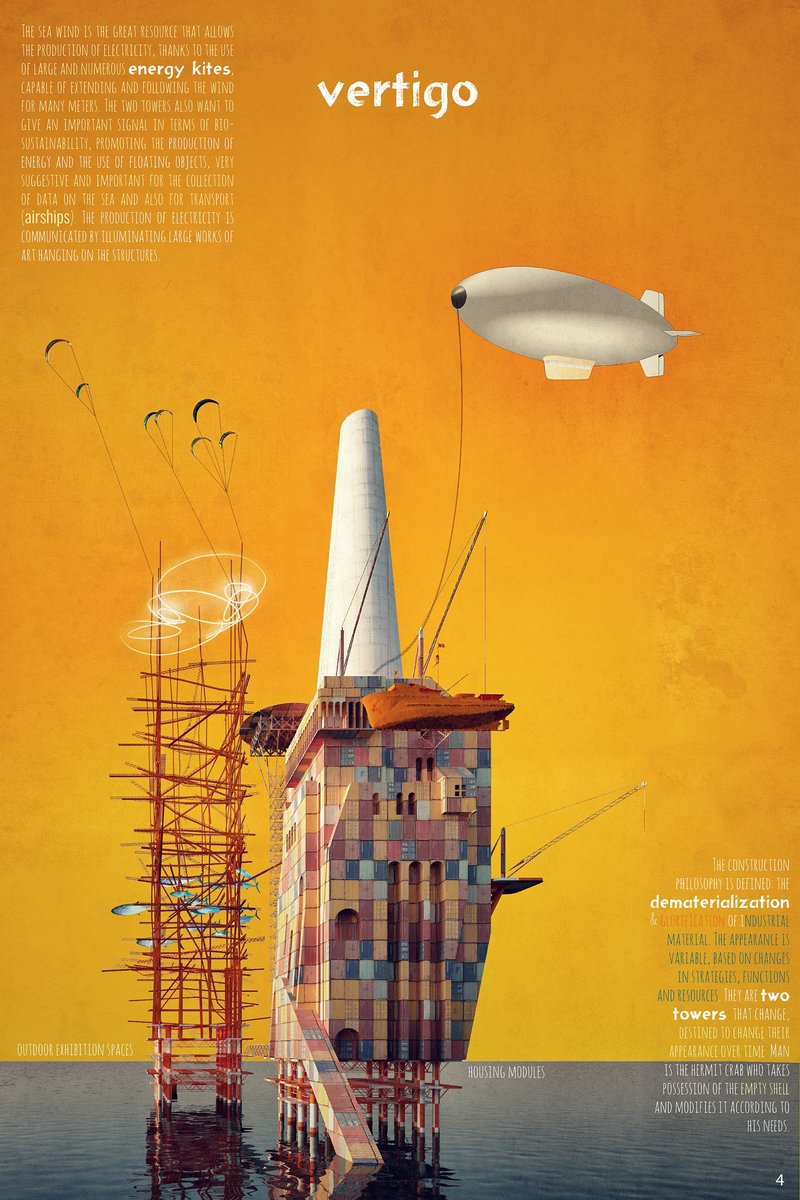
Industrial Aesthetics and Material Transformation
One of the most compelling aspects of Vertigo is its visual language. The architecture embraces industrial aesthetics while simultaneously dematerializing them through light, atmosphere, and abstraction.
Shipping containers become habitable modules with arched openings and layered facades. Steel trusses evolve into intricate sculptural frameworks. Construction cranes, gangways, and mechanical systems are integrated into the spatial composition rather than concealed.
The towers constantly shift in visual identity depending on weather, light conditions, and viewing distance. From afar, they resemble surreal monuments emerging from the sea. Up close, they reveal a dense network of structural details, suspended pathways, exhibition systems, and inhabitable voids.
This evolving appearance reinforces the project’s conceptual focus on instability, impermanence, and transformation.
Sustainability Through Architectural Reuse
Beyond its symbolic qualities, Vertigo also addresses environmental sustainability. The project incorporates renewable energy systems through large airborne energy kites capable of generating electricity from ocean winds.
The reuse of offshore infrastructure significantly reduces the environmental impact associated with demolition and reconstruction. Instead of erasing industrial remnants, the proposal recycles them into public architecture.
This approach aligns with emerging conversations surrounding circular architecture, industrial rehabilitation, and adaptive reuse strategies for post-industrial environments.
The sea platform becomes a sustainable cultural machine capable of generating energy, hosting public programs, and preserving industrial memory simultaneously.
Experiencing the Sea as Architecture
Throughout the project, the sea itself becomes an architectural element. Distance, movement, wind, sound, and horizon are treated as spatial materials shaping the visitor experience.
The approach to the towers across open water heightens anticipation and isolation. The immense scale of the structures against the empty sea creates a sense of vulnerability and wonder. Once inside, the architecture frames the ocean through openings, elevated platforms, and suspended walkways.
The visitor is never disconnected from the surrounding environment.
The project transforms the Mediterranean landscape into an immersive theatrical setting where architecture mediates the relationship between humanity and the vastness of nature.
A New Future for Offshore Architecture
Vertigo demonstrates how adaptive reuse architecture can transform industrial relics into emotionally charged public spaces. Through its combination of maritime mythology, experimental spatial design, and sustainable reuse strategies, the project proposes a bold future for offshore infrastructure.
Gabriele Filippi’s proposal is not simply about preserving an oil rig. It is about redefining how architecture can reclaim forgotten industrial territories and convert them into places of culture, reflection, and collective imagination.
As cities and coastlines continue confronting environmental and industrial transitions, projects like Vertigo reveal the potential of architecture to create meaning from abandonment and beauty from obsolete structures.



Popular Articles
Popular articles from the community

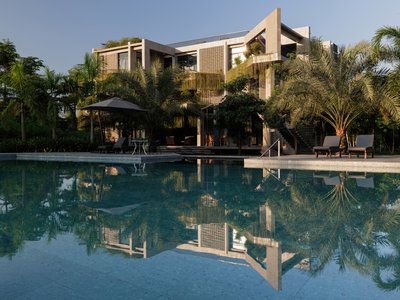
Reincarnation Weaves a Three-Story Retreat into the Green Landscape of Rural Bangladesh
Ara Manor in Narsingdi dissolves the line between domestic architecture and its lush surroundings through screens, courtyards, and planted rooftops.
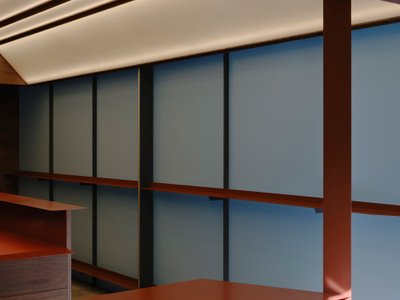
Kerry Kounnapis Packs 800 Daily Coffees into a 43-Square-Metre Melbourne Laneway Bar
Palace Coffee channels Pellegrini's and European standing bars through oxide-red steel and spotted gum timber in a Ridgway Place sliver.

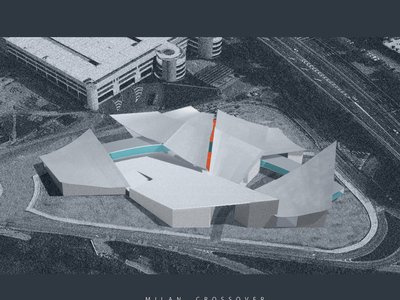
Milan Crossover: Sustainable Architecture for a New Fashion Culture in Milan
Milan Crossover transforms fashion culture through sustainable architecture, linking material libraries, remake studios, and public runways.
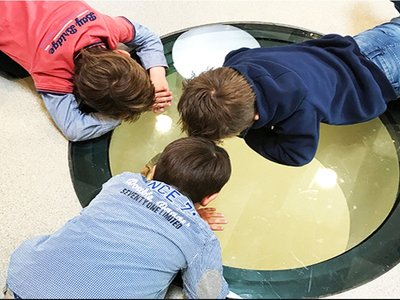
IKC de Geluksvogel: Sustainable School Architecture Designed for Free Movement and Digital Learning
IKC de Geluksvogel turns sustainable school architecture into a flexible Maastricht campus for digital learning, nature, and free movement.

Similar Reads
You might also enjoy these articles
Eco Chapel: A Green Architecture Pavilion Designed in Symbiosis with the Forest
Eco Chapel uses green architecture to weave prayer, learning and reuse into a forest pavilion shaped by modular hexagonal canopies for life.
Kaffeebühnen: Coffee Shop Architecture Designed as a Civic Stage Between Vienna’s City and Park
Kaffeebühnen turns coffee shop architecture into a civic stage, linking Vienna’s park edge, urban life, warm timber yards, and coffee craft.
Healing Façade: Sustainable Architecture for Reforestation, Community, and Sacred Ecology in Ethiopia
Healing Façade reimagines sustainable architecture as a living wall that restores soil, catches water and renews Ethiopia's forest churches.


Urban Forest: A Vertical Ecosystem for 5,000 Workers in Singapore's Changi Business Park
Radially stacked pods and layered green decks turn a 7-acre plot into 47 acres of ecological workspace projected for 2040.


Explore Architecture Competitions
Discover active competitions in this discipline




The International Standard for Design Portfolios


The Global Benchmark for Architecture Dissertation Awards


The Global Benchmark for Graduation Excellence


Challenge to reimagine the Iron Throne
Comments (0)
Please login or sign up to add comments
No comments yet. Be the first to comment!