

VIPE 201 Commercial Building: Innovative Commercial Architecture in Manaus
VIPE 201 in Manaus blends precast concrete, corten steel, and vertical greenery, offering flexible commercial spaces, sustainable design, and visual urban integration.


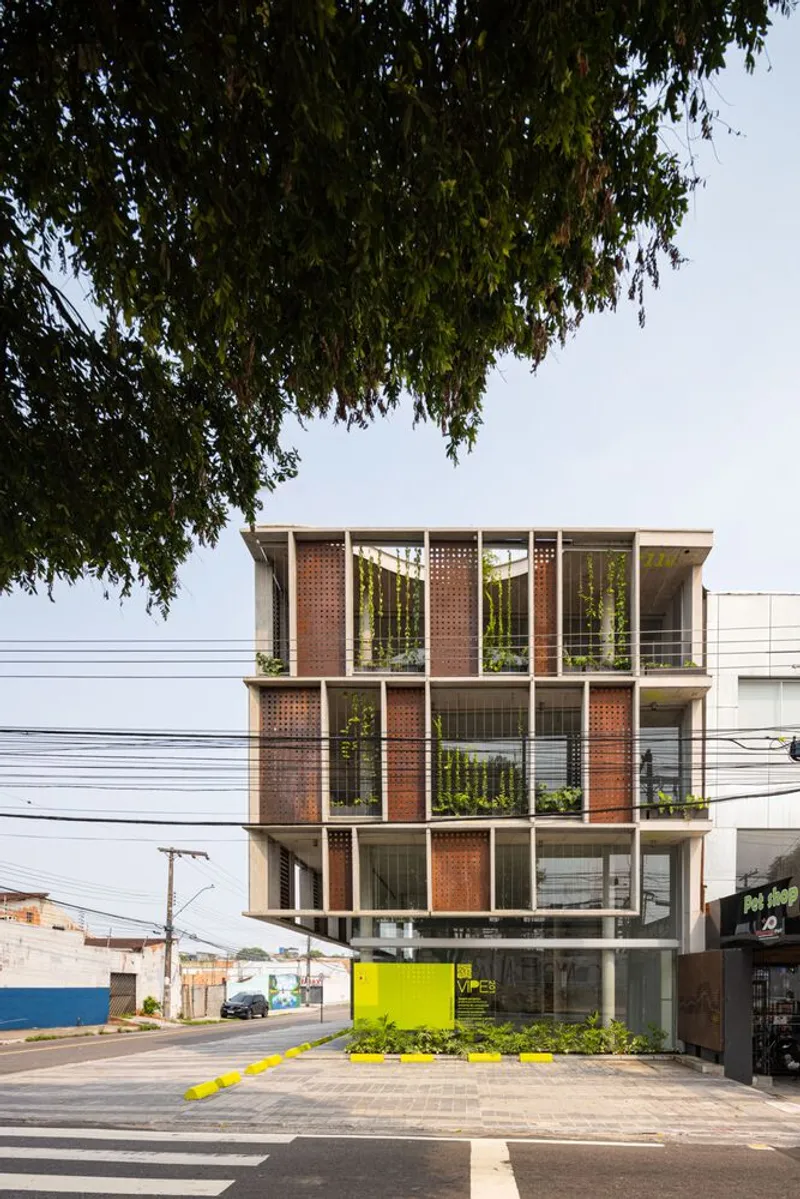
Nestled along one of Manaus’s main avenues, the VIPE 201 Commercial Building, designed by Vipe Arquitetura, stands as a contemporary landmark in Brazilian commercial architecture. Completed in 2024, this 610 m² structure exemplifies an innovative design approach that balances aesthetics, functionality, and environmental responsiveness, making it a noteworthy addition to Manaus’s urban fabric. Photography by Joana França captures the building’s elegant interplay between materials, greenery, and light.


Architecture That Responds to Time and Climate
The building emerges as an internal initiative by Vipe Arquitetura, aiming to create a structure that harmonizes with both the city and the natural climate. Its design emphasizes thermal comfort, leveraging material choices and architectural strategies to adapt to local weather conditions. The project intentionally embraces patina and the passage of time, allowing the façade to evolve naturally while reducing the need for intensive maintenance.


Materiality and Structural Innovation
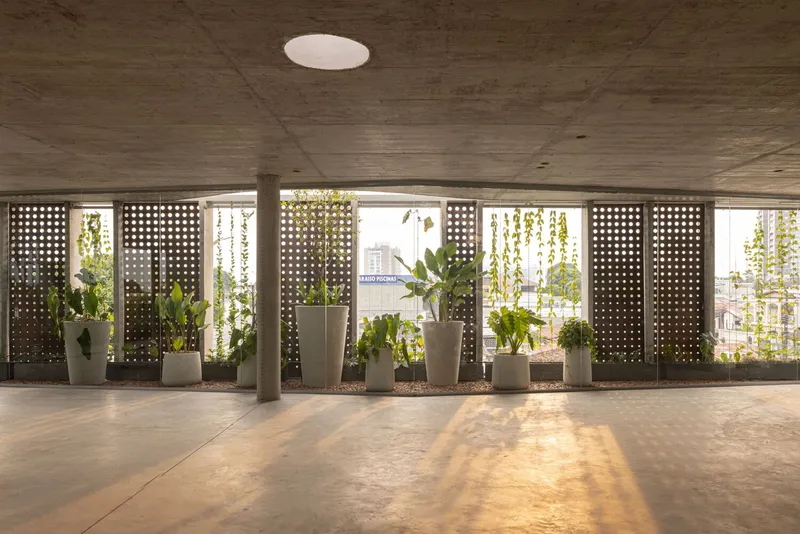
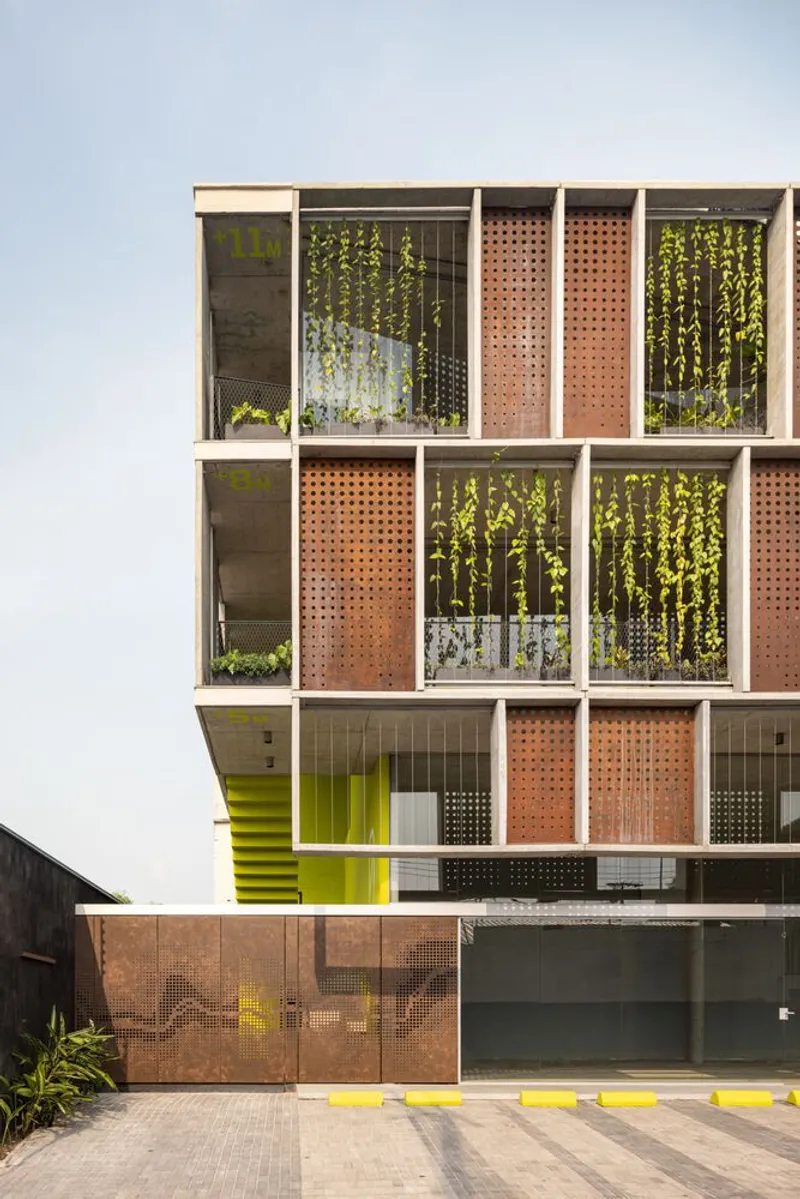
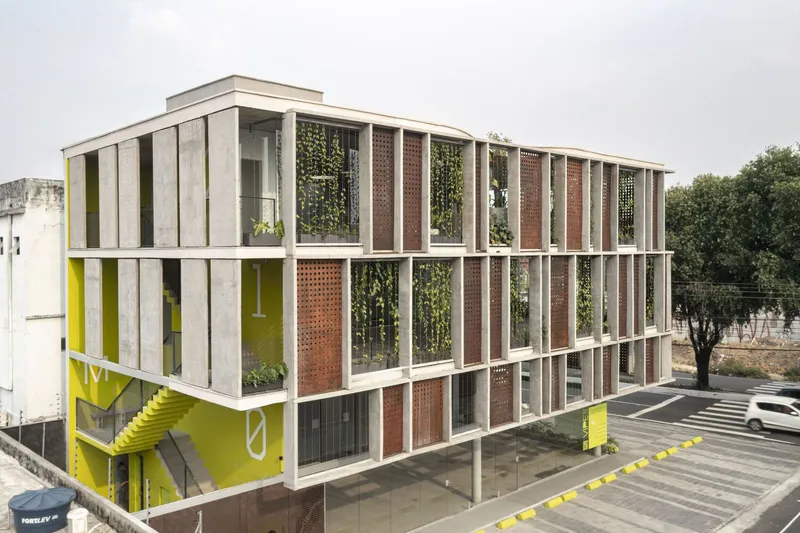
VIPE 201 utilizes precast concrete elements, corten steel panels, and vertical greenery, combining durability with sustainable urban integration. Structurally, the building is efficiently organized with only six pillars supporting three flat prestressed slabs, enabling rapid project execution without compromising spatial openness. The west-facing façade is equipped with prefabricated brise-soleils, protecting the interior from harsh sunlight and allowing recessed glass panels to provide visual transparency.
The building’s layout fosters a seamless interaction between interior and exterior, with sunlight penetrating through slab openings to nourish the greenery in planter boxes, while domes provide natural ventilation for bathrooms. Solar panels enhance energy efficiency, reinforcing the project’s commitment to sustainability.


Flexible Commercial Spaces
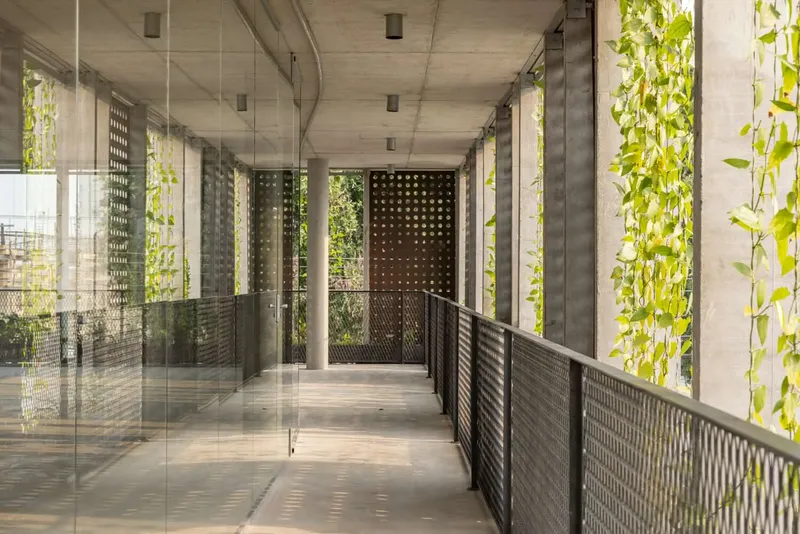
Designed for versatility, VIPE 201 accommodates a variety of commercial functions. The ground floor features a reception area, waiting hall, café, commercial rooms, restrooms, and an external restroom, all under double-height ceilings that enhance spatial perception. The first floor houses nine commercial rooms with waiting areas and restrooms, while the second floor hosts the Vipe Arquitetura office, complete with reception, lounge, workstations, meeting rooms, pantry, and a relaxation terrace.
The open-plan concept allows for flexible floor layouts and easy adaptation to multiple programs, supporting diverse commercial uses while maintaining aesthetic coherence.
Integrating Nature into the Urban Landscape
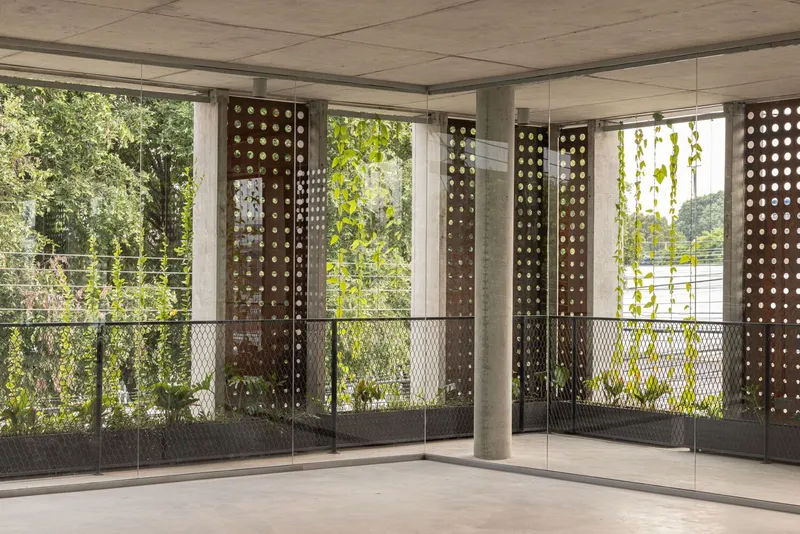
VIPE 201 stands out for its integration of greenery into urban architecture. Vertical planting of tumbergias, guaimbês, syngoniums, jaboticaba trees, dinheiro-em-penca plants, and yellow alamandas establishes a dialogue with existing city trees, softening the built environment and promoting biophilic connections. This living façade not only enhances visual appeal but also improves microclimate and air quality in its surroundings.
By harmonizing innovative materials, energy efficiency, and lush vegetation, VIPE 201 exemplifies a modern approach to commercial architecture that is both functional and visually inspiring.

All photographs are works of Joana França


Popular Articles
Popular articles from the community


Manzana Morphosis: Stretching Barcelona's Grid into a Living Landscape for 2050
A radical reworking of the Eixample manzana turns density into a tool for generous public space, vertical ecology, and environmental performance.


graciastudio Turns a Viewless Tijuana Lot Inward Around a Courtyard of Concrete, Timber and Trees
In Tijuana, Jorge Gracia's GA2 House stacks a timber-clad private floor over exposed concrete and replaces a missing view with a planted interior patio.

The Amber Palace Opera: A Geological Fiction Surfaces on Tallinn's Baltic Waterfront
Pierre Brillard reimagines a Baltic legend as a public landscape, opera house, and waterfront promenade rooted in Tallinn's coastal identity.

Aquadapt: An Underwater Habitat That Rewrites Its Rooms by the Hour
Curved modules ring the seabed while one shell shifts from breakfast room to cinema, farm and football pitch as residents' needs change.

Similar Reads
You might also enjoy these articles

Cube Design Draws an Ecological Corridor Between Two Shenzhen Hills with the Nankai Building
Beside Shenzhen's container docks, the Nankai Building pairs stacked balconies with a climbing green screen to connect two hillsides across its height.

Praksis A and Studio Sted Bend a Red Timber Cabin Across the Granite of Norway's Southern Coast
On the southern Norwegian coast, a 105 m² cabin follows the rock on slender posts, pairing red cladding outside with pine, brick and plywood within.

David Ortega Stacks a Two-Story Mexico City Penthouse Around a Steel Stair and a Pergola-Shaded Roof Terrace
In Colonia Roma, a 300 m² penthouse uses oak joinery, a planted steel stair and a slatted roof pergola to make a new-build apartment feel like a house.

PARALELA and LB2 Thread a Public Walkway Through the Base of a Las Condes Residential Tower
In Las Condes, Santiago, the Hamlet Building gives its fenceless ground floor to a 70-metre wooded passage linking two streets and the metro.

Explore Architecture Competitions
Discover active competitions in this discipline

Challenge to reimagine the Iron Throne

Photograph architecture without architects

Illustrate the lost glory of Angkor Wat - Render Challenge

Design challenge to reuse E-waste
Comments (0)
Please login or sign up to add comments
No comments yet. Be the first to comment!