
Visioarq Arquitectos Rehabilitates a Coimbra Villa into a Panoramic Layered Residence
An 816-square-meter rehabilitation fragments an existing villa into stepped volumes that frame views across a twelfth-century Portuguese city.

Coimbra is a city whose identity is inseparable from its topography. The hillside that carries the old university down to the Mondego River has been sculpted by buildings for nearly a millennium, and any residential project on its slopes inherits the obligation to reckon with elevation, panorama, and the legacy of what was there before. JAC House, completed in 2021 by Visioarq Arquitectos, takes that obligation seriously. Rather than demolishing an existing villa and starting fresh, the firm chose rehabilitation: keeping the bones of the original house while wrapping, extending, and fragmenting it with new volumes that step down the terrain and open wide toward the horizon.
What makes this project genuinely interesting is not just the scale of transformation, at 816 square meters on a 2,472-square-meter site, but the strategy of volumetric decomposition. The architects treat the existing mass as one element in a composition of white rendered planes, timber-lined passages, and cantilevered terraces that alternate between compression and release. The result is a house where every transition, from corridor to courtyard, from staircase to rooftop, involves a deliberate shift in light, material, and prospect. It won the Diogo de Castilho Municipal Prize in 2023, and the recognition is well earned.
Facade as Sequence
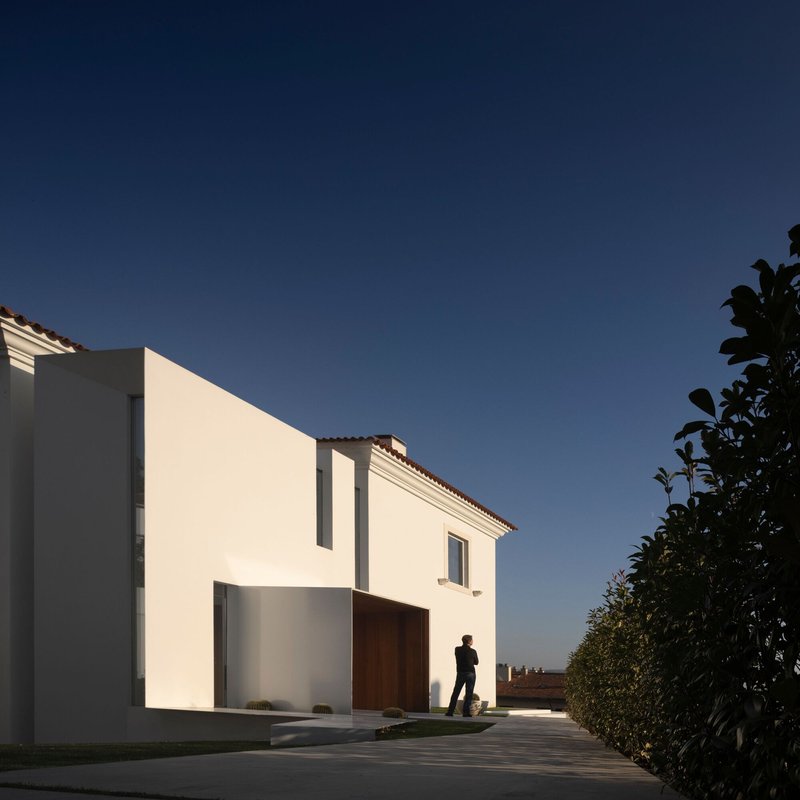
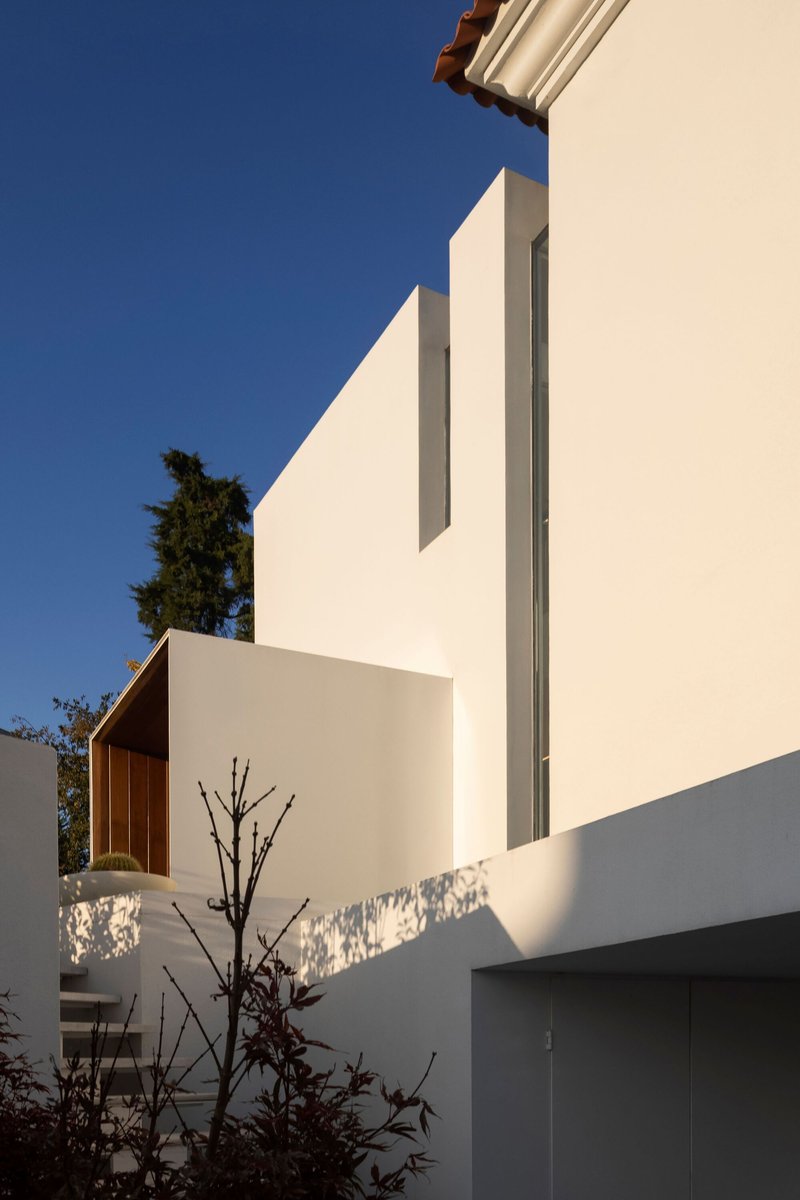
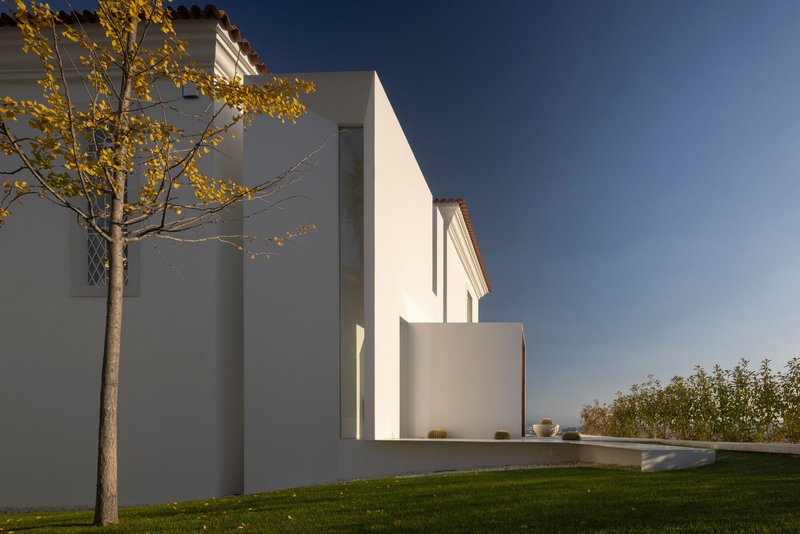
The street-facing elevations reveal the project's logic before you step inside. White stucco volumes step and shift against one another, each plane set back or pushed forward to generate shadow lines and narrow vertical windows that punctuate the surface. The massing avoids reading as a single block. Instead, the facade fragments into what feels like a cluster of interconnected pavilions, their alignments governed by the slope rather than by any rigid grid.
At dusk the effect intensifies. Interior light spills through precise openings while the white walls absorb the last of the sky. A recessed garage with a pivoting timber door becomes a deliberate event on the ground plane, its warmth contrasting with the cool geometry above. The autumn foliage of a strategically retained tree softens the composition and signals that the landscape is not an afterthought but a co-author of the experience.
Timber Thresholds
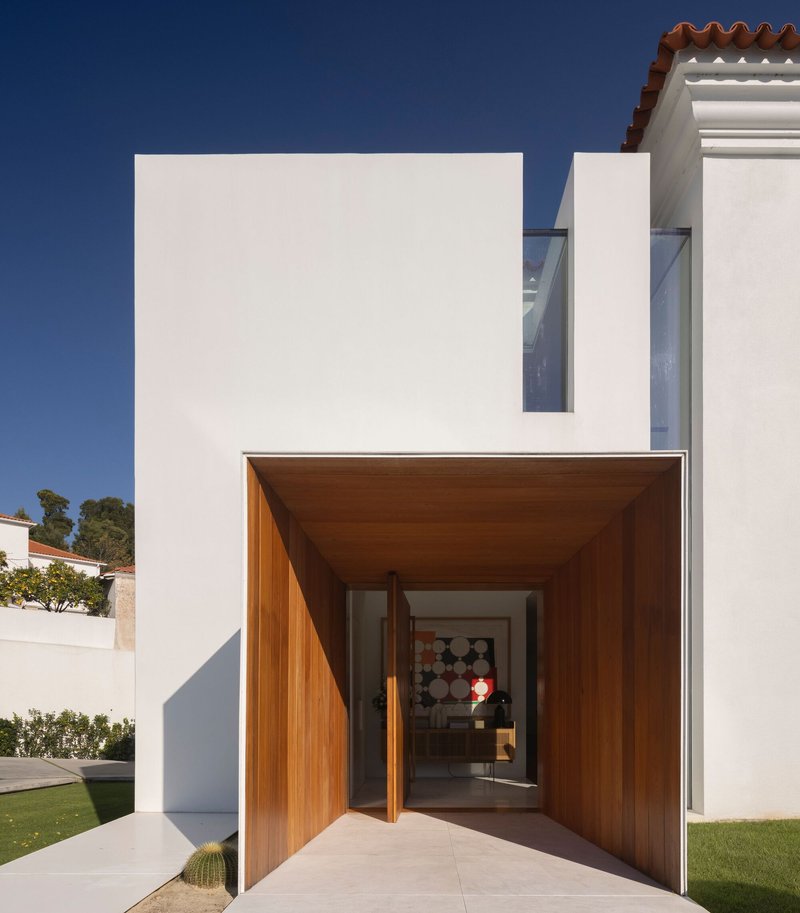
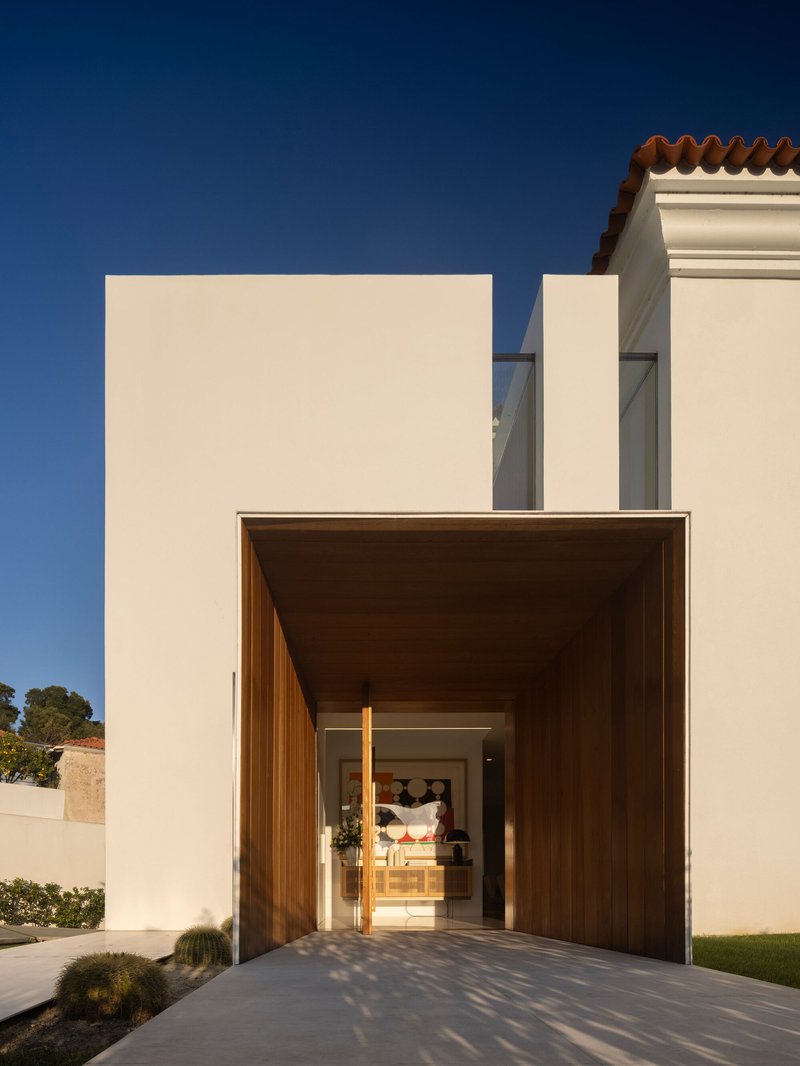
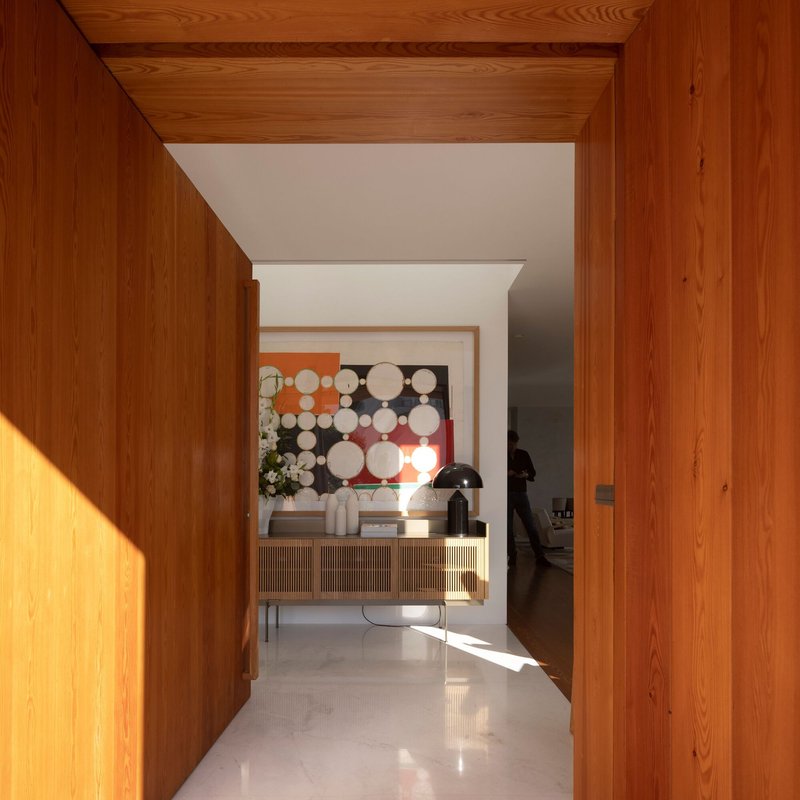
Visioarq uses timber cladding almost exclusively at moments of passage: the entry portal, the deep corridor leading to the interior, the stair treads. The choice is precise. Timber here functions as a material signal that you are crossing from one spatial condition into another. The entry portal frames the pivoting front door and tunnels your vision toward art and furnishing glimpsed inside, collapsing the distance between street and living space.
The polished white floor of the entry corridor amplifies reflected daylight while the timber walls and ceiling absorb it, creating a warm, compressed tube that heightens the sense of arrival. It is a classical architectural move, the deep threshold, executed with minimal palette: stone, timber, white plane, light.
Vertical Circulation and the Suspended Fireplace
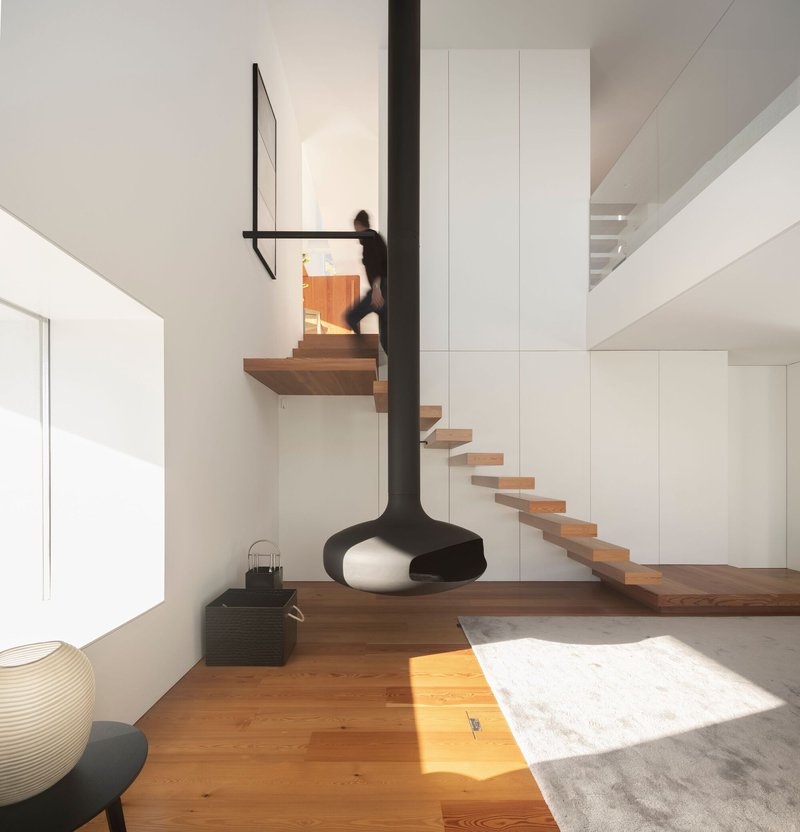
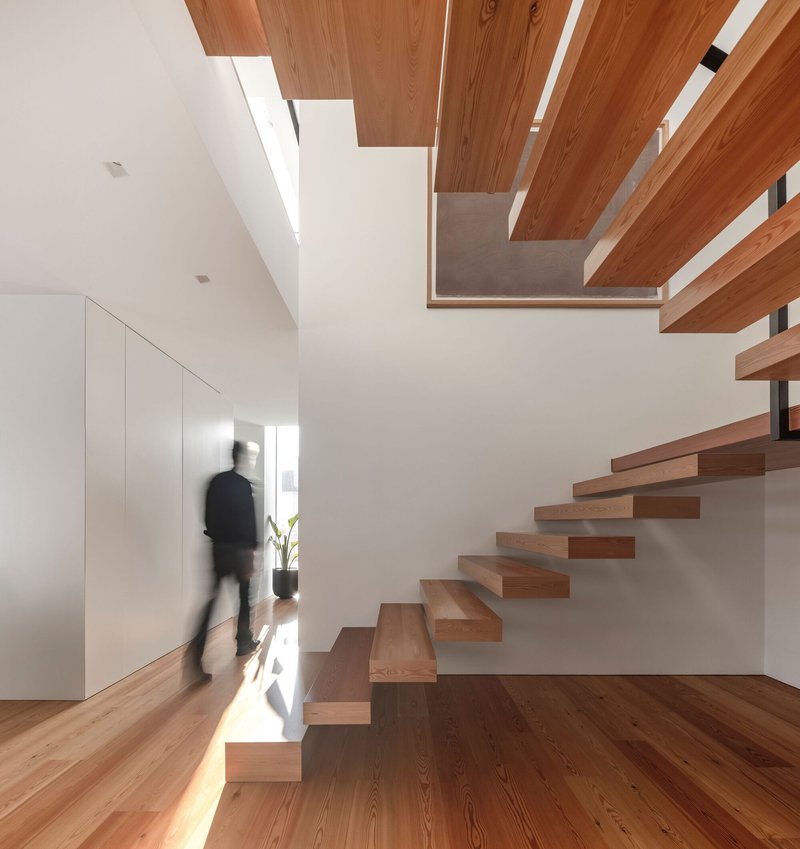
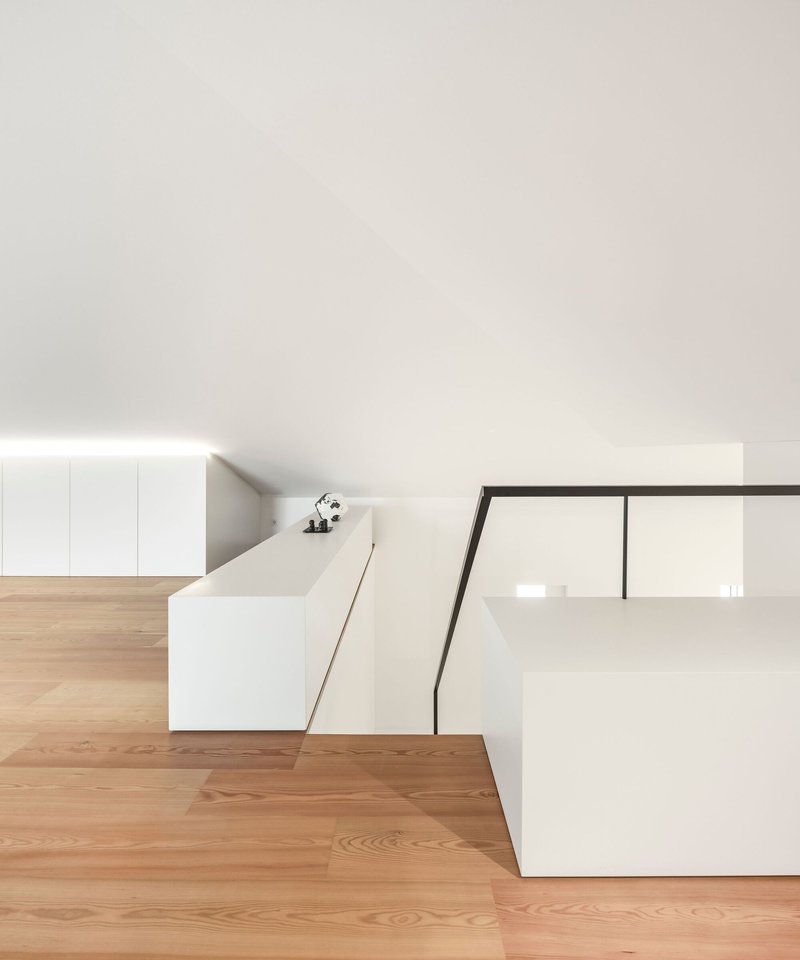
The floating timber staircase is the spatial engine of the house. Its cantilevered treads and glass balustrade maintain visual continuity across a double-height void, allowing light to fall uninterrupted from upper glazing to the ground floor. A suspended black fireplace hangs in this void like a sculptural counterweight, its cylindrical mass grounding an otherwise weightless composition.
From the upper-level kitchen island, an angled glass balustrade lets you look straight down into the living space below, reinforcing the section as the primary spatial experience. This is a house that rewards vertical movement: ascending through light, descending toward garden and courtyard. The blurred figures captured in Fernando Guerra's photographs underscore this quality of constant motion through layered levels.
Light, Shadow, and the Indoor Pool
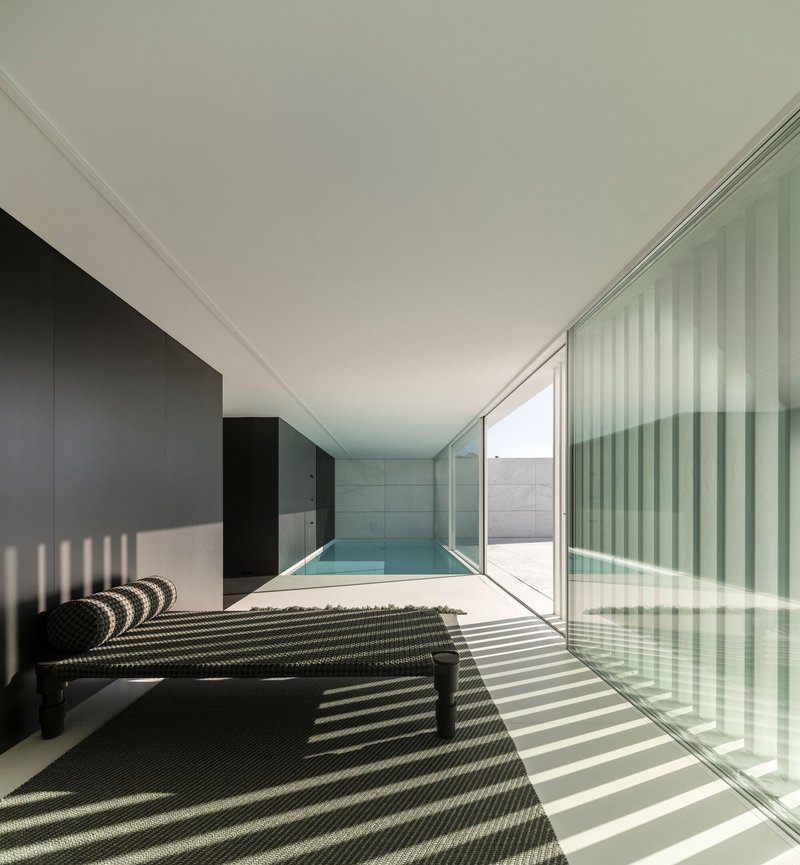
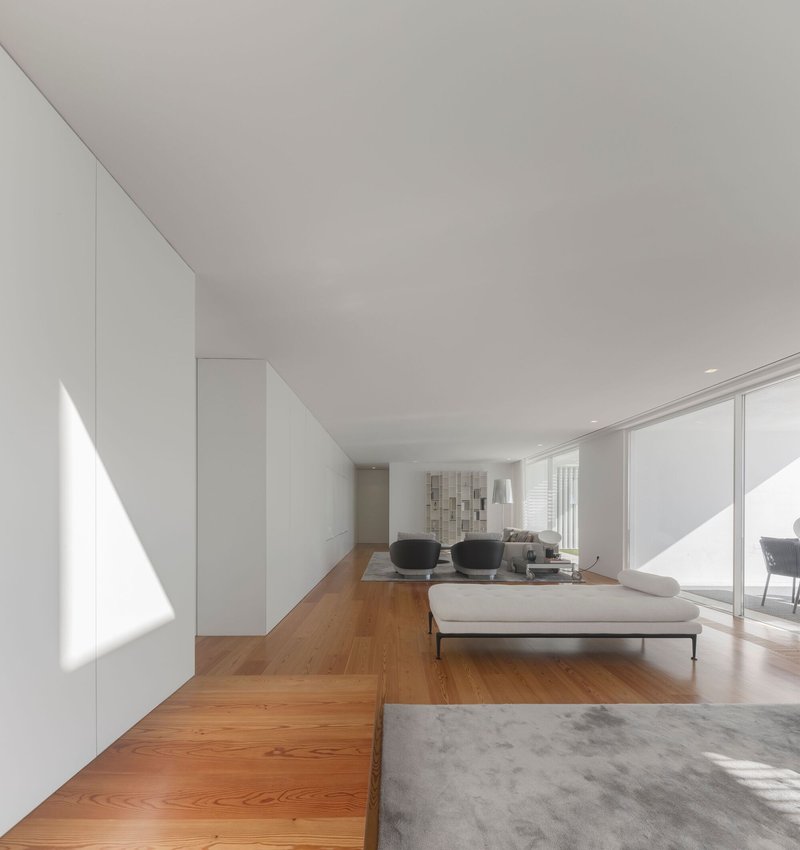
The indoor pool chamber is the house's most dramatic interior. Vertical pleated glass screens filter daylight into sharp striped shadows that ripple across the black tile floor and water surface. It is a controlled atmospheric event, turning a functional amenity into something closer to a meditation space. The material restraint, black tile against white enclosure, gives the light all the expressive authority.
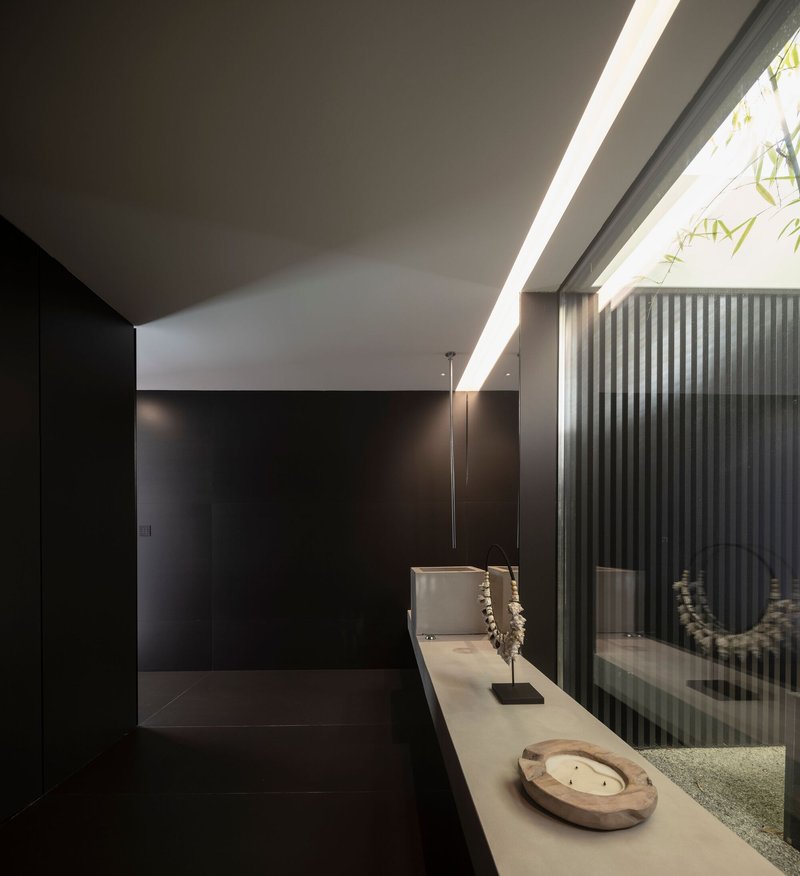
Elsewhere in the house, the architects play similar games with clerestory skylights and deep wall reveals. A hallway with a recessed ceiling slot casts a precise band of light down a black wall, illuminating a stone ledge of curated objects. The living room receives diagonal bands of sun through carefully positioned openings. Light is never ambient here; it is always composed.
Gardens, Terraces, and the City Below
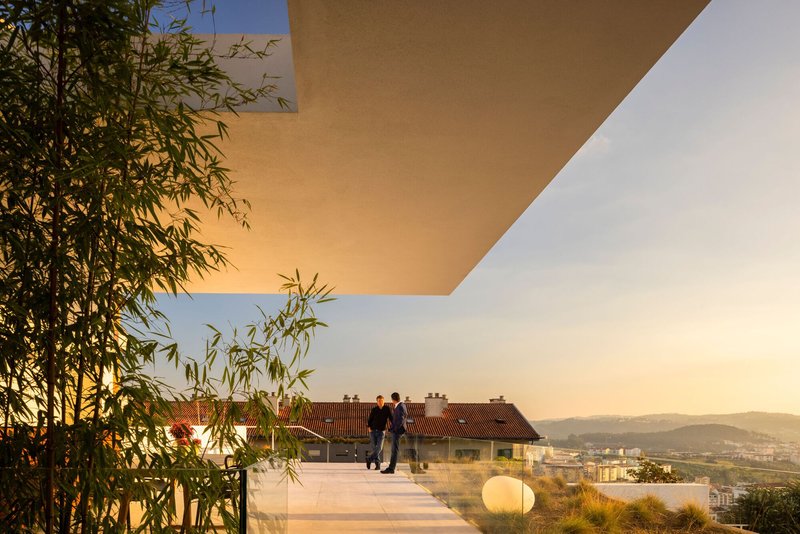
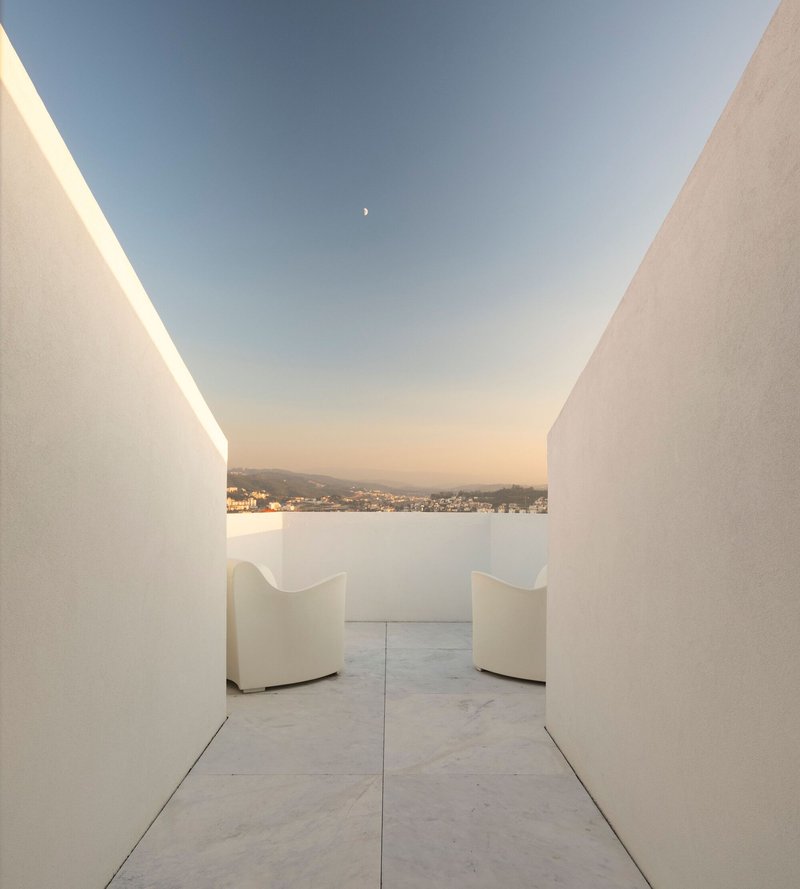
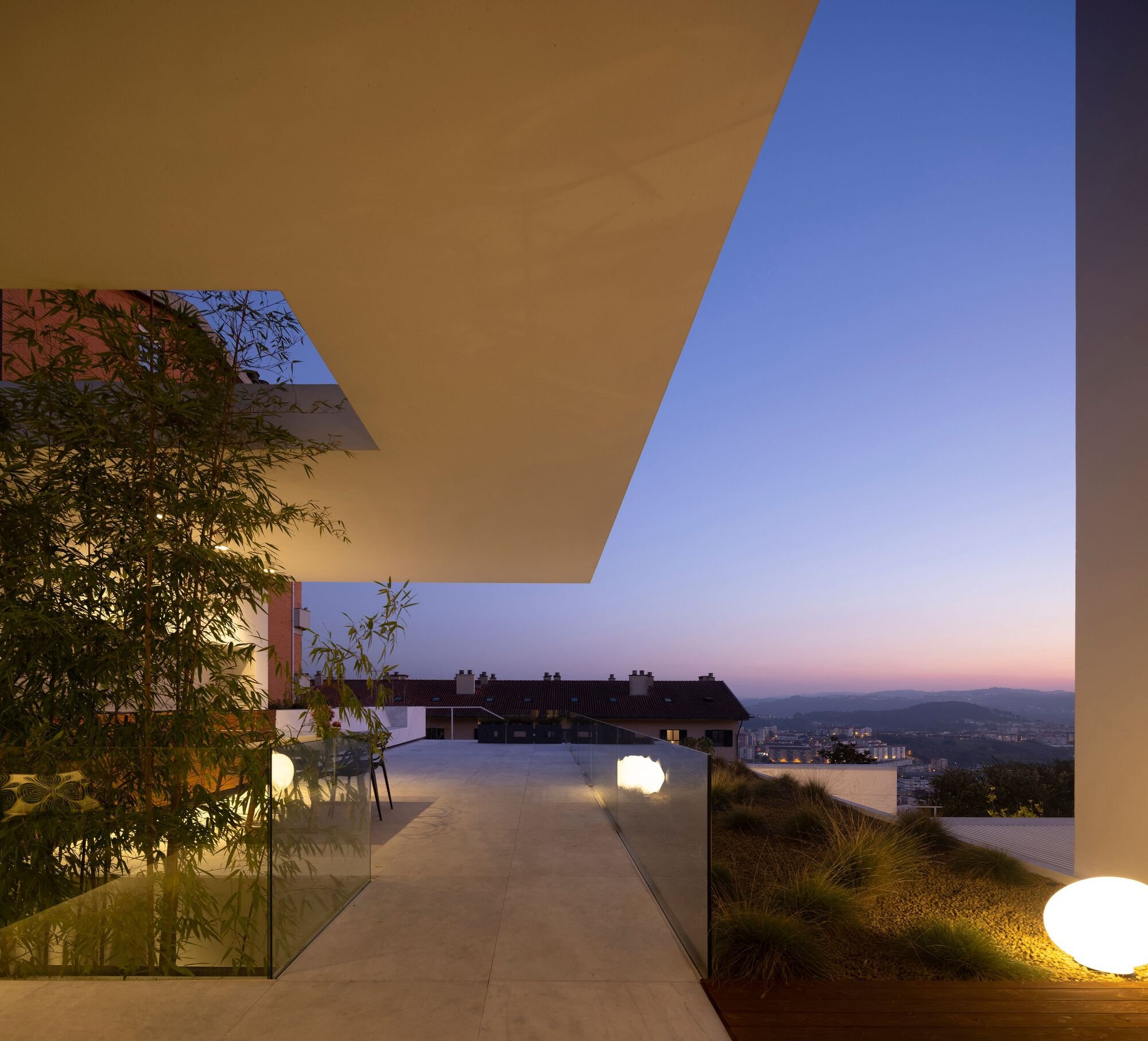
The site's 2,472 square meters accommodate a series of outdoor rooms that extend the living space toward the horizon. A rooftop terrace planted with bamboo becomes an elevated belvedere for sunset views across Coimbra's rooftops and hills. A white rendered passage flanked by curved chairs frames the distant landscape like a painting. These are not leftover spaces; they are designed with the same spatial precision as the interior rooms.
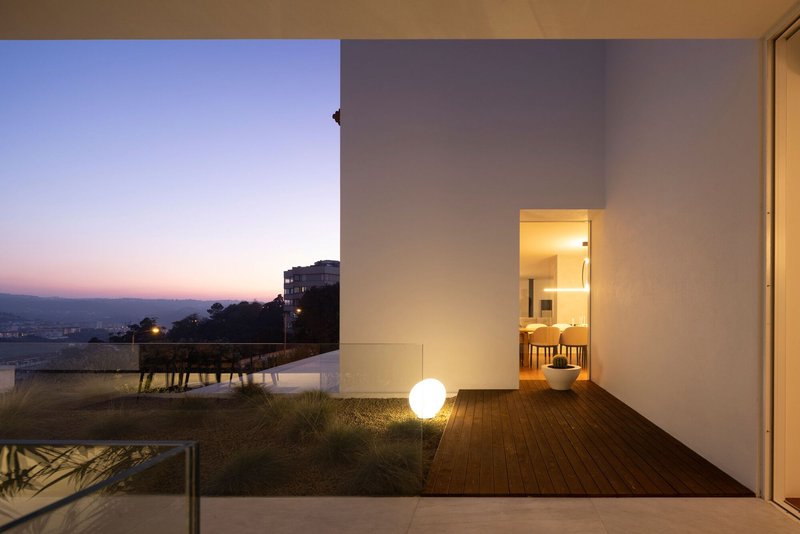
At twilight, a timber deck terrace with globe lighting and a cantilevered soffit becomes a glowing stage set against the darkening hillside. The architects clearly understand that a house on a scenic site must not merely sit on the land but must choreograph the act of looking. Every terrace is an argument about where your eye should go.
Courtyards and Intermediate Spaces
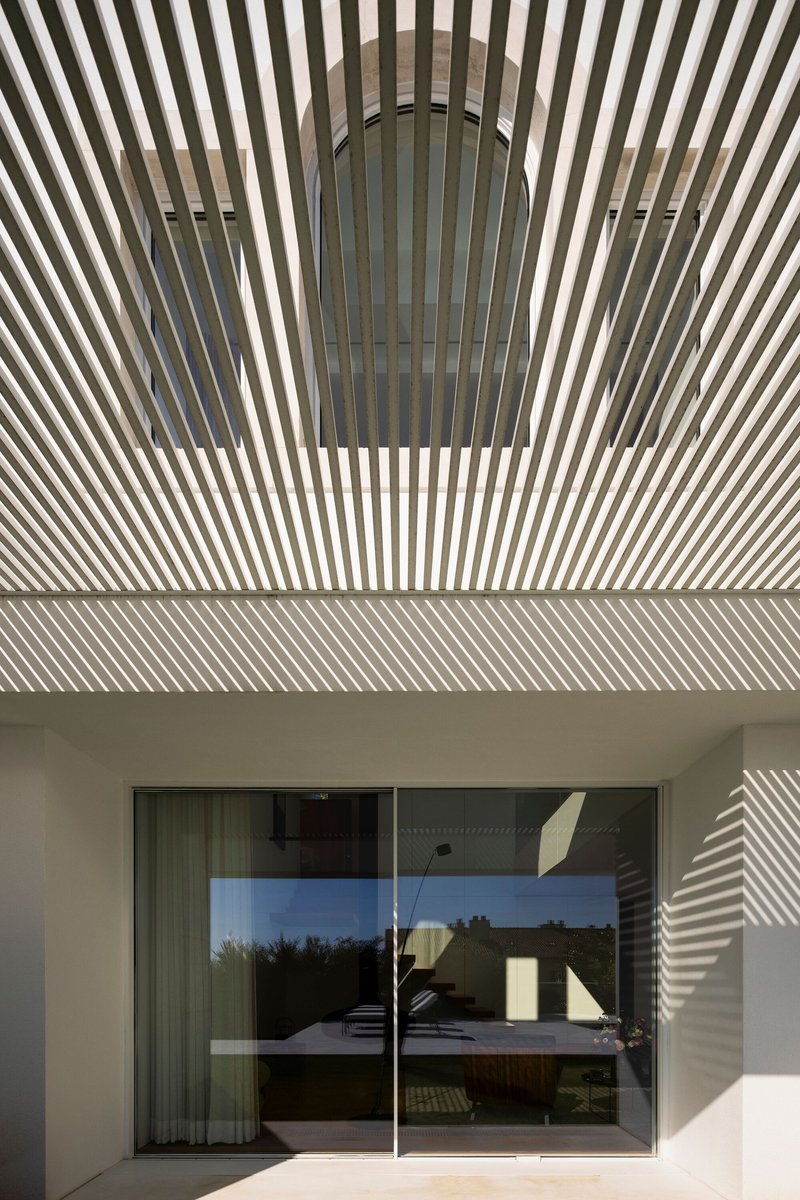
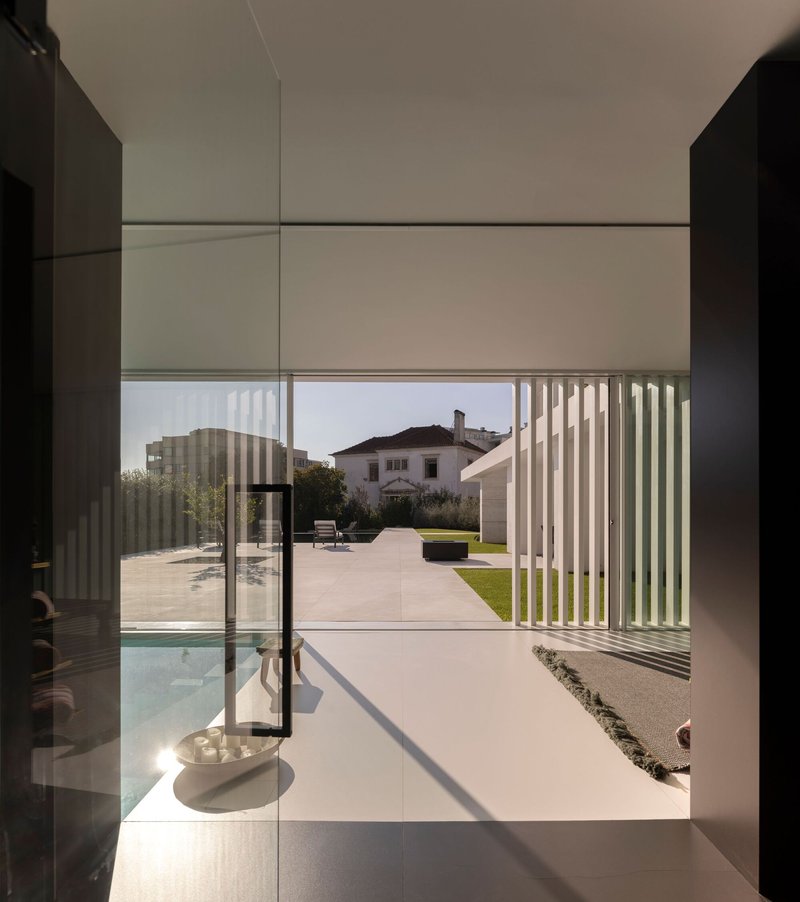
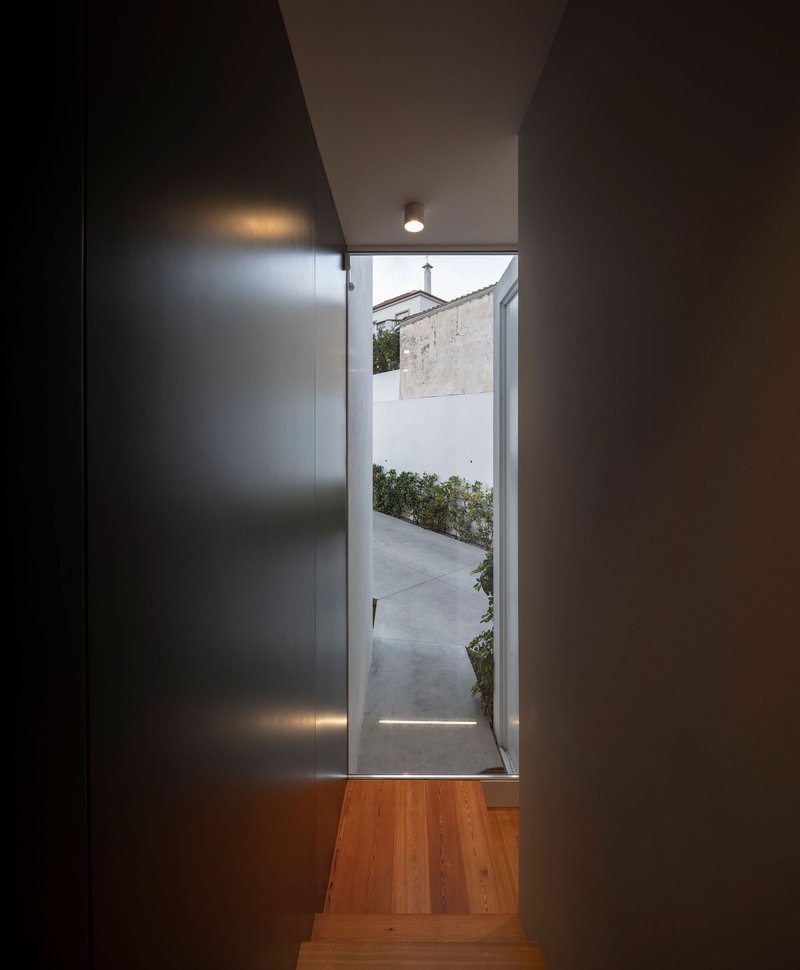
The timber slat pergola is one of the quieter but most effective elements. It casts striped shadows onto the wall and glass door below, producing a layered screen between sun and interior. From inside, floor-to-ceiling glass doors dissolve the boundary entirely, letting the garden and pergola read as an extension of the room. The Japanese garden referenced in the project program finds its expression in these moments of controlled framing and deliberate asymmetry.
A timber staircase descending to a white courtyard with planted greenery reinforces the house's strategy of connecting levels through exterior passages. You move from inside to outside and back again repeatedly, each transition marked by a shift in light quality and enclosure. The house does not simply have a garden; it is woven through one.
Material Specifics
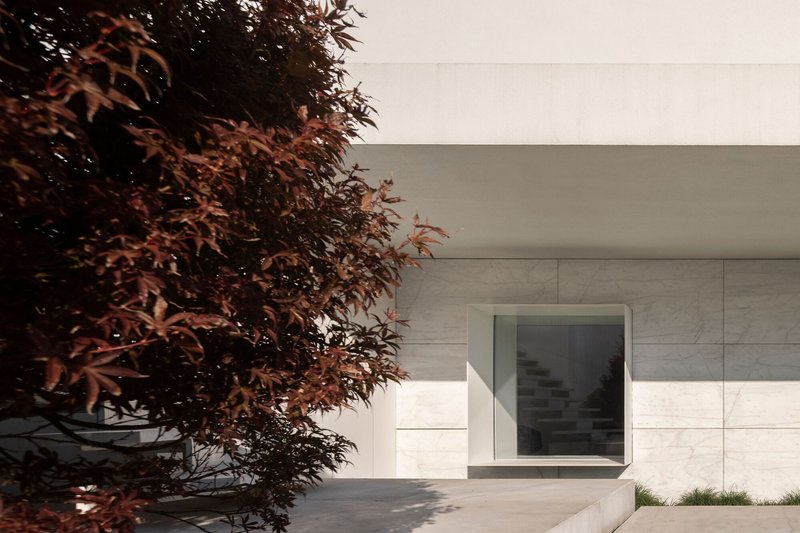
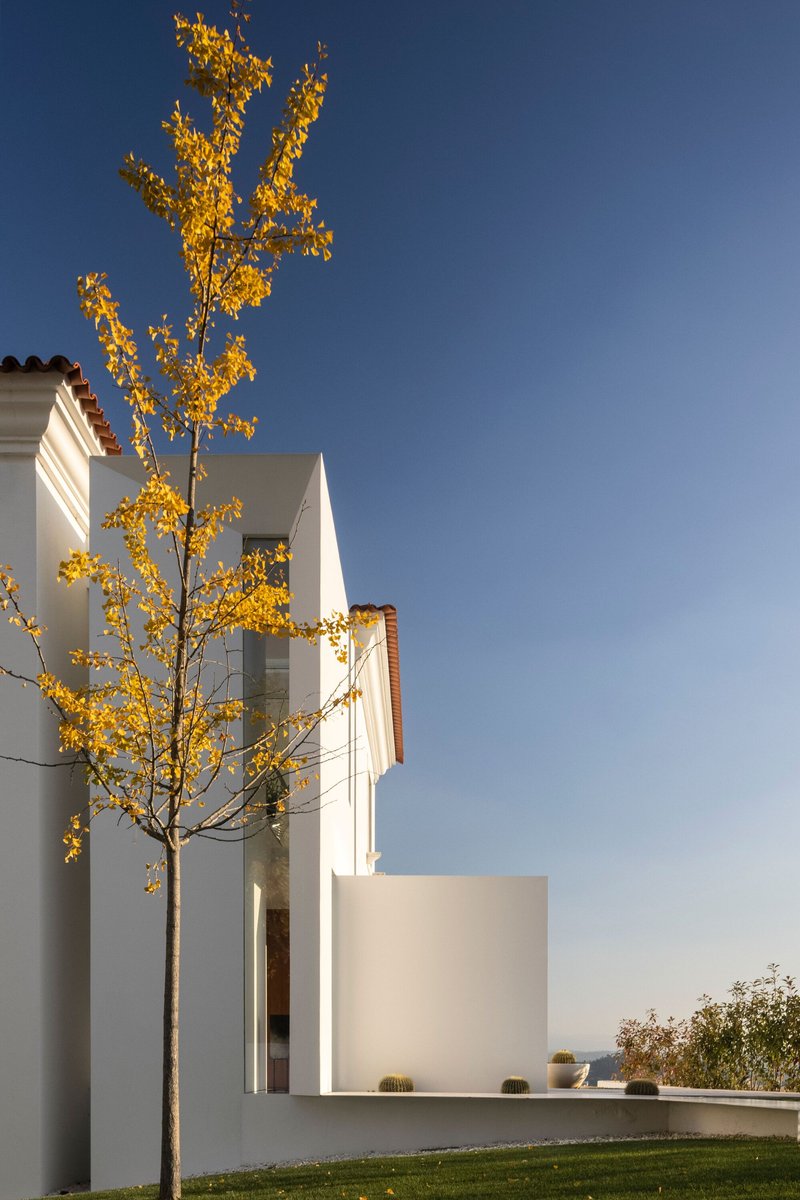
The existing villa's stone-clad facade and terra-cotta roof tiles remain legible as historical markers, anchoring the intervention in time. A framed window alongside a red-leafed tree preserves the domestic scale of the original house while the new white volumes assert a contemporary geometry beside it. The collision is deliberate, not hostile. The two languages coexist because the architects gave each enough space to breathe.
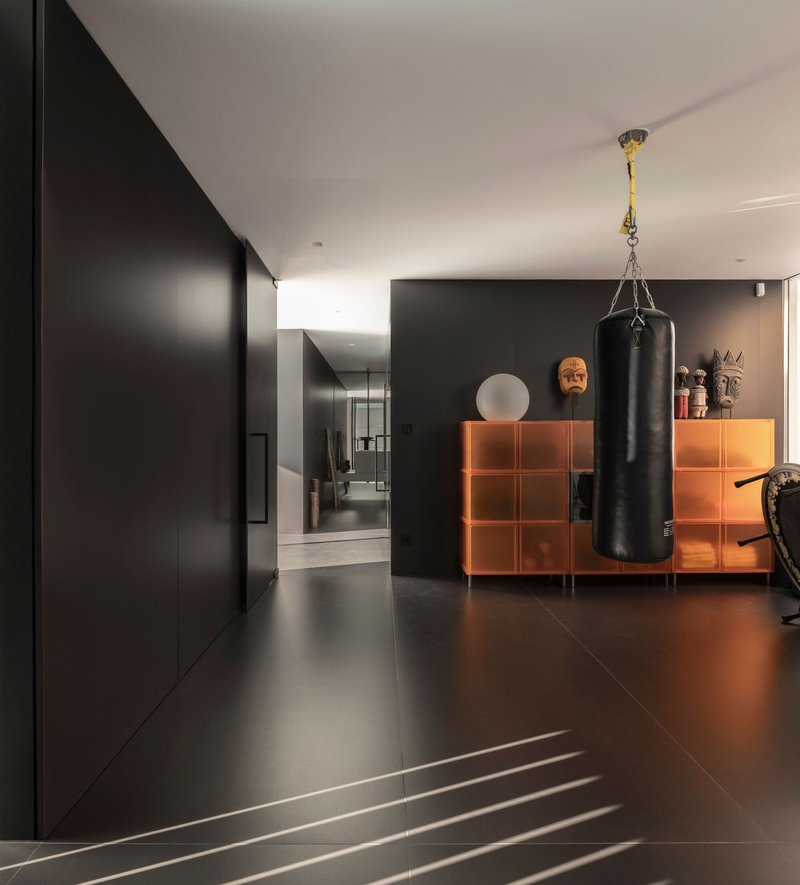
Interior finishes swing between austerity and warmth. A dark corridor with orange storage units and a suspended punching bag reveals the house's private, functional side: a gym carved into the lower level, its saturated color a rare departure from the dominant white and timber palette. The Panoramah! minimalist window system, visible at the largest glazed openings, allows the frames to disappear almost entirely, turning walls into pure transparency where the view demands it.
Plans and Drawings
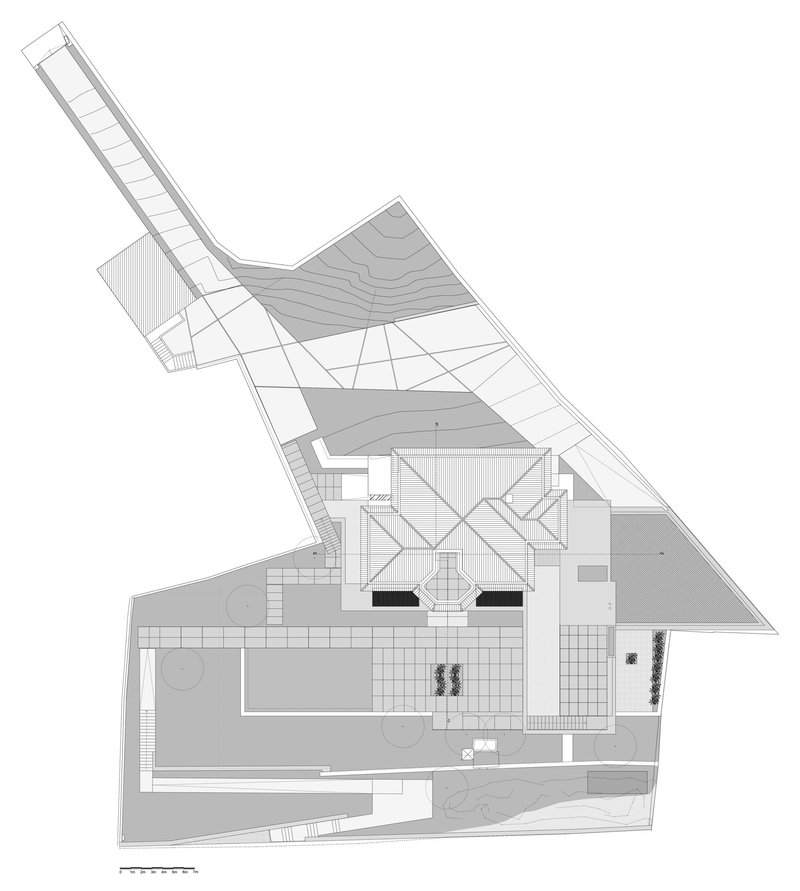
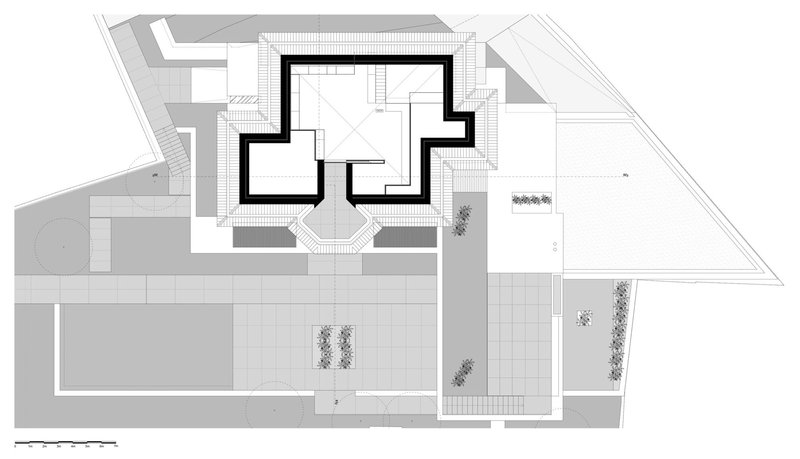
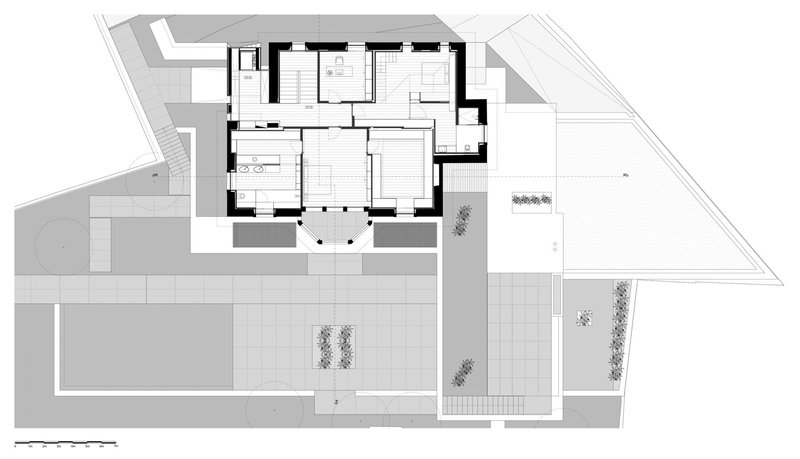
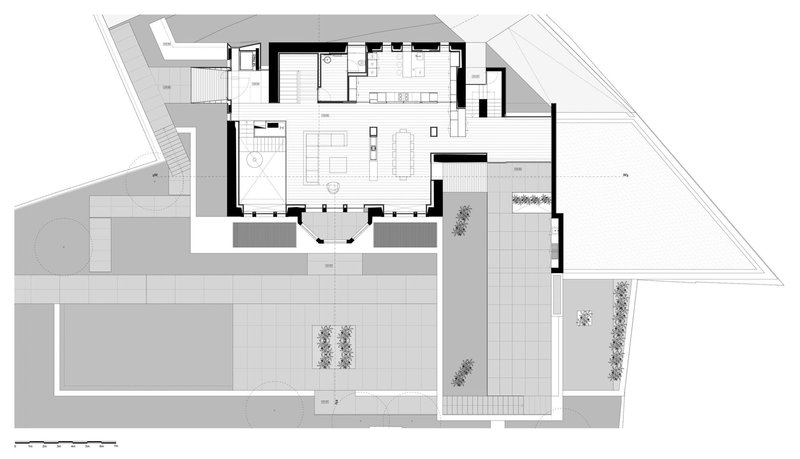
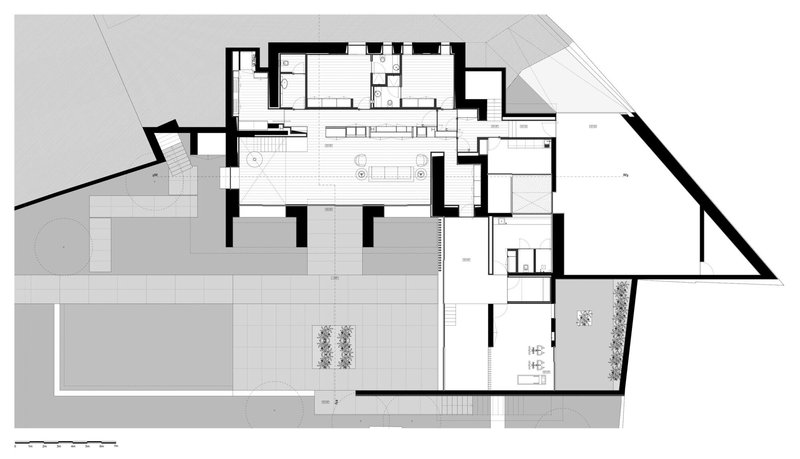
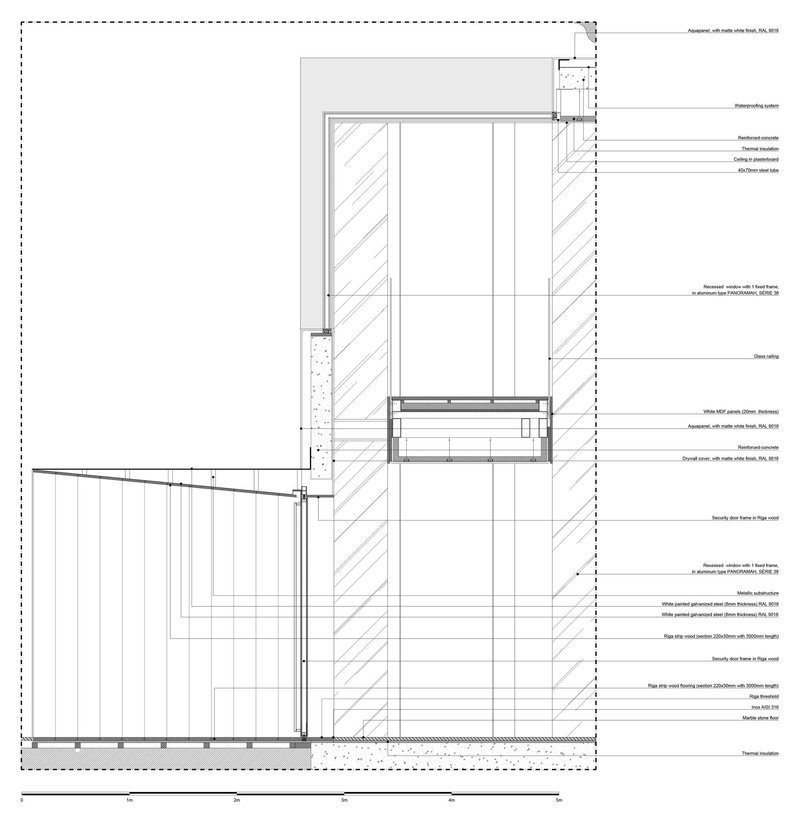
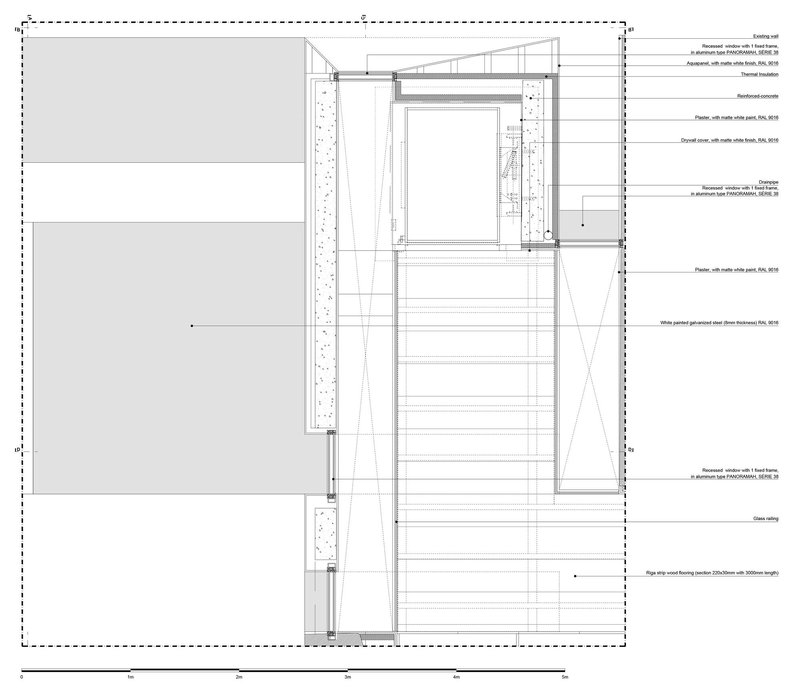
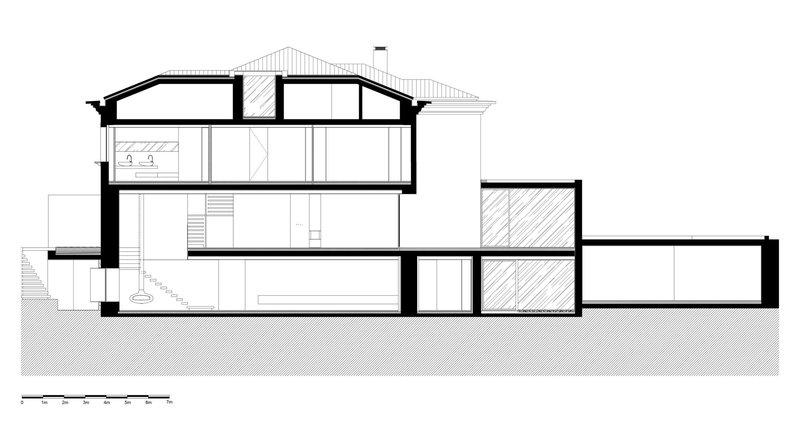
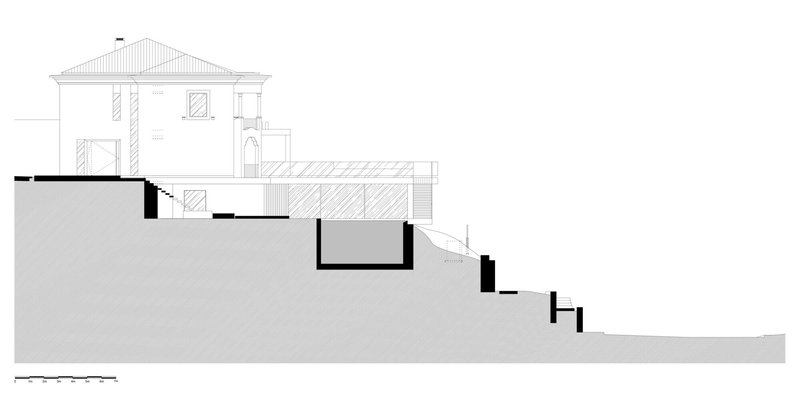
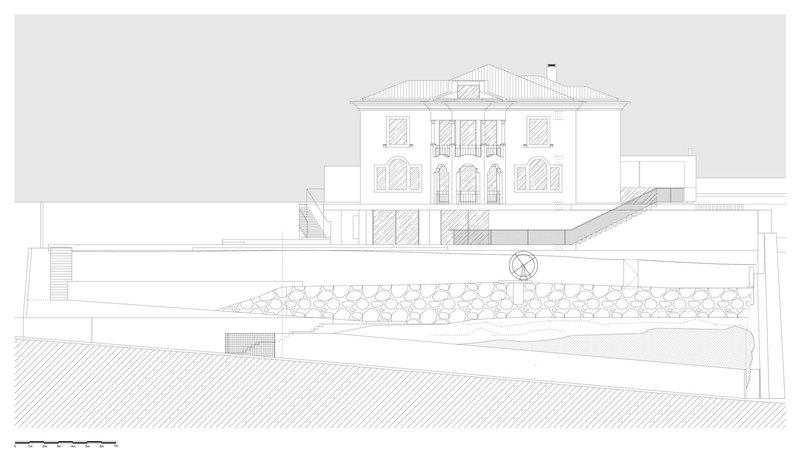
The site plan confirms the reading of the house as a field of interconnected volumes arranged around courtyards, terraces, and a pool that occupies the lower portion of the site. Floor plans show bedroom wings extending from a central circulation core, with generous terrace access at every level. The sections are the most revealing documents: they expose a multi-level house with vaulted and sloped roofs stepping down the terrain, the new addition extending from the existing building along the descending slope. A terraced pool courtyard with hexagonal paving appears in the elevation drawing, completing the picture of a project that treats its 2,472-square-meter site as a three-dimensional landscape rather than a flat lot.
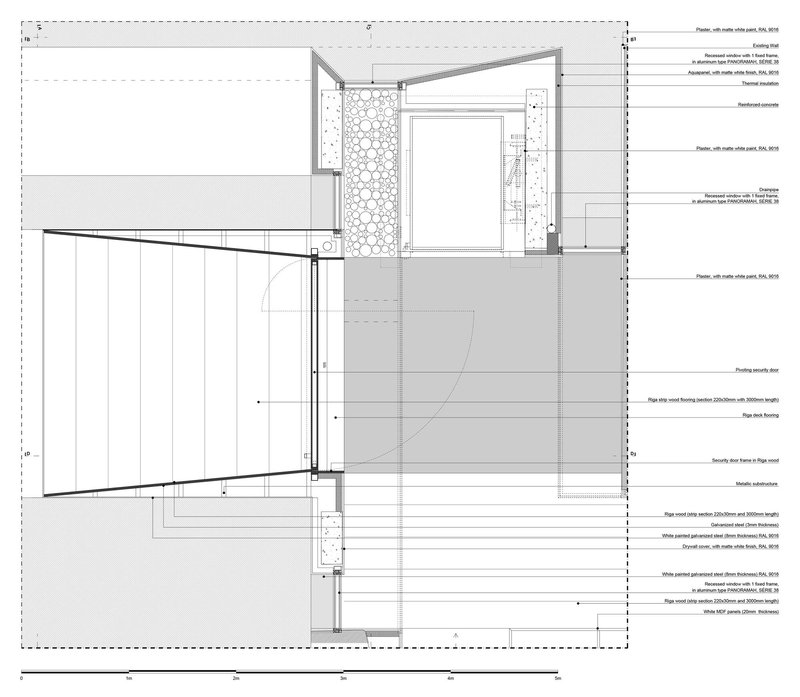
Detail sections showing the junction between sloped roof and stone-infill wall, and the connection between interior space and exterior timber deck, demonstrate a level of tectonic care that matches the spatial ambition. The reinforced concrete structure is visible in section, its robust walls and lintels enabling the large glazed openings that define the interior experience.
Why This Project Matters
Rehabilitation projects often fall into one of two traps: timid preservation that leaves the original structure unchallenged, or aggressive erasure that treats the existing building as an inconvenience. JAC House avoids both. Visioarq Arquitectos took a conventional Coimbra villa and reimagined it as the nucleus of a stepped landscape of rooms, terraces, and views, adding 816 square meters of living space while keeping the original house legible. The Diogo de Castilho Prize recognized something real: this is a project that respects context without deferring to it.
More broadly, the house demonstrates what a thoughtful section can do on a sloped site. The vertical choreography of light, the layered thresholds between inside and outside, and the calibrated framing of panoramic views all depend on the architects' willingness to work with the terrain rather than flatten it. In a city where topography is identity, that sensitivity matters. JAC House is a residential project that thinks like an urban one, treating its hillside as a stage for both private life and the public landscape of Coimbra beyond.
JAC House by Visioarq Arquitectos, Coimbra, Portugal. 816 m². Completed 2021. Photography by Fernando Guerra | FG+SG.
About the Studio
Share Your Own Work on uni.xyz
If projects like this are the kind of work you want to make, uni.xyz is a place to publish your own, find collaborators, and enter design competitions.




Popular Articles
Popular articles from the community

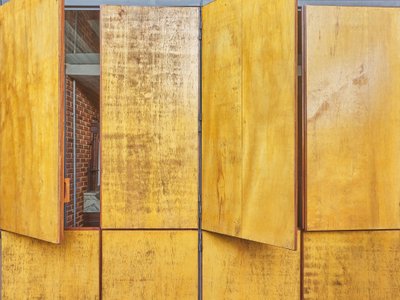
gru.a Builds a 70 m² Timber Shelter That Opens Like a Farm Door in Brazil's Valley of the Vines
In the mountainous region near Rio de Janeiro, a compact retreat uses plywood panels and deep eaves to blur the line between inside and out.
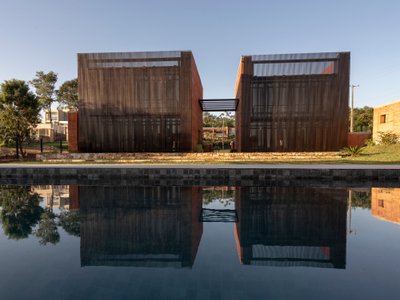
BAUEN Builds Two Rammed Earth Volumes in Paraguay Inspired by the Ovenbird's Nest
In San Bernardino, a house of compacted earth channels the instinct of a constructive bird to shelter life from the Paraguayan summer.
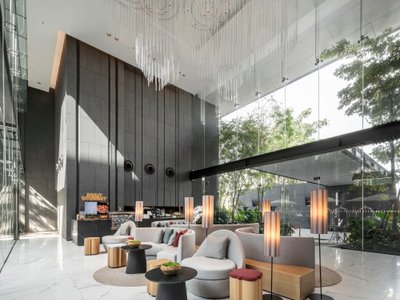
IDIN Architects Wraps a Hua Hin Hotel Around a Private Courtyard to Escape the City
Dusit D2 Hua Hin turns an urban infill site in Thailand's family vacation heartland into a self-contained resort through courtyard planning.
Johnston Architects Reimagines the Methow Valley Hay Barn as a Small-Town Library in Winthrop
A 7,300-square-foot timber library channels the region's agrarian vernacular to serve a rural Washington community of 400 year-round residents.


Similar Reads
You might also enjoy these articles

127af Flips a Tiny Bagnolet Rowhouse Upside Down with a Handcrafted Roof Extension
A 55-square-meter terraced house on the edge of Paris gains a luminous upper living floor through lightweight timber and steel.
1.61 Design Workshop Wraps a 600-Square-Meter Café in Vietnam in Sculptural Burgundy Drama
Reden Café & Bistro pairs a helical staircase, mosaic floors, and deep red interiors to rethink Vietnamese hospitality space.

The Unbound Brain: A School Shaped by Cognitive Architecture
Cylindrical learning pods radiate like neurons from a central cortex, turning the floor plan into a spatial model of human thought.
Revival Vernacular Architecture: Rammed Earth Settlements for the Sahara
A modular desert community in Mauritania that fuses passive cooling techniques with earthen construction and local craftsmanship.


Explore Architecture Competitions
Discover active competitions in this discipline




The International Standard for Design Portfolios


The Global Benchmark for Architecture Dissertation Awards


The Global Benchmark for Graduation Excellence


Challenge to design mud housing for contemporary communities
Comments (0)
Please login or sign up to add comments
No comments yet. Be the first to comment!