
Wine Bar Noie by HAGISO: A Compact Interior Renovation Transforming a 23 m² Space in Tokyo
Compact Tokyo wine bar renovation featuring a central kitchen, angled furniture, reflective ceiling, and refined spatial strategies by HAGISO.


Small-Space Renovation Redefining the Contemporary Wine Bar in Tokyo
Wine Bar Noie, designed by HAGISO, is a compact yet meticulously crafted renovation project located in Tokyo, Japan. Covering an area of just 23 square meters, the project demonstrates how architectural precision and spatial manipulation can transform a narrow, low-ceilinged interior into a distinctive and immersive dining experience. Completed in 2024, the wine bar challenges conventional images of wine-oriented spaces through innovative layout planning, material selection, and subtle optical strategies.
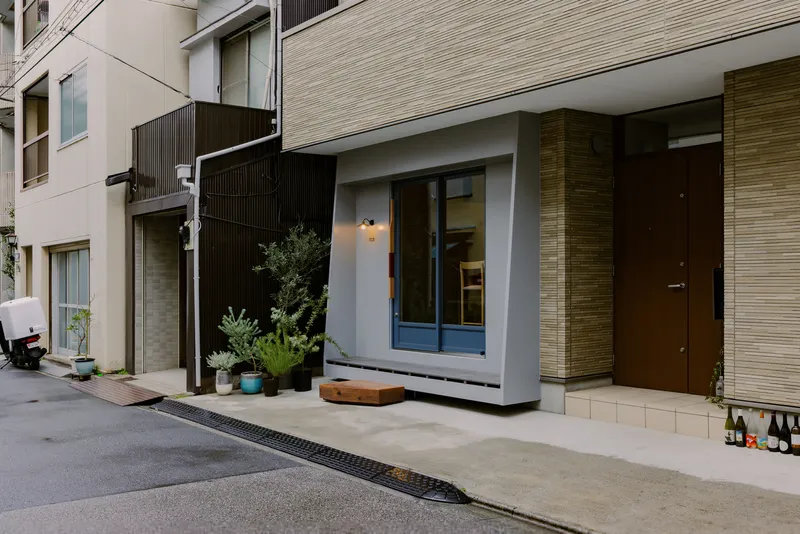
At the heart of the design is a centrally positioned kitchen counter, which becomes both a functional core and a social focal point. Circulation is organized as a continuous aisle wrapping around this central element, guiding movement fluidly through the space while maintaining visual openness. Toward the rear, the layout transitions into a more intimate lounge area, offering a calm contrast to the active kitchen zone. This spatial sequencing allows the small bar to feel layered and experiential rather than confined.
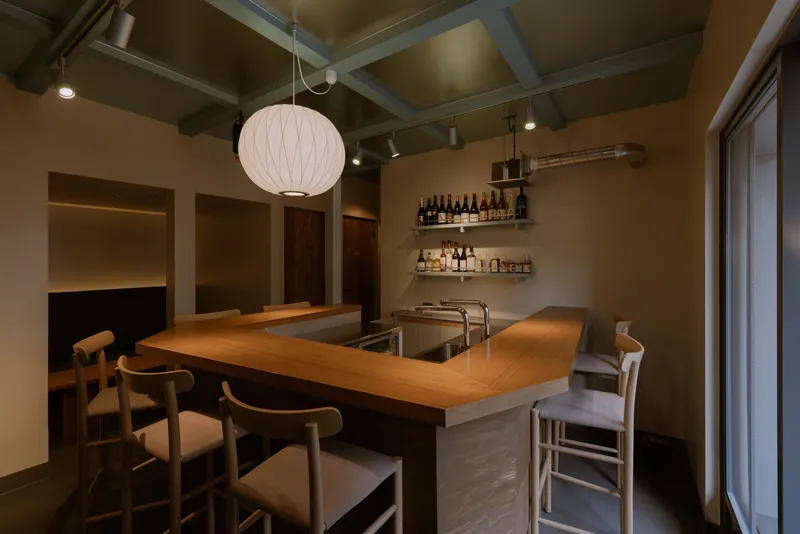
To maximize the perceived width of the aisle, all furniture corners were cut at an angle, resulting in custom, uniquely shaped tables, counters, and shelving. This deliberate geometric strategy softens the tight circulation routes while subtly expanding the spatial reading of the interior. The furniture design becomes an architectural extension of the plan, reinforcing efficiency without sacrificing character.
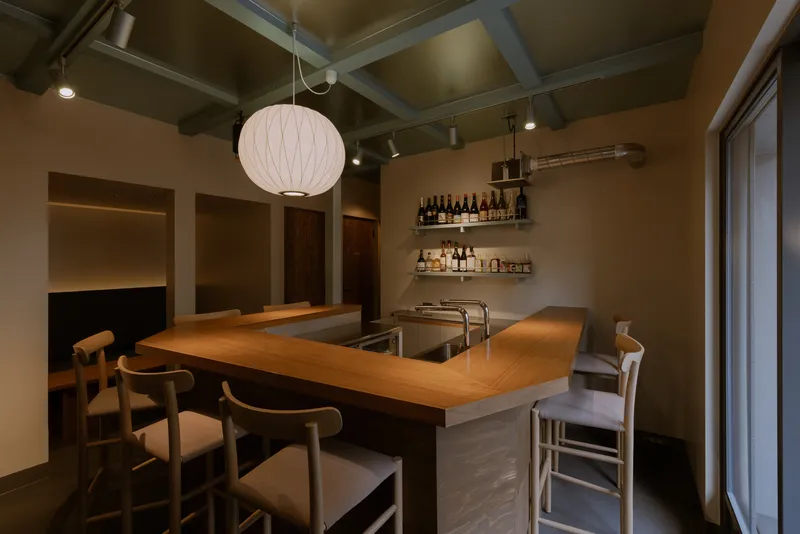
One of the project’s primary challenges was the existing ceiling height of only 2,400 millimeters. Rather than attempting structural alteration, the architects opted for an optical solution: a glossy, reflective silver ceiling that visually extends the vertical dimension. This reflective surface captures light and movement, enhancing spatial depth and counteracting the low ceiling condition.
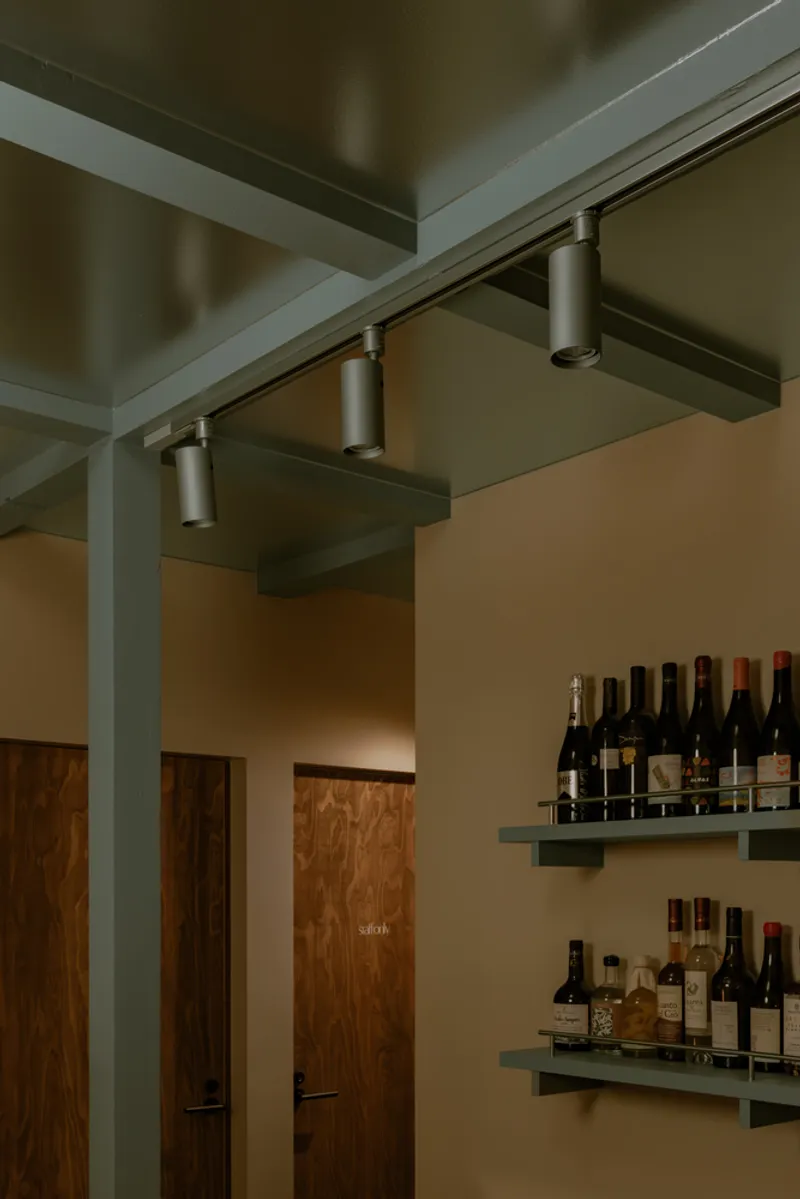
The interior color palette further departs from traditional wine bar aesthetics. Columns and beams are painted in a gray-blue tone selected from the Munsell hue circle, intentionally excluding colors typically associated with wine, such as reds, purples, greens, and oranges. This restrained chromatic choice produces a calm, contemporary atmosphere and positions Wine Bar Noie as a space defined by architectural clarity rather than thematic decoration.
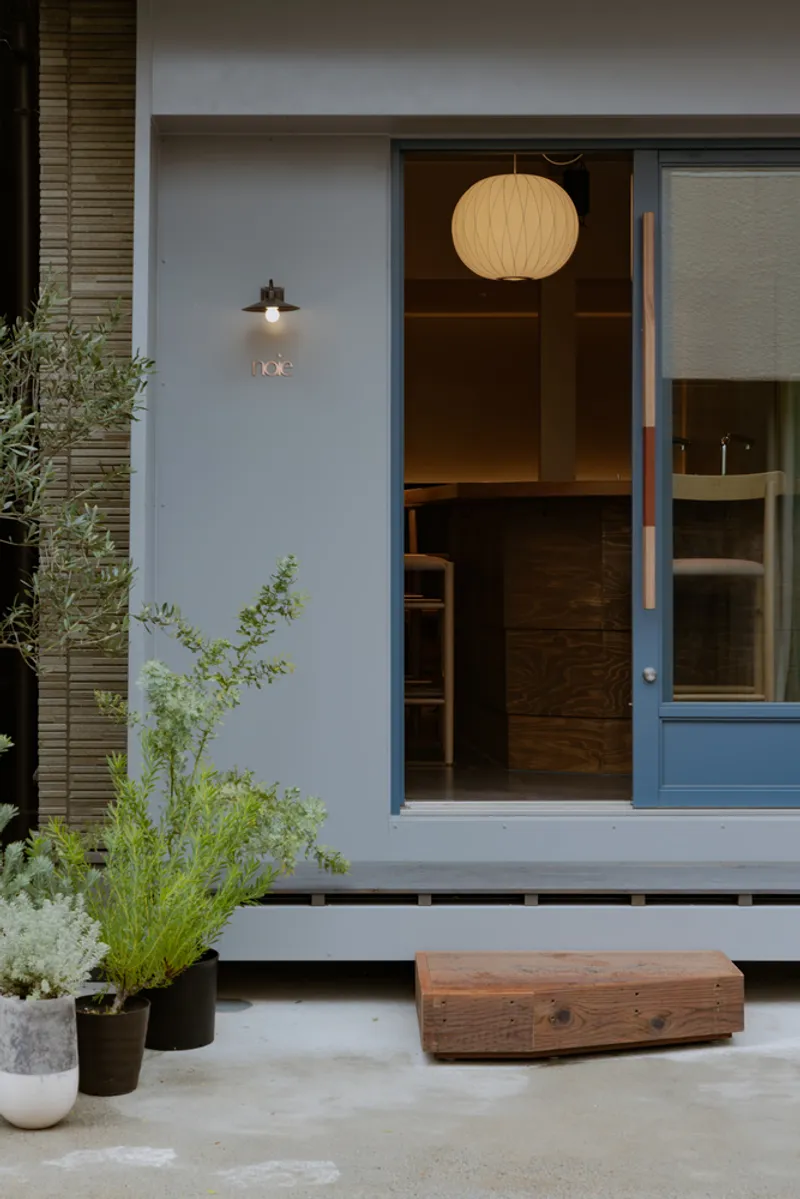
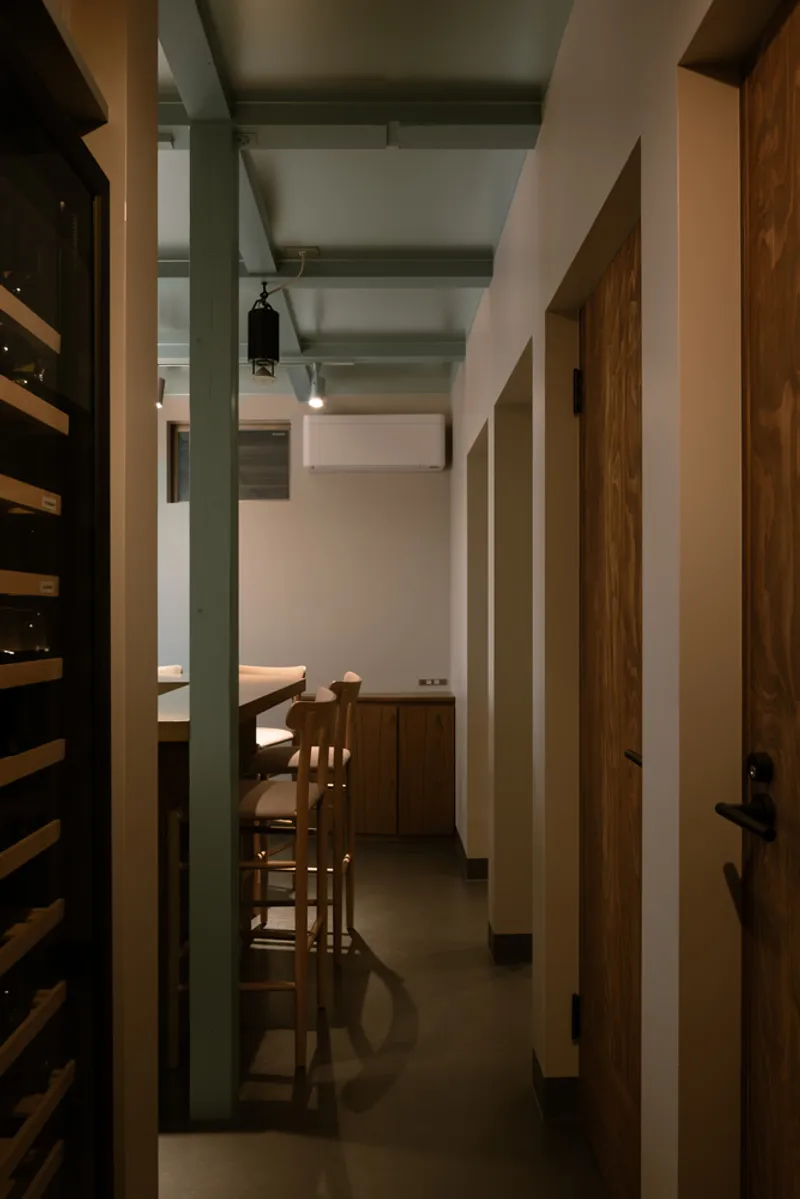
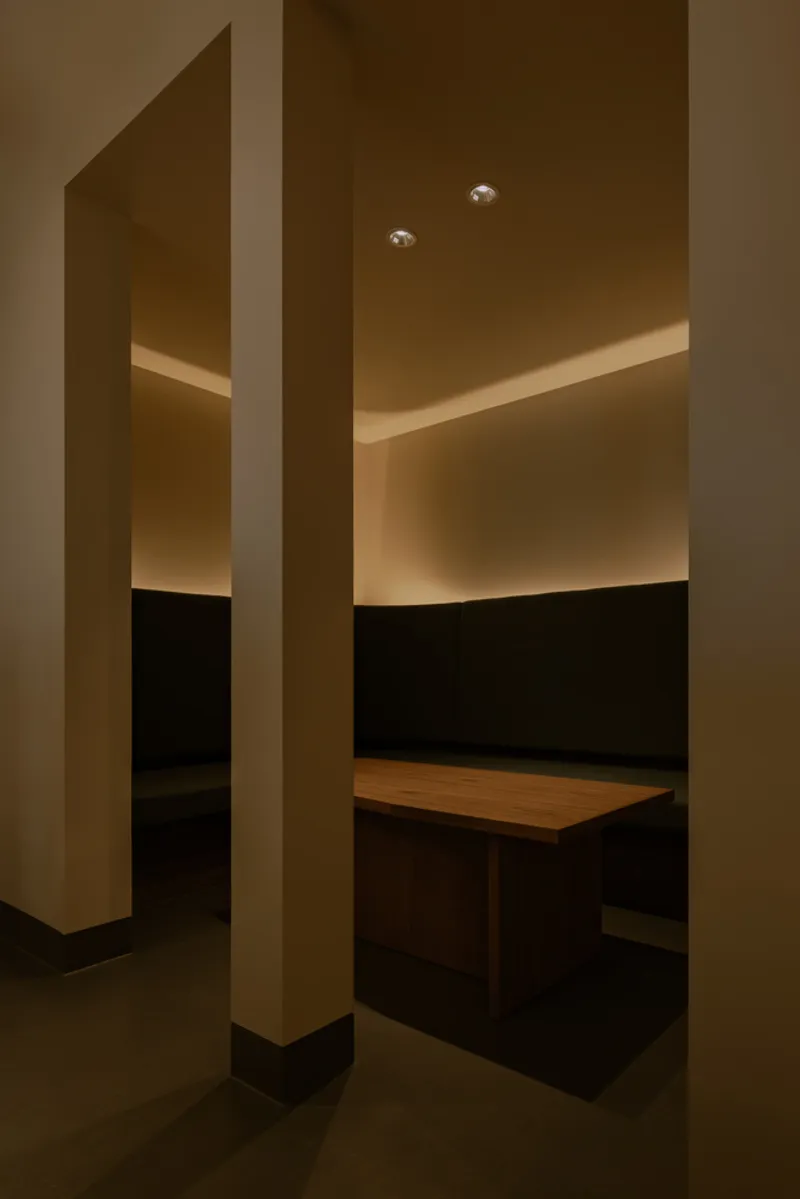
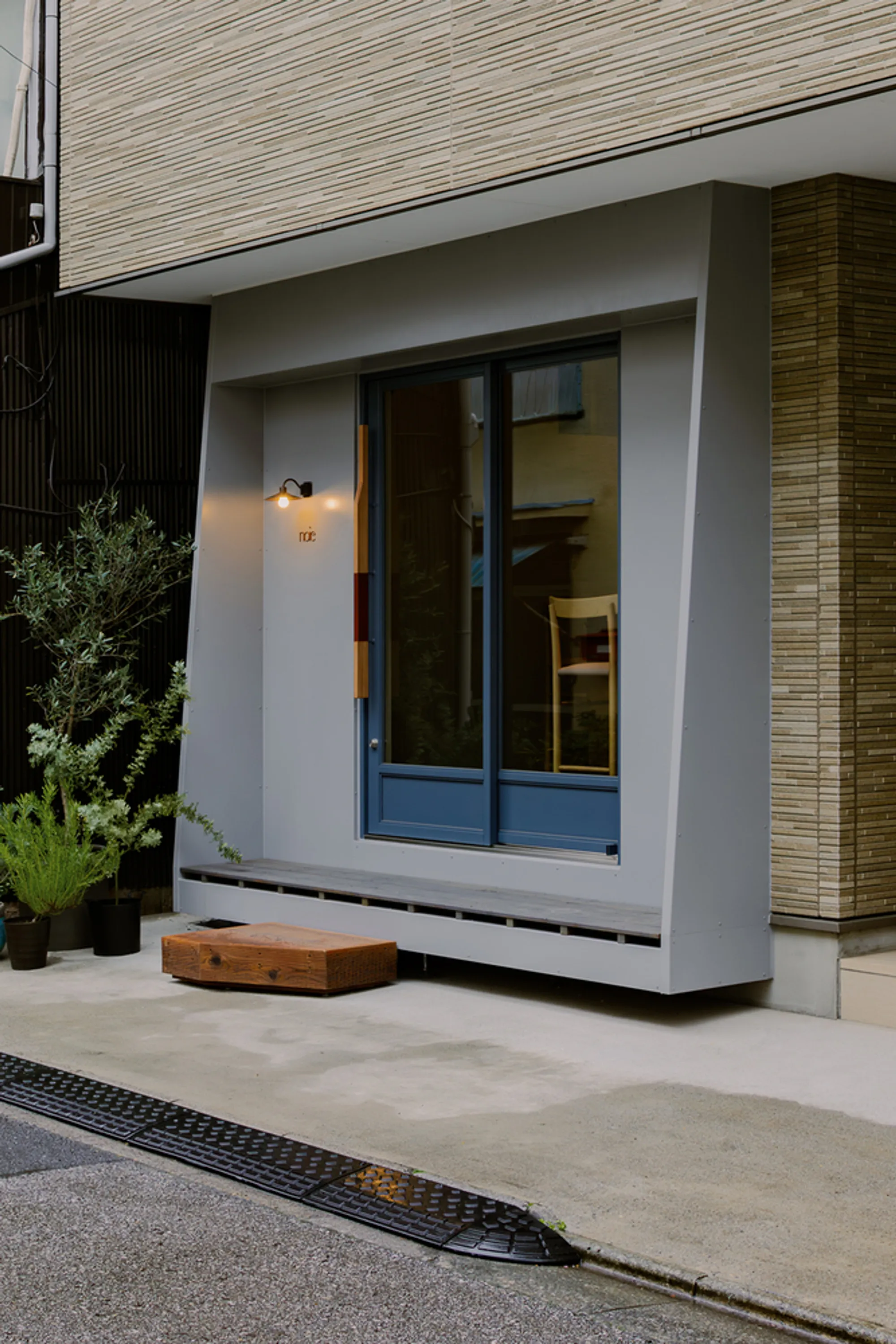
At the entrance, a steel-framed opening clearly defines the threshold between street and interior, while a compact terrace seating area extends the bar’s presence outward despite limited frontage. These architectural gestures enhance urban engagement and improve functionality within the constrained footprint.
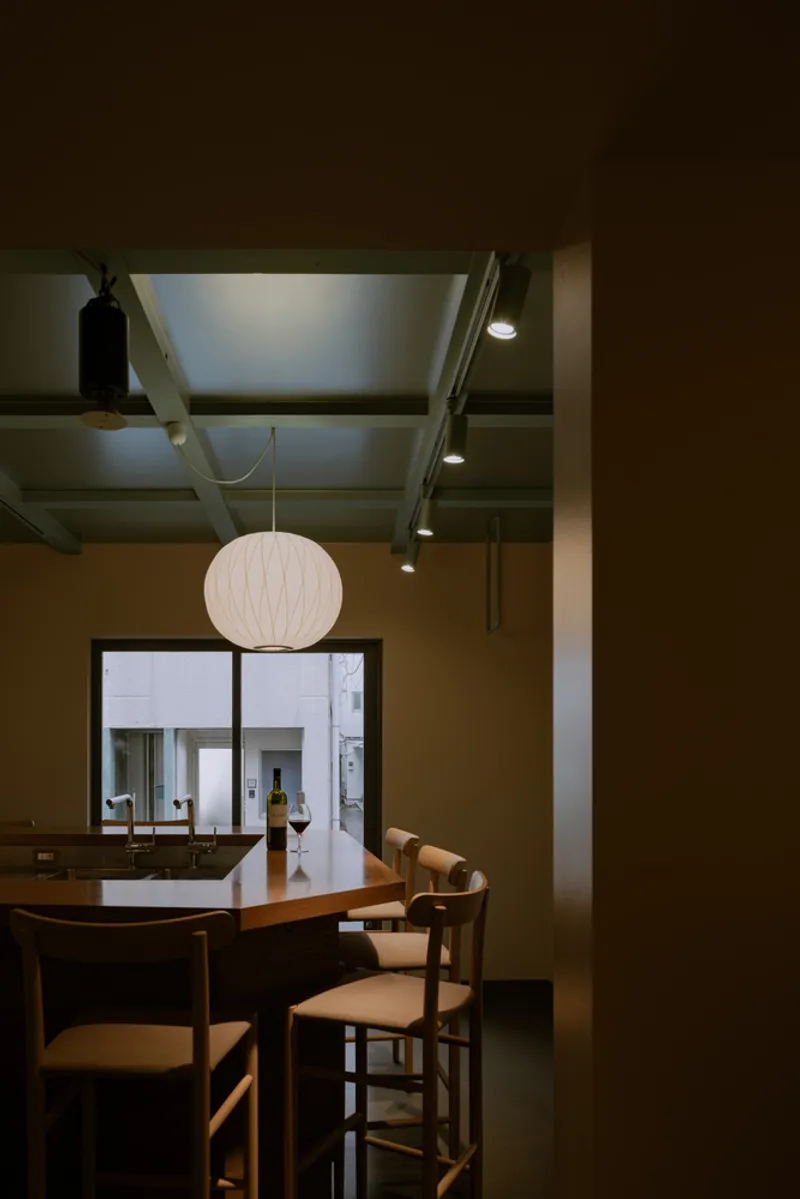
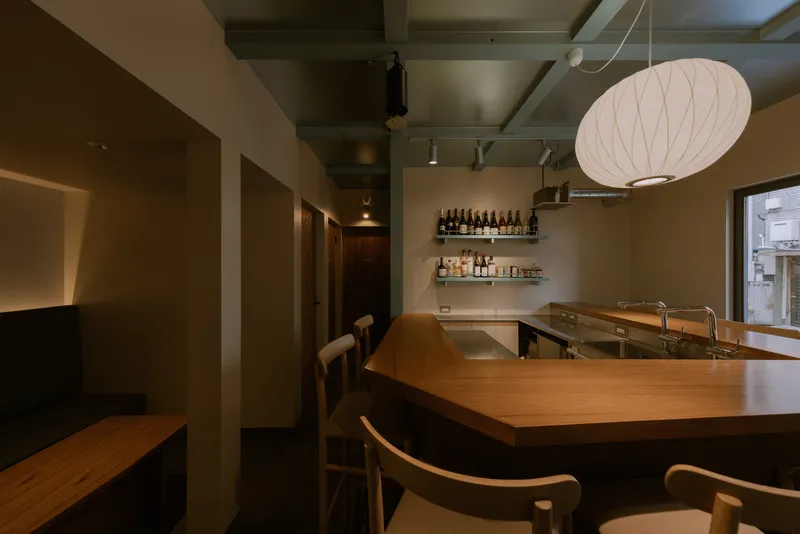
Through careful planning, material refinement, and geometric precision, Wine Bar Noie exemplifies how small-scale renovation architecture can generate spatial richness. HAGISO’s design transforms a tight, low, and narrow interior into a refined hospitality space, proving that architectural quality is not dependent on size but on thoughtful intervention.
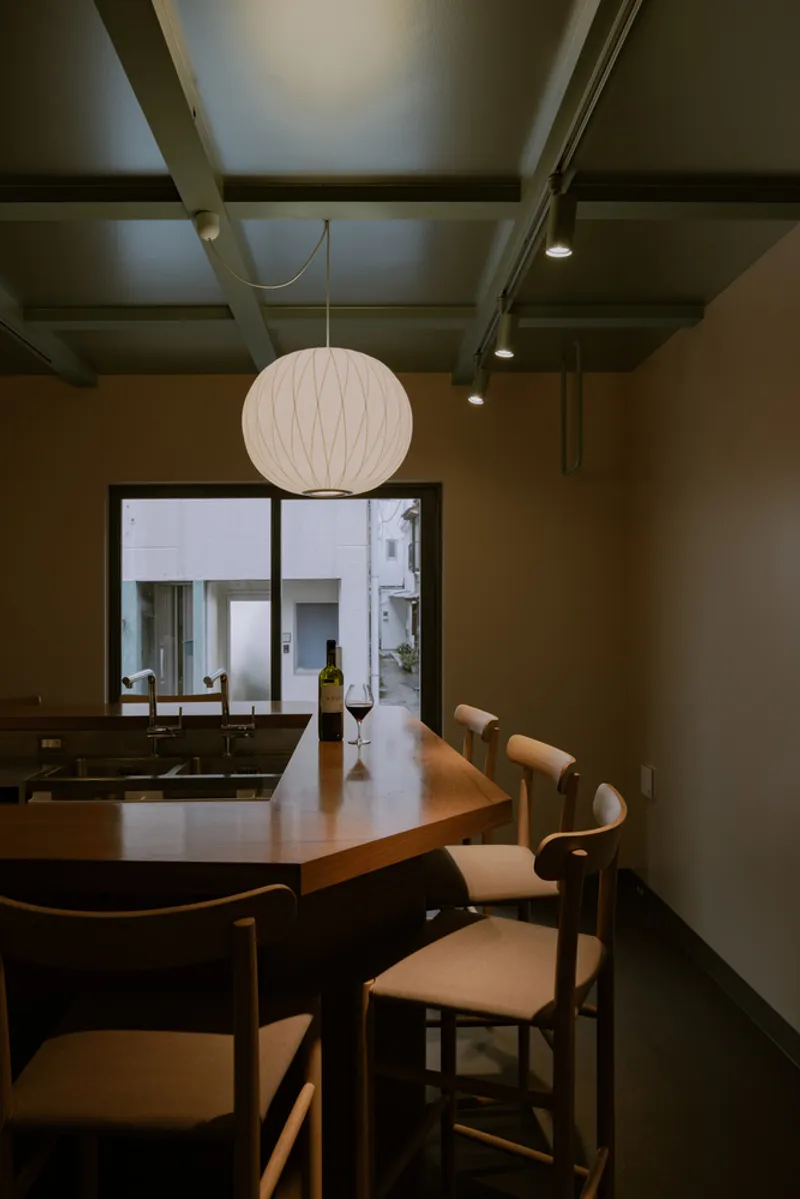

All photographs are works of Keishin Horikoshi / SS




Popular Articles
Popular articles from the community


Play: Fragments of Their World
Familiar architecture becomes modular playground design, creating safe spaces where displaced children can learn, connect, imagine and play.

Riyadh For All: Intergenerational Urban Design for Active Aging in Rabat
Riyadh For All reimagines urban design in Rabat with intergenerational co-living, adaptive courtyards, and Moroccan cultural exchange today.

The Musturak Paradise: Senior Living Architecture for a Connected Future in Temara, Morocco
The Musturak Paradise reimagines senior living architecture in Temara via private homes, social spaces, culture, community, and shared care.

Co-Life: Senior Housing Design That Reconnects Older Adults With the City
Co-Life reimagines senior housing design through healing gardens, shared streets, workshops, and a sustainable community across generations.

Similar Reads
You might also enjoy these articles


Hodi-Mandai Geram
Project Function: Preservation and revitalization of the Intangible heritage and socio-spatial identity of the Hodi by Housing, Cultural Memory Center, Sacred Grove, landscape, local tourism economy


Olio Towers: A Mid-Rise for Performers That Fuses Housing, Rehearsal, and Stage
Located blocks from Houston's Theater District, this modular tower stacks living units around a central performance atrium.

Oasis: Modular Green Housing Carved into Dhaka's Urban Fabric
A shortlisted Plugin Housing entry reclaims unauthorized settlements in Dhaka with stepped concrete volumes, green roofs, and ventilation-driven design.

Black Hole: A Floating Megastructure for the Post-Physical Era
Emiliano Mazzarotto envisions a spherical, self-scaling arena where e-sports, digital hotels, and holographic stadiums replace traditional public space.
Explore Interior Design Competitions
Discover active competitions in this discipline


Challenge to design luxury tourism on rails


Challenge to reimagine the Iron Throne


Photograph architecture without architects


VR headsets Storefront design competition
Comments (0)
Please login or sign up to add comments
No comments yet. Be the first to comment!